Florida is hiding things from you. Not on purpose it’s just that the state is so loud about its theme parks, its neon-lit beach strips, and its all-inclusive everything that the quieter stuff barely gets a word in.
But that quieter stuff? That’s where it gets good.
We’re talking about a swamp floor carpeted in rare orchids. A perfectly round lake ringed by Victorian houses.
A tiny island built entirely from shells left behind by people who lived there a thousand years ago. A town where the Greek dialect has survived, largely unchanged, for over a century on American soil.
None of these places will ask you to wait in line for two hours. None of them have a gift shop at the exit.
This is a list of 14 spots across Florida that don’t get the attention they deserve and in 2026, that’s exactly why you should go.
Cassadaga — Florida’s Spiritualist Camp Town
Step off the main road and into Cassadaga, and you will immediately feel like you have walked into a different century. Founded in 1894, this tiny Central Florida community is a fully functioning spiritualist camp, one of the oldest in the southeastern United States.
Residents here are certified mediums and healers who offer readings, spiritual counseling, and public events throughout the year.
Walking the quiet residential streets, you pass old bungalows with hand-painted signs advertising clairvoyants and message services. The Andrew Jackson Davis building, the camp’s main bookshop and gathering space, has been operating continuously for over a hundred years.
You can walk right in, browse books on metaphysics, and ask about upcoming events without any pressure.
Whether you are a true believer or just curious, Cassadaga rewards an open mind. Weekend events often include public message services in the historic Colby Memorial Temple, where anyone can attend.
Plan a few hours, talk to locals, and let the place work on you at its own pace.
Homosassa Springs — Manatees Below the Surface
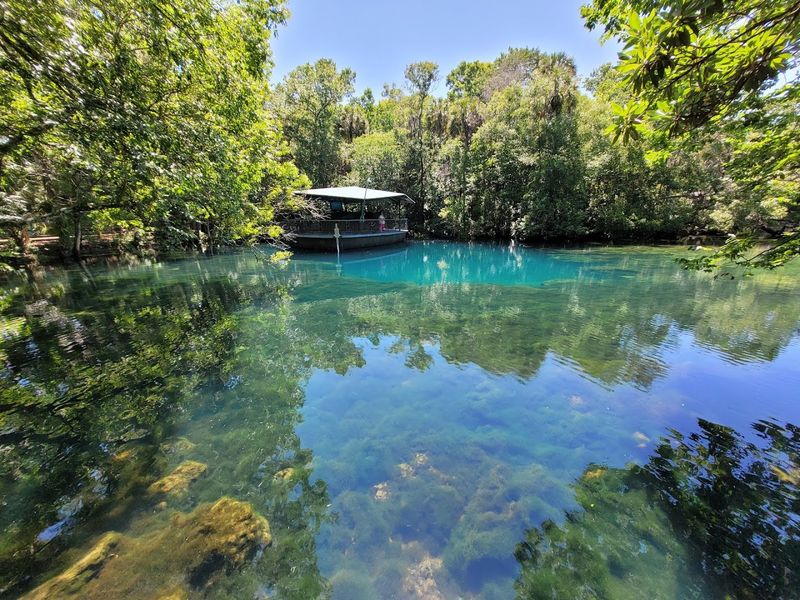
Most wildlife encounters in Florida put you above the water looking down. Homosassa Springs State Wildlife Park flips that entirely.
The park’s underwater observatory is a glass-enclosed room built at spring level, letting you stand eye-to-eye with manatees as they drift through the water around you. It is genuinely one of the most unusual wildlife experiences in the state.
The spring holds a constant 72 degrees Fahrenheit year-round, which is exactly why manatees gather here between November and March. When Gulf water temperatures drop, these slow-moving mammals seek out warm freshwater springs and Homosassa is one of their favorites.
They are not performing or trained; they are simply warm and comfortable, doing manatee things.
Beyond manatees, the spring is home to river otters, Florida black bears (in a sanctuary habitat), and a rotating cast of native fish species visible through the glass. Arrive early on a weekday for the quietest experience.
The park also runs educational programming, making it a strong choice for families traveling with kids of any age.
Apalachicola — The Gulf’s Most Honest Oyster Town
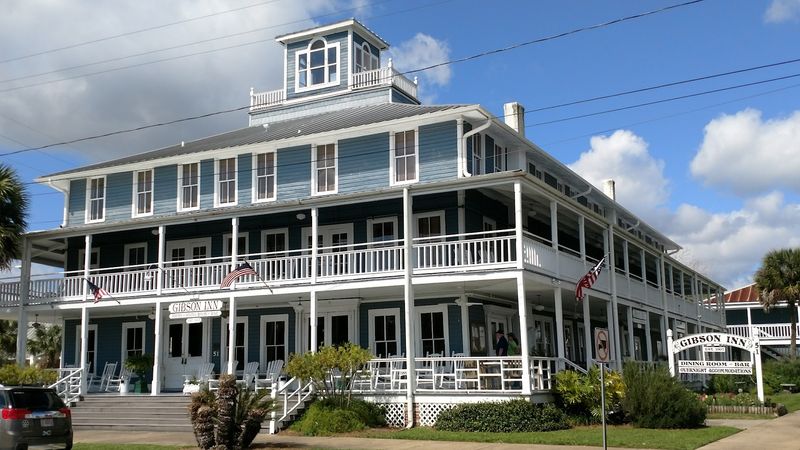
Apalachicola sits at the far western edge of Florida’s Panhandle, where the Apalachicola River meets the Gulf of Mexico, and it carries the kind of lived-in character that resort towns spend millions trying to fake. The Victorian-era downtown is walkable, unhurried, and full of buildings that have been standing since the 1800s without anyone turning them into boutique hotels at least not yet.
The town built its identity on oysters, once producing a huge portion of Florida’s total harvest. After 2012, upstream water disputes with Georgia dramatically reduced the estuary’s flow, and the oyster population crashed.
Many locals pivoted to shrimping and tourism, giving the waterfront a transitional honesty that is oddly compelling. Restaurants still serve Gulf seafood raw oysters when available, shrimp always and the portions are generous without the tourist markup.
A walk along Water Street at dusk, watching the shrimp boats come in, is worth the drive by itself. The Apalachicola National Estuarine Research Reserve also offers guided tours if you want to understand the ecosystem behind what is on your plate.
Ichetucknee Springs — Six Miles of Cold, Clear Tubing
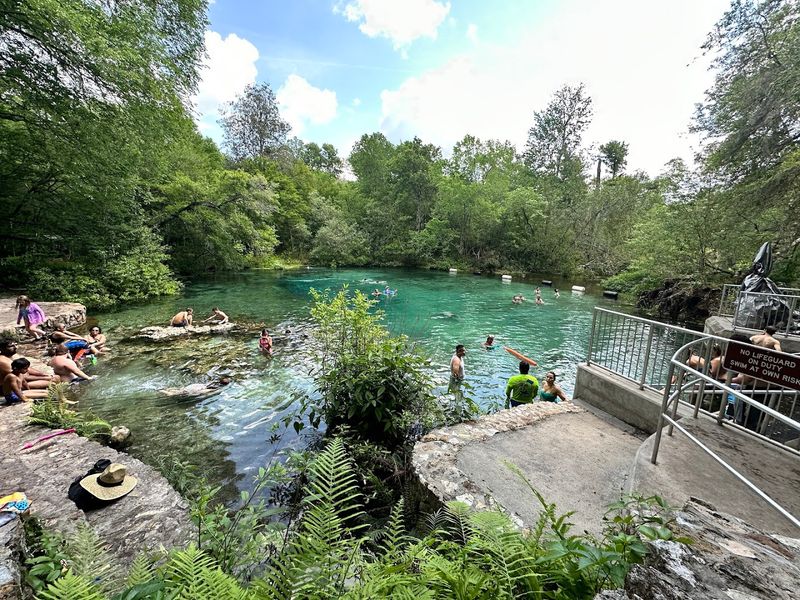
Few Florida experiences are as straightforwardly good as tubing down the Ichetucknee River. The river runs six miles through a North Florida hardwood forest, fed by a cluster of springs that keep the water brilliantly clear and a refreshing cool even in July.
You rent a tube, get in, and the current does the rest no paddling required.
The Florida Park Service limits the number of daily tubing entries to protect the spring’s flow and the surrounding ecosystem. That cap means the river never feels like a crowded waterpark, even on summer weekends.
If you arrive at the north entrance by 9 a.m., you will almost certainly get in. Bring a waterproof bag for snacks and sunscreen, and do not skip the snorkeling the visibility is often 20 feet or more.
Along the way, watch for limpkins, great blue herons, river otters, and softshell turtles moving through the water beneath you. The full tube run takes two to three hours depending on the current.
Weekday visits in late September, when the summer crowds thin, offer some of the best conditions of the year.
Goodland — Marco Island’s Forgotten Fishing Village
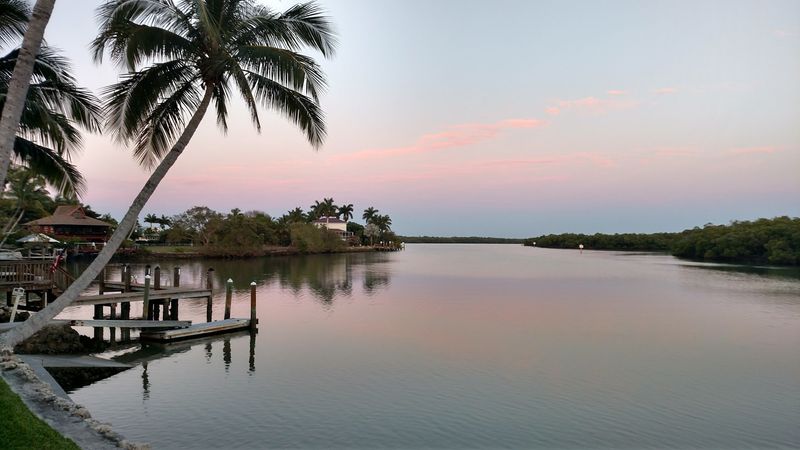
Just a few minutes from Marco Island’s polished resort strip sits a community that operates on a completely different frequency. Goodland is a working waterfront village, small, sun-bleached, and unapologetically itself.
The streets are narrow, the houses are low, and the marina looks like it has not changed much since the Carter administration, which is meant as a compliment.
The anchor of local social life is Stan’s Idle Hour, a waterfront bar that hosts its legendary Sunday gatherings throughout the season. These informal events, sometimes billed as Mullet Festival celebrations, attract regulars who arrive in costumes that are difficult to categorize and impossible to forget.
It is loud, friendly, and about as far from a tourist experience as you can get while still being on Marco Island.
The view across Caxambas Bay from the dock is genuinely beautiful mangroves, shallow water, and the occasional dolphin working the channel. Kayak rentals are available nearby for anyone who wants to explore the Ten Thousand Islands from a quieter angle.
Come hungry; the waterfront seafood is fresh and priced for locals.
Ybor City — Tampa’s Brick-Lined Latin Quarter
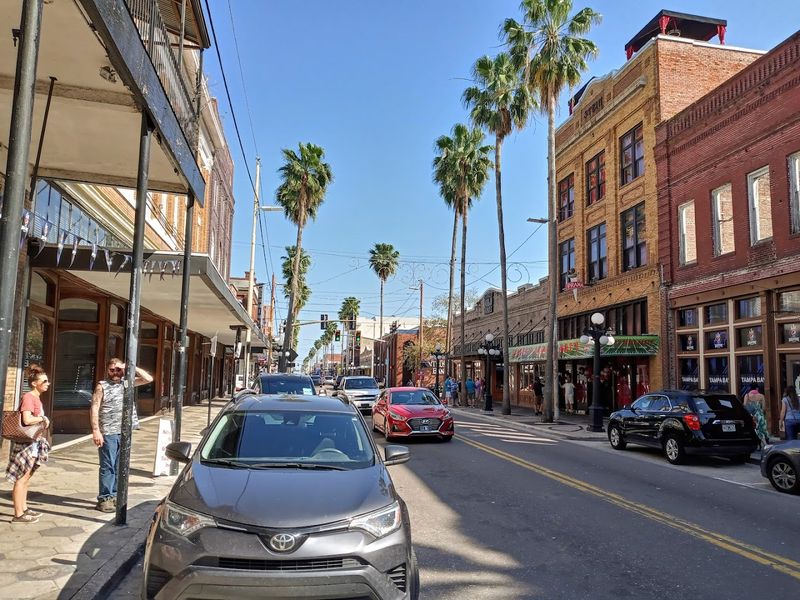
Ybor City does not feel like the rest of Tampa, and that is entirely the point. Built in the late 1800s as the center of Florida’s cigar manufacturing industry, this neighborhood was constructed by Cuban, Spanish, and Italian immigrants who brought their food, language, and culture with them.
The brick-lined streets and ornate factory buildings they left behind are still standing, and the community is actively working to keep them that way.
The Columbia Restaurant, opened in 1905, is the oldest restaurant in Florida and still run by the same family. The flamenco shows are genuine, the Cuban sandwich is the standard by which all others are measured, and the dining room feels like a small theater.
Ybor City has more registered historic structures per block than almost any other Florida neighborhood, including former cigar factories now repurposed as apartments, bars, and event spaces.
Free-roaming chickens, descendants of birds kept by early immigrant families — wander the sidewalks and are protected by city ordinance. Nobody quite knows how many there are.
A Saturday afternoon walking tour through the 7th Avenue corridor covers most of the highlights in about two hours.
Weeki Wachee Springs — America’s City of Mermaids
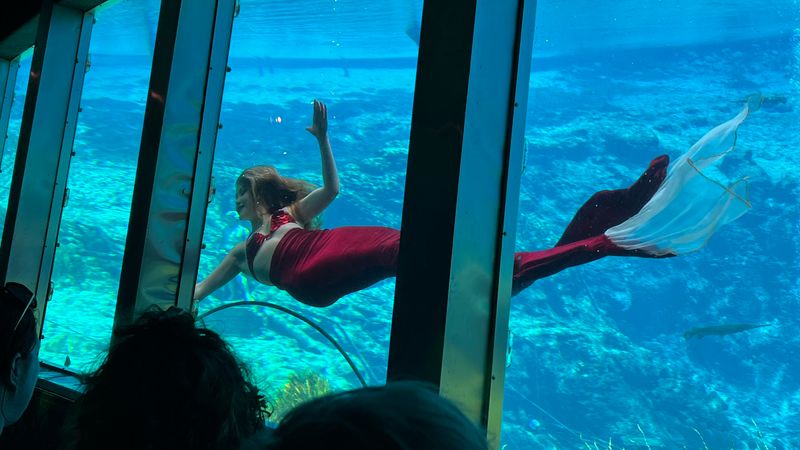
Since 1947, performers at Weeki Wachee Springs have been doing live underwater shows through an eight-foot-thick glass wall, breathing through air hoses and executing choreographed sequences in a natural freshwater spring. No tricks, no video editing, no net below, just trained swimmers in mermaid tails doing something genuinely hard while making it look effortless.
It is one of the oldest continuously running roadside attractions in the entire country.
The shows run multiple times daily and last about 30 minutes. The theater is built below the spring’s waterline, so the audience sits looking into the spring rather than down at a pool.
The water is clear enough to see every detail of the performance, and the natural light filtering through the spring gives the whole thing an otherworldly quality that no indoor pool could replicate.
Beyond the mermaid shows, Weeki Wachee is a full Florida state park with a natural swimming area, water slides, and a riverboat cruise through the Weeki Wachee River. Manatees sometimes visit the spring in winter, adding an unscripted element that no theme park can compete with.
Arrive on a weekday for shorter lines and a calmer atmosphere.
Cedar Key — Clam Country at the End of the Causeway
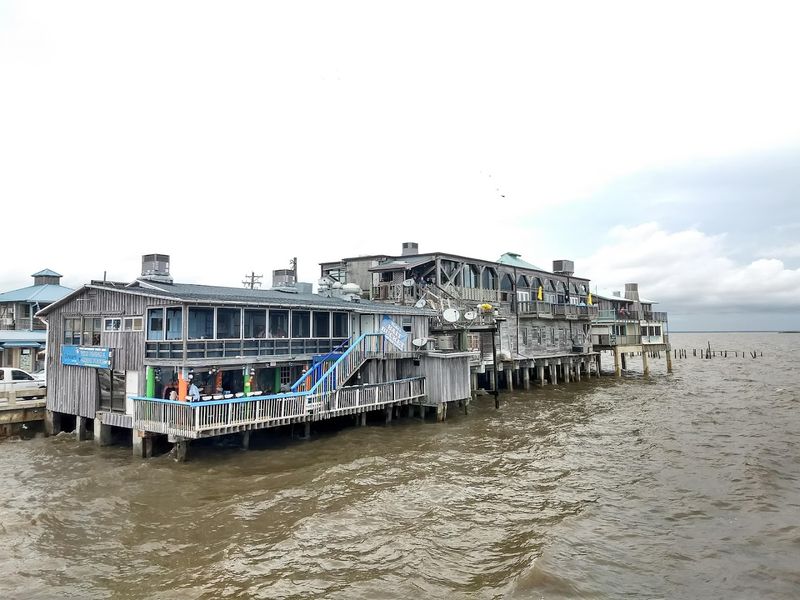
Getting to Cedar Key requires commitment. A two-lane causeway stretches out over marsh grass and shallow Gulf water for several miles before the island town comes into view, low-rise, unhurried, and genuinely uncrowded even in peak season.
That long approach filters out a certain kind of visitor, which is probably why the town has stayed so intact.
Cedar Key is one of the largest clam-producing communities in the United States, and the industry is visible everywhere. At low tide, you can stand on the causeway boardwalk and watch farmers working the flats by hand, raking and sorting clams in the shallow water below.
It is a working waterfront in the most literal sense, and the kind of scene that has nearly disappeared from most of Florida’s coastline.
Kayaking out to the Cedar Keys National Wildlife Refuge a cluster of small islands offshore is one of the area’s best activities. Guided tours are available from several outfitters in town.
The local restaurants serve clams in about every preparation imaginable, and a plate of steamed clams with drawn butter while watching the sun drop over the Gulf is a very fine way to end a day.
Micanopy — Live Oaks, Antiques, and Roaming Bison
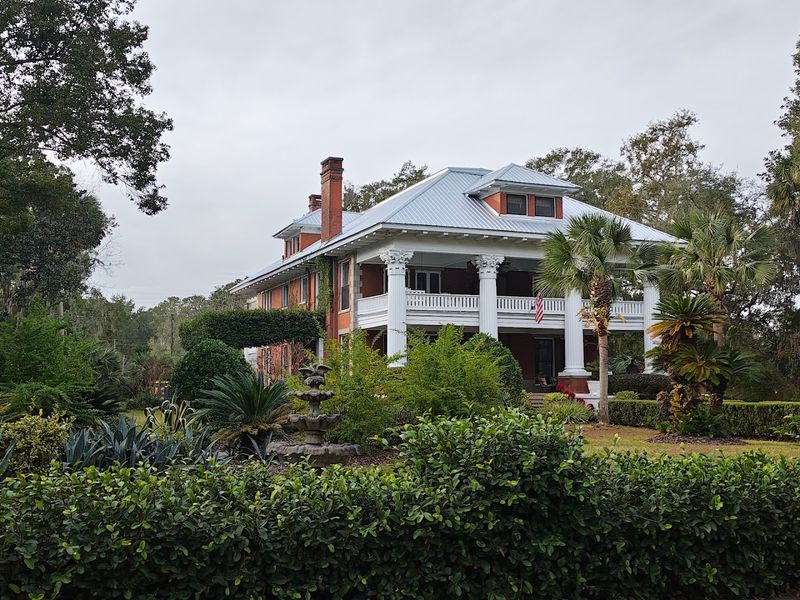
Micanopy is technically Florida’s oldest surviving inland town, established in the early 1800s, and a walk through it feels less like tourism and more like accidentally finding a place that time forgot to update. The entire downtown is essentially one block of antique shops and historic storefronts shaded by live oaks so old and wide they form a canopy over the street.
It is the kind of place where you slow down without meaning to.
The town played a complicated role in the Second Seminole War, and several historic markers tell that story honestly. The antique district is serious dealers here know their inventory, and finds range from Florida folk art to mid-century furniture to genuine 19th-century pieces from the region.
A short drive south on U.S. 441 brings you to Paynes Prairie Preserve State Park, where a highway overlook gives views over a vast open basin. American bison were reintroduced here in the 1970s, and the herd occasionally wanders onto the highway, stopping traffic in the most Florida way possible.
Wild horses, sandhill cranes, and alligators round out the wildlife list at the prairie. Go at dusk for the best chance at seeing something memorable.
Fakahatchee Strand Preserve — A Prehistoric Green Swamp
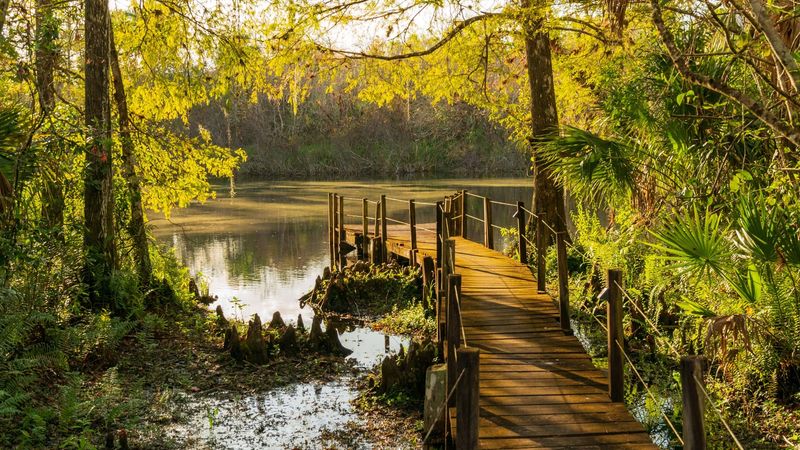
On an overcast morning inside the Fakahatchee Strand, the light turns green. It filters down through bald cypress canopy draped with bromeliads and ferns, reflects off dark tannin-stained water, and lands on rare native orchids growing straight out of tree bark.
The effect is genuinely prehistoric not in a marketing-brochure way, but in the actual sense that this ecosystem has looked roughly like this for a very long time.
The Fakahatchee is a linear freshwater swamp running through Big Cypress in Southwest Florida, and it holds one of the densest concentrations of native orchid species in North America. Most of the old-growth cypress was logged in the early 1900s, but several sections were spared, and those trees are enormous.
The main boardwalk trail is accessible to most visitors and gives a solid introduction to the strand without getting your feet wet.
For a deeper experience, ranger-guided swamp walks take small groups directly into the water knee-deep, slow, and extraordinary. Reservations are required and fill up fast.
Ghost orchids, the rarest and most famous of the strand’s orchid species, bloom here in summer, drawing photographers from around the world who are willing to wade for the shot.
De Funiak Springs — Victorian Homes Around a Perfect Circle
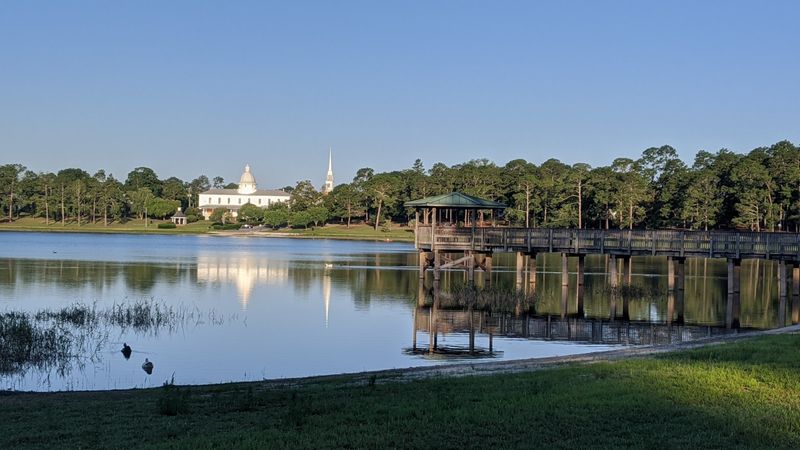
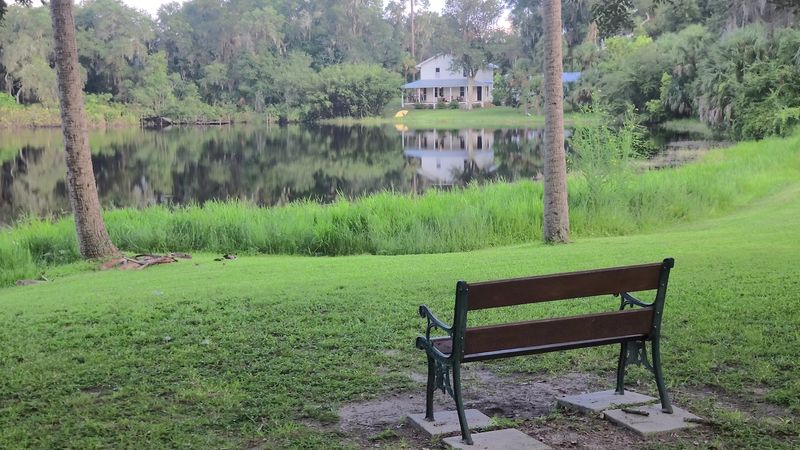
Lake De Funiak is one of only two naturally round lakes in the world, formed by an ancient sinkhole, and on a still morning its surface reflects the ring of Victorian homes surrounding it so clearly that the image doubles. That visual alone is worth the detour into the Florida Panhandle but the town around it has its own compelling story to tell.
In the 1880s, De Funiak Springs was chosen as the site of a Chautauqua Assembly a popular cultural retreat movement of the era that brought lectures, concerts, and educational programming to communities across the country. The Victorian homes built for that era’s visitors still line the lake, and the Chautauqua Hall of Brotherhood, one of the oldest continuously used auditoriums in Florida, still stands near the water.
Walking the lake loop on a weekday takes about 30 minutes and passes homes ranging from well-maintained to magnificently weathered. The town has a small downtown with a local diner and an independent bookshop.
It is not a place that tries to sell itself to you, which makes it oddly refreshing. The Panhandle’s best-kept secret is hiding in plain sight around a geometrically improbable lake.
Everglades City — Stone Crabs and Ten Thousand Islands
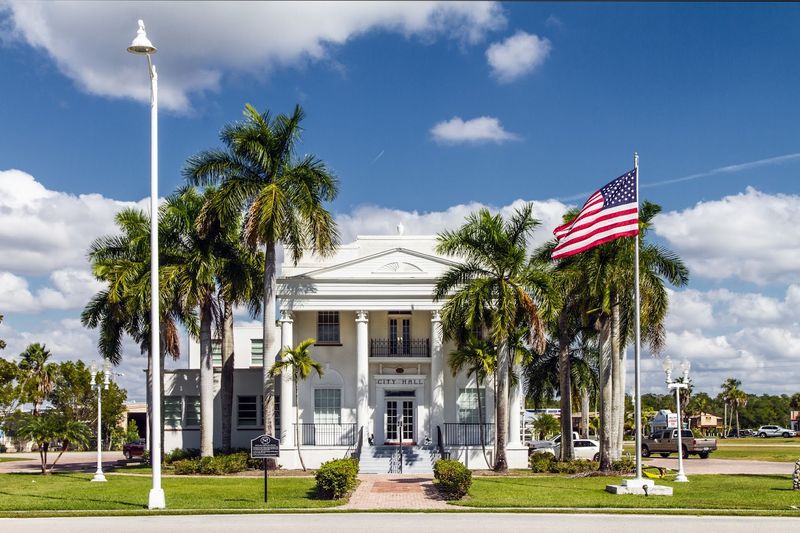
Everglades City sits at the southwestern edge of Florida, where the land breaks apart into a maze of mangrove islands, tidal channels, and shallow Gulf water known as the Ten Thousand Islands. The town itself is small and unpretentious a few streets, a couple of motels, some boat-rental outfitters, and restaurants that serve what the local fishermen pull from the water that morning.
Stone crab season runs October through May, and Everglades City is one of the best places in Florida to eat them fresh. The harvesting method is unusually sustainable: only the claws are removed from each crab, and the animal is returned to the water, where it regrows them over the following season.
Several local restaurants serve cracked claws the same day they come off the traps.
Kayaking into the Ten Thousand Islands is the area’s main draw for active visitors. The waterways are calm, the wildlife is extraordinary — roseate spoonbills, manatees, bottlenose dolphins, osprey and the sense of being genuinely remote sets in quickly even though you are never far from a navigable channel.
Half-day and full-day guided tours are available from outfitters in town year-round.
Tarpon Springs — Greek Sponge Divers on the Gulf Coast
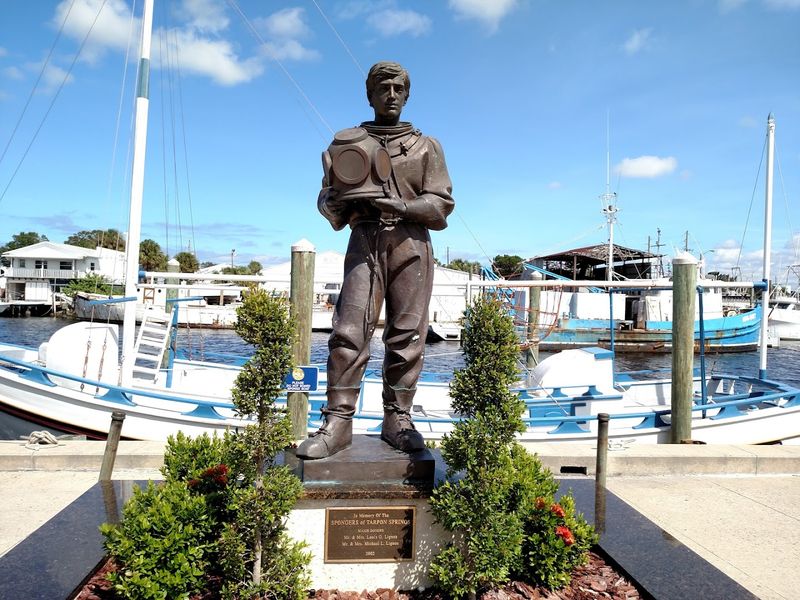
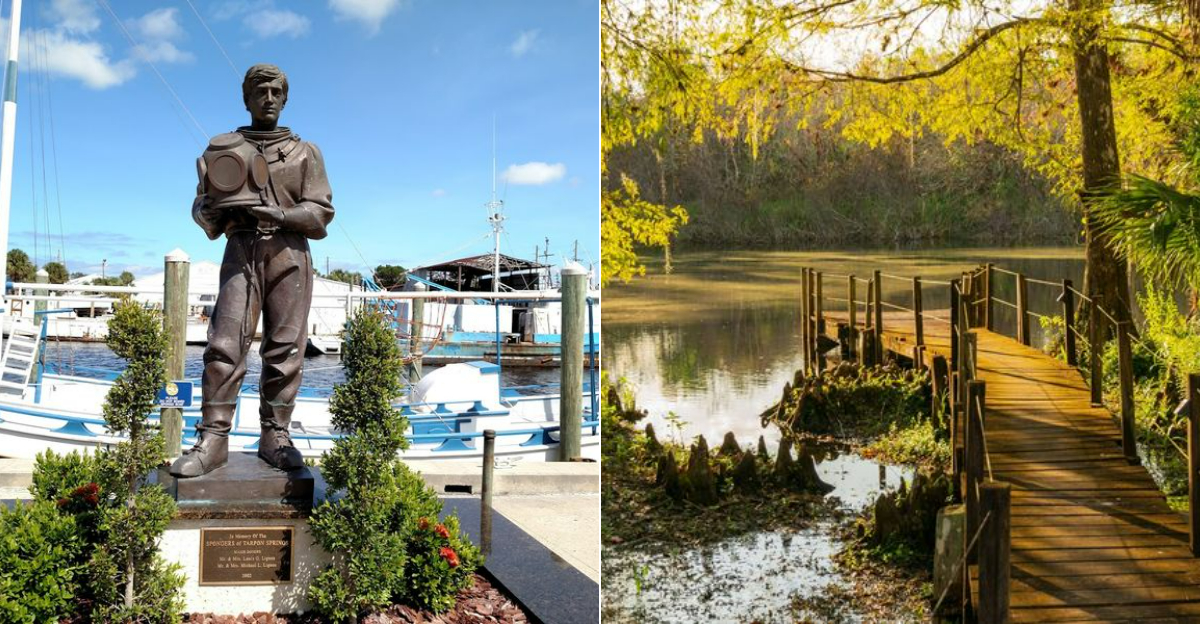
Around 1905, Greek immigrants from the Dodecanese islands arrived in Tarpon Springs and built a sponge-diving industry so productive that the town became the largest sponge port in the United States at its peak. More than a century later, the Greek community is still here and still fishing for sponges in the Gulf of Mexico using methods brought directly from the Aegean.
The Sponge Docks district along Dodecanese Boulevard is the cultural center of town, lined with sponge shops, Greek bakeries, and seafood restaurants serving spanakopita, baklava, and grilled octopus alongside the expected Florida seafood options. The Greek Orthodox Cathedral of Saint Nicholas, built in 1943, is stunning inside and open to visitors most mornings.
Linguists have actually studied Tarpon Springs as one of the most intact examples of traditional Greek dialect spoken outside of Greece the community’s relative isolation helped preserve a form of the language that has changed less than in many parts of Greece itself. Dive boats still run sponge-diving excursions from the docks.
The best time to visit is the Epiphany celebration in January, when the Greek Orthodox community holds its annual blessing of the waters one of the largest such ceremonies in the Western Hemisphere.
Chokoloskee Island — A Shell Mound at the Edge of the Everglades
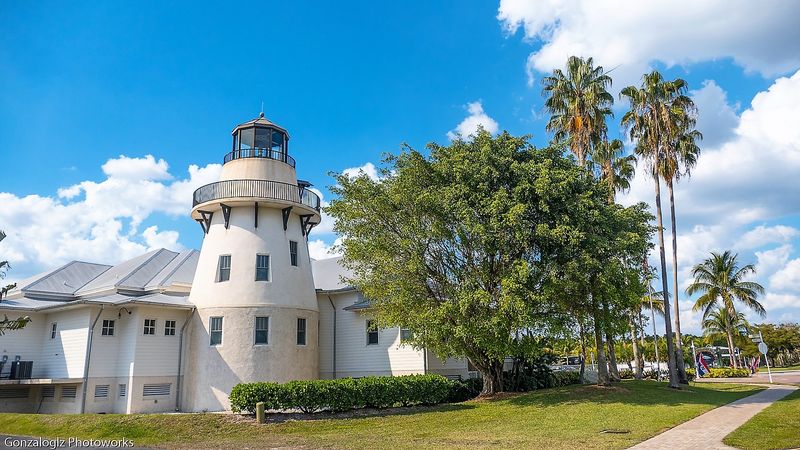
Chokoloskee sits at the absolute end of a long causeway in Southwest Florida, a small island of about 360 acres surrounded entirely by the Everglades. Getting there requires passing through Everglades City and continuing down a road that gradually makes clear there is nothing beyond it.
That sense of finality is part of the appeal.
The island itself is a Calusa shell midden meaning the ground underfoot is largely composed of shells deposited by the Calusa people over thousands of years of occupation. That accumulated shell base is why Chokoloskee rises higher than the surrounding marsh and why it stayed dry during hurricanes that flooded surrounding areas.
Walking the island’s perimeter, you are literally walking on the compressed remains of an ancient civilization’s daily meals.
For kayakers, Chokoloskee is a practical launching point for the Everglades Wilderness Waterway, a 99-mile backcountry paddling route through one of the most remote stretches of the American southeast. Even a short day paddle from the island’s boat ramp puts you deep into mangrove channels where the silence is total and the wildlife is extraordinary.
Outfitters in town rent kayaks and offer guided trips for all experience levels.