Most barbecue you’ve eaten has been lying to you. Not badly.
Not on purpose. But somewhere between the gas-assisted smokers, the bottled sauces, and the restaurants that use the word “pit” without actually having one — something got lost.
Alston Bridges Barbecue in Shelby, North Carolina has been doing it the right way since 1956. Hickory wood.
Cinder block pits. Pork shoulders cooked overnight.
No shortcuts. No reinvention.
Just the same method, the same smoke, the same tang of vinegar and tomato that earned this place a James Beard America’s Classics Award — and the loyalty of people who’ve been sitting in the same booth every week for 40 years. One plate here and you’ll start asking uncomfortable questions about everything you thought you knew about smoked meat.
That’s not a warning. That’s a recommendation.
A Pit That’s Been Burning Since 1956
Some restaurants hang a sign that says “established since” and hope nobody looks too closely. Alston Bridges Barbecue doesn’t need to fake it.
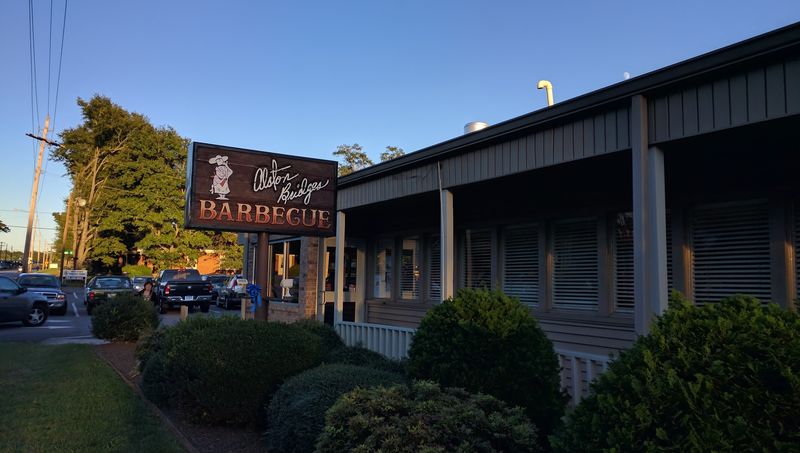
Since 1956, the same building at 620 E Grover St in Shelby has been putting smoke into the air, serving plates, and earning the kind of loyalty that gets passed down from grandparents to grandkids.
The James Beard Foundation gave it an America’s Classics Award in 2000 — a recognition reserved for restaurants that genuinely reflect the character of their community. That’s not a Yelp badge.
That’s the food world saying this place is irreplaceable.
Walk through the door and the smell hits you immediately. Decades of hickory smoke have soaked into the walls, the booths, and the ceiling tiles.
You can’t fake that kind of history. You either earn it over 60-plus years of showing up and doing it right, or you don’t have it at all.
Alston Bridges has it in spades.
Lexington Style — The Barbecue Tradition That Sets This Region Apart
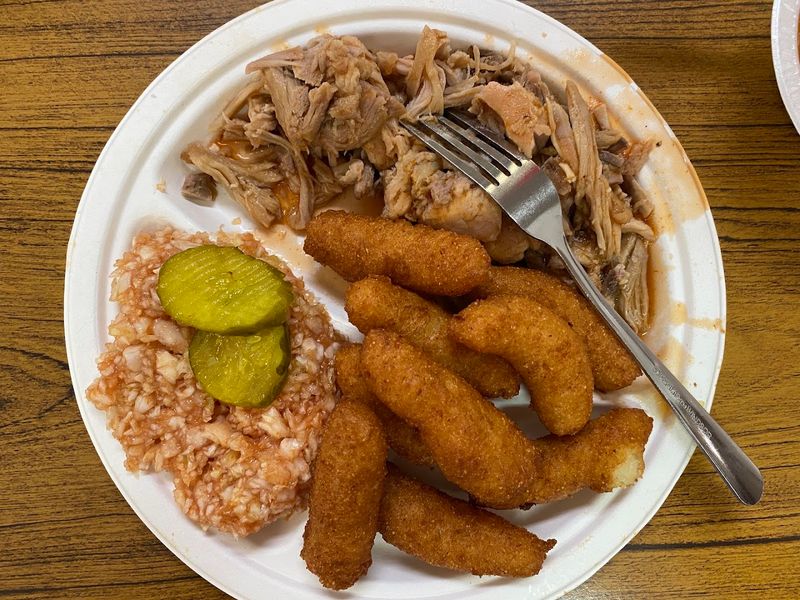
North Carolina barbecue isn’t one single thing, and that surprises a lot of visitors. The eastern part of the state cooks the whole hog and douses it in a thin, pure vinegar sauce.
But Shelby sits in the Piedmont region, where the Lexington style rules: pork shoulder only, cooked long and slow over hardwood, finished with a sauce that blends tomato and vinegar together.
That combination makes it tangier than Kansas City, less sugary than Memphis, and smokier than almost anything you’d find in a chain restaurant. It’s a style with real roots and real rules, and Alston Bridges is one of the most faithful examples still operating today.
First-timers sometimes expect something sweeter or saucier. What they get instead is pork that tastes like the wood it was cooked over, with a sauce that sharpens the flavor rather than hiding it.
Once you understand what Lexington style is actually trying to do, it clicks — and it’s hard to go back.
The Hickory Wood Pit — No Gas, No Shortcuts, No Apologies
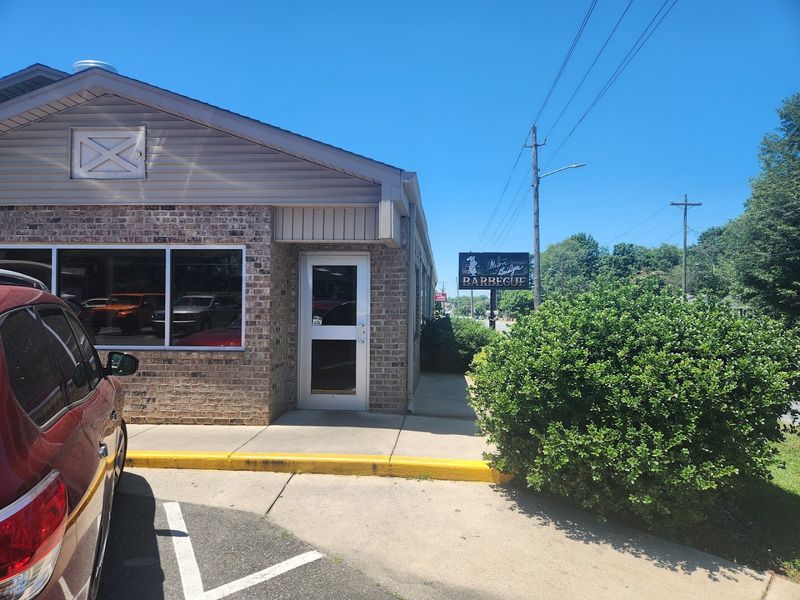
Behind the restaurant, there’s a cinder block pit. No gas assist.
No pellet smoker. No digital temperature controller.
Just hickory wood, fire, and time — the same combination that has been producing the food at Alston Bridges since the Eisenhower administration.
Pork shoulders go on overnight and come off when they’re ready. That window is roughly 12 to 14 hours, depending on the fire and the meat.
Residents a few blocks away in Shelby have mentioned they can smell it on still mornings before they even get out of bed. That’s not a marketing story.
That’s just what real wood smoke does when it’s been going since midnight.
A lot of modern barbecue spots use wood as a flavor accent while relying on gas to do the actual cooking. There’s nothing wrong with that approach if the results are good.
But there’s something categorically different about a pit that runs on wood alone — the flavor, the texture, and the char on the outside pieces all reflect it.
What to Order — The Plate, the Slaw, and the Outside Pieces
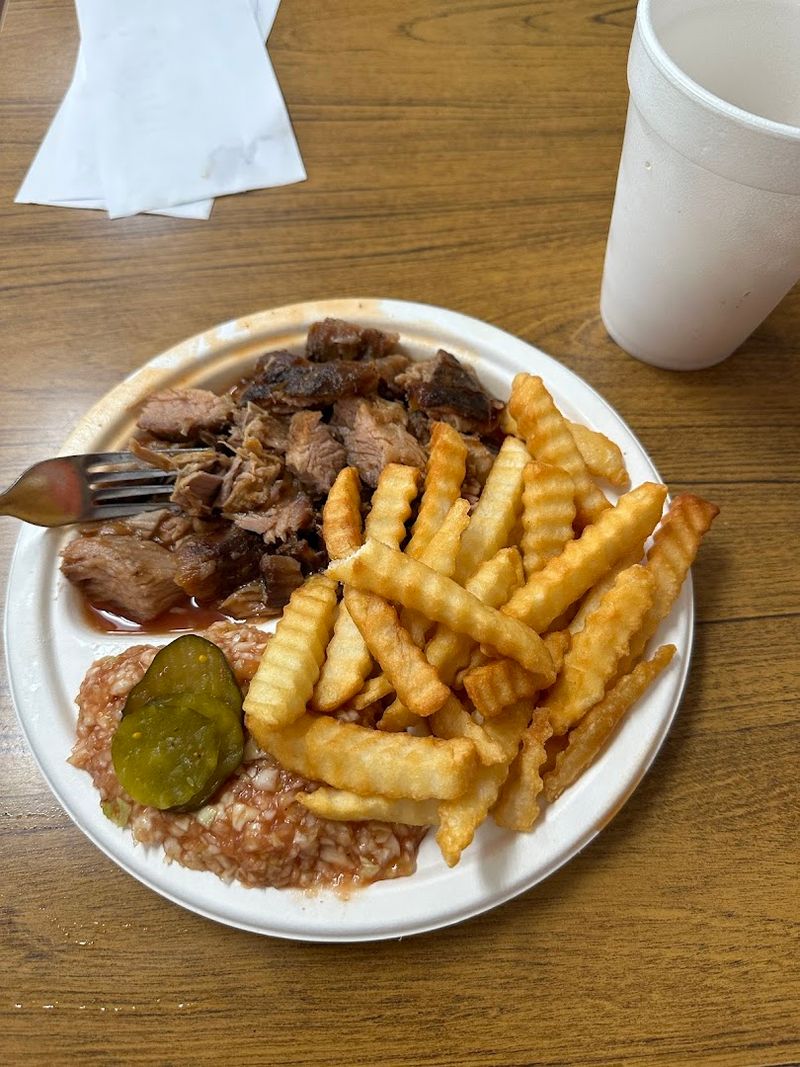
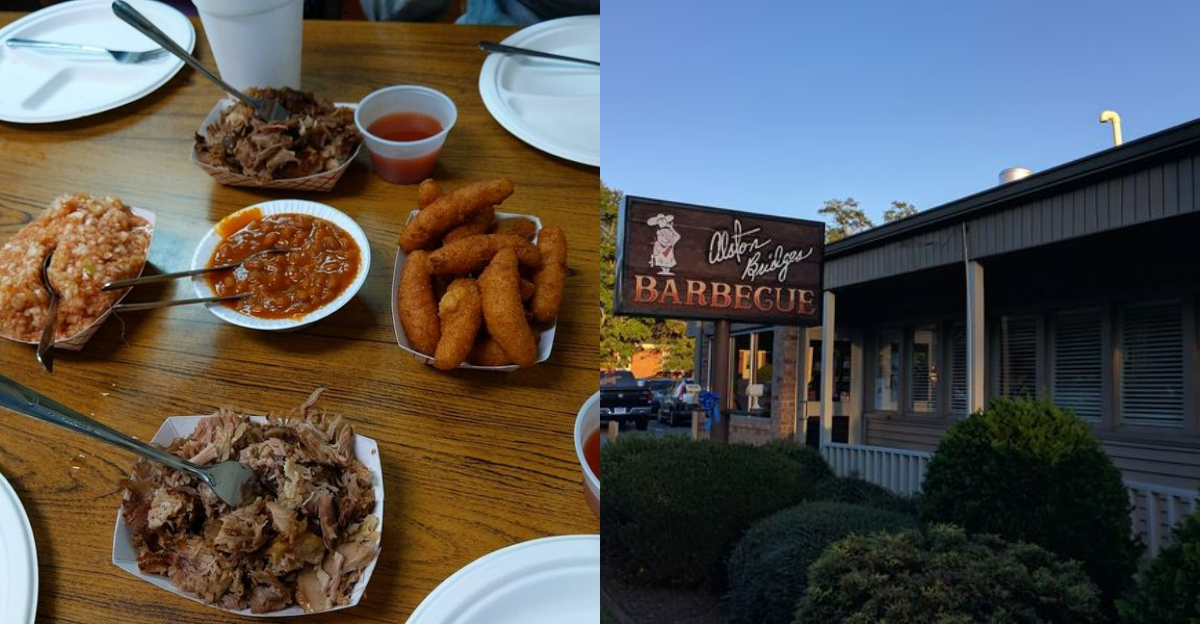
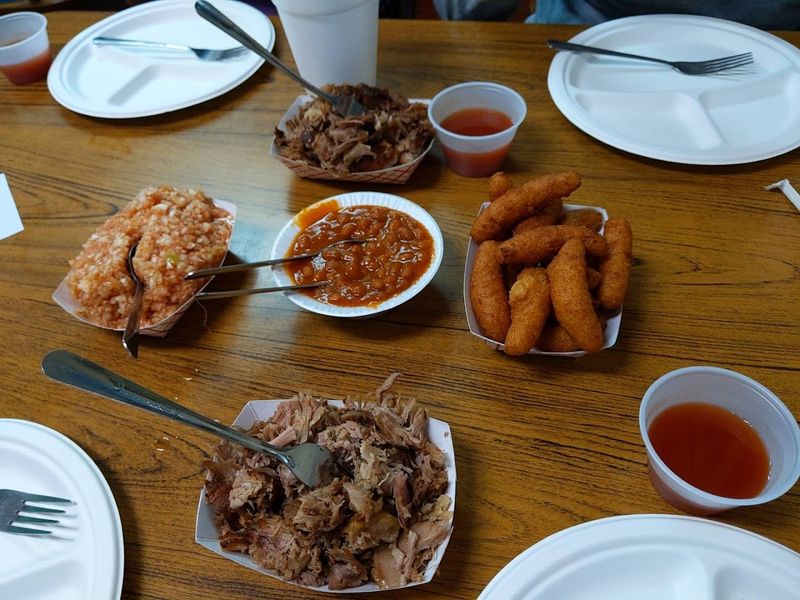
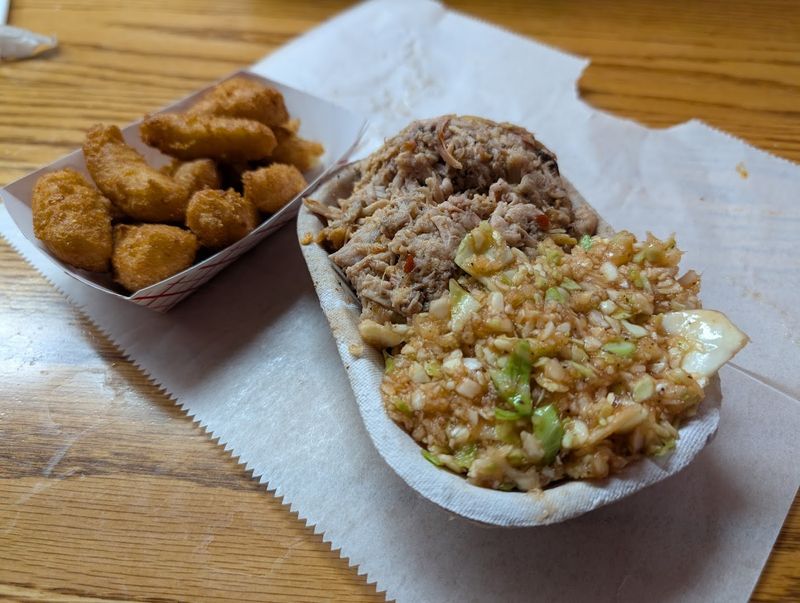
The menu at Alston Bridges is short on purpose. A barbecue plate means chopped or sliced pork, coleslaw, hush puppies, and a choice of sides.
Simple. Focused.
No distractions.
Here’s the move that regulars swear by: ask for the outside pieces mixed into your chopped pork. Those are the darker, crispier bits from the edges of the shoulder — where the smoke and the heat have done the most work.
They add texture and an intensity of flavor that the inner meat alone doesn’t quite match. It’s the kind of thing you’d only know to ask for if someone told you.
Order the barbecue slaw, not a creamy white coleslaw. In Lexington-style tradition, the slaw is made with the same vinegar-tomato sauce as the meat — thinner, tangier, and built to eat alongside the pork rather than separately.
Plates come garnished with dill pickle slices, a small touch that cuts through the richness. First-timers often raise an eyebrow at the pickles.
Most of them eat every one.
The Dining Room — Booths, Fluorescent Lights, and Zero Pretense
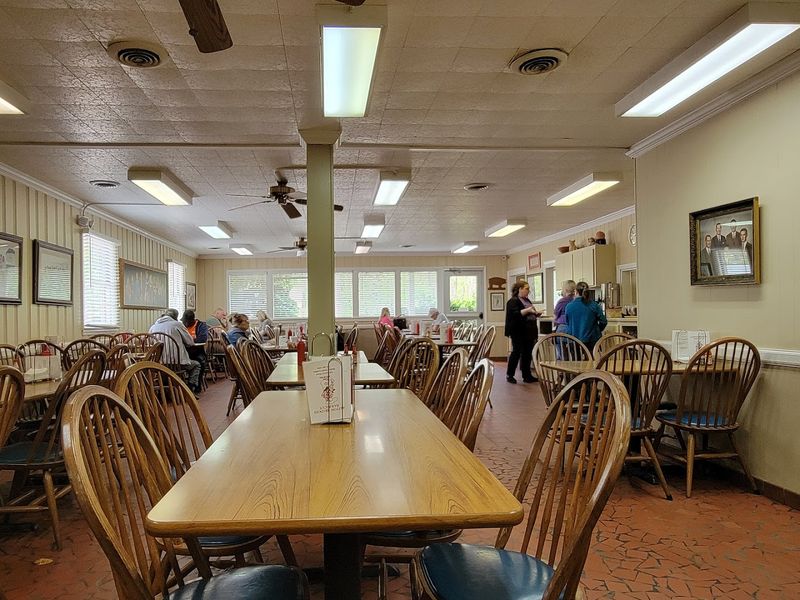
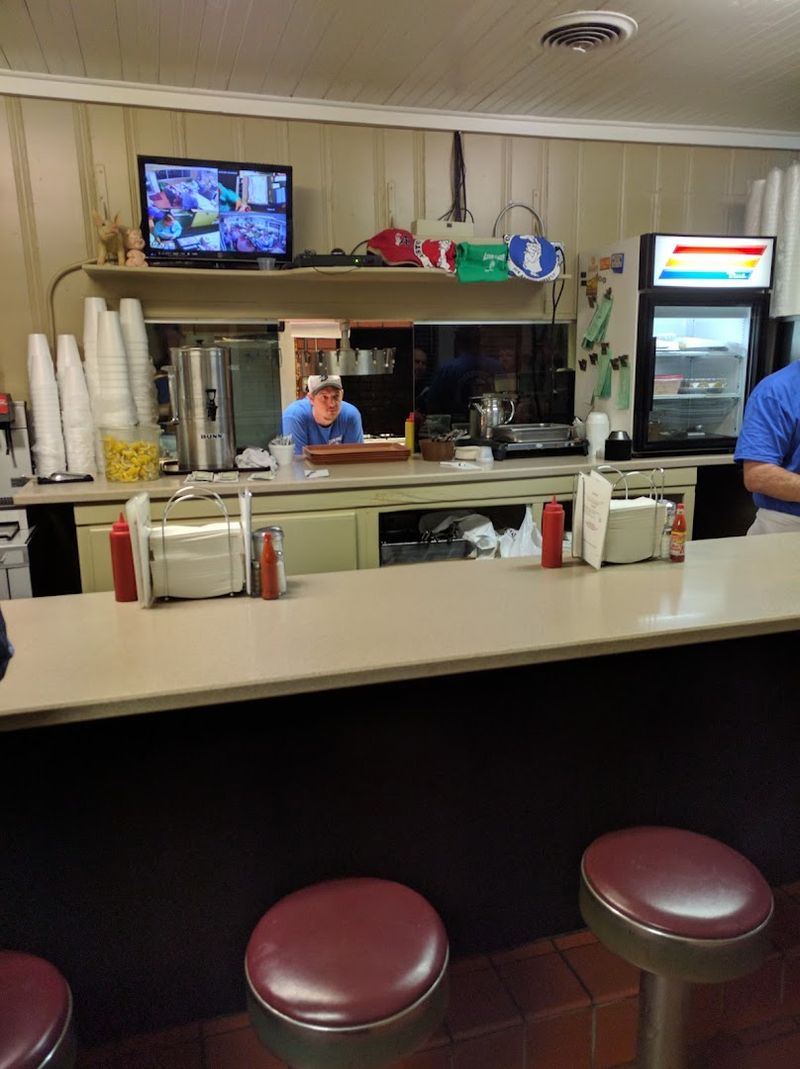
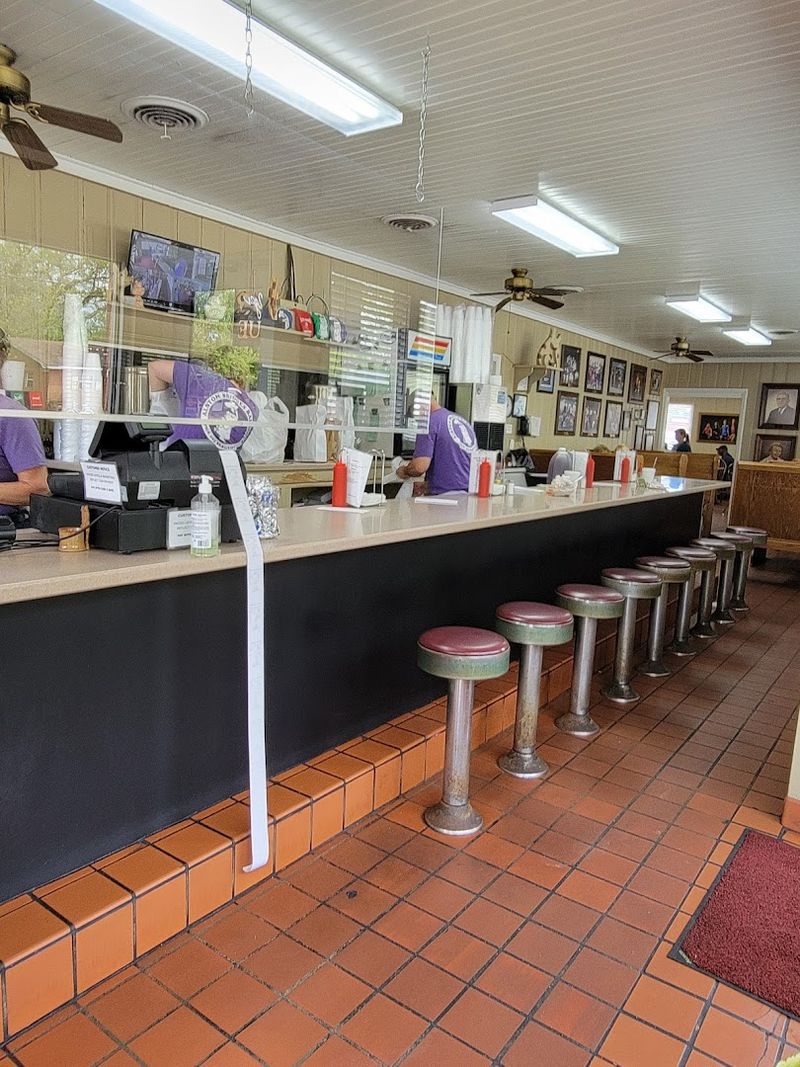
Nobody walks into Alston Bridges expecting a design moment. The dining room looks exactly like a barbecue joint that opened in 1956 and never once felt the urge to renovate.
Wooden booths. Fluorescent overhead lights.
Paper napkins in a metal holder on the table. The kind of room that tells you immediately where the priorities are.
Some first-time visitors find it underwhelming. The regulars find it refreshing.
When there’s nothing on the walls competing for your attention, you focus on the food — which is exactly the point. A few of those regulars have been coming in weekly for 30 or 40 years, sitting in the same booth, ordering the same plate, and leaving satisfied every single time.
There’s a word for what this room is, and that word is honest. It doesn’t try to be something it isn’t.
The seating is cozy, the booths are comfortable enough, and the staff is genuinely friendly. Customers consistently mention the service as a highlight, even in reviews where the food gets mixed marks.
The Family Behind the Smoke — Three Generations of Commitment
Alston Bridges started the restaurant. His family kept it going — and has been running it ever since without interruption.
That kind of generational handoff sounds simple, but in the restaurant industry, it’s genuinely rare. Barbecue pits go cold all the time.
Recipes get sold. Methods get modernized until the original is unrecognizable.
At Alston Bridges, the wood stayed hickory. The pit stayed cinder block.
The method stayed overnight. The James Beard Foundation specifically cited that long-term dedication when naming it an American Classic — a restaurant that reflects the soul of its community rather than chasing trends or outside recognition.
Running a family restaurant for multiple decades means absorbing every hard year alongside every good one. It means showing up even when the easier path would be to sell or close.
The fact that the family has done that continuously since 1956 says something that no award or review can fully capture. It’s a form of stubbornness that, in this case, the whole town benefits from.
Shelby, North Carolina — The Town That Built This Restaurant
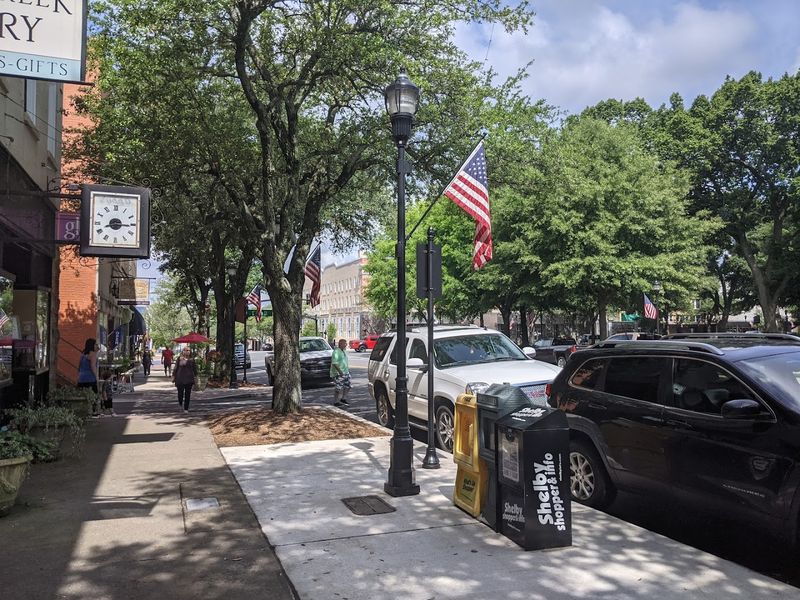
Shelby is a city of about 20,000 people in Cleveland County, sitting at the foot of the Blue Ridge Mountains roughly an hour west of Charlotte. Most people driving through on U.S.
Route 74 don’t stop. That’s a consistent mistake.
Downtown Shelby has a compact, walkable core with independent shops, a used bookstore, a local coffee roaster, and a handful of diners. It also happens to be the birthplace of Earl Scruggs, the banjo player who helped define the sound of bluegrass music.
There’s a small museum in town dedicated to his life and legacy, and it’s free to enter — a detail worth knowing if you’re building a full day around the trip.
Alston Bridges isn’t some transplanted destination that could exist anywhere. It grew out of this specific place, this specific community, and the specific food traditions of the Piedmont region.
Understanding Shelby a little helps you understand why the restaurant is the way it is — and why that’s worth something beyond just a good meal.
When to Go — Timing Your Visit So You Don’t Miss Out
Alston Bridges operates Monday through Friday, opening at 10:45 AM. They close at 7 PM — or when the meat runs out, whichever comes first.
And the meat does run out. Some busy days, certain cuts are gone before 2 PM.
That’s not a gimmick designed to create urgency. It’s what happens when a restaurant makes a fixed quantity of food the right way and refuses to stretch it further than it should go.
The smartest move is arriving close to opening time. Show up around 11 AM and you’ll have your pick of the menu, an easy booth, and the full experience without the midday rush.
Show up at 1:30 PM and you might be ordering around whatever’s left.
Saturday and Sunday are closed. That’s worth double-checking before you make the drive.
A few reviewers have mentioned arriving late and being turned away when the kitchen ran out — a frustrating experience that’s entirely avoidable with a quick call to +1 704-482-1998 before you head out.
The Hush Puppies — The Side Dish That Steals the Whole Show
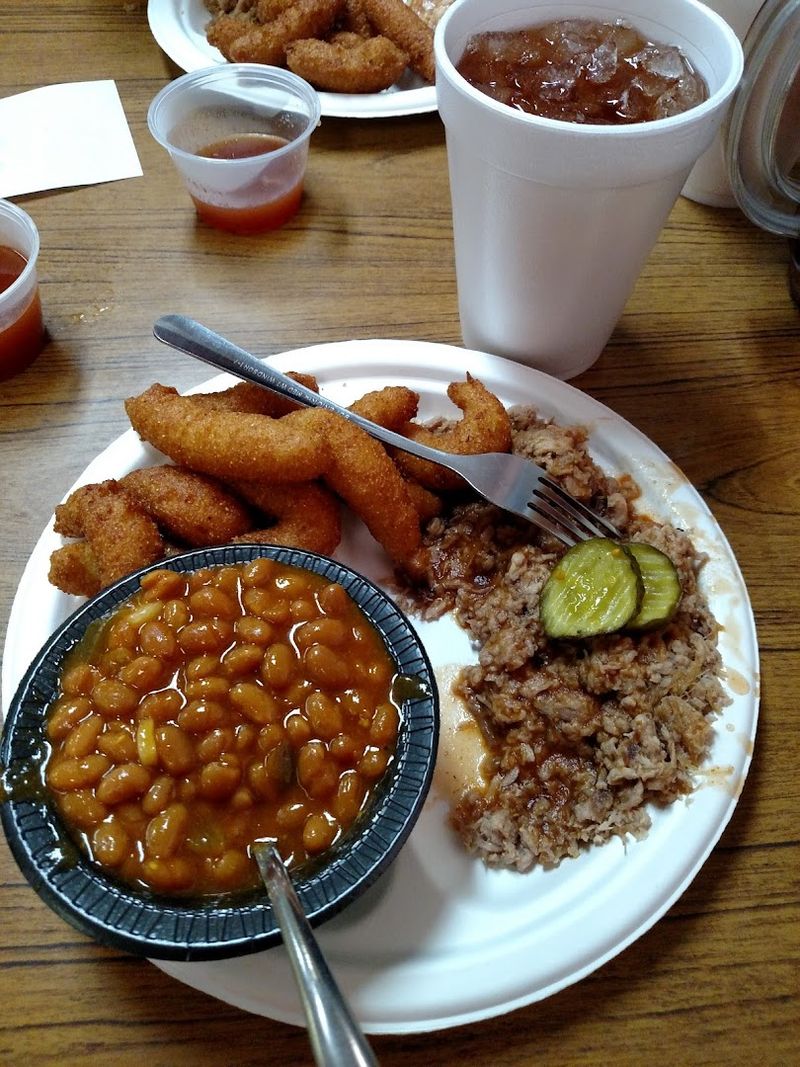
Ask ten different reviewers what the single best thing at Alston Bridges is, and a surprising number of them will say the hush puppies — not the pork. That’s not a knock on the barbecue.
It’s a testament to how seriously this kitchen takes what most places treat as an afterthought.
The hush puppies at Alston Bridges come out golden-brown, crispy on the outside, and soft enough inside to pull apart without effort. Multiple reviewers across years of visits have called them the best they’ve ever had — one person even said they were “the best in the entire country.” That’s a bold claim for a side dish, but it keeps coming up too consistently to ignore.
Hush puppies are simple food: cornmeal batter, fried until done. The difference between a forgettable one and a memorable one comes down to oil temperature, batter ratio, and timing.
Whoever is running the fryer at Alston Bridges has clearly been paying attention to all three. Order them.
Don’t share unless you have to.
The Sauce Question — Vinegar, Tomato, and Why It Works
The sauce at Alston Bridges is thin. Noticeably thin.
If you’re expecting something thick, glossy, and sweet, you’re going to be caught off guard — and that reaction tells you something useful about your own barbecue expectations.
Lexington-style sauce blends vinegar and tomato into something that’s meant to season the meat, not smother it. You add it yourself, a little at a time, and let it cut through the fat and smoke rather than coating everything in sweetness.
Some reviewers have called it watery. Others have called it exactly right.
Both reactions are honest, and both reflect how different this style is from what most people grew up eating.
The same sauce base goes into the red slaw — that’s what makes the slaw taste like it belongs on the same plate as the pork rather than beside it. First-timers who come in expecting Kansas City or Memphis flavors sometimes leave underwhelmed.
First-timers who come in curious and open-minded often leave converted. The sauce rewards the second approach far more generously.
How Alston Bridges Fits Into the Larger North Carolina BBQ Conversation
Western North Carolina has serious barbecue competition. Lexington Barbecue — often called the Honey Monk — sits about 45 minutes northeast of Shelby and is probably the most well-known Lexington-style restaurant in the state.
Both places are worth visiting, and comparing them is part of the fun. But they’re not the same experience.
Alston Bridges is smaller, quieter, and less trafficked by food tourists. It doesn’t show up on as many “best of” lists, and the dining room doesn’t feel curated for Instagram.
What it offers instead is something harder to manufacture: the feeling of eating in a place that exists for its community first and for visitors second.
Other strong North Carolina barbecue spots — Skylight Inn in Ayden, Prime Barbecue in Knightdale, The Pit in Raleigh — each represent different regional traditions and styles. Visiting more than one gives you a fuller picture of how seriously this state takes its smoke.
But if you’re building that kind of barbecue road trip, Alston Bridges belongs on the list early, not as an afterthought.