
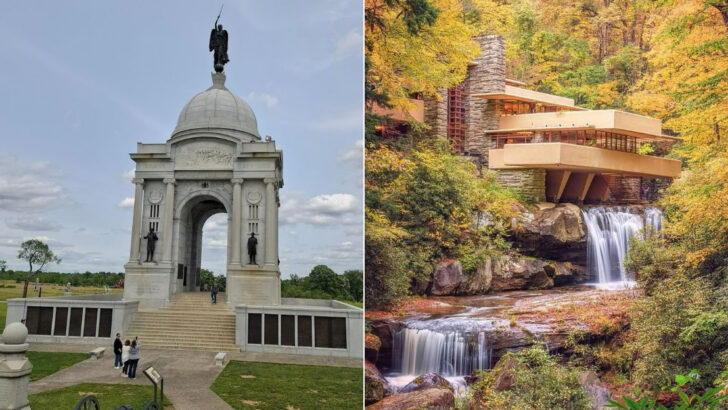
Pennsylvania is bigger than you think and most people only see a thin slice of it. The Turnpike.
Philadelphia. Pittsburgh.
Maybe Gettysburg if they planned ahead. That’s the version of the state most visitors get, and it’s fine.
It’s just not the whole story. The whole story involves a town that’s been on fire underground since 1962.
A prison that changed how America thought about punishment. A gorge that drops 1,000 feet through the Allegheny Plateau.
A railroad that has been running steam locomotives continuously since 1832. None of these are difficult to reach.
None of them require a guide, a reservation, or a reason beyond simple curiosity. Pennsylvania in 2026 rewards the people willing to take the exit they weren’t planning on.
These 14 stops are a good place to start.
Centralia — The Town That’s Been on Fire Since 1962
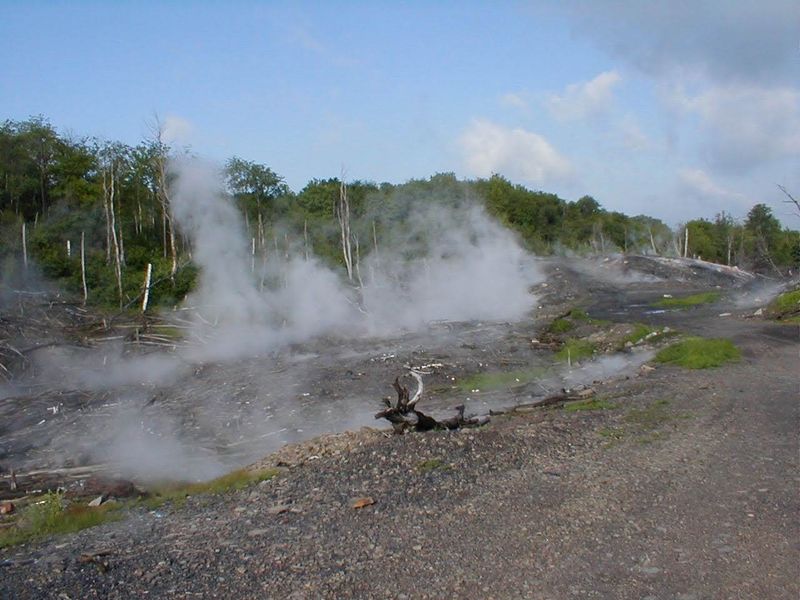
Somewhere beneath the quiet, overgrown lots of Centralia, Pennsylvania, a coal seam has been burning since 1962 — and it shows no sign of stopping anytime soon. At its peak, this Columbia County borough had around 1,000 residents.
Today, fewer than five people remain on official record.
Walking through Centralia feels genuinely surreal. Street signs still stand, fire hydrants dot the curbs, and the old road grid is still visible — but the houses are gone, replaced by tall grass and young trees.
Steam vents from cracks in the pavement along Odd Fellows Road, where the asphalt has buckled and split from the heat churning below.
This is not a theme park or a haunted attraction. It is a real place where something went catastrophically wrong, and that wrongness has been unfolding slowly for over six decades.
Visiting requires no admission fee and no tour group. Just show up, walk carefully, and let the strangeness of it settle over you.
Fallingwater — Frank Lloyd Wright’s Most Famous House, Still Earning It
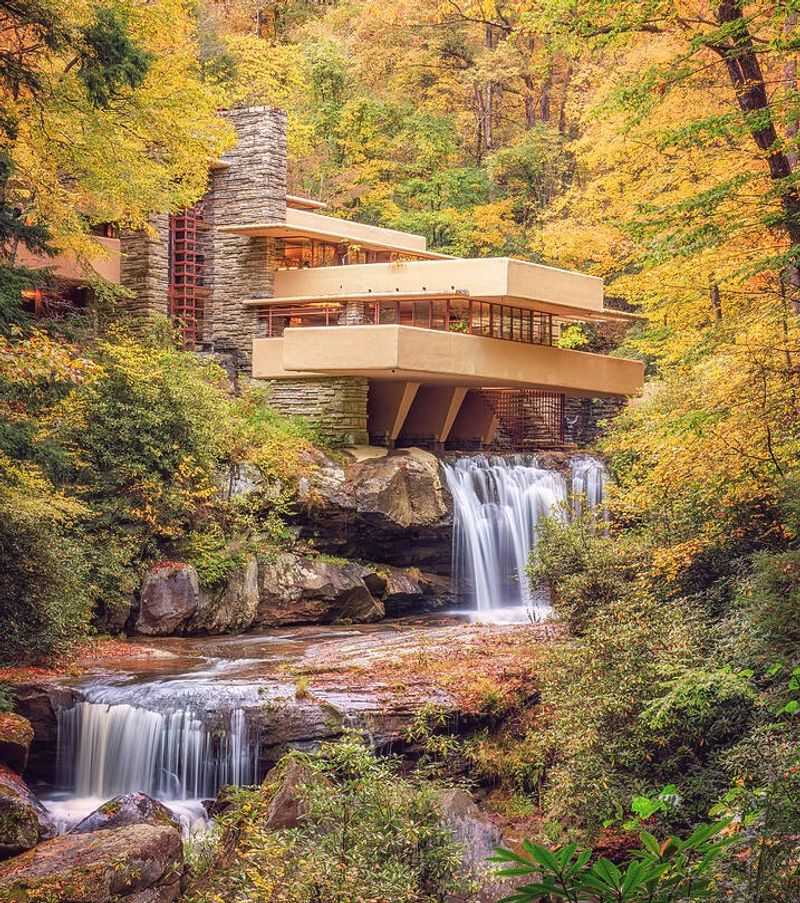
Built directly over a waterfall in 1939, Fallingwater is probably the most photographed private home in American architecture — and seeing it in person explains why photographs never quite capture it. The house extends out over Bear Run on a series of cantilevered concrete terraces that make the structure appear to float above the water.
Tours run daily and book up weeks in advance, especially in fall when the surrounding Laurel Highlands forest turns full color. The guided interior tour covers the original furniture, the built-in bookshelves, and — most memorably — the hatch in the living room floor that opens directly to the stream below.
That last detail tends to stop visitors mid-sentence.
Frank Lloyd Wright designed this as a weekend home for the Kaufmann family, and the genius of it is how naturally it sits in its setting, as if the building grew from the rock rather than being placed on it. Budget at least three hours for the full experience, and book your tickets well ahead of your visit date.
Ohiopyle State Park — Where the Youghiogheny River Does All the Work
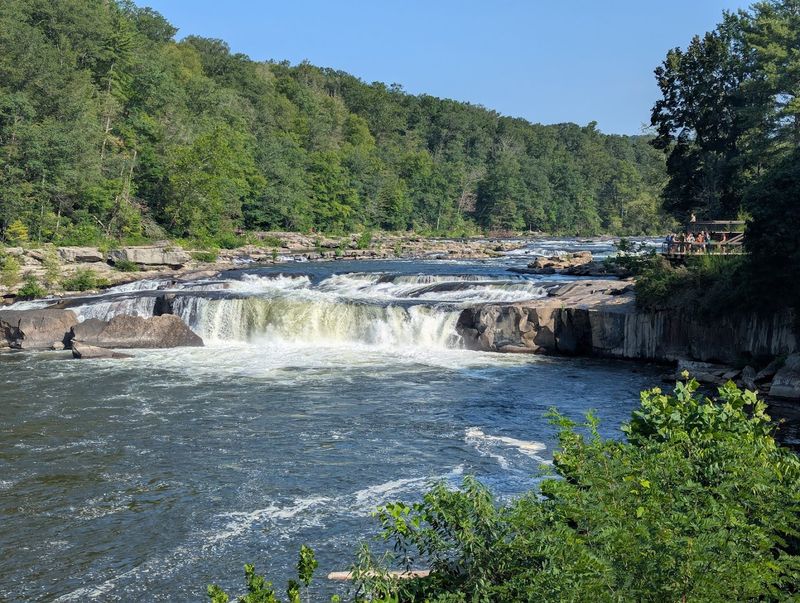
Ohiopyle sits in Fayette County in southwestern Pennsylvania, built around a stretch of the Youghiogheny River that drops nearly 20 feet per mile through a steep forested gorge. The river is the main event here — whitewater rafting, kayaking, and tubing through the Lower Yough’s Class III and IV rapids draw visitors from across the mid-Atlantic every summer.
Beyond the river, the park has 80 miles of trails, including sections of the Great Allegheny Passage rail trail connecting Pittsburgh to Cumberland, Maryland. Ohiopyle Falls sits right in town, just a short walk down a paved path.
The natural water slides — smooth flat rock formations where the current pushes you downstream — are free to use and genuinely fun for all ages.
The town of Ohiopyle itself is tiny: a few outfitter shops, a small restaurant, and a former train depot converted into a visitors center. If you plan to raft, book a guided trip with one of the licensed outfitters weeks in advance, especially for summer weekends.
The gorge fills up fast.
Jim Thorpe — A Victorian Mountain Town With a Name That Needs Explaining
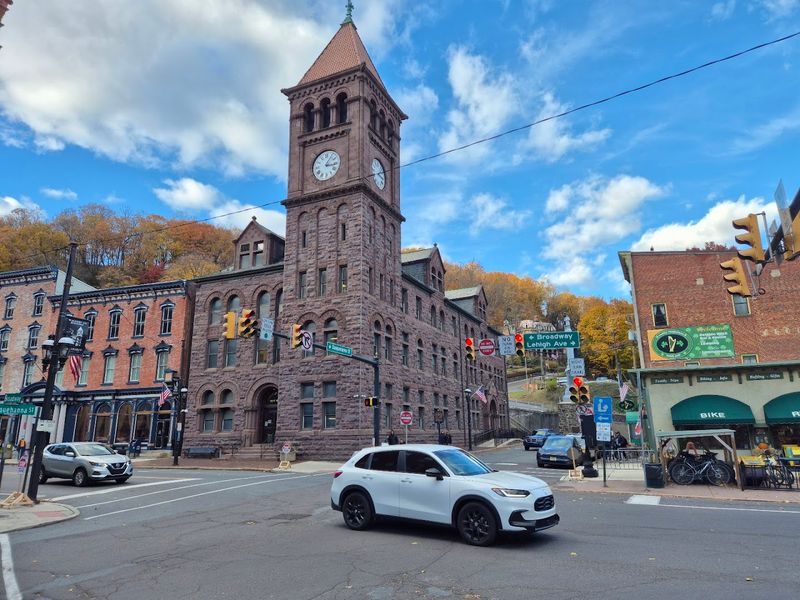
The town of Jim Thorpe in Carbon County sits in a sharp river valley in the Pocono Mountains, and its name comes with a story that is equal parts fascinating and ethically complicated. Originally called Mauch Chunk, the borough renamed itself in 1954 after the legendary Native American athlete Jim Thorpe — widely considered one of the greatest athletes of the 20th century — in a deal with his widow that brought his remains to the town, despite the fact that Jim Thorpe himself had no known connection to Pennsylvania.
The legal and ethical questions around that arrangement remain unresolved. What is not in question is that the town itself is genuinely worth a visit.
Victorian-era architecture lines steep streets filled with independent shops, good restaurants, and a historic hotel. The Carbon County Courthouse, built in 1893, is one of the most ornate public buildings in the entire state.
Hiking trails climb into the surrounding ridges, and the town is a popular base for exploring the Lehigh Gorge State Park nearby. Fall weekends here are especially lively, so plan accordingly if crowds are not your thing.
Gettysburg — Not Just a Battlefield, a Town Living Alongside Its Own History
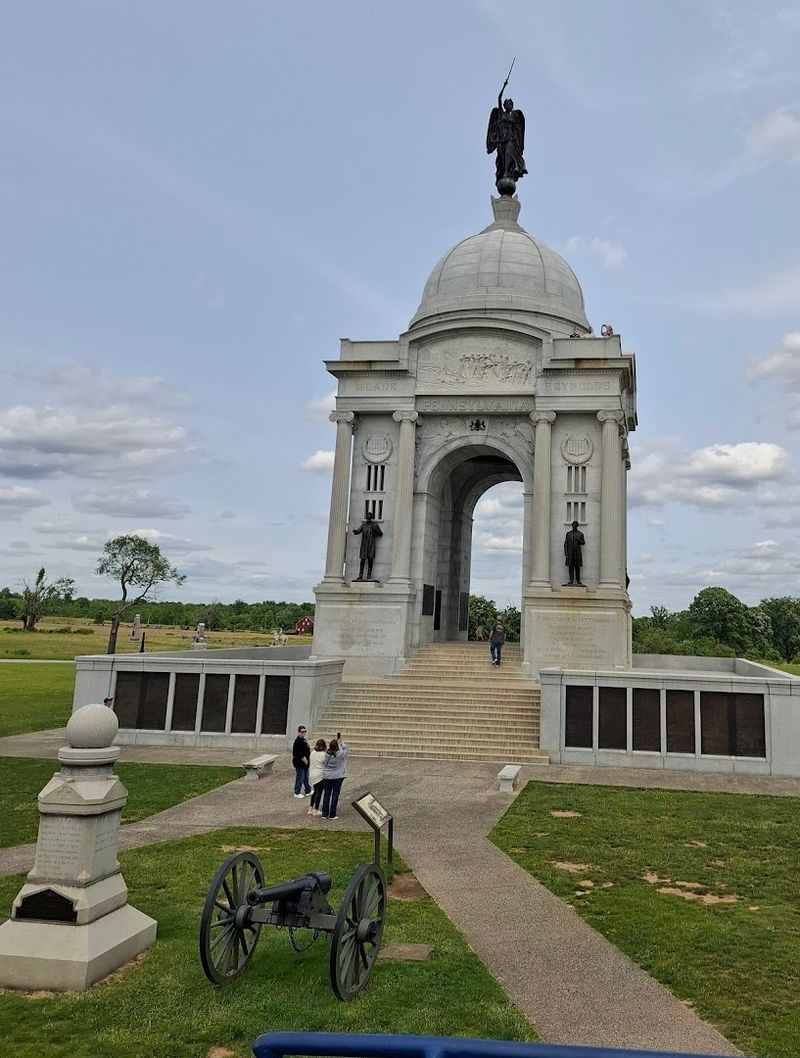
Over three days in July 1863, roughly 51,000 soldiers were killed, wounded, or went missing at Gettysburg — and today, about 8,000 people live right alongside that history in Adams County. The battlefield, managed by the National Park Service, covers 6,000 acres and takes about three hours to tour by car.
But the town square is worth spending real time in too. Independent bookshops, a local brewery, a few solid restaurants, and the Gettysburg Hotel — operating since 1797 — give the area a lived-in feel that balances out the weight of what surrounds it.
Sitting on the hotel’s front porch and watching visitors come and go is oddly grounding.
The Soldiers’ National Cemetery, where Lincoln delivered the Gettysburg Address in November 1863, is a short walk from the main square and free to enter. The history here is heavy, and it should be — but Gettysburg handles that weight honestly.
Rangers at the visitors center are exceptionally knowledgeable and worth talking to before you head out onto the fields.
Hawk Mountain Sanctuary — A Ridgeline Built for Watching
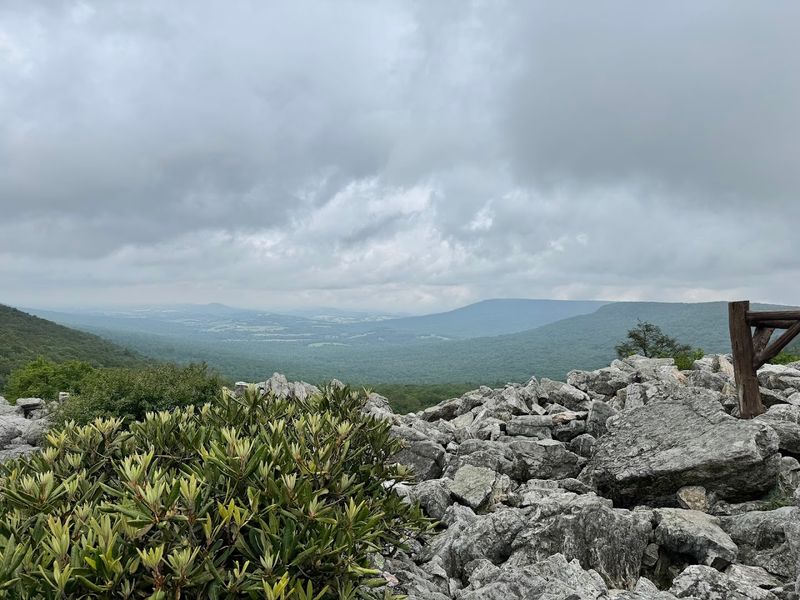
Every fall, thousands of raptors funnel past a rocky ridge in Berks County, Pennsylvania — and Hawk Mountain Sanctuary has been the best seat in the house since 1934. On peak migration days in September and October, broad-winged hawks, sharp-shinned hawks, Cooper’s hawks, and bald eagles ride the ridge’s updrafts south by the thousands, sometimes passing the North Lookout in a single afternoon.
The sanctuary was founded specifically to protect these birds at a time when hunters were shooting them in large numbers from this very ridge. That history adds a layer to the visit that sticks with you.
The hike to the North Lookout is about a mile and a half with some rocky scrambling, but it is manageable for most visitors and well worth the effort.
Bring binoculars — the difference between seeing a distant speck and a red-tailed hawk in sharp detail is the difference between a pleasant walk and something you will talk about for years. Admission is charged, and the sanctuary’s naturalists are on hand at the lookout to help identify species as they pass.
Presque Isle State Park — A Moving Sandbar on Lake Erie
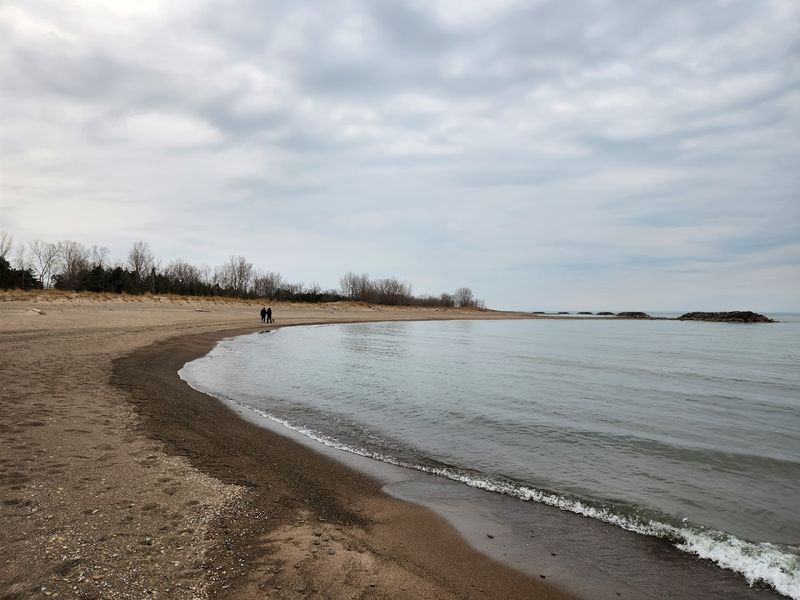
Presque Isle is a curved peninsula of sand extending into Lake Erie near Erie, Pennsylvania — and unlike most parks, it is literally moving. Wave action reshapes the peninsula every single year, and the U.S.
Army Corps of Engineers regularly dredges and rebuilds sections to keep it from washing away entirely. That constant change is part of what makes it interesting.
The park has 13 different beaches, calm lagoon-side water perfect for kayaking and paddleboarding, and a lighthouse that has operated since 1873. Sunsets from the western tip of the peninsula rank among the best in the state, with an unobstructed view across the open lake.
Over 300 bird species have been recorded here, making it a serious stopover point during migration season.
Admission to the park is free, it is open year-round, and it sits right next to the city of Erie — making it an easy add-on to any trip to the region. Parking fills up on summer weekends, so arriving early in the morning pays off.
The lagoon side is especially calm and family-friendly for young kids.
Ricketts Glen State Park — 22 Named Waterfalls and a Trail That Connects Them
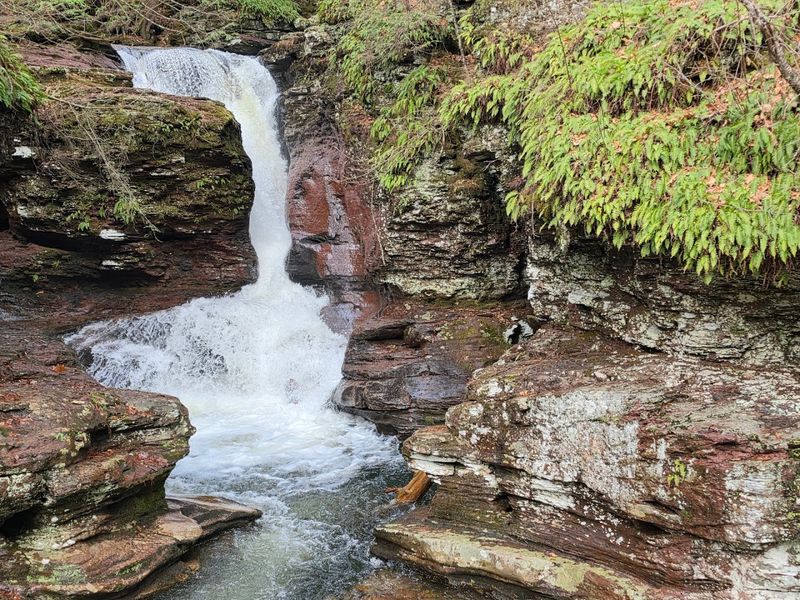
Most hikes end at a waterfall. The Falls Trail at Ricketts Glen passes 22 of them.
Stretching 7.2 miles through Luzerne, Sullivan, and Columbia counties, this loop descends into two separate stream gorges and climbs back out, connecting a sequence of named waterfalls through old-growth hemlock and sugar maple forest. The tallest drops 94 feet.
The trail is rated difficult — steep descents, wooden staircases built into the gorge walls, and slippery rocks near the water. It is not recommended in icy conditions, and that warning should be taken seriously.
The reward for doing it right is a sustained stretch of forest that has never been logged, with trees over 500 years old standing along the creek banks.
The park also has a lake with a swimming beach, campsites, and cabins — making it worth staying a full weekend rather than cramming it into a day trip. If you only have time for part of the Falls Trail, the upper section near the parking area offers some of the most dramatic waterfalls with a shorter commitment.
Either way, wear waterproof boots.
Meadowcroft Rockshelter — One of the Oldest Human Sites in North America
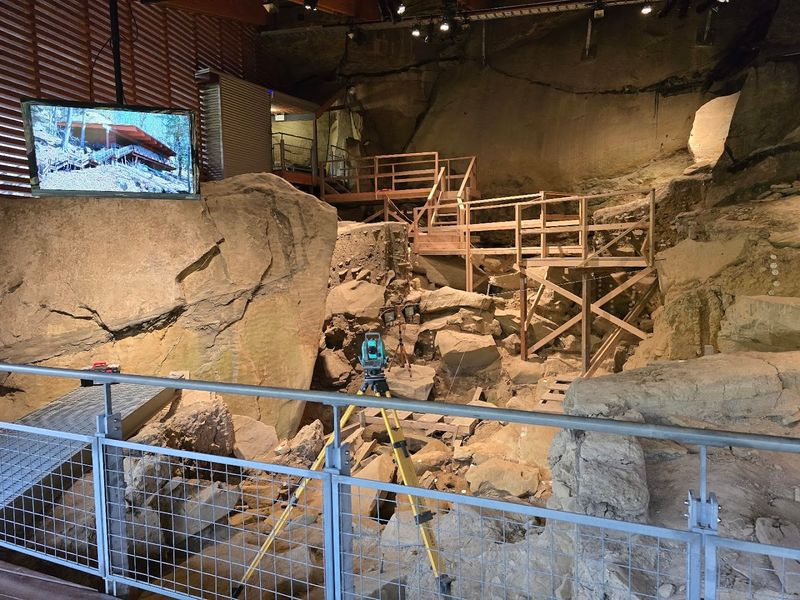
About 16,000 years ago, people were camping under a rocky overhang in what is now Washington County, Pennsylvania. That is the conclusion drawn from decades of careful archaeological work at Meadowcroft Rockshelter — one of the earliest known sites of human occupation in all of North America, and one of the most underappreciated historic sites in the country.
The site is now part of a museum complex that lets visitors walk through the actual shelter under a protective roof, see the excavated layers still in place, and follow the story of how researchers uncovered and dated the materials found there. The adjacent outdoor museum includes reconstructed 16th-century Native American structures and early European frontier buildings, which give the timeline a broader context.
For anyone interested in American prehistory, this place deserves far more attention than it gets. The fact that it does not show up on most Pennsylvania travel lists is genuinely puzzling given what has been found here.
Guided tours are available and highly recommended — the site makes a lot more sense with someone explaining what you are actually looking at beneath your feet.
Longwood Gardens — 1,083 Acres That Take Horticulture Seriously
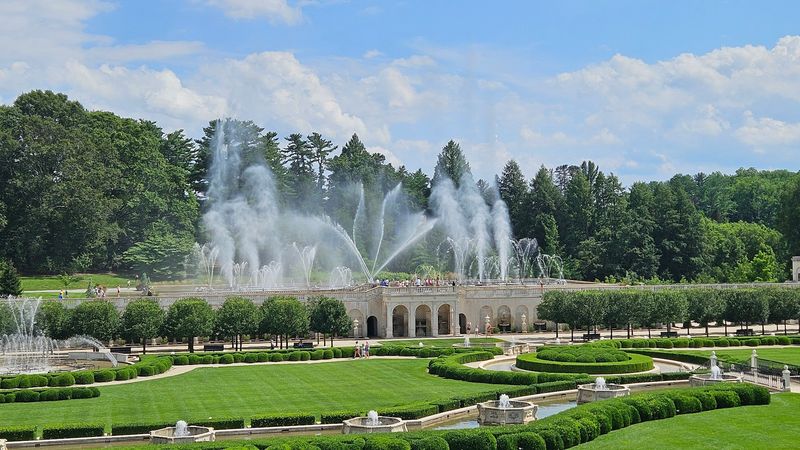
Pierre S. du Pont started developing Longwood Gardens in 1906 on land that Quaker farmers had worked since the late 1700s — and what he built over the following decades became one of the most extensively maintained botanical gardens in the United States. The numbers are staggering: over 1,000 acres of outdoor gardens, meadows, and preserved woodlands, plus an indoor Conservatory covering four and a half acres under glass.
The Conservatory alone is worth the trip, with rooms dedicated to ferns, orchids, tropical plants, and a bonsai collection that takes time to fully appreciate. The outdoor Italian Water Garden, designed in 1927, features 18 fountain jets arranged with geometric precision that feels almost architectural.
The main fountain system was fully restored and reopened in 2017 after a major renovation.
Longwood runs programming year-round — spring bulb displays, summer fountain shows, fall chrysanthemum festivals, and a winter light installation that transforms the entire property after dark. Tickets should be purchased in advance, especially for the winter light events, which sell out regularly.
Plan for at least four hours if you want to cover the main areas properly.
The Flight 93 National Memorial — A Quiet Field That Carries a Lot of Weight
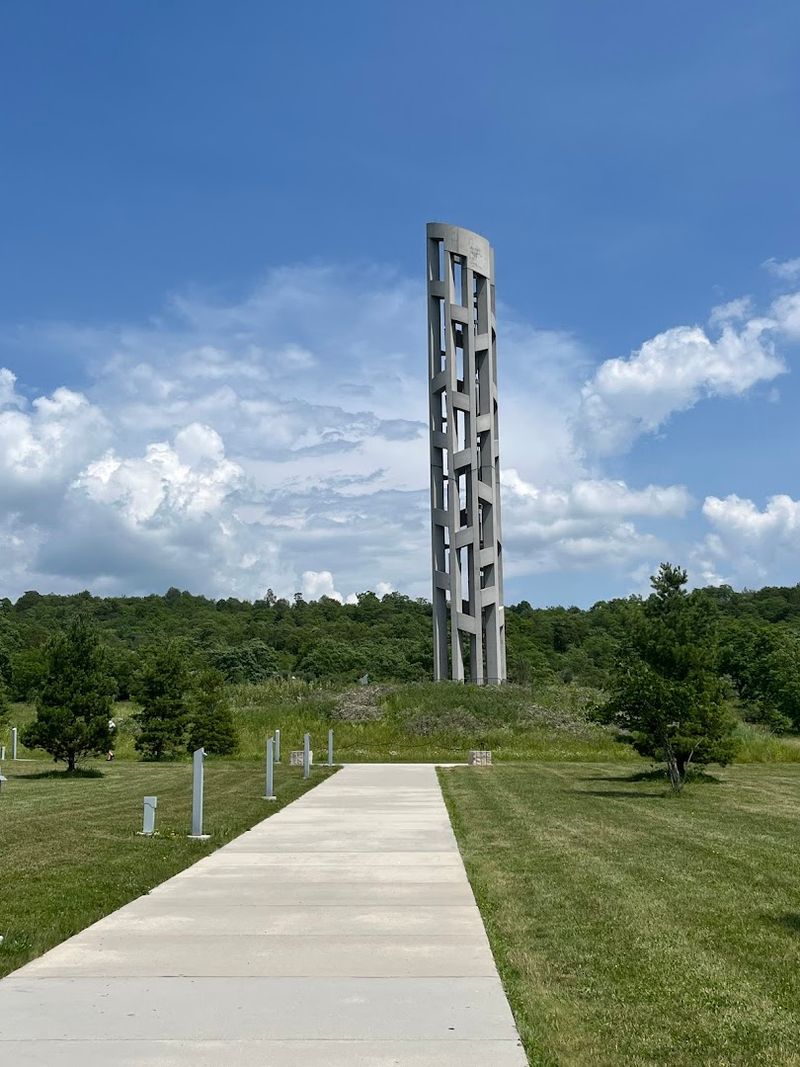
On September 11, 2001, passengers and crew aboard United Airlines Flight 93 attempted to retake the aircraft from hijackers. The plane crashed into a field in Stonycreek Township, Somerset County, killing all 40 people on board.
The memorial built on that site is one of the most quietly powerful places in Pennsylvania.
A long wall of white marble panels lists every name. A black slate path follows the flight path of the aircraft in its final seconds, leading toward the crash site visible from the memorial overlook — a shallow bowl of land surrounded by forest and farmland that looks almost impossibly ordinary given what happened there.
There are no dramatic monuments at the site itself, no large interpretive displays crowding the view.
The visitor center, located about a quarter mile away, contains a thoughtfully designed exhibition covering the events of that morning and the stories of the people who died. It is a hard place to visit and an important one.
The grounds are free to enter, open daily, and maintained with the kind of care that reflects exactly how seriously this site is taken.
Strasburg Railroad — The Oldest Short-Line Railroad in the Country Still Running Steam
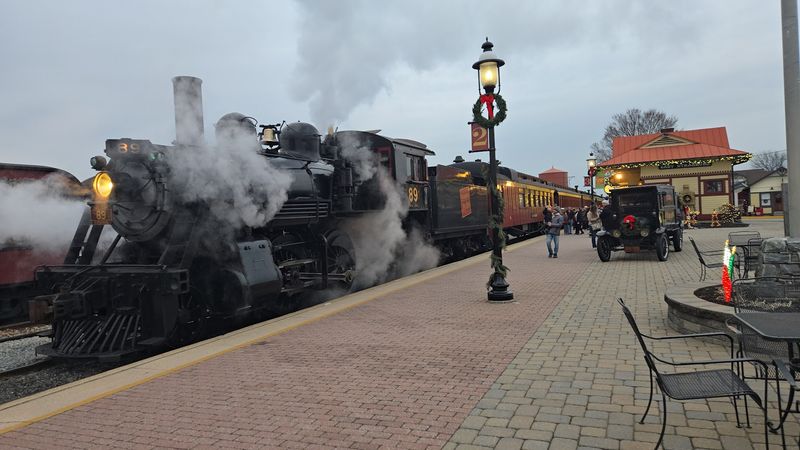
Operating continuously since 1832, the Strasburg Railroad is the oldest short-line railroad in the United States — and it still runs genuine steam-powered locomotives on a 4.5-mile track through Pennsylvania Dutch farmland. This is not a theme park ride dressed in railroad clothing.
It is a working heritage railway with original and restored steam engines and wooden passenger cars dating from the early 1900s.
The round trip takes about 45 minutes and passes through some of the most actively farmed land in Lancaster County. Watching a horse-drawn plow work a field while a steam train rolls past is a genuinely odd and somehow perfectly normal sight in this corner of Pennsylvania.
The contrast never gets old.
The railroad also runs a first-class dining car, an open observation car, and family cars for passengers traveling with young children. The adjacent Railroad Museum of Pennsylvania — a separate institution right across the road — is absolutely worth adding to the visit and houses one of the finest collections of historic locomotives in the country.
Buy your tickets online ahead of time, especially on weekends.
Pine Creek Gorge — Pennsylvania’s Answer to a Canyon
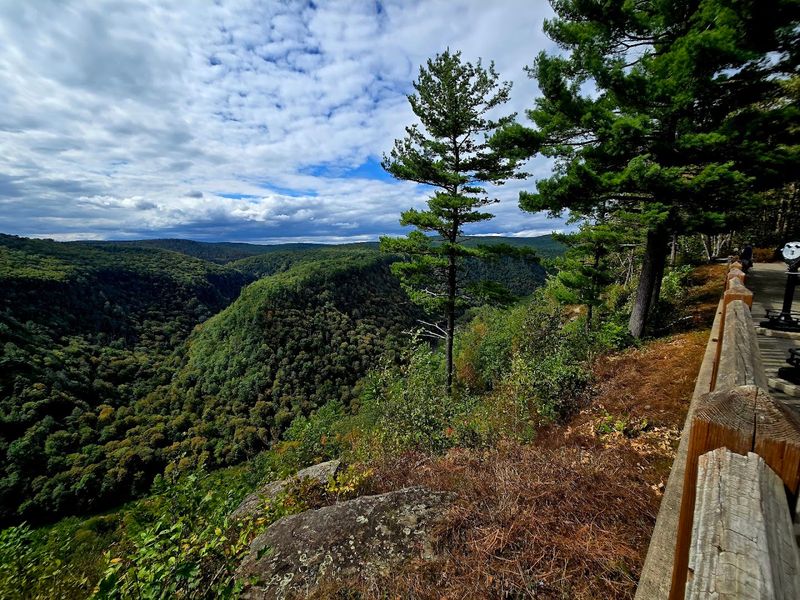
Tioga County holds a secret that most people outside Pennsylvania have never heard of: a 47-mile gorge cut through the Allegheny Plateau, dropping up to 1,000 feet from rim to valley floor. Locals call it the Pennsylvania Grand Canyon, which is geologically imprecise — this gorge was carved by glacial meltwater rather than river erosion — but the view from the rim is real and it earns the comparison on visual impact alone.
The Turkey Path trail drops 800 feet to the creek in about a mile, steep enough to demand careful footing on the descent and real leg effort climbing back out. At the bottom, Pine Creek runs cold and clear through a wide flat valley where you can fish, kayak, or simply sit on the gravel bar and listen to the kind of quiet that most people have forgotten exists.
Fall is the best time to visit by a significant margin. The hardwood forest on the gorge walls turns from top to bottom in sequence — a slow fade of orange and yellow that moves like a tide down the slope over two or three weeks.
Camping is available along the valley floor for those who want to stay and watch it happen.
Eastern State Penitentiary — A Prison That Changed How America Thought About Punishment
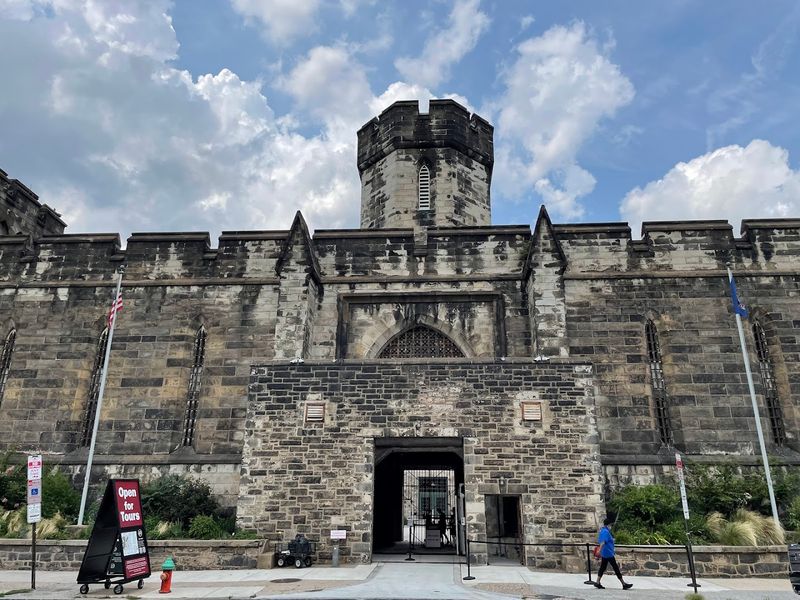
When Eastern State Penitentiary opened in Philadelphia’s Fairmount neighborhood in 1829, it was considered the most famous prison in the world. Reformers, architects, and government officials traveled from across Europe specifically to study its design — a hub-and-spoke layout of long cellblocks radiating from a central surveillance tower, each cell equipped with a small private exercise yard and a skylight the architects called “the eye of God.”
The building was constructed around the idea — promoted by Philadelphia Quakers — that extended solitary confinement would lead inmates to reflect and reform rather than simply suffer. The experiment largely failed.
The practice was eventually abandoned, but the architecture it produced has outlasted the philosophy behind it. The prison operated for 142 years before closing in 1971.
Since then, the building has been preserved in a state of deliberate ruin — peeling paint, collapsed ceilings, and vegetation pushing through the floors of the oldest cellblocks. Guided tours, audio tours, and a thorough history of American prison reform are all available.
The wildly popular Halloween attraction they run every fall is a separate event entirely and not connected to the historical experience.