April in Massachusetts is one of those months that can’t quite make up its mind — one afternoon it’s warm enough for a walk along the water, and the next morning there’s frost on the windshield. But that unpredictability is exactly what makes it special.
The crowds of summer are still weeks away, the trees are just starting to bud, and the small towns across the state feel genuinely alive in a way that’s hard to describe until you’ve experienced it. Whether you’re drawn to coastal fishing villages, Revolutionary War battlefields, flower-covered bridges, or world-class art museums tucked into quiet Berkshire hillsides, Massachusetts has a small-town April trip that will stick with you long after the season changes.
Shelburne Falls — A Bridge Covered in Flowers and a River Worth Watching
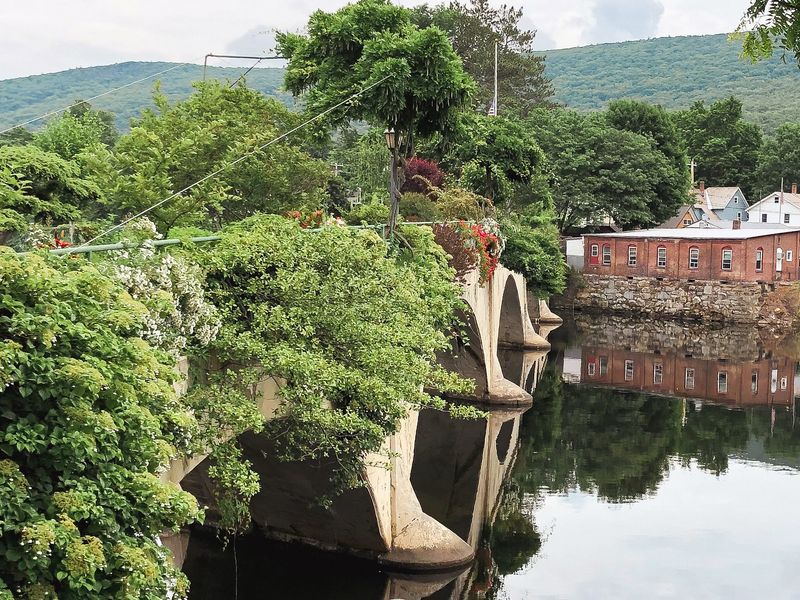
Every spring, a former trolley bridge in Shelburne Falls gets transformed into something you have to see to believe. Volunteers from the local horticultural society plant thousands of flowers across the entire span, and by April the Bridge of Flowers is already showing its first wave of color — tulips, pansies, and early perennials bursting out of every planting bed.
Below the bridge, the Deerfield River has carved something equally spectacular into the bedrock at Salmon Falls. Glacial potholes — some nearly 39 feet deep — were drilled into the stone by boulders spinning in the meltwater current at the end of the last ice age.
You can walk right up to the edge and peer straight down into them.
The main street on both sides of the river is lined with independent shops, a great used bookstore, and small cafes that are easy to spend an afternoon in. Shelburne Falls moves at its own pace, and April is the right time to match it.
Deerfield — One Street, 300 Years of American History, No Crowds in April
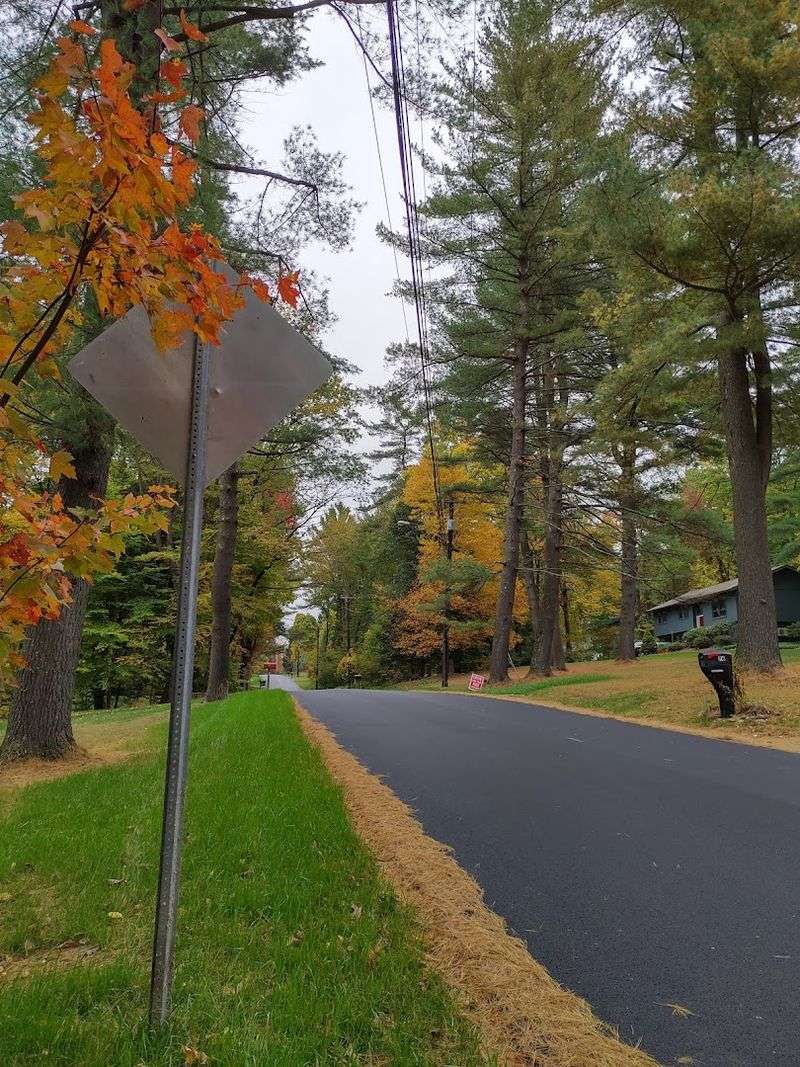
There’s a single mile-long street in Franklin County where you can walk past more than a dozen original 18th-century homes, step inside most of them, and stand on floors that haven’t been replaced in over 200 years. That’s Historic Deerfield, and in April it belongs almost entirely to you.
The Deerfield Museum organization maintains these homes as working house museums, staffed by guides who can tell you exactly which piece of furniture was already old when the house was built. The wide-plank floors creak.
The ceilings are low. The windows are wavy with original glass.
The 1704 Deerfield Raid — when French and Native forces attacked the village in the middle of winter, killing 56 residents and taking over 100 captive — is part of every tour. It’s a story that doesn’t get softened, and the landscape makes it feel real in a way that a museum exhibit never quite manages.
Come in April before the school groups arrive.
Rockport — A Granite Town on the Tip of Cape Ann, Better in April Than August
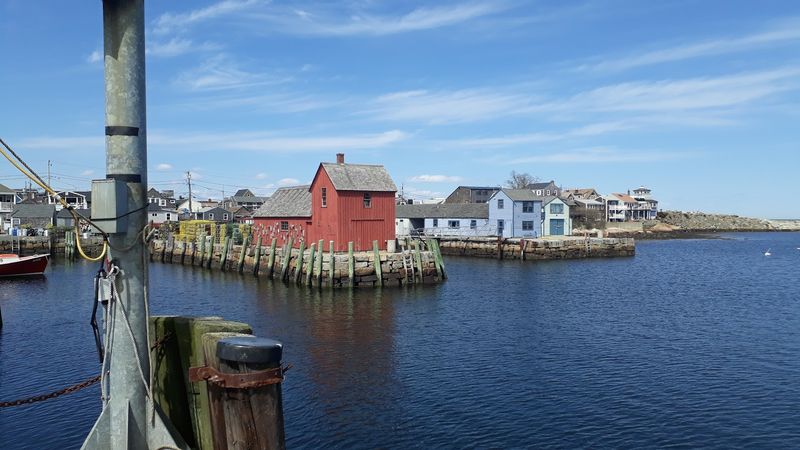
Rockport has been painted, photographed, and sketched so many times that its red fishing shack — officially called Motif Number 1 — is sometimes described as the most painted building in America. In August, you’d be competing with a dozen easels and twice as many phone cameras just to get a clear look at it.
In April, you can stand directly in front of it in near silence.
The town sits at the very tip of Cape Ann, where the granite cliffs meet the Atlantic and the streets on Bearskin Neck are barely wide enough for two people to pass. Most of the shops are just reopening for the season, and the harbor still smells like a working waterfront.
Halibut Point State Park on the northern shore is worth the short drive. The quarry there operated until 1929, and the granite blocks stacked along the coast look like they were left by something much older than any industry.
Low tide in April on those rocks is genuinely magnificent.
Northampton — A College City That Takes Food, Music, and Bookshops Seriously
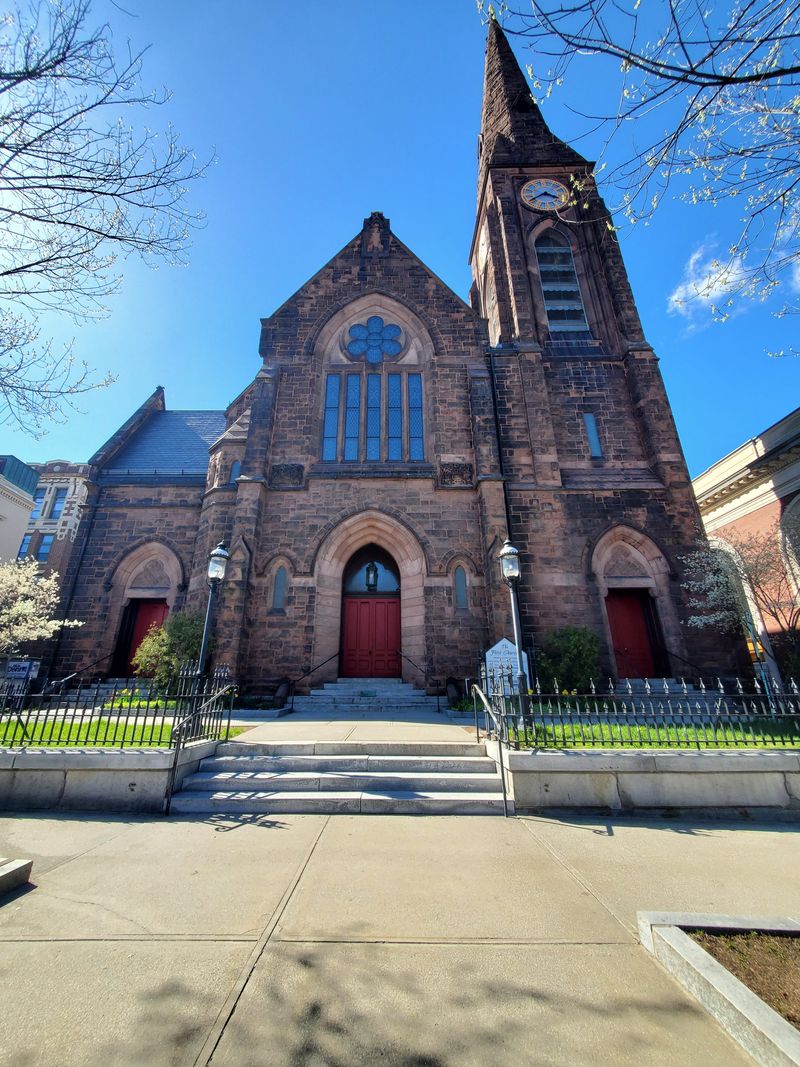
Rain on a Tuesday in April is basically the ideal condition for Northampton. The main street in Hampshire County’s most independently minded city is dense with good bookshops, live music venues, and restaurants that don’t need a famous chef’s name above the door to justify their menus.
When the weather turns, the whole place just moves indoors without missing a beat.
The Smith College Museum of Art is free — permanently — and holds over 25,000 works including paintings by Degas, Winslow Homer, and Picasso. Most people driving through Northampton on their way to somewhere else have no idea it exists.
That’s a genuinely strange gap in public knowledge for a collection of that quality.
Northampton has a long history of progressive politics and arts, and that energy still shows up in the mix of people you’ll find on the street on any given afternoon. It doesn’t perform its identity for visitors — it just is what it is, which makes it considerably more interesting than towns that do.
Provincetown — The Outer Cape in the Off-Season, Stripped Back to What It Actually Is
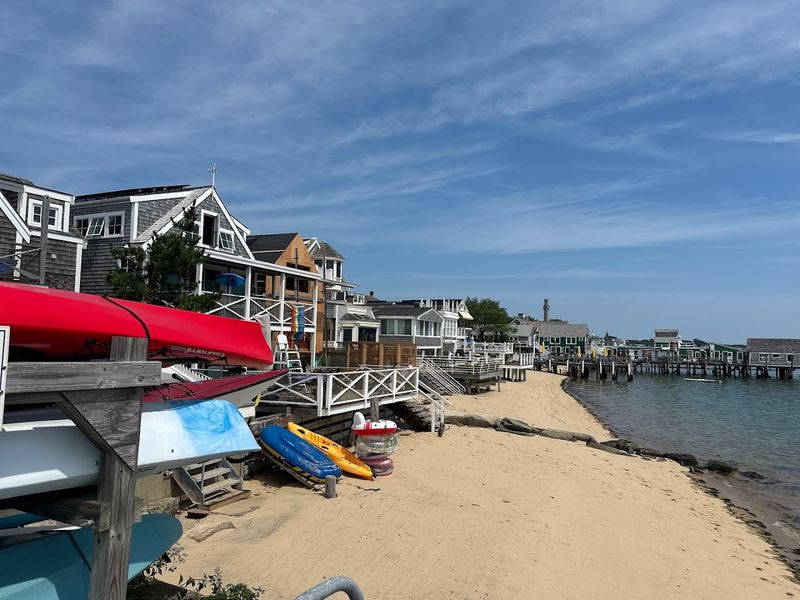
By the Fourth of July, Provincetown is one of the most densely packed places on the East Coast. In April, with a year-round population of about 3,000, it feels like a completely different town — and honestly, a better one.
The art galleries on Commercial Street are just reopening, the restaurants have their full menus back, and the light on the harbor in late afternoon is some of the best anywhere on the New England coast.
Most people don’t realize that Provincetown, not Plymouth, was where the Pilgrims first landed in 1620. The Pilgrim Monument — completed in 1910 and the tallest all-granite structure in the United States — makes that argument from 252 feet above the town.
Climb it on a clear April day and you can see the entire Outer Cape laid out in both directions.
The dunes of Cape Cod National Seashore start just outside of town and are walkable in spring before the summer heat settles in. Bring layers.
The wind off the water in April is not negotiating.
Sturbridge — A Living History Village Where April Means Maple Syrup Season
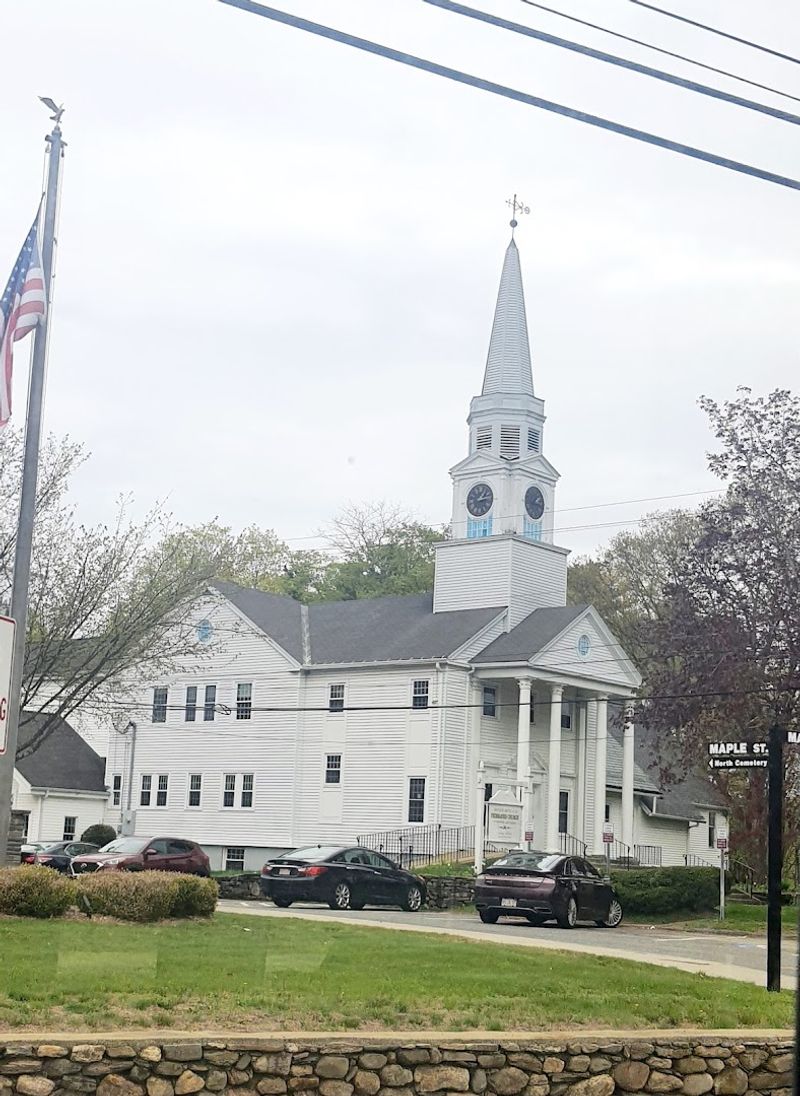
Old Sturbridge Village doesn’t feel like a museum in the way most history museums do. Spread across 200 acres in Worcester County, it’s a reconstruction of rural New England life between 1790 and 1840, built from actual period structures relocated from across the region.
The buildings are real. The trades are operational.
The people in period clothing are actually making things.
In April, the maple sugaring demonstrations are running, which is reason enough to visit. But the working blacksmith, printing office, pottery, and cider mill are all active year-round — not displays of old equipment, but real demonstrations using period tools and methods.
Watching a blacksmith turn raw iron into finished hardware in real time is a different experience than reading a placard about it.
The farm animals are out in April, the grounds are starting to green up, and the crowds are a fraction of what they’ll be in summer. If you’ve written off living history museums as something for school field trips, Old Sturbridge Village might genuinely change your mind.
Lenox — The Berkshires in the Quiet Season, Before the Concert Crowds Arrive
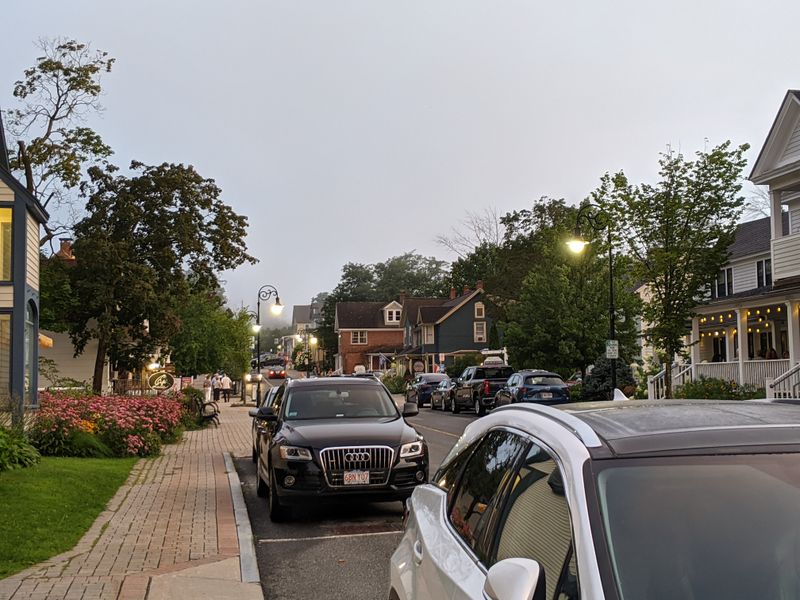
Lenox in summer means Tanglewood, the Boston Symphony Orchestra’s outdoor venue, and the town fills up fast. In April, the inns charge about half the summer rate, the restaurants have open tables, and the surrounding Berkshire hills are doing that specific thing they do in early spring — bare branches with just the faintest green haze starting to show.
The Mount is the main reason to come. Edith Wharton designed the house herself in 1902, applying her own theories about architecture, proportion, and landscape — the same ideas she’d put into her book on interior design just two years earlier.
She wrote The House of Mirth here. The house is a National Historic Landmark, and the gardens, though not in full bloom until later in spring, are accessible and worth walking.
The town’s main street has a good independent bookshop and several restaurants that take their sourcing seriously. Lenox in April rewards the kind of slow, unhurried visit that the summer season makes nearly impossible to pull off.
New Bedford — A Whaling City That Hasn’t Forgotten What It Was Built On
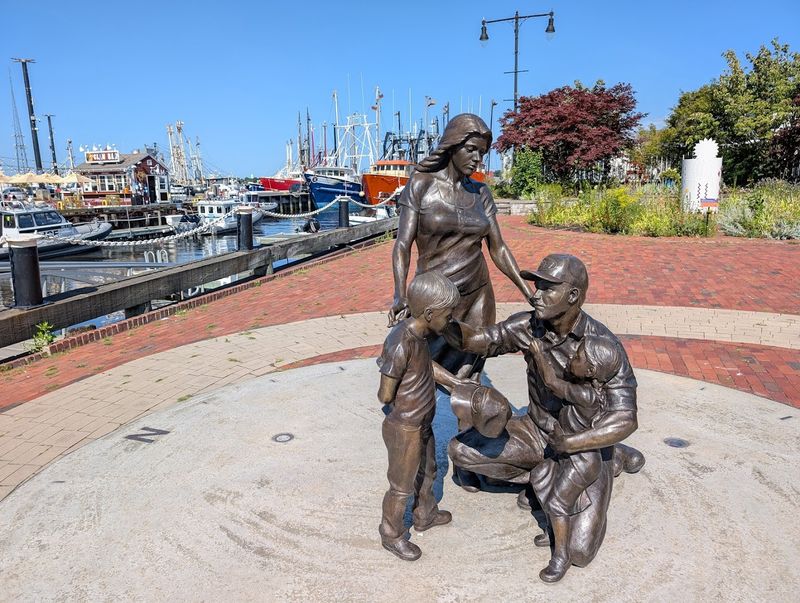
Before oil wells, there was whale oil, and New Bedford was where much of the world’s supply came from. In the mid-19th century, this city in Bristol County was the wealthiest per capita in the United States — a fact that still shows up in the granite buildings lining its downtown streets.
Herman Melville walked these same blocks before writing Moby-Dick, and the opening chapters of that novel are set here.
The New Bedford Whaling Museum is the largest whaling museum in the world, and it earns that title. The half-scale model of a whale ship, the skeleton of a blue whale hanging from the ceiling, and the collection of scrimshaw and logbooks together make a genuinely absorbing afternoon.
April crowds are thin.
New Bedford is also still one of the most productive commercial fishing ports in the country by dollar value — over $400 million in seafood annually. The working waterfront and the 19th-century historic district sit a few blocks apart, which gives the city a layered, unpolished quality that’s hard to find anywhere else in Massachusetts.
Concord — Where the Revolution Started and Thoreau Went to Live Deliberately
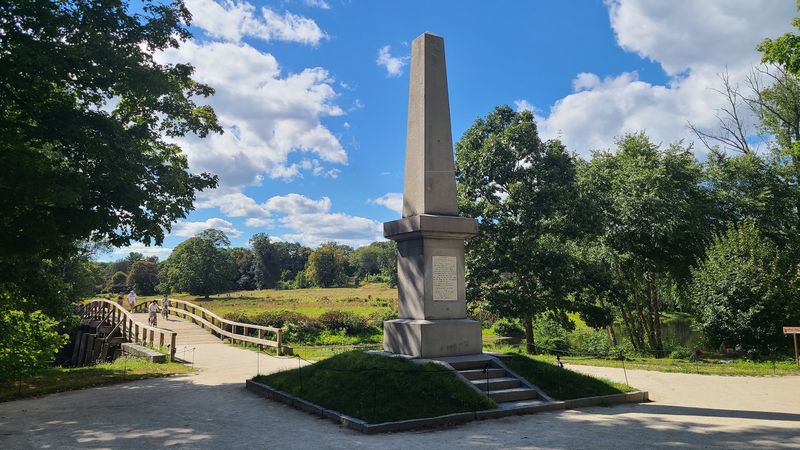
April is the exact right month to visit Concord, and not just because of the scenery. Patriots’ Day — the third Monday in April — marks the anniversary of the 1775 battles at Lexington and Concord, and Massachusetts commemorates it every year with a reenactment at the North Bridge.
It’s the spot where colonial militiamen fired back at British troops, the moment the Revolutionary War effectively began.
Walden Pond is a short drive from the center of town. Thoreau built his cabin here in 1845 and spent two years living as deliberately simply as he could manage.
The pond is calm in April, the trails around it are mostly empty, and the replica cabin near the parking area gives a real sense of how small and purposeful that experiment was.
Orchard House, where Louisa May Alcott wrote Little Women, is also open for tours. Concord packs more American literary and historical weight into its square miles than almost any other small town in the country, and April is when it’s easiest to absorb it without interruption.
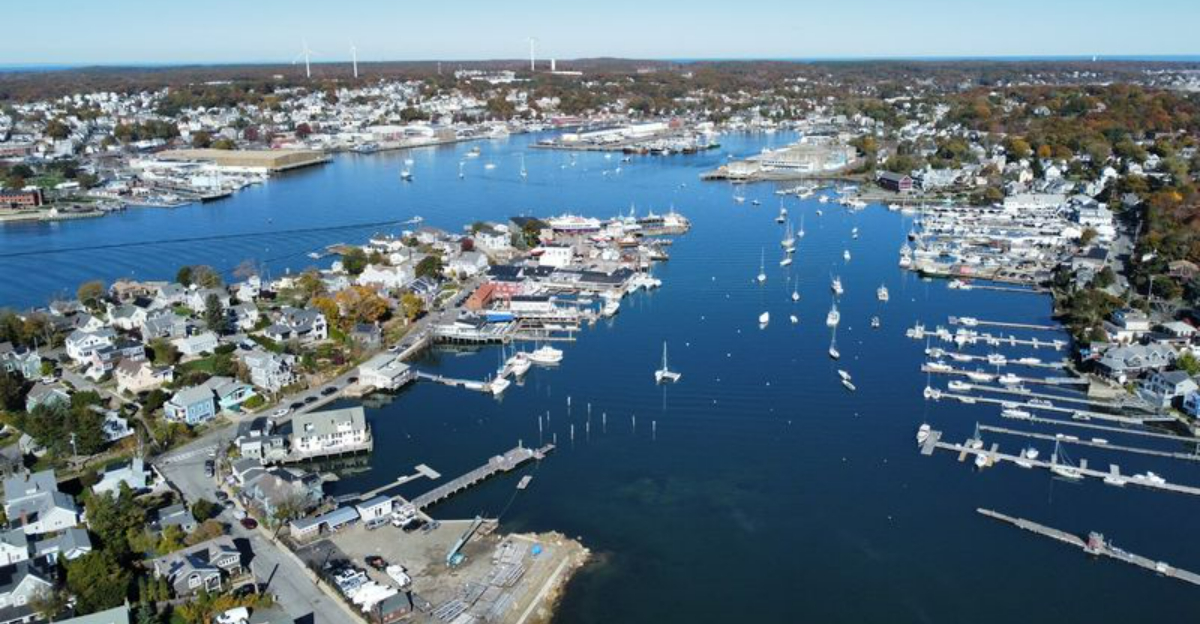
Gloucester — America’s Oldest Fishing Port, Still Smelling Like One
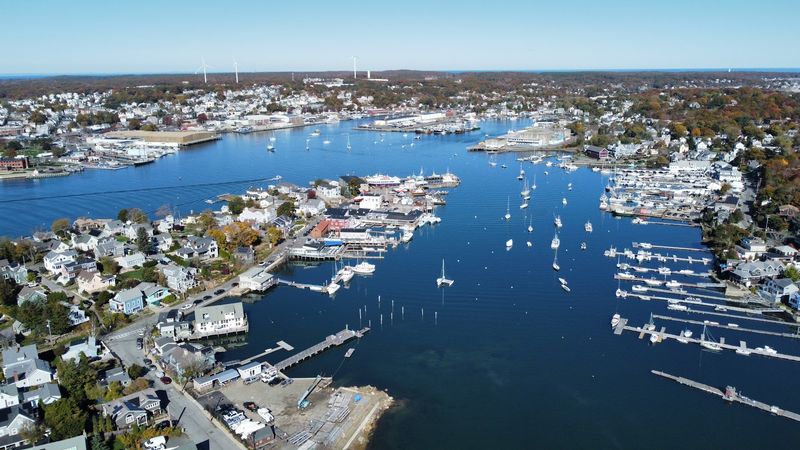
Founded in 1623, Gloucester holds the title of the oldest continuously operating fishing port in the United States, and unlike a lot of historic designations, this one is still backed up by daily reality. The waterfront smells like diesel and salt and fish, because that’s what it is — a working port, not a recreation of one.
The Man at the Wheel statue — a bronze fisherman gripping a ship’s helm — stands at the harbor’s edge and was unveiled in 1925 to honor the more than 10,000 Gloucester fishermen who had died at sea since the town’s founding. The inscription is just nine words: “They that go down to the sea in ships.” It doesn’t need more than that.
Rocky Neck, just across the harbor, is the oldest continuously operating art colony in the country, and in April the studios are starting to reopen after winter. Fresh seafood at a restaurant where the boat that caught it is visible through the window is a specific kind of satisfaction that Gloucester delivers without any effort at all.
Ipswich — Salt Marshes, Clam Shacks, and a Medieval House Still Standing
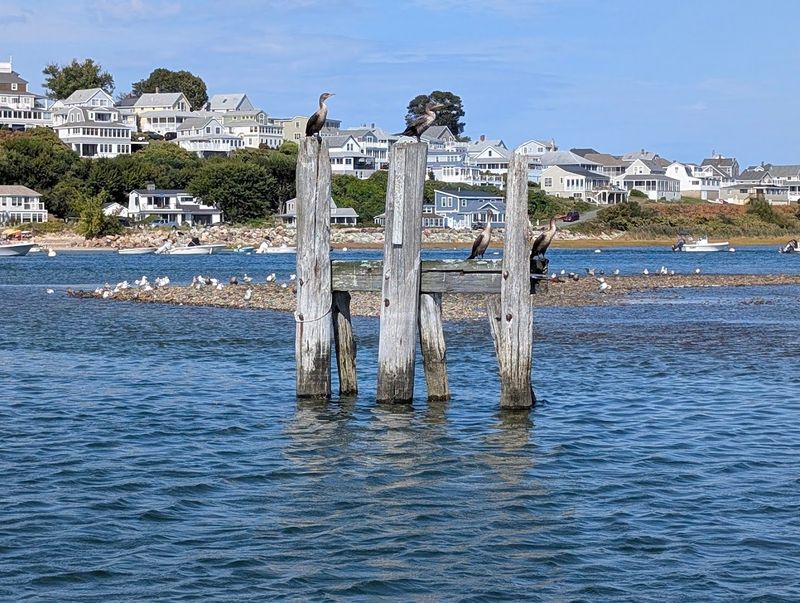
The Whipple House in Ipswich was built around 1655, making it one of the oldest surviving timber-framed structures in the United States. It looks like something that belongs in rural England, which makes sense — the people who built it had only recently left.
Walking past it on a quiet April street in Essex County is a genuinely disorienting experience in the best possible way.
Crane Beach, just outside of town, is one of the finest barrier beach systems on the Massachusetts coast, and the Crane Estate grounds are open for walking year-round. In April, the crowds that pack the beach in July are completely absent, and the Great Marsh — the largest salt marsh complex in New England — is starting to wake up.
Migratory birds are moving through, and the light over the marsh in the morning is extraordinary.
Ipswich clams — soft-shell clams from the local tidal flats, fried since at least the 1910s — are considered the benchmark for the dish by most serious food writers. The clam shacks open in spring, and April means no line.
Williamstown — A Small College Town at the Top of the Berkshires With a World-Class Art Museum
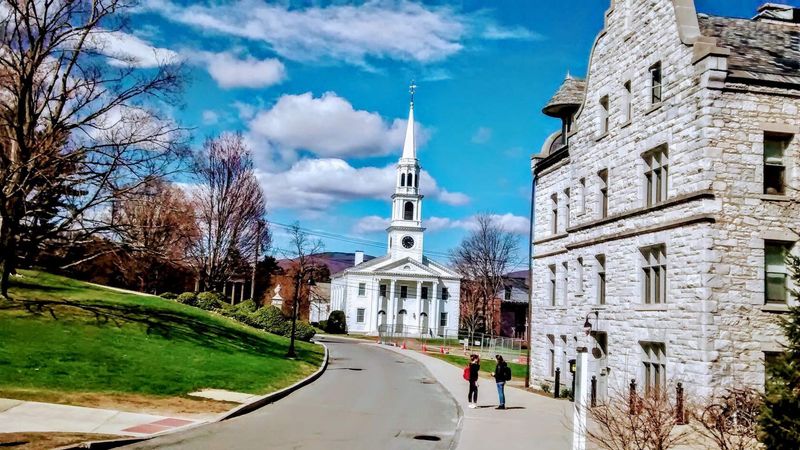
Williamstown sits at the northwestern corner of Massachusetts, a quiet village of about 8,000 people where the hills of Vermont are visible from the main street on a clear day. It doesn’t advertise itself aggressively, which is part of why the Clark Art Institute — one of the finest small art museums in the country — remains genuinely undervisited.
The Clark holds 30 Renoir paintings, major works by Winslow Homer and John Singer Sargent, and one of the strongest collections of French Impressionism you’ll find outside of a major metropolitan museum. Admission is free until late May when the summer season begins, so April visits cost nothing and feel like a private showing.
The building itself, set against 140 acres of meadow and woodland, is worth the trip on its own.
Walking trails from the Clark connect into the surrounding hills and are passable by April. The Williams College Museum of Art in the village center is also free and shows serious contemporary work.
Route 7 north from Pittsfield on an early April morning, with the hills still bare and the light low and golden, is one of the better drives in New England.