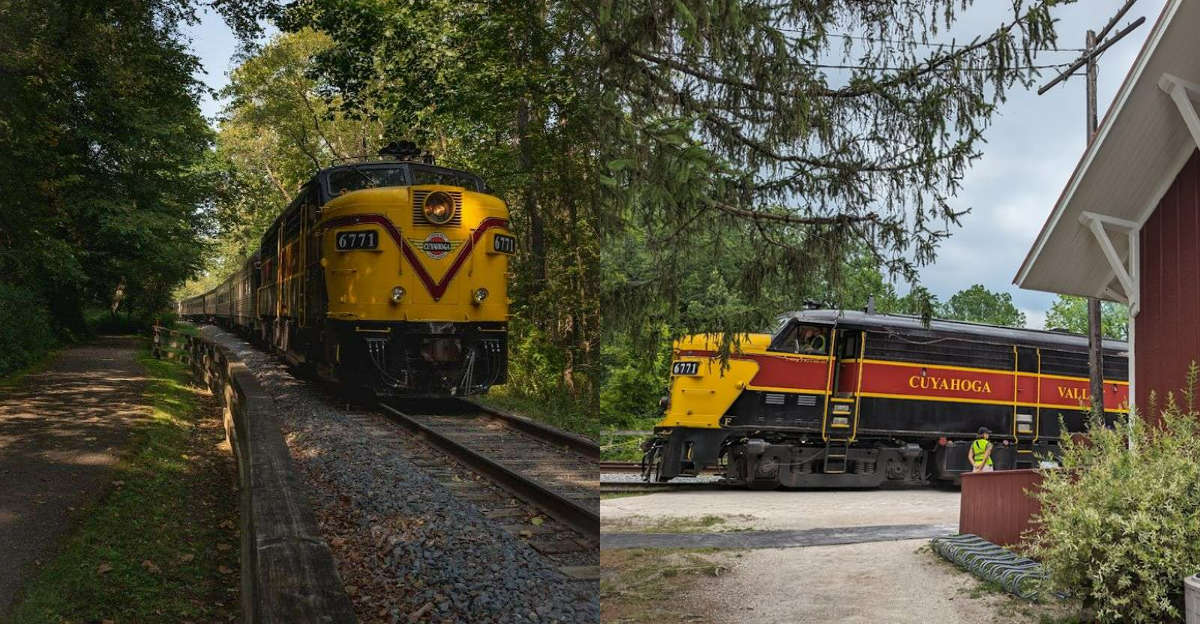
Tucked inside Ohio’s only national park, the Cuyahoga Valley Scenic Railroad offers one of the most relaxed and rewarding ways to explore a truly special landscape. Starting from the charming Peninsula Depot, passengers climb aboard vintage-style rail cars and roll through forests, wetlands, and river bends that most people never discover on their own.
Whether you’re a first-time rider or a returning fan, this train journey has a way of slowing everything down in the best possible sense. If you’ve been looking for a reason to visit Cuyahoga Valley National Park, this might be the one that finally gets you on board.
What the Cuyahoga Valley Scenic Railroad Actually Is
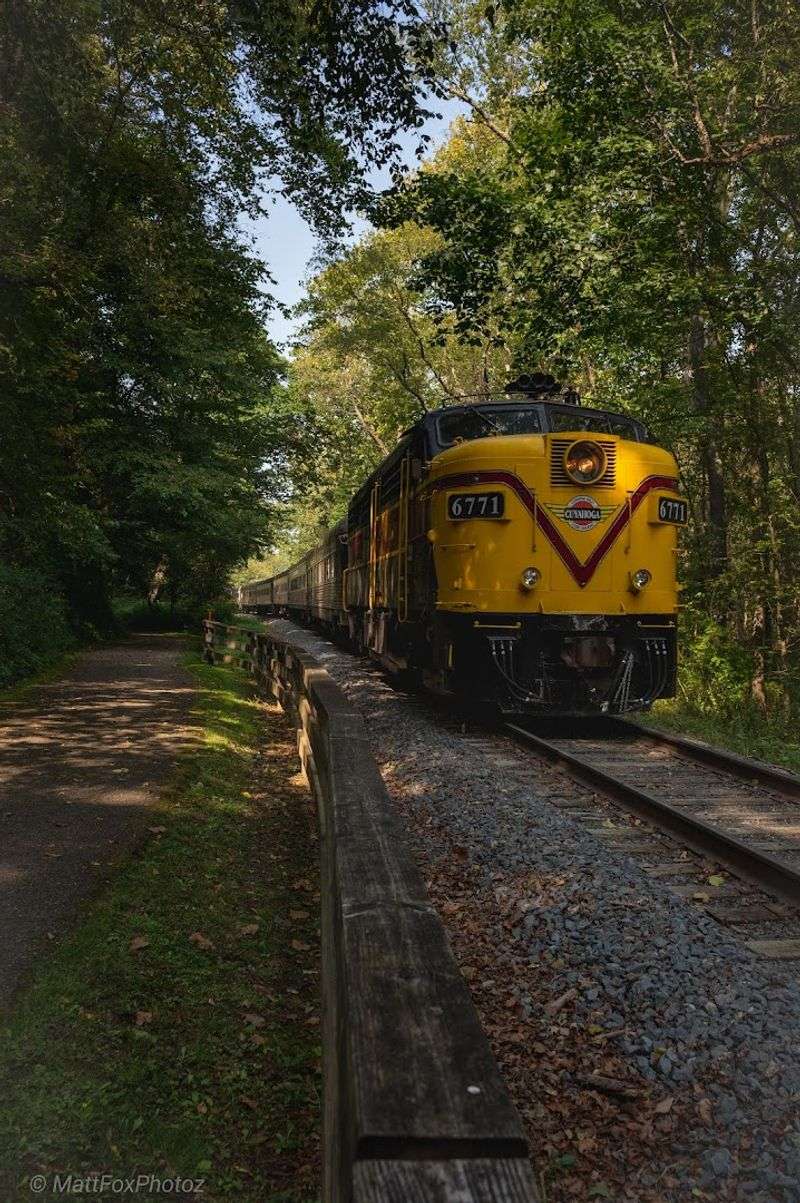
Long before GPS and highway overpasses, this stretch of Ohio was already moving people from one place to another. The Cuyahoga Valley Scenic Railroad has operated in some form since the 1880s, making its tracks some of the most historically layered ground in the state.
Today, it runs a 26-mile passenger excursion route between Akron and Independence, cutting through Ohio’s only national park the entire way.
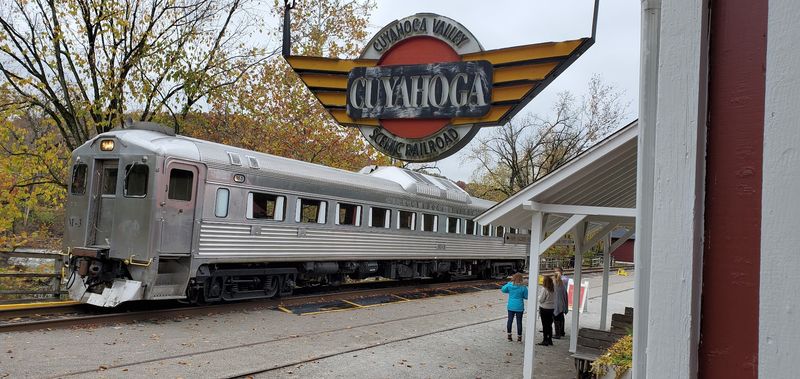
This is not a tourist trolley or a quick novelty ride. Passengers travel through forests, wetlands, and farmland aboard full-size rail cars with large windows built specifically for landscape viewing.
The slow, steady pace gives you time to actually absorb what you’re seeing, which is something a car window at highway speed simply cannot offer.
For anyone curious about what Cuyahoga Valley National Park really looks like beyond the parking lots and trailheads, this train is one of the most honest answers available.
Why Peninsula Depot Is the Right Place to Start
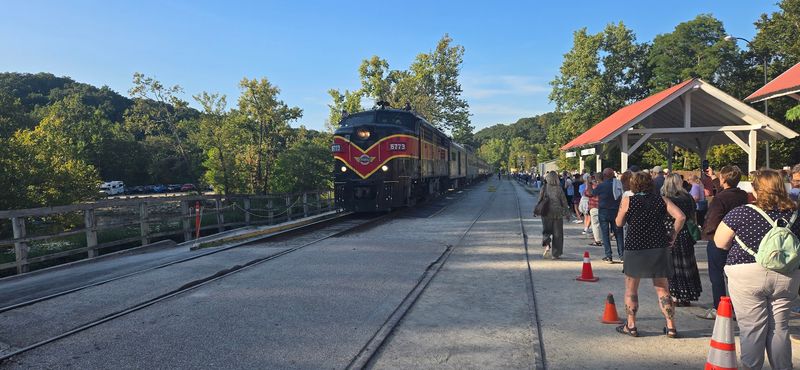
There is something about arriving in Peninsula, Ohio that immediately tells you the pace of the day is about to change. The village is small enough to walk end-to-end in about ten minutes, but most visitors end up lingering far longer than they intended.
That is the quiet magic of choosing this depot as your starting point.
Located at 1630 Mill Street West, the Peninsula Depot sits at the geographic and social heart of the park experience. Independent shops, trail access, and a well-known pizza spot are all within easy walking distance, meaning the trip feels like it has already begun before you even check your ticket.
Riders who start here also benefit from being at the midpoint of the full route, which gives flexible options for going north toward Independence or south toward Akron. For first-timers especially, Peninsula is simply the most well-rounded entry point the railroad offers.
Boarding the Train: What the Experience Feels Like
Nobody is rushing you here. The boarding process at Peninsula Depot is deliberately low-key — tickets are checked, passengers settle into their seats, and the train eases out of the station without any of the frantic energy that defines most modern travel.
That unhurried tone is not an accident; it is the whole point.
The passenger cars are climate-controlled and comfortable, with seating options ranging from standard coach to booth-style tables and premium upper dome positions. Large windows frame the passing landscape like a slow-moving painting, and the gentle rocking of the car does something noticeable to the nervous system within the first few minutes.
Volunteer conductors move through the cars, pointing out landmarks and sharing history over the intercom in a way that feels genuinely enthusiastic rather than scripted. One reviewer described it perfectly: the staff seem like people who actually chose to be here, and that energy is contagious from the moment you step aboard.
The First Miles: Leaving Town Behind
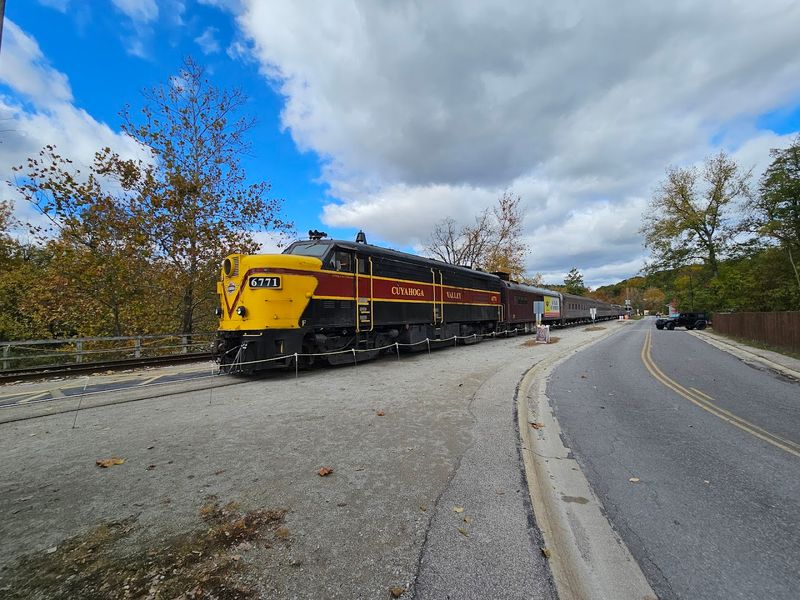
Within just a few minutes of departing Peninsula, something shifts. The streets and storefronts of the village disappear, replaced almost instantly by a thick corridor of trees that closes in on both sides of the track.
The sounds of town fade so quickly that passengers who are mid-conversation sometimes pause and just look out the window.
This rapid transition from developed land to dense woodland is one of the more quietly dramatic moments of the ride. It does not announce itself — it simply happens, and then the forest is all there is.
The effect is a kind of collective exhale inside the car that is hard to manufacture and impossible to fake.
For kids especially, this moment tends to land with real impact. One minute you are in a parking lot world, and the next you are somewhere that feels genuinely wild.
That contrast sets the mood for everything the next hour or two will offer.
The Cuyahoga River as a Constant Companion
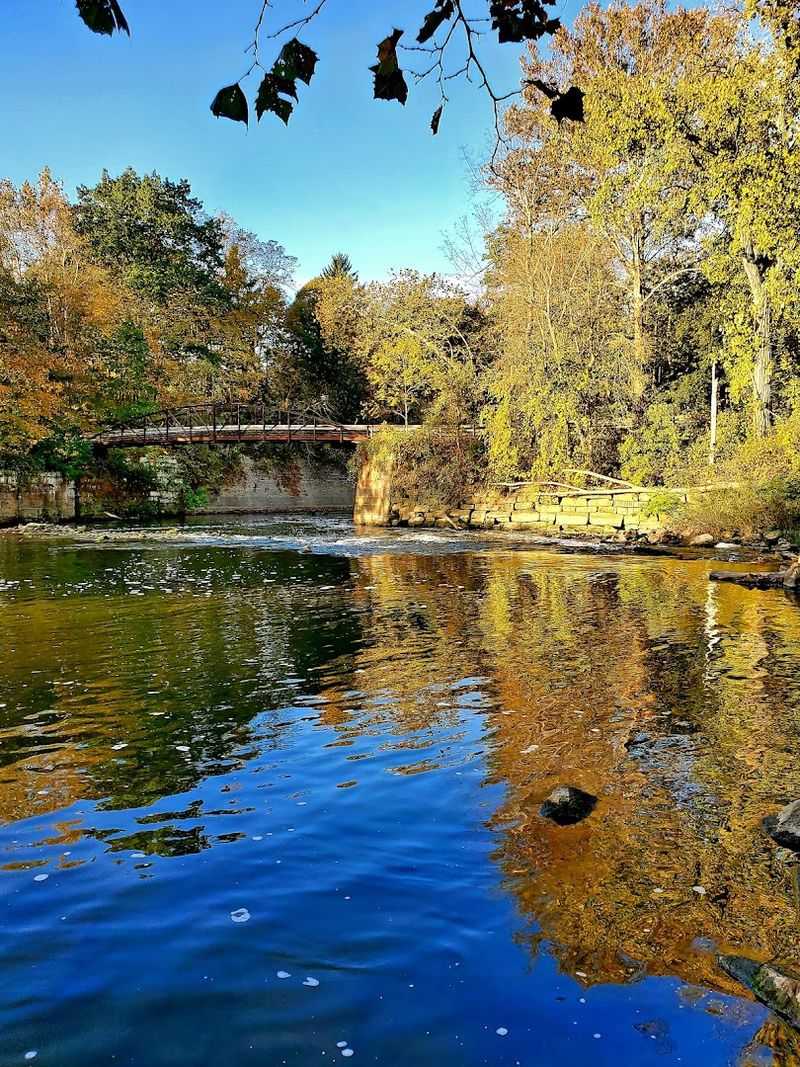
Few rivers in America carry as dramatic a comeback story as the Cuyahoga. In 1969, it caught fire due to severe industrial pollution — an event that shocked the country and helped launch the modern environmental movement.
Seeing it today from the train window, clean and tree-lined and full of wading herons, is a quietly powerful experience.
The train follows the river for much of its route, offering repeated views at different widths and moods depending on the season. After heavy rain, the water runs fast and brown.
In summer, it reflects the canopy like a green mirror. In winter, sections freeze into jagged shelves of ice that catch the light in unexpected ways.
No narration is needed for this part of the ride. The river speaks for itself as one of the more concrete environmental recovery stories you can witness firsthand — not from a museum panel, but from a moving train just a few yards away.
Wildlife Along the Route
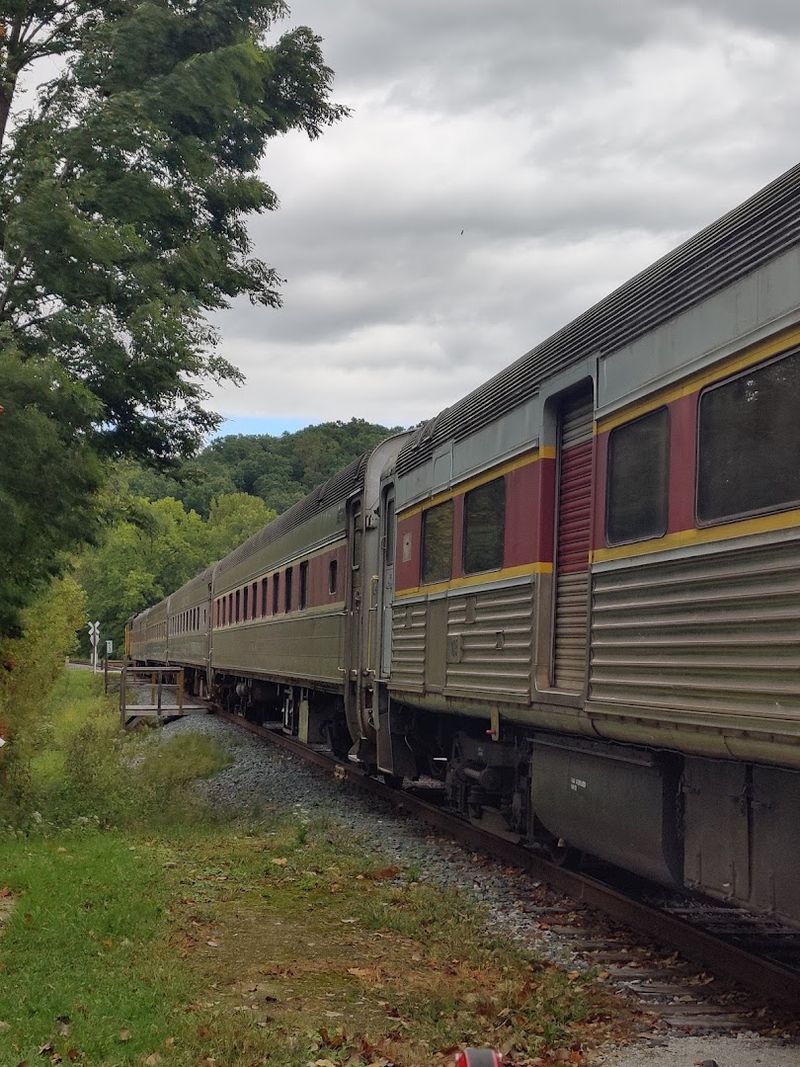
Great blue herons are practically co-passengers on this route. They stand motionless in the river shallows while the train glides past, sometimes close enough that you can see individual feathers.
The train’s smooth, slow movement disturbs them far less than a hiker crunching through nearby leaves would, which is one reason wildlife sightings from the car can actually outperform what you might see on the trail.
White-tailed deer, red-tailed hawks, and beaver activity along the banks are all realistic sightings depending on timing. Bald eagles have been spotted during winter months when bare trees make the sky more visible — one reviewer mentioned seeing two on a March trip and called it the clear highlight of the day.
Luck plays a role, obviously. But the odds are better than most passengers expect going in.
Keeping your phone down and your eyes on the water during the river sections dramatically improves your chances of catching something memorable.
Seasonal Scenery and Picking the Right Time to Go
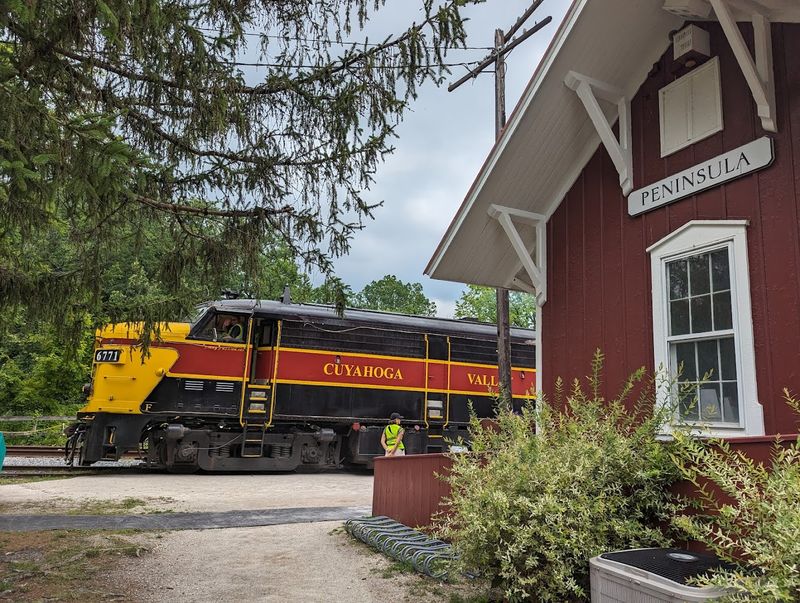
Fall is the most popular season by a wide margin, and for good reason. The valley transforms into a long corridor of orange, red, and gold that looks almost theatrical from the train window.
October tickets routinely sell out weeks in advance, so planning early is not optional — it is essential if you want a specific date.
Spring brings pale green new growth and migratory birds returning to the valley. Summer delivers dense canopy and glassy water reflections.
Winter, though less discussed, is genuinely underrated. Bare trees reveal the full shape of the terrain, frozen river sections appear along the banks, and the crowds are dramatically smaller than any other time of year.
Each season changes the character of the ride in a specific and noticeable way. If you have ridden once in fall and think you know what the trip is, try a January departure.
The same route becomes an almost completely different experience when the leaves are gone.
Special Themed Excursions Worth Planning Around
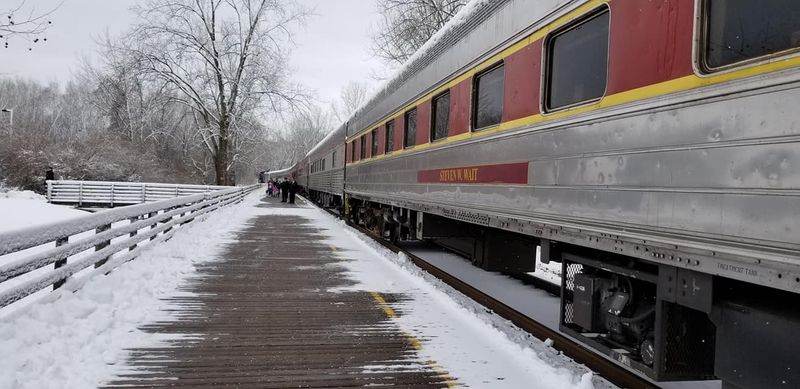
The standard day excursion is great, but the CVSR’s themed ride calendar is where things get genuinely interesting. The Polar Express holiday experience is arguably the most in-demand ticket in all of Northeast Ohio each winter, drawing families from well beyond the local area and selling out at a pace that surprises first-timers every single year.
Beyond the holiday train, the rotating calendar includes beer and wine tasting rides, photography-focused excursions, murder mystery evenings, and seasonal dinner trains. Each themed event attracts a noticeably different crowd than the standard scenic trip, and the atmosphere shifts accordingly — dinner train passengers are dressed up; photography riders have camera bags in every overhead bin.
One practical note: themed excursions book out significantly faster than regular rides, sometimes months in advance. Checking the CVSR website early and setting a reminder when new events are announced is the most reliable way to actually secure a spot on the rides worth planning a trip around.
Hop-On, Hop-Off Flexibility Along the Route
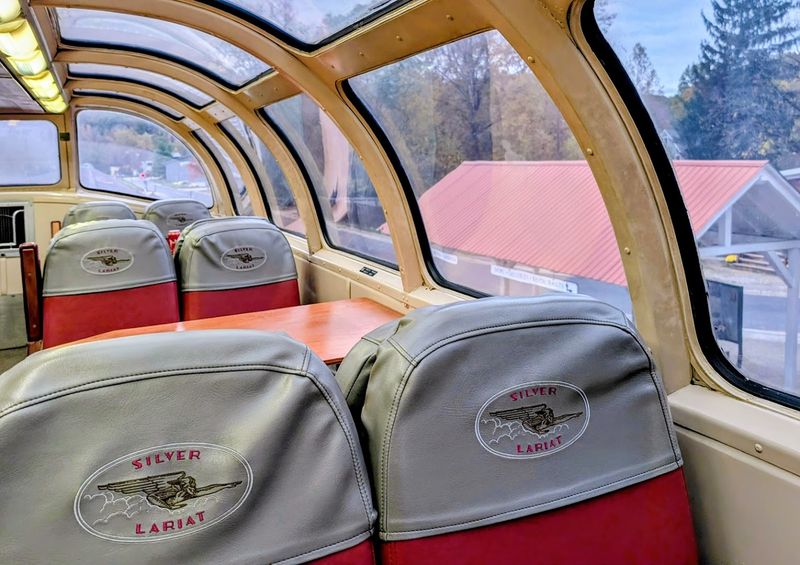
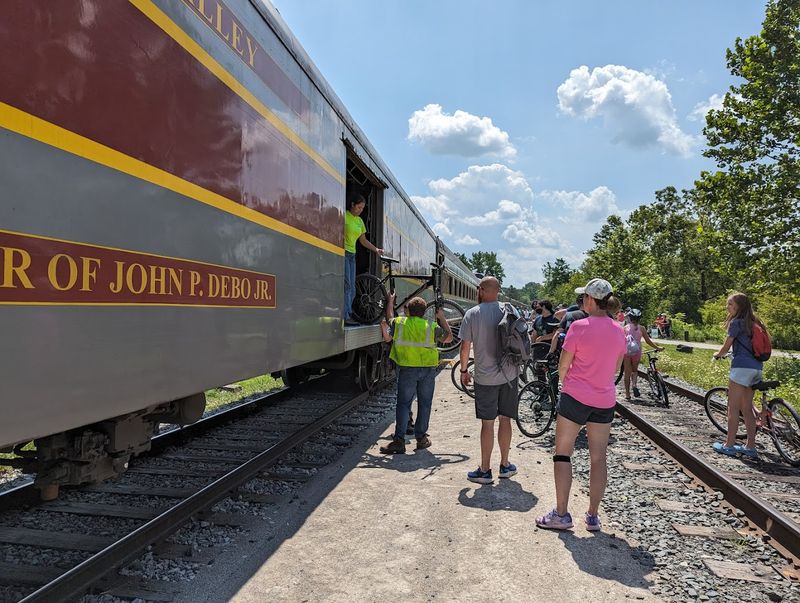
Passive sightseeing is one way to use this train. An active, layered day trip is another, and the CVSR makes that second option remarkably easy through its Bike Aboard program and hop-on, hop-off stops at select stations along the route.
The concept is straightforward: ride your bike to the depot, load it onto a designated car for a small fee, disembark at a distant stop, and cycle back through the park on the Towpath Trail at your own pace. The whole experience requires almost no car use and combines rail travel with actual time on the ground in the national park — two very different speeds, one very well-designed day.
Hikers can use the same system, getting off at a trailhead, spending a few hours on foot, and catching a later train back to Peninsula. For anyone who finds a straight round-trip too passive, this flexibility turns the railroad into a genuine transportation tool rather than just a sightseeing loop.
The Towpath Trail Connection
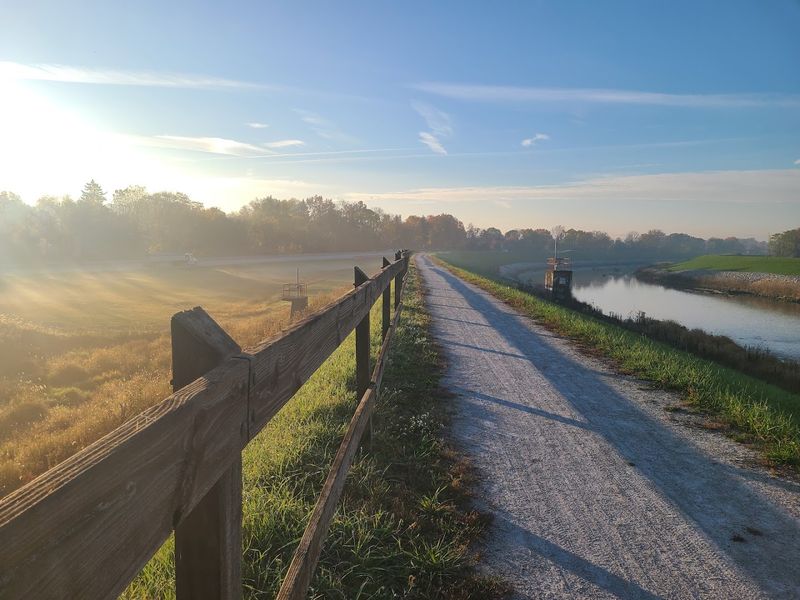
Running alongside much of the rail route is the Ohio and Erie Canal Towpath Trail — a flat, well-maintained multi-use path that traces the historic canal corridor through the valley. Canal boats once moved goods along this same strip of Ohio in the early 1800s.
Today, cyclists and hikers travel it instead, often within waving distance of the passing train.
That visual relationship between the railroad and the trail is one of the more interesting details of the whole experience. In some sections, the tracks and the path run just yards apart, making it easy to appreciate how this particular corridor has served as a transportation artery for nearly 200 years without interruption.
On busy fall weekends, it is genuinely common to wave from the dome car to cyclists pedaling below on the Towpath. It is a small moment, but it captures something real about the valley — two different travel speeds, the same landscape, the same long history moving underneath both of them.
Food, Stops, and What to Do Before or After the Ride
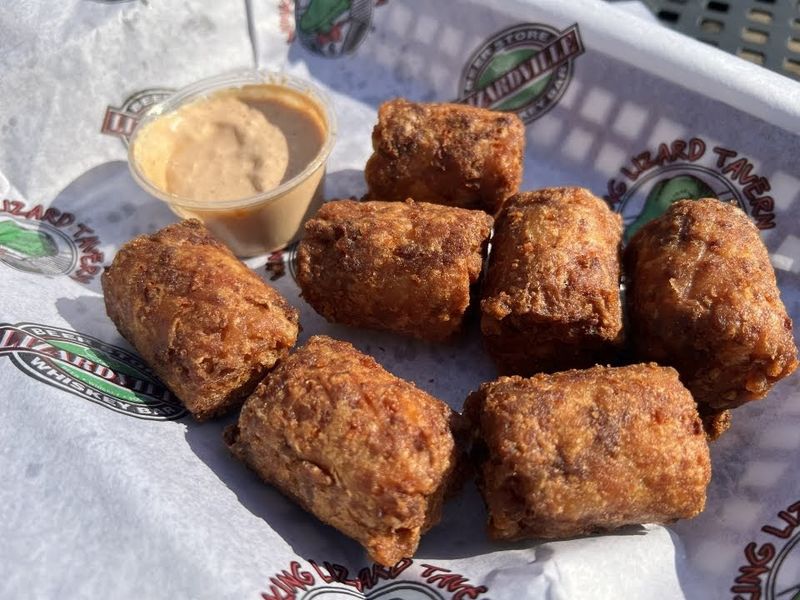
Arriving 30 to 45 minutes before your scheduled departure at Peninsula Depot gives you just enough time to make the most of the village without rushing. The Winking Lizard Tavern is the most established dining option on the strip — a longtime local staple with solid pub food and a patio that fills up fast on weekend afternoons.
A handful of independent shops and a well-stocked trail outfitter round out the walkable options.
After the ride, Peninsula has a way of keeping people around longer than they planned. The post-train atmosphere tends to be social and easy — groups comparing wildlife sightings over food, kids still buzzing from the dome car, people browsing the outfitter for gear they definitely did not come to buy.
Staying an extra hour turns what might be a half-day into a full, unhurried afternoon that feels complete in a way that purely transportation-focused trips rarely do. Peninsula earns that extra time without even trying.
Who This Trip Works Best For and What to Expect Going In
Honesty upfront: this is not a thrill ride. There are no sharp curves, dramatic climbs, or white-knuckle moments.
The value of the CVSR experience is entirely in slowness — the scenery, the commentary, the specific pleasure of moving through a landscape at a pace that actually lets you see it. If that sounds appealing, you are the target audience.
Families with young kids tend to do extremely well here. The train is handicap accessible, the seats are comfortable, and the volunteer crew has a genuine talent for engaging with children — one reviewer described watching the staff treat her three-year-old son like royalty on his first train ride.
Older travelers who want to experience the national park without strenuous hiking find the train equally well-suited to their needs.
First-time riders sometimes admit they were not sure the trip would hold their attention for the full duration. Most of them are already checking return dates before the train pulls back into Peninsula.
How the CVSR Connects to the Larger Story of the Valley
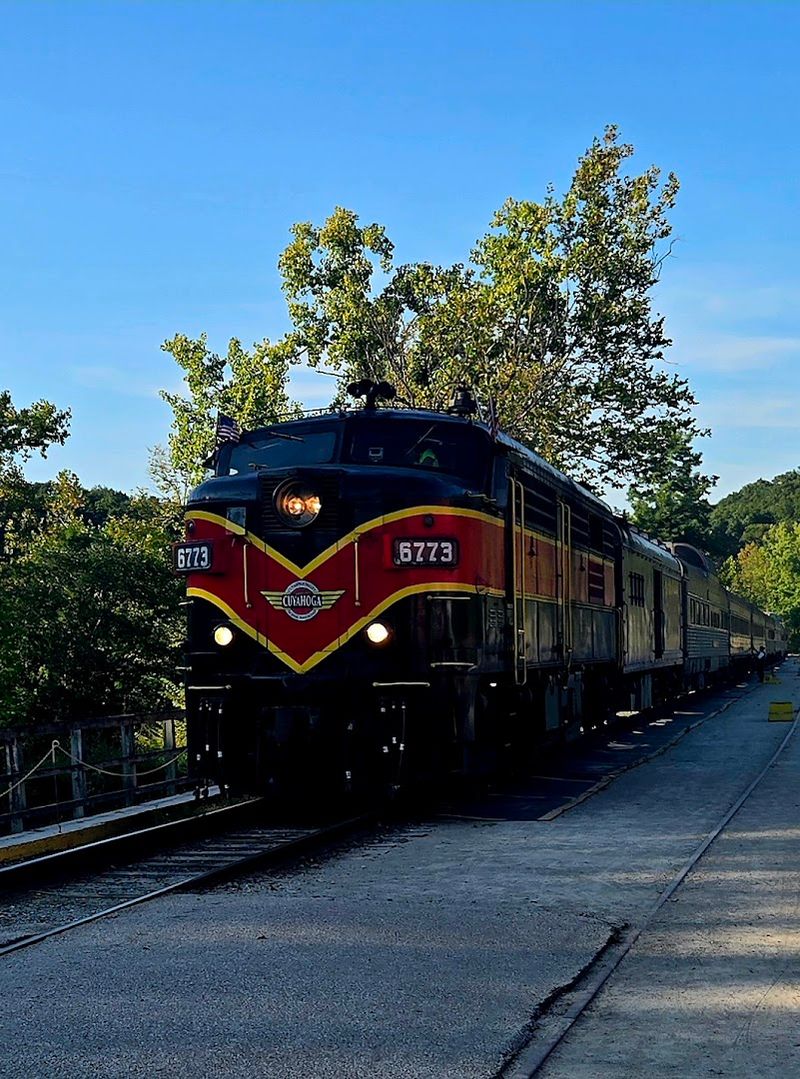
Most passengers board without knowing the backstory, but it changes how the whole experience feels once you do. The Cuyahoga Valley Scenic Railroad operates as a nonprofit, sustained by a combination of ticket revenue, donations, and a dedicated volunteer base that keeps the trains running through the national park season after season.
That means the person checking your ticket on a Saturday morning may have chosen to spend their free time on a historic train instead of anywhere else. The staff’s enthusiasm is not a performance requirement — it is a reflection of genuine investment in something they believe is worth preserving.
That difference comes through in every interaction, from the narration over the intercom to the casual conversations in the aisle.
The railroad’s continued operation is also a community achievement in the truest sense. Knowing that adds a layer to the ride that no amount of upgraded seating or polished branding could replicate — and it makes the modest ticket price feel like something more than just a transaction.