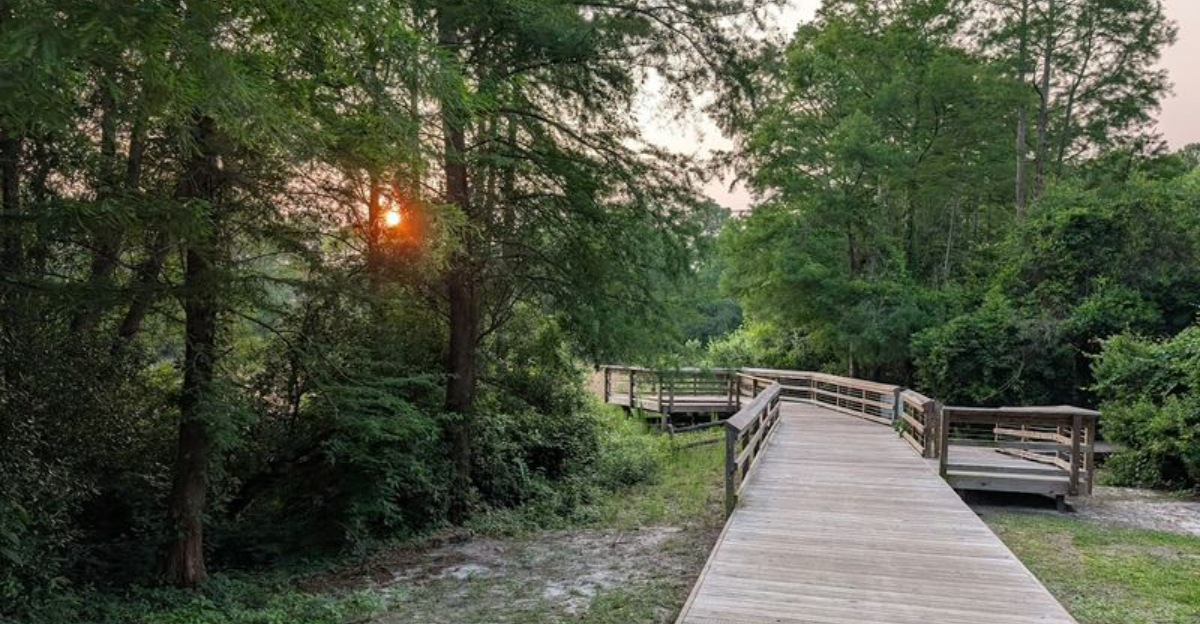
Tucked inside the busy city of Wilmington, North Carolina, Halyburton Park is a 58-acre nature preserve that feels like a world of its own. Dense tree canopy, quiet trails, and the sound of birds replace the usual city buzz the moment you step inside.
Locals return again and again — not because the park is dramatic or extreme, but because it offers something genuinely rare: a calm, easy, and completely accessible outdoor escape. Whether you are a seasoned walker or just looking for a reason to get outside, Halyburton has a way of making every visit feel worth it.
A Green Escape in the Middle of Wilmington
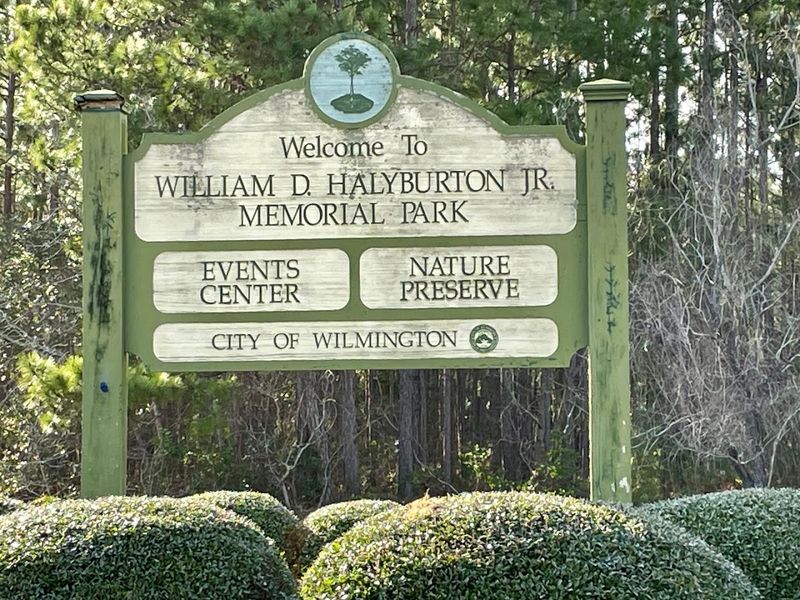
Step through the entrance at Halyburton Park and something quietly shifts. The road noise from South 17th Street fades behind the tree line faster than you would expect, replaced by birdsong and the soft crunch of trail underfoot.
For a park that sits entirely within city limits, that transition feels almost surprising every time.
Wilmington is a mid-sized coastal city with plenty going on — traffic, development, the usual pace of daily life. Halyburton offers a reliable counterpoint to all of that without requiring a long drive or special planning.
You can park, lace up your shoes, and be deep under a canopy of pines and oaks within minutes of arriving.
Rated 4.7 stars across more than a thousand reviews, the park earns that reputation through consistency. Families, solo walkers, dog owners, and retirees all find something here that keeps them coming back.
It is the kind of green space a city is lucky to have — and Wilmington knows it.
The Trail System: Flat Paths Through Coastal Carolina Woodland
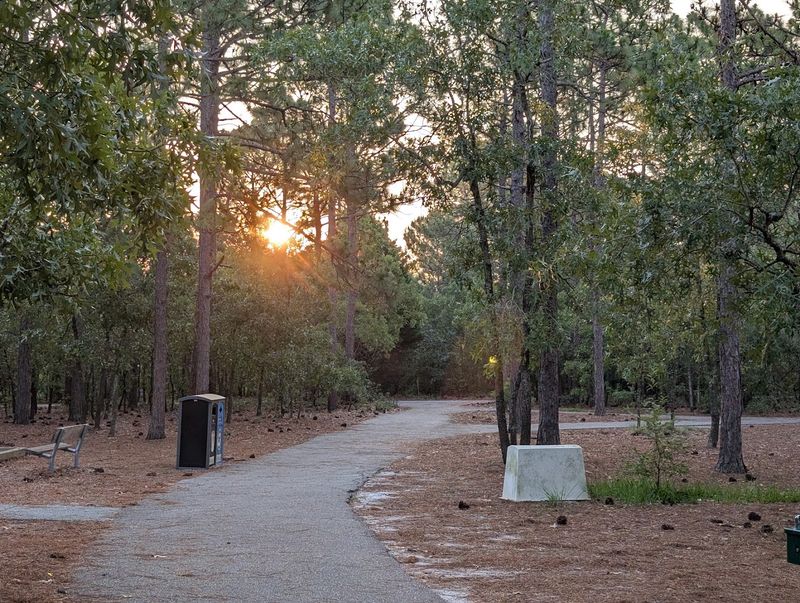
Roughly 4 miles of trails wind through Halyburton Park, and the most notable thing about them — besides the tree cover — is how flat they are. The coastal plain geography of the Wilmington area means there are no hills to climb, no steep descents to navigate.
You just walk, and the trail takes care of the rest.
Most loops can be completed in under an hour at a relaxed pace, which makes it easy to do two laps if you are feeling good or cut it short if you are not. The mix of pines, oaks, and bay trees typical of the Carolina coastal plain creates natural shade that keeps the trails comfortable even on warm days.
Beginners, older walkers, and parents pushing strollers all manage these paths without trouble. Trail maps are posted at entry points, and the layout is intuitive enough that getting turned around is hard to do.
One regular visitor described completing the loop three times a week — and meaning it.
A Natural Focal Point on the Main Loop
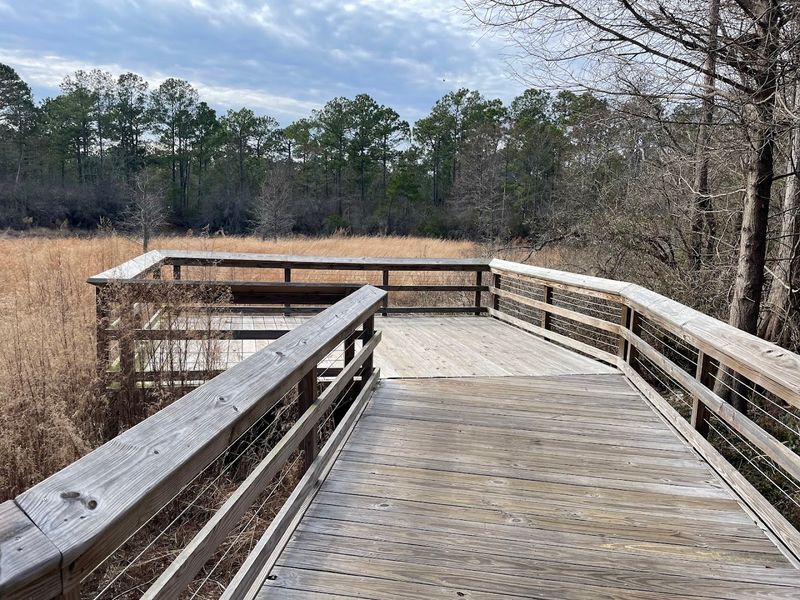
Near the center of the park, a small pond quietly anchors the main trail loop. It does not announce itself dramatically — you round a bend and there it is, still and reflective, with turtles basking on logs and herons standing at the edge like they have been there all morning.
On calm days, the water mirrors the surrounding tree line so clearly it is genuinely hard to tell where the trees end and the reflection begins.
The wooden footbridge crossing the water is one of the most photographed spots in the park. People stop there naturally — to look down at the pond, take a picture, or just breathe for a moment before continuing the loop.
It functions as an unofficial rest point without anyone having to plan it that way.
Water birds show up year-round, making this corner of the park reliable for casual wildlife watching. You do not need binoculars or a field guide.
Just slow down at the bridge, and the pond usually gives you something worth seeing.
Wildlife You Can Actually See
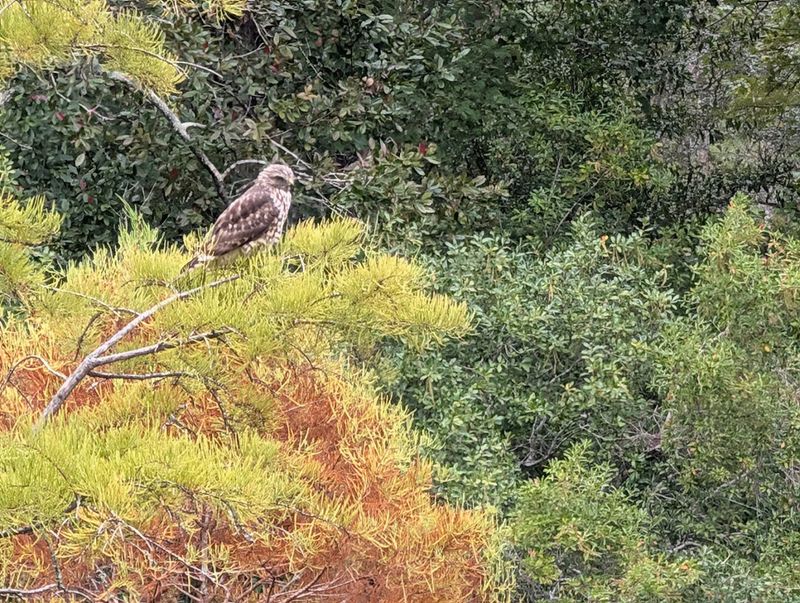
Box turtles have a reputation at Halyburton Park. On warm afternoons, they show up on the trail path with the kind of unhurried confidence that suggests they have absolutely no intention of moving for you.
Walkers learn quickly to watch the ground as well as the trees — because the wildlife here does not stay hidden.
Red-bellied woodpeckers are a regular presence, drilling into dead pines with a rhythm you can hear before you see them. Gray squirrels are everywhere, moving through the understory in every direction.
Occasionally, a great blue heron lifts off from the pond edge with slow, deliberate wingbeats that stop people mid-stride.
What makes wildlife watching here different from more remote parks is that none of it requires luck or expertise. You do not need to arrive at dawn or stand perfectly still.
The animals at Halyburton seem comfortable with foot traffic, which means casual visitors regularly walk away having seen more than they expected. Nature watching here is genuinely accessible to everyone.
The Longleaf Pine Savanna: A Habitat Worth Noticing
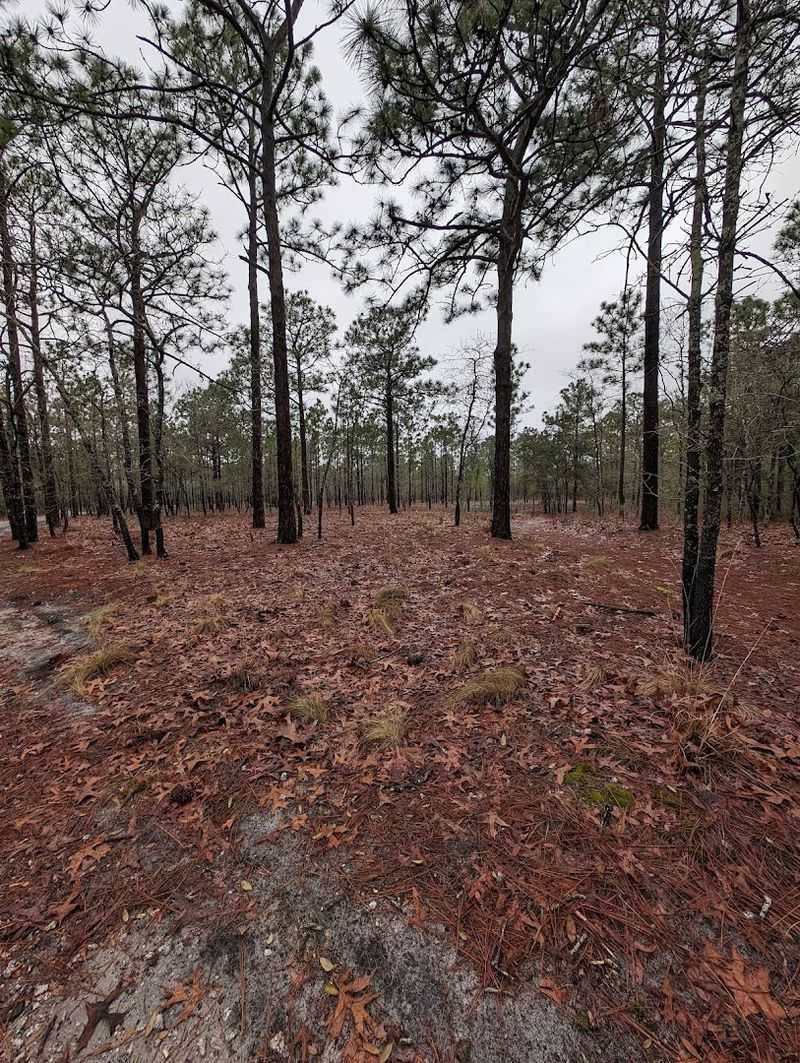
Most visitors walk right past the longleaf pine area without knowing what they are looking at — and that is exactly why it deserves a second look. The spacing is different here.
The pines stand tall and straight with more room between them than in the rest of the park. Light reaches the ground more easily, and the understory is grassy rather than dense with shrubs.
It looks intentional because it is.
Longleaf pine savannas once covered roughly 90 million acres across the southeastern United States. Today, less than 3% of that original range survives.
What Halyburton has is a small restored patch, but even a small patch carries real ecological weight.
The park actively works to bring this habitat back, and visitors have noticed — one reviewer specifically called it “pretty cool.”
You do not need to be an ecologist to appreciate the difference in atmosphere. Spend a few minutes in the longleaf section and then walk back into the mixed forest.
The contrast is noticeable, and understanding why makes the whole park feel more interesting.
Who Uses the Park and When
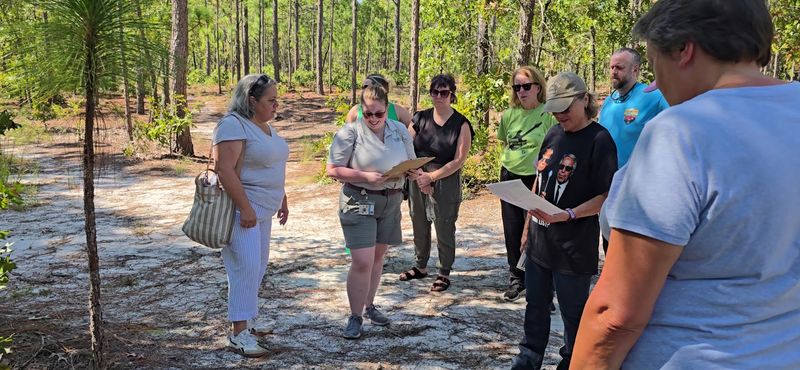
Early mornings at Halyburton belong to the dog walkers. They arrive before 9 AM if they can, moving through the trails at a pace set more by their dogs than by any fitness goal.
By mid-morning, parents with strollers tend to take over the wider paved loop, kids pointing at squirrels and occasionally demanding a snack near the benches.
Lunch hour brings a different crowd — solo walkers with earbuds in, squeezing a loop into a break from work. The park is close enough to central Wilmington that a midday visit is genuinely practical.
Late afternoons tend to get slightly busier, especially on weekends when families come out together.
Weekday mornings are consistently the quietest windows. One regular described sharing the full loop with just a handful of other people on a Tuesday morning — a rare feeling for a park inside a city of this size.
If solitude matters to you, that timing is worth keeping in mind. The park opens at 9 AM daily and closes at 5 PM.
What to Know Before You Go
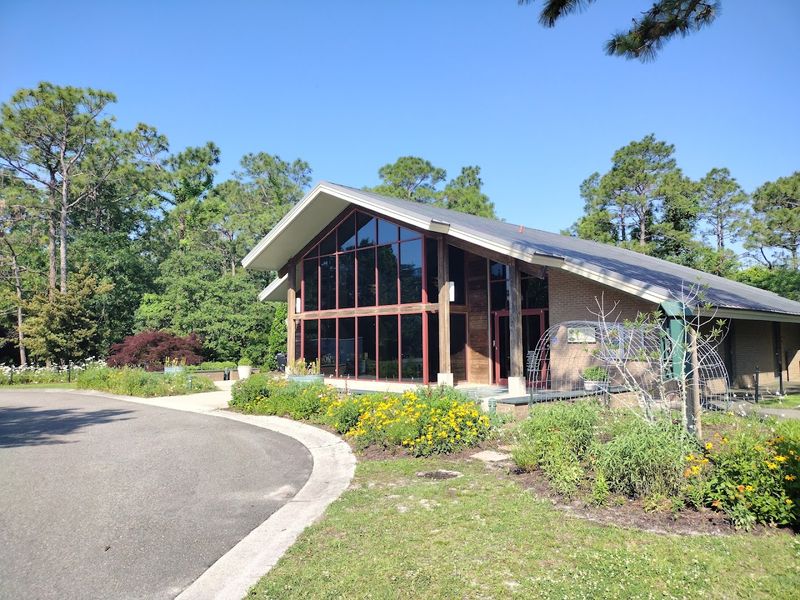
Admission to Halyburton Park is free, which makes it one of the easiest yes decisions in Wilmington. The main entrance is located at 4099 S 17th St, with parking available along University Drive.
The lot is reasonably sized, and on most weekday visits you will have no trouble finding a spot close to the trailhead.
Restrooms are located near the entrance and are generally well-maintained — though a handful of visitor reviews note they are occasionally locked, so plan accordingly. A covered shelter sits near the trailhead area, useful for regrouping on warm days or waiting out a passing shower.
Trail maps are posted at key entry points, and the layout is straightforward enough that most first-time visitors figure it out quickly.
The park is operated by New Hanover County and is open daily from 9 AM to 5 PM. Benches are placed at regular intervals along the trails — a detail that matters more than it might seem for anyone who walks slowly, needs a rest, or just wants to sit and listen to the woods for a moment.
A Good Fit for Casual Walkers and a Starting Point for New Ones
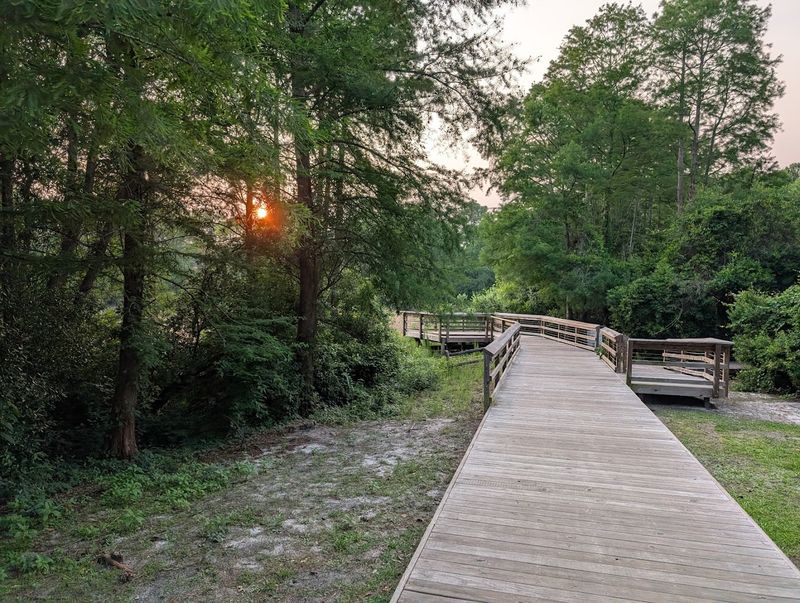
Halyburton Park does not ask anything of you before you arrive. No special gear, no fitness requirement, no experience with trails.
You can show up in sneakers and jeans and have a genuinely good time. That low-pressure quality is part of what makes it so easy to return to — there is no version of a visit here that feels like a failure.
For people who are just starting to build a walking habit, this park is about as good a starting point as exists in the Wilmington area. The flat terrain, shaded paths, and manageable loop length make it possible to finish a walk feeling better than when you started rather than exhausted.
That matters when you are trying to make exercise a regular thing.
Many Wilmington residents walk here three or more times a week — not because they have to, but because the park genuinely earns that loyalty. A visitor center with educational exhibits about local wildlife, carnivorous native plants scattered along the trails, and a community of friendly regulars round out an experience that goes well beyond a simple walk in the woods.