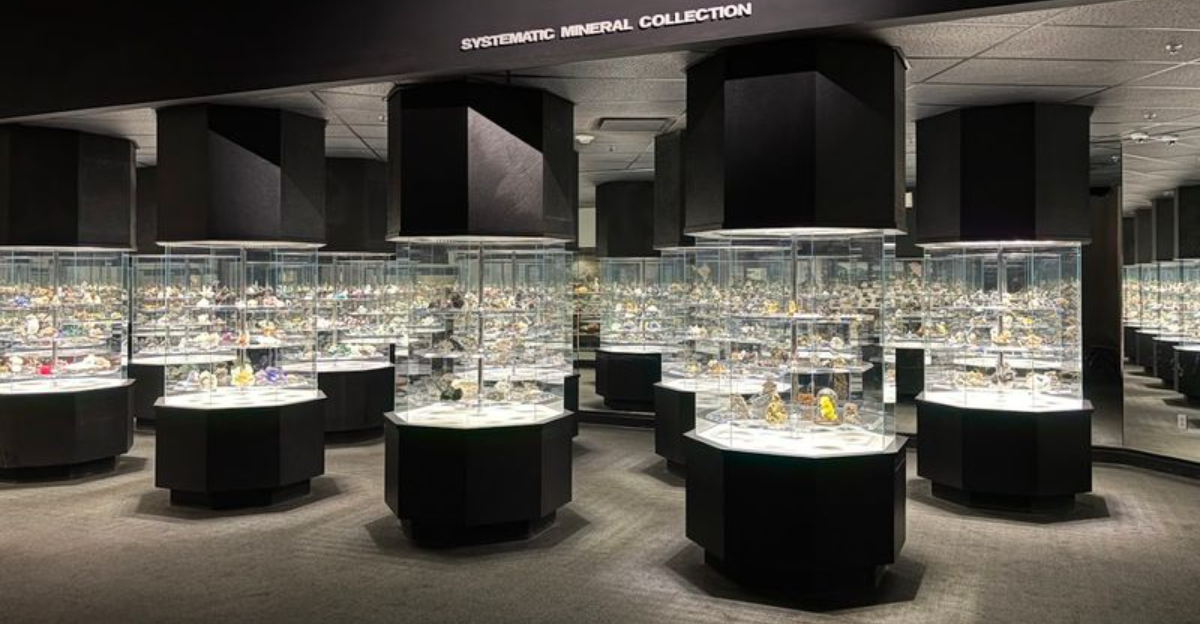
Tucked inside Pittsburgh’s Carnegie Museum of Natural History, Hillman Hall of Minerals and Gems is one of the most spectacular places you can visit in all of Pennsylvania.
Whether you love rocks, history, or just beautiful things, this hall has something that will genuinely take your breath away.
With nearly 5,000 Pennsylvania mineral specimens and a gem gallery that rivals the finest in the country, it stands as a true American treasure.
If you have never heard of it before, get ready — because this place is absolutely worth knowing about.
A Treasure in Pennsylvania
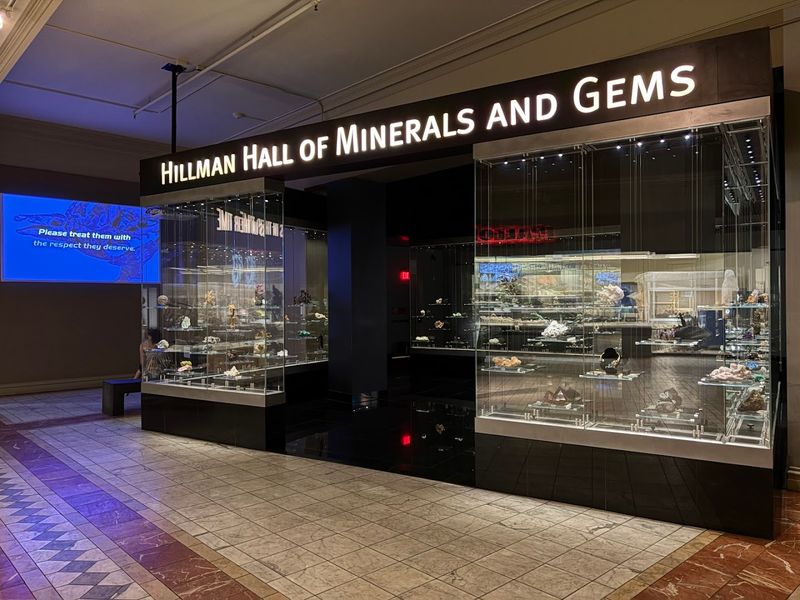
Walking into Hillman Hall of Minerals and Gems feels a little like stepping into another world. The light catches thousands of crystals, colors burst from every display case, and suddenly even the most casual visitor turns into a curious explorer.
It is that kind of place — one that surprises you no matter how many times you have been before.
Housed within the Carnegie Museum of Natural History in Pittsburgh, Pennsylvania, Hillman Hall is widely recognized as one of America’s premier mineral and gem exhibitions. The hall celebrates the science and beauty of Earth’s natural materials through vivid specimens, thoughtfully designed displays, and a layout that feels both educational and genuinely artistic.
What makes this hall stand out is how it balances learning with pure visual wonder. You can study the chemistry behind a crystal or simply admire how gorgeous it looks — both experiences are equally valid here.
Families, students, geology enthusiasts, and first-time visitors all find something meaningful to take home with them. Few places in the country manage to blend science and art so effortlessly, making Hillman Hall a true gem — in every sense of the word.
Origins of the Collection
Every great collection has to start somewhere, and Hillman Hall’s story begins modestly in the late 1800s. When the Carnegie Museum of Natural History first opened its doors, the mineral collection consisted of just around 550 specimens — a small but carefully chosen group of rocks and crystals that hinted at something much bigger to come.
Those early pieces were selected with purpose, representing a wide range of mineral types and geological origins. Even at that early stage, curators understood that a well-rounded collection needed both scientific variety and visual appeal.
That dual focus — education and beauty — became a guiding principle that still shapes the hall today.
Early acquisitions came from mineral dealers, scientific expeditions, and the growing network of natural history institutions that were exchanging specimens across the country during that era. Pittsburgh’s industrial boom also helped, bringing wealth and attention to the museum that made future growth possible.
What started as a few hundred rocks in glass cases gradually evolved into one of the richest mineral collections in the entire United States. That humble beginning of 550 specimens is a reminder that even the most extraordinary things often start with a single, well-placed step forward.
Growth Through Donations and Acquisitions
Andrew Carnegie was not just a steel magnate — he was also a passionate supporter of education and knowledge, and his influence on Hillman Hall’s collection is enormous. One of the most significant turning points in the museum’s history came when Carnegie personally funded a major purchase of mineral specimens, dramatically expanding what the collection could offer visitors and researchers alike.
Beyond Carnegie’s direct contributions, private collectors played a huge role in building the hall’s holdings over the decades. Wealthy geology enthusiasts, mining professionals, and dedicated hobbyists donated pieces from their personal collections, each gift adding new depth and diversity to what was on display.
Some of these donated specimens are now among the most prized items in the entire hall.
This pattern of growth through generosity is actually quite common in the world of natural history museums, but few institutions have benefited from it as richly as Carnegie’s. Each new acquisition brought fresh scientific value and fresh visual excitement to the collection.
Today, the result of all those purchases, gifts, and partnerships is a collection that holds tens of thousands of specimens — a living legacy built by many hands over more than a century of dedication to natural science.
World-Class Pennsylvania Mineral Suite
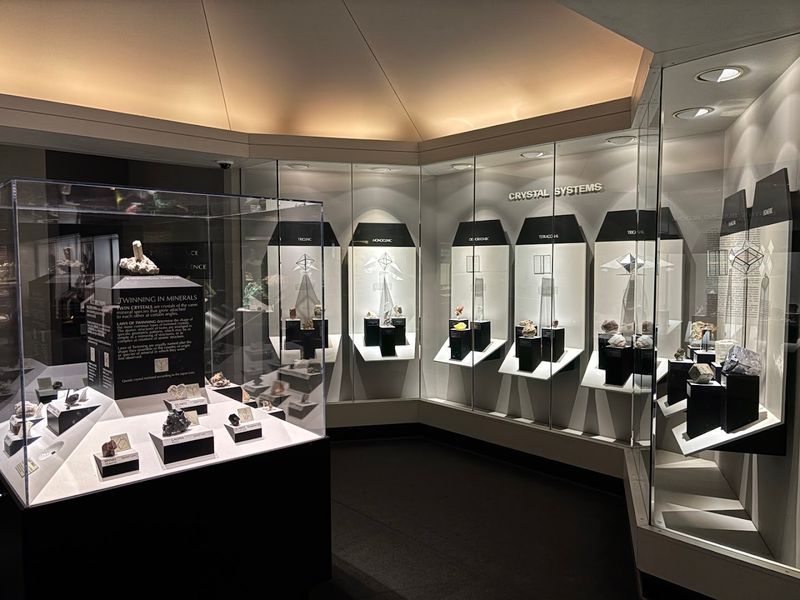
Pennsylvania has a surprisingly rich geological story, and Hillman Hall tells it better than almost anywhere else. The museum’s Pennsylvania mineral suite contains close to 5,000 individual specimens — a staggering number that reflects just how geologically diverse this state really is.
From the iron-rich soils of the western counties to the limestone valleys of the central region, Pennsylvania’s underground world is full of surprises.
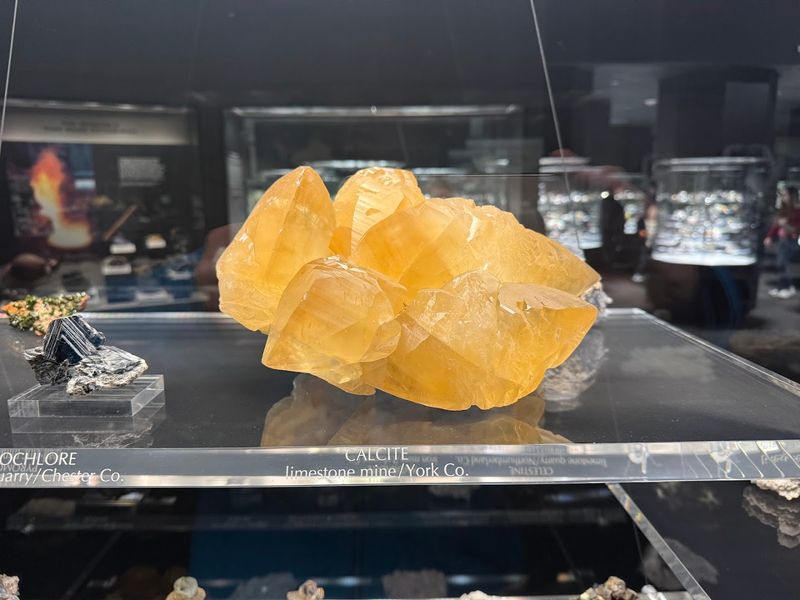
Minerals like pyrite, calcite, sphalerite, and various forms of quartz are well represented, alongside rarer finds tied to Pennsylvania’s long history of coal, iron, and zinc mining. Each specimen carries a piece of the state’s industrial and geological past, making the suite as historically meaningful as it is scientifically impressive.
For anyone who grew up in Pennsylvania, seeing these minerals can feel almost personal.
The sheer scale of the collection gives researchers and educators an incredibly detailed picture of the state’s mineralogy. Schools and universities have used the suite for study, and geology students from across the region regularly visit to see specimens they might otherwise only read about in textbooks.
Whether you are a lifelong Pennsylvanian or just passing through Pittsburgh, this suite offers a genuinely eye-opening look at the rich earth beneath your feet.
Exhibit Themes and Sections
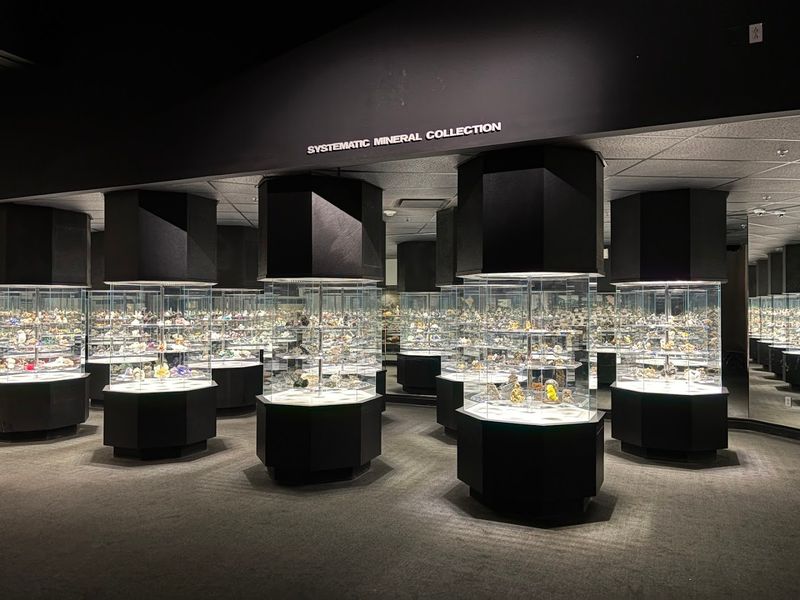
One of the smartest things about Hillman Hall is how it is organized. Rather than just lining up rocks in alphabetical order, the hall is divided into distinct themed sections that each explore a different side of mineralogy.
This approach makes the experience feel fresh and dynamic, almost like visiting several smaller museums within one larger space.
Crystallography exhibits explain how minerals form their geometric shapes, using models and real specimens to show the science behind those stunning crystal structures. Fluorescence displays are a crowd favorite — ultraviolet lights reveal hidden colors inside minerals that are completely invisible under normal lighting, turning an ordinary-looking rock into something magical.
Systematic displays organize minerals by chemical family, helping visitors understand how Earth’s elements combine to create the variety of materials we see.
Locality suites group specimens by where they were found in the world, giving visitors a geographic perspective on mineralogy. Seeing minerals from a specific mountain range or mining district all together creates a surprisingly powerful sense of place.
Each section of the hall builds on the others, creating a complete educational journey from basic chemistry to global geology. It is the kind of exhibit design that rewards both quick visits and long, leisurely exploration equally well.
Masterpiece Gallery and Aesthetic Highlights
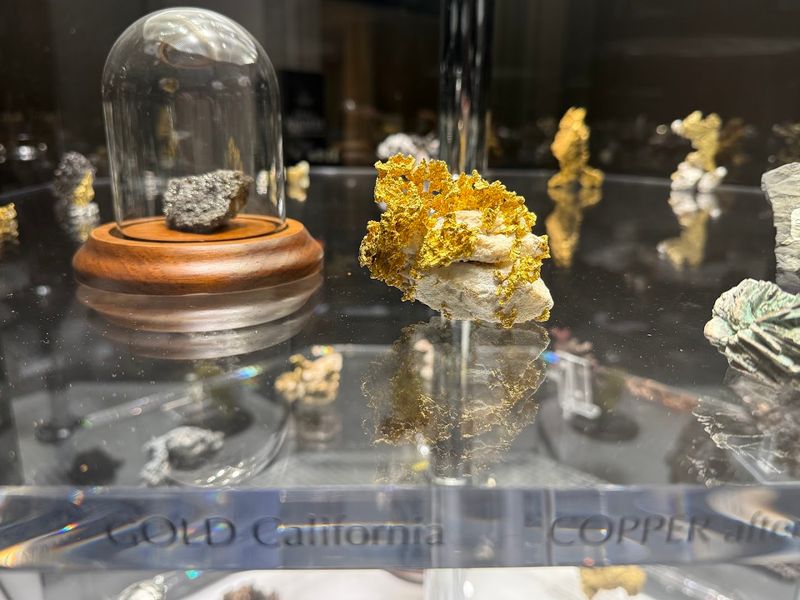
Some minerals are not just scientifically interesting — they are flat-out stunning. The Masterpiece Gallery inside Hillman Hall is where those exceptional specimens live, displayed with the same care and reverence you might expect in a fine art museum.
Dramatic lighting, careful positioning, and generous open space around each piece give visitors room to truly appreciate what they are looking at.
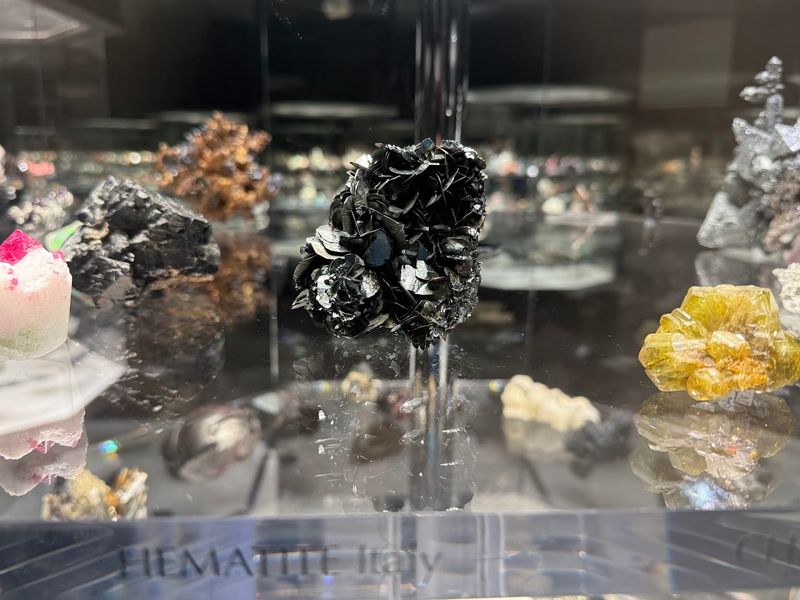
Specimens here come from mineral-rich locations around the globe — brilliant azurite clusters from Morocco, towering quartz formations from Brazil, and rare colored tourmalines that look almost too vivid to be real. Each piece was selected not just for its geological significance but for its sheer visual impact.
Standing in front of some of these specimens, it is genuinely hard to believe they formed naturally inside the Earth.
The gallery also serves an important educational purpose by showing visitors the full range of what minerals can look like at their absolute finest. Many people grow up thinking rocks are boring, but one walk through the Masterpiece Gallery tends to change that opinion permanently.
It is an experience that sticks with you — the kind of beauty that makes you want to learn more about how something so extraordinary could come from the ground beneath our feet.
Wertz Gallery of Gems and Jewelry

If the rest of Hillman Hall makes you fall in love with minerals, the Wertz Gallery of Gems and Jewelry will absolutely seal the deal. Dedicated entirely to gems, cut stones, and fine jewelry, this gallery is a dazzling space that feels almost like a high-end jeweler’s showroom — except everything here comes with a scientific story attached.
Hundreds of gemstones are on display, ranging from familiar favorites like rubies, sapphires, and emeralds to rarer stones that most visitors have never heard of before. Cut stones are presented alongside their rough, uncut counterparts, helping visitors understand the transformation that turns a raw mineral into a polished gem.
The jewelry pieces show how humans have used these natural materials creatively across different cultures and time periods.
What makes the Wertz Gallery special is that it bridges the gap between geology and human artistry. A sparkling diamond necklace and a raw diamond crystal might sit just a few feet apart, telling a complete story from Earth’s crust to a craftsman’s workbench.
Gem enthusiasts, jewelry lovers, and curious kids all find plenty to admire here. It is consistently ranked among the highlights of any visit to Hillman Hall, and it is easy to see — and feel — exactly why.
Interactive Learning Elements
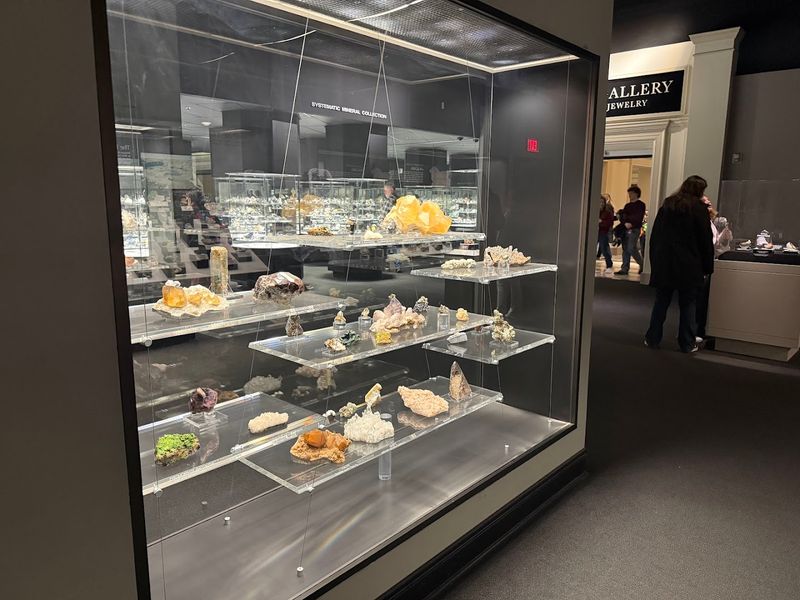
Hillman Hall understands that the best way to learn something is to experience it directly, and the hall delivers on that idea in some genuinely fun ways. Ultraviolet light displays are among the most popular interactive features — visitors step into darkened areas where ordinary-looking minerals suddenly burst into vivid greens, oranges, and pinks under UV light.
It is one of those moments that makes both kids and adults say “wow” out loud.
Labeled chemical compositions throughout the hall help connect what visitors see with what they know from science class. Understanding that a beautiful purple amethyst is simply a form of silicon dioxide — the same material as common sand — makes geology feel surprisingly accessible.
These labels are written clearly enough for younger visitors to follow without talking down to adult learners.
Interactive elements also include physical models that demonstrate crystal structure and formation processes, giving a three-dimensional understanding of concepts that can be hard to visualize from a book alone. The hall does a great job of layering information so that casual visitors can enjoy the visuals while more serious learners can go deeper.
Every interactive feature is designed to spark curiosity rather than just deliver facts, which is exactly what a great museum experience should do.
Visitor Impressions and Popularity
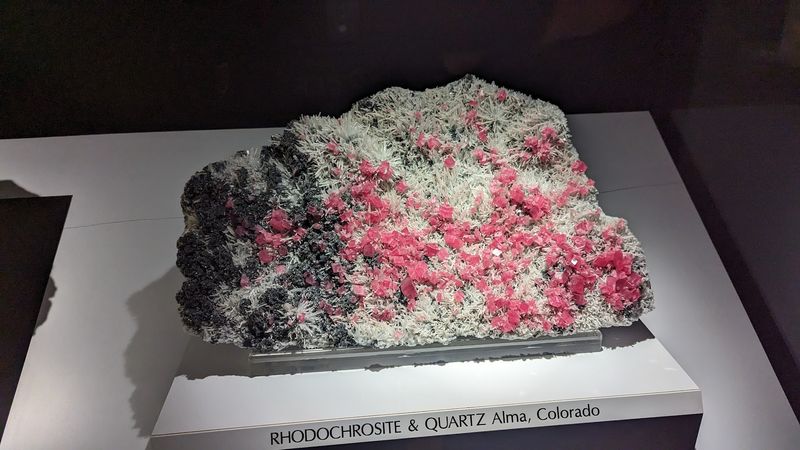
Ask almost anyone who has visited Hillman Hall what they thought, and you will hear the same words come up again and again: breathtaking, incredible, and surprisingly emotional. There is something about being surrounded by so much natural beauty — all of it pulled from the Earth — that hits people in an unexpected way.
First-time visitors often say they had no idea a mineral collection could feel this moving.
Online reviews and visitor feedback consistently place Hillman Hall among the top highlights of the entire Carnegie Museum of Natural History, which is saying something given how many remarkable exhibits the museum contains. Families with young children love it because the colors and sparkle capture kids’ attention instantly.
Geology enthusiasts appreciate the scientific depth, while casual visitors simply enjoy the visual spectacle.
Teachers frequently bring school groups here because the hall connects so naturally to science curriculum — earth science, chemistry, and physical geography all find touchpoints within the displays. Many visitors report that their trip to Hillman Hall reignited a childhood love of rocks and minerals they had long forgotten.
That kind of lasting impact is the mark of a truly special exhibit. Whether you come expecting a lot or just a little, Hillman Hall has a way of exceeding whatever you brought with you.
Visitor Info and Planning Tips
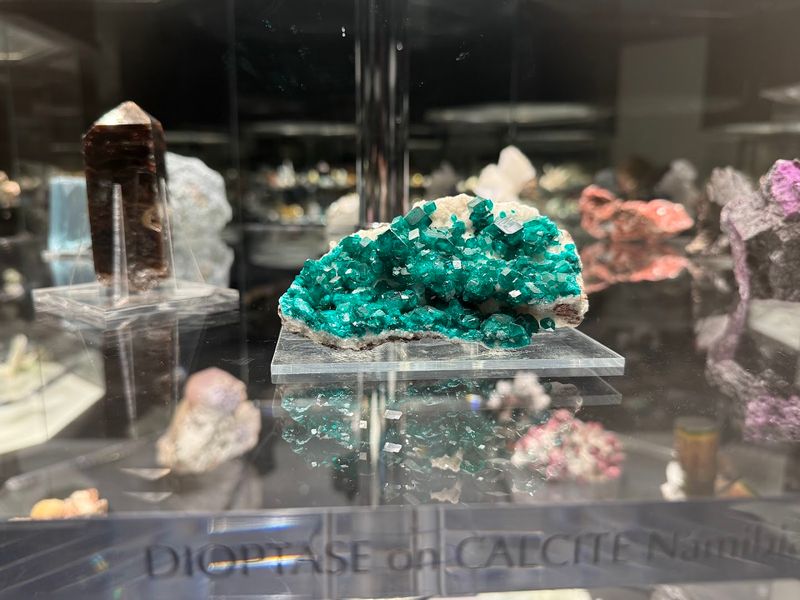
Planning a trip to Hillman Hall is straightforward, and the experience is well worth the effort. The hall is located inside the Carnegie Museum of Natural History at 4400 Forbes Ave, Pittsburgh, PA 15213.
Admission to Hillman Hall is included with your general Carnegie Museum of Natural History ticket, so you get access to the entire museum — including dinosaur exhibits, anthropology galleries, and more — all in one visit.
For current hours, ticket prices, and upcoming events, the best resource is the official Carnegie Museums website at carnegiemnh.org. You can also call the museum directly at (412) 622-3131 to ask about guided tours, school group bookings, or special programming.
The museum frequently offers themed events and after-hours experiences that can make your visit even more memorable.
If you want a quieter experience with more time to linger at each display, weekday mornings tend to be less crowded than weekends. Guided tours of Hillman Hall are occasionally offered and are highly recommended for visitors who want deeper context behind the specimens on display.
Wear comfortable shoes since the museum is large, and consider arriving early to give yourself plenty of time. Hillman Hall alone could easily fill an hour or two for anyone who loves minerals, gems, or simply beautiful things.