Tucked just off Interstate 75 in Cartersville, Georgia, the Tellus Science Museum is the kind of place that turns a regular weekend into an unforgettable adventure.
Whether you want to hold a real megalodon tooth, pan for gemstones, or peer through a massive telescope at the night sky, this museum has something for everyone.
Spanning over 120,000 square feet and affiliated with the Smithsonian Institution, it ranks among the largest and most impressive science museums in the entire Southeast.
If you haven’t visited yet, you’re in for a seriously exciting experience.
A Massive, Smithsonian-Affiliated Science Destination
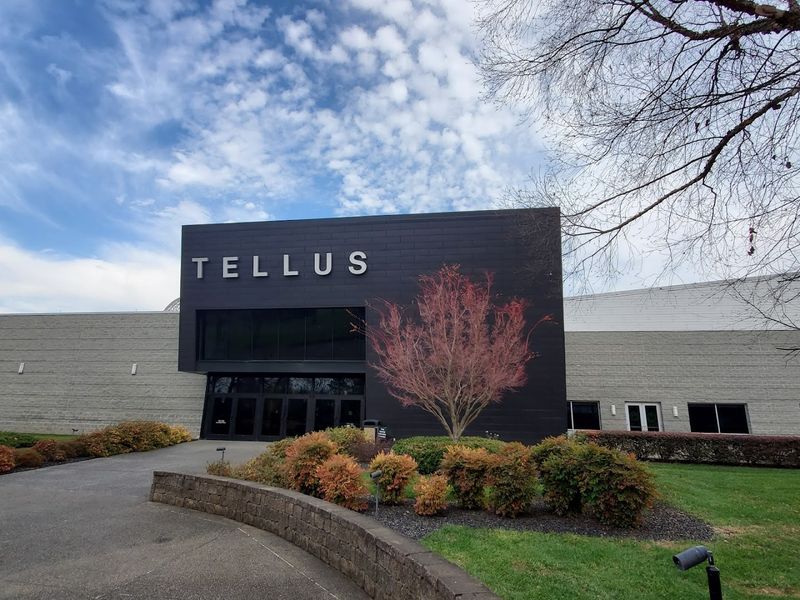
Not every museum earns the right to carry the Smithsonian name, but Tellus Science Museum in Cartersville, Georgia has done exactly that. Spanning more than 120,000 square feet, it stands as one of the largest science museums in the entire Southeast region — and it absolutely lives up to that title.
Being Smithsonian-affiliated means the museum meets high standards for educational content, exhibit quality, and scientific accuracy. That kind of credibility matters, especially when you’re bringing kids who are curious about the world around them.
You can trust that what you’re learning here is grounded in real science.
The building itself is architecturally impressive, with spacious halls, wide open exhibit floors, and thoughtfully designed spaces that make exploration feel natural and exciting. First-time visitors often describe the sheer scale as overwhelming in the best possible way.
You could spend an entire day here and still feel like you’ve only scratched the surface.
Located conveniently close to Atlanta — roughly an hour’s drive — Tellus makes for a perfect family day trip. Admission prices are reasonable, and the value you get for your money is genuinely hard to beat.
Whether you’re a science nerd or just looking for a fun outing, this museum delivers.
The Jaw-Dropping Fossil Gallery
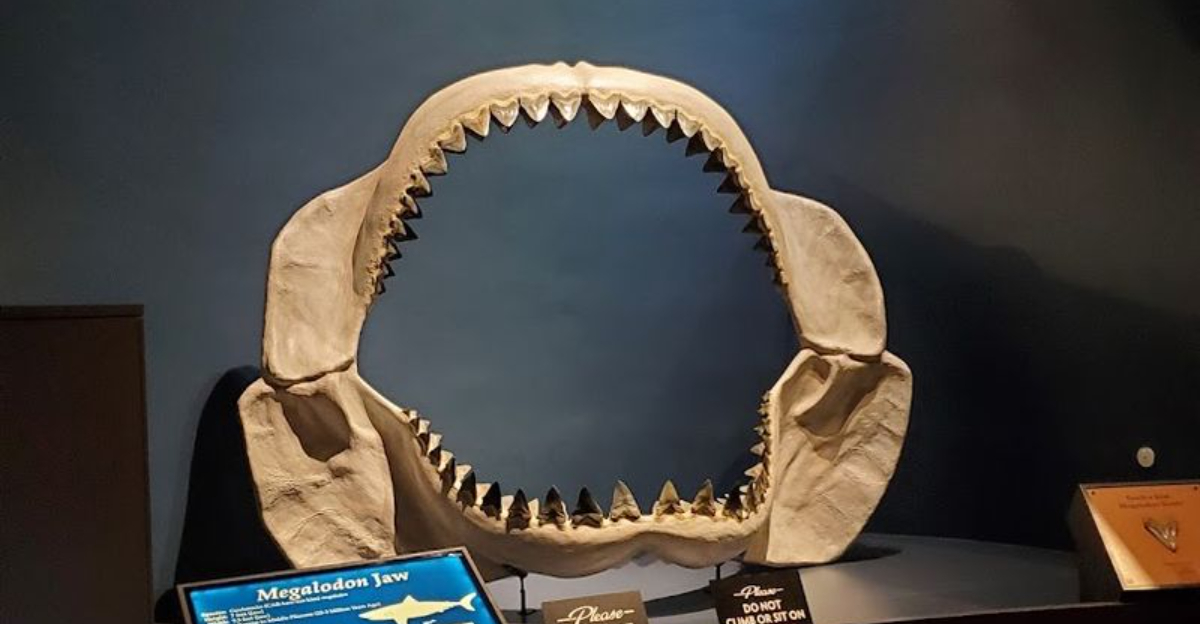
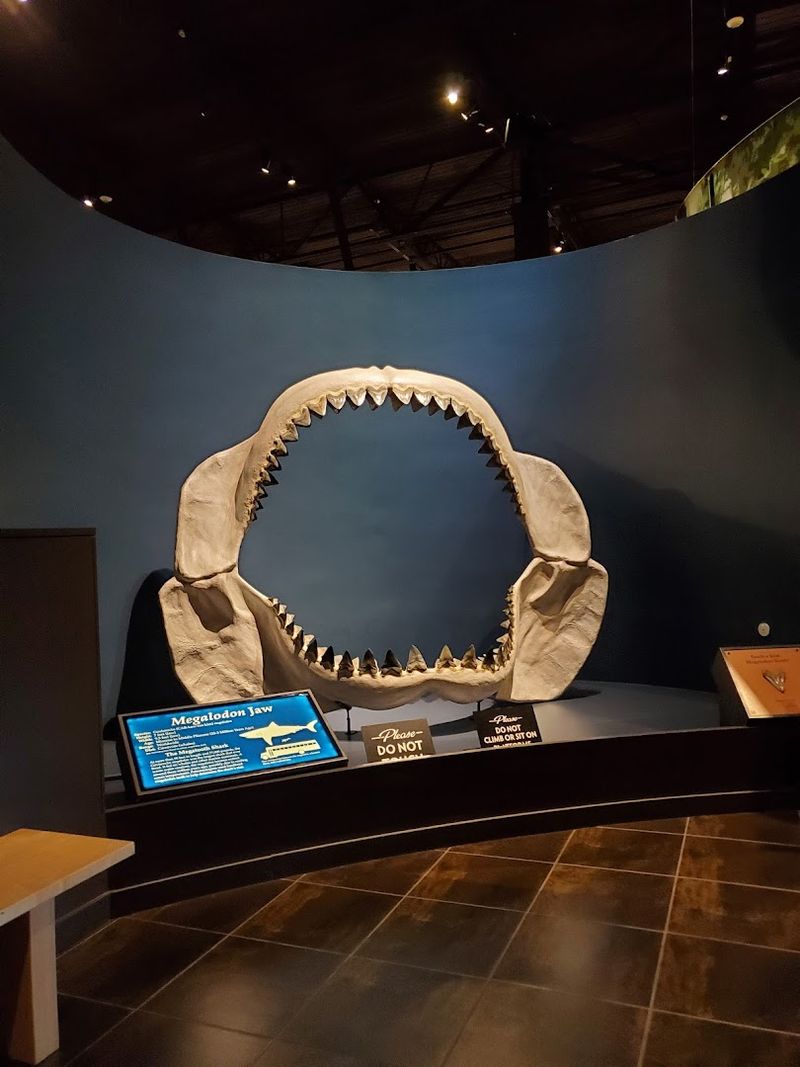
Imagine standing in front of a jaw so enormous it could swallow a small car whole. That’s essentially the experience waiting for you inside Tellus’s fossil gallery, where a reconstructed megalodon jaw — built using real fossilized teeth — commands the room like nothing else could.
Megalodon was a prehistoric shark that ruled the oceans millions of years ago, and its teeth are among the most sought-after fossils on the planet. Seeing them up close, arranged in that fearsome arc of ancient enamel, gives you a gut-level sense of just how powerful this creature must have been.
It’s the kind of exhibit that stops people mid-stride.
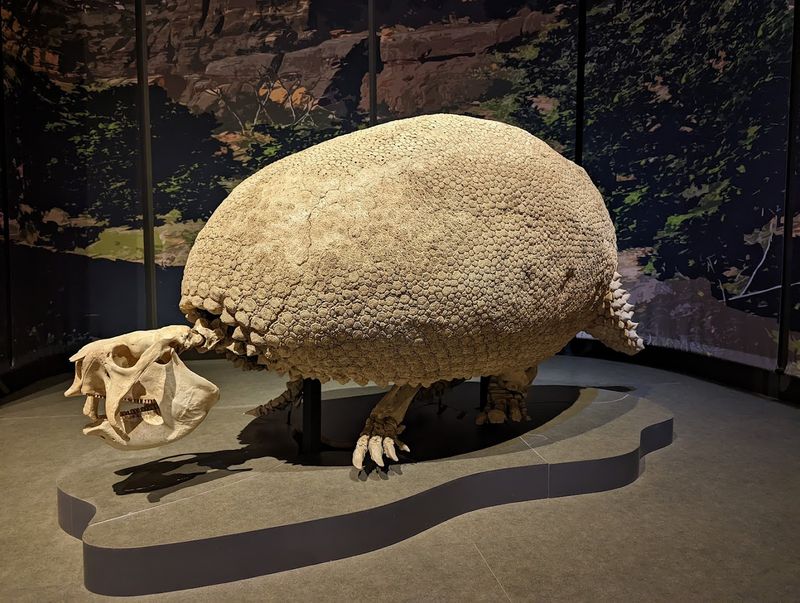
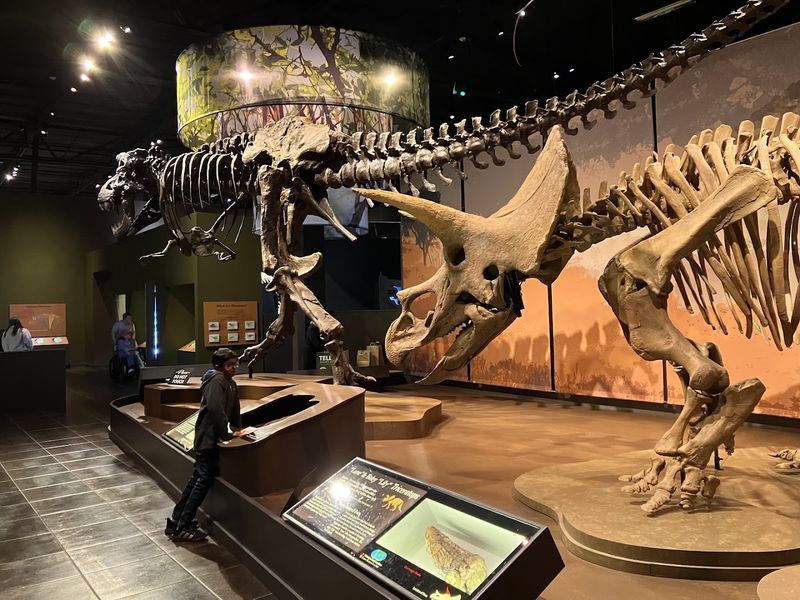
Beyond the megalodon, the fossil gallery is packed with other prehistoric wonders. Life-sized skeletal reconstructions, ancient marine creatures, and geological timelines help paint a vivid picture of Earth’s deep history.
Each display is labeled clearly enough for younger visitors to follow along without getting lost in scientific jargon.
Parents especially appreciate how the fossil gallery sparks genuine curiosity in kids who might not otherwise care about prehistoric science. After walking through this space, most visitors leave with a new appreciation for just how wild and ancient our planet really is.
Hands-On Gem Panning and Fossil Digging
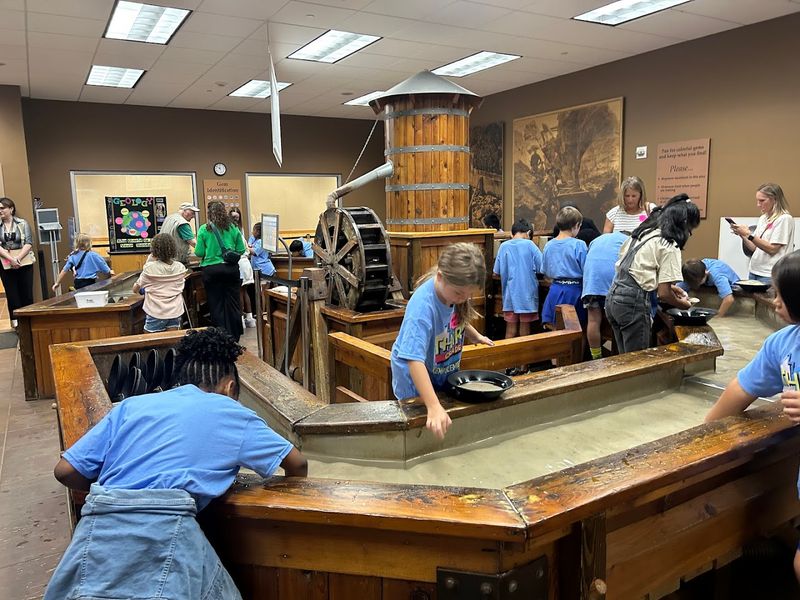
Some museum experiences you watch — this one you actually dig into, literally. Gem panning and fossil digging at Tellus are two of the most popular activities on the property, and for good reason: they let you walk away with something real.
At the gem panning sluice, visitors scoop bags of gem-rich sand into a screen and wash it through flowing water. As the sediment clears, colorful stones begin to appear — amethyst, quartz, garnets, and more.
It sounds simple, but the thrill of spotting your first sparkly gem never gets old, no matter your age.
The fossil digging area offers a similar rush. Kids and adults crouch over sandy dig zones, carefully brushing away material to uncover prehistoric fragments.
Staff members are usually nearby to help identify what you’ve found, which adds a wonderful layer of learning to the excitement.
Both activities do carry a small additional fee beyond general museum admission, so budget accordingly. Still, most families consider it one of the best parts of the whole visit.
There’s something uniquely satisfying about taking home a real gem or fossil you found yourself — a souvenir that carries a story worth telling long after the trip is over.
The Stunning Weinman Mineral Gallery
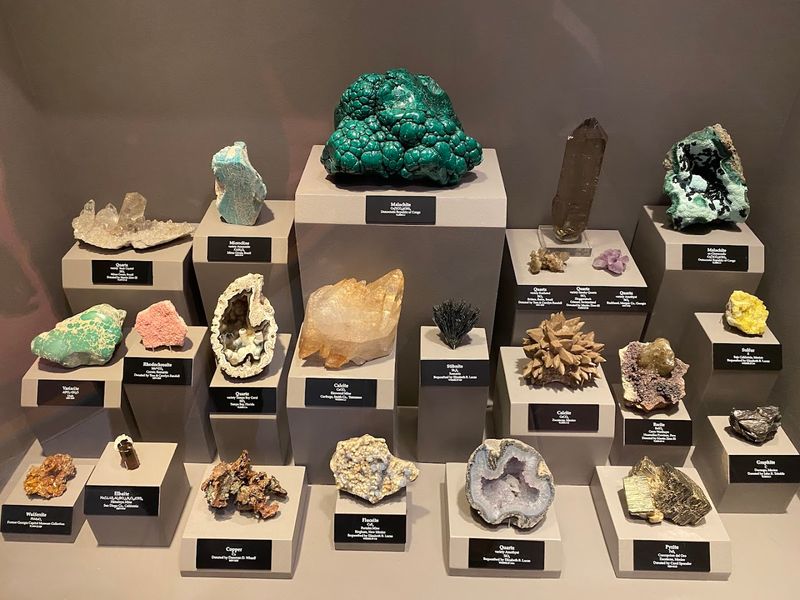
Walk into the Weinman Mineral Gallery and prepare to have your breath taken away. Thousands of minerals, gems, and geologic specimens fill beautifully lit display cases, turning this gallery into something that feels more like a treasure vault than a science exhibit.
From towering amethyst geodes to delicate crystalline formations that look almost too perfect to be natural, the variety on display here is extraordinary. Some specimens glow under ultraviolet light, shifting into brilliant neon colors that feel almost otherworldly.
It’s one of those rare exhibits where every single case rewards a second and third look.
The Weinman Gallery is named in honor of the family whose generous donation helped fund this remarkable collection. The curators have done an excellent job organizing specimens by type, origin, and geological significance, making it educational without ever feeling like a textbook.
Labels are written accessibly, so even young visitors can follow along.
Geology enthusiasts will find this gallery particularly rewarding, but you honestly don’t need any background knowledge to appreciate its beauty. The sheer visual impact of the collection does all the work.
Whether you’re eight years old or eighty, standing inside this gallery and gazing at Earth’s natural artistry is a genuinely moving experience worth every minute.
Science in Motion Gallery
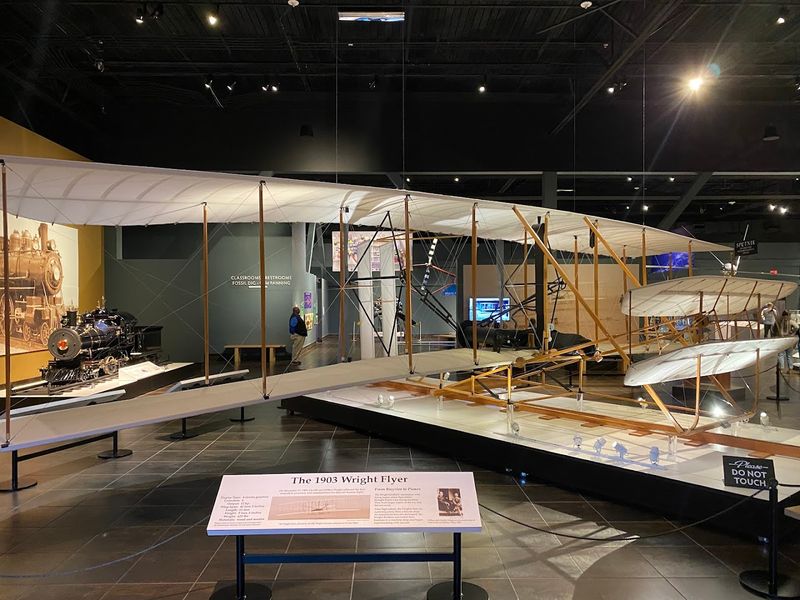
Human beings have always been obsessed with going faster, flying higher, and reaching farther — and the Science in Motion Gallery at Tellus captures that restless spirit beautifully. From early automobiles to spacecraft components, this exhibit traces the arc of technological innovation across more than a century.
Vintage vehicles are among the highlights here, with classic cars and early transportation machines displayed in a way that makes history feel tangible. Seeing the evolution from horse-drawn carriages to jet-age aircraft laid out in sequence gives you a genuine appreciation for how rapidly human ingenuity can accelerate when given the right conditions.
Aviation and spaceflight artifacts add another thrilling layer to the gallery. Authentic equipment, scale models, and interactive displays bring the history of flight to life in ways that pure textbook learning simply can’t replicate.
Kids who dream of becoming pilots or astronauts tend to linger in this section far longer than anywhere else.
What makes Science in Motion especially effective is how it connects past discoveries to present-day technology. The exhibit quietly reminds visitors that every modern convenience — from the car in your driveway to the phone in your pocket — traces back to someone’s bold, creative idea.
That message alone makes the gallery worth visiting.
My Big Backyard: A Kid-Focused Science Zone
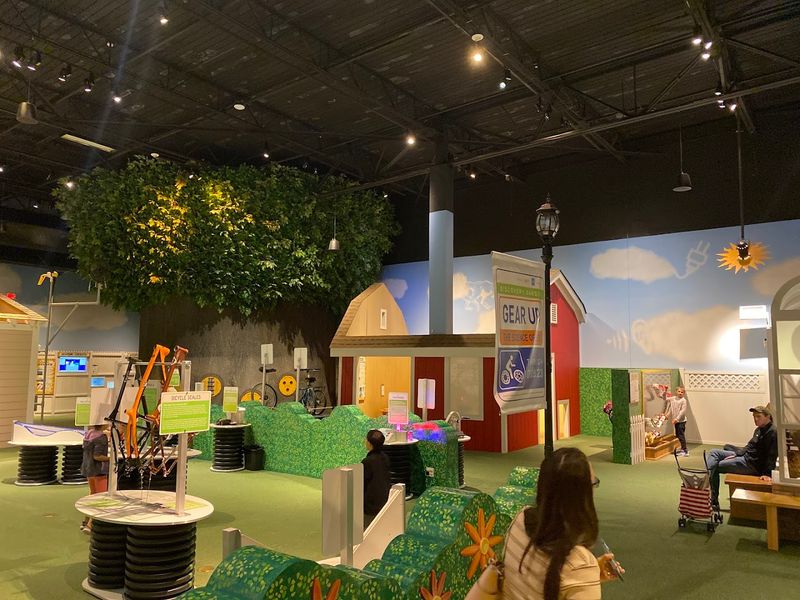
Younger visitors sometimes get lost in museums designed primarily for older audiences — but My Big Backyard at Tellus was built with little ones squarely in mind. This cheerful, hands-on zone introduces foundational science concepts through play, making learning feel like the best game in the room.
Light, sound, and magnetism are among the core topics explored here, each presented through interactive stations that invite kids to touch, test, and discover. Instead of reading about how magnets work, children can feel the push and pull for themselves.
That kind of sensory learning sticks in ways that passive observation never quite achieves.
The design of the space is warm and inviting, with colorful displays scaled to kid-friendly heights and activities structured to encourage exploration rather than instruction. Parents can participate alongside their children or simply watch as their little ones figure things out independently — both experiences are genuinely delightful.
Early childhood educators often point out that science curiosity planted young tends to grow into lifelong learning habits. My Big Backyard seems designed with exactly that philosophy in mind.
It’s not just a play area — it’s a carefully crafted environment where the seeds of scientific thinking get planted in the most natural, joyful way possible. Bring extra time; kids rarely want to leave.
The Bentley Planetarium Experience
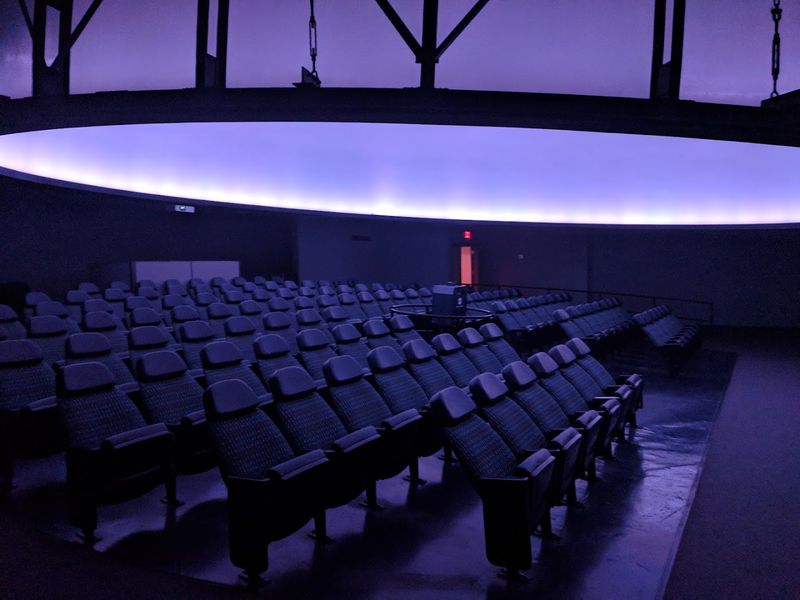
Few experiences match the feeling of reclining in a darkened dome while the entire universe unfolds above your head. The Bentley Planetarium at Tellus delivers exactly that, offering immersive full-dome shows that transport audiences through galaxies, nebulae, and solar systems light-years away from Georgia.
The projection technology used here is genuinely impressive. High-resolution imagery fills the curved ceiling from edge to edge, creating a wraparound visual experience that feels nothing like watching a regular movie.
When the show sweeps past Saturn’s rings or zooms through a star cluster, the sense of scale and wonder hits differently than any flat screen could produce.
Planetarium shows at Tellus cover a range of topics, from introductory programs perfect for young children to more detailed explorations of black holes, cosmic evolution, and the search for life beyond Earth. Show schedules vary, so checking the museum’s official website before your visit is a smart move to make sure you catch the one that fits your group best.
Even visitors who don’t consider themselves astronomy fans tend to walk out of the Bentley Planetarium with a fresh sense of wonder about the cosmos. Something about seeing the universe rendered at that scale — immersive, overwhelming, and beautiful — has a way of putting everyday life into a much larger perspective.
Stargazing at the Observatory’s 20-Inch Telescope
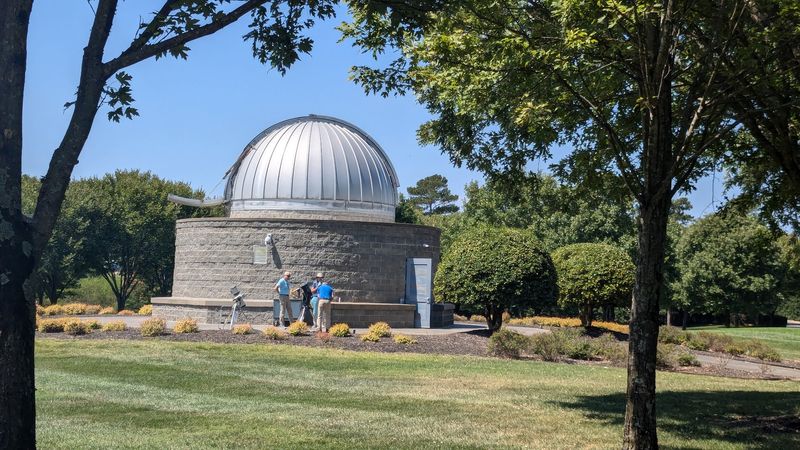
There’s a big difference between seeing a photograph of the Moon and actually pressing your eye to a telescope eyepiece and watching it hang there in the dark, crater-pocked and luminous. Tellus gives visitors that second, far more powerful experience through its on-site observatory and 20-inch telescope.
Twenty inches refers to the diameter of the telescope’s primary mirror — a measurement that translates directly into light-gathering power and image clarity. With an instrument this size, you can observe craters on the Moon in remarkable detail, trace the rings of Saturn, spot Jupiter’s cloud bands, and even pick out distant star clusters invisible to the naked eye.
The observatory programs at Tellus typically run during special evening events and skywatch nights, which are scheduled periodically throughout the year. These events are enormously popular and often fill up quickly, so registering in advance through the museum’s website is strongly recommended.
Showing up without a reservation can mean missing out entirely.
Experienced staff members guide visitors through each observation session, pointing out celestial objects and explaining what they’re seeing in plain, accessible language. Whether you’re a seasoned stargazer or someone who has never looked through a telescope before, an evening at Tellus’s observatory has a way of making the universe feel personally yours.
Rotating Special Exhibits and Events
One of the smartest things about Tellus is that it never lets itself get stale. Rotating special exhibits mean that even frequent visitors have good reason to come back, because there’s almost always something new waiting to be discovered beyond the permanent galleries.
Past rotating exhibits have ranged from deep-space themed installations to hands-on science workshops centered around biology, chemistry, and environmental science. The variety keeps the museum relevant and exciting across different age groups and interests.
A kid who loved the space exhibit last spring might find a geology workshop this fall equally captivating.
Seasonal events add another layer of appeal. Holiday-themed science nights, summer learning programs, and community outreach events make Tellus feel like a living, breathing part of the Cartersville community rather than just a static building full of displays.
These events often sell out, so keeping an eye on the museum’s event calendar pays off.
For teachers and homeschooling families, the rotating programming is especially valuable. Curriculum-aligned workshops and field trip packages are frequently updated to match current educational standards, making Tellus a reliable partner in year-round learning.
Checking the official Tellus website regularly ensures you never miss an event that might be perfectly timed for your family or classroom visit.
Visitor Info and Tips
Planning your visit to Tellus Science Museum is straightforward, and a little preparation goes a long way toward making the day run smoothly. The museum is located at 100 Tellus Drive, Cartersville, GA 30120, and can be reached by phone at 770-606-5700.
It sits just off Interstate 75, making it an easy one-hour drive from Atlanta.
General hours run daily from 10 AM to 5 PM, though it’s always worth confirming on the official website before heading out, especially around holidays. Most families find that budgeting two to three hours covers the main galleries comfortably, but if you plan to include gem panning, fossil digging, and a planetarium show, set aside a full day.
Wear comfortable shoes — there’s a lot of ground to cover.
Parking is free and plentiful, which is a genuinely nice perk for a museum of this size. Bring a light snack or plan to use the on-site cafe, since longer visits tend to work up an appetite.
Strollers are welcome throughout the facility.
For evening skywatch programs at the observatory, advance registration through the museum’s website is essential since spots fill quickly. Checking the planetarium show schedule ahead of time also helps you plan your arrival.
Tellus is one of those rare places where every visit feels worth the trip.