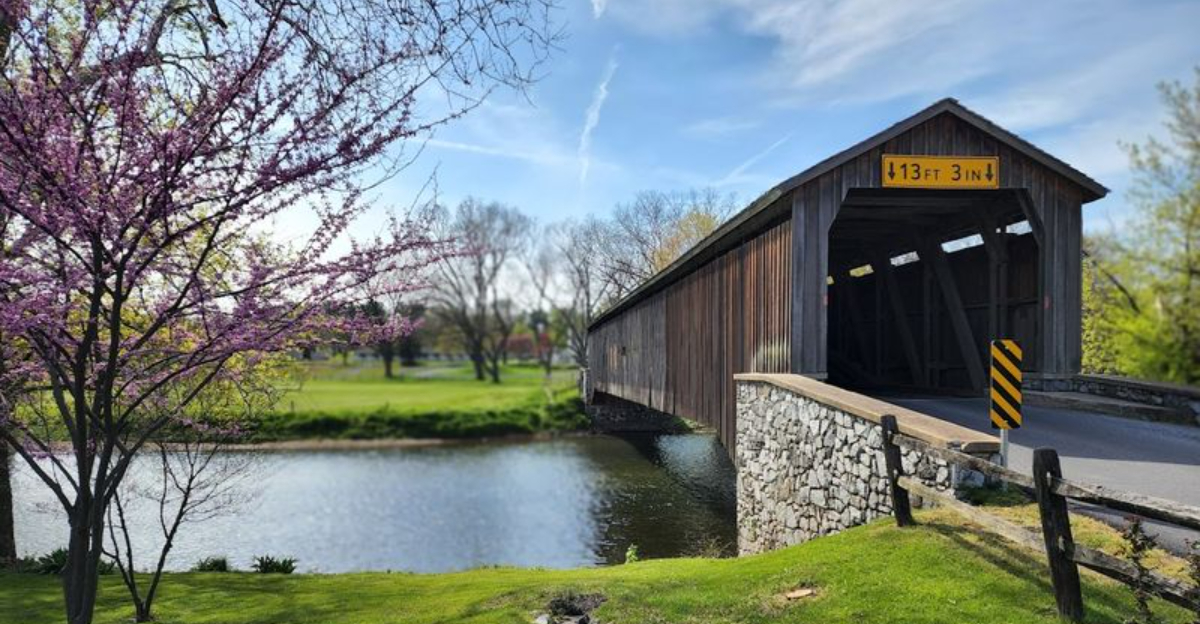
Pennsylvania is home to some of the most beautiful covered bridges in the entire country, and the best part is you can still drive through many of them today.
These wooden structures were built in the 1800s to protect the bridge timbers from rain and snow, helping them last much longer than open bridges.
Rolling through one feels like stepping back in time, with the smell of old wood and the sound of your tires echoing off the walls.
Whether you are exploring Amish Country in Lancaster County or winding through Bucks County farmland, these 12 bridges are absolutely worth the trip.
Hunsecker’s Mill Covered Bridge (Lancaster County)
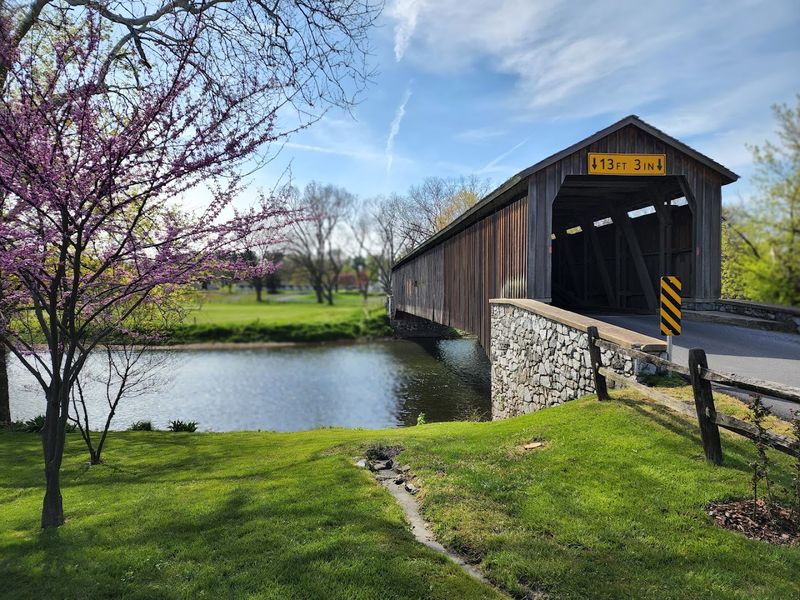
Stretching an impressive 180 feet across the Conestoga River, Hunsecker’s Mill Covered Bridge holds the title of one of the longest single-span covered bridges still carrying active traffic in the entire United States. That alone makes it worth finding on a map.
Built in the heart of Lancaster County’s Amish Country, this bridge is not just a historic relic sitting behind a fence — it is a living, working part of the local road system.
Locals drive over it daily, and you might even catch a horse-and-buggy clip-clopping through while you wait your turn. The surrounding scenery is quintessential Pennsylvania countryside, with rolling green fields and farmhouses dotting the horizon.
When sunlight filters through the bridge’s wooden slats, the effect is nothing short of magical.
The original structure was destroyed by a flood in 1972 from Hurricane Agnes and was rebuilt shortly after, staying true to its traditional Burr arch design. Visiting in the early morning gives you the best chance of having it nearly to yourself.
Bring a camera, because the view from both ends of the bridge — with the Conestoga River flowing below — is genuinely postcard-worthy and hard to forget.
Pine Grove Covered Bridge (Lancaster County)
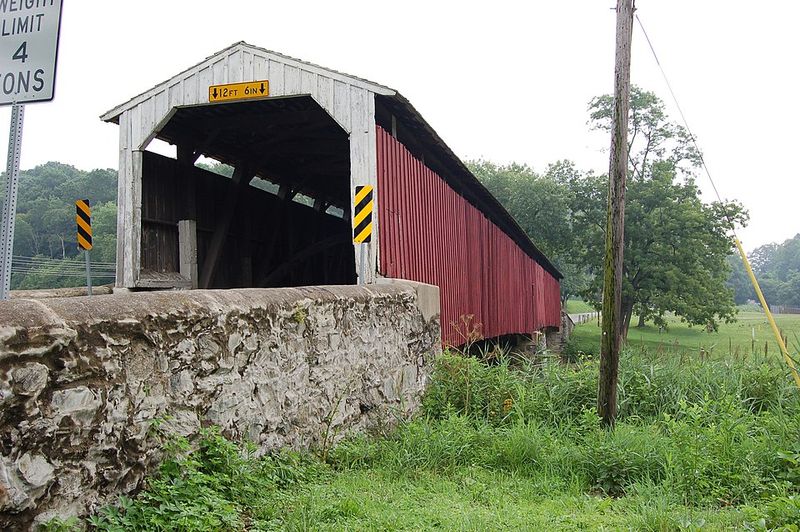
Painted a bold, barn-red color that practically glows against the surrounding green farmland, Pine Grove Covered Bridge is one of the most photographed covered bridges in all of Pennsylvania. It has the kind of look that makes you pull over without even planning to.
Sitting quietly along a rural Lancaster County road, this bridge carries real vehicle traffic and has been doing so for well over a century.
What makes Pine Grove especially fun to visit is how approachable it feels. There are no crowds, no ticket booths, and no velvet ropes — just a beautiful old bridge doing exactly what it was built to do.
The open fields around it make for gorgeous photos during golden hour, when the warm light catches the red wood just right.
Photographers, history buffs, and casual road-trippers all tend to fall a little in love with this spot. The bridge is part of Lancaster County’s well-known covered bridge driving tour, which strings together multiple historic crossings into one unforgettable afternoon route.
If you are planning a trip to Amish Country, adding Pine Grove to your itinerary takes almost no extra effort and rewards you with one of the most charming sights in the region.
Weaver’s Mill Covered Bridge (Lancaster County)
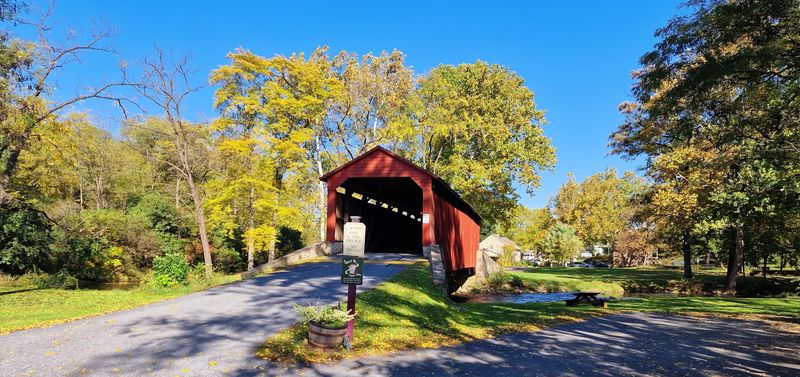
Few covered bridges in Pennsylvania tell the story of everyday rural life quite like Weaver’s Mill. Still open to both cars and horse-and-buggy crossings, this bridge is not just a piece of preserved history — it is a functioning part of the community that built it.
Watching an Amish buggy roll through the same wooden tunnel that carriages used in the 1800s is a genuinely humbling experience.
The bridge sits within Lancaster County’s dense network of back roads, where the pace of life slows down considerably. Farmers still work the fields nearby, and the sound of hooves on old wooden planks is not unusual on a quiet weekday morning.
It is one of those rare places where the 19th century and the present exist side by side without any awkwardness.
Weaver’s Mill is included on many covered bridge trail maps for Lancaster County, making it easy to combine with several other historic crossings in a single day trip. The structure itself reflects traditional timber craftsmanship that modern construction simply does not replicate.
If you appreciate the idea of infrastructure that has outlasted everything built around it, this bridge will leave a lasting impression on you and anyone you bring along for the ride.
Erb’s Covered Bridge (Lancaster County)
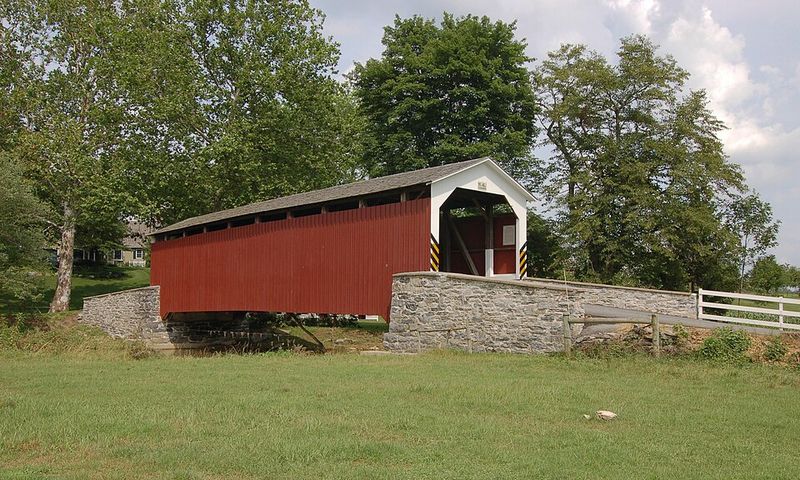
Built in 1849, Erb’s Covered Bridge has been standing longer than most American institutions most people can name off the top of their heads. That kind of age is remarkable on its own, but what makes it even more impressive is that this Burr arch bridge is still actively used as part of a rural road network in Lancaster County.
It was not retired to a park or a museum — it just kept working.
The Burr arch design, named after bridge builder Theodore Burr, combines a multiple kingpost truss with a long arch, giving the structure both flexibility and strength. Engineers today still admire how well this 19th-century technique has held up over generations of use.
Erb’s is a great example of why covered bridges were such an engineering achievement for their era.
Visiting this bridge feels a bit like stumbling onto a secret. It sits along a quiet country road without much fanfare, and that low-key quality is part of its charm.
Bring a picnic and find a shady spot nearby, because the surrounding farmland is peaceful and unhurried. History does not always come with a grand entrance, and Erb’s Covered Bridge is living proof of that quiet, enduring kind of greatness.
Zook’s Mill Covered Bridge (Lancaster County)
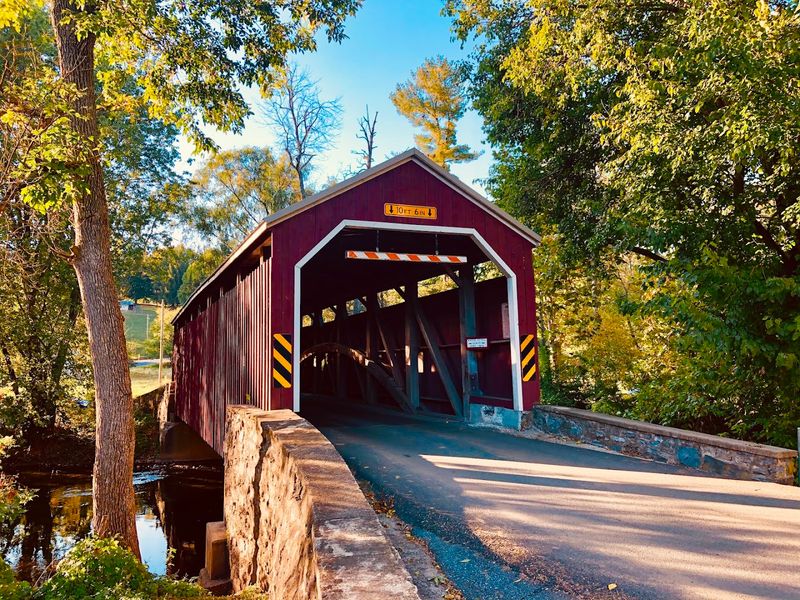
Zook’s Mill Covered Bridge has a comeback story worth knowing. The original structure was destroyed by fire, a fate that has claimed many of Pennsylvania’s historic bridges over the years.
Rather than letting the loss stand, the community worked to reconstruct the bridge using traditional methods and materials, keeping the spirit of the original very much alive. Today, it carries vehicles along a quiet Lancaster County road just as it always did.
There is something meaningful about a bridge that was rebuilt rather than replaced with concrete and steel. It shows that the people living around it understood what they had and were not willing to simply move on.
That kind of community investment in local history is increasingly rare, which makes Zook’s Mill feel extra special when you cross it.
The setting is classic Lancaster County — flat farmland stretching out on either side, the occasional barn visible in the distance, and a road that feels like it belongs to a slower era. Driving through the reconstructed bridge, you get the same echoing, shadowy experience that travelers have had here for generations.
For those building a covered bridge road trip itinerary, Zook’s Mill fits naturally into the Lancaster County cluster and adds a resilience angle to the day’s story.
Keller’s Mill Covered Bridge (Lancaster County)
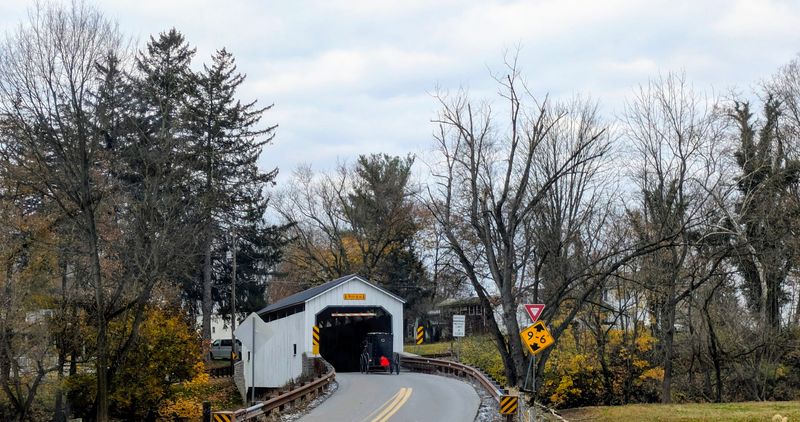
Keller’s Mill Covered Bridge is proof that thoughtful restoration can honor the past without turning it into a museum piece. Rebuilt to preserve its traditional timber construction, this Lancaster County bridge remains open to car traffic, which means it continues to serve a practical purpose while also acting as a tangible connection to 19th-century craftsmanship.
Not many structures can claim both of those things at once.
Traditional timber framing is a skill that takes years to master, and the woodworkers who rebuilt Keller’s Mill used techniques that would be familiar to the original builders. Mortise-and-tenon joints, wooden pegs, and hand-hewn beams all play a role in holding the structure together.
Spending a few minutes looking at the interior of the bridge while parked nearby gives you a real appreciation for just how labor-intensive this kind of work is.
The bridge sits within easy driving distance of several other Lancaster County covered bridges, making it a natural addition to any self-guided tour of the area. The rural roads leading to it are pleasant to drive and offer glimpses of working farms, roadside produce stands, and the kind of unhurried countryside that Lancaster County is famous for.
Keller’s Mill may not be the flashiest stop on your list, but it will likely be one of the most satisfying.
Forry’s Mill Covered Bridge (Lancaster County)
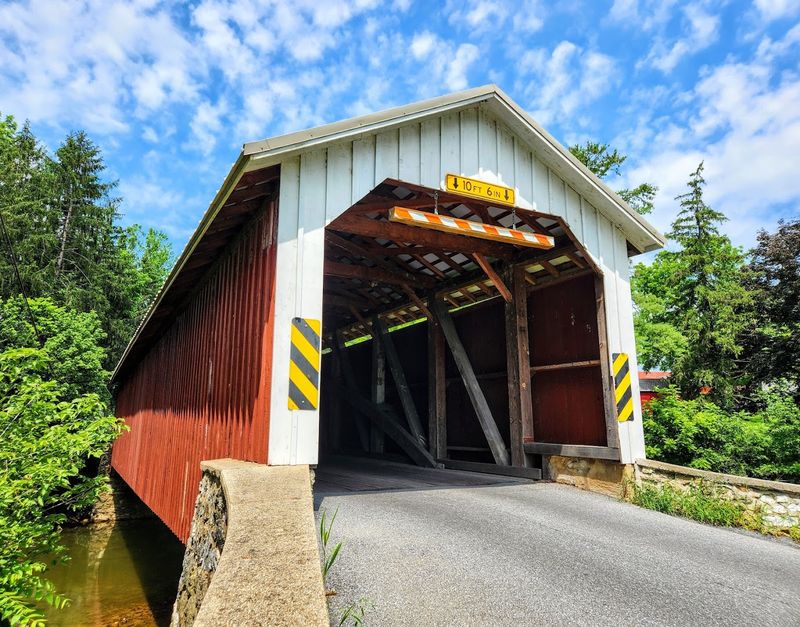
Some bridges demand your attention, and others simply invite you to slow down. Forry’s Mill Covered Bridge falls firmly into the second category.
Tucked into a peaceful stretch of Lancaster County farmland, this bridge serves local access roads without drawing much of a crowd, which makes the experience of crossing it feel genuinely personal rather than touristy.
The setting around Forry’s Mill is the kind of quiet that city dwellers actively seek out on weekend getaways. Open fields roll out in every direction, the road is unhurried, and the only sounds you are likely to hear are birds and the occasional tractor in the distance.
It is the sort of place where you might find yourself sitting on the hood of your car for a while, just taking it all in.
Covered bridges like Forry’s Mill were originally built to protect wooden bridge timbers from weather, extending their lifespan from roughly 10 years to 80 or more. That practical origin story makes the peaceful atmosphere feel even more earned — this structure has been quietly doing its job for well over a century.
For anyone building a Lancaster County covered bridge tour, Forry’s Mill adds a mellow, unhurried stop that balances out the more well-known landmarks on the route beautifully.
Frankenfield Covered Bridge (Bucks County)
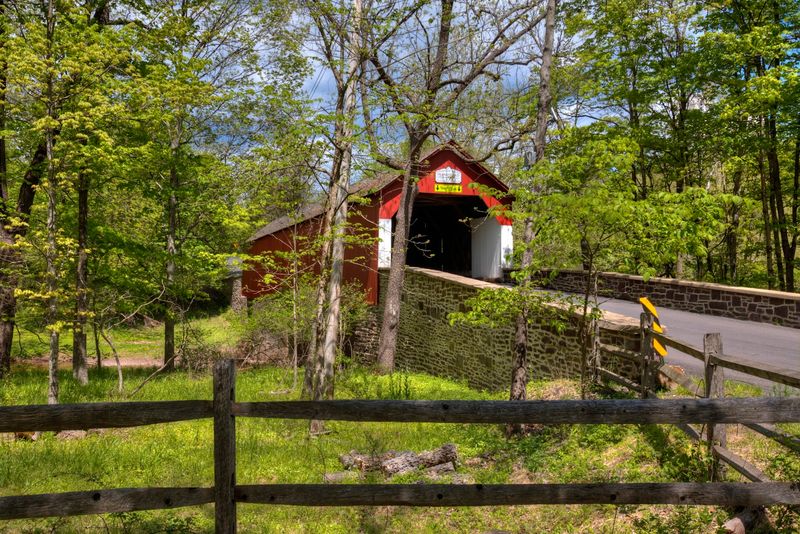
Bucks County has long had a reputation for scenic beauty, and Frankenfield Covered Bridge fits right into that identity. Reconstructed after sustaining damage, this bridge was brought back to life using traditional methods and continues to allow vehicle passage through its wooden tunnel.
Situated in the scenic Delaware River corridor, the landscape surrounding it shifts dramatically with the seasons, making it a year-round destination worth revisiting.
Fall is arguably the best time to visit, when the trees lining the road turn shades of amber, gold, and deep red. The contrast between the warm wood of the bridge and the explosion of autumn color around it creates a scene that feels almost staged.
Photographers make special trips to Bucks County every October just to capture this kind of moment.
Bucks County actually maintains several covered bridges as part of its heritage tourism efforts, and Frankenfield is frequently included on guided tours and self-drive maps available at local visitor centers. The area around the bridge has a relaxed, artistic energy — small towns, farm stands, and art galleries are all nearby.
Crossing Frankenfield on a crisp fall morning, with leaves drifting down and the old wood creaking softly beneath your tires, is the kind of memory that sticks with you long after the drive home.
Wehr Covered Bridge (Lehigh County)
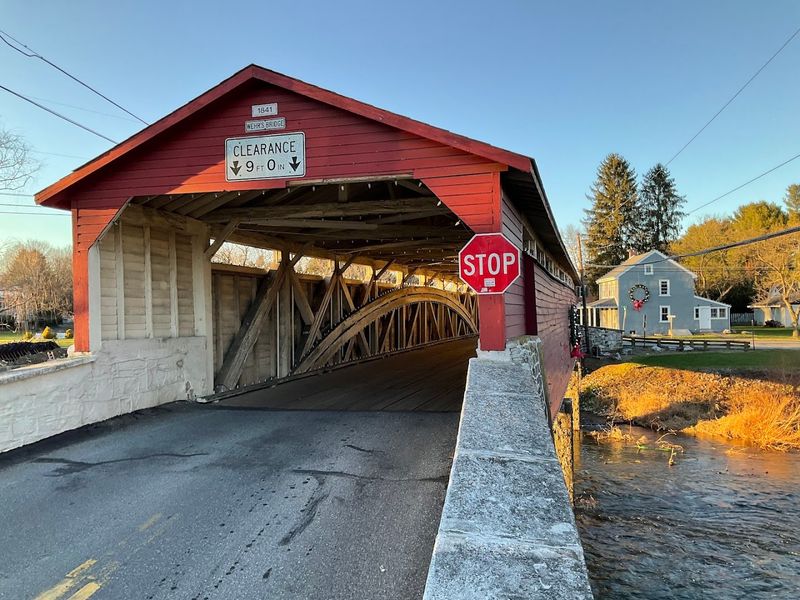
Dating back to 1841, Wehr Covered Bridge is one of the oldest surviving covered bridges in all of eastern Pennsylvania, and its age alone commands a certain amount of respect. Spanning Jordan Creek in Lehigh County, this long Burr truss structure has weathered nearly two centuries of floods, storms, and seasonal freezes without losing its essential character.
Standing at either end and looking through the dim wooden corridor is a genuinely moving experience.
The Burr truss design was widely favored by Pennsylvania bridge builders throughout the 1800s because of its impressive load-bearing capacity and resistance to lateral movement. Wehr’s bridge is one of the finest remaining examples of this technique in the eastern part of the state.
The stone abutments anchoring both ends of the bridge add to its sense of permanence and craftsmanship.
Jordan Creek flows steadily beneath the bridge, and the sound of the water combined with the cool shade inside the wooden tunnel creates an atmosphere that is hard to describe and easy to appreciate. Lehigh County is not always the first destination that comes to mind for covered bridge enthusiasts, but Wehr makes a compelling case for including it on any serious Pennsylvania bridge tour.
History this old and this intact deserves to be seen in person, not just read about online.
Van Sant Covered Bridge (Bucks County)
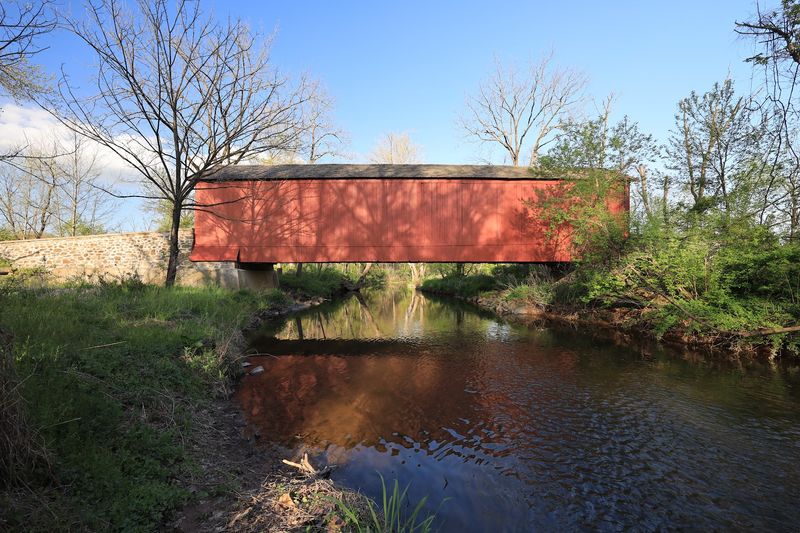
Hidden among wooded parkland in Bucks County, Van Sant Covered Bridge has the kind of secluded, storybook quality that makes you feel like you have found something most people do not know about. The dense tree canopy surrounding it filters sunlight into shifting patterns on the old wood, and the overall atmosphere is hushed and unhurried in a way that feels almost deliberate.
This is a bridge that rewards the people willing to seek it out.
Bucks County has invested meaningfully in preserving its covered bridges, and Van Sant benefits from that commitment. The surrounding parkland keeps commercial development at bay, ensuring that the experience of visiting remains quiet and natural rather than crowded and commercialized.
It is the kind of place where you genuinely feel removed from the noise of modern life, if only for a few minutes.
The bridge itself reflects classic Pennsylvania covered bridge construction, with sturdy timber framing and the characteristic tunnel-like silhouette that makes these structures so visually distinctive. Local hikers and cyclists sometimes pass through the area, adding a gentle sense of life to what might otherwise feel like a forgotten corner of the county.
Van Sant is an ideal stop for anyone who wants their covered bridge experience to feel intimate rather than like a roadside attraction.
Ebenezer Covered Bridge (Washington County)
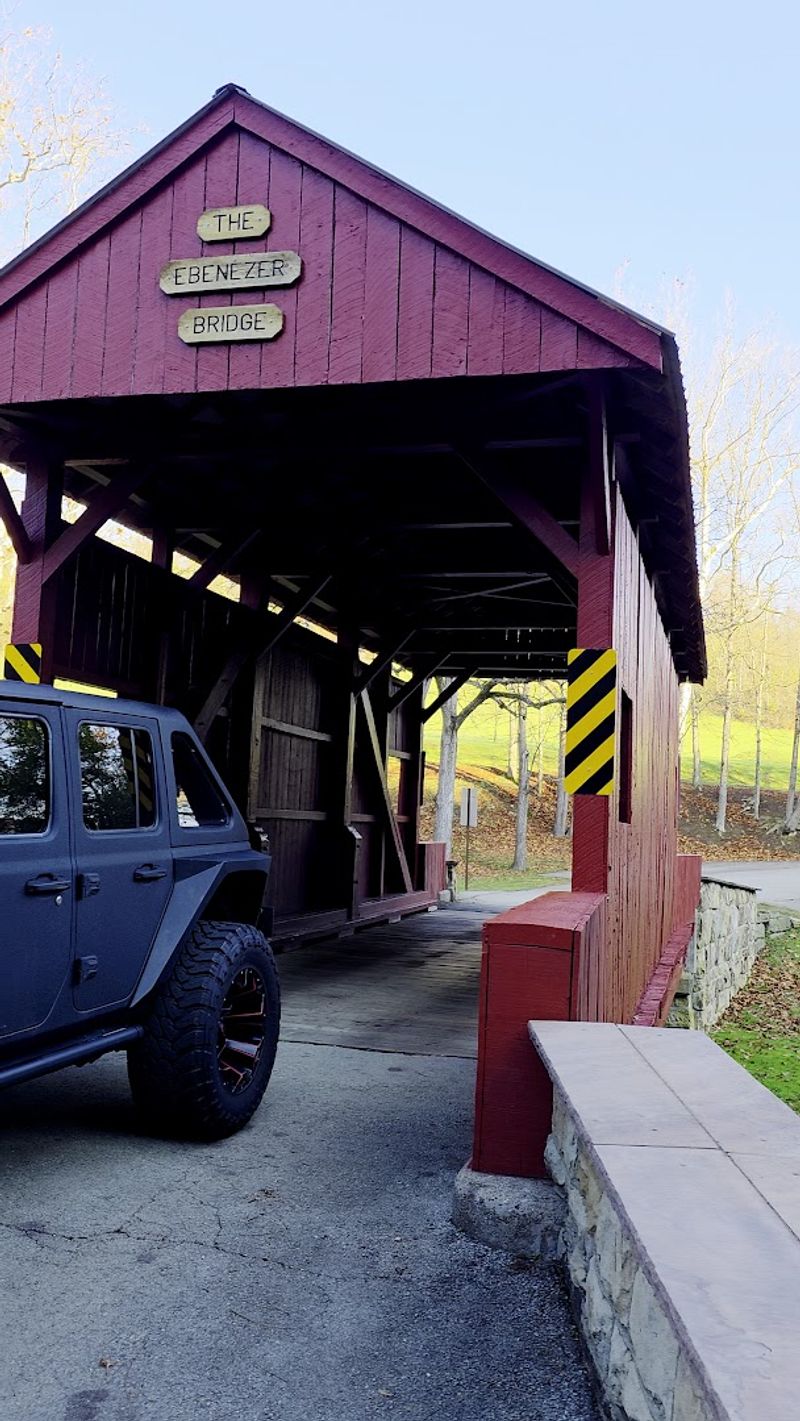
Every autumn, the area around Mingo Creek in Washington County transforms into a celebration of living history, and Ebenezer Covered Bridge is one of the most popular landmarks at the heart of it all. The annual Covered Bridge Festival draws thousands of visitors who come specifically to experience these wooden structures up close, and Ebenezer consistently ranks among the most visited stops on the route.
There is a festive, communal energy around it during festival season that is hard to match.
Outside of festival time, the bridge settles back into its role as a working rural landmark, carrying traffic across Mingo Creek with the same quiet reliability it has maintained for generations. The surrounding Washington County countryside has a rugged, unhurried character that feels distinct from the more manicured landscapes of Lancaster or Bucks County.
It is a part of Pennsylvania that does not always make the tourist brochures but absolutely deserves more attention.
The Covered Bridge Festival itself is a fantastic reason to plan a fall trip to southwestern Pennsylvania. Local vendors, artisans, and food sellers set up along the route, turning a scenic drive into a full-day event.
Ebenezer is the kind of bridge that means something to the people who live near it, and that local pride comes through clearly when you visit during the festival weekend.
Poole Forge Covered Bridge (Lancaster County)
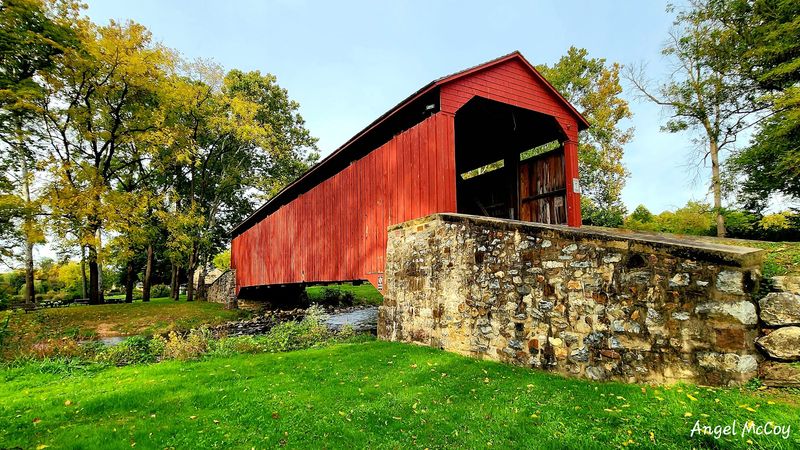
Built in 1859, Poole Forge Covered Bridge carries a quiet elegance that sets it apart from many of its Lancaster County neighbors. Crossing the Conestoga River on a public road route that passes through privately owned historic land, this bridge occupies a genuinely unique position — part of everyday infrastructure and part of a carefully preserved heritage landscape at the same time.
The combination creates an atmosphere that feels almost cinematic.
The preserved farmland surrounding Poole Forge gives the bridge a postcard-perfect backdrop in every season. Spring brings fresh green fields and blooming trees, summer fills the scene with lush growth, and fall turns everything warm and golden.
Even a gray winter day has its own moody charm here, with bare trees framing the old wooden structure against a pale sky.
Lancaster County has done an admirable job of keeping bridges like Poole Forge accessible without overwhelming them with signage or tourist infrastructure. You can pull over, walk up to the bridge, peer down at the Conestoga River below, and take your time without anyone rushing you along.
For a bridge built over 160 years ago, it remains remarkably photogenic and remarkably present. Poole Forge is the kind of final stop that sends you home already planning your next visit to Lancaster County’s covered bridge country.