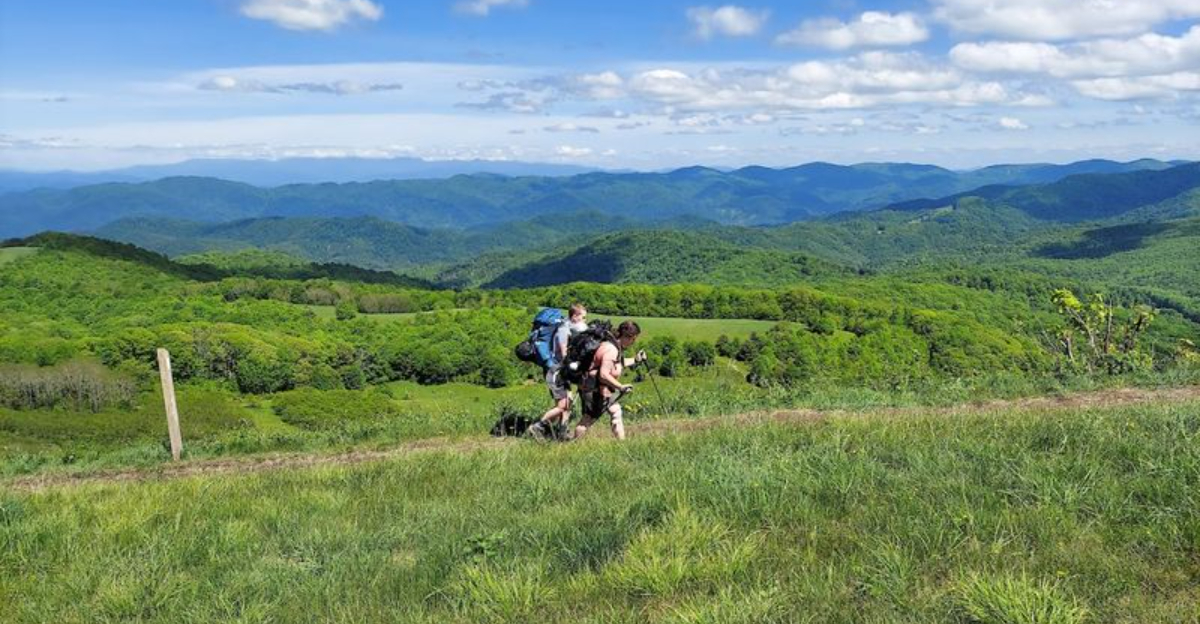
April is one of the best months to hit the trails in North Carolina.
The mountains come alive with fresh wildflowers, rushing waterfalls, and layers of soft green spreading across the ridges.
Whether you are a seasoned hiker or just getting started, the views you will find here rival anything on the East Coast.
Pack your boots and get ready, because these trails are absolutely worth the climb.
Craggy Pinnacle Trail (Blue Ridge Parkway)
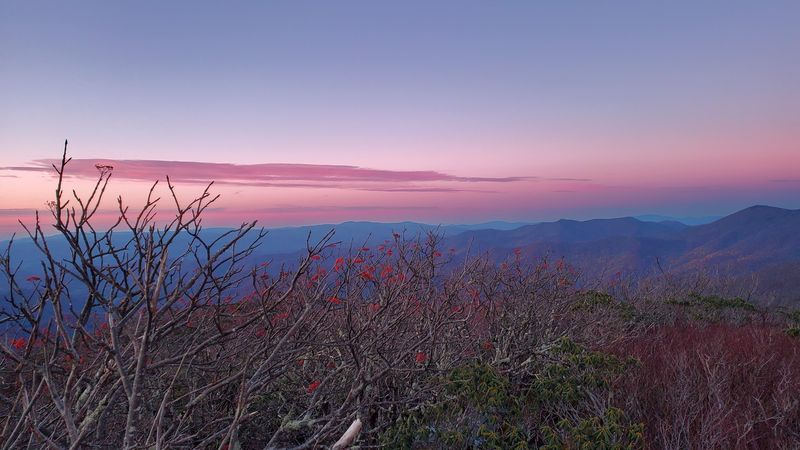
Standing on top of Craggy Pinnacle feels like the whole world just opened up in front of you. Located near Asheville along the Blue Ridge Parkway, this trail is short but earns every step with a payoff that is hard to beat.
The round trip covers about 1.4 miles, but the elevation gain makes it feel more serious than its length suggests.
April is a magical time to make this climb. The surrounding ridges start greening up while distant peaks still hold that hazy, layered look that makes every photo feel like a painting.
Sunrise hikes here are especially dramatic, with fog rolling through the valleys below and soft golden light hitting the rocky summit.
The trail itself winds through heath balds and mossy rock formations, giving it a wild and ancient feel. Footing can be uneven in spots, so wearing trail shoes with good grip is a smart move.
Arrive early on weekends to snag a parking spot, since word is out about how stunning this place gets in spring. Locals consider it one of the top short hikes in the entire Asheville area, and it is easy to understand why once you reach the top.
Black Balsam Knob (Pisgah National Forest)
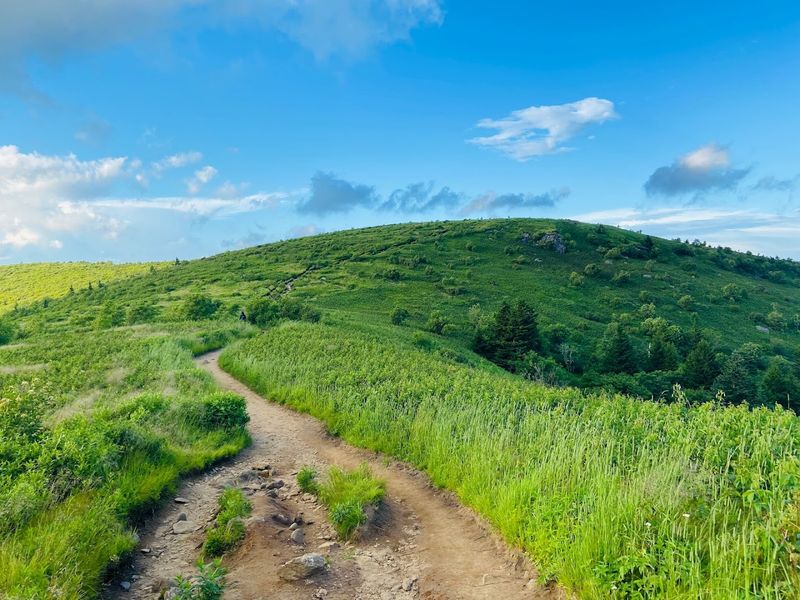
Few places in the eastern United States let you walk above the treeline quite like Black Balsam Knob. Sitting at over 6,200 feet in Pisgah National Forest along the Art Loeb Trail corridor, this high-elevation bald strips away the trees and hands you the sky.
April is when the transformation really begins, and watching winter browns slowly give way to soft greens is something special.
The views here are genuinely 360 degrees with almost nothing blocking them. On a clear April day, you can see layers of mountains rolling in every direction, including Cold Mountain to the south and dozens of unnamed ridges fading into the distance.
The openness makes it feel more like the western mountains than the typical wooded Appalachian experience.
Getting here involves a moderate hike of about 1.5 to 3 miles depending on your route. The terrain above the treeline is rocky and exposed, so wind can be a real factor, especially in early April when temperatures still swing sharply.
Bring an extra layer and check the forecast before heading out. This trail rewards hikers who come prepared with one of the most breathtaking and wide-open mountain experiences in all of North Carolina.
Rough Ridge Trail (Tanawha Trail Section)
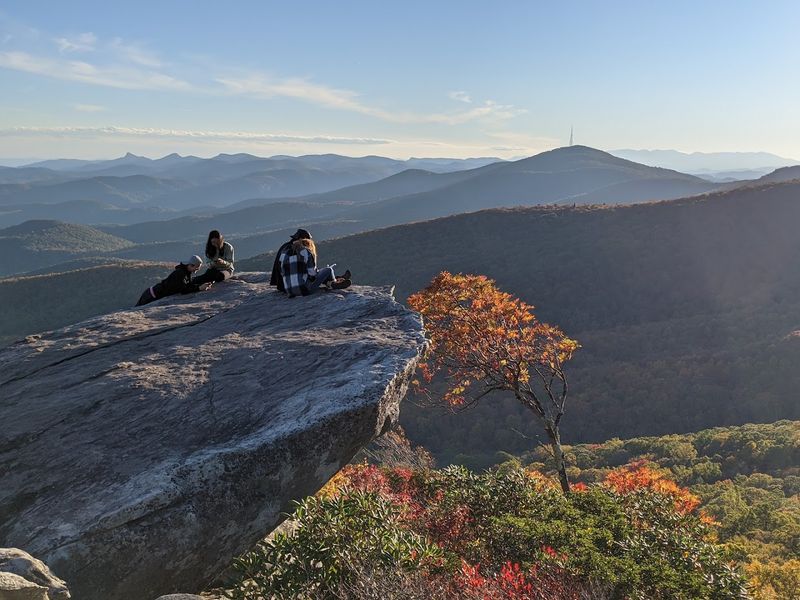
Rough Ridge has a reputation, and it absolutely lives up to it. Tucked along the Tanawha Trail near Grandfather Mountain on the Blue Ridge Parkway, this short hike packs in more visual drama per mile than almost any other trail in North Carolina.
Wooden boardwalk sections protect the fragile heath and lead hikers up to open rocky outcrops with sweeping views that stop people mid-step.
April brings a fresh coat of green to the surrounding forest, making the contrast between the rocky ridge and the soft foliage below feel especially vivid. Long-range views toward Grandfather Mountain are clearer in spring before summer haze settles in, and the light tends to be golden and soft during morning hours.
Photographers absolutely love this spot in April.
The trail covers about 1.6 miles round trip but involves some scrambling over boulders near the summit, so kids and beginners should take their time and watch their footing. The area sits at around 4,000 feet, meaning temperatures can be cooler than expected even in mid-April.
Layers are your best friend here. Parking is available at the Rough Ridge parking area off the Parkway, and the lot fills quickly on weekends, so an early start makes a big difference.
Linville Falls Trail (Blue Ridge Parkway)
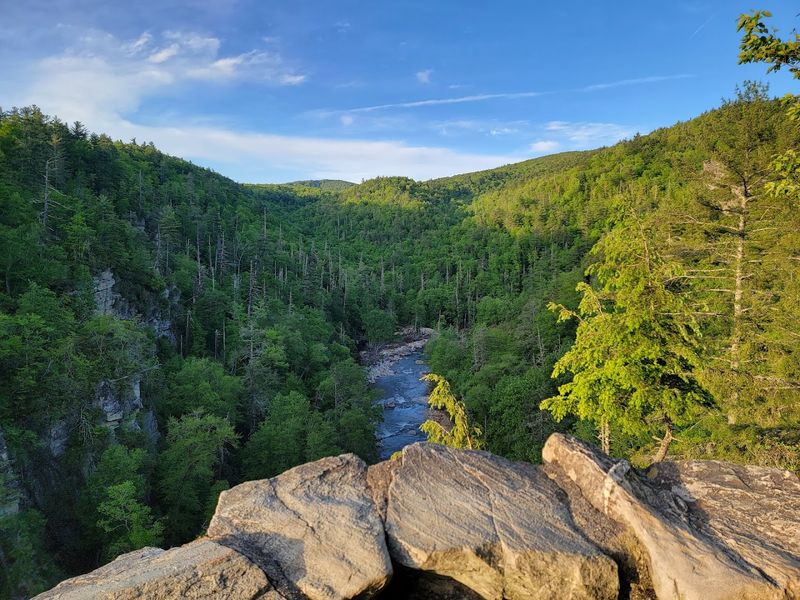
Linville Falls is one of those places that earns a gasp the first time you see it. Tucked within the Blue Ridge Parkway near the town of Linville, this trail system gives hikers access to multiple overlooks, each offering a completely different angle of the falls and the dramatic gorge below.
April turns up the volume here in a serious way.
Snowmelt and spring rains combine to push Linville River into a roaring, powerful flow by mid-April. The falls thunder down into the gorge with real force, and the mist rising from the basin creates a cool, dramatic atmosphere around the overlooks.
Standing at the upper rim and looking down into the dark canyon below is genuinely awe-inspiring.
The trail system offers several loop options ranging from easy to moderate, with the full experience covering about 2 miles total. Families with kids can stick to the lower, flatter sections near the first overlook, while more adventurous hikers can push to the upper rim for the most dramatic perspective.
The visitor center at the trailhead has restrooms and basic information. Spring weekends get crowded here, so arriving before 9 a.m. gives you the best chance of enjoying the falls without a crowd pressing in around you.
Craggy Gardens Trail
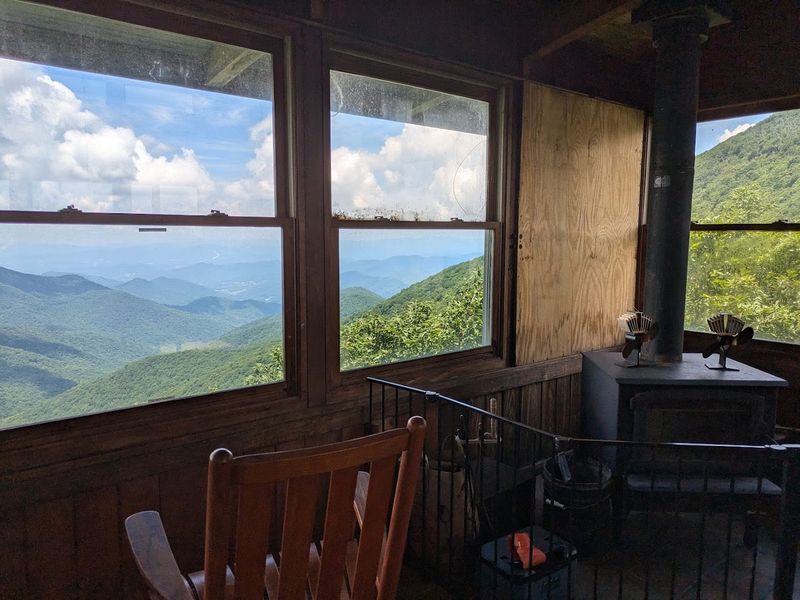
Craggy Gardens is one of those places that feels like it belongs in a fairy tale, especially in spring when everything starts waking up at once. Located along the Blue Ridge Parkway north of Asheville, this trail winds through heath balds thick with rhododendron and blueberry shrubs just beginning to push out new leaves in April.
The views open up generously as you climb, rewarding hikers with wide sweeping panoramas before summer haze has a chance to settle in.
Early wildflowers are a real highlight here in April. Trout lilies, spring beauties, and other early bloomers dot the trailside, adding color to a landscape still shaking off winter.
Birdwatchers will also find plenty of activity, as migrating songbirds start moving through the area during this time of year.
The main trail to the gardens picnic area covers about 0.8 miles one way, making it accessible for most fitness levels. The terrain is rocky and can be slippery when wet, so tread carefully after rain.
The elevation sits around 5,500 feet, which means mornings can still feel quite cold in early April. Pack a light jacket and some snacks, and plan to linger a while because the views from the upper sections are genuinely hard to walk away from.
Graveyard Fields Loop (Blue Ridge Parkway)
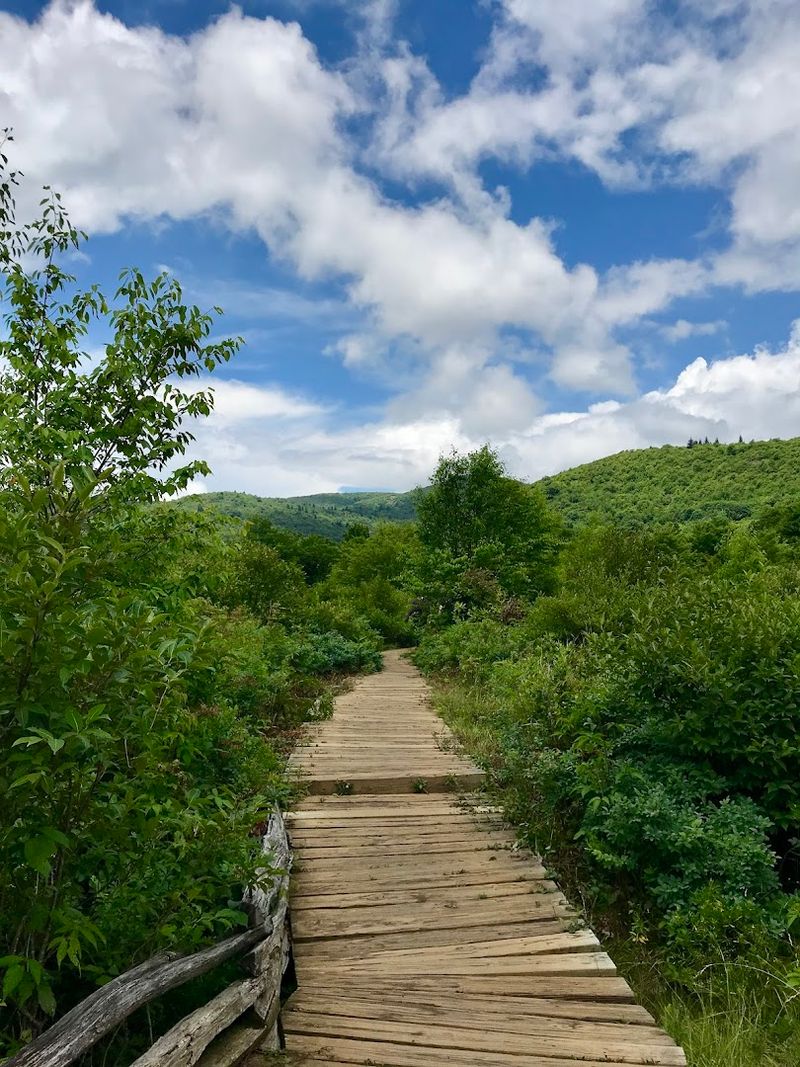
The name sounds eerie, but Graveyard Fields is one of the most beloved spots along the entire Blue Ridge Parkway. Located at milepost 418.8 at an elevation of about 5,100 feet, this open valley was shaped by a massive windstorm that knocked down most of the trees long ago, leaving a wide, meadow-like landscape unlike anything else in the region.
April brings it back to life in a satisfying way.
Fresh green growth begins pushing up through the valley floor as seasonal runoff feeds the streams and waterfalls that cut through the area. The Second Falls, a short walk from the main loop, runs especially strong in spring and is a favorite for photos.
The open terrain means you get wide, unobstructed views of the surrounding ridgelines as you walk the loop.
The full loop covers about 3.3 miles with modest elevation changes, making it manageable for most hikers including families with older kids. Trails can be muddy and wet in April, so waterproof boots are a practical choice.
The parking area fills up fast on weekends, particularly once the Parkway fully opens for the season. Arriving early or visiting on a weekday gives you the best experience and lets you soak in the peaceful, wide-open atmosphere that makes Graveyard Fields genuinely unforgettable.
Beacon Heights Trail
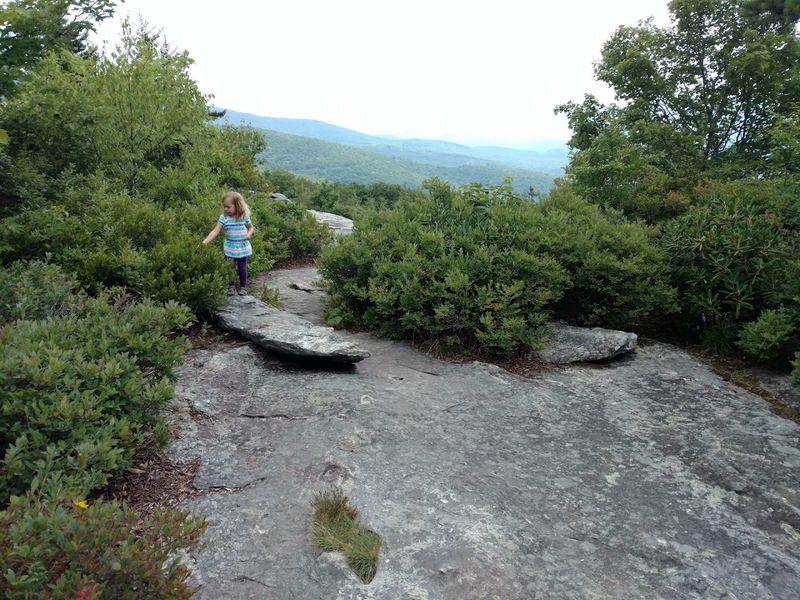
Beacon Heights punches way above its weight class for a trail this short. Sitting just off the Blue Ridge Parkway near Grandfather Mountain, this hike covers only about 1.2 miles round trip but delivers a wide-open rocky summit with views that stretch across the entire High Country.
April skies tend to be cleaner and clearer than summer, which makes the long-range visibility here genuinely impressive.
On a good April morning, you can spot Grandfather Mountain to the east along with dozens of other peaks layered across the horizon. The rocky summit itself has a wild, exposed feel that makes it seem much more remote than it actually is.
Wildflowers begin appearing along the lower sections of the trail by mid-April, adding some color to the approach.
Because the hike is short, it attracts a wide range of visitors including families, older hikers, and people who just want a quick but rewarding outdoor experience. The steepness near the top requires a bit of careful footwork, but nothing technical.
Parking is available in a small pullout off the Parkway, and the lot can fill on busy spring weekends. Going early on a weekday is the move if you want the summit to yourself and the best possible light for photos of those spectacular layered mountain views.
Deep Gap / Tanawha Trail Section
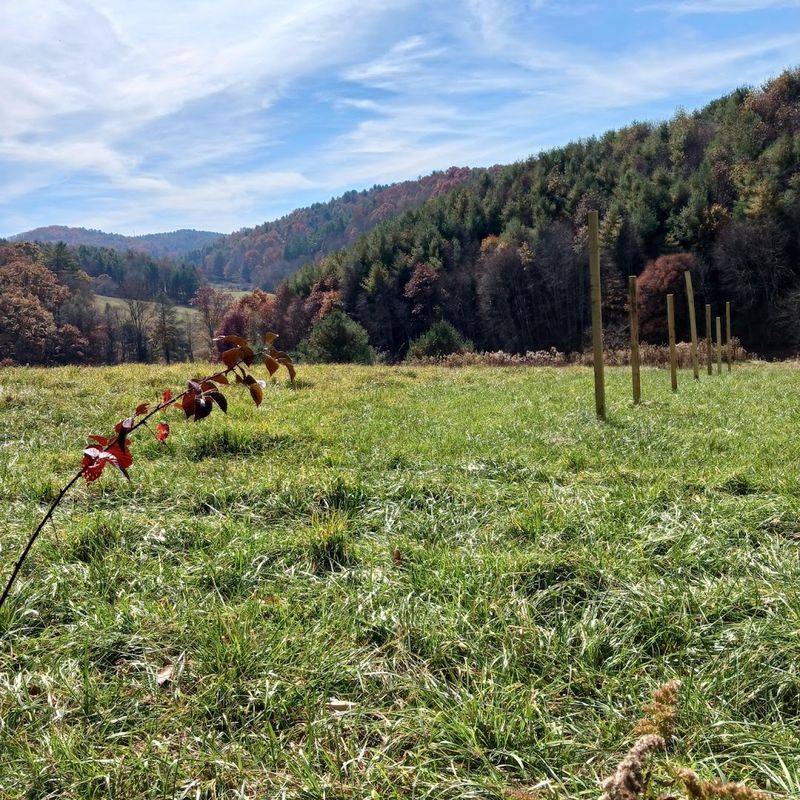
Not every great trail needs to shout. The Deep Gap section of the Tanawha Trail is the kind of place that rewards hikers who appreciate quiet, unhurried beauty.
Winding through rolling forest terrain along the Blue Ridge Parkway near Grandfather Mountain, this stretch feels tucked away and peaceful in a way that the more popular nearby trailheads simply cannot match in April.
Early wildflowers are the real stars here in spring. Trillium, bloodroot, and hepatica begin pushing up through the leaf litter by early April, and the understory fills in with soft green as the weeks progress.
The forest canopy filters the light beautifully in the morning, creating that golden-green glow that makes woodland hiking feel almost cinematic.
The terrain is relatively gentle compared to other Parkway trails, with rolling grades that make it a good choice for hikers who want a longer, more relaxed outing without punishing climbs. The Tanawha Trail runs 13.5 miles in total, so you can choose your distance based on energy and time.
Bring water and snacks since there are no facilities along this section. Bug spray is also worth packing as the insects begin waking up in April.
This trail is a local favorite for good reason, offering a calm and restorative experience every single time.
Mount Mitchell State Park Trails
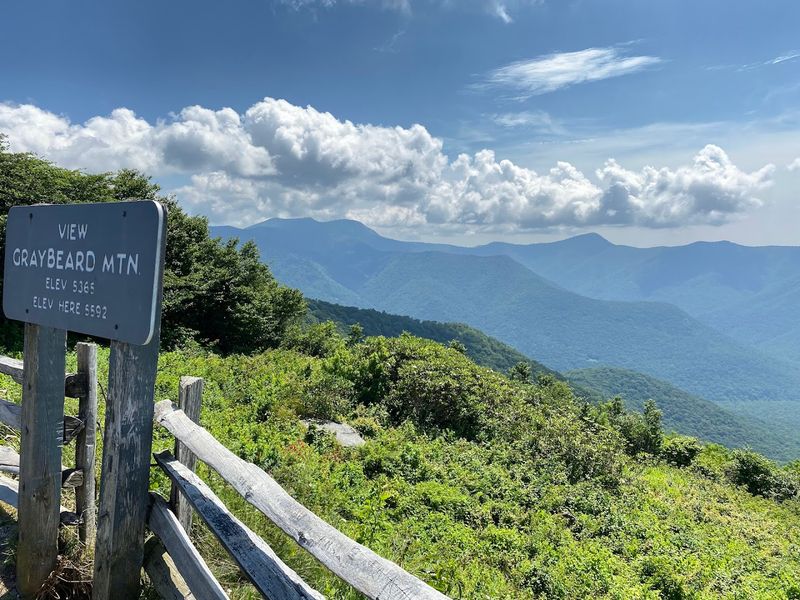
Standing at 6,684 feet, Mount Mitchell holds the title of the highest peak east of the Mississippi River, and visiting in April gives you a version of this mountain that few people think to seek out. While summer draws the biggest crowds, spring is when Mitchell shows off its dramatic side.
Cool air lingers near the summit long after the valleys below have warmed up, and the contrast between bare upper ridges and greening lower slopes creates a striking visual effect.
The observation tower at the summit offers views that extend for miles on clear days, and April often delivers excellent visibility before summer haze builds up. The surrounding forest, dominated by Fraser fir and red spruce, stays darker and more wintry near the top while spring creeps upward from below.
It is like watching two seasons exist at the same time.
Several trails wind through the park at various difficulty levels, from the paved summit path to longer backcountry routes that drop into the surrounding wilderness. The Old Mitchell Trail covers about 4 miles round trip and offers a more immersive experience than the drive-up option.
Weather changes fast at this elevation, so always carry a rain layer and extra warmth. April temperatures near the summit can drop into the 30s even on sunny afternoons, so preparation matters here more than almost anywhere else on this list.
Pink Beds Loop (Pisgah National Forest)
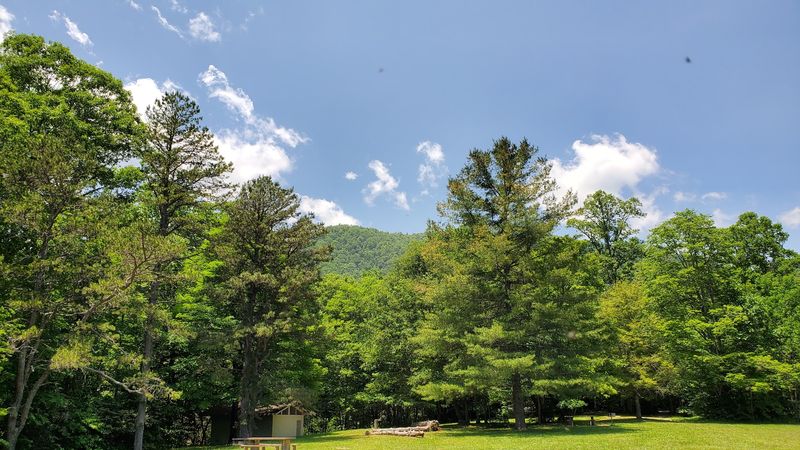
The Pink Beds Loop has a name that sounds almost too pretty to be real, and in April, it earns every syllable. Located in Pisgah National Forest near the Blue Ridge Parkway, this roughly 5-mile loop winds through a rare high-elevation wetland ecosystem that transforms into a wildflower showcase each spring.
The flat, accessible terrain makes it one of the more welcoming hikes in the region for all ages and fitness levels.
April is prime time here. Pink lady’s slippers, trillium, violets, and dozens of other native wildflowers bloom across the forest floor, creating a patchwork of color that feels almost like a garden.
The several creek crossings along the route are especially beautiful at this time of year, with clear, cold water running strong from snowmelt and spring rain.
Birdwatching is another reason to visit in April, as the wetland habitat draws warblers, thrushes, and other migratory species passing through. The trail is mostly flat with only minor elevation changes, making it a low-stress outing that still delivers a rich sensory experience.
Mud is common after rain, so waterproof footwear is a good call. The trailhead is located near the Cradle of Forestry historic site, which adds an interesting cultural dimension to the day if you have extra time to explore.
Looking Glass Rock Trail
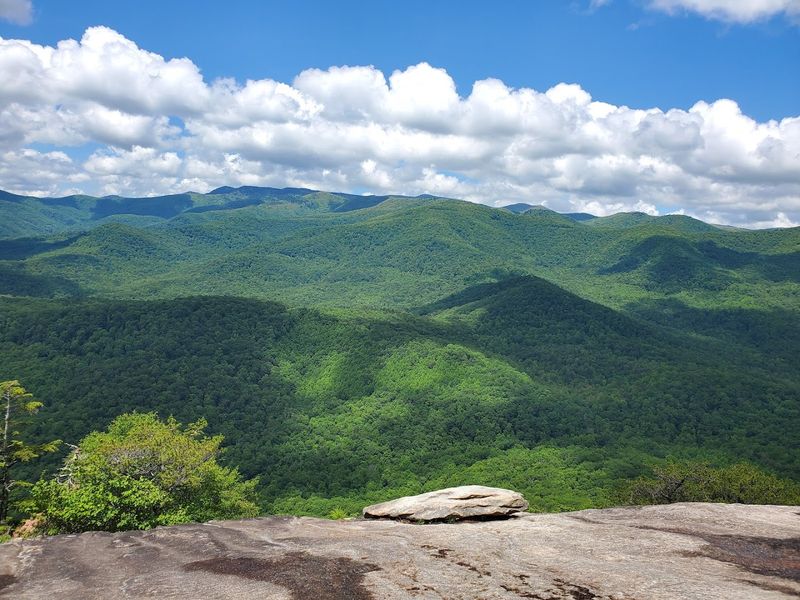
Looking Glass Rock is the kind of trail that makes your legs burn and your jaw drop in equal measure. Rising from the forest floor of Pisgah National Forest like a massive granite dome, this iconic rock face is one of the most recognizable natural landmarks in western North Carolina.
The trail to the summit covers about 6.4 miles round trip with over 1,600 feet of elevation gain, making it a genuine workout from start to finish.
April is an excellent month for this hike for a couple of reasons. The air is cooler and clearer than summer, which makes the steep climb much more manageable and the views from the top considerably sharper.
The surrounding forest is actively greening up, and the contrast between the exposed granite summit and the soft spring canopy spreading out below is visually stunning.
From the top, hikers get a bird’s-eye view of the Davidson River valley and the rolling forest of Pisgah stretching in every direction. The summit itself is open and rocky, with several spots to sit, eat lunch, and take in the scenery.
Footing on the upper sections can be tricky on wet rock, so dry days are much better for this one. Start early to avoid afternoon crowds and to catch the best morning light hitting the granite face from across the valley.
Max Patch
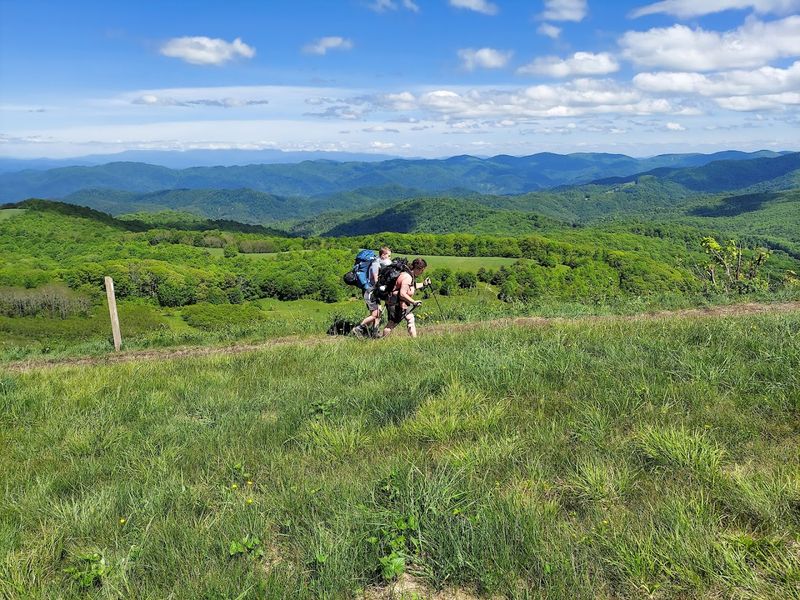
Max Patch might be the single most joyful place to hike in all of North Carolina, and April is when it reaches peak magic. This grassy bald along the Appalachian Trail sits at about 4,629 feet and offers a full, unobstructed 360-degree view of the surrounding mountains that makes it feel like standing inside a panorama photograph.
There are no trees blocking the sky, no ridgelines cutting off the horizon, just open mountain beauty in every direction.
Fresh green grass begins spreading across the summit in April, and early wildflowers add pops of color to the wide, rolling hilltop. The effect is almost theatrical, like a natural amphitheater designed purely for enjoying the view.
On clear days, distant peaks in Tennessee are visible to the west, while the Black Mountains rise to the east.
The main loop trail covers about 1.4 miles and is suitable for most hikers, though longer routes connect to the broader Appalachian Trail for those wanting more miles. Sunrise and sunset visits are especially popular and genuinely breathtaking.
Parking has become limited due to the trail’s growing fame, so the National Forest now requires a parking reservation on weekends and holidays. Plan ahead, arrive early, and bring a picnic because once you get up here, you will not want to leave anytime soon.