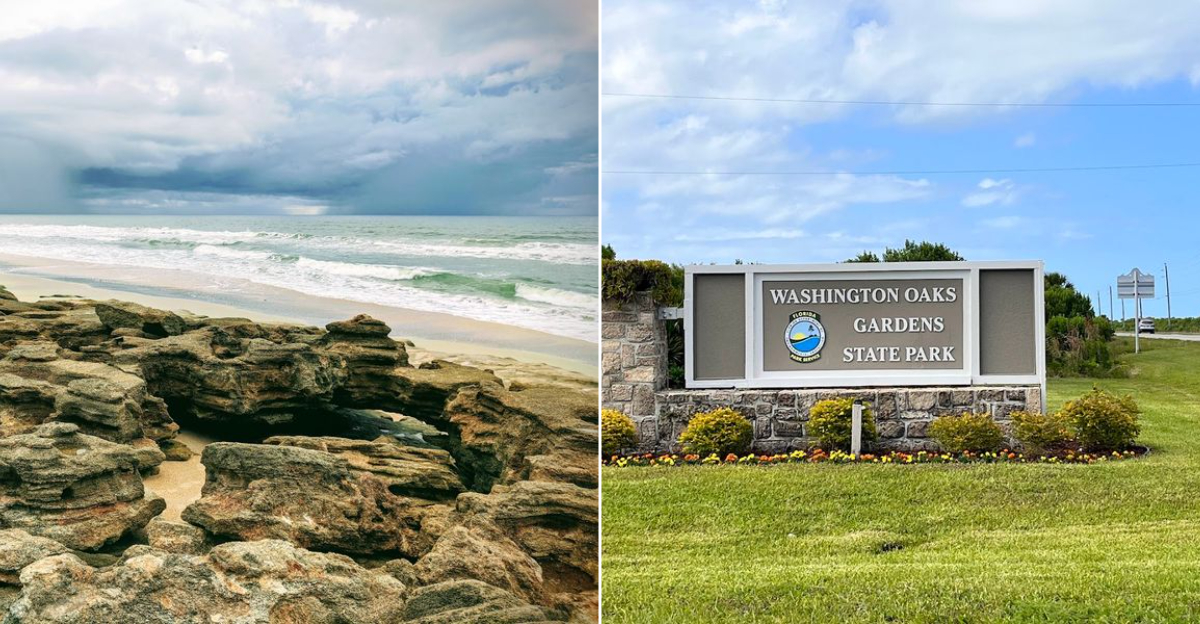
Most Florida beaches greet you with soft, powdery sand stretching as far as the eye can see. But Washington Oaks Gardens State Park in Palm Coast breaks that mold completely, offering something you rarely find along the Sunshine State’s coastline: rugged coquina rock formations rising dramatically from the shore.
Tucked along North Ocean Shore Boulevard, this beloved park combines a stunning oceanside beach with lush formal gardens, ancient live oaks, and peaceful Intracoastal waterway views. Whether you’re a nature lover, a casual walker, or someone who just wants a break from the ordinary, this park delivers an experience that genuinely surprises first-time visitors.
The Coquina Rock Formations Along The Shore
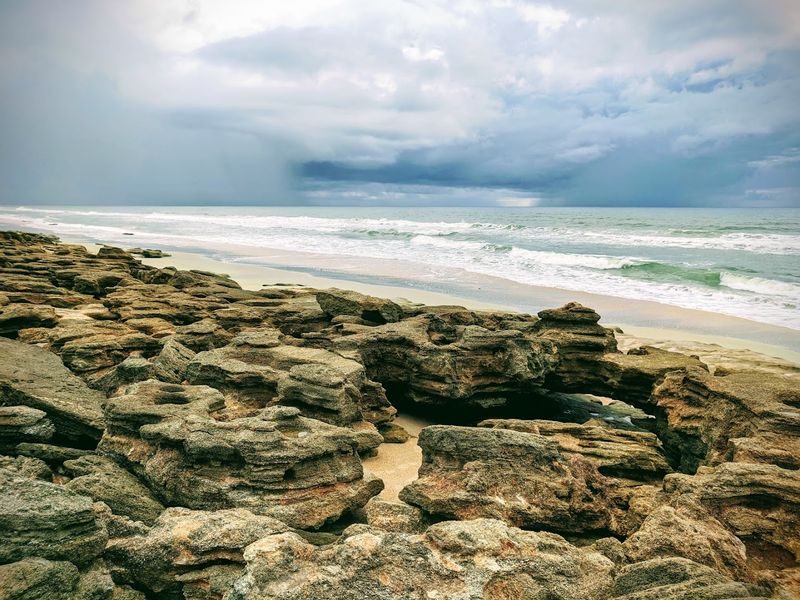
Forget everything you think you know about Florida beaches. At Washington Oaks Gardens State Park, the shoreline is dominated by ancient coquina rock formations that rise and tumble along the Atlantic coast like a natural sculpture garden.
These jagged, textured rocks are made of compressed shells and sand cemented together over thousands of years, creating one of the most visually striking coastlines in the entire state.
Visitors who time their trip with low tide are treated to an especially spectacular view. The rocks emerge fully from the retreating water, revealing tide pools teeming with small marine creatures, starfish, and sea anemones.
It feels less like a typical Florida beach and more like something you’d discover along the rocky coasts of Maine or Oregon.
Families love exploring the nooks and crevices between the formations, and photographers flock here during golden hour when the warm light turns the coquina a deep amber. Long-time visitors have shared that they have been coming back for over 35 years and still never tire of these amazing formations.
Wear sturdy sandals or water shoes when walking on the rocks, as the surfaces can be uneven and slippery when wet.
The Formal Rose Garden And Gazebo
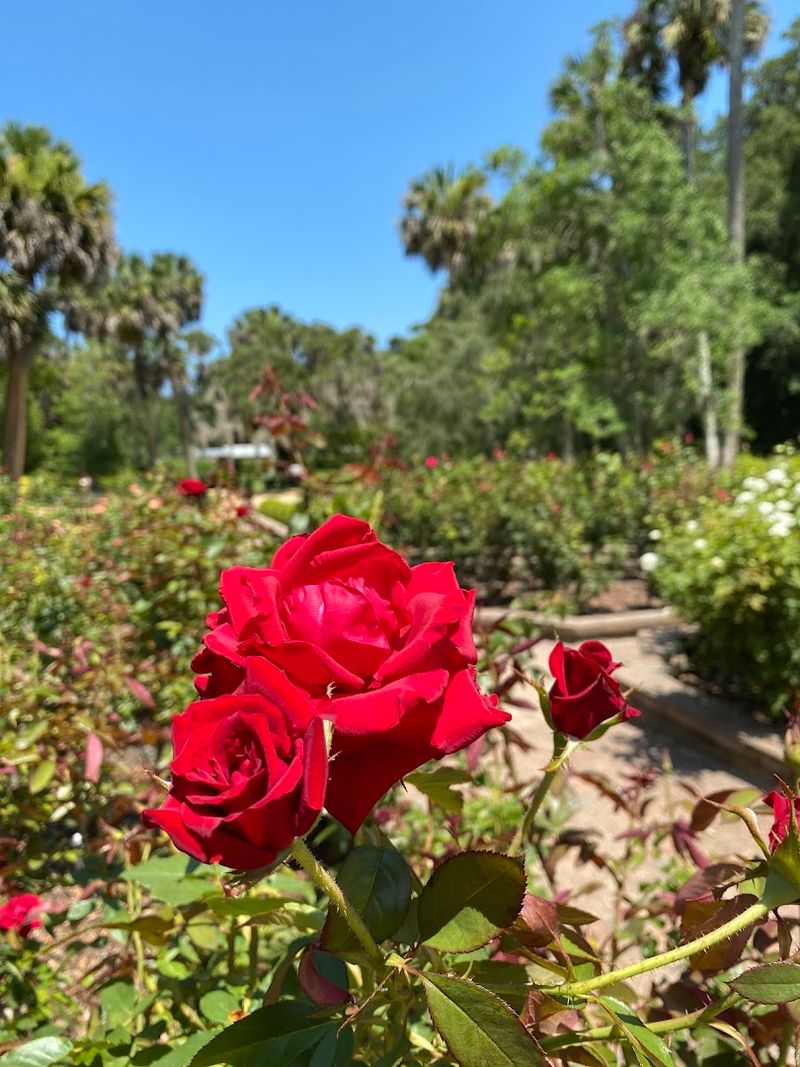
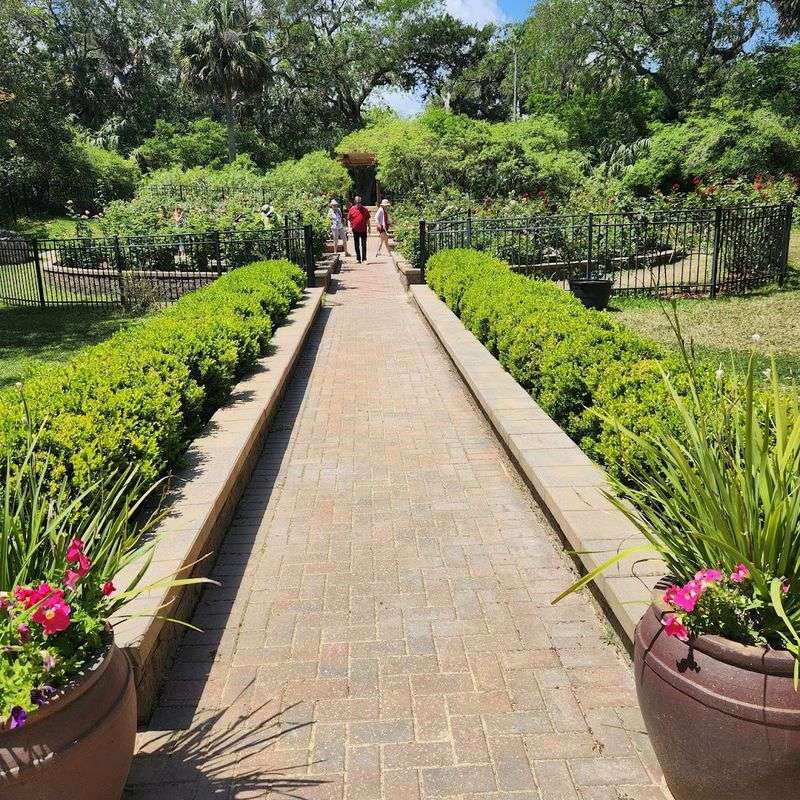
Step through the garden entrance and the rose garden at Washington Oaks Gardens State Park stops you in your tracks. Rows of carefully tended rosebushes burst into bloom multiple times a year, filling the air with a soft fragrance that feels almost old-fashioned in the best possible way.
A classic gazebo anchors the center of the space, making it one of the most photographed spots in all of Flagler County.
The garden’s history adds an extra layer of charm. The land was once owned by Owen D.
Young and his wife Louise, who cultivated the grounds into a private paradise beginning in the 1930s. Their love for formal European-style gardens shaped everything you see today, from the symmetrical plantings to the elegant fountain features scattered throughout.
Spring and summer bring the roses to their most spectacular peak, though blooms appear several times annually. Couples regularly choose this spot for engagement photos and intimate wedding ceremonies near the gazebo, and the park even offers permits for exactly that purpose.
If you visit when the roses are pruned back in late winter, the surrounding tropical plantings and reflection ponds still make the garden well worth exploring on any given afternoon.
Ancient Live Oak Trees And Hammock Trails
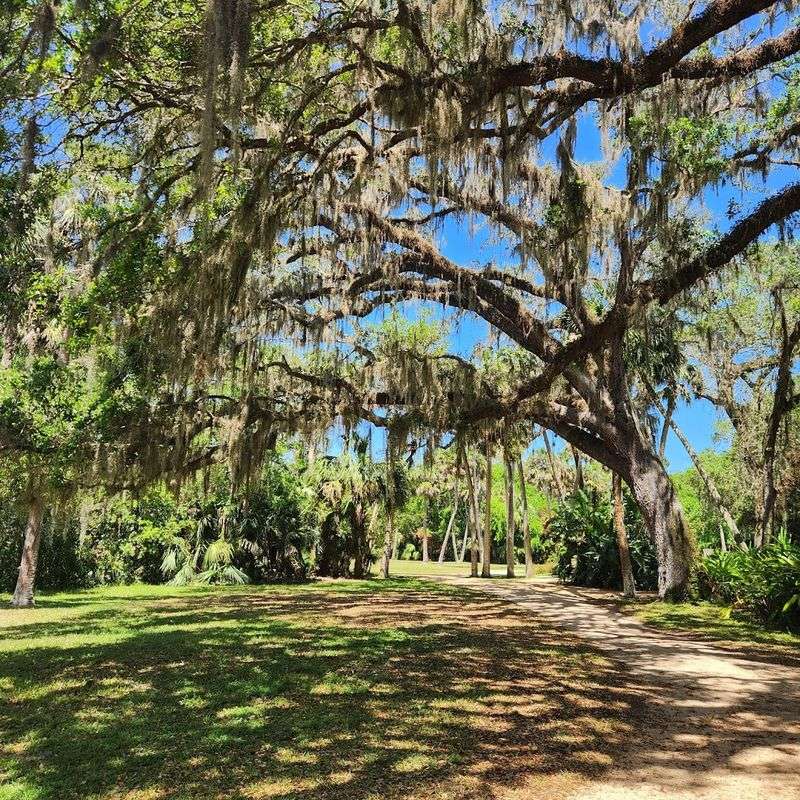
There is something almost magical about walking beneath a canopy of 300-year-old live oak trees. At Washington Oaks Gardens State Park, the live oak hammocks create a cathedral-like atmosphere that makes every trail feel like a step back in time.
Massive branches stretch wide overhead, draped in Spanish moss, while the filtered sunlight creates a cool, peaceful environment even on warm Florida afternoons.
One particularly notable tree, estimated to be around 300 years old, stands as a living landmark within the park. A small wooden protective box surrounds its base, marking it as a special point of interest for visitors who want to stand beside something genuinely ancient.
Walking these shaded paths in January, when cooler coastal breezes drift through, feels especially refreshing according to longtime park regulars.
The hammock trails are not strenuous, making them accessible for visitors of all fitness levels. Benches are placed at regular intervals along the paths, so anyone who needs a rest can pause and simply absorb the quiet atmosphere.
Birders frequently spot owls, warblers, and other wildlife moving through the dense canopy. A beautiful owl reportedly makes its home among the live oaks, delighting sharp-eyed visitors who know where to look.
Tide Pool Exploration And Marine Life
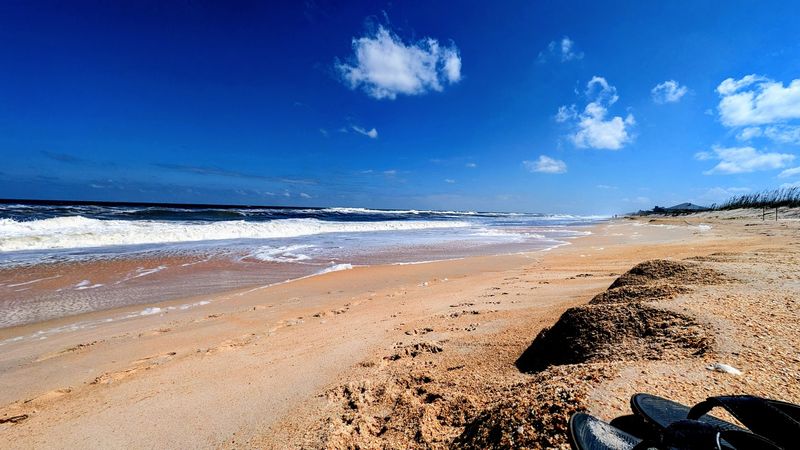
Low tide at Washington Oaks Gardens State Park turns the rocky beach into a living aquarium. The coquina formations trap pockets of seawater as the tide pulls back, creating shallow tide pools that are absolutely packed with marine life.
Starfish, hermit crabs, sea anemones, small fish, and even the occasional octopus have all been spotted by curious visitors willing to slow down and look closely.
Checking the tide chart before your visit is genuinely one of the best pieces of advice seasoned park-goers share. Arriving around low tide gives you the widest window to explore the pools before the Atlantic reclaims them.
Children especially love this hands-on encounter with ocean life, and parents appreciate that it requires nothing more than a sense of curiosity and a willingness to get a little wet.
Shelling is also a popular activity along this stretch of beach. The mix of coquina rock and sandy patches creates ideal conditions for collecting interesting shells, and some lucky visitors have even found shark teeth washed up near the formations.
The park community has a clear, respectful philosophy here: look, admire, and leave everything where you found it so the next visitor can enjoy the same discovery.
The Matanzas River Picnic And Fishing Area
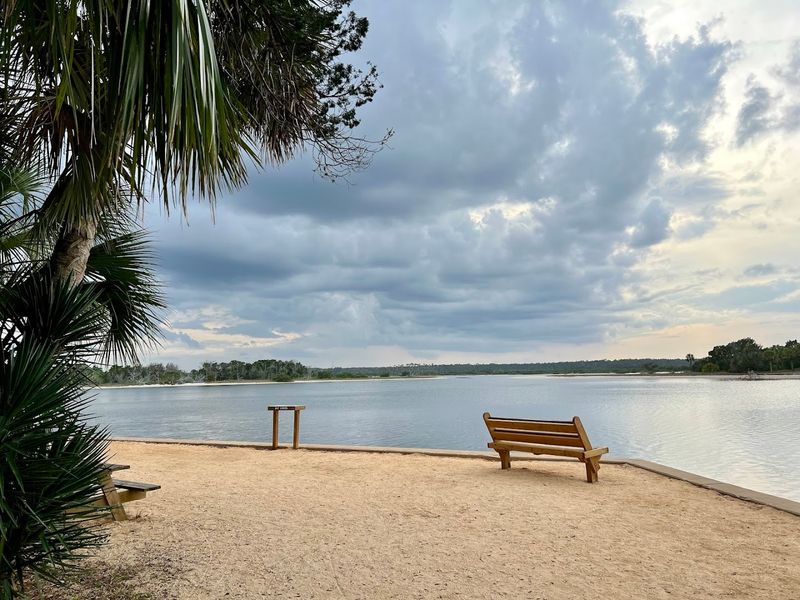
On the western side of A1A, Washington Oaks Gardens State Park offers a completely different kind of beauty. The Matanzas River, part of the Intracoastal Waterway, flows peacefully past a well-maintained picnic and fishing area that feels like a world away from the crashing Atlantic just across the road.
Benches line the waterfront, giving visitors front-row seats to one of Florida’s most tranquil water views.
Fishing from the riverbank is a beloved activity here, and the calm waters attract both seasoned anglers and families introducing kids to the sport for the first time. Dolphins are frequently spotted playing in the river, and patient observers have also seen sea turtles and manatees drifting through the waterway.
Watching boats cruise past while pelicans dive nearby makes even a simple afternoon picnic feel like something special.
The picnic area includes covered pavilions, grills, and plenty of shaded tables, making it ideal for family gatherings. A nearby restaurant, Captain’s BBQ at Bings Landing, sits just down the street for those who arrive hungry without a packed lunch.
For only five dollars per carload, getting access to both the garden side and the riverfront picnic area represents outstanding value for a full day of outdoor enjoyment.
Seasonal Camellia And Azalea Blooms
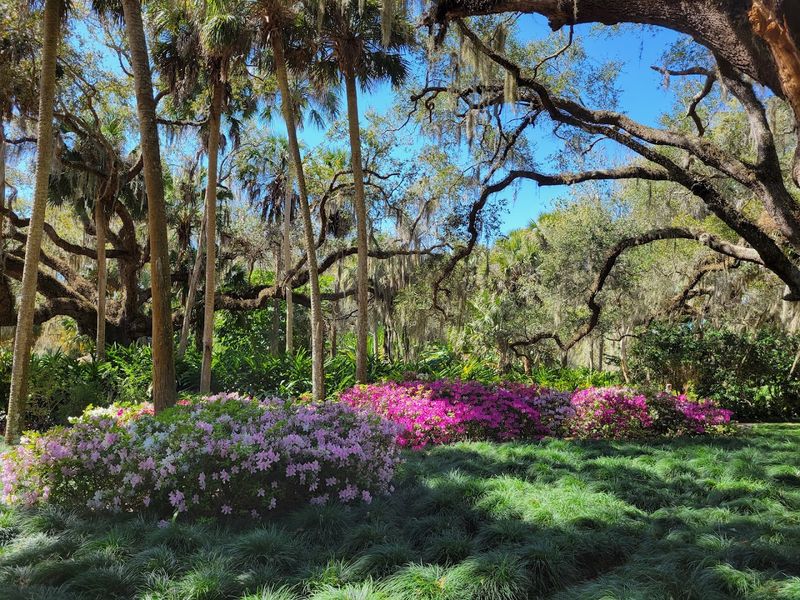
Winter in most of the country means bare branches and grey skies, but at Washington Oaks Gardens State Park, January and February bring some of the garden’s most breathtaking color. Camellias steal the spotlight during the cooler months, their elegant blooms appearing in soft pinks, rich reds, and creamy whites against a backdrop of deep green foliage.
Azaleas frequently join the display, adding bursts of vivid color that make the garden feel alive even during the off-season.
The timing of these blooms makes winter visits genuinely special. Cooler temperatures make strolling the shaded paths far more comfortable than a humid summer afternoon, and the combination of fragrant flowers and coastal breezes creates an atmosphere that regular visitors describe as almost meditative.
Families who have been coming to the park for decades specifically plan their January trips around the camellia season.
Bird-of-paradise plants and other exotic tropical specimens hold their own year-round, ensuring the garden never looks bare regardless of when you visit. Reflection ponds mirror the surrounding blooms, doubling the visual impact and creating stunning photo opportunities at every turn.
If you have never visited a Florida botanical garden in winter, the camellia and azalea display at Washington Oaks is the perfect introduction to why the season here is surprisingly spectacular.
Wildlife Watching: Dolphins, Manatees, And Shore Birds
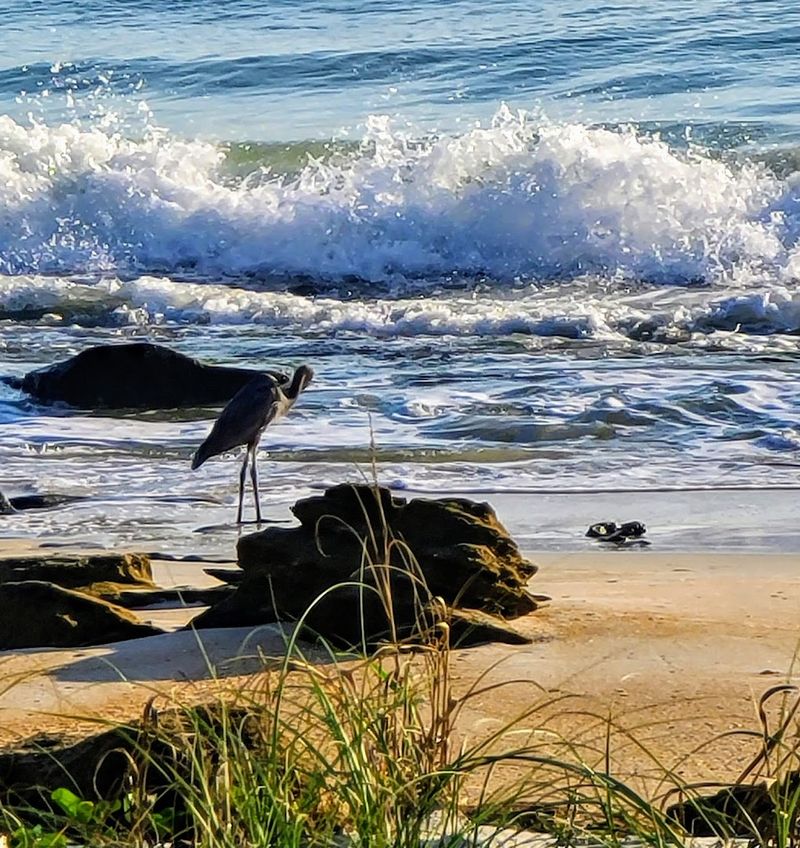
Washington Oaks Gardens State Park is quietly one of the best wildlife-watching destinations in Flagler County, and most visitors stumble onto this fact by happy accident. Stand along the Intracoastal Waterway for just a few minutes and there’s a good chance a dolphin will surface nearby, rolling through the calm water with effortless grace.
Manatees are regularly spotted drifting through the river, especially in cooler months when they seek warmer waters near the coast.
The beach side of the park offers its own wildlife highlights. Stingrays glide through the shallow water near the coquina rocks, and patient observers have spotted octopuses tucked into rocky crevices at low tide.
Shore birds are abundant along both the ocean and river sides of the park, with herons, egrets, and brown pelicans making regular appearances throughout the day.
A resident owl has become something of a local celebrity among frequent visitors, nesting within the ancient live oak hammocks and occasionally making an appearance during morning walks. Birders who arrive early with binoculars are often rewarded with a rich variety of species moving through the coastal habitat.
The park’s diverse ecosystems, from salt marsh to maritime forest, create ideal conditions for an impressive range of Florida wildlife all in one compact location.
Hiking And Biking Trails Through Diverse Habitats
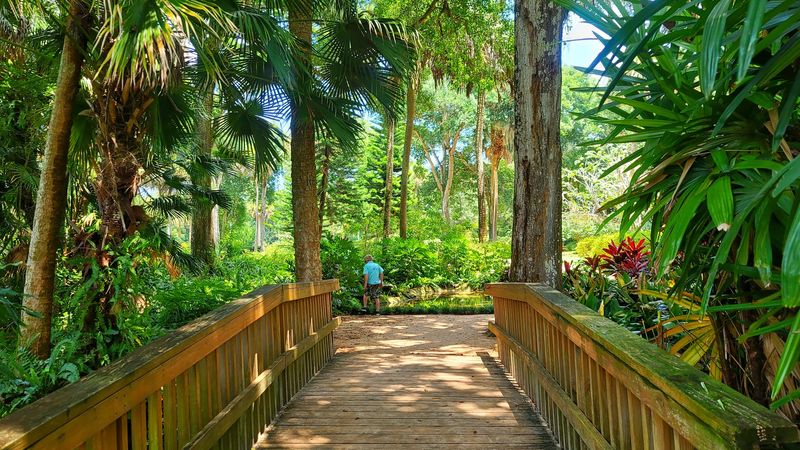
Adventure at Washington Oaks Gardens State Park does not require a high fitness level, and that is honestly part of its appeal. The park’s network of hiking and biking trails winds through several distinct Florida habitats, including maritime hammock, coastal scrub, and wetland edges, offering a surprisingly varied natural experience within a relatively compact area.
Most trails are flat and easy to navigate, making them accessible for children, older adults, and anyone in between.
Morning visits are especially rewarding on the trails. Arriving early, around 8 a.m. during summer months, lets you enjoy the shaded paths before the heat builds.
The live oak canopy keeps temperatures noticeably cooler than open areas, and the sounds of birds and rustling palmetto fronds create a peaceful soundtrack for the walk. Benches placed along the routes make it easy to pause, rest, and simply absorb the surroundings.
Cyclists find the trails enjoyable for a leisurely ride, and the park’s layout allows you to combine a garden stroll with a longer biking loop without retracing your steps too often. Dogs are welcome on the nature trails, though they are not permitted inside the formal garden areas.
Leashed pups seem to love every bit of the experience, making Washington Oaks a genuinely dog-friendly destination worth adding to your outdoor itinerary.
The Visitor Center, Gift Shop, And Park History
History enthusiasts will find the visitor center at Washington Oaks Gardens State Park genuinely fascinating. Decorated with antiques and filled with detailed exhibits about the park’s origins, the center tells the story of Owen D.
Young, a prominent businessman who purchased the property in the 1930s and transformed it into a private estate of extraordinary beauty. After his death, the land was donated to the state of Florida, preserving it for generations of future visitors to enjoy.
The gift shop attached to the visitor center carries locally made items, small souvenirs, and snacks, including ice cream that proves very popular during warmer months. A working greenhouse on the property sells plants on select days throughout the year, giving garden enthusiasts the chance to bring a little piece of Washington Oaks home with them.
Guided walks are offered on certain mornings each month, led by knowledgeable rangers and volunteers who bring the park’s natural and cultural history to life.
Families with long connections to the park share warm memories of Christmas luminaries lining the paths in the 1990s and visiting Santa at the visitor center with young children. Those traditions helped build a loyal community of returning visitors who treat Washington Oaks less like a tourist attraction and more like a beloved local landmark passed down through the generations.
Affordable Entry And Practical Visitor Tips

At just five dollars per carload, Washington Oaks Gardens State Park delivers remarkable value for a full day of outdoor exploration. That single entry fee covers access to both the formal garden side along the Intracoastal Waterway and the coquina rock beach across A1A, meaning you get two completely different natural experiences for the price of one.
Parking is ample on the garden side, though the beach parking area is more limited, so arriving early on weekends is a smart move.
Restrooms are available in multiple locations throughout the park, including near the main parking lot and at the visitor center, which is a practical detail that matters more than you might expect on a full-day outing. Bringing bug spray is strongly recommended, particularly during warmer months when insects are more active in the garden and trail areas.
Sunscreen and water shoes for the rocky beach are also worth packing before you leave home.
The park is open daily, and the best visiting strategy depends on the season. Summer visitors should aim for early morning arrivals to beat the heat, while winter guests can enjoy a leisurely midday stroll when temperatures are mild and camellias are blooming.
Checking the tide schedule before heading to the beach side maximizes your chances of catching the tide pools at their most spectacular and accessible low-tide state.