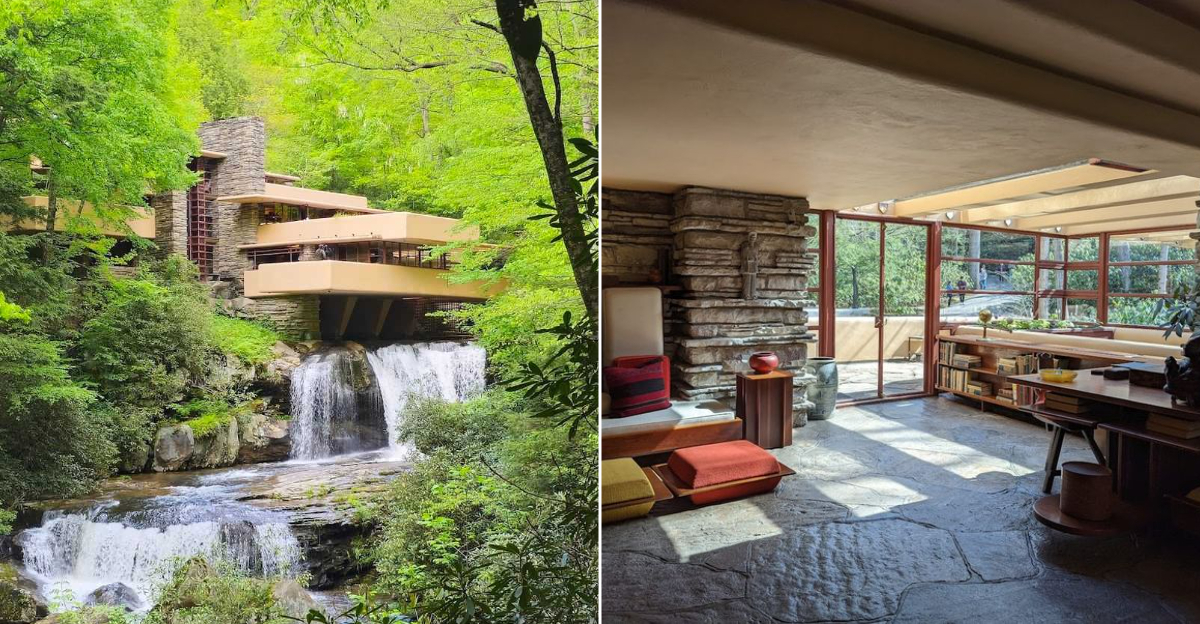
Tucked deep in the forested hills of southwestern Pennsylvania, Fallingwater is one of the most celebrated buildings ever designed. Architect Frank Lloyd Wright created it in 1935 as a weekend retreat for the Kaufmann family, and it sits directly over a rushing waterfall on Bear Run stream.
Visitors from all over the world make the scenic drive to Mill Run just to stand in front of it and feel the mist. Once you see it in person, it is impossible to forget.
Frank Lloyd Wright and the Genius Behind the Design
Few architects in history have left a mark as bold and lasting as Frank Lloyd Wright. Born in 1867, Wright spent his entire career pushing against the idea that buildings should look like boxes dropped onto a landscape.
He believed structures should grow from their surroundings, almost like plants rooting into the earth.
When department store owner Edgar J. Kaufmann approached Wright in 1934 about designing a vacation home near Bear Run in Pennsylvania, Wright saw a once-in-a-lifetime opportunity.
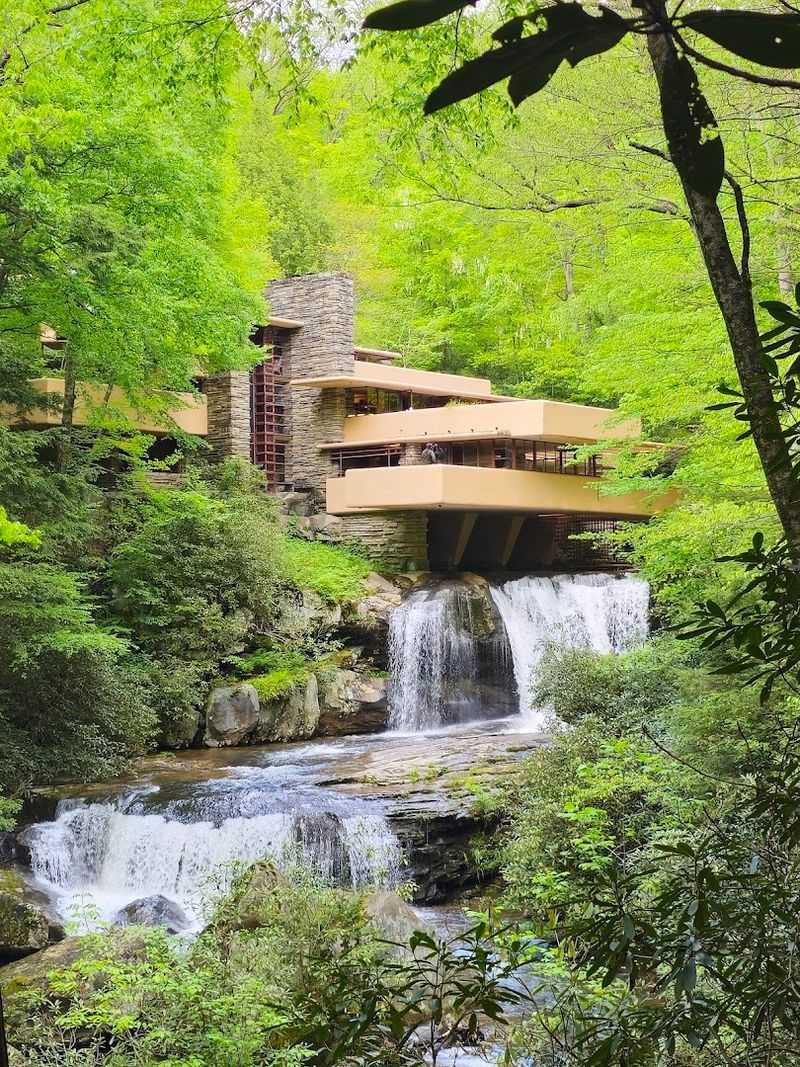
The site had a waterfall, boulders, and a dense canopy of trees. Rather than placing the house near the waterfall so the family could look at it, Wright did something nobody expected: he built the house directly on top of it.
The result was Fallingwater, completed in 1937. Wright used bold horizontal platforms called cantilevers that jut out over the stream with no columns supporting them from below.
At the time, engineers were genuinely worried the structure might collapse. It did not.
Wright was around 70 years old when the house was finished, and many consider it the peak moment of his already extraordinary career.
The Cantilevered Terraces That Defied Gravity
When most people imagine a building, they picture walls sitting on a solid foundation that touches the ground. Fallingwater threw that idea out the window entirely.
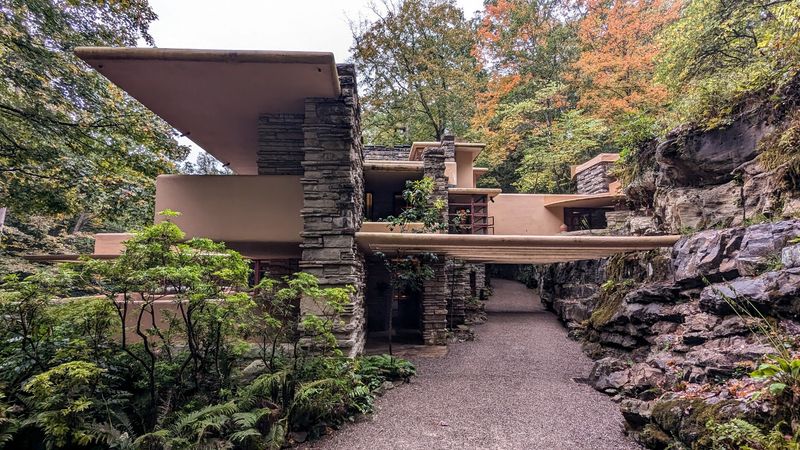
The house features massive concrete platforms called cantilevers that stretch out horizontally over the waterfall below, held in place by reinforced beams anchored into the natural rock.
Wright designed three main terrace levels, each one extending in a different direction like the arms of a tree reaching for sunlight. The longest cantilever stretches approximately 18 feet beyond its support point.
Structural engineers hired by the Kaufmann family secretly added extra steel reinforcement to the design because they feared Wright had not used enough. Wright was furious when he found out, though later inspections confirmed the extra steel was a wise precaution.
Over the decades, the terraces did begin to sag slightly due to the weight of the concrete and the constant moisture from the stream below. A major restoration project launched in 2003 used post-tensioning cables to stabilize the platforms, and a newer $7 million preservation effort began in 2023 to address additional cracking and corrosion.
Visitors today can still walk on the terraces and feel just how dramatically they hover over the rushing water below.
Bear Run Stream and the Waterfall That Never Sleeps
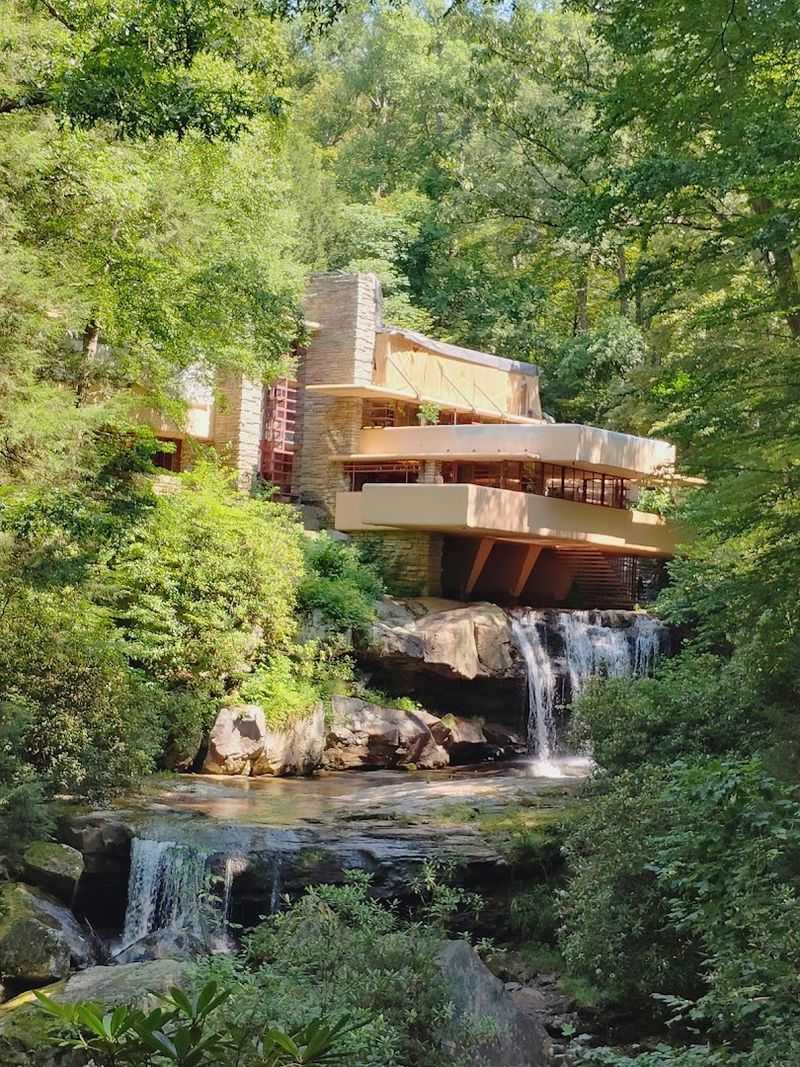
Bear Run is a small but spirited stream that cuts through the Laurel Highlands of southwestern Pennsylvania before emptying into the Youghiogheny River. It flows year-round, which means the waterfall beneath Fallingwater is always moving, always making noise, always throwing a faint mist into the air around the house.
That constant sound of water was not just a design detail for Wright; it was the entire point.
The waterfall drops about 20 feet over a series of natural rock ledges, and the sound fills every room in the house. Guests staying at Fallingwater in its early years reportedly found the noise either deeply soothing or slightly maddening, depending on their personality.
Liliane Kaufmann, the family matriarch, loved it so much she had Wright design a staircase that descends directly from the living room down to a small plunge pool right at the water level.
Today, visitors on guided tours can hear the stream from inside the house and sometimes catch a glimpse of the falls through the large windows. The surrounding Bear Run Nature Reserve, managed by the Western Pennsylvania Conservancy, protects over 5,000 acres of forest and keeps the stream clean and healthy for future generations to enjoy.
The Kaufmann Family and Their Extraordinary Weekend Home
Edgar J. Kaufmann Sr. was the owner of Kaufmann’s Department Store, a Pittsburgh institution that eventually became part of Macy’s.
He and his wife Liliane were cultured, well-traveled, and deeply interested in art. Their son, Edgar Jr., introduced them to Frank Lloyd Wright after studying at the Taliesin Fellowship, Wright’s famous school of architecture in Wisconsin.
The Kaufmanns originally had a simple camp on the Bear Run property. When they asked Wright to design something more permanent, they imagined a house near the waterfall where they could sit on a porch and enjoy the view.
Wright’s counter-proposal, building on top of the falls, surprised them at first. But Edgar Sr. trusted the vision and gave Wright the freedom to execute it fully.
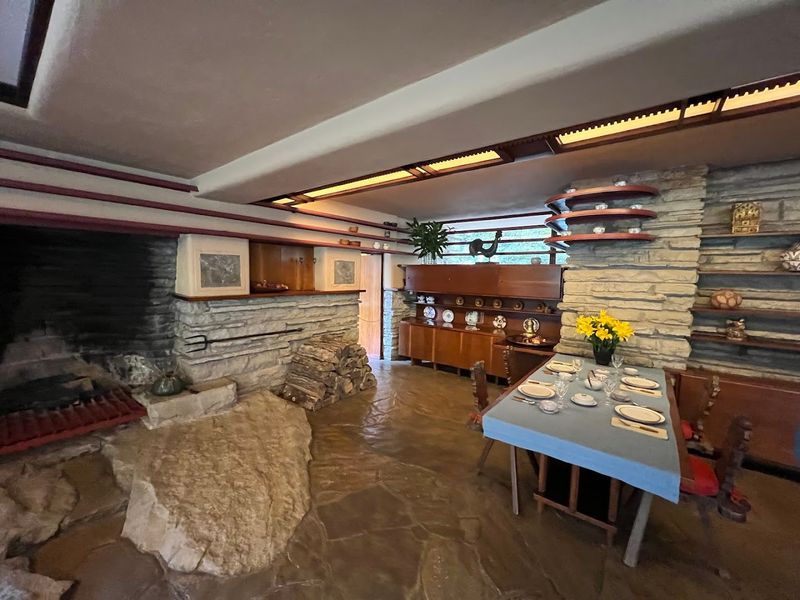
Fallingwater served as the Kaufmann family’s weekend and vacation retreat from 1937 until Edgar Jr. donated the property to the Western Pennsylvania Conservancy in 1963. The house retains much of its original furnishing, art, and personal objects, giving visitors the rare feeling of stepping into a real family home rather than a sterile museum.
Edgar Jr. wanted people to experience both the architecture and the spirit of the people who lived there.
Organic Architecture and the Philosophy of Living with Nature
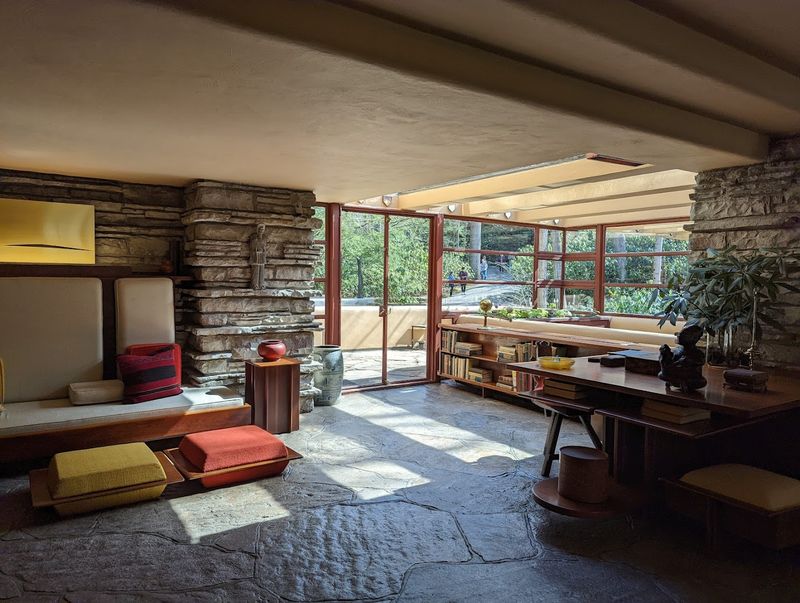
Wright had a word for his design philosophy: organic. He believed buildings should feel like natural extensions of the land they sit on, not impositions dropped onto it from above.
At Fallingwater, that philosophy is visible in every single detail, from the floors to the ceiling to the way light moves through the rooms at different times of day.
The floors throughout the house are made from local sandstone quarried right on the Kaufmann property. Wright had the stone waxed rather than sealed so it would remain slightly rough underfoot, mimicking the feeling of walking on a riverbank.
The walls are a combination of the same rough sandstone and smooth concrete painted in a warm ochre tone. Built-in furniture made from black walnut wood keeps the interior feeling connected to the forest just outside the glass.
Natural light was a huge priority for Wright. He placed windows and glass doors in corners and along walls in ways that blur the line between inside and outside.
Standing in the living room, you can look in almost any direction and see trees, rocks, or sky. That blurring of boundaries is exactly what Wright intended, making the house feel less like a shelter from nature and more like a partnership with it.
Touring the House: What to Expect When You Visit
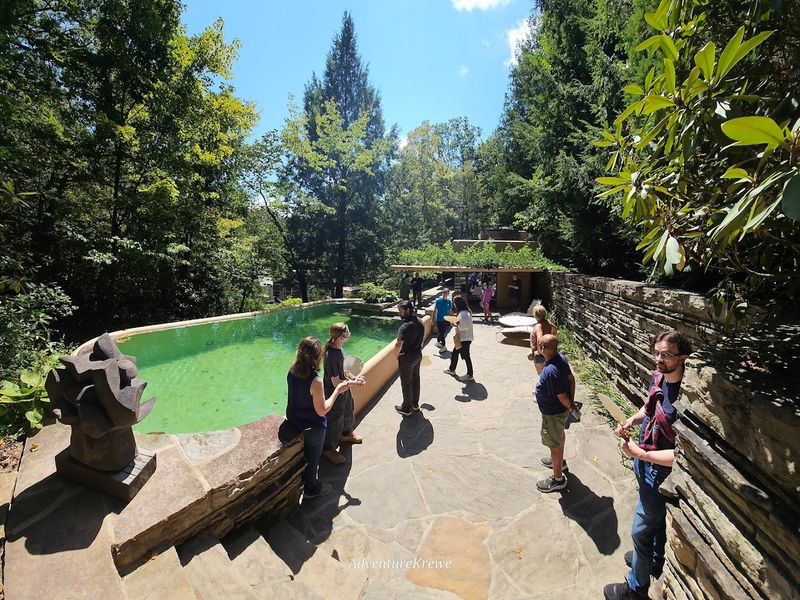
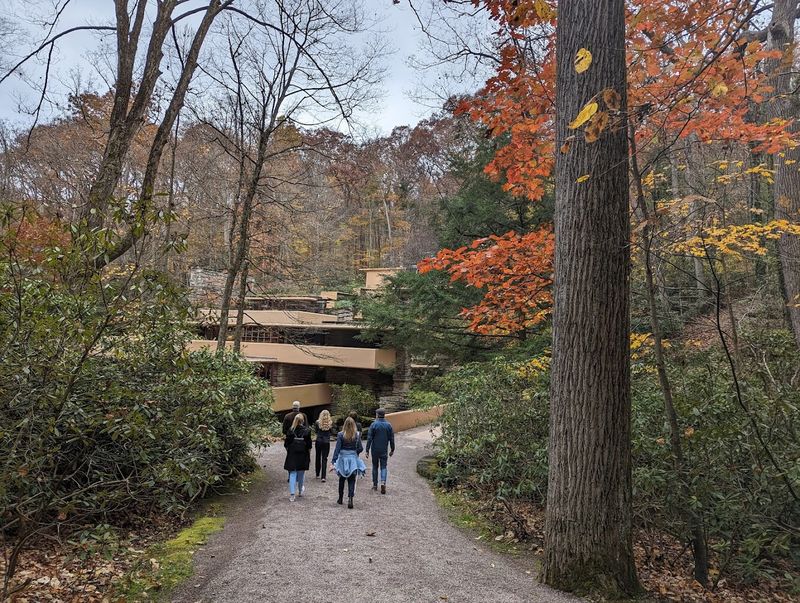
Arriving at Fallingwater for the first time feels a little like following a treasure map. You park at the visitor center, check in, and then walk a wooded path before the house reveals itself around a bend.
That first glimpse, with the white concrete terraces floating above the rushing stream, tends to stop people in their tracks.
Several tour options are available. The standard house tour lasts about an hour and takes small groups through the main living spaces, bedrooms, and terraces.
The in-depth guided tour runs roughly 90 minutes and includes the guesthouse and gardener’s cottage in addition to the main house. Photography rules vary by tour level, so checking the website at fallingwater.org before booking is a smart move.
Tickets sell out quickly, especially on weekends, so booking online well in advance is strongly recommended.
Guides at Fallingwater are genuinely passionate about the history and architecture of the site. Visitors consistently praise them for making the experience feel personal rather than rehearsed.
Audio devices are provided so you can hear your guide clearly even when the group spreads out across a room. Comfortable walking shoes are a must, as the grounds include uneven stone paths and narrow stairs that are not fully ADA accessible.
The Restoration Project Saving Fallingwater for Future Generations
Concrete is strong, but it is not invincible. Decades of moisture from the stream below, combined with the stress of those dramatic cantilevered platforms, eventually took a toll on Fallingwater’s structure.
By the late 1990s, engineers discovered the terraces had developed a noticeable sag, and water was seeping through cracks in the walls and floors.
A major stabilization project completed in 2002 used post-tensioning cables threaded through the concrete to pull the drooping terraces back toward level. That work bought the building significant time.
However, the deeper problems of corrosion, cracking stucco, and water infiltration continued to develop. In 2023, the Western Pennsylvania Conservancy launched a new $7 million restoration effort targeting the exterior surfaces, drainage systems, and structural connections throughout the building.
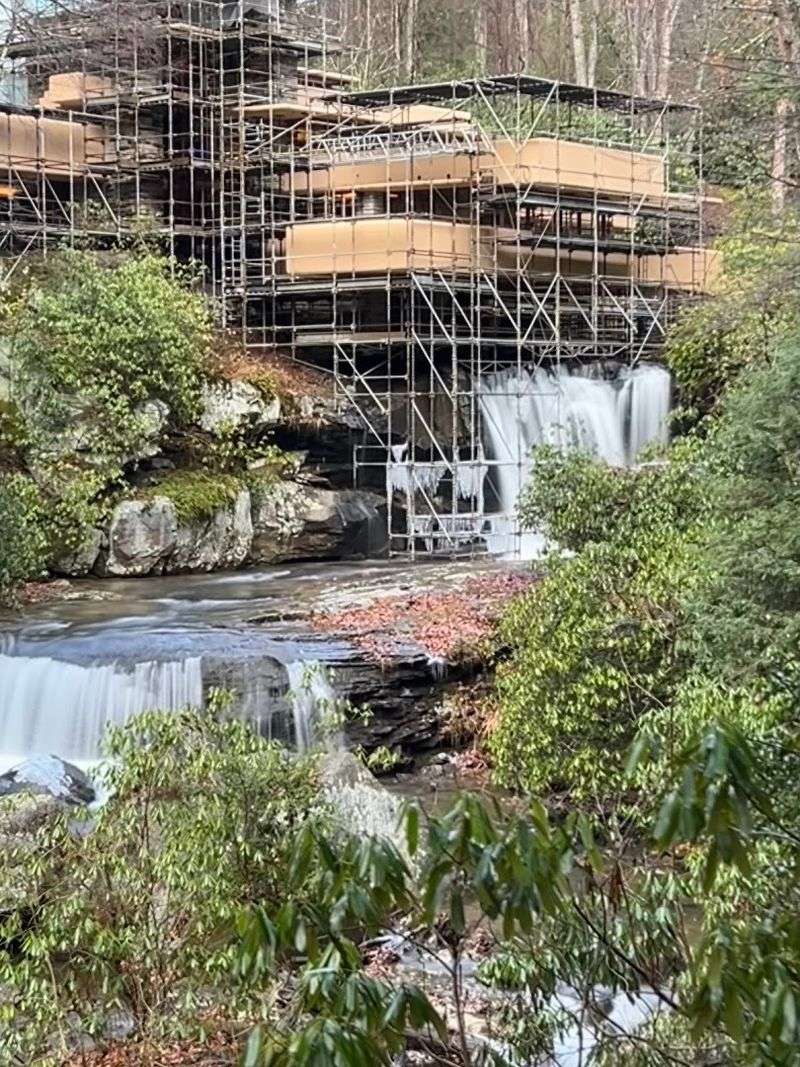
Visitors arriving during the restoration period may notice scaffolding covering portions of the exterior, which does limit some of the classic photo angles. Most reviewers who visited during this period still found the experience deeply worthwhile, noting that the interior and grounds remain fully impressive.
The restoration is expected to protect Fallingwater for at least another century, ensuring that the building Wright called his greatest work continues to inspire visitors long into the future.
The Surrounding Grounds, Gardens, and Nature Trails
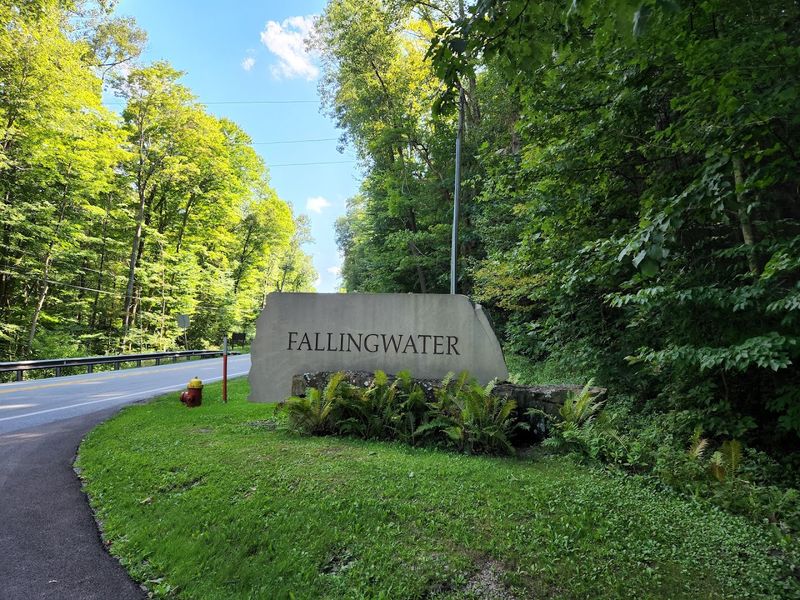
Fallingwater does not exist in isolation. The building sits within the Bear Run Nature Reserve, a protected stretch of forest covering more than 5,000 acres in the Laurel Highlands of southwestern Pennsylvania.
The reserve is managed by the Western Pennsylvania Conservancy and offers a network of hiking trails that wind through old-growth forest, past wildflower meadows, and along the banks of Bear Run itself.
Even visitors who cannot get tickets for a house tour can purchase a $20 property pass that grants access to the grounds, exterior paths, and some of the terraces. Walking the property gives a strong sense of how deliberately Wright chose every sight line and approach angle.
The guesthouse, designed a few years after the main house, sits on a hillside above the main structure and continues the same organic design language. A small cafe near the visitor center serves coffee, baked goods, and sandwiches for those who want to linger.
Spring and fall are especially magical times to visit. In spring, wildflowers bloom along the stream banks and the forest canopy glows bright green.
In fall, the surrounding hills turn vivid shades of orange and red that make the ochre and white tones of the building look even more striking. Any season offers something genuinely beautiful.
Fallingwater’s Place in Architectural History
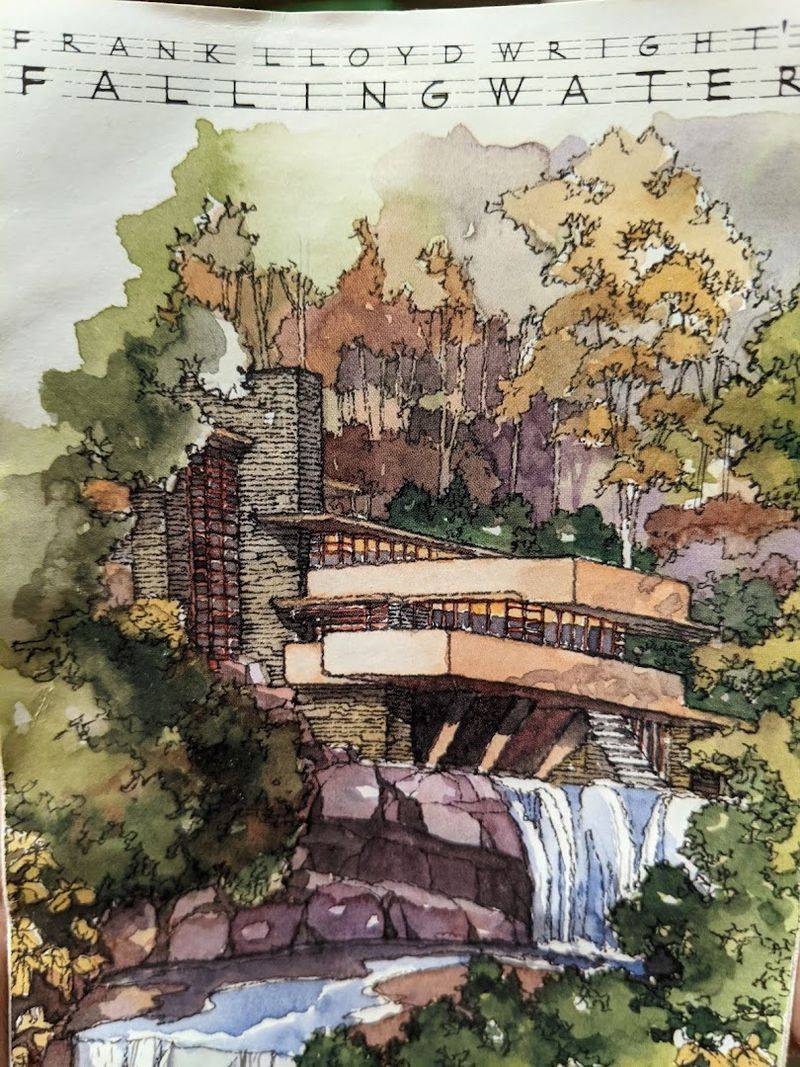
In 1991, the American Institute of Architects voted Fallingwater the best all-time work of American architecture. That is a remarkable title for a building that started as a private vacation home hidden in the woods of Pennsylvania.
The house had already appeared on the cover of Time magazine in 1938, making Wright a household name at a time when architects rarely received that kind of public attention.
Architectural historians point to Fallingwater as a turning point in the way people thought about the relationship between buildings and their natural settings. Before Fallingwater, most modernist architecture celebrated hard edges, flat surfaces, and a deliberate separation from the natural world.
Wright argued for the opposite, and Fallingwater proved his point in concrete and stone.
The building has been studied in architecture schools on every continent and has appeared in countless textbooks, documentaries, and design exhibitions. UNESCO placed it on the World Heritage List in 2019 as part of a group of eight Wright buildings recognized for their outstanding universal value.
Fallingwater is not just famous in the United States; it is recognized globally as one of the clearest expressions of what architecture can be when a designer truly listens to the land beneath their feet.
Practical Tips for Planning Your Visit to Fallingwater
Getting to Fallingwater requires a bit of planning, but the effort pays off handsomely. The address is 1491 Mill Run Road, Mill Run, PA 15464.
The drive from Pittsburgh takes about 90 minutes through increasingly scenic countryside, and the last stretch of road winds through forested hills that set the mood perfectly before you even arrive.
The site is open Thursday through Monday from 8 AM to 4 PM and is closed on Tuesdays and Wednesdays. Parking is free and fairly spacious, but you must have a scheduled ticket before arriving.
Walk-up availability is rare, especially on weekends and holidays. Booking through the official website at fallingwater.org is the best approach, and tickets for popular dates can sell out weeks in advance.
The phone number for the site is 724-329-8501 if you prefer to call with questions.
Wear comfortable shoes with good grip because the paths and stairs involve uneven stone surfaces. The tours are not fully wheelchair accessible due to the original design of the building.
A gift shop, small cafe, and exhibit about the Kaufmann family are all located at the visitor center. Arriving a few minutes early gives you time to explore those spaces and get oriented before your tour begins.