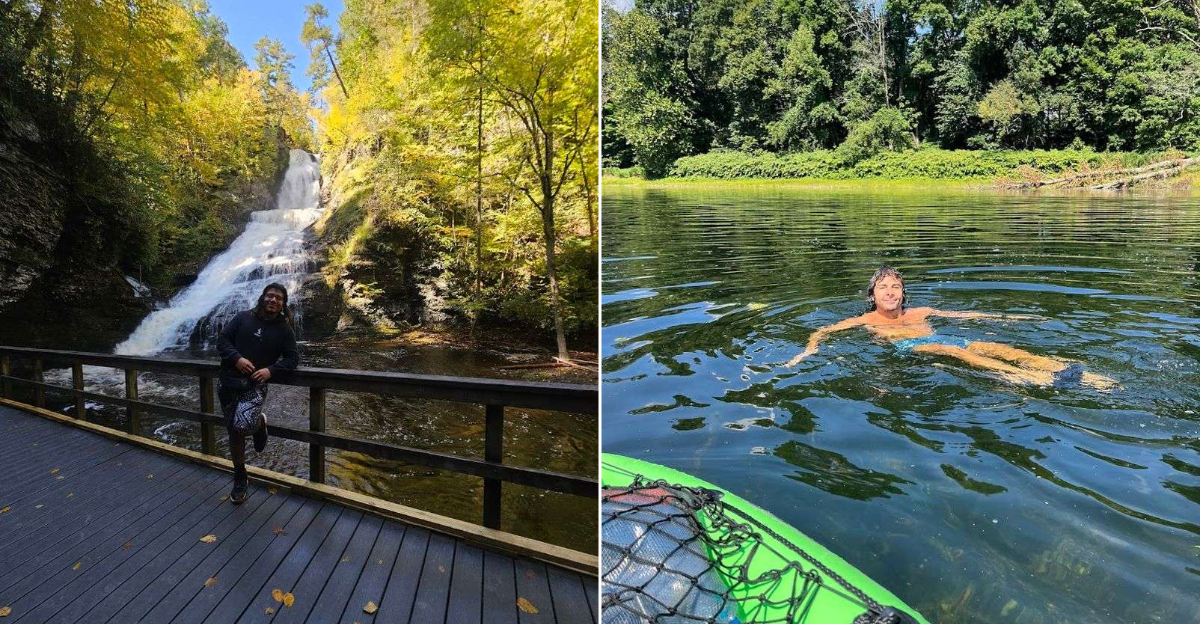
Tucked along the Pennsylvania-New Jersey border, Delaware Water Gap National Recreation Area stretches across more than 70,000 acres of forested ridges, sparkling river bends, and hidden waterfalls. This massive national park follows 40 miles of the Delaware River, offering everything from challenging mountain hikes to lazy afternoon swims.
Best of all, visit on a weekday and you might feel like you have the whole place to yourself. Whether you are a seasoned hiker or just looking for a peaceful picnic spot, this river valley has something worth discovering.
Mount Tammany Trail and the Famous Water Gap View
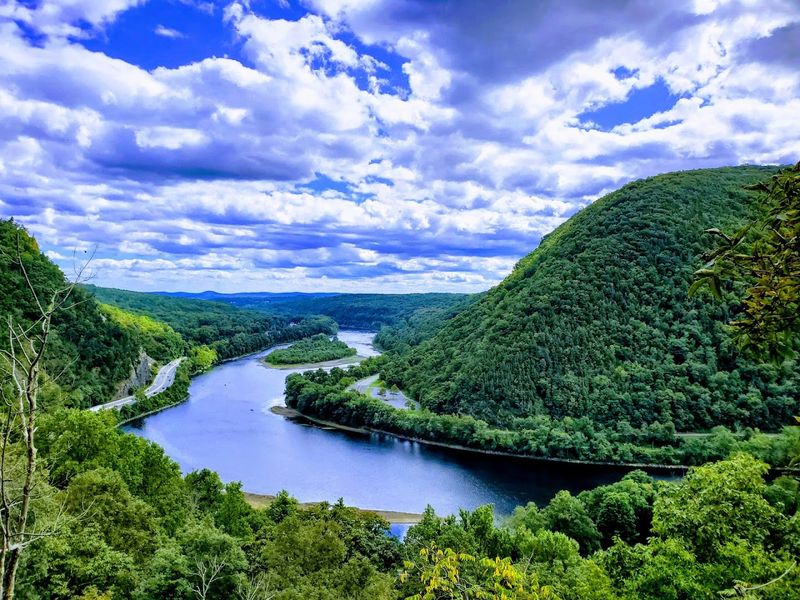
Standing at the top of Mount Tammany feels like earning a trophy you did not know you needed. The red-dot trail climbs about 1,500 feet over roughly 1.5 miles, weaving through boulders and dense forest before opening up to one of the most jaw-dropping views in the entire Mid-Atlantic region.
From the summit, you can see the Delaware River carving its dramatic path straight through the Kittatinny Ridge below you. On a clear day, the scene stretches for miles in both directions, with layers of blue-green ridges fading into the distance.
Many hikers combine the red trail up with the blue trail down to make a satisfying loop.
Families with kids around eight and older generally handle this hike well, though the rocky sections require careful footing. Starting before noon on a weekday almost guarantees a quiet experience at the top.
Bring plenty of water, wear sturdy shoes, and pack a snack because you will want to linger at the summit longer than you planned. This trail consistently earns its reputation as a must-do hike in Pennsylvania.
Dingmans Falls: One of the Tallest Waterfalls in Pennsylvania
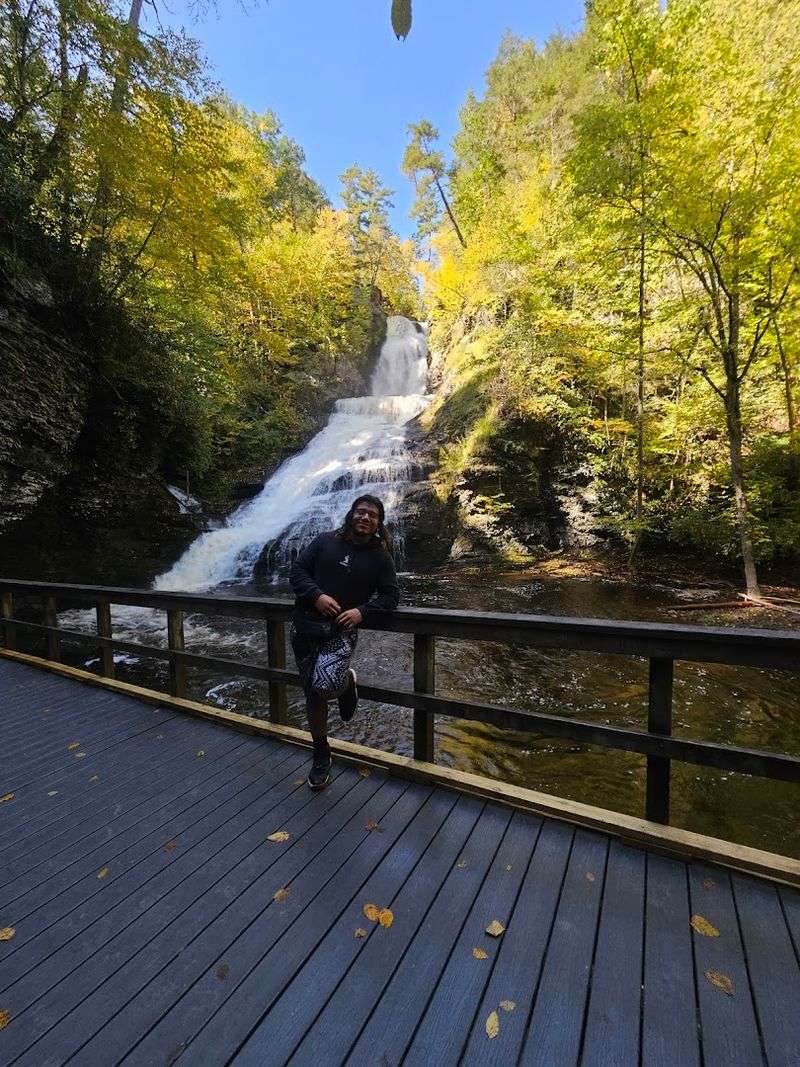
At roughly 130 feet tall, Dingmans Falls is the kind of waterfall that makes you stop mid-sentence and just stare. The accessible boardwalk trail leading to it is only about 0.3 miles from the parking lot, making it one of the most rewarding short walks in the entire park.
The boardwalk is wide enough for wheelchairs and strollers, and benches placed along the path give everyone a chance to rest and soak in the forest atmosphere. You actually pass smaller Silverthread Falls on the way, which sends a thin ribbon of water down a mossy cliff face.
Both falls together make the walk feel like a two-for-one deal.
Even young children absolutely love this trail. The sound of rushing water builds as you get closer, creating a natural sense of anticipation.
Restroom facilities are available at the trailhead, though they are very basic. Visiting on a Tuesday or Wednesday morning means you can stand at the base of the falls in near-total quiet, hearing nothing but the roar of the water.
Pack bug spray because the moist forest environment attracts insects throughout the warmer months.
Swimming Holes Along the Delaware River

On a hot July afternoon, few things beat wading into the cool, clear waters of the Delaware River. Several spots along the riverbank within the recreation area are perfect for swimming, and the river bottom is generally smooth rounded rocks rather than sharp edges, making it friendly for bare feet.
Bull Island and the beaches near Smithfield Beach are popular choices, offering sandy and gravelly shores where families spread out towels and kids splash in the shallows. The current in most swimming areas is gentle enough for confident beginners, though always check posted signs and water conditions before getting in.
Weekday visits are genuinely different from weekends here. On a Wednesday in midsummer, you might share a stretch of riverbank with just a handful of other visitors, which feels almost unreal given how beautiful the scenery is.
Lifeguards are not always present, so adult supervision is essential. Bring water shoes, sunscreen, and a change of clothes.
The water stays refreshingly cool even in August, fed by shaded tributaries and springwater. For anyone looking to cool off without driving to a crowded public pool, these river spots are an easy and scenic answer.
Kayaking and Canoeing the Delaware River
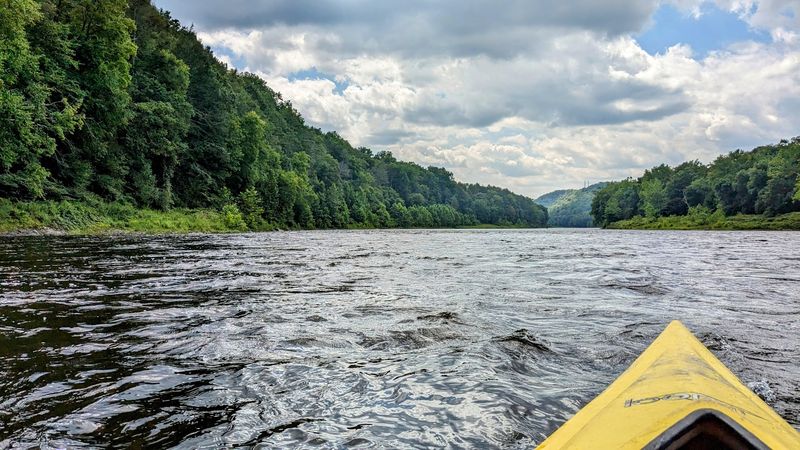
Paddling the Delaware River is one of those experiences that feels completely unhurried, like the river itself is in no rush to get anywhere. The current is easy-going along most stretches through the recreation area, making it accessible for beginners and families who have never held a paddle before.
Bald eagles and golden eagles have been spotted soaring above the water, and kingfishers dart along the banks with impressive speed. The river is wide enough that you never feel cramped, and the forested hillsides on both sides create a tunnel of green that blocks out any reminder of city life.
Several outfitters near the park rent kayaks, canoes, and tubes by the hour or full day.
Fall is arguably the best season to paddle here. The changing leaf colors reflect off the water in a way that feels almost too beautiful to be real.
Summer offers warmer water temperatures and longer daylight hours. Either way, a weekday paddle means fewer boats sharing the river and a quieter, more peaceful experience overall.
Always wear a life jacket, bring sunscreen and snacks, and let someone know your planned route and return time before heading out.
The Appalachian Trail Through the Recreation Area
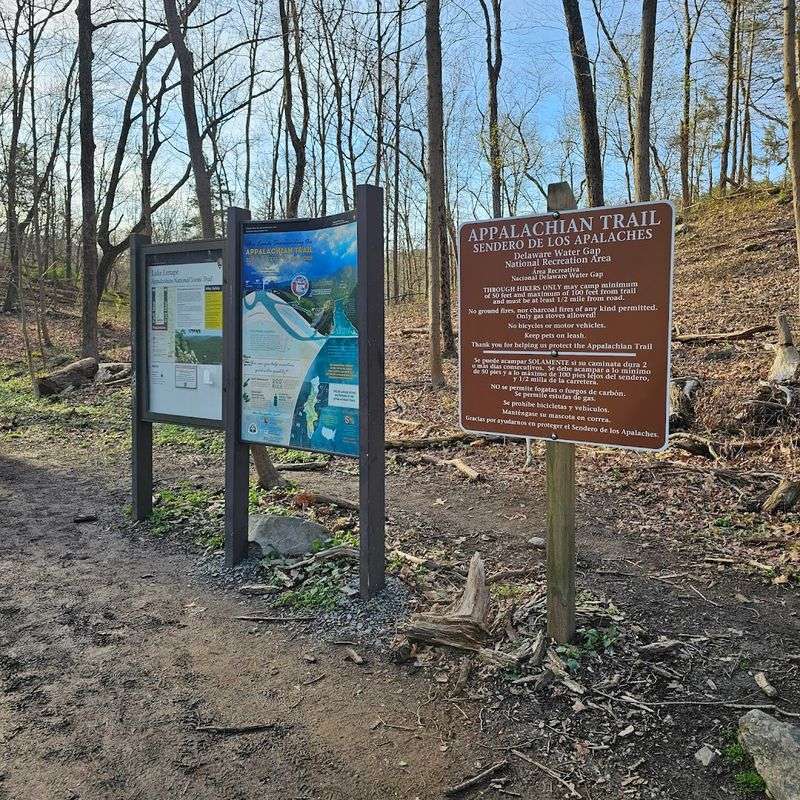
The Appalachian Trail passes directly through Delaware Water Gap National Recreation Area, and for many long-distance hikers, this section marks a meaningful milestone on the 2,190-mile journey from Georgia to Maine. Day hikers can access the trail from multiple points and experience a genuine slice of this legendary footpath without committing to a multi-month adventure.
The Mount Minsi section on the Pennsylvania side is particularly popular, climbing through hardwood forest to open ridgeline views above the river. Trail markers are reliably placed, and the footpath itself is well-worn and easy to follow.
Even first-timers rarely get confused about which way to go.
One reviewer mentioned parking near the trail access point and consistently finding open spots on weekday afternoons between noon and one. That kind of low-key access is part of what makes this section of the AT special compared to more crowded segments further south.
Bring trekking poles for the rocky descents, and wear layers because ridge temperatures can be noticeably cooler than the valley below. Whether you walk two miles or ten, stepping onto the Appalachian Trail here carries a quiet sense of history that is hard to explain but easy to feel.
Bushkill Meeting Center: Your Best First Stop
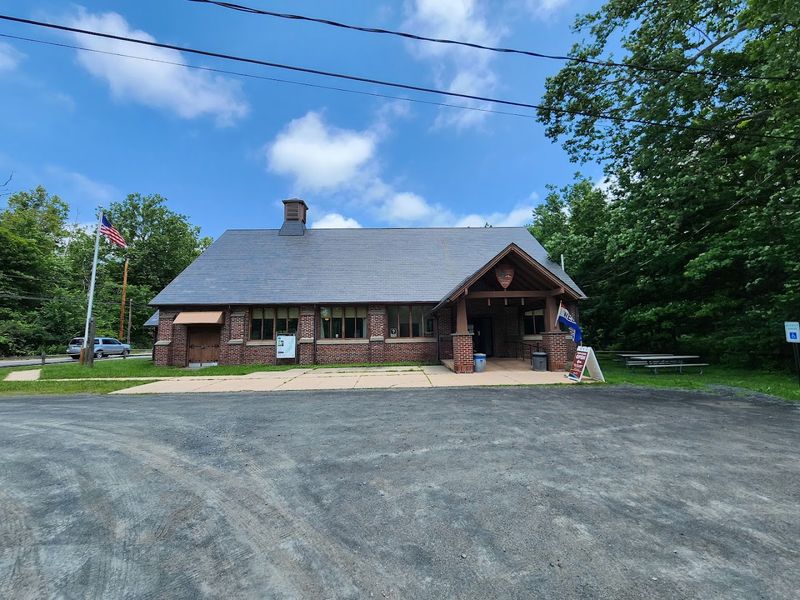
Before heading anywhere else in the park, stopping at the Bushkill Meeting Center is genuinely worth your time. This is the main visitor center for the recreation area, and the staff there can point you toward trails, swimming spots, and scenic drives that match your fitness level and available time.
Free maps are available here, and those maps are surprisingly detailed, marking both free-access areas and spots that require a fee. Reviewers consistently mention picking up the park map at Bushkill as a game-changer for navigating the sprawling 70,000-acre property.
Without it, the sheer size of the park can feel overwhelming, especially for first-time visitors.
The center also offers exhibits on the natural and cultural history of the Delaware Valley, giving younger visitors a fun introduction to the wildlife and geology they are about to encounter on the trails. Junior ranger activity booklets are available here too, and kids who complete the activities earn an official badge.
Parking is easy, restrooms are clean, and the staff are genuinely enthusiastic about helping visitors make the most of their day. Think of this stop as the launchpad for everything else the park has to offer.
Fall Foliage Hikes: A Whole Different Kind of Beautiful
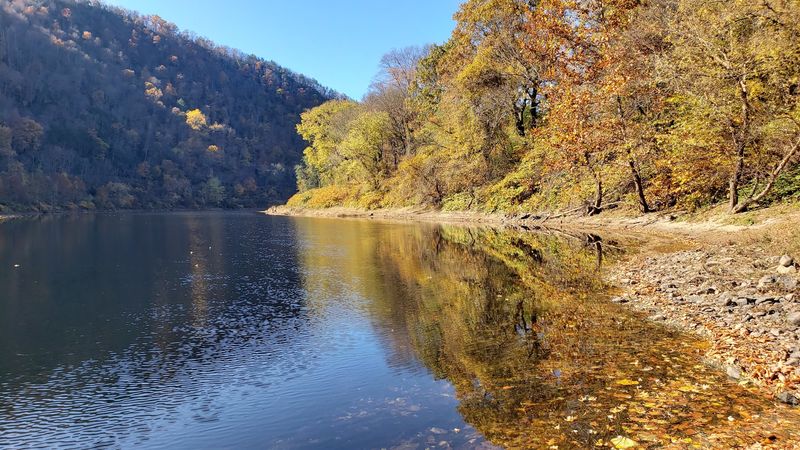
Multiple visitors who reviewed the park mentioned planning return trips specifically for fall, and it is easy to understand why. When October arrives, the forested ridges of Delaware Water Gap transform into a rolling canvas of red, orange, and gold that stretches as far as the eye can see from any elevated viewpoint.
The combination of hardwood forest and dramatic river views makes this one of the best fall foliage destinations in the entire northeastern United States. Trails that feel purely functional in summer suddenly become immersive color experiences in autumn.
Even the short walk to Dingmans Falls takes on a completely different character when the surrounding trees are ablaze with color.
Weekday visits in October are especially rewarding because fall weekends can draw larger crowds to popular overlooks. Arriving on a Tuesday or Wednesday morning means you can stand at a ridge overlook with almost no one else around, just the wind and the sound of leaves shifting overhead.
Peak color typically arrives between mid-October and early November depending on the year. Check local foliage reports before planning your trip to time it just right, and bring a camera because the views genuinely exceed what any photograph can fully capture.
Peters Valley School of Craft and the Historic Village
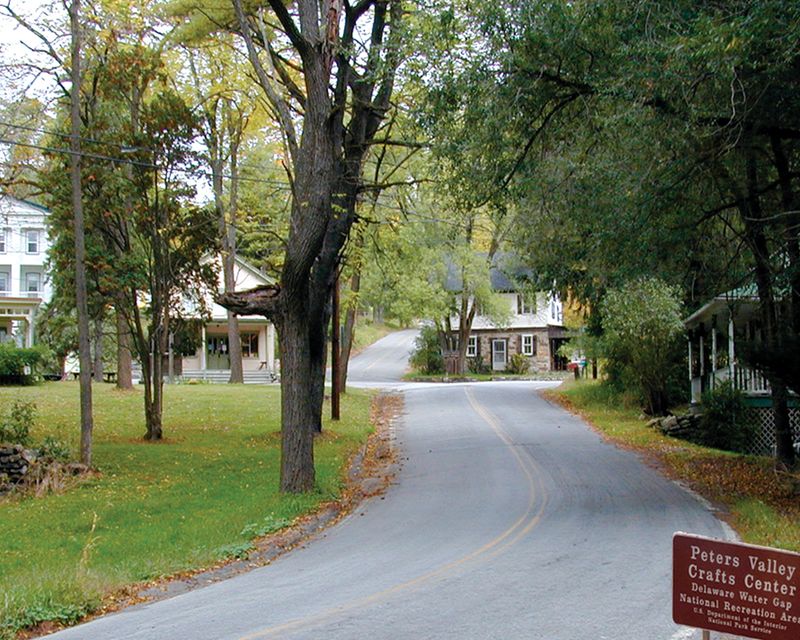
Hidden inside the boundaries of the recreation area, Peters Valley School of Craft is one of those unexpected discoveries that makes a park visit feel like more than just a hike. Founded in 1970 and operating within a cluster of historic buildings, the school hosts professional craft artists who work in ceramics, blacksmithing, fiber arts, weaving, and woodworking throughout the summer and fall.
Visitors can tour the studios, watch resident artists at work, and browse the gallery shop filled with handmade pieces available for purchase. The setting itself is charming, with old stone walls and weathered wooden structures that feel like they belong in a different century.
The surrounding village atmosphere gives the area a quiet, almost timeless quality that contrasts beautifully with the wild landscapes just minutes away on the trail system.
An annual craft fair draws visitors from across the region, but on a regular weekday the campus is peaceful and unhurried. It is a wonderful stop for adults who want something a little different from a traditional park experience.
Children who enjoy hands-on creativity often find the open studio environment genuinely fascinating. Combining a morning hike with an afternoon visit to Peters Valley makes for a surprisingly well-rounded day trip.
Camping Under the Stars in the Delaware Valley
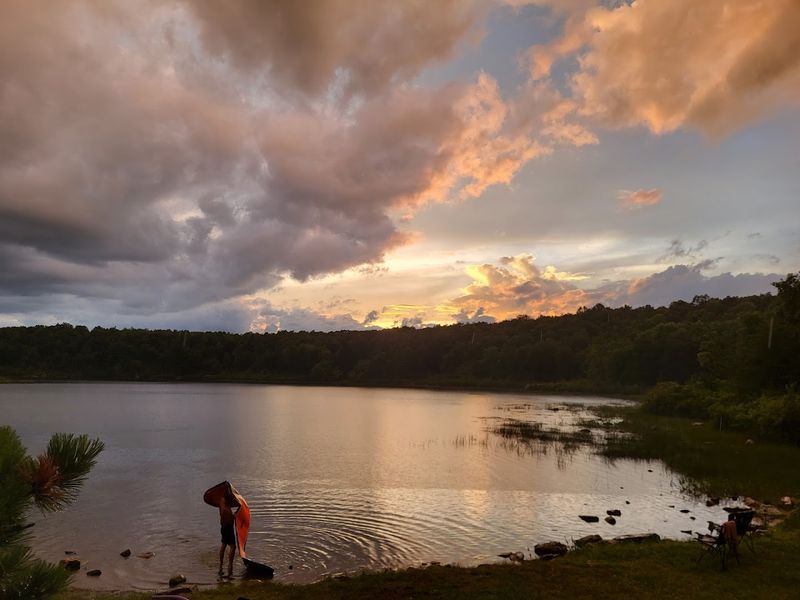
There is something deeply satisfying about falling asleep to the sound of the Delaware River and waking up to birdsong in a hemlock forest. Camping at Delaware Water Gap National Recreation Area turns a day trip into a full-on immersion, and the park offers several campground options to match different comfort levels and group sizes.
Dingmans Campground and Otter Lake Camp Resort are among the options near the Pennsylvania side, with sites ranging from primitive tent spots to areas with more amenities. Reservations are strongly recommended for summer weekends, but weekday availability is often much better, and the campgrounds feel noticeably quieter with fewer neighboring sites occupied.
One important tip: bring plenty of water and snacks because there are no convenience stores or food vendors inside the park boundaries. Bug spray is absolutely essential, especially near water and in the evenings.
Campfire restrictions vary by season, so check the park website before packing firewood. The night sky away from city light pollution is genuinely stunning here, and stargazing from a camp chair after a full day of hiking is the kind of simple pleasure that reminds you why people have been camping in this valley for generations.
This experience is hard to beat at any price point.