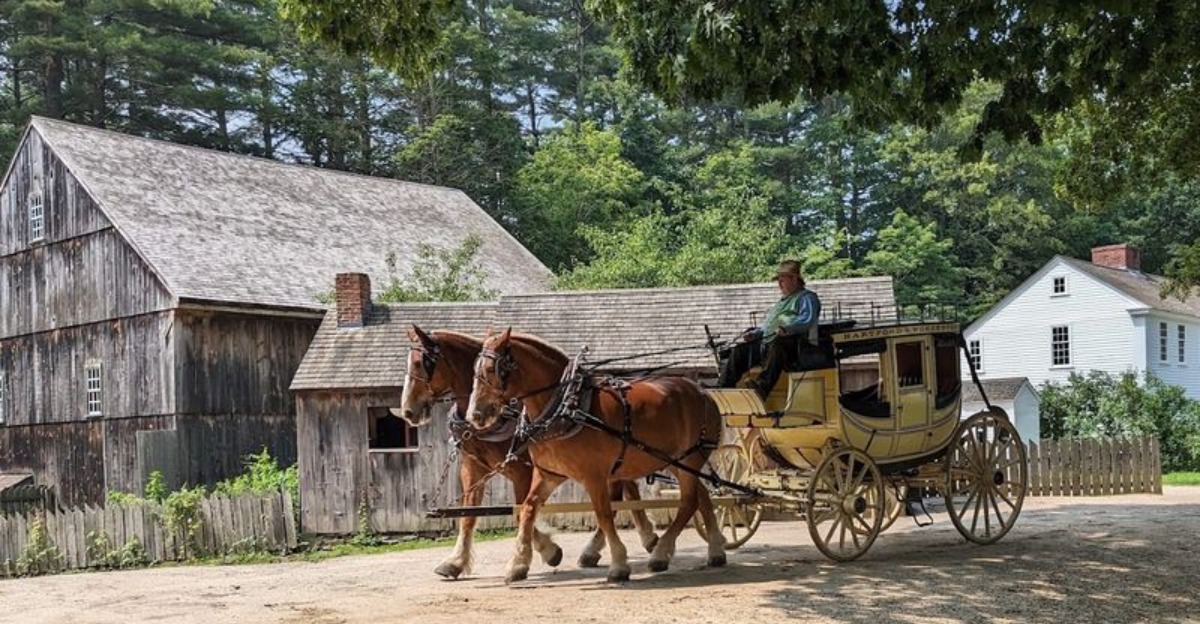
Imagine walking down a dirt road lined with historic homes, hearing the clang of a blacksmith’s hammer, and smelling fresh bread baking over an open hearth — all while being fully transported back to the 1830s.
That’s exactly what happens when you visit Old Sturbridge Village in Sturbridge, Massachusetts.
Spread across more than 200 acres, this remarkable living history museum is not just something you look at — it’s something you experience, touch, and feel.
Whether you’re a history lover, a curious traveler, or a family looking for a one-of-a-kind adventure, Old Sturbridge Village is unlike any museum you’ve ever visited.
A Fully Immersive 1830s New England Town
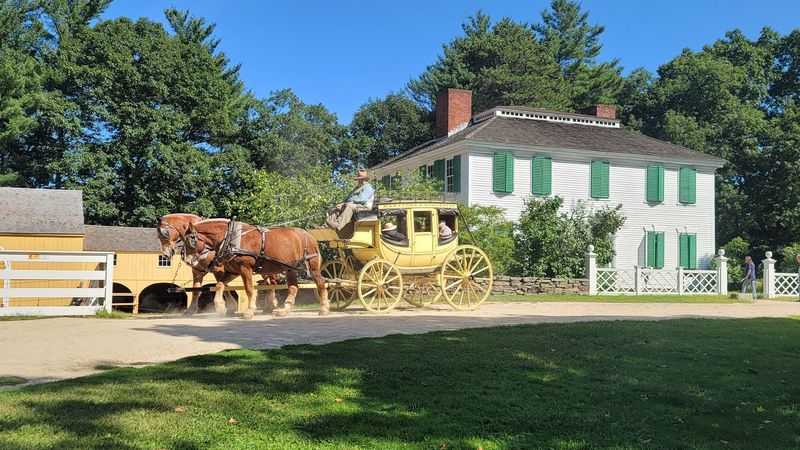
Walking through Old Sturbridge Village feels less like visiting a museum and more like accidentally stumbling into a time machine. Located at 1 Old Sturbridge Village Rd, Sturbridge, MA 01566, this carefully crafted outdoor museum recreates rural New England life from the late 1700s through the 1830s.
Every building, pathway, and detail has been arranged to mirror what an actual working community would have looked like nearly 200 years ago.
The village layout is intentional and thoughtful. Homes sit alongside shops, civic buildings, and gathering spaces — just as they would have in a real town.
You don’t just see history displayed behind glass; you walk through it, turn corners into it, and hear it happening around you.
Families with children especially love how interactive the experience is. Kids can ask questions of costumed interpreters, peek into kitchens, and watch skilled workers going about their daily routines.
There’s a warmth and authenticity here that’s genuinely hard to find anywhere else. Old Sturbridge Village isn’t recreating history for show — it’s honoring it with extraordinary care and dedication that visitors of all ages can feel the moment they arrive.
One of the Largest Living History Museums in the U.S.
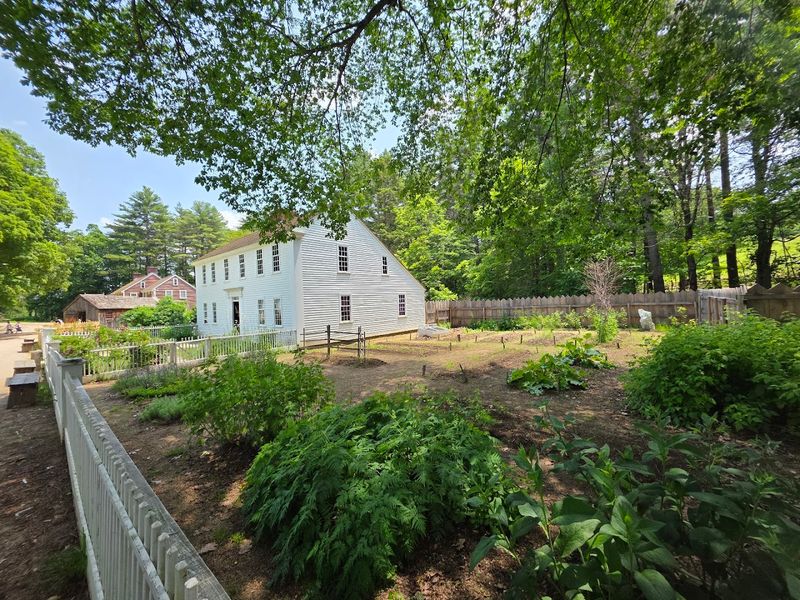
Size matters when you’re trying to bring an entire era back to life. Old Sturbridge Village spans over 200 acres, making it the largest outdoor living history museum in all of New England — and one of the biggest in the entire United States.
That kind of space allows the museum to go far beyond a few buildings and a gift shop.
With 200 acres to explore, visitors encounter working farms, dense forest trails, mill neighborhoods, and a full village center — all spread out the way they would naturally exist in a real rural town. The sheer scale of the place makes it feel genuinely authentic rather than staged or compressed.
Plan to spend a full day here, because rushing through would mean missing so much. Comfortable walking shoes are a must, and bringing a map from the entrance helps you navigate the grounds without doubling back too often.
Many visitors are surprised by how much ground there is to cover. Families often return for a second visit just to catch the areas they missed the first time.
The size of Old Sturbridge Village is truly one of its greatest strengths — and one of its most exciting surprises.
Dozens of Authentic Historic Buildings
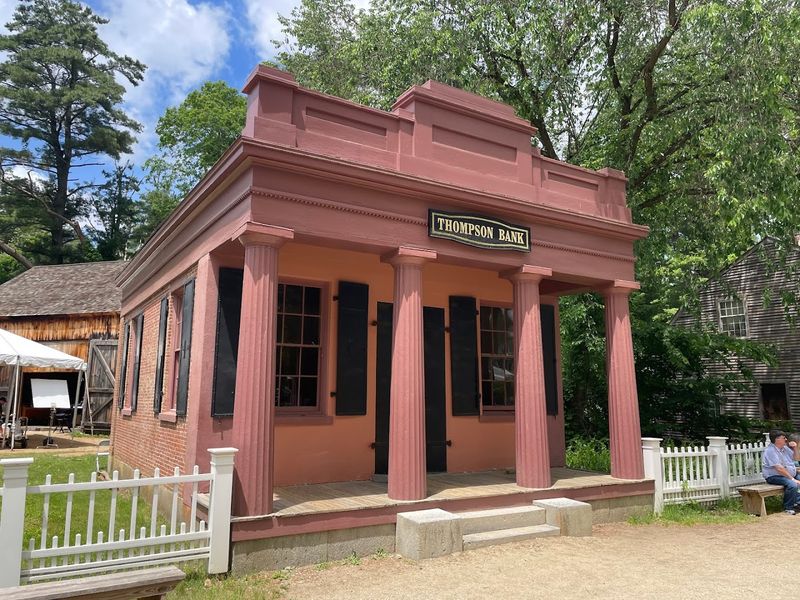
More than 40 historic buildings are scattered across Old Sturbridge Village — and what makes them truly special is that many of them are real. Numerous structures were carefully relocated from towns across New England, preserving original wood, stonework, and craftsmanship that no replica could ever fully replicate.
Standing inside them feels different because they carry actual history in their walls.
Each building tells its own story. A Federal-style farmhouse speaks to the aspirations of a prosperous rural family.
A modest one-room dwelling reflects the simpler life of a laborer. A well-stocked general store hints at the commerce that kept small communities running.
Together, these structures paint a complete picture of early 19th-century New England society.
Preservation efforts at Old Sturbridge Village are ongoing and meticulous. Staff historians and conservators work to maintain architectural accuracy, ensuring that every beam, floorboard, and fireplace reflects the period as faithfully as possible.
For architecture enthusiasts, this place is an absolute treasure trove. For casual visitors, it’s simply a jaw-dropping collection of beautiful old buildings that feel incredibly alive.
Walking from one structure to the next becomes its own kind of adventure — each doorway opening into a different slice of the past.
Costumed Historians Bring the Past to Life
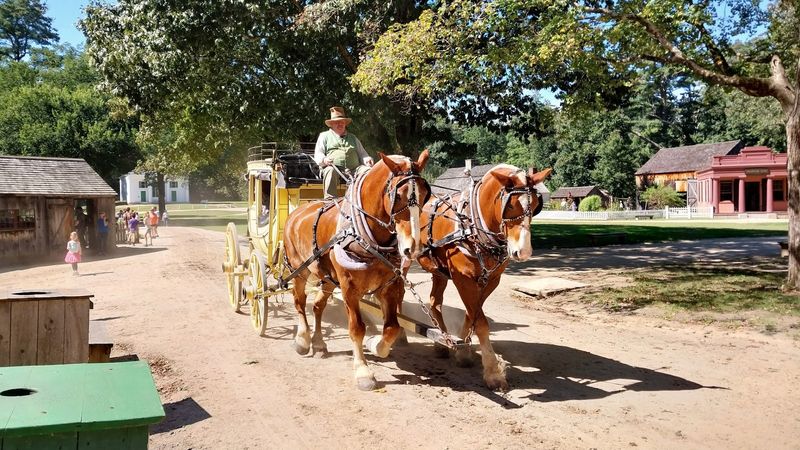
History books can tell you what happened, but the costumed interpreters at Old Sturbridge Village show you how it felt. These are not actors reciting memorized scripts — they are trained historians and educators who deeply understand the period they represent.
Dressed in authentic period clothing, they go about daily tasks as if the year really is 1830-something.
You might catch a woman spinning wool by a crackling fire, a farmer tending to his livestock, or a printer carefully setting type on an old press. Each interpreter welcomes questions and engages visitors in real conversation, often staying in character while explaining the historical context behind what they’re doing.
It creates a layer of connection that no exhibit panel or audio tour could replicate.
Children are especially captivated by these interactions. There’s something genuinely magical about a child asking a “villager” why they’re churning butter and receiving a thoughtful, in-character response.
Adults find themselves equally drawn in, often lingering much longer than expected. The interpreters are the heartbeat of Old Sturbridge Village — without them, the buildings would just be old structures.
With them, the entire village breathes, moves, and feels remarkably, wonderfully alive in a way that stays with you long after you leave.
A Working Farm With Heritage Animals
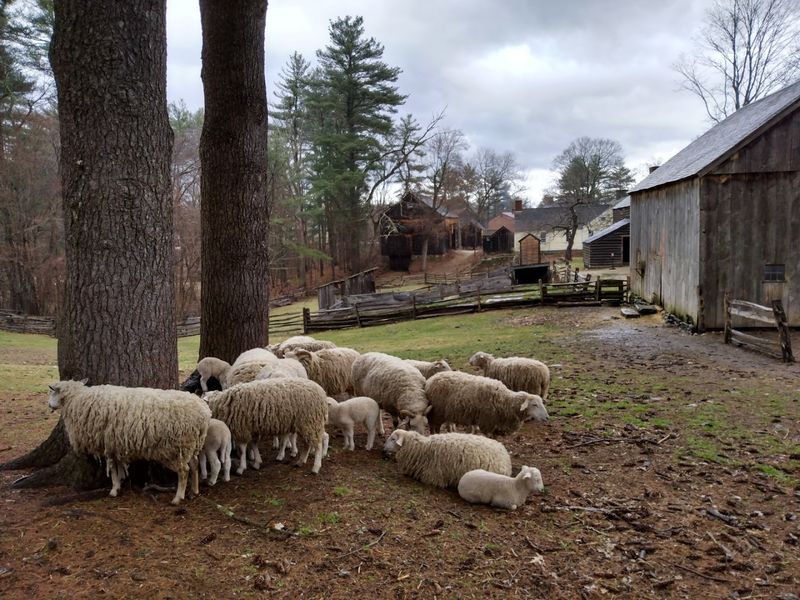
There’s something quietly wonderful about watching a pair of oxen plow a field the same way farmers did nearly two centuries ago. The working farm at Old Sturbridge Village is no decorative backdrop — it’s an active, functioning agricultural operation that uses heirloom crop varieties and heritage-breed animals to reflect the farming practices of the 1830s.
Every season brings different activities and sights.
Heritage breeds like Merino sheep, Milking Devon cattle, and Narragansett turkeys roam the farm, representing the kinds of animals that rural New Englanders would have depended on for food, fiber, and labor. Seeing these animals in their historic context adds a dimension that no textbook illustration could match.
Young visitors are often surprised to learn how central animals were to nearly every aspect of 1830s daily life.
Spring is especially lively on the farm, with planting demonstrations and newborn animals drawing big crowds. Summer brings harvest preparations, while autumn showcases crop collection and food preservation techniques.
Even in winter, the farm has a quiet beauty and educational value. The working farm is one of the most hands-on areas of the entire village — a place where agriculture history becomes tangible, immediate, and genuinely fascinating for visitors of every background and age.
Water-Powered Mills Still in Operation
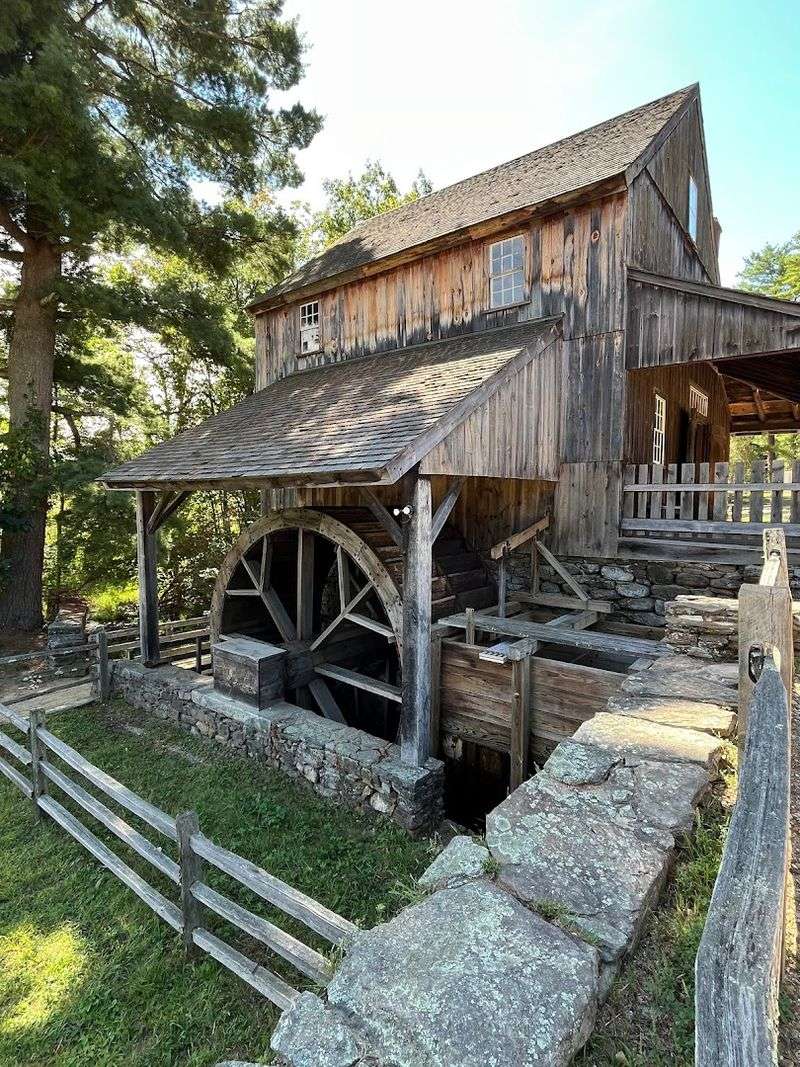
Before electricity changed everything, water was the engine of industry — and at Old Sturbridge Village, you can still watch it work. The mill neighborhood features a gristmill, sawmill, and carding mill, all powered by the natural flow of water just as they were in the early 1800s.
Watching a massive waterwheel turn and hearing the machinery grind into motion is genuinely awe-inspiring.
The gristmill grinds grain into flour, the sawmill cuts lumber with a vertical blade, and the carding mill processes wool fibers — three essential industries that kept New England communities functioning long before factory production took over. Interpreters explain each process clearly, making even the most complex mechanical operations understandable to younger visitors.
Fun fact: water-powered mills were so critical to early American towns that communities were often built around them rather than the other way around. Seeing these mills in actual operation — not just on display but truly functioning — drives that point home in a memorable way.
The rhythmic sound of rushing water and turning gears creates an atmosphere that’s both calming and fascinating. Mill enthusiasts and curious kids alike tend to linger here longer than anywhere else, drawn in by the hypnotic motion of machines that have been working the same way for nearly two hundred years.
Traditional Trades and Craft Demonstrations
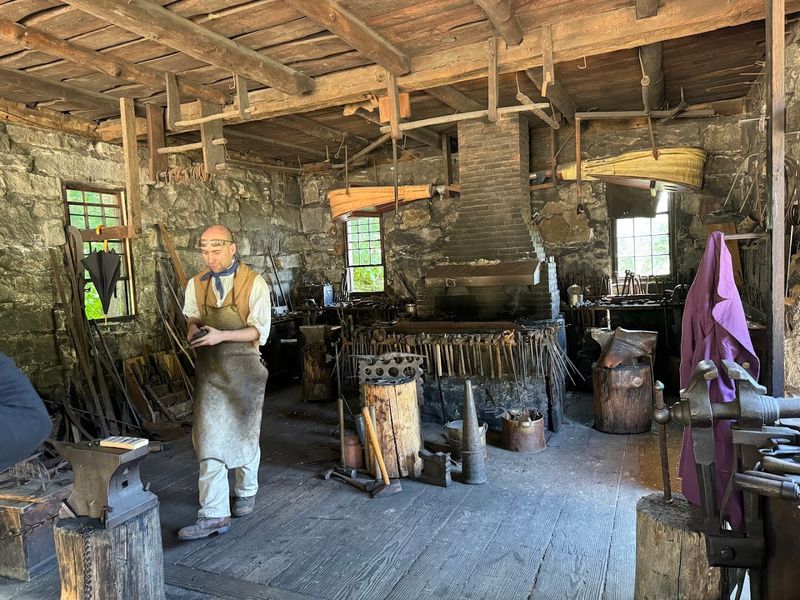
Picture a blacksmith hammering red-hot iron into shape, sparks flying in the dim light of a stone forge. Around the corner, a potter shapes clay on a foot-powered wheel, and down the road, a cobbler stitches leather soles onto handmade shoes.
At Old Sturbridge Village, traditional trades are not just demonstrated — they’re performed with real skill and authentic period tools by people who have genuinely mastered them.
The range of crafts on display is impressive. Visitors can watch printing presses stamp ink onto paper, observe tinsmithing and coopering, and see how cloth was woven on large wooden looms.
Each trade station offers a window into the economic fabric of early 19th-century New England, where nearly everything a family needed was made locally by skilled hands.
Many demonstrations are interactive, giving visitors a chance to try simple tasks themselves. Children love hammering a small piece of metal under guidance or helping turn a printing press handle.
These moments of hands-on participation make the experience stick in a way that passive observation simply cannot. Whether you have a background in craftsmanship or have never held a hand tool, watching these trades performed with such authenticity and precision is both humbling and deeply impressive.
It’s a reminder of how skilled and resourceful everyday people truly were.
A Village Center That Mirrors Civic Life
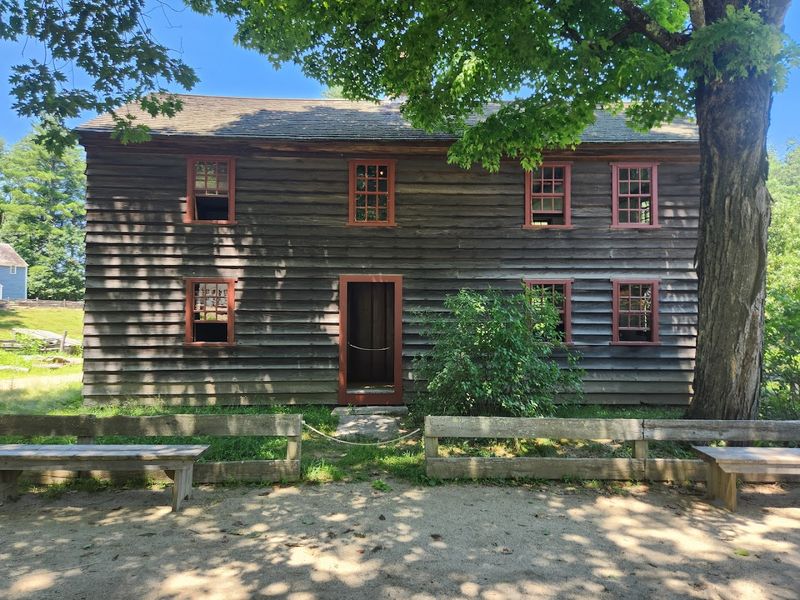
Every great New England town was built around a common — a shared green space where community life happened. Old Sturbridge Village’s town center captures this perfectly, featuring a meetinghouse, bank, tavern, and general store arranged around a central green.
Together, these buildings represent the social, spiritual, political, and economic pillars of 1830s rural life in a way that feels completely organic.
The meetinghouse served as both a place of worship and a civic gathering space, reflecting how closely religion and community governance were intertwined in early New England. The tavern was where travelers rested and neighbors exchanged news — essentially the social media platform of its day.
The general store stocked everything from fabric to molasses, acting as the community’s commercial lifeline.
Walking through the village center gives you a real sense of how tightly knit these early communities were. Everyone knew everyone, and public spaces like the common were where relationships, disputes, and decisions all played out together.
The layout here isn’t just historically accurate — it’s emotionally resonant. Standing on that green, surrounded by these buildings, you can almost hear the hum of 19th-century community life buzzing around you.
It’s one of the most quietly powerful spots in the entire museum experience.
Seasonal Events and Living History Programs
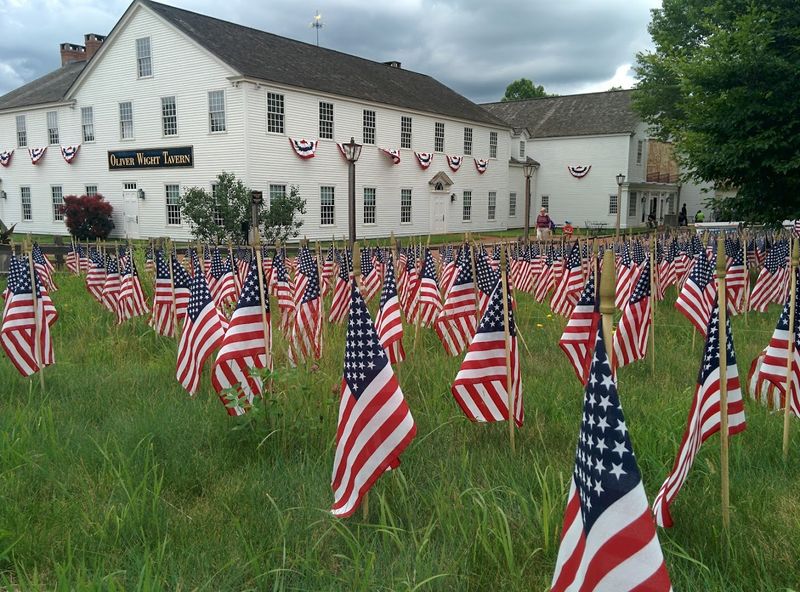
Old Sturbridge Village transforms throughout the year, and each season brings a completely different kind of magic. The calendar is packed with themed events that go far beyond ordinary museum programming.
From candlelit holiday celebrations in December to spirited Independence Day festivities in July, there’s almost always something special happening on the grounds.
Winter brings the beloved “By Candlelight” event, where the village glows with the warm flicker of hundreds of candles and lanterns. Visitors wander through the historic buildings while carolers sing and interpreters share stories of 1830s holiday traditions.
It’s an experience that feels genuinely enchanting rather than manufactured. Spring and fall bring harvest festivals, planting demonstrations, and educational programs tied to the agricultural calendar.
School groups and homeschool families often take advantage of the museum’s hands-on educational programs, which are designed to align with curriculum standards while keeping kids genuinely engaged. Cooking classes, craft workshops, and storytelling sessions make history feel like something kids actually want to explore.
Checking the events calendar before your visit is strongly recommended — planning your trip around a themed event can elevate the experience from great to unforgettable. Old Sturbridge Village doesn’t just mark the seasons; it celebrates them with the same enthusiasm and community spirit that defined New England life nearly two centuries ago.
Why It Still Feels Remarkably Real Today
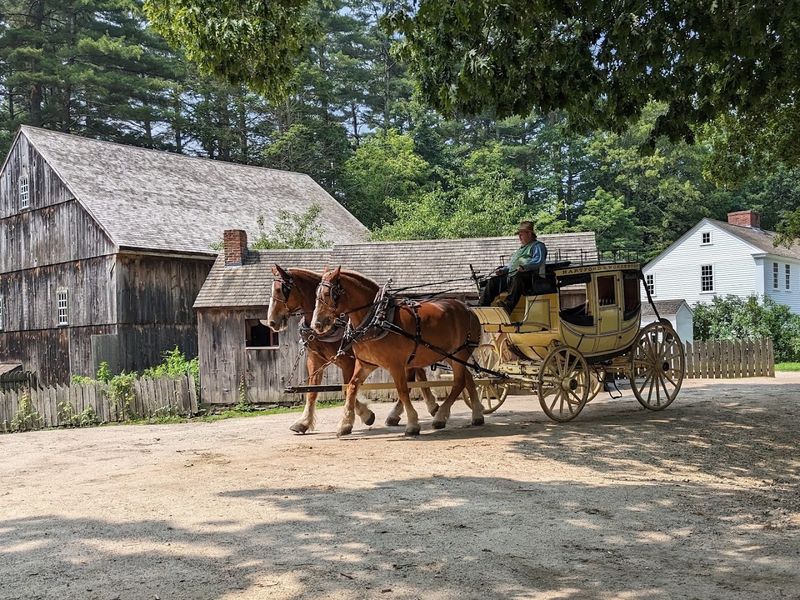
What makes Old Sturbridge Village feel remarkably real isn’t just its historic buildings—it’s the way the entire environment works together to recreate everyday life as it actually unfolded in the 1830s. Nothing is staged behind glass.
Fires crackle in hearths, bread bakes in wood-fired ovens, and the scent of fresh-cut timber or livestock drifts through the air as you move from one part of the village to another. Costumed interpreters don’t simply perform demonstrations; they stay in character, answering questions and carrying out daily routines as if modern life doesn’t exist.
The landscape itself adds to the illusion. Dirt roads, split-rail fences, and open farmland stretch between homes and workshops, creating natural space that mirrors how rural communities once functioned.
Even the pacing feels different—slower, quieter, and more deliberate—encouraging visitors to linger and observe rather than rush through exhibits.
Because so much of what you see is active and functional—from working mills to planted fields—the experience becomes immersive in a way traditional museums rarely achieve. It doesn’t feel like a reenactment.
It feels like you’ve briefly stepped into a living, breathing New England town from nearly two centuries ago.