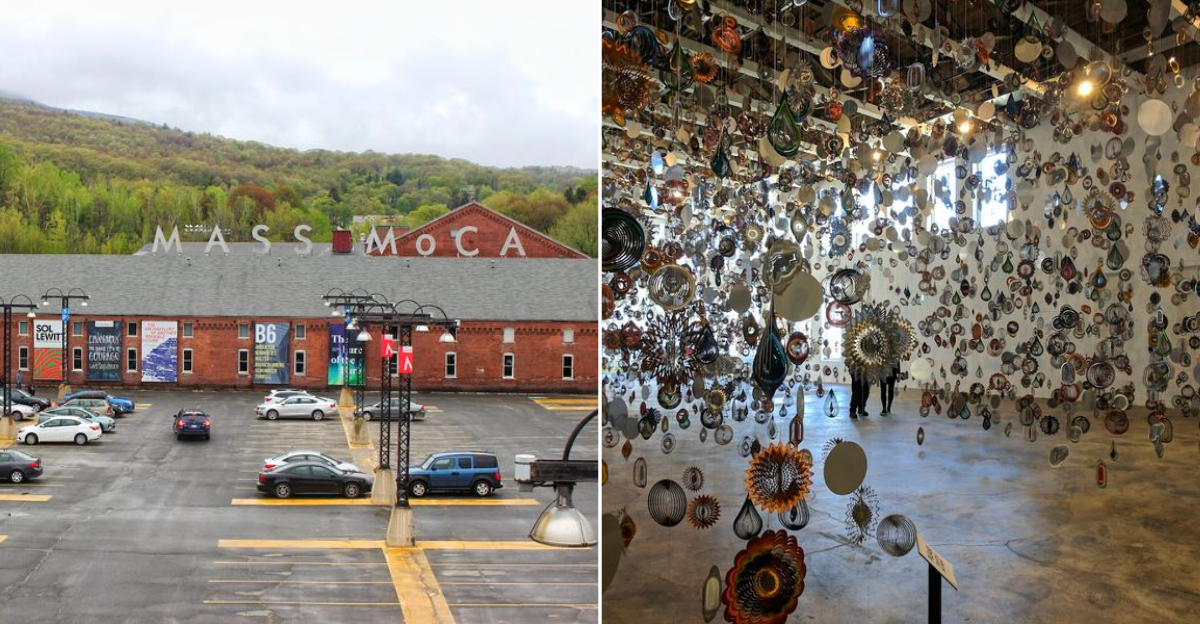
Tucked away in the Berkshire Hills of western Massachusetts, MASS MoCA — the Massachusetts Museum of Contemporary Art — is one of the most unexpected and awe-inspiring art destinations in the entire country. What was once a sprawling 19th-century factory complex in North Adams has been transformed into a world-class museum that stretches across 26 buildings and over 250,000 square feet of gallery space.
Since opening in 1999, it has drawn millions of visitors who come to experience enormous installations, live performances, and boundary-pushing contemporary art. Whether you are a lifelong art lover or just curious about something different, MASS MoCA has something that will genuinely surprise you.
The Historic Mill Complex That Started It All
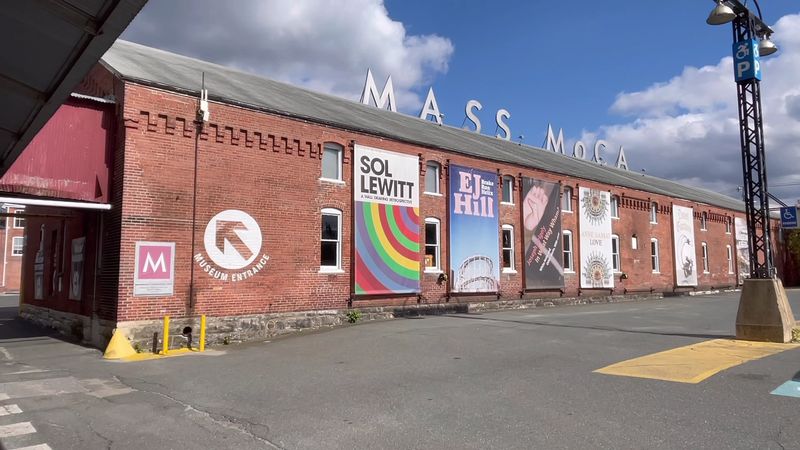
Before MASS MoCA became a landmark for contemporary art, it was a powerhouse of American industry. The complex was originally built in the 1870s as the Arnold Print Works, a textile factory that once employed thousands of workers in North Adams.
Later, it became home to Sprague Electric Company, a major electronics manufacturer during the mid-20th century. When Sprague left in 1985, the buildings sat empty for over a decade.
The sheer scale of the abandoned site caught the attention of visionaries who saw something beyond crumbling brickwork and dusty floors. After years of planning, fundraising, and renovation, MASS MoCA officially opened in 1999.
The transformation was extraordinary — raw industrial spaces became galleries, loading docks turned into performance venues, and factory floors became homes for massive art installations that could not fit anywhere else.
Walking through the campus today, you can still feel the history embedded in the walls. Exposed brick, wooden beams, iron railings, and soaring ceilings give every gallery a distinct character.
The architecture itself tells a story about labor, innovation, and reinvention. Few museums in the world carry this kind of layered identity, where the building is as compelling as the art inside it.
Jaw-Dropping Scale: One of the Largest Contemporary Art Museums in the U.S.
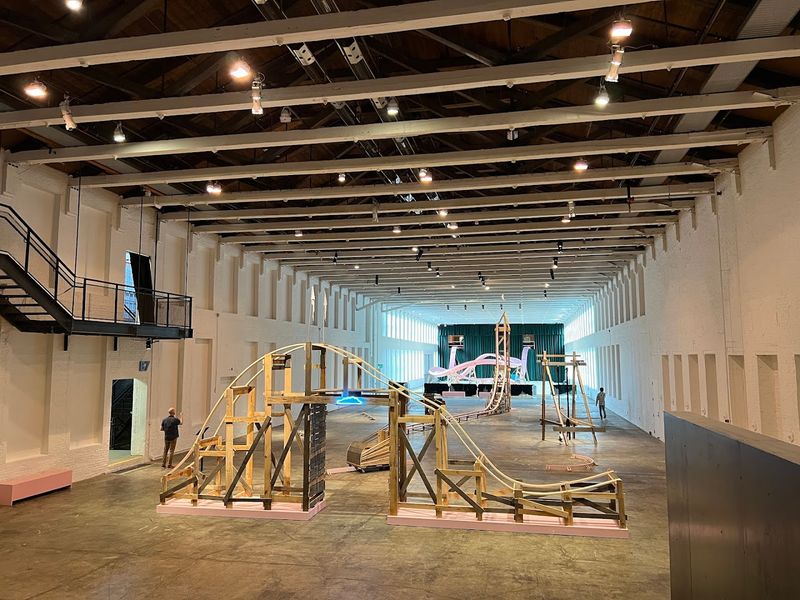
Size matters at MASS MoCA, and the numbers are genuinely staggering. The museum campus covers roughly 26 acres and includes more than 250,000 square feet of space spread across multiple buildings.
To put that in perspective, it is larger than many entire city blocks. This enormous footprint allows MASS MoCA to display large-scale works that other museums simply cannot accommodate.
Artists like Sol LeWitt, Katharina Grosse, and James Turrell have all created pieces specifically designed for MASS MoCA’s vast spaces. Some installations fill entire floors or stretch across rooms the size of airplane hangars.
Visitors often describe the experience of walking into these spaces as physically overwhelming in the best possible way — your sense of scale gets completely reset.
Because the museum is so large, most visitors recommend budgeting at least two to three hours for a visit, and many art lovers return multiple times to catch everything. The sprawling layout can feel a little maze-like at first, but that sense of exploration is part of the adventure.
Staff members are always nearby and happy to help you find your way or point you toward a gallery you might have missed on your first pass through.
James Turrell’s Light and Space Installations
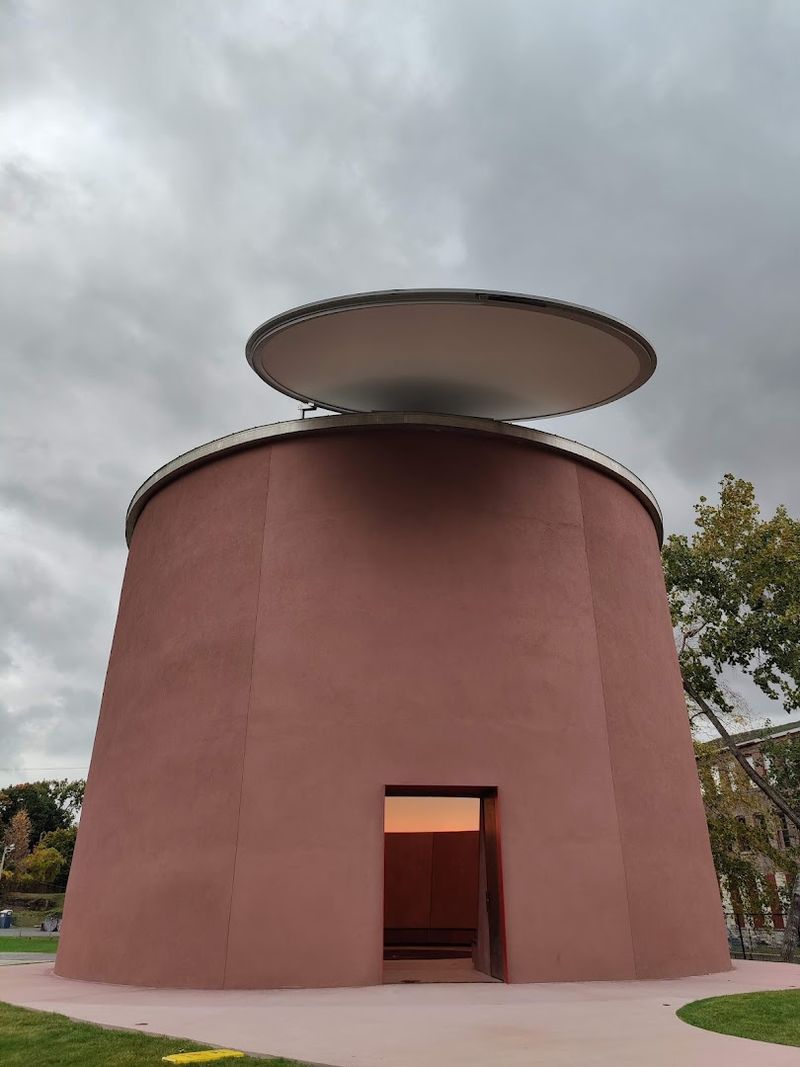
Few artists in the world manipulate light the way James Turrell does, and MASS MoCA is one of the best places on earth to experience his work. Turrell’s installations at the museum use carefully controlled light and architectural space to create experiences that feel almost supernatural.
Visitors walk into rooms where the walls seem to dissolve and colored light transforms into something almost tangible.
One of the most talked-about experiences at MASS MoCA is Turrell’s “Into the Light” installation. Reviewers consistently describe it as one of the highlights of their visit, with some calling it among the most profound artistic experiences of their lives.
The way the light shifts and breathes inside these carefully constructed chambers leaves many people speechless. It is the kind of art that does not just ask you to look — it asks you to feel.
Turrell has spent decades exploring how human perception responds to light, and his MASS MoCA pieces are considered among the finest examples of his practice. Arriving early and giving yourself plenty of quiet time inside each room makes a real difference.
These are not works you rush through. Bring patience, bring curiosity, and prepare to see something that genuinely changes how you think about space and vision.
Sol LeWitt’s Permanent Wall Drawing Retrospective
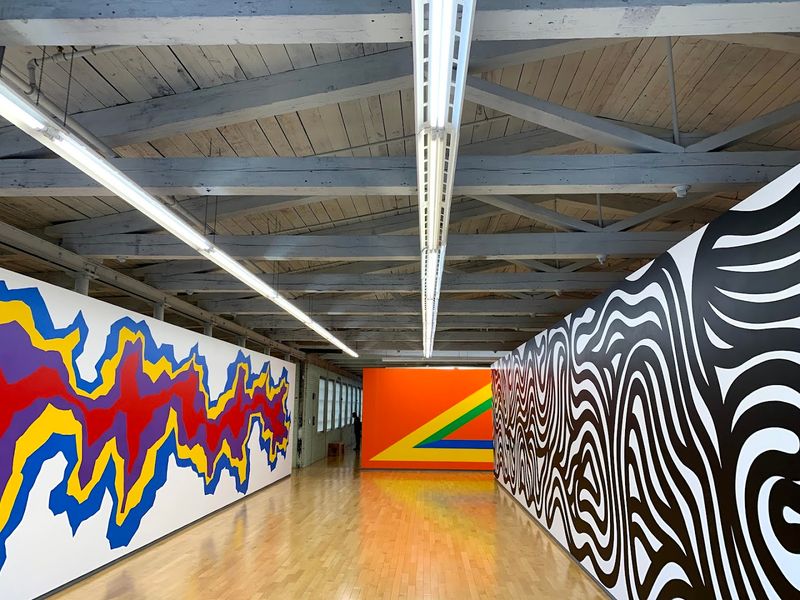
Walking into the Sol LeWitt galleries at MASS MoCA feels like stepping inside a living painting. The museum is home to a permanent retrospective of LeWitt’s wall drawings — a collection so large and so carefully arranged that it took an entire building, Building 7, to house it properly.
The installation spans 27,000 square feet and represents five decades of the artist’s career, making it the most comprehensive display of his wall drawings anywhere in the world.
Sol LeWitt was a pioneer of Conceptual and Minimalist art, and his wall drawings are among the most recognizable works in modern art history. Rather than painting on canvas, LeWitt created detailed instructions that trained teams of artists would execute directly on gallery walls.
At MASS MoCA, the sheer variety of styles — from precise geometric lines to bold splashes of color — shows how his thinking evolved across his lifetime.
The gallery opened in 2008 under a 25-year agreement with the LeWitt estate, and it remains one of the most visited permanent collections in New England. Even visitors who say they are not big fans of abstract art tend to leave genuinely moved by the experience.
The combination of color, pattern, and architectural scale creates something that feels both playful and deeply serious at the same time.
Live Performances and the Music Scene at MASS MoCA
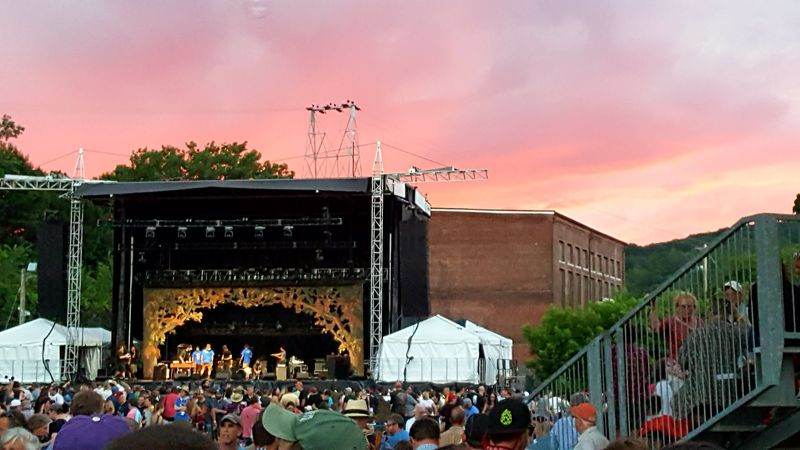
MASS MoCA is not just a place to look at art — it is a full-on cultural destination with a thriving live performance scene. The museum hosts hundreds of concerts, theater performances, dance shows, and film screenings every year, drawing audiences from across New England and beyond.
The venues inside the complex range from intimate gallery spaces to large converted factory halls that can hold thousands of people.
The main concert venue, known as the Hunter Center, is a beloved spot for music fans. Its industrial bones — exposed brick, high ceilings, and wide open floors — give it an acoustic character that feels raw and energetic.
Artists from folk and jazz to electronic music and indie rock have all taken the stage here. One reviewer raved about seeing Dave Guy perform there, calling it a magnificent experience that they hoped to repeat.
The no-assigned-seating format at many shows encourages a relaxed, communal atmosphere where the audience feels genuinely connected to the performance. If you are planning a visit and a concert is happening the same evening, it is absolutely worth arriving early to explore the galleries before the show.
Combining visual art and live music in one evening at MASS MoCA is about as good as a cultural night out gets anywhere in the country.
The Kids’ Space and Family-Friendly Art Activities
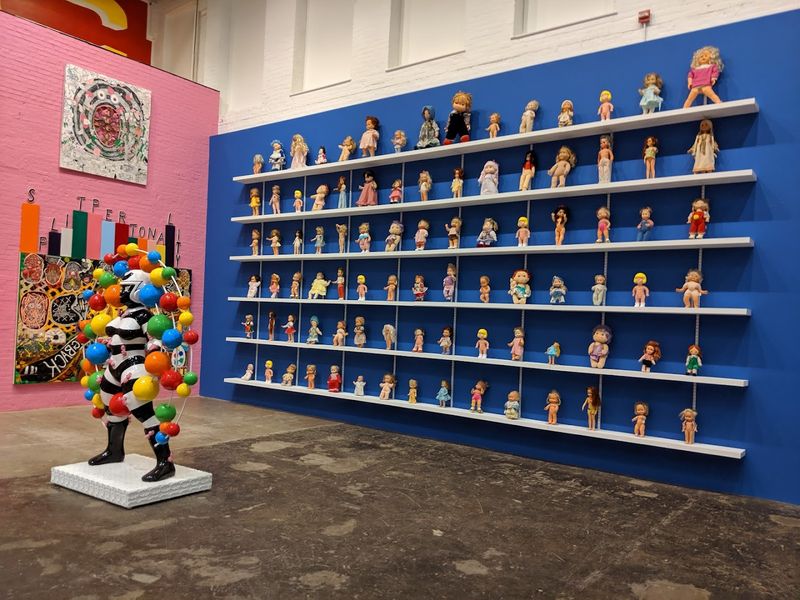
Bringing kids to an art museum can feel like a gamble, but MASS MoCA genuinely delivers for families. The museum has a dedicated kids’ space on the second floor where children can make their own art projects in a free, drop-in format.
The space offers different rotating activities, so returning visitors always find something new to try. Parents love it because the kids stay engaged, and children love it because they get to actually create something with their own hands.
Beyond the art-making room, much of the museum itself is kid-friendly in ways that bigger institutions often are not. Many installations are interactive, large-scale, and visually exciting — the kind of work that makes kids stop mid-step and stare with wide eyes.
Bright colors, giant sculptures, strange rooms, and immersive environments naturally capture young imaginations in ways that traditional painting galleries often struggle to do.
Outdoor spaces on the campus give younger visitors room to run around and decompress between exhibits, which any parent with an energetic toddler will appreciate. Staff members are welcoming and patient with families.
Admission pricing is reasonable, and some reviewers noted that teachers with a valid school ID can receive a discount. For a family day trip from anywhere in western Massachusetts or neighboring states, MASS MoCA is genuinely hard to beat.
Rotating Exhibits That Keep Every Visit Fresh
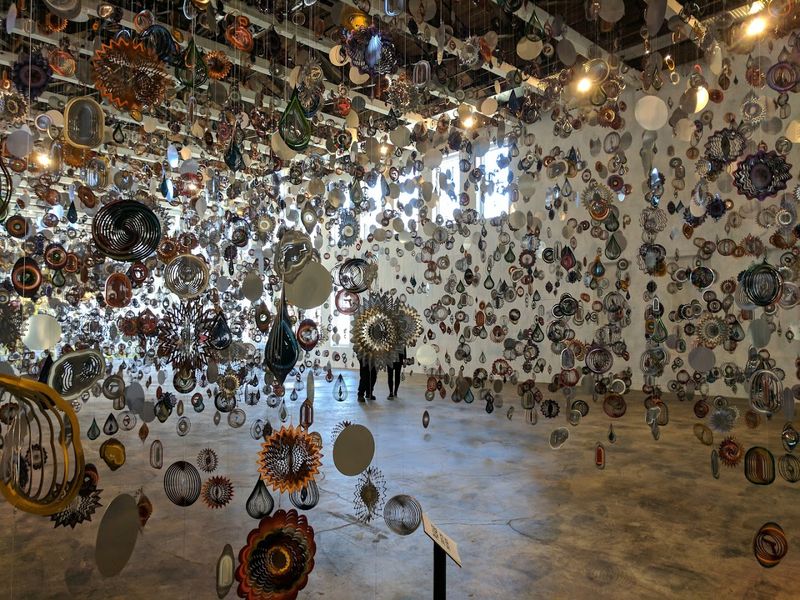
One of the best things about MASS MoCA is that it never stands still. The museum regularly rotates its temporary exhibitions, meaning that even frequent visitors can always count on discovering something completely new.
This commitment to change is part of what makes the museum feel alive rather than like a static archive. Regulars who have visited multiple times often report seeing almost entirely different shows on each return trip.
Past temporary exhibitions have explored everything from indigenous queer identity — such as the celebrated Jeffrey Gibson show — to punk-era New York culture, immersive tea ceremonies, and galaxy-themed light installations made from thousands of tiny bulbs. The curatorial team is known for taking risks and championing artists whose work pushes boundaries in terms of scale, material, and concept.
That spirit of experimentation keeps the programming exciting and sometimes genuinely surprising.
A helpful tip before your visit: check the MASS MoCA website at massmoca.org to see what is currently on display. Reviewers consistently mention that reading up on the current exhibitions beforehand makes the experience richer and more rewarding.
Knowing a little about an artist’s background or a show’s central ideas helps you connect with the work more deeply once you are standing in front of it. Knowledge adds layers to the experience.
The Architecture and Industrial Atmosphere of the Campus
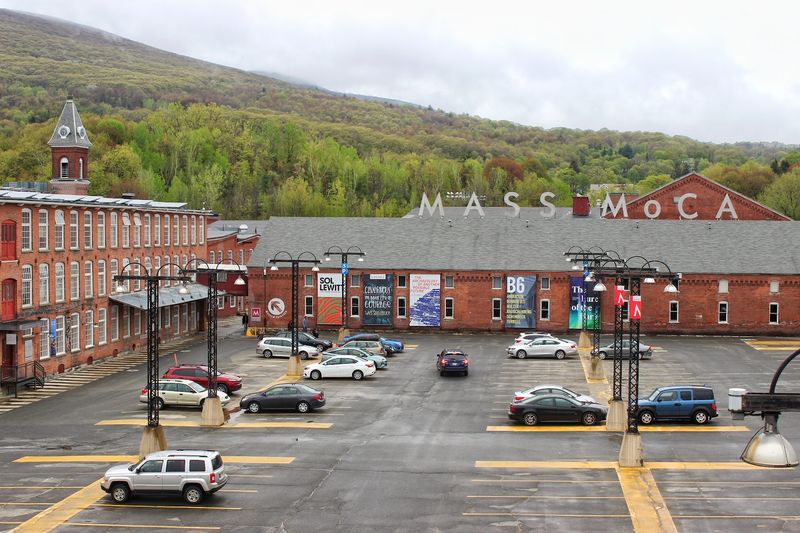
Even before you step inside a single gallery, MASS MoCA impresses with its surroundings. The campus is a beautifully preserved example of 19th-century New England industrial architecture, and walking through it feels like traveling back in time while simultaneously experiencing something completely contemporary.
Exposed brick walls, wooden ceilings, iron staircases, and a river running alongside the buildings create a sensory atmosphere unlike any conventional museum.
The Hoosic River borders part of the campus, adding a natural element to the post-industrial landscape. Bridges connect different sections of the complex, and outdoor sculpture installations are scattered throughout the grounds.
In warmer months, the outdoor spaces are a major draw — though visitors should note that outdoor exhibitions are typically closed during winter, as mentioned by several reviewers who visited in the colder season.
New buildings have been added to the campus in recent years, expanding the available gallery space even further. Each building has its own personality shaped by its original industrial function, giving every section of the museum a distinct character.
Some spaces feel cathedral-like with their soaring heights, while others are more intimate and corridor-like. The variety keeps the experience dynamic from start to finish, and the architecture alone would be worth a visit even without the extraordinary art it contains.
Dining and Shopping: Lickety Split Cafe and the Gift Shops
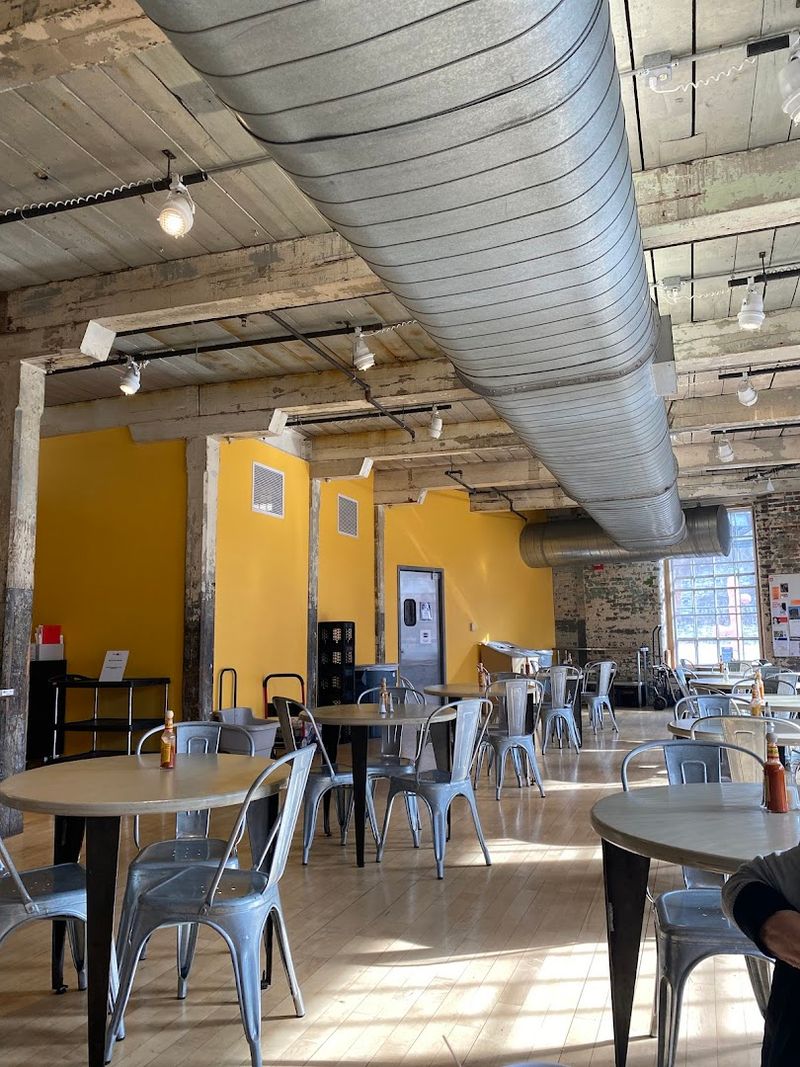
A full day at MASS MoCA works up an appetite, and luckily the museum has solid options for refueling. The Lickety Split Cafe is a favorite among regulars and newcomers alike.
Reviewers consistently praise the food as affordable and genuinely delicious — not the overpriced, underwhelming fare you might expect from a museum cafeteria. The menu includes fresh, satisfying options that hit the spot whether you are stopping for a quick snack or sitting down for a proper lunch.
There are also coffee spots scattered around the campus, so you can grab a warm drink between buildings without needing to backtrack far. The casual, relaxed atmosphere of the dining spaces fits perfectly with the overall vibe of MASS MoCA — unpretentious, welcoming, and a little bit cool.
Sitting near the windows with a coffee and watching other visitors wander between galleries is a genuinely pleasant way to take a break mid-visit.
The gift shops at MASS MoCA deserve special mention because they are genuinely excellent. Unlike generic souvenir shops, these stores stock unique art books, quirky finds, locally made goods, and items that reflect the museum’s creative spirit.
Multiple reviewers mentioned picking up gifts for friends and family and wishing they had budgeted more time to browse. If you are looking for something original and meaningful to bring home, the gift shop will not disappoint.
Planning Your Visit: Hours, Admission, and Getting There
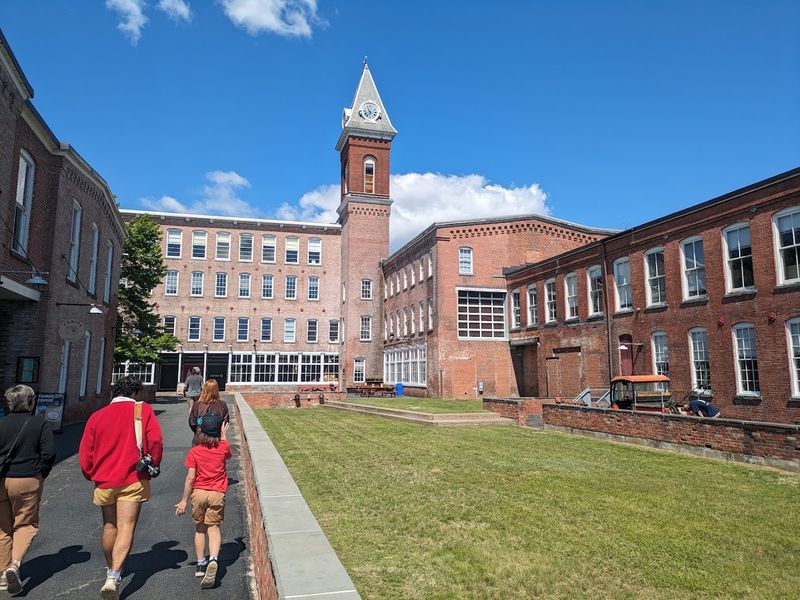
Getting to MASS MoCA is easier than you might expect, even though North Adams sits in a relatively rural corner of western Massachusetts. The museum is located at 1040 Mass MoCA Way, North Adams, MA 01247, and free parking is available on site — a detail that reviewers mention with genuine appreciation.
Whether you are driving from Boston, Albany, or Hartford, the scenic route through the Berkshires makes the journey part of the experience.
The museum is open Wednesday through Monday from 10 AM to 5 PM and is closed on Tuesdays. During winter months, keep in mind that outdoor installations and some exterior areas may not be accessible.
Admission is considered very reasonable for the size and quality of what is on offer, and discounts are available for teachers who present a valid school ID. The museum also offers hourly guided tours for visitors who want a more in-depth look at specific works or galleries.
A few practical tips before you go: wear comfortable shoes because the campus is large and you will walk a lot. Coat check is available and self-service.
Cell service can be spotty in some buildings, so downloading a map beforehand is smart. For the most up-to-date exhibition information and event schedules, visit massmoca.org or call +1 413-662-2111 before your trip to plan ahead.