Tucked away in rural southwest Georgia, a one-of-a-kind place called Pasaquan stands as proof that one person’s wild imagination can completely change the world around them.
Eddie Owens Martin, known as St. EOM, spent three decades covering every inch of his family farm with swirling murals, towering sculptures, and bold, colorful patterns.
What started as a personal spiritual vision slowly became one of the most remarkable folk art environments in the entire United States.
Whether you love art, history, or just really cool places, Pasaquan is a story worth knowing.
The Vision of Eddie Owens Martin
Born in 1908 in Oglethorpe County, Georgia, Eddie Owens Martin ran away from home as a teenager and spent years living in New York City, where he worked odd jobs and began exploring mysticism, spirituality, and global cultures. He went by the name St. EOM, a title he gave himself after what he described as a powerful spiritual vision that told him to return to his Georgia roots and create something extraordinary.
Martin believed he had been chosen to spread a universal message of peace, connection, and enlightenment through art. He was entirely self-taught, never attending art school or formal training programs, yet his work displays a level of skill and creativity that leaves visitors speechless.
His personal philosophy blended elements from African, Asian, and Native American traditions into something entirely his own.
What makes Martin so fascinating is that he never sought mainstream fame or fortune. He simply built his world, on his terms, in rural Georgia.
St. EOM lived at Pasaquan until his death in 1986, leaving behind a legacy that continues to grow in recognition and appreciation decades later.
A 30-Year Transformation of a Rural Farm
Imagine picking up a paintbrush one day and not putting it down for thirty years. That is essentially what Eddie Owens Martin did when he returned to his family farm in Marion County, Georgia, sometime in the early 1950s.
What greeted him was a plain, modest farmstead, the kind you might see anywhere in the rural South. What he left behind was something the world had never seen before.
Year after year, Martin worked tirelessly, mixing his own paints, designing his own patterns, and applying color to every surface he could reach. Buildings got murals.
Fences became canvases. Concrete walls turned into cosmic landscapes filled with figures, symbols, and swirling geometric shapes.
The transformation was slow but relentless, growing more complex and layered with every passing season.
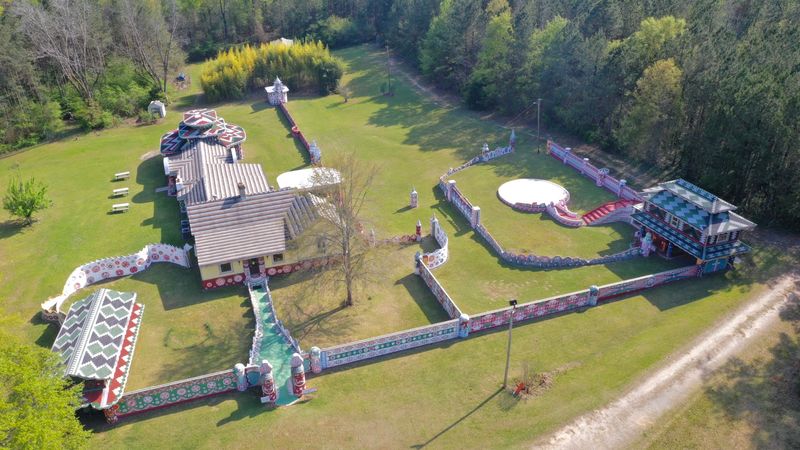
By the time Martin finished, the roughly five-acre property had become a fully realized alternate world, one that existed completely outside the mainstream art world. No gallery commission, no patron funding, no artistic movement guiding him.
Just one man, his vision, and decades of uninterrupted creative work. The result is a place that feels less like a farm and more like stepping through a portal into another dimension.
The Meaning Behind the Name Pasaquan
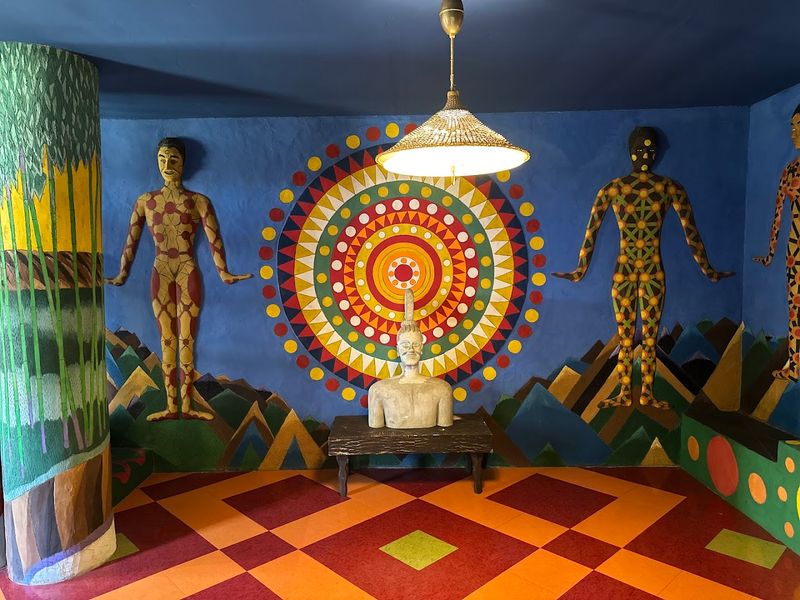
The name Pasaquan is not borrowed from any existing language or culture. Eddie Owens Martin invented it himself, and that invention tells you a lot about who he was.
He described Pasaquan as a word that represented a place where the past, present, and future all come together. To Martin, it was not just a name for his home.
It was a concept, a belief system, and a declaration of purpose all rolled into one.
Martin envisioned his compound as a kind of spiritual sanctuary, a place where people of all backgrounds could feel connected to something larger than themselves. He drew from world religions, ancient mythology, and cosmic philosophy to build a personal framework of belief that defied easy categorization.
Pasaquan was meant to be a living symbol of that belief, breathing and growing as he continued to build and paint.
Interestingly, Martin also saw himself as a kind of spiritual guide or prophet, someone bridging the gap between earthly life and cosmic understanding. The name Pasaquan captured that idea perfectly.
Even today, scholars and art historians find new layers of meaning in the name and the philosophy behind it, proving that Martin packed a remarkable amount of depth into every single choice he made.
Hand-Painted Buildings and Immersive Spaces
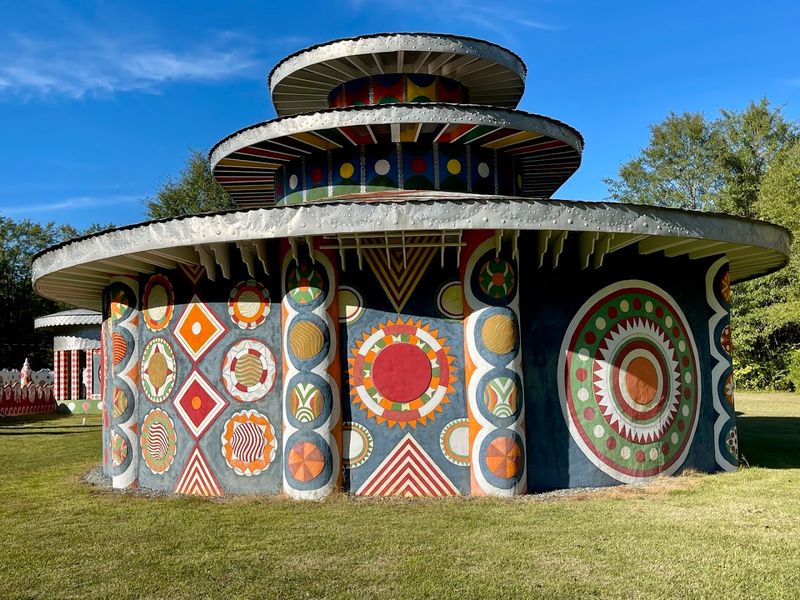
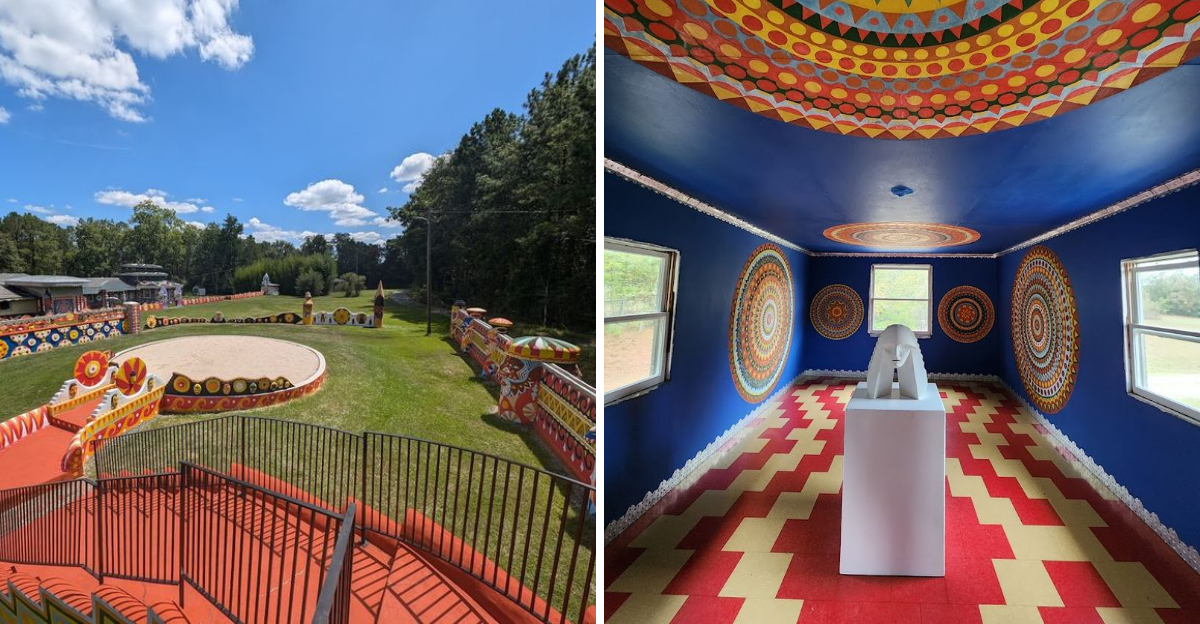
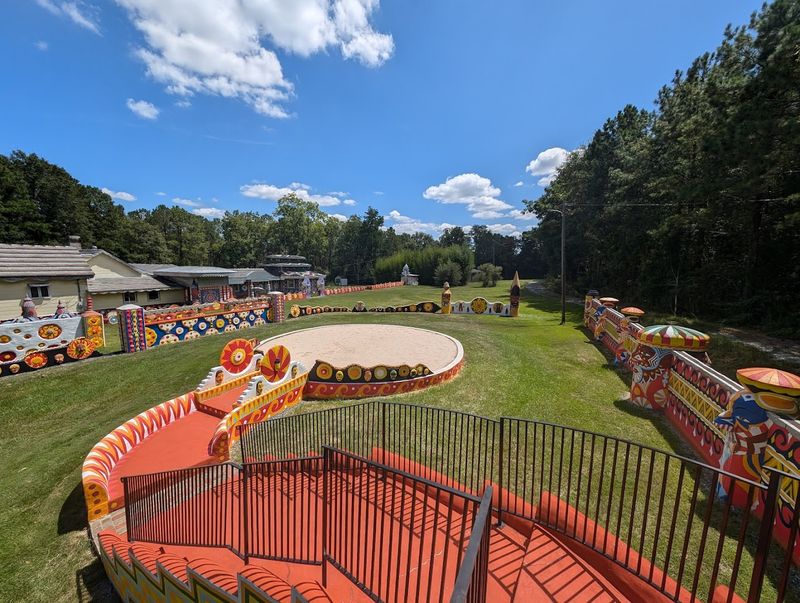
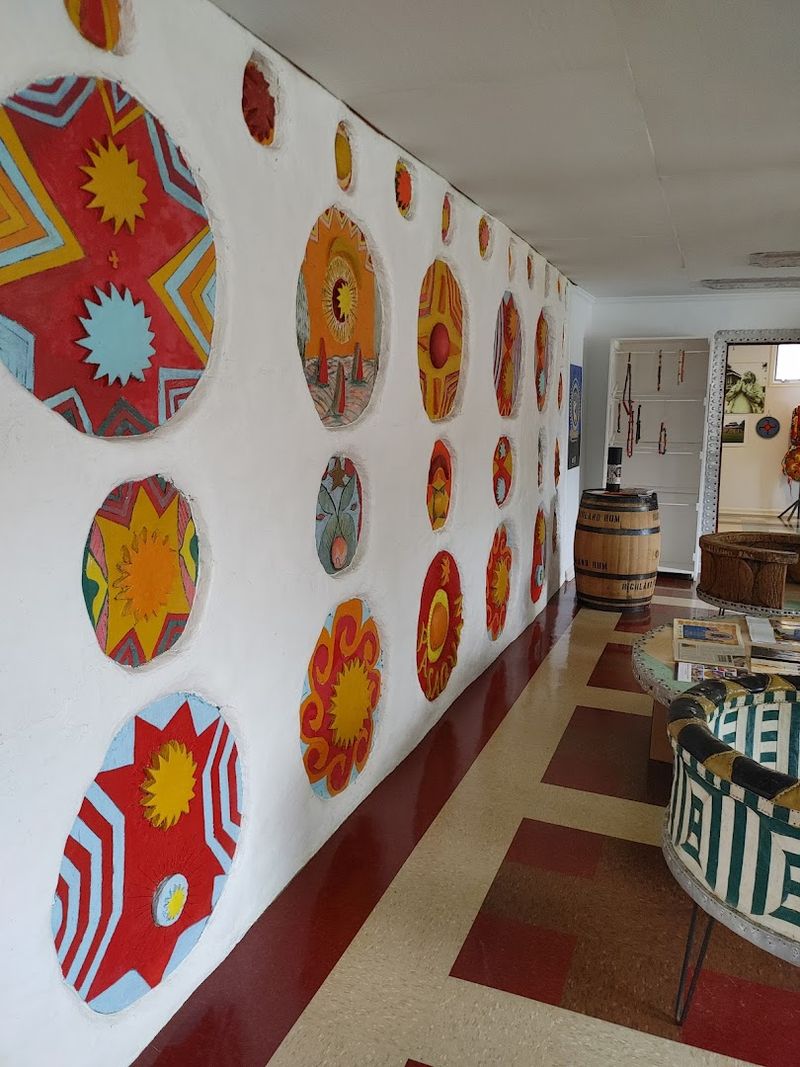
Walking through Pasaquan feels less like visiting a museum and more like being swallowed whole by a painting. Every single structure on the property, from the main house to the outbuildings, fences, and courtyard walls, is covered from top to bottom in hand-painted murals.
There are no blank surfaces here. Every corner, every edge, every inch of concrete has been transformed into part of a larger visual story.
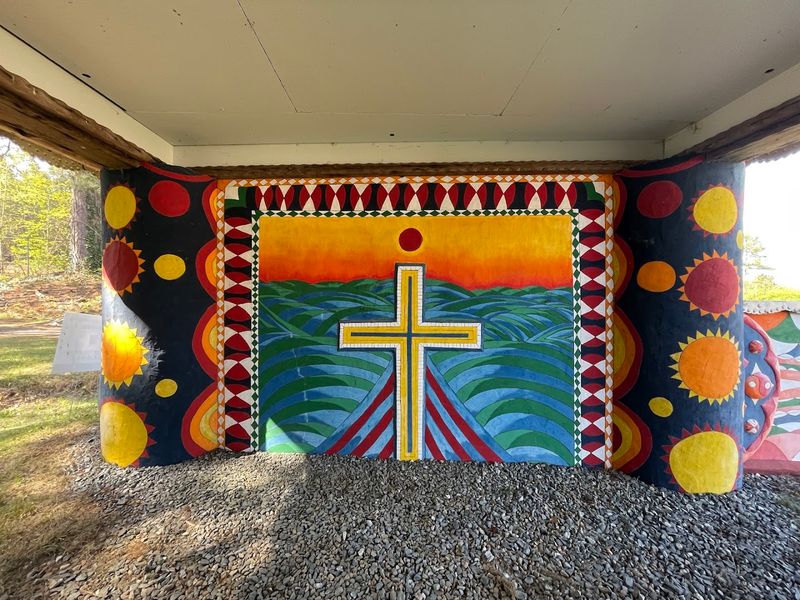
Martin created distinct spaces within the compound, each with its own color palette and symbolic meaning. Some areas feel ceremonial and grand, with large figures painted in bold reds, yellows, and blues.
Others feel more intimate, with tightly woven geometric patterns that draw your eye inward. Moving from space to space creates a sense of journey, as if each room or courtyard is a chapter in a very long, very colorful book.
What is truly jaw-dropping is that Martin did all of this by hand, without digital tools, projectors, or modern design aids. He eyeballed proportions, mixed colors from scratch, and repainted surfaces when weather or time wore them down.
The result is an immersive environment that no photograph can fully capture. You really do have to stand inside it to understand what Martin was creating over all those years.
Symbolism, Spirituality, and Global Influences
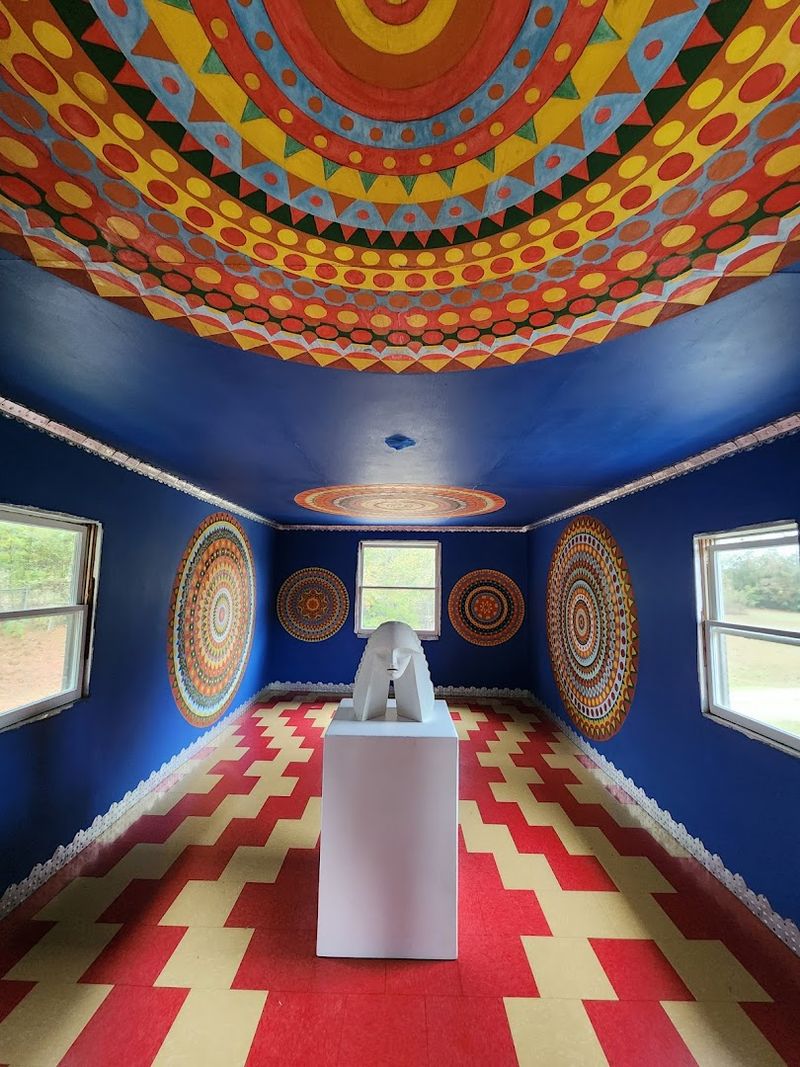
One of the most striking things about Pasaquan is how much of the world it contains in one small corner of rural Georgia. Martin was a voracious reader and self-taught scholar who spent years studying African art, Asian philosophy, Indigenous American traditions, and ancient mythology.
All of that research poured directly into his paintings, creating a visual language that feels simultaneously foreign and strangely familiar.
Recurring symbols appear throughout the compound: serpents, suns, cosmic eyes, stylized human figures, and intricate mandalas. Martin used these motifs to express his personal spiritual beliefs, which centered on the idea that all human cultures share a deeper cosmic connection.
He was not borrowing from these traditions carelessly. He genuinely believed he was tapping into universal truths that transcended any single culture or religion.
Art historians have spent considerable time analyzing the symbolism at Pasaquan, and new interpretations continue to emerge. Some scholars see clear parallels to West African spiritual traditions, while others point to similarities with Hindu and Buddhist iconography.
What makes the symbolism so compelling is that Martin never explained it all in detail. He left much open to interpretation, inviting visitors and scholars alike to bring their own understanding to his vivid, layered world.
Totems, Sculptures, and Found Objects
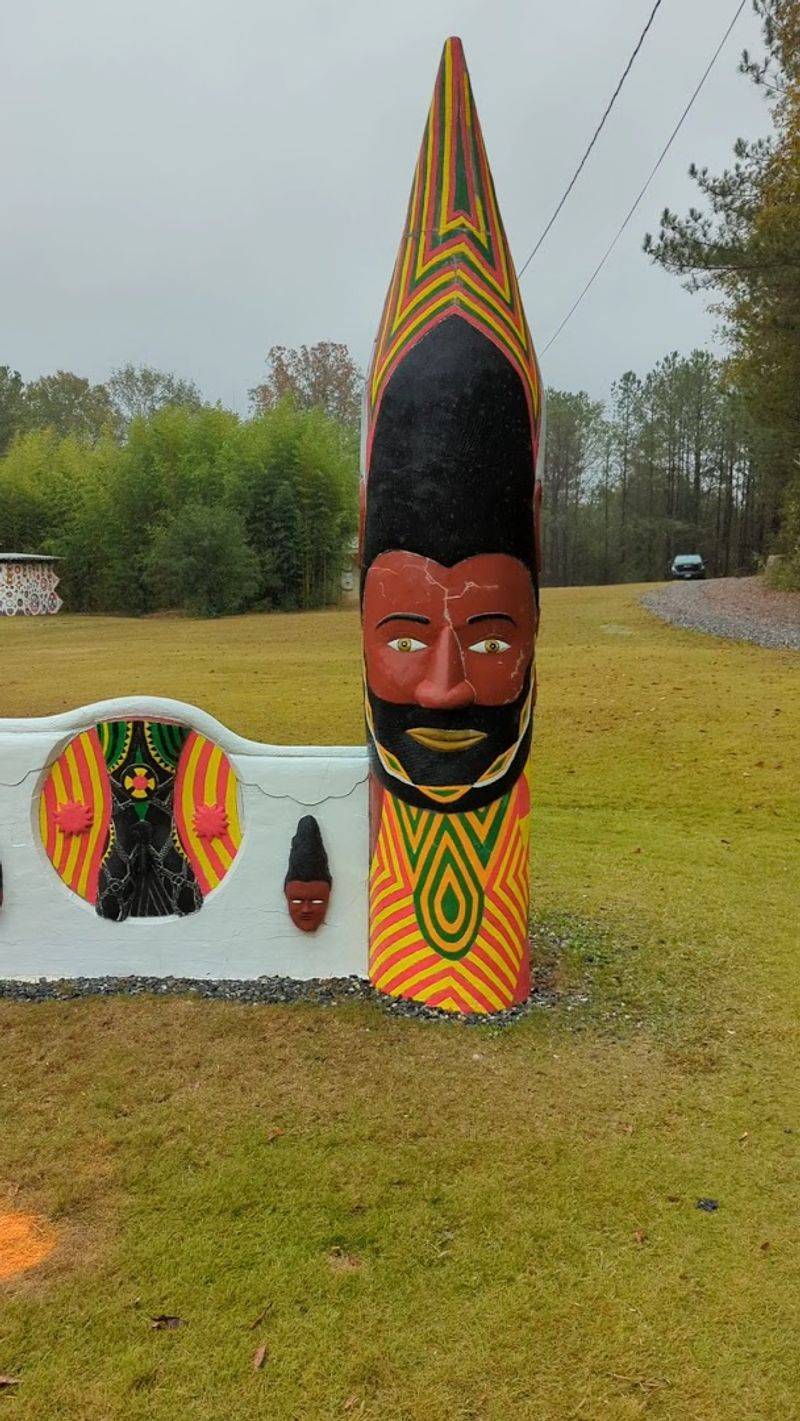
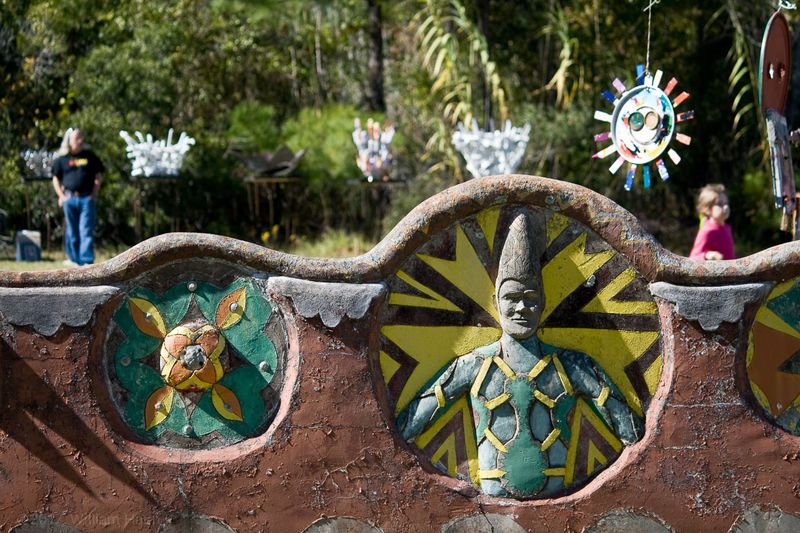
Paint was not Martin’s only medium. Scattered throughout the Pasaquan compound are three-dimensional sculptures, towering concrete totems, and assemblages made from found and repurposed materials.
These sculptural elements add a whole new layer of depth to the site, turning it from a painted environment into a fully three-dimensional world that surrounds you on all sides.
Many of the sculptures feature humanoid figures with exaggerated features, wide eyes, and outstretched arms. They stand like guardians throughout the compound, reinforcing the ceremonial atmosphere Martin worked so hard to create.
Some are painted in the same bold colors as the surrounding walls, making them blend seamlessly into the murals. Others stand out as distinct focal points that anchor specific areas of the property.
Martin was resourceful in the best possible way. He used whatever materials were available to him, concrete mixed by hand, metal scraps, discarded objects, and natural materials found on the property.
This use of found objects connects Pasaquan to a broader tradition in American folk and outsider art, where artists create from necessity and ingenuity rather than expensive supplies. The sculptures at Pasaquan are not polished or perfect, and that raw, handmade quality is a huge part of what makes them so powerful and memorable.
Preservation by Columbus State University
After Eddie Owens Martin passed away in 1986, Pasaquan faced an uncertain future. Without its creator, the compound began to deteriorate.
Harsh Georgia weather, overgrown vegetation, and simple neglect started to chip away at the murals and structures Martin had spent his entire adult life building. For a while, it seemed like one of America’s most unusual artistic treasures might quietly disappear.
Thankfully, a group of dedicated preservationists and Columbus State University stepped in to save it. The university took on stewardship of the property and launched a major restoration effort, bringing in art conservators, historians, and volunteers to carefully repair the murals, stabilize the structures, and document every inch of the compound.
The work was painstaking and required an enormous amount of research to ensure that repairs matched Martin’s original colors and techniques as closely as possible.
Today, Columbus State University manages Pasaquan as a public museum, keeping it open for visitors and researchers. The preservation effort at Pasaquan is often cited as a model for how to responsibly care for outsider art environments, which are notoriously fragile and difficult to maintain.
Thanks to that commitment, future generations will be able to walk through Martin’s world and experience his vision exactly as he intended it to be seen.
Recognition as a Folk Art Landmark
For much of his life, Eddie Owens Martin worked in near-total obscurity. The art world did not discover Pasaquan until the 1970s, when a small group of folk art enthusiasts and journalists began writing about the compound and bringing it to wider attention.
Even then, recognition came slowly. Martin was a private, eccentric figure who did not actively seek publicity or validation from the mainstream art establishment.
Since his death, however, Pasaquan’s reputation has skyrocketed. It is now regularly listed among the most significant visionary art environments in the United States, sitting alongside legendary outsider art sites like the Watts Towers in Los Angeles and the Forevertron in Wisconsin.
Art historians, collectors, and cultural critics have embraced Pasaquan as a masterpiece of American self-taught art, praising its scale, ambition, and philosophical depth.
The site has been featured in major publications, academic journals, and documentary films. It draws visitors from across the country and around the world, many of whom describe the experience as genuinely life-changing.
Being recognized as a folk art landmark means more than just tourism. It means that Martin’s vision, once known only to a handful of neighbors in rural Georgia, now belongs to the entire world.
That is a remarkable turnaround for a man who simply followed his imagination wherever it led.
Visiting the Site Today
Planning a trip to Pasaquan is easier than you might think, though it does require a bit of intentional effort since the site sits in a quiet, rural corner of southwest Georgia. The address is 238 Eddie Martin Road, Buena Vista, GA 31803, located in Marion County near the small town of Buena Vista.
The drive through the Georgia countryside is itself a peaceful experience, making the eventual arrival at the colorful compound feel even more dramatic.
Pasaquan is open for guided tours on select days, so checking the official website or calling ahead before your visit is a smart move. Guided tours are the best way to experience the site because knowledgeable guides explain the symbolism, history, and restoration efforts in ways that bring the whole place to life.
Photography is welcomed, and honestly encouraged, because the murals and sculptures are endlessly photogenic from every angle.
Visitors often recommend wearing comfortable walking shoes and giving yourself plenty of time. Rushing through Pasaquan would be a real shame.
There are so many details to notice, from tiny painted symbols near the ground to sweeping panoramic murals that stretch across entire walls. Many visitors say they spot something new on a second or third visit that they completely missed the first time around.
Why Pasaquan Continues to Captivate
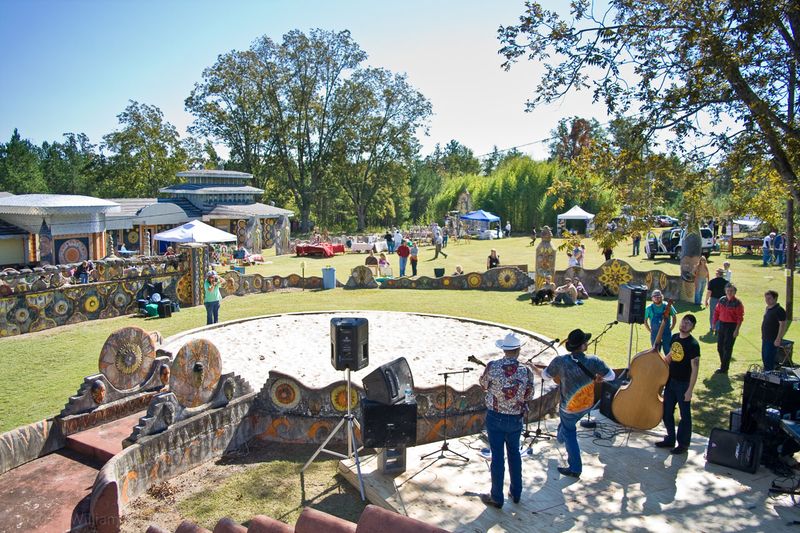
There is something almost impossible to explain about the hold Pasaquan has on people who visit it. You can describe the colors, the symbols, the scale, and the history, but none of that fully prepares you for the feeling of actually standing inside it.
Visitors regularly describe a sense of awe that goes beyond simple appreciation for art. It feels like being inside someone else’s mind, a mind that was extraordinarily vivid, deeply spiritual, and utterly fearless.
Part of what keeps Pasaquan so captivating is how personal it is. Unlike public art commissioned for a plaza or a government building, every brushstroke at Pasaquan came from one person’s private vision.
Martin was not trying to please anyone else. He was building the world he wanted to live in, and that kind of radical creative honesty is rare and magnetic.
Pasaquan also reminds us that extraordinary things can happen anywhere, even on a modest farm in rural Georgia. Martin had no formal training, no wealthy sponsors, and no guarantee that anyone would ever care about what he was doing.
He created anyway, for decades, with total commitment. That story, as much as the art itself, is why Pasaquan keeps drawing people back and why it will almost certainly still be doing so a hundred years from now.