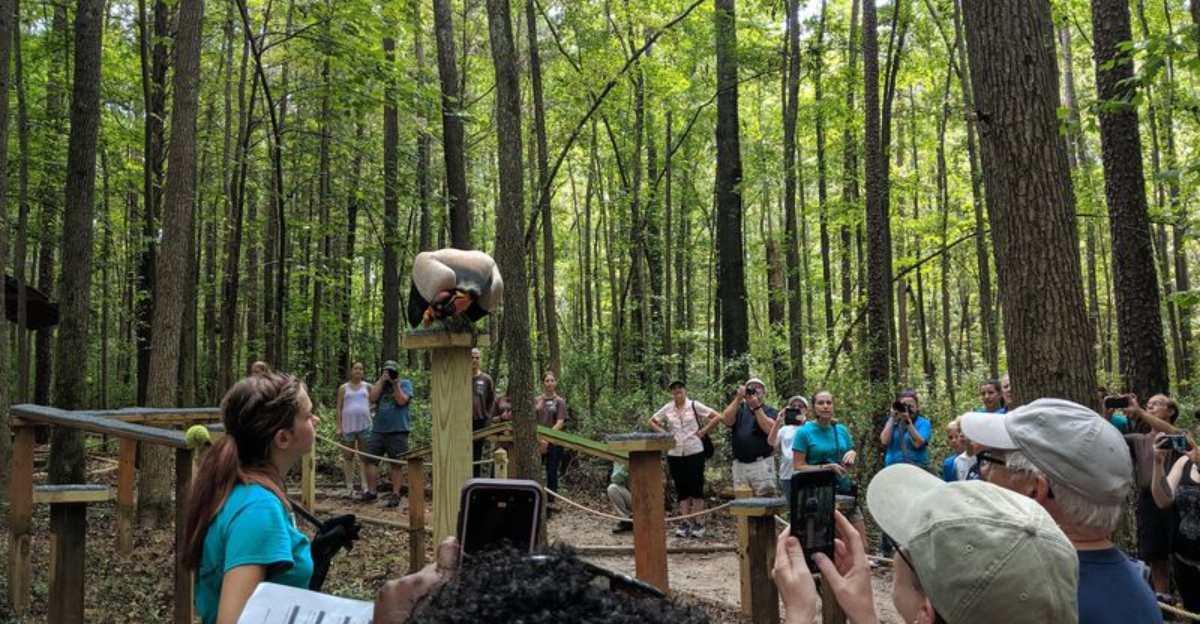
Tucked inside Latta Nature Preserve in Huntersville, North Carolina, the Carolina Raptor Center sits on 57 acres of lush forest where rescued birds of prey find a second chance at life. A winding, shaded trail connects you to eagles, owls, falcons, and more — all living in spacious, naturalistic enclosures built right into the trees.
Whether you are a bird lover, a family looking for an outdoor adventure, or simply someone who wants to spend a peaceful morning in the woods, this place delivers something truly unforgettable. Rated 4.7 stars by nearly 1,500 visitors, the Carolina Raptor Center is one of the Charlotte area’s most beloved wildlife destinations.
The Shaded Forest Trail
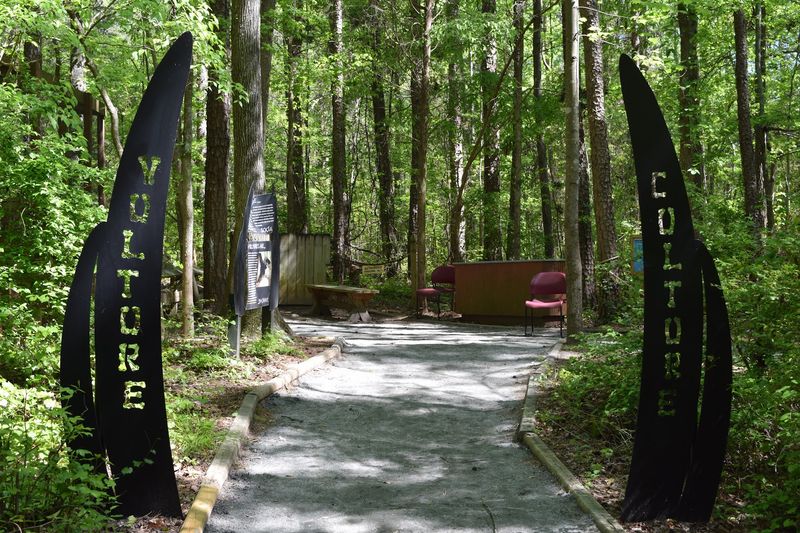
Walking this trail feels less like visiting a wildlife center and more like stepping into the forest itself. The path stretches roughly three-quarters of a mile through 57 acres of mature North Carolina woodland, with tall hardwood canopies blocking the sun and keeping temperatures surprisingly cool even on warm days.
Visitors have noted that you barely need sunscreen thanks to the generous tree coverage.
The trail is well-maintained and easy enough for families with young children, though comfortable closed-toe shoes are strongly recommended. Benches and rest spots are scattered along the route, giving you plenty of chances to stop, sit, and simply watch the birds do their thing.
The slow pace encourages you to soak in every detail of the forest around you.
What makes this trail special is how naturally it blends into the environment. The enclosures are not bolted onto a concrete lot — they are woven into the trees, so every turn feels like a discovery.
Reviewers consistently describe the experience as feeling like a genuine hike through the woods, just one where magnificent raptors happen to be your trail neighbors. Plan for at least 90 minutes to two hours to enjoy it fully.
Rescued Bald Eagles Up Close
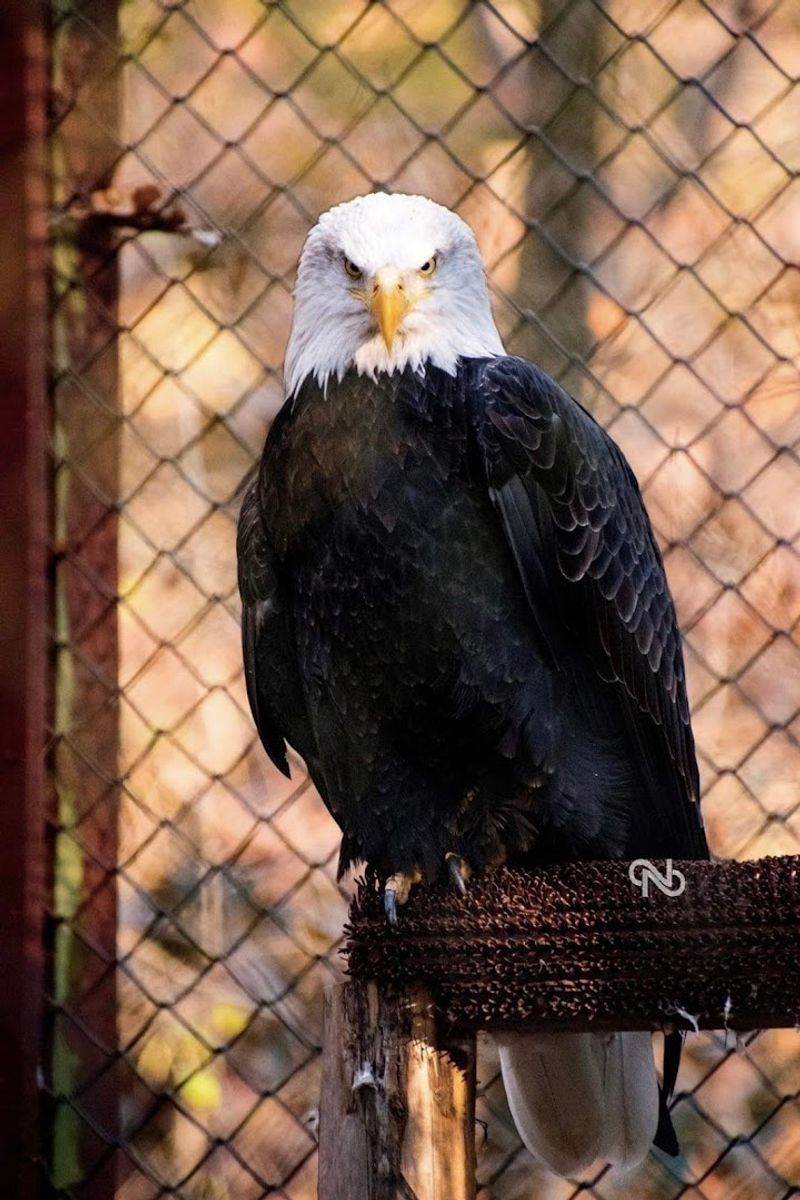
Few moments in nature hit quite like locking eyes with a bald eagle from just a few feet away. At the Carolina Raptor Center, bald eagles are among the star residents, and their enclosures are designed so that visitors can get remarkably close without barriers blocking the view.
Most of these birds arrived injured or orphaned and can no longer survive in the wild on their own.
Arriving shortly after the center opens at 10 AM gives you the bonus of watching feeding time, which is when the eagles are at their most active and expressive. Staff and volunteer guides stationed along the trail are happy to share the backstory of each individual bird — how it was found, what injuries it sustained, and what its life looks like now at the center.
The enclosures here are notably different from the long, narrow cages found at some facilities. They are wide and set up so the bird naturally positions itself close to where visitors stand, making every viewing feel personal.
Multiple reviewers have called it one of the closest raptor encounters they have ever had. Seeing a bald eagle this near, looking this alert and powerful, is something that stays with you long after you leave.
Owl Encounters Along the Trail
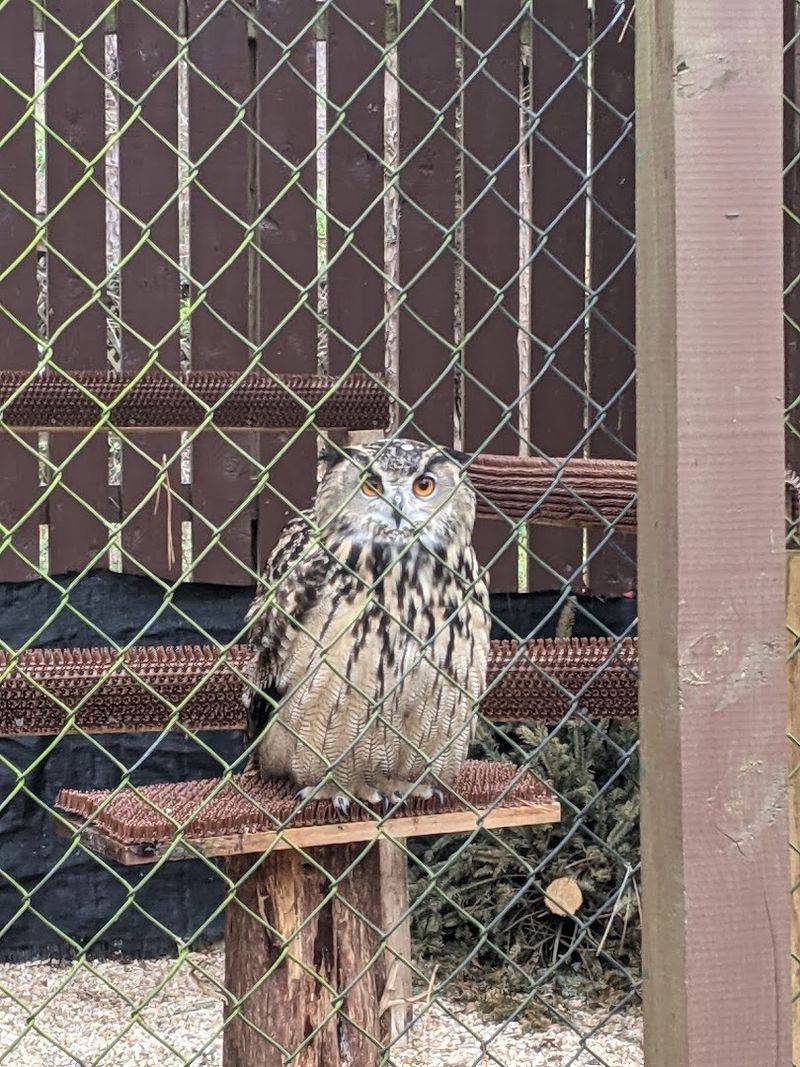
Owls have a way of making you feel like you are the one being studied. At the Carolina Raptor Center, multiple owl species are housed in enclosures along the trail, ranging from tiny screech owls to impressively large great horned owls.
Each bird carries its own story, and most arrived at the center after collisions with vehicles, windows, or power lines.
One reviewer described seeing owls here as a highlight for their kids, who were completely mesmerized by the birds’ rotating heads and enormous eyes. The enclosures are built with natural perches and forest-appropriate surroundings, so the owls look right at home rather than out of place in a manufactured habitat.
Guides along the trail are eager to explain the biology behind those famous owl features.
Did you know a great horned owl’s eyes are so large relative to its skull that they cannot move in their sockets? That is why owls rotate their heads up to 270 degrees instead.
Learning quirky facts like this from knowledgeable staff makes the owl section of the trail one of the most educational stops on the walk. Whether you are six or sixty, watching an owl blink slowly and stare back at you is genuinely magical.
Falcons and Their Fierce Personalities
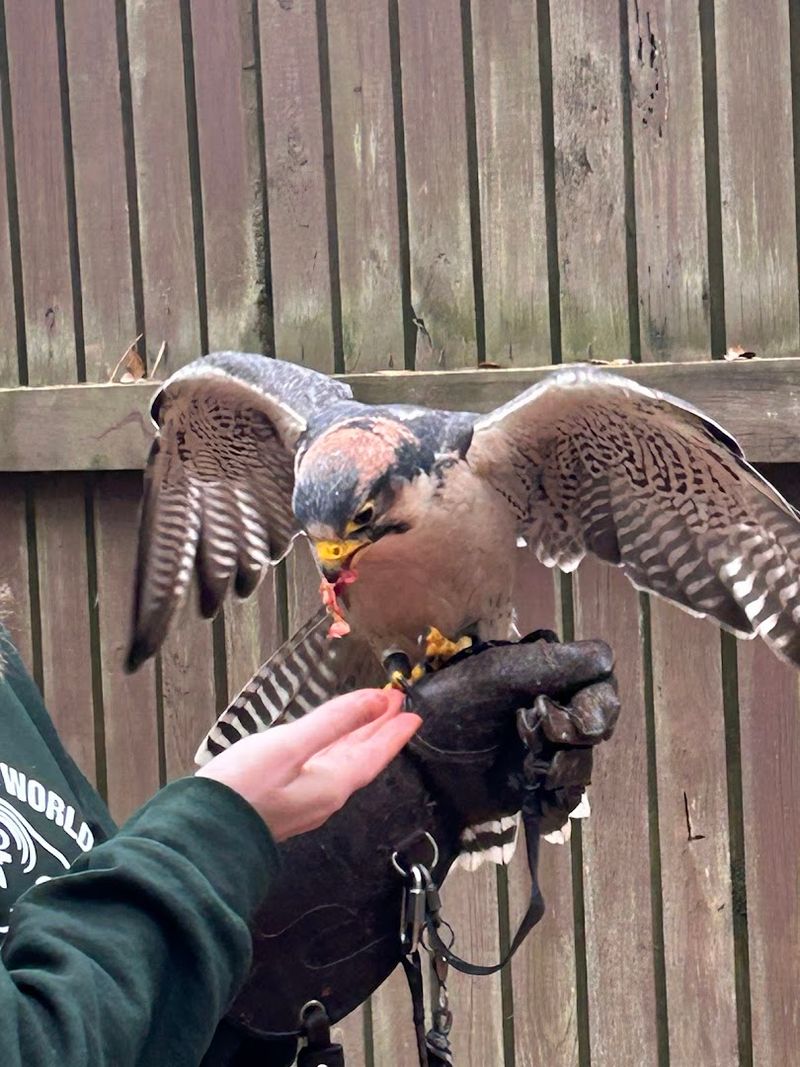
Speed, precision, and attitude — falcons bring all three in abundance. The Carolina Raptor Center is home to several falcon species, including the peregrine falcon, which holds the title of fastest animal on Earth, capable of reaching speeds over 240 miles per hour in a dive.
Seeing one up close, even in an enclosure, gives you a real appreciation for just how finely tuned these birds are.
Falcons at the center are mostly non-releasable rescues, meaning they were injured in ways that prevent safe return to the wild. Despite their circumstances, the birds appear active and engaged, which several reviewers have pointed out with genuine admiration.
The staff clearly invest real effort in keeping the birds mentally stimulated and physically healthy.
One of the best ways to appreciate falcons here is during the keeper talks and live presentations offered throughout the day. Watching a handler work with a falcon — even just demonstrating basic trained behaviors — reveals how intelligent and responsive these birds are.
The relationship between handler and bird is built on trust and patience, and seeing it play out in real time adds a whole new layer to the visit. Falcons are not just fast; they are fascinating on every level.
The Raptor Rehabilitation Hospital
Behind the public trail lies the beating heart of the Carolina Raptor Center — its working rehabilitation hospital. Every year, the center treats more than 800 sick and injured birds of prey, making it one of the most active raptor rehab facilities in the Southeast.
Birds arrive from across the region after being hit by cars, struck by power lines, or found weakened and malnourished in the wild.
The hospital is staffed by trained wildlife rehabilitators and supported by a team of dedicated volunteers. While public access to the hospital is limited, some visitors have had the chance to learn more about this side of the operation through special programs and guided tours.
The work done here is serious, skilled, and deeply impactful for local raptor populations.
Understanding the rehabilitation side of the center adds real meaning to your trail walk. Every bird you see in an enclosure has a story that likely passed through that hospital.
Some recovered enough to be released back into the wild; others stayed on as permanent residents and educational ambassadors. The center’s commitment to genuine wildlife medicine — not just display — is a big part of what makes it so respected by both visitors and conservation professionals throughout North Carolina and beyond.
The Fly-By Flight Demonstrations
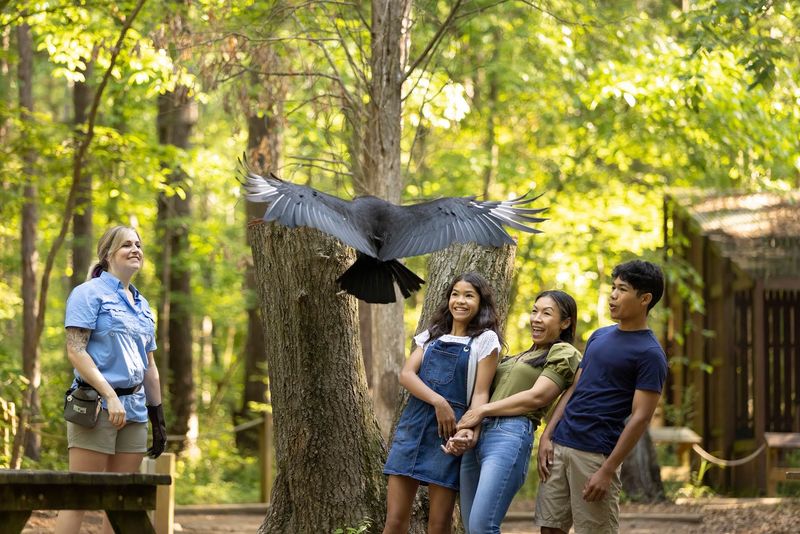
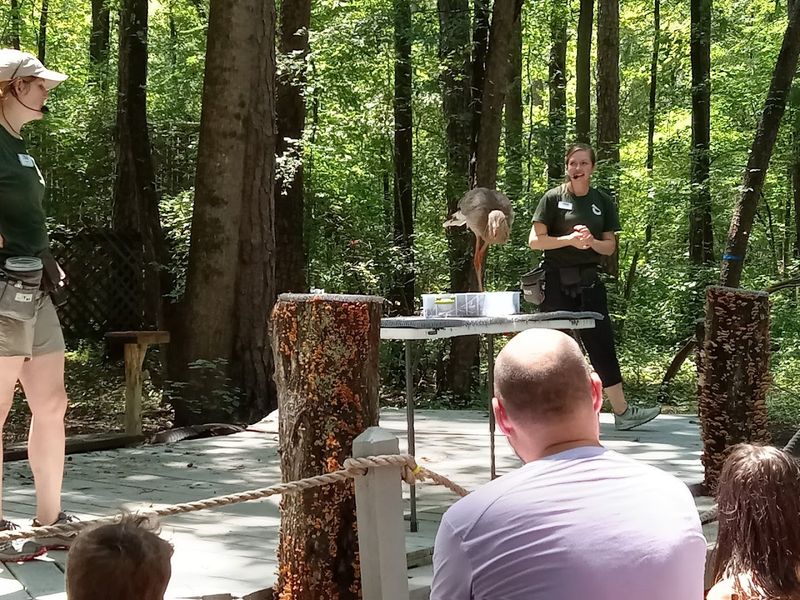
There is something about watching a raptor fly free — even briefly — that takes your breath away. The Carolina Raptor Center’s live flight demonstrations, sometimes called the Fly-By show, give visitors a front-row seat to birds of prey doing what they were born to do.
Handlers work with trained ambassador birds to showcase natural flight behaviors, hunting techniques, and the sheer athleticism of raptors in motion.
Reviewers who caught the show consistently rank it as a trip highlight. One visitor described it as the most surprising part of the visit, saying the performance far exceeded expectations.
The demonstrations are educational as well as thrilling, with narration explaining each bird’s natural history and the conservation challenges it faces in the wild today.
It is worth noting that shows can occasionally be canceled due to weather or bird welfare concerns, so arriving early and checking the day’s schedule at the front desk is a smart move. The center also offers special “Meet a Raptor” and “Raptor Encounter” sessions that let small groups get even closer to specific birds with a trained handler present.
Multiple visitors have called these add-on experiences the most memorable part of their entire day at the Carolina Raptor Center.
Hawks of the Carolinas on Display
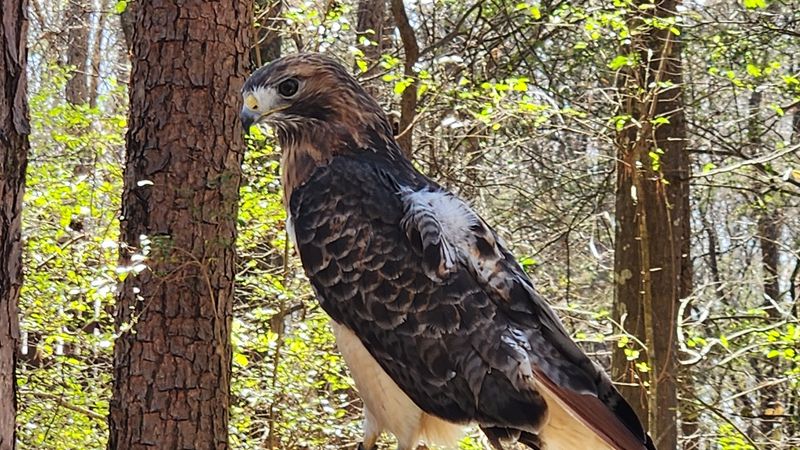
Hawks are the workhorses of the raptor world — common enough to spot in your backyard, yet endlessly fascinating up close. At the Carolina Raptor Center, several hawk species are represented along the trail, including red-tailed hawks, Cooper’s hawks, and broad-winged hawks.
Each species has its own enclosure styled to reflect its natural habitat, and the birds are remarkably visible and active during morning visits.
Red-tailed hawks, in particular, tend to be bold and unbothered by human presence, which makes them excellent subjects for observation and photography. Staff members stationed near hawk enclosures are great resources for learning how to tell species apart by their markings, flight patterns, and hunting styles.
These are the kinds of details that stick with you and change how you look at the sky on your drive home.
A fun fact worth sharing with kids: the iconic raptor screech you hear in movies — even when a bald eagle is on screen — is almost always dubbed in from a red-tailed hawk recording. The bald eagle’s actual call is a surprisingly soft, high-pitched chirp.
Sharing moments like this with younger visitors tends to produce the best reactions on the trail. Hawks are underrated, and this center gives them the spotlight they deserve.
The Giant Andean Condor and Vulture Exhibits
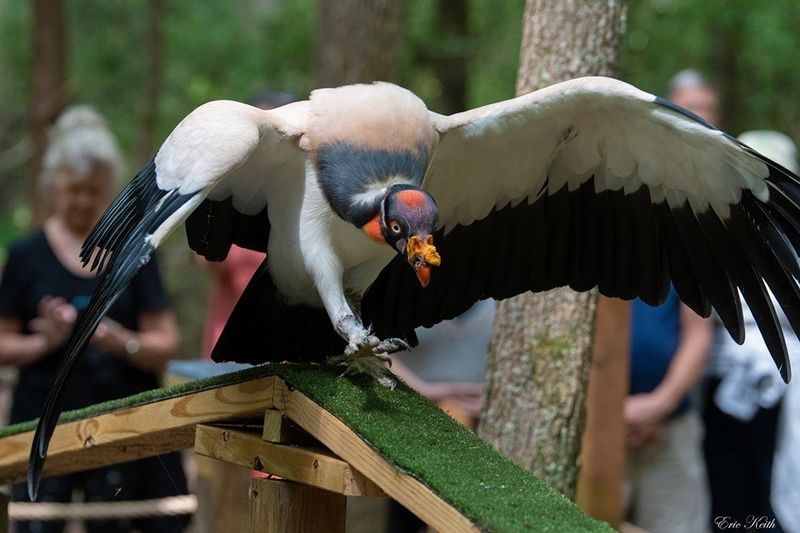
Not every bird at the Carolina Raptor Center is the kind you would expect to find in a North Carolina forest. The center is also home to a giant vulture — a species that has genuinely stopped visitors mid-stride on the trail.
With wingspans that can exceed ten feet, these birds command attention in a way that is hard to describe until you are standing right in front of one.
Vultures often get a bad reputation, but the Carolina Raptor Center does a wonderful job reframing how visitors think about these birds. Ecologically, vultures are essential — they are nature’s cleanup crew, preventing the spread of disease by consuming carcasses that other animals leave behind.
Educational signage and knowledgeable guides help shift the narrative from creepy to crucial in a surprisingly short time.
One reviewer specifically mentioned being amazed by the sheer size of the vulture on display, calling it one of the most unexpected highlights of the trail. The enclosures for larger birds are generously sized, and the birds appear comfortable and well-cared-for.
Seeing a massive condor or vulture up close, learning about its ecological role, and walking away with a genuine appreciation for a misunderstood species — that is the kind of experience the Carolina Raptor Center does exceptionally well.
Educational Programs and School Group Visits
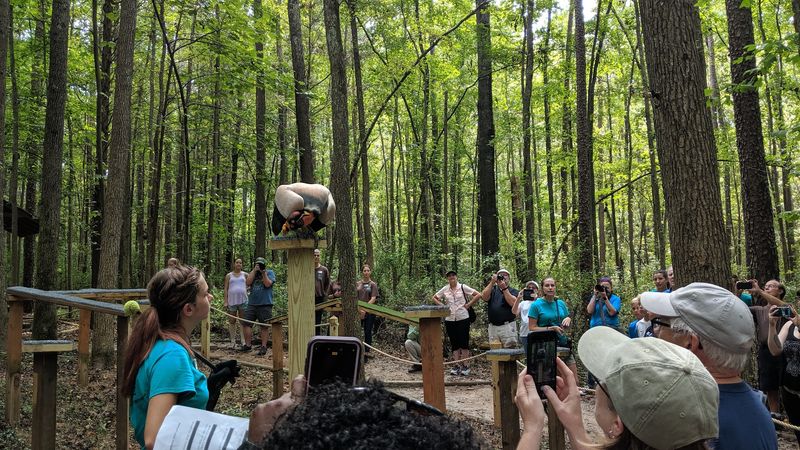
Ask any teacher who has brought a class here and you will hear the same thing: the Carolina Raptor Center is one of those rare field trip destinations where the kids are genuinely paying attention. The center offers structured educational programs designed for school groups, homeschool co-ops, and youth organizations, covering topics like food webs, ecosystems, and wildlife conservation in ways that feel real rather than textbook-dry.
Presentations are led by staff and trained volunteers who clearly love what they do. One parent reviewer praised a staff member named Alex for spending extra time with her eight-year-old who asked nonstop questions — a small detail that says a lot about the culture at this place.
The center welcomes curiosity at every level, from preschoolers to high schoolers, and adjusts its programming accordingly.
Seasonal passes make repeat visits affordable for families who want to use the center as an ongoing learning resource throughout the year. The experience of seeing a bird up close — watching it blink, shift its weight, or lock eyes with you — creates a kind of connection that no classroom video can replicate.
For homeschool families especially, the Carolina Raptor Center functions as a living science lab just a short drive from Charlotte, and the educational value is genuinely hard to overstate.
The Gift Shop and Supporting Conservation
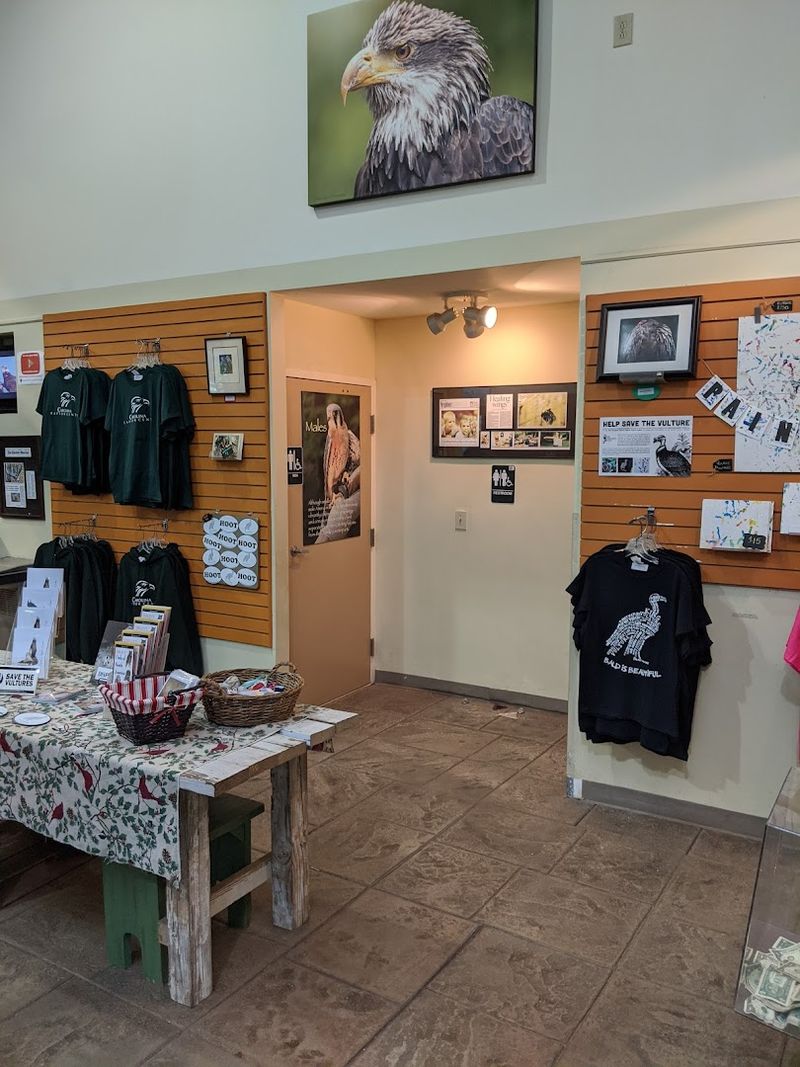
Every purchase at the Carolina Raptor Center gift shop goes toward supporting a nonprofit that treats over 800 injured birds every year. That context makes browsing the shelves feel meaningful rather than just transactional.
The shop carries raptor-themed merchandise, nature books, plush birds, and educational items — all reasonably priced according to multiple reviewers who appreciated getting good value for their money.
Beyond the gift shop, visitors can support the center through memberships, seasonal passes, and direct donations. The center is actively rebuilding and upgrading several of its facilities, and early visitors to the renovation process have described the energy around the improvements as genuinely exciting.
Knowing your admission dollars fund real wildlife medicine and habitat conservation adds a layer of purpose to the whole visit.
The Carolina Raptor Center is located at 6000 Sample Rd, Huntersville, NC 28078, inside Latta Nature Preserve. It is open every day of the week from 10 AM to 4 PM, and tickets can be purchased at the door without a wait — at least on most mornings.
For families, school groups, or anyone who wants to spend a few meaningful hours outdoors surrounded by extraordinary birds, this place earns every one of its 4.7 stars. Come once, and you will almost certainly find yourself planning a return visit before you even reach the parking lot.