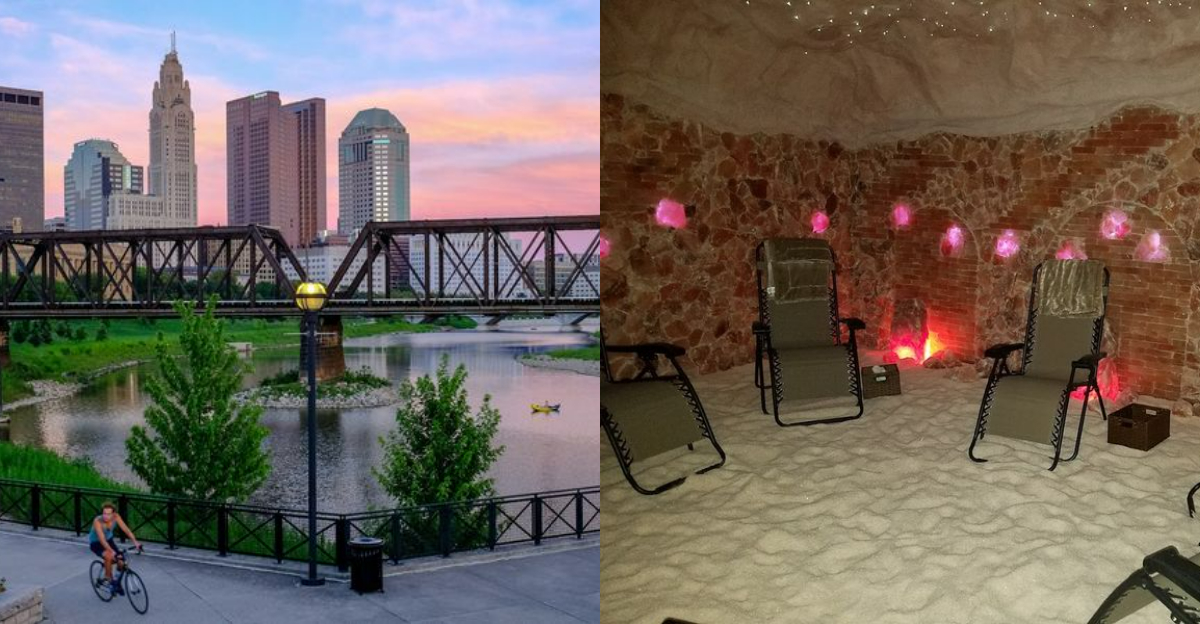
Tucked inside a quiet corner of Columbus, Ohio, Tranquility Salt Cave is the kind of place that makes you wonder why you waited so long to visit. The walls are lined with thousands of pounds of Himalayan salt, the air carries a faint mineral freshness, and the whole room feels deliberately designed to slow you down.
Whether you’re dealing with allergies, stress, or just a week that got too loud, this spot offers something genuinely different. If you’ve never heard of salt therapy before, you’re about to find out why people keep coming back.
A Room Made of Salt, Right in the Middle of Columbus
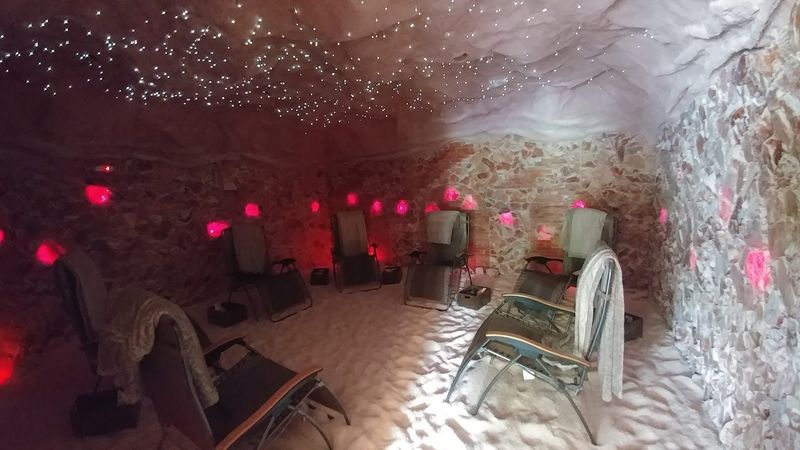
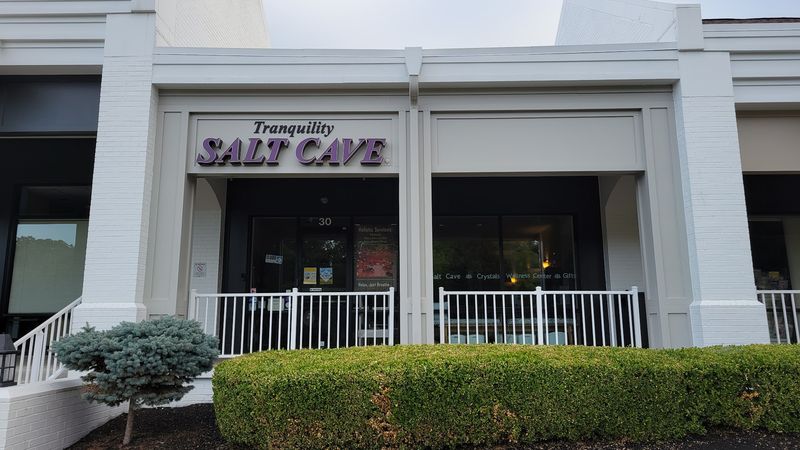
Somewhere between a wellness studio and a geological wonder, Tranquility Salt Cave sits at 30 Dillmont Drive in Columbus, Ohio — and it’s not what most people picture when they imagine a “cave.” Built inside a commercial complex, the space houses over 10,000 pounds of Himalayan pink salt sourced from Pakistan’s Khewra Salt Mine, one of the oldest and largest salt mines in the world.
The main session room is lined with salt bricks that glow warm amber under low lighting. The floor is heated and covered in granulated salt, and chromatherapy lights pulse gently from salt lamp boulders placed around the room.
It feels like someone took a geological phenomenon and made it accessible on a Tuesday afternoon.
What’s remarkable is that this landlocked, urban wellness spot brings an ancient mineral material straight into the heart of the Midwest — no mountain retreat required, no passport needed.
What Actually Happens During a Salt Cave Session
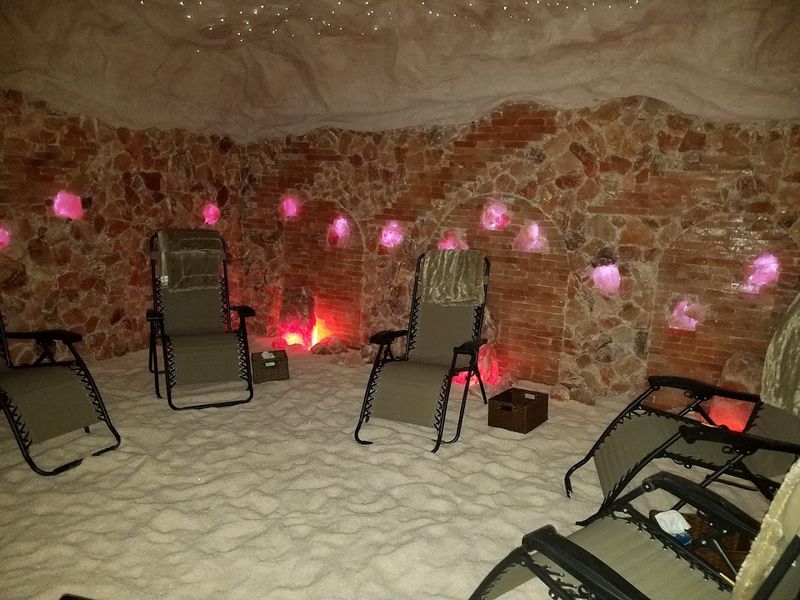
Walking into Tranquility Salt Cave for the first time feels a little like entering a room that has already decided to be calm for you. You settle into a zero-gravity recliner — chosen specifically for spinal support — and the session begins.
A halogenerator, which is a machine that grinds pharmaceutical-grade salt into microscopic particles, quietly disperses salt-infused air throughout the space.
The whole session runs about 45 minutes. There’s no massage table, no treatment being performed on you, no instructions to follow.
Soft music plays, the lighting stays low, and the halogenerator hums gently in the background. Some people meditate.
Some people scroll their thoughts until they stop. A surprising number simply fall asleep.
When the session ends, staff check in quietly, and most visitors describe leaving with a noticeable sense of ease — like the mental volume got turned down several notches without them even trying.
Why People Are Talking About Salt Therapy
Salt therapy, known formally as halotherapy, has a surprisingly long backstory. Back in 18th-century Poland, physicians noticed that workers in the Wieliczka Salt Mine had noticeably healthier respiratory systems than most people in the surrounding population.
That observation eventually sparked a whole field of wellness practice built around inhaling salt-particle-infused air.
Today, halotherapy sits in a fascinating middle ground between established folk medicine and emerging modern wellness research. Some peer-reviewed studies suggest modest benefits for people with asthma, chronic bronchitis, and seasonal allergies — though researchers are quick to note that larger clinical trials are still needed.
It’s honest territory: promising, not proven beyond all doubt.
What makes places like Tranquility Salt Cave worth taking seriously is that they don’t oversell the science. The experience is positioned as a wellness supplement — something that supports your health routine rather than replacing medical care.
That kind of transparency tends to build real trust.
The Design of the Space and What It’s Trying to Do
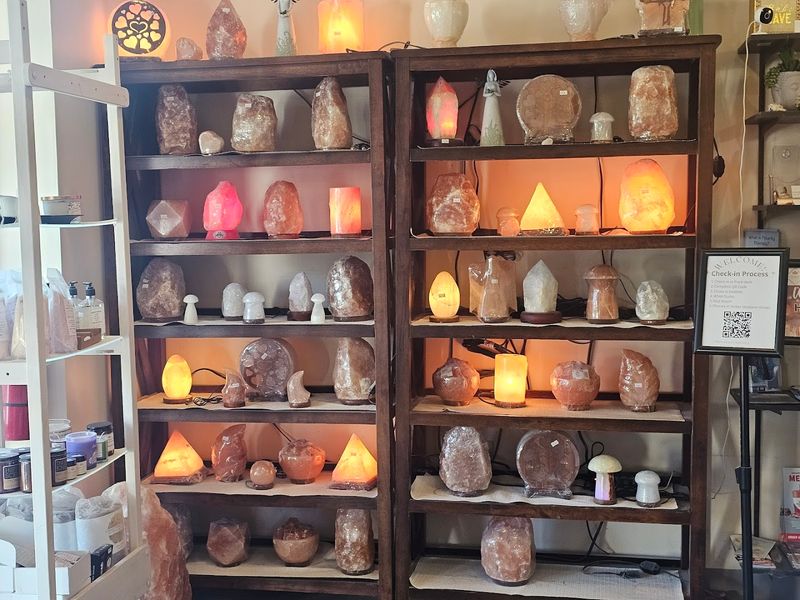
Every design choice at Tranquility Salt Cave points toward a single goal: reducing stimulation. The walls are covered in Himalayan salt bricks.
The floor is blanketed in granulated salt. The lighting stays low and warm, pulled from chromatherapy sources and salt lamp boulders rather than overhead fixtures.
Visitors have described the ceiling as having an artistic twinkling quality — like a slow, quiet night sky.
Seating is arranged so that no single spot in the room feels like the “front.” There’s no focal point to lock onto, no screen, no stage. That’s a deliberate move.
When your eyes have nowhere obvious to land, the mind tends to follow and soften its grip on whatever it was holding tightly.
The zero-gravity recliners are angled to take pressure off the spine, and soft blankets are available for guests who want extra warmth. Everything about the room communicates one thing clearly: you are allowed to stop for a while.
Who Actually Goes to a Salt Cave
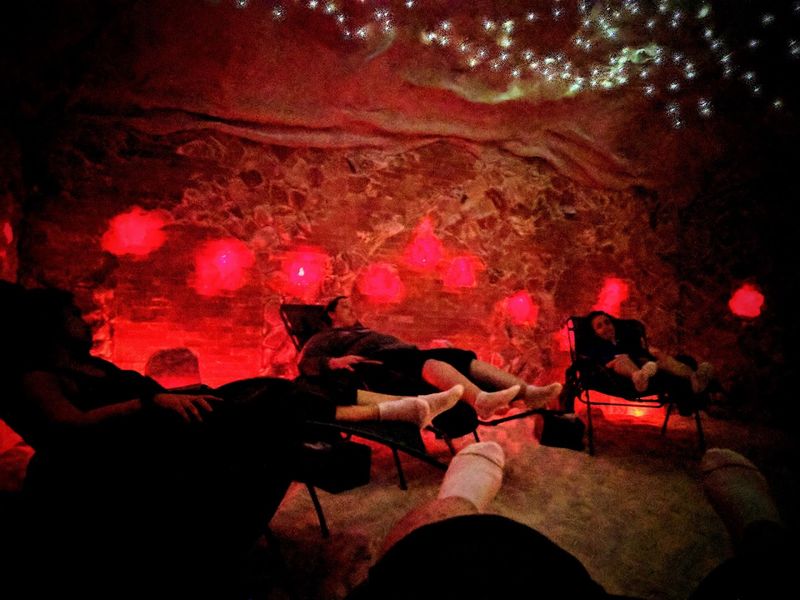
Scroll through the reviews at Tranquility Salt Cave and a clear picture emerges: the people showing up are wildly varied. There are people recovering from lingering coughs after the flu, couples looking for a shared quiet hour, friend groups celebrating birthdays, and individuals who simply want 45 minutes without a screen in their face.
Seasonal allergy sufferers, people navigating stressful work stretches, and curious first-timers who saw the place mentioned online — they all end up in the same reclined chairs.
One thing that sets salt caves apart from most wellness spaces is the social permission to do absolutely nothing. You don’t have to stretch, perform, or interact.
You just breathe. For people who find meditation apps too structured or yoga too physical, the salt cave offers a middle path that requires zero effort.
It’s also one of the few wellness environments where falling asleep mid-session is completely normal — and quietly celebrated by the staff.
What Columbus Locals Say About It

Word travels fast when something genuinely delivers. Columbus visitors have left hundreds of reviews for Tranquility Salt Cave, and the patterns in what they say are telling.
People mention the calm of the staff — specifically owner Leslie and team member Dawn by name — the ease of the booking process, and the way a single session manages to feel meaningfully different from the rest of the week.
One reviewer described booking it as a monthly routine rather than a one-time novelty. Another brought eight friends for a group session and said the whole experience was comfortable and enjoyable from start to finish.
Several visitors noted that the relaxed feeling lingered for hours after they left, which is a detail that tends to turn first-timers into regulars.
There’s also a small gift shop and an affirmation bowl near the exit — a detail that sounds small but multiple reviewers mentioned it specifically, which says something about how the whole visit lands.
Salt Therapy and Respiratory Health — What’s Real and What’s Not
Some visitors arrive at Tranquility Salt Cave with specific respiratory hopes — easing asthma symptoms, clearing out sinus congestion, or getting some relief from seasonal allergies. And some of them leave genuinely surprised.
One reviewer walked in coughing from a post-flu linger and reported not coughing once for two full days after the session. Another described breathing clearly through her nose for the first time in years, with relief lasting up to 48 hours.
Research on halotherapy does suggest modest benefits for certain respiratory conditions, particularly when sessions are repeated over time. The mechanism makes some intuitive sense: fine salt particles are naturally antimicrobial and may help thin mucus and reduce airway inflammation.
That said, the evidence base is still developing, and no reputable salt cave — including Tranquility — positions halotherapy as a medical treatment.
What they offer is a wellness supplement: something that may support your respiratory comfort without replacing your doctor, your inhaler, or your allergy medication.
How It Compares to Other Low-Key Wellness Options in Columbus

Columbus has quietly built a solid wellness scene. Float tanks, infrared saunas, acupuncture studios, sound bath events, and yoga spaces have all found footing in the city — and Tranquility Salt Cave fits into that landscape as a complementary piece rather than a competitor to any of them.
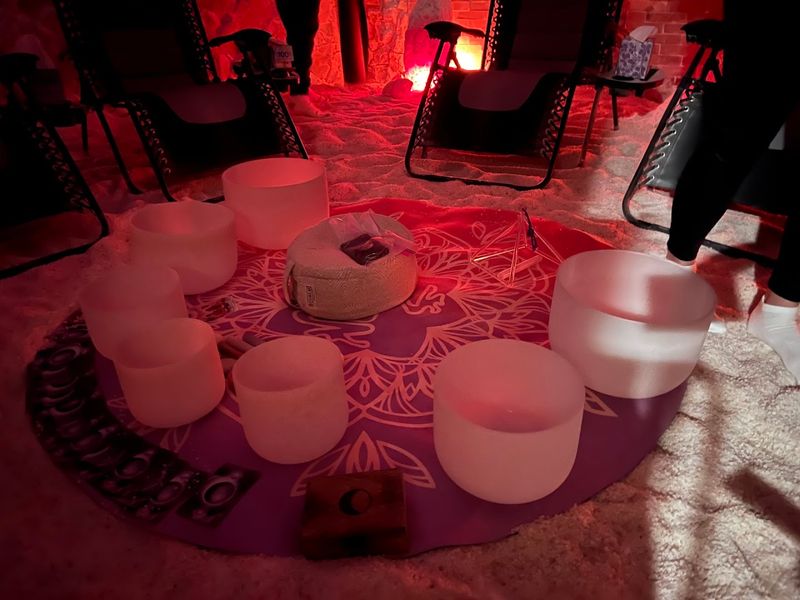
In fact, the cave itself sometimes hosts sound healing and guided meditation events, layering experiences together in ways that other venues don’t.
Compared to float tanks, the salt cave is significantly more approachable for first-timers. Float tanks require you to be comfortable with total darkness and sensory isolation — which can feel disorienting before you’ve built up a tolerance for it.
The salt cave, by contrast, is immediately accessible: dim light, soft music, other people nearby if you want that comfort.
Infrared saunas and massage sessions tend to feel more physically active or intense. The salt cave occupies its own lane — passive, quiet, and oddly easy to fit into an ordinary week without much planning.