Tucked away on a hilltop in Stockbridge, Massachusetts, Naumkeag is one of the most remarkable historic estates in all of New England.
This stunning property combines a grand Gilded Age mansion with a series of breathtaking gardens that took decades to create.
Whether you love history, art, or the outdoors, Naumkeag offers something truly special that you won’t find anywhere else in the Berkshires.
Once you see it, you’ll understand why garden lovers and history buffs keep coming back year after year.
A Gilded Age Estate with a Personal Story
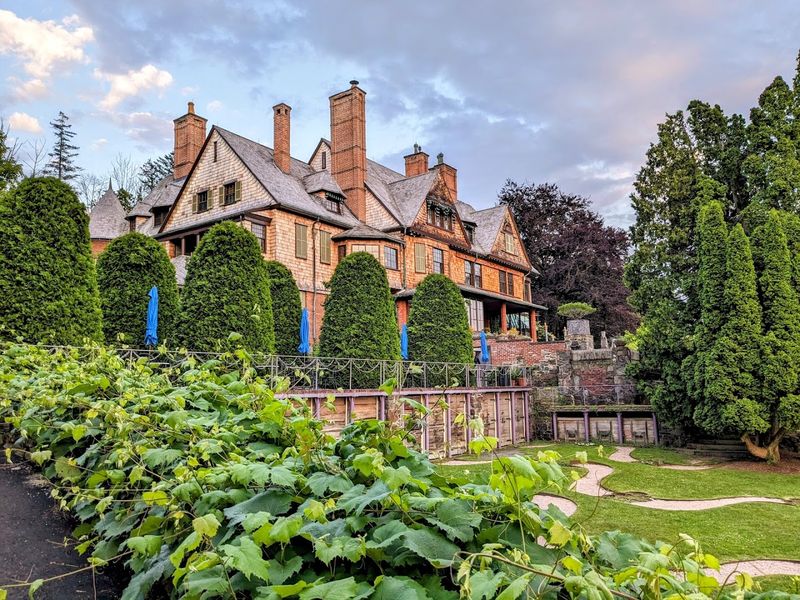
Not every historic estate feels like a real home, but Naumkeag is different. Built in the 1880s as a summer retreat for attorney Joseph Hodges Choate and his family, this property carries the warmth of generations of personal memories rather than the stiff formality of a museum showpiece.
The Choates weren’t just wealthy—they were genuinely connected to this land. They entertained friends, raised children, and spent lazy summers watching the Berkshire Mountains change with the seasons.
That human quality is something you can actually feel when you walk through the estate today.
Naumkeag passed to Joseph’s daughter Mabel after his death, and she became the heart and soul of the property for decades. Her personal taste, creativity, and friendships shaped nearly every corner of the gardens.
Visiting Naumkeag means stepping into a story that belongs to real people, not just a chapter in an architecture textbook.
Designed by Architectural Legends
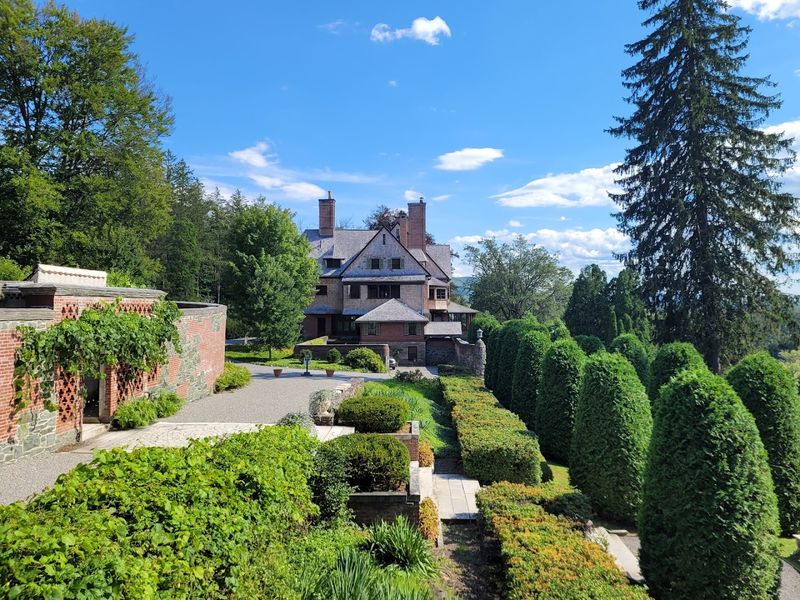
Few buildings in the Berkshires carry as much architectural prestige as the mansion at Naumkeag. The 44-room Shingle Style home was designed by the legendary firm of McKim, Mead and White—the same team responsible for iconic structures across America, including the original Penn Station in New York City.
Stanford White and his partners brought a signature blend of relaxed elegance to the project. The shingle exterior, sweeping porches, and flowing interior spaces were perfectly suited to the casual pace of a summer retreat, yet every detail was crafted with refined precision.
What makes this building so interesting is how it balances grandeur with livability. It doesn’t try to intimidate visitors the way some Gilded Age estates do.
Instead, it invites you in, almost like a very large, very beautiful family home. Architecture students and casual visitors alike tend to find something new to appreciate each time they look closely at the building’s proportions and craftsmanship.
A 30-Year Garden Collaboration
Some of the greatest creative works in history came from long, trusting partnerships—and the gardens at Naumkeag are a perfect example of that truth. Starting in the 1920s, Mabel Choate and landscape architect Fletcher Steele began working together on the grounds, and their collaboration stretched across roughly 30 years.
Steele wasn’t a typical garden designer. He pushed boundaries, experimented with form and movement, and treated outdoor spaces as living works of art.
Mabel was the ideal client—curious, adventurous, and willing to try ideas that had never been attempted in American landscape design before.
Together, they created a series of distinct outdoor “rooms,” each with its own personality, purpose, and visual language. Some spaces feel theatrical and bold, while others are quiet and contemplative.
The result is a garden that rewards slow, attentive exploration rather than a quick walkthrough. Their friendship and mutual respect clearly drove the work forward in ways that a simple client-designer relationship never could have.
The Iconic Blue Steps
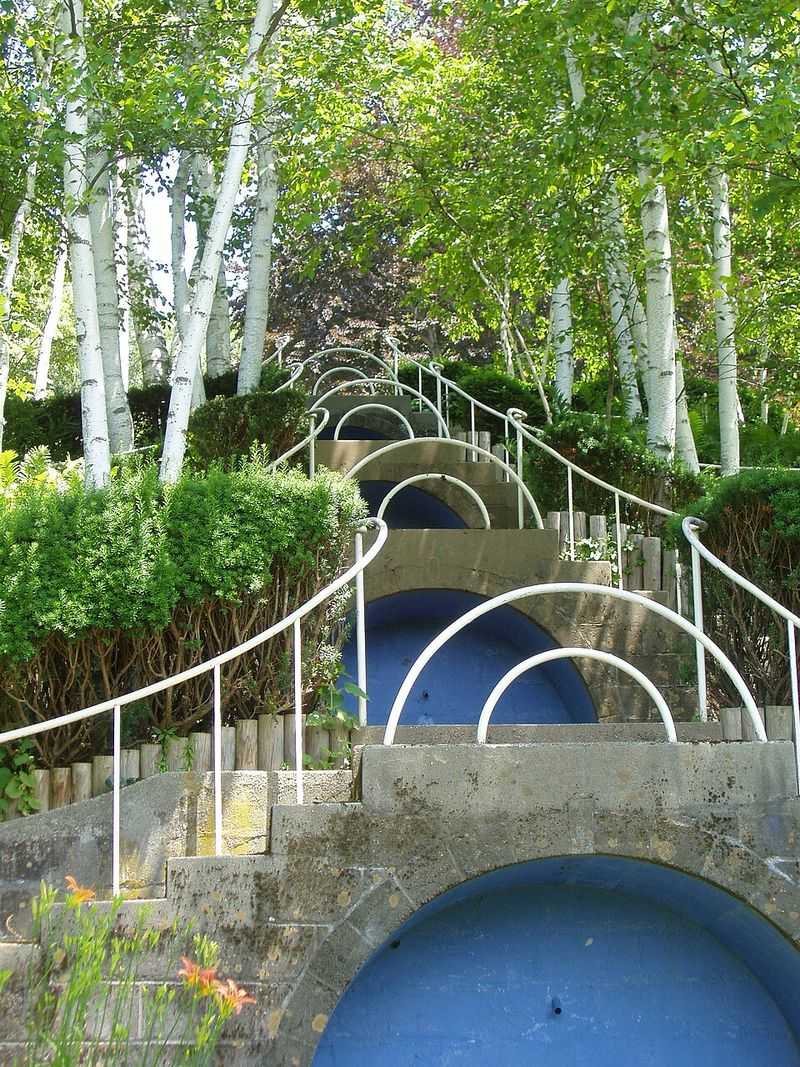
Ask any garden historian about Naumkeag and the first thing they’ll mention is the Blue Steps. Completed in 1938, this extraordinary feature is widely considered one of the most inventive garden designs ever built in the United States—and once you see it in person, that reputation makes complete sense.
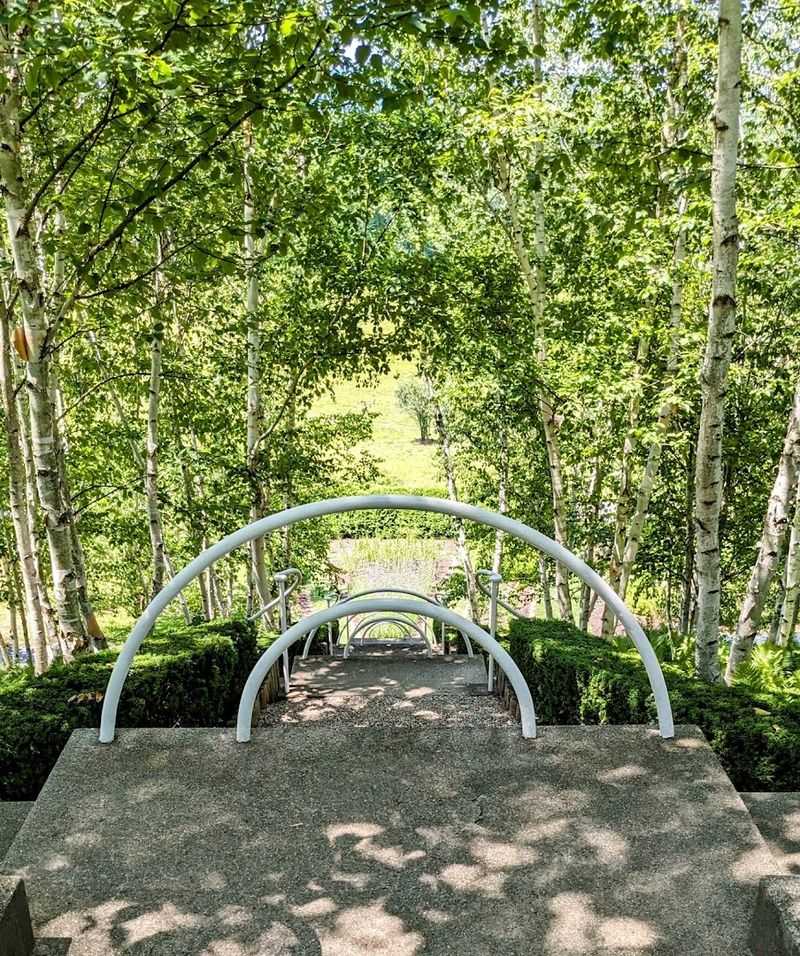
Fletcher Steele designed a series of four graceful, curving staircase arches painted a vivid blue-gray, each flanked by slender white birch trees. Thin channels of water run alongside the steps, catching light and sound as visitors climb through the canopy.
The geometry is unmistakably Art Deco, yet the surrounding nature softens every hard edge.
What’s remarkable is how the Blue Steps feel both monumental and playful at the same time. Children want to run up them; adults stop to photograph every angle.
The design solves a practical problem—connecting two garden levels on a steep hillside—while creating something so beautiful it became the defining image of the entire estate. Seeing it for the first time is genuinely one of those wow moments that stays with you.
The Afternoon Garden’s Theatrical Design
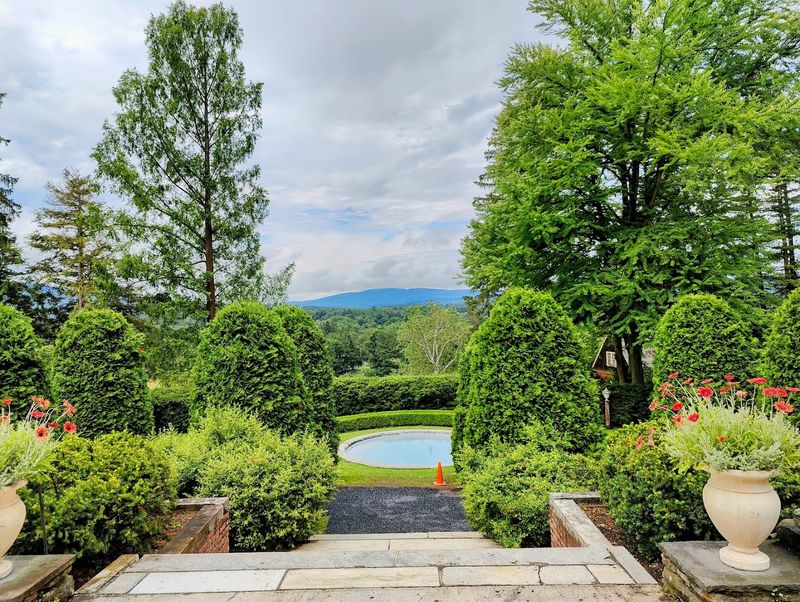
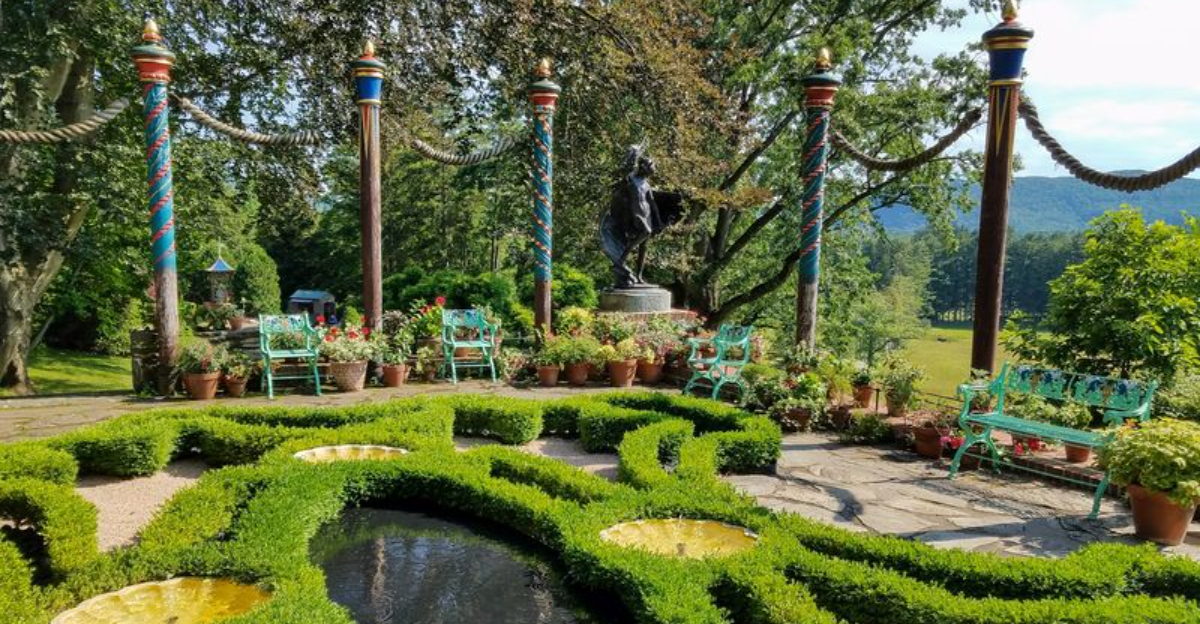
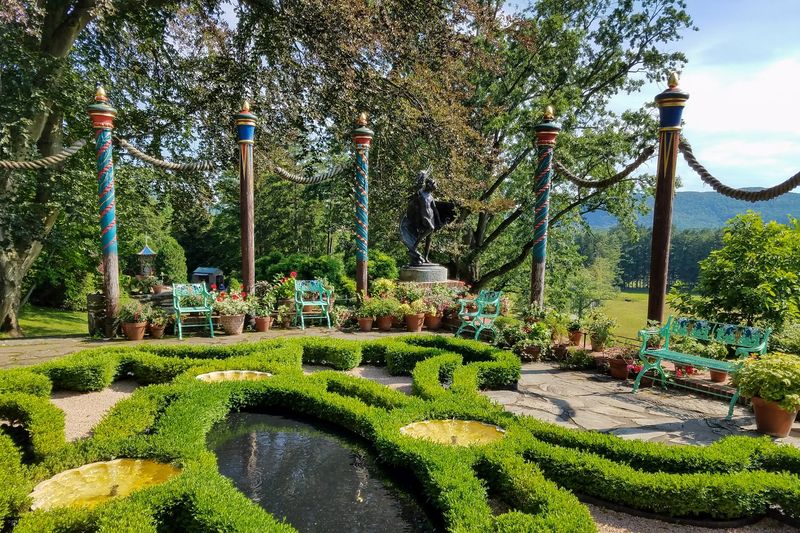
Fletcher Steele once said that gardens should be stages for living, and nowhere at Naumkeag is that philosophy more obvious than in the Afternoon Garden. Created in the 1930s, this space was designed specifically to be enjoyed during the warm hours of the day when the light hits the Berkshire Mountains just right.
Tall, colorful Venetian-style poles painted in bold stripes anchor the space with a festive, almost carnival energy. Carefully positioned openings in the surrounding hedges frame mountain views like paintings hung on a gallery wall.
The combination of structure and scenery feels deliberately theatrical—you’re not just standing in a garden, you’re standing on a stage.
Mabel Choate reportedly loved hosting friends here for afternoon tea, and it’s easy to imagine why. The space has an effortless charm that makes even a simple visit feel like a special occasion.
Even on an overcast day, the colors and shapes hold your attention. It’s the kind of garden that makes you want to linger long after you planned to move on.
A Global Mix of Garden Styles
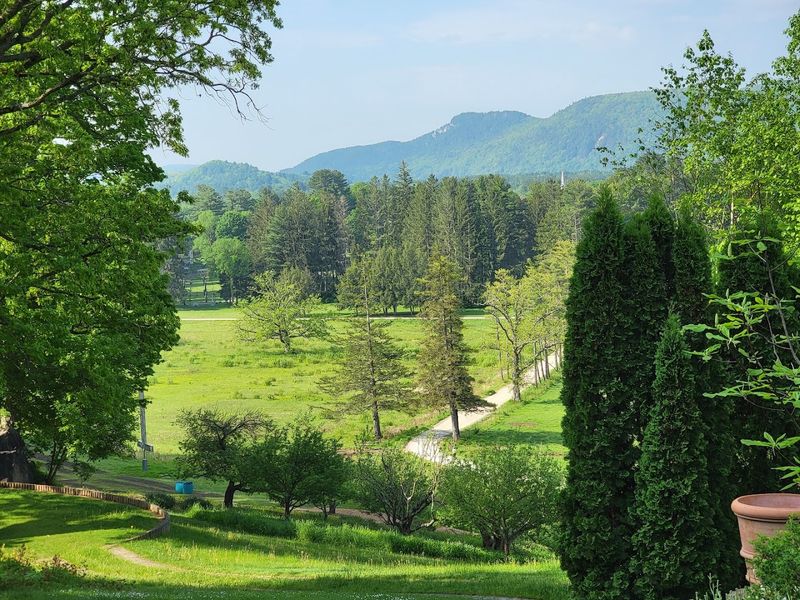
One of the most surprising things about Naumkeag is how far it travels without ever leaving a single hillside in western Massachusetts. The estate’s gardens pull inspiration from cultures and continents around the world, weaving them together into something that feels completely original.
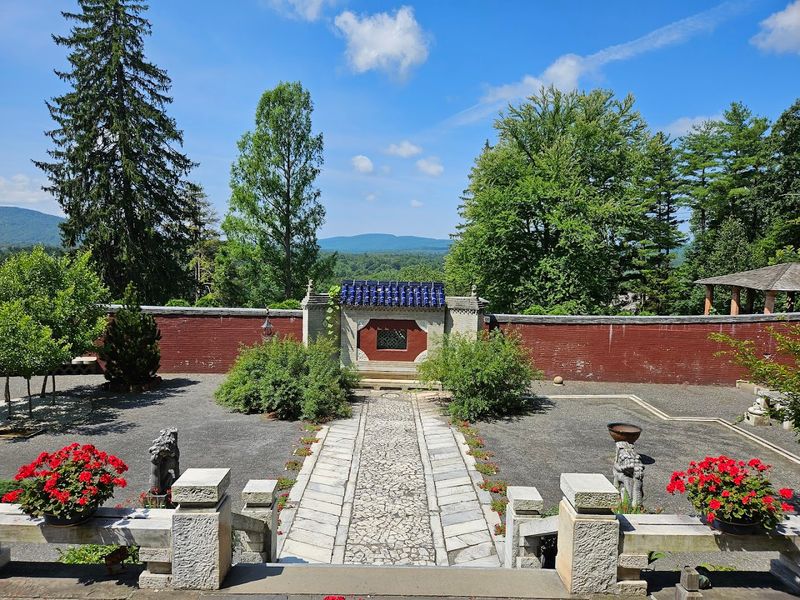
The Chinese Garden is perhaps the most striking example. Built in the 1930s after Mabel Choate visited China, it features an authentic moon gate, a small temple-style pavilion, and plantings chosen for their symbolic meaning in Chinese culture.
Walking through the moon gate feels like crossing into an entirely different world.
European influences are equally present throughout the property. Formal terraces echo Italian garden traditions, while other areas carry hints of French design in their symmetry and structure.
Steele was deeply well-traveled and openly borrowed ideas from every tradition he admired. Rather than creating a confused patchwork, he and Mabel managed to blend these global influences into a landscape that feels cohesive, surprising, and genuinely American in its adventurous spirit.
Terraced Gardens with Mountain Backdrops
Sitting on a prominent hilltop, Naumkeag has one of the most enviable natural settings of any historic estate in New England. The surrounding Berkshire Mountains aren’t just a backdrop—they’re an active part of the design, integrated into nearly every view the gardens offer.
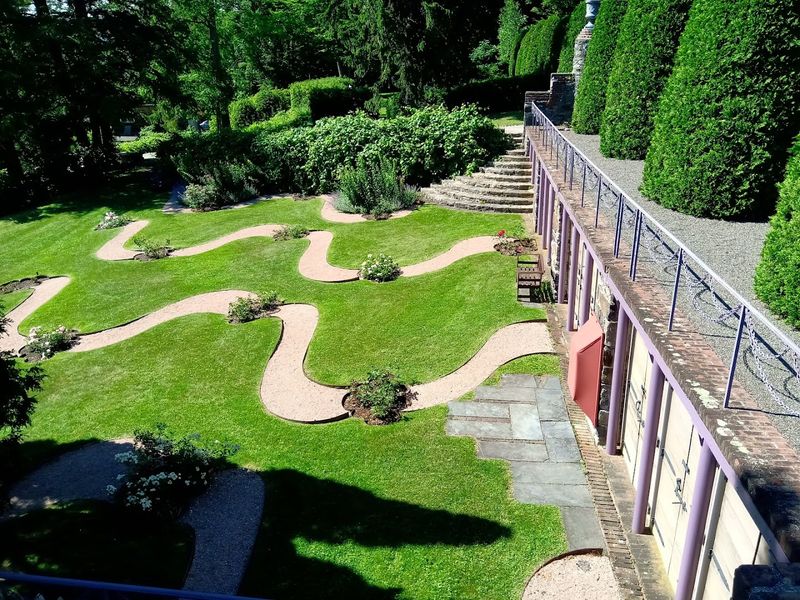
Steele worked carefully with the natural slope of the land, creating a series of terraced levels that step down the hillside in a way that feels both organized and organic. Each terrace reveals a slightly different perspective on the landscape, drawing your eye outward toward the rolling hills in the distance.
The lawns and plantings are arranged to echo the horizontal lines of the mountain ridges, creating a visual rhythm that ties the built environment to the natural world.
On a clear day, the views from the upper terraces are genuinely breathtaking. The combination of manicured gardens in the foreground and wild mountain scenery in the background is exactly the kind of contrast that makes Naumkeag so memorable.
Many visitors say the terraced gardens are where they spend the most time simply standing still and looking.
A Rare Surviving Work of Fletcher Steele
Fletcher Steele designed hundreds of gardens during his long career, working across the United States and internationally. He was one of the most innovative landscape architects of the 20th century, and his ideas about garden design were decades ahead of their time.
Yet almost none of his work survives today.
Most of Steele’s gardens were private commissions that were later altered, neglected, or demolished as properties changed hands. Naumkeag is the extraordinary exception.
Not only does it survive, but it remains the only Steele-designed garden that is open to the general public—making it an almost irreplaceable piece of American cultural history.
For anyone interested in landscape architecture, visiting Naumkeag is a bit like finding a lost masterpiece hanging in a small-town museum. The work is genuine, the context is intact, and the experience of being there carries real historical weight.
Garden historians and design professionals travel from around the country specifically to study and photograph the property. For everyone else, it’s simply a beautiful and fascinating place that happens to be historically priceless.
Faithfully Restored to Its Original Vision
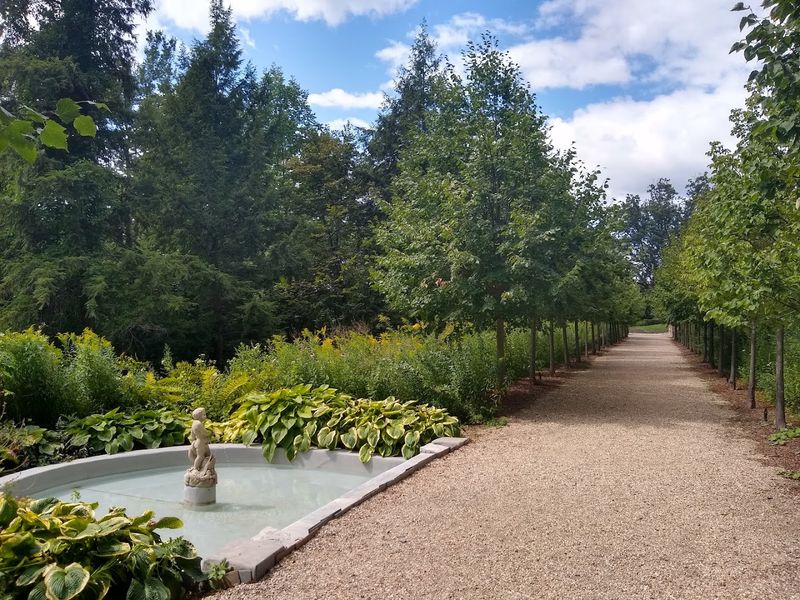
By the early 2000s, decades of natural wear had taken a toll on some of Naumkeag’s most delicate garden features. Plants had grown out of scale, structures had weathered, and some of Steele’s original plantings had been lost entirely.
A major restoration effort launched in the 2010s set out to change that.
Conservators and horticulturalists worked from Steele’s original drawings, correspondence, and historic photographs to rebuild the gardens as accurately as possible. The process was painstaking—tracking down specific plant varieties, matching original paint colors, and rebuilding structural elements using traditional techniques.
The goal wasn’t just preservation; it was resurrection.
The results are remarkable. Areas of the garden that had faded or changed beyond recognition now reflect Steele’s intentions with renewed clarity.
Visitors today are experiencing something genuinely close to what Mabel Choate and her guests would have seen nearly a century ago. That kind of faithful restoration is rare and expensive, and it reflects how seriously the Trustees of Reservations—the organization that manages Naumkeag—takes its responsibility to this irreplaceable landscape.
What to Know Before You Go
Planning a visit to Naumkeag is worth a little preparation, because this is one of the Berkshires’ most popular destinations and it tends to fill up fast. The estate is located at 5 Prospect Hill Road in Stockbridge, MA 01262, sitting on a quiet hilltop just minutes from the center of town.
Naumkeag is a seasonal attraction, typically open from late spring through fall. Timed entry tickets are available for both the gardens and the historic mansion, and buying in advance is strongly recommended—especially on weekends and during special events.
The beloved Pumpkin Show in October and the dazzling Winterlights display in late fall and early winter draw especially large crowds.
Comfortable walking shoes are a must, since the gardens involve hills and uneven terrain. Bring a camera, because nearly every corner offers a shot worth keeping.
Allow at least two to three hours if you want to explore both the house and the full grounds at a relaxed pace. Parking is available on-site, and the Trustees of Reservations website has up-to-date hours, ticket prices, and event schedules to help you plan ahead.