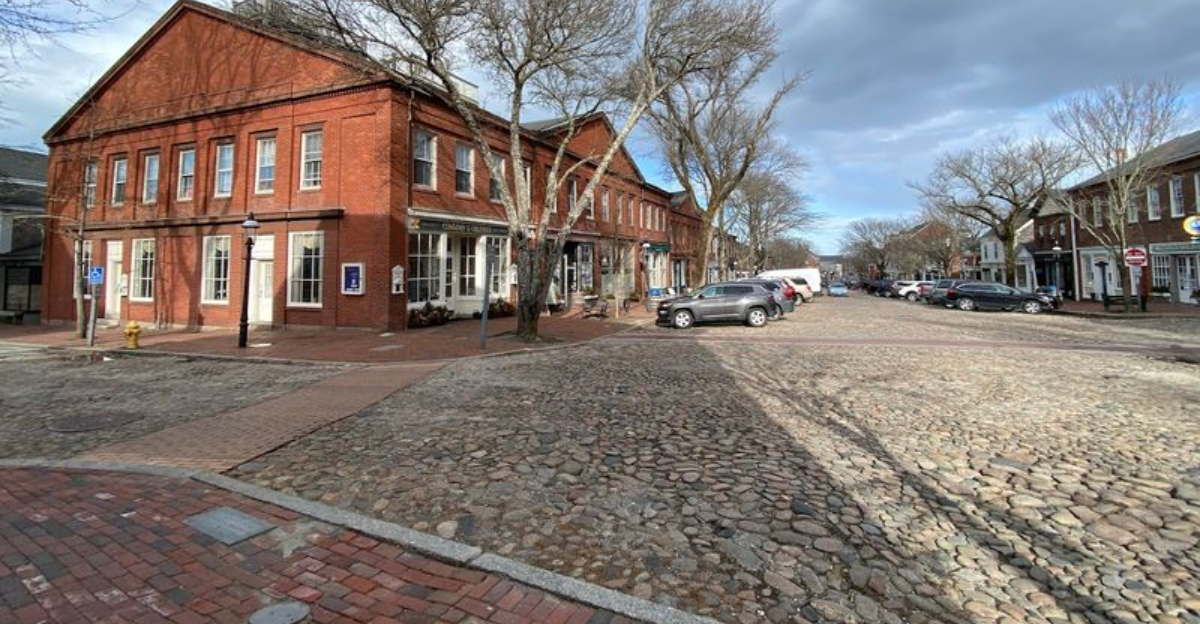
Imagine walking down a street where almost nothing has changed in nearly 200 years.
That is exactly what you experience in the Nantucket Downtown Historic District, a coastal Massachusetts neighborhood that still looks remarkably like it did during the height of the whaling era in the 1840s.
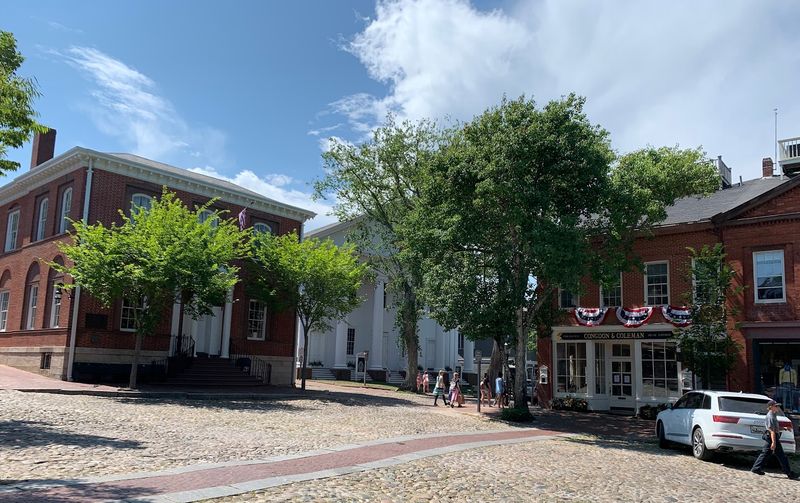
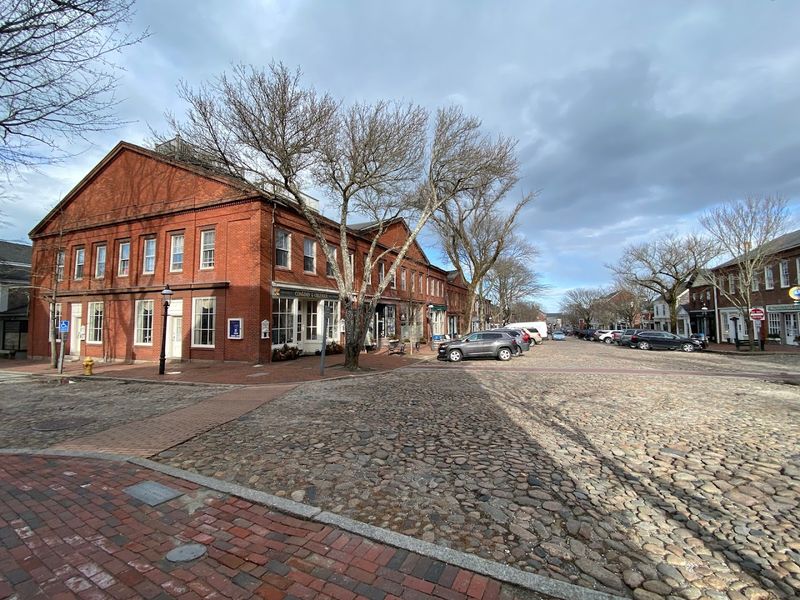
Cobblestone streets, brick storefronts, and sea captains’ homes line the roads just as they did when Nantucket was one of the most powerful whaling ports in the world.
Whether you are a history lover, an architecture fan, or just someone who enjoys a really good story, this place has something that will genuinely stop you in your tracks.
A Seaport Shaped by the Whaling Boom
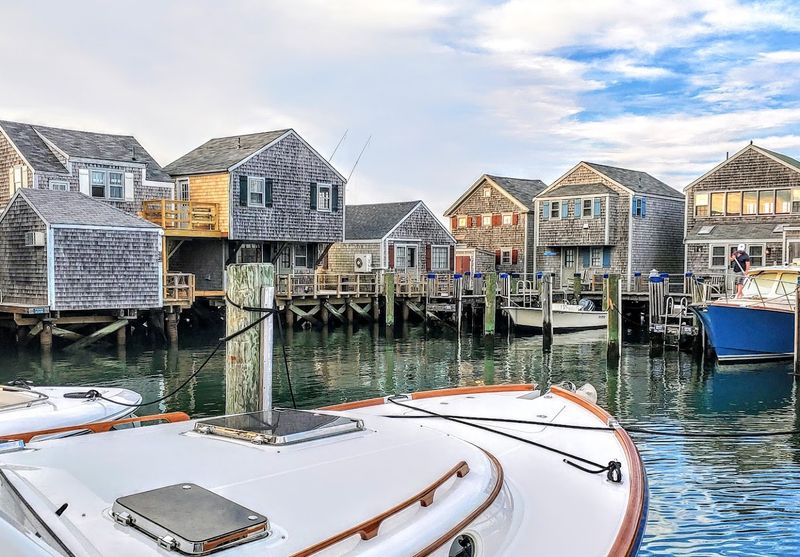
Back when whale oil lit the lamps of cities across the world, Nantucket was the place everyone watched. In the late 1700s and early 1800s, this small island off the coast of Massachusetts became one of the most powerful whaling ports in all of North America.
Ships launched from its harbor and returned months or even years later loaded with barrels of valuable whale oil.
The money that poured into Nantucket from the whaling trade was staggering for the time. Wealthy merchants and ship owners built grand homes, opened businesses, and transformed a modest fishing community into a thriving commercial hub.
The downtown area grew rapidly, with streets filling in around the harbor to support an industry that employed hundreds of local residents.
That economic boom left a permanent mark on the town’s layout and architecture. Wide streets, commercial wharves, and rows of well-built structures all reflect the ambitions of a community that believed its prosperity would last forever.
Walking through downtown Nantucket today, you can still feel the confidence and energy of that whaling era baked right into the bricks and cobblestones beneath your feet.
Cobblestone Streets Laid in the 1830s
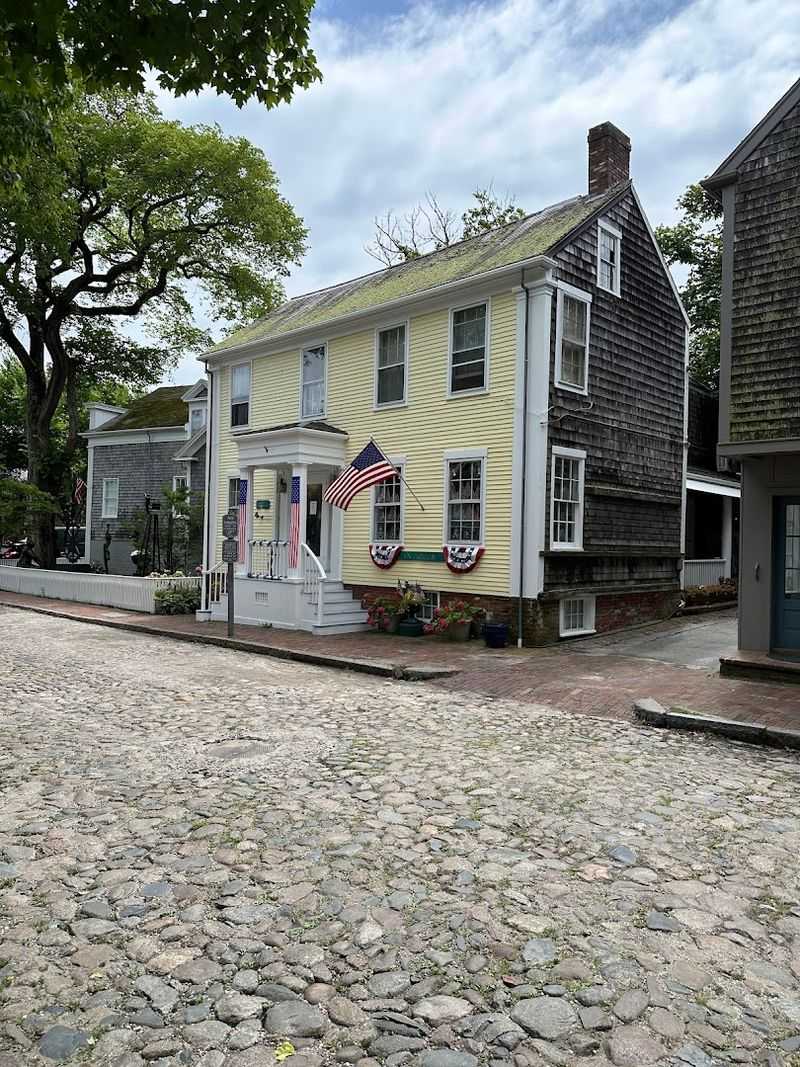
Few things say “step back in time” quite like the sound of your footsteps echoing off cobblestones. Around 1836 and 1837, the town of Nantucket made the ambitious decision to pave its downtown roads with these rounded stones, replacing the muddy, rutted paths that had made travel miserable in wet weather.
It was a practical upgrade that also gave the town a polished, prosperous look.
The cobblestones were carefully set by hand, fitted tightly together to create a surface strong enough to handle horse-drawn wagons loaded with heavy cargo. Workers packed the stones into sand or gravel beds, a technique that proved so effective that many of those original streets still survive today.
Walking on them now, you are literally stepping on the same stones that merchants, sailors, and townspeople walked on almost two centuries ago.
Visitors often notice how the uneven surface slows them down just enough to really look around. That slight inconvenience turns out to be a gift.
The cobblestones force a slower pace, which makes it much easier to notice the historic buildings, old signs, and architectural details that surround you at every turn on the island.
Imported Stones With Maritime Origins

Here is a detail about Nantucket’s cobblestones that most visitors never learn: those stones likely traveled a long way before they ended up under your feet. Many historians believe the cobblestones were brought to the island from mainland ports, and some may have arrived as ship ballast — heavy material loaded into the bottom of cargo ships to keep them stable when sailing without a full load of goods.
When a ship arrived in Nantucket carrying whale oil or trade goods, it needed to offload its ballast before taking on new cargo. Piles of stone would accumulate on the docks, and rather than simply discarding them, resourceful islanders found a practical use.
Those ballast stones became the very foundation of Nantucket’s downtown streets, which is a wonderfully poetic connection between the town’s roads and its maritime identity.
Whether or not every stone arrived as ballast, the broader point is clear: Nantucket’s physical landscape was shaped by its role as a trading hub. Even the ground you walk on tells the story of a community that was deeply, creatively connected to the sea.
That layer of hidden history makes every step through downtown feel a little more meaningful.
Whaling-Era Storefronts Still Standing
After a devastating fire swept through downtown Nantucket in 1846, the community faced a choice: rebuild quickly and cheaply, or rebuild with intention. They chose intention.
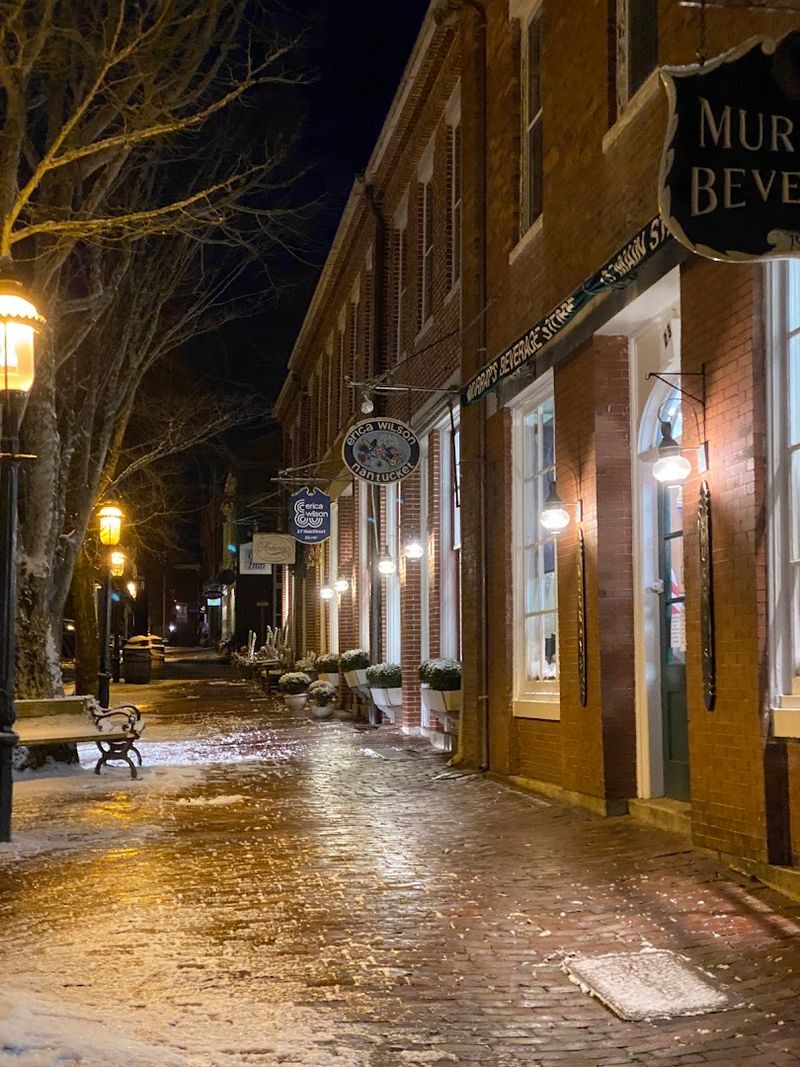
Merchants and property owners reconstructed the commercial district using brick, a material far more fire-resistant than the wood that had burned so easily. The result was a row of storefronts that blended practicality with a confident architectural style.
Greek Revival design was fashionable at the time, and Nantucket’s rebuilt downtown reflected that trend beautifully. Flat or gently pitched rooflines, large symmetrical windows, and subtle decorative elements gave the new buildings a clean, dignified look that signaled prosperity without being flashy.
Many of those same structures still line the downtown streets today, looking remarkably similar to how they appeared when they were brand new in the late 1840s.
What makes these storefronts especially impressive is that they are not museum pieces sitting behind velvet ropes. Restaurants, boutiques, and small businesses still operate inside them, which means you can grab a coffee or browse a shop while standing inside a building that has been part of Nantucket’s commercial life for well over 150 years.
That combination of history and everyday use is genuinely rare.
A Town That Peaked in the 1840s
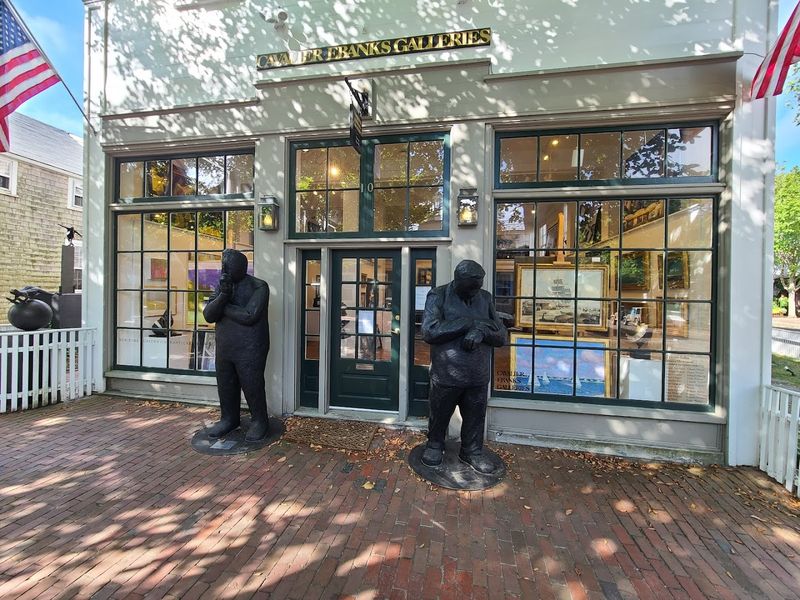
By 1840, Nantucket had reached the peak of its influence. The island’s population was at its highest, its harbor was busy with whaling ships, and its merchants were among the wealthiest in New England.
For a brief, glittering moment, this small island punched far above its weight on the world stage, supplying much of the whale oil that kept the industrializing world illuminated.
Then things began to change. The discovery of petroleum in Pennsylvania in 1859 offered a cheaper alternative to whale oil, and the whaling industry began a long, slow decline.
Nantucket’s economy contracted sharply, and many residents left to find opportunities elsewhere. The population dropped significantly in the decades following the town’s peak years, and new construction slowed to a near halt.
Strangely enough, that economic decline turned out to be one of the best things that ever happened to Nantucket’s historic character. Because there was little money for new development, the old buildings simply stayed.
Streets were not widened, storefronts were not demolished for modern replacements, and the urban fabric of the 1840s survived largely intact. The town’s greatest misfortune became its most treasured asset, preserving a slice of American history that money alone could never have recreated.
Preservation Through Isolation
There is something quietly remarkable about what did NOT happen in Nantucket during the late 1800s and early 1900s. While cities and towns across America were tearing down old buildings to make way for factories, wider roads, and modern commercial strips, Nantucket was largely left alone.
The economic slowdown that followed the collapse of the whaling industry meant there simply was not enough money or demand to justify major redevelopment.
That isolation worked like a time capsule. Buildings that might have been demolished elsewhere were left standing because no one had a compelling reason to replace them.
Streets that might have been widened for automobile traffic stayed narrow because the island’s remote location kept large-scale infrastructure projects from taking hold. Even the lack of a bridge connecting Nantucket to the mainland helped shield it from the forces of rapid modernization.
Historians and preservationists often describe this phenomenon as “preservation by neglect,” which sounds like an insult but is actually a compliment. Sometimes the best way to save a historic place is simply for the world to forget about it for a few decades.
Nantucket’s quiet years in the late 19th century inadvertently protected a streetscape that is now considered one of the finest examples of intact 19th-century urban design in the entire country.
One of America’s First Historic Districts
Long before historic preservation became a mainstream concern in the United States, Nantucket was already taking steps to protect what it had. In 1955, the town formally established the Nantucket Historic District, making it one of the earliest officially designated historic districts in the entire country.
That was nearly a decade before the National Historic Preservation Act of 1966 created the federal framework that most Americans associate with historic protection today.
The designation came with real teeth. A Historic District Commission was established to review proposed changes to buildings within the district, ensuring that new construction, renovations, and even paint colors were compatible with the historic character of the neighborhood.
Property owners who wanted to make changes to their buildings had to go through a formal review process, which was unusual and even controversial at the time.
Decades later, that early commitment to preservation looks like one of the smartest decisions Nantucket ever made. The strict rules that frustrated some property owners in the 1950s and 1960s are exactly why the town still looks the way it does today.
Nantucket proved that a community could protect its historic character without turning itself into a museum, and that lesson has influenced preservation efforts across the country ever since.
Architecture From Two Centuries
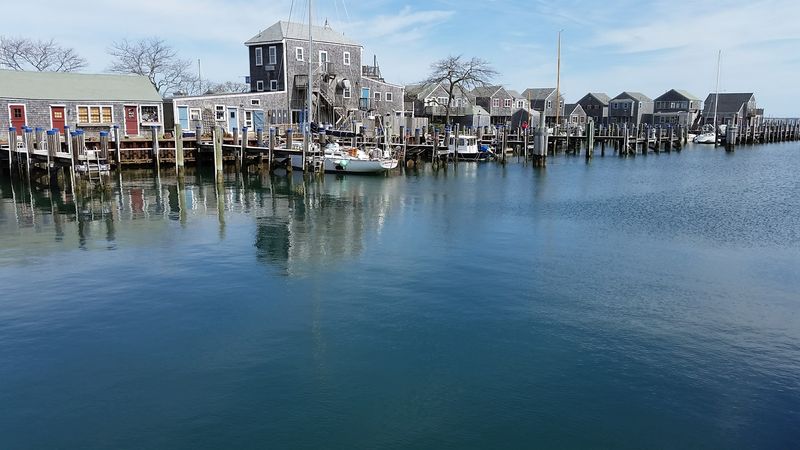
One of the most rewarding things about walking through downtown Nantucket is noticing how different buildings from different eras sit comfortably side by side. An 18th-century sea captain’s house might stand just a few doors down from a brick commercial building constructed after the 1846 fire, and both look completely at home next to each other.
The result is an architectural conversation between two centuries that feels surprisingly harmonious.
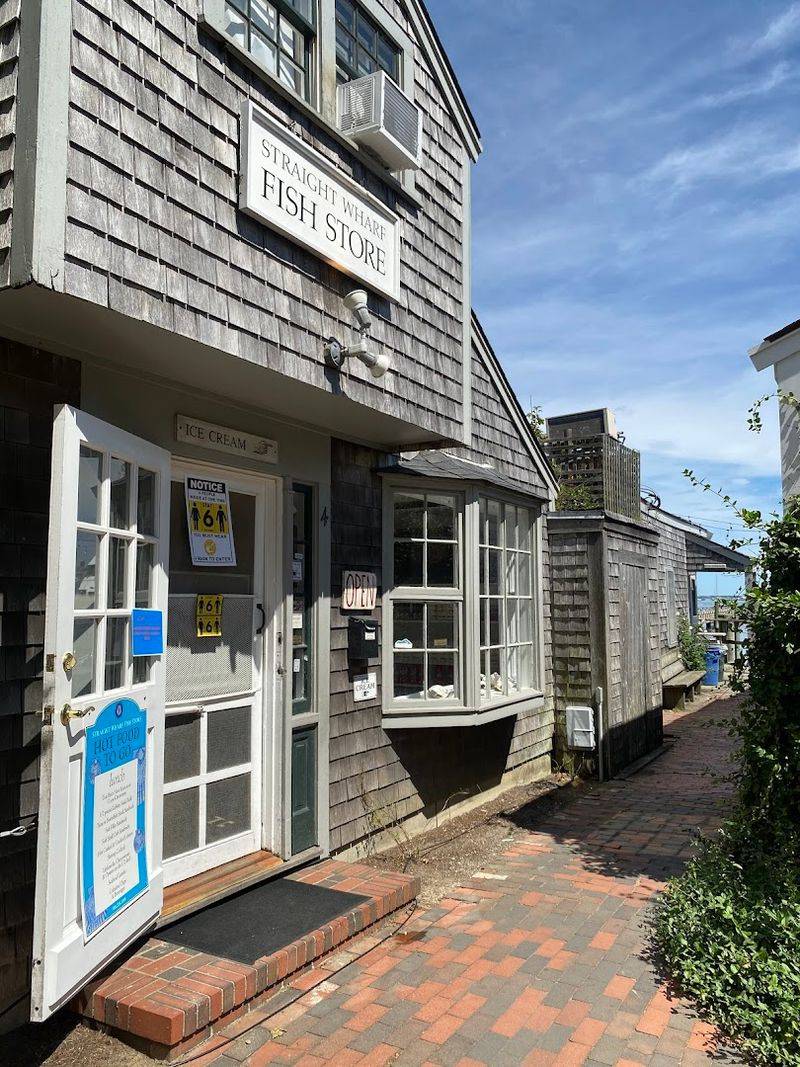
Nantucket’s older homes often feature the cedar shingle siding that has become almost synonymous with New England coastal architecture. Over time, those shingles weather to a beautiful silver-gray color, giving the buildings a soft, timeless quality that fits perfectly with the island’s misty coastal atmosphere.
Many of these homes were built by or for successful whaling captains and merchants, and their solid construction reflects the pride and ambition of people who had made real fortunes from the sea.
Rooftop widow’s walks — those small railed platforms perched at the very top of many captain’s houses — are another architectural detail worth watching for as you explore. Legend says they were used by wives watching anxiously for their husbands’ ships to return from long voyages.
Whether or not that story is entirely accurate, those little platforms add a poignant human dimension to the buildings below.
A Living Museum of the Whaling Era
Most museums ask you to look but not touch. Downtown Nantucket flips that rule entirely.
The entire historic district functions as an immersive, living environment where the past and present coexist in a way that feels completely natural rather than staged. You can walk into a building that is more than 150 years old, sit down at a table, and order lunch without anyone making a big deal about the history surrounding you.
That everyday quality is what separates Nantucket from a theme park or a preserved ghost town. People actually live and work here.
Local families have called these streets home for generations. The bakeries, bookshops, and clothing stores operating inside century-old storefronts are real businesses serving real customers, not costumed interpreters performing a historical script for tourists.
The Nantucket Whaling Museum, housed in a former spermaceti candle factory just steps from the harbor, offers an excellent anchor point for anyone who wants deeper context before exploring the streets. Seeing a real 46-foot sperm whale skeleton and original whaling equipment inside a building that was itself part of the whaling industry adds a powerful layer of meaning to everything you will notice outside.
The museum and the streets together create an experience that is genuinely hard to find anywhere else.
Why It Still Feels Frozen in Time
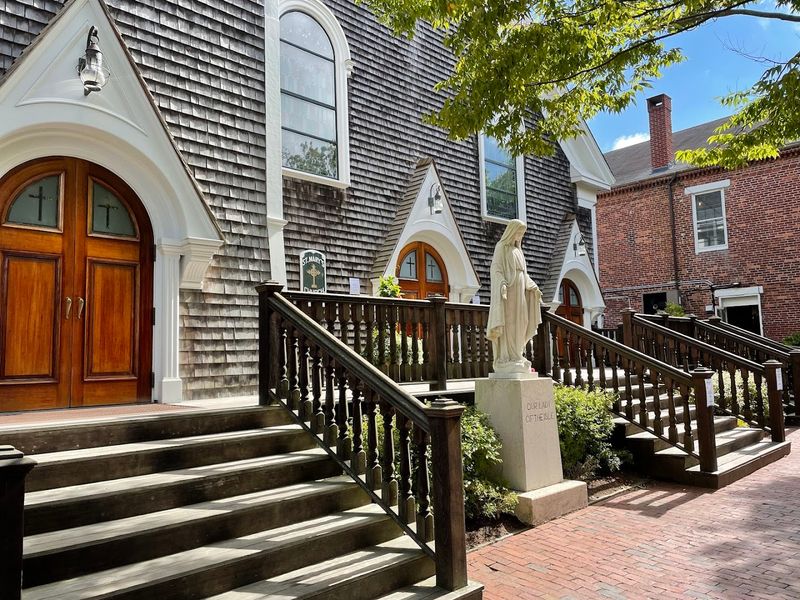
Stand on Main Street in downtown Nantucket early on a quiet morning, before the summer crowds arrive, and something unusual happens. The cobblestones, the brick facades, the church steeples rising above the roofline, and the faint smell of salt air combine to create an atmosphere that feels genuinely disconnected from the modern world.
It is not a trick or a tourist illusion — it is the real result of a very specific set of historical circumstances coming together over nearly two centuries.
Three forces are mostly responsible for keeping Nantucket looking the way it does. First, the economic collapse that followed the whaling era meant the town was too poor to modernize aggressively.
Second, the island’s physical isolation from the mainland limited the kind of rapid development that reshaped so many other American towns during the 20th century. Third, and most importantly, the community made a conscious, sustained decision to protect what remained through formal historic preservation rules.
Together, those three factors created something genuinely rare: a downtown district that still carries the scale, texture, and visual character of a mid-19th-century American seaport. Nantucket did not freeze in time by accident.
It froze because people chose to remember, and because history, for once, cooperated beautifully with that choice.