If you grew up reading about the Cat in the Hat, the Lorax, or Horton the elephant, there is a real place in Massachusetts that brings all those stories to life. The Dr. Seuss National Memorial Sculpture Garden in Springfield, MA is a free, outdoor experience filled with stunning bronze sculptures of beloved characters.
Springfield is actually where Theodor Seuss Geisel — the real person behind Dr. Seuss — grew up, making this spot truly special. Whether you are visiting with kids or just feeling nostalgic, this garden is one of those places that puts a smile on your face the moment you walk in.
The Cat in the Hat sculpture
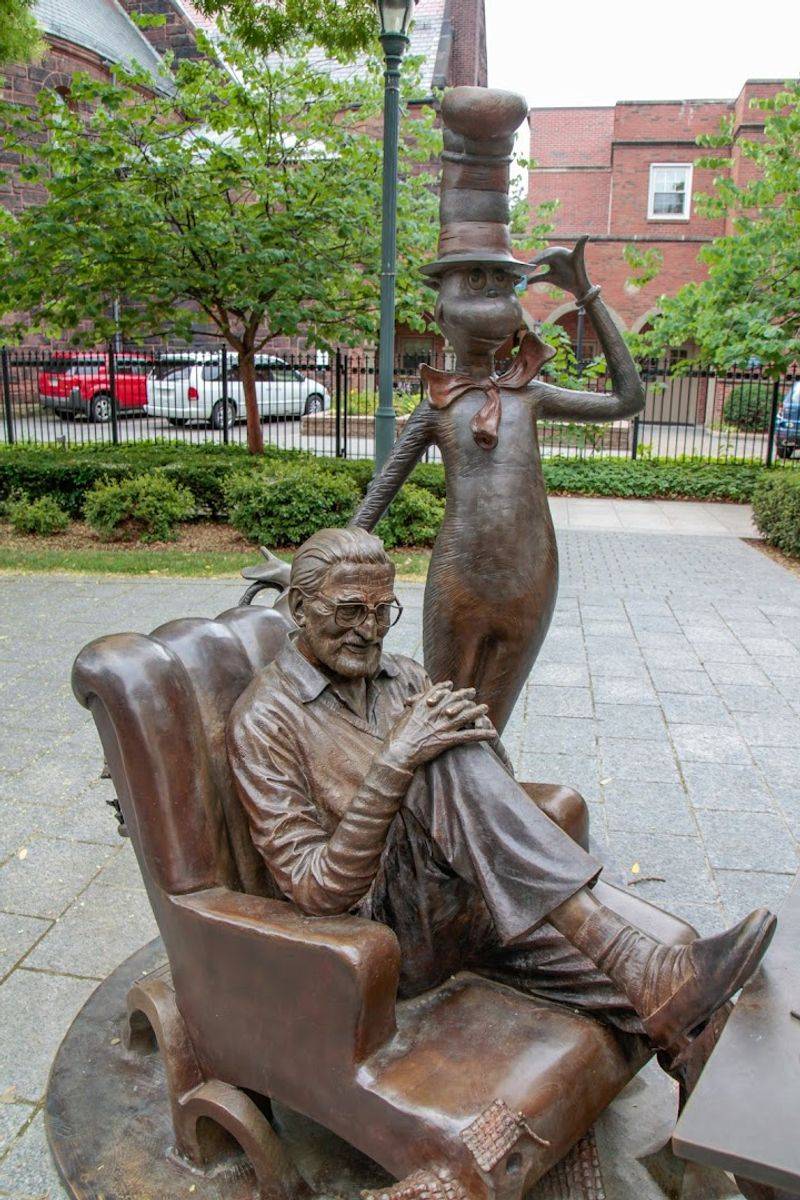
Few characters are as instantly recognizable as the Cat in the Hat, and seeing him in bronze is something else entirely. This towering sculpture captures every detail — the striped hat, the mischievous grin, and that confident stance that made generations of kids fall in love with the character. standing before it feels like stepping directly into the pages of the book.
Theodore seuss geisel, who was born in springfield in 1904, used his hometown as a creative springboard. The Cat in the Hat was published in 1957 and became one of the best-selling children’s books of all time.
Having the sculpture here, in the city where its creator grew up, gives it an extra layer of meaning.
Kids absolutely lose their minds when they spot this one — arms stretched out wide, ready for a photo. Adults tend to get a little quiet, caught up in a wave of childhood memories.
The sculpture is beautifully maintained and perfectly positioned within the garden courtyard. Plan to spend a few extra minutes here because everyone in your group will want their own photo with the Cat.
The lorax sculpture
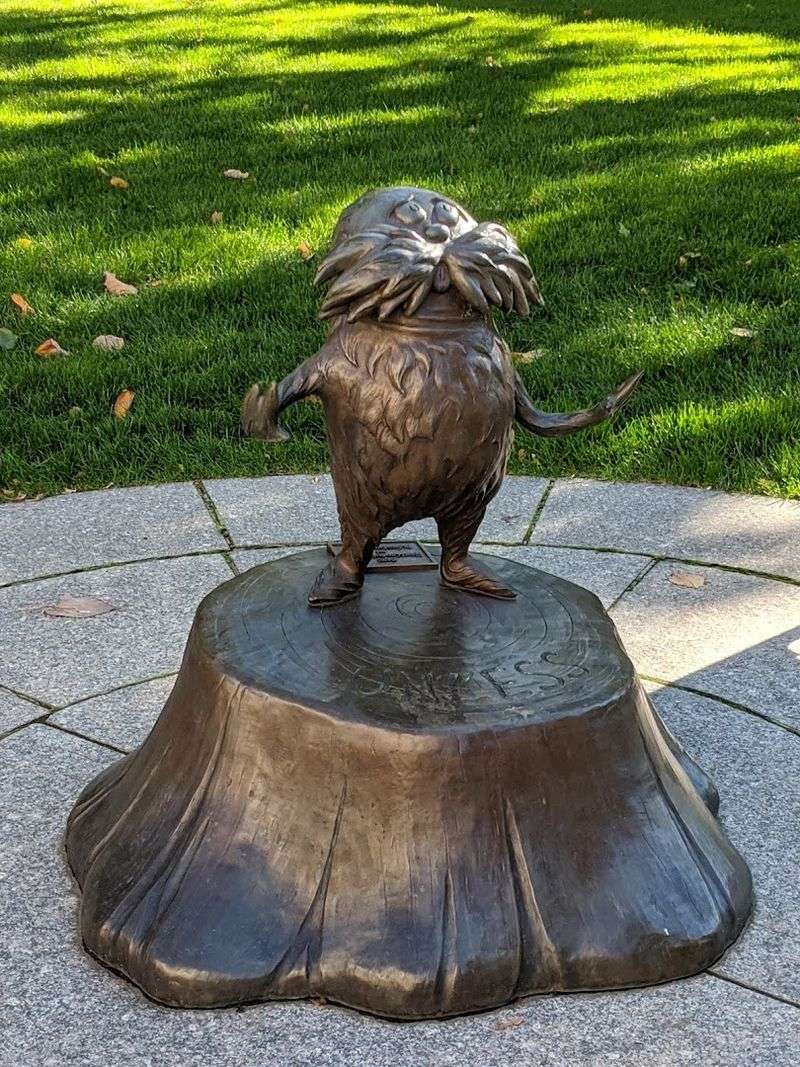
“I am the lorax. I speak for the trees.” Those words hit differently when you are standing right in front of a life-size bronze lorax with his bushy mustache and serious little eyes.
This sculpture is one of the most photographed in the entire garden, and for good reason — the lorax has become a symbol of environmental awareness that resonates just as strongly today as it did in 1971.
What makes this piece especially cool is how the sculptor, lark grey dimond-cates, captured the lorax’s personality so precisely. he looks both grumpy and wise at the same time, which is exactly how readers always imagined him. The detail work on the mustache alone is worth a close-up look.
Many visitors come specifically for the lorax, especially around Earth Day when the garden sees a big spike in foot traffic. one reviewer mentioned coming “on Earth Day to see the lorax and horton,” which shows how meaningful this sculpture is to environmentally conscious families. If you have kids who are learning about nature and conservation, this is a wonderful conversation starter right in the middle of a beautiful garden setting.
Horton the elephant sculpture
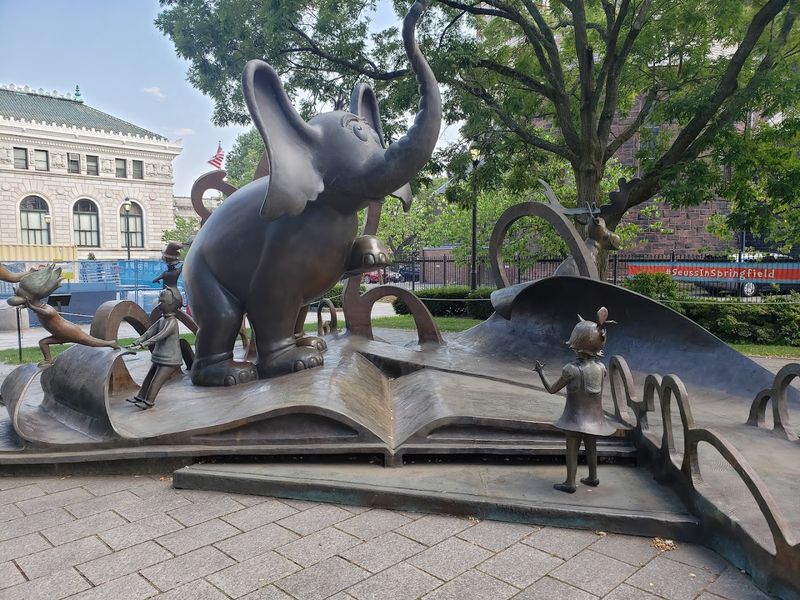
Horton hears a Who, and you will hear yourself saying “wow” the moment you see this magnificent sculpture. Horton is one of the largest figures in the garden, and the sheer scale of the bronze elephant is breathtaking.
His kind eyes and gentle posture make him immediately approachable, and little kids practically sprint toward him every time.
The character of Horton first appeared in “Horton hatches the egg” in 1940 and later starred in “Horton hears a Who!” in 1954. Both books carry powerful messages about kindness, loyalty, and standing up for those who cannot speak for themselves.
Seeing Horton rendered in such careful, artistic detail makes those themes feel even more real.
Parents often use this sculpture as a chance to talk with their children about empathy and doing the right thing — values that Sr. Seuss wove into nearly every story he wrote. The sculpture is incredibly sturdy and perfectly safe for kids to pose around.
Many visitors choose to sit beside Horton for a photo, making it one of the most heartwarming spots in the entire garden. Come with your camera fully charged because you will definitely want multiples of this one.
Thing one and Thing Two sculptures
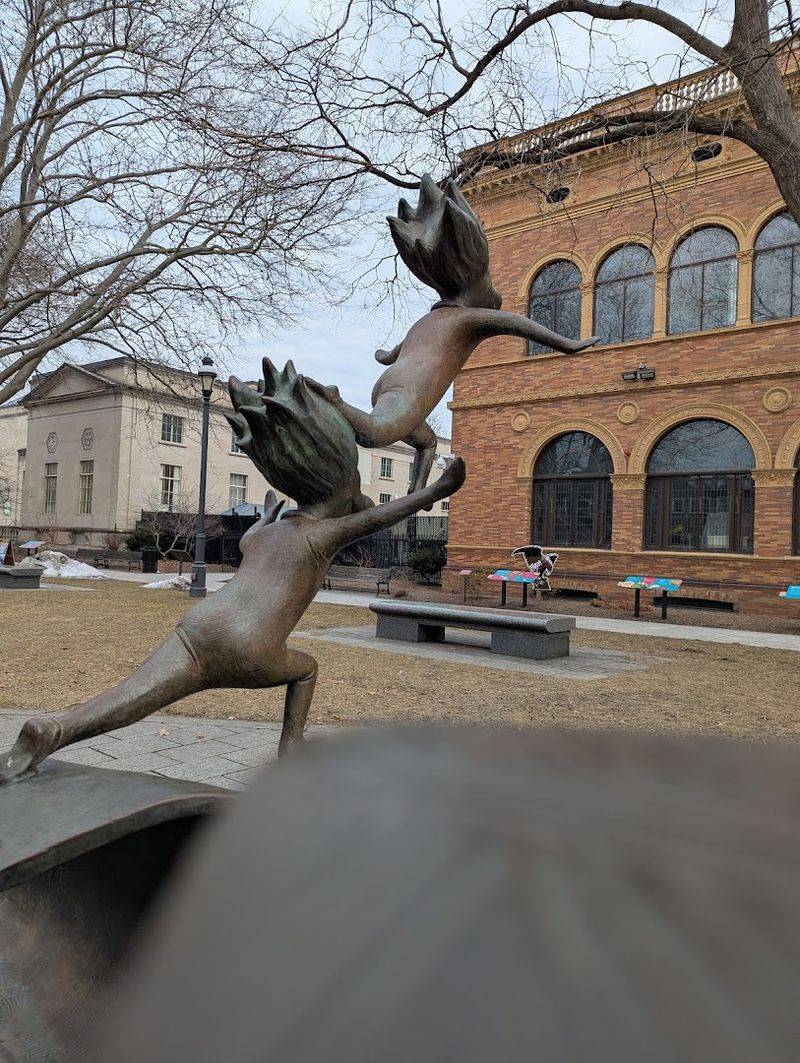
Chaos never looked so charming. Thing one and Thing Two are among the most playful sculptures in the entire garden, and their matching wild-haired, wide-grinned figures practically radiate mischief.
Kids who recognize them from the Cat in the Hat books immediately start pointing and laughing — which is exactly the reaction Dr. Seuss would have wanted.
The two characters debuted in “The Cat in the hat” in 1957, crashing into the story (and the house) with pure, unfiltered energy. Sculptor Lark Grey Dimond did a remarkable job capturing their identical, bouncy personalities in bronze.
Standing between them for a photo is basically a requirement at this point.
What is fun about this sculpture is how it sparks sibling rivalry in the best possible way. Siblings argue over who gets to be Thing one and who has to be Thing Two, which usually ends in laughter.
Parents appreciate how naturally the sculptures encourage kids to engage with the story and with each other. Even visitors who have never read the books tend to be drawn in by the sheer energy these two bronze figures project.
They are a highlight for families visiting with younger children especially.
The Free and Open-to-the-Public Access
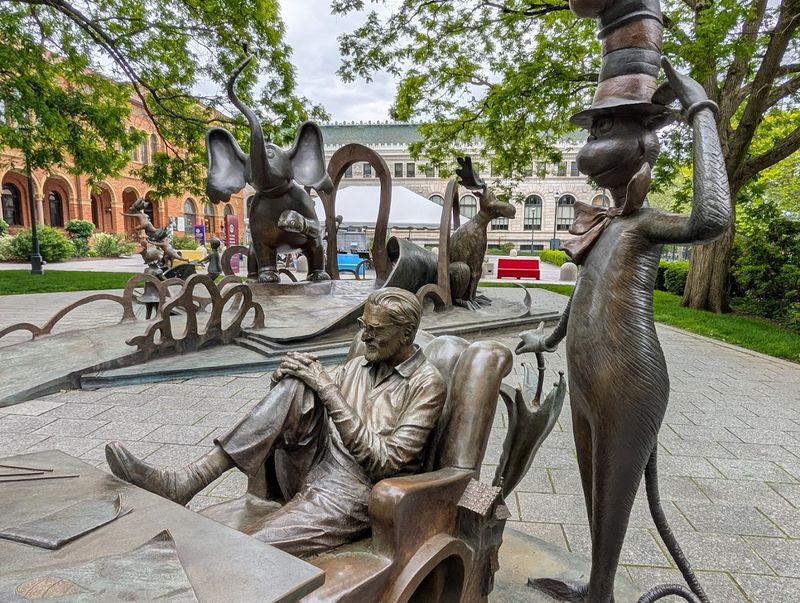
One of the best things about the Dr. Seuss National Memorial Sculpture Garden is that it costs absolutely nothing to visit. That is right — the outdoor sculpture garden is free and open to the public every day from 9 AM to 5 PM.
In a world where family outings can get expensive fast, this is a genuinely refreshing find.
The garden sits at the center of the Springfield Museums complex at 21 Edwards street. While paid admission is required to enter the surrounding museums, the outdoor garden is fully accessible without buying a ticket. several reviewers specifically mentioned choosing the free garden when they only had limited time in the area, and every single one of them said it was worth the stop.
Free does not mean low quality here. The garden is beautifully maintained, with clean walking paths, shaded trees, and benches scattered throughout.
There is even an outdoor tent area where families can sit and relax. If you want to extend your visit, museum admission is reasonably priced and the first Wednesday of each month offers free entry to the museums as well.
For budget-conscious families, this combination makes for an exceptional and affordable day out in western Massachusetts.
The Springfield Museums Campus setting
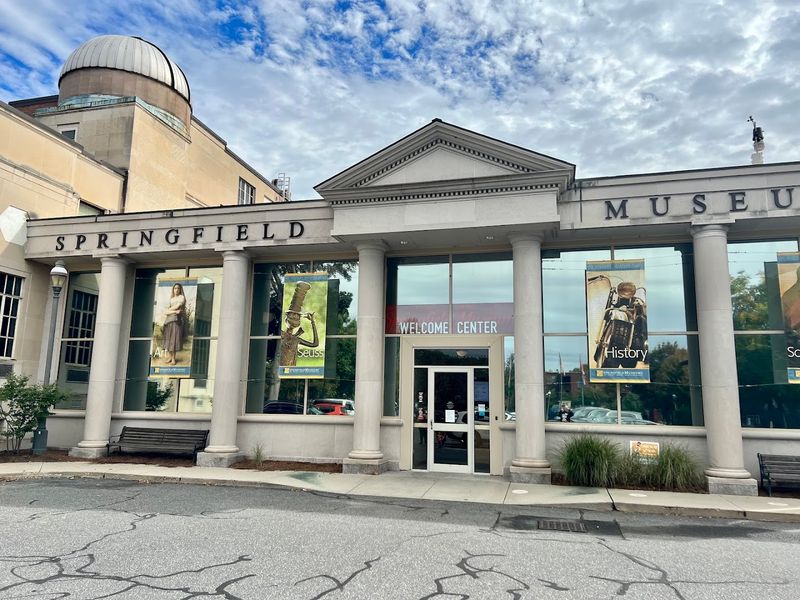
The Dr. seuss sculpture Garden does not exist in isolation — it sits at the heart of a remarkable multi-museum campus that makes the whole visit feel like a full-day adventure. The springfield Museums complex includes the Dr. seuss Museum, the springfield science Museum, the Michele and Donald D’amour Museum of Fine Arts, and the Wood Museum of springfield history, all clustered around the same courtyard.
Walking between the museums feels like exploring a college campus, with elegant paved paths, mature trees providing shade, and the sculptures serving as landmarks guiding you from building to building. one reviewer described it perfectly as a “campus-like setup” that is easy to navigate on foot. The layout makes it simple to combine a sculpture garden visit with a museum tour without feeling rushed or overwhelmed.
Even if you only have an hour or two, the outdoor campus alone offers plenty to see and enjoy. Pack a lunch and find one of the benches near the garden — multiple reviewers mentioned having picnics right in the courtyard while admiring the sculptures up close.
The grounds are kept exceptionally clean and well-organized, which makes the whole experience feel polished and welcoming for visitors of every age and background.
The Giant Book sculpture with Dr. Seuss quotes
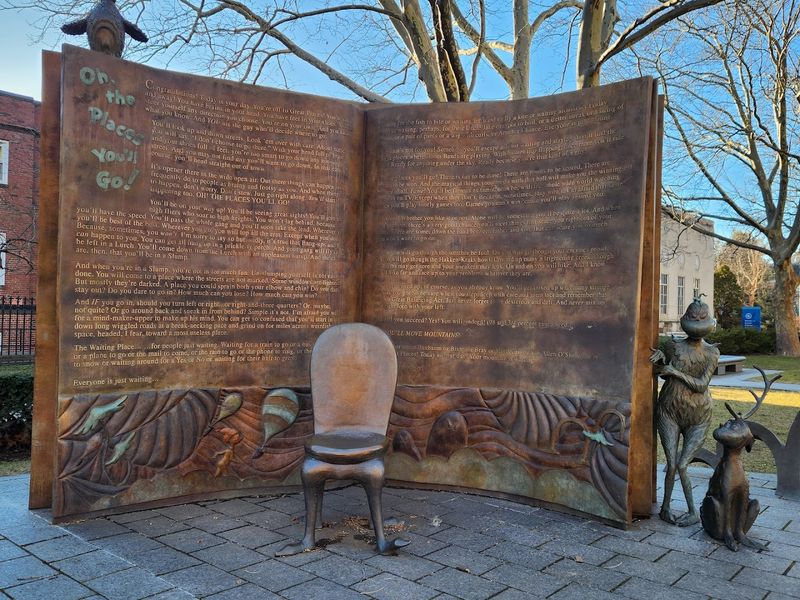
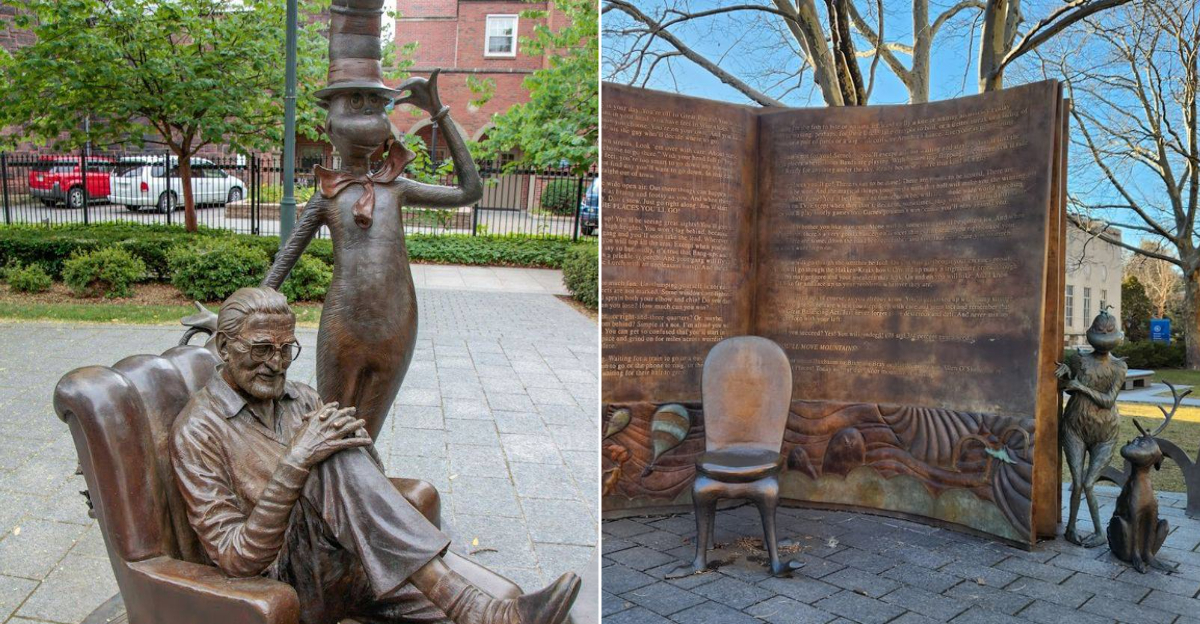
Beyond the character sculptures, the garden features a striking giant book sculpture etched with famous verses from Dr. Seuss’s works. It is the kind of detail that sneaks up on you — you are busy admiring the character figures, and then suddenly you stop in front of this massive open book and start reading, and before you know it you are quoting lines out loud.
The engraved quotes range from playful and silly to surprisingly profound. Dr. Seuss had a remarkable gift for hiding deep wisdom inside simple, bouncy rhymes, and seeing those words carved in stone gives them a weight and permanence that feels fitting.
It is one of the most photographed non-character elements in the garden.
Teachers and parents especially love this feature because it gives kids a tangible connection between the sculptures and the actual books. Running your fingers over the engraved text while reading it aloud turns a passive visit into an interactive literary experience.
It also makes for a beautiful photo, particularly in the morning light when shadows fall across the carved letters. If you tend to breeze past the non-character elements in gardens like this, make a point to slow down and spend a few minutes with the book sculpture.
You will not regret it.
Best Tips for visiting the Garden
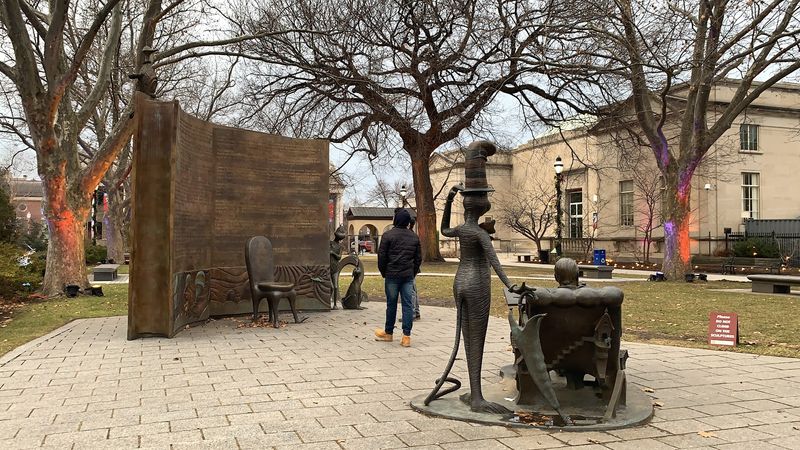
A little planning goes a long way when visiting the Dr. seuss National Memorial sculpture Garden. The garden is open daily from 9 AM to 5 PM, so arriving in the morning gives you the best light for photos and the calmest crowds. springfield can get busy on weekends, especially in warmer months, so a weekday morning visit is ideal if your schedule allows it.
Free street parking and nearby lots make getting there stress-free. The garden is stroller-friendly and easy to navigate for visitors with mobility considerations.
If you are planning to visit the surrounding museums as well, check the springfield Museums website ahead of time — the first Wednesday of each month offers free museum admission on top of the always-free garden access, which is an incredible deal for families.
Pack snacks and water, especially if you are visiting with young kids. There are benches and shaded areas throughout the campus where you can take a break. comfortable walking shoes are a good call since you may end up exploring more of the campus than you originally planned.
The phone number for the museums is +1 413-263-6800 if you need to call ahead with any specific questions about accessibility or special events happening during your visit.