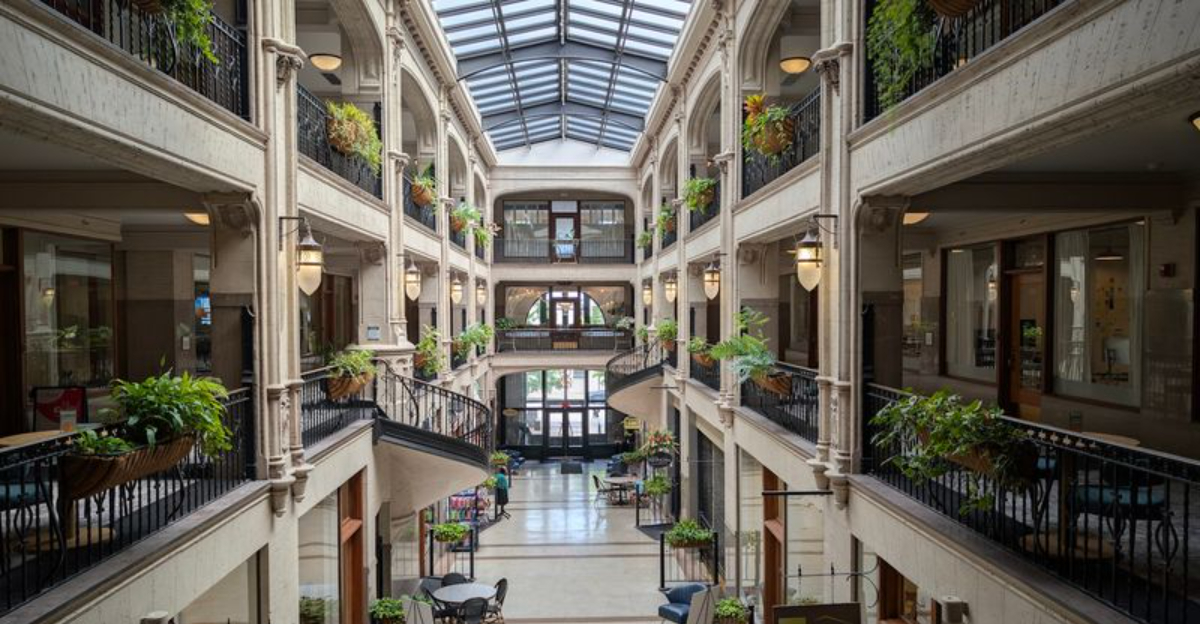
Tucked into the heart of downtown Asheville, North Carolina, the Grove Arcade is one of the most breathtaking historic buildings you’ll ever walk through.
Built in the late 1920s, this stunning indoor marketplace looks and feels like a scene straight out of an old Hollywood film.
From its ornate stone carvings to its soaring arched ceilings, every corner tells a story.
Whether you’re a history lover, a curious traveler, or just someone who appreciates jaw-dropping architecture, the Grove Arcade is an experience you won’t forget.
A Roaring Twenties Vision Brought to Life
Back in the 1920s, Asheville was buzzing with energy. The city was growing fast, attracting wealthy visitors and ambitious developers who wanted to make their mark on the mountain town.
Enter E.W. Grove, the same entrepreneur behind the famous Grove Park Inn, who dreamed up a grand indoor marketplace unlike anything the region had ever seen.
Grove envisioned a place where shopping, socializing, and commerce would all happen under one spectacular roof. His concept wasn’t just practical — it was bold, glamorous, and deeply tied to the optimistic spirit of the Jazz Age.
Asheville was becoming a fashionable destination, and Grove wanted his arcade to match that rising reputation perfectly.
Sadly, Grove passed away before construction was fully complete, but his vision had already taken physical shape in stone and mortar. The building stood as a testament to what one person’s ambition could achieve during one of America’s most creatively explosive decades.
Walking through the arcade today, you can almost feel the excitement of that original era radiating from the walls. It’s a rare surviving example of 1920s commercial architecture done with real flair and intention.
One of America’s First Indoor Shopping Malls
Most people think of shopping malls as a 1950s or 1960s invention, but the Grove Arcade quietly proved that idea wrong decades earlier. Completed in 1929, this building was designed as one of the earliest true indoor shopping arcades in the entire United States — a concept so ahead of its time that most Americans hadn’t even imagined it yet.
The arcade was meant to bring together dozens of different merchants under a single, weather-protected roof. Shoppers could browse from store to store without stepping outside, which was a genuinely revolutionary idea for the era.
European cities had long enjoyed covered shopping passages called “gallerias,” and the Grove Arcade brought that same sophisticated concept to the American South.
What makes this even more impressive is the scale of the ambition. This wasn’t a modest covered walkway — it was a multi-story commercial palace designed to serve an entire city.
Most early attempts at indoor retail in the U.S. were far simpler in scope. The Grove Arcade essentially planted a seed that would eventually grow into the massive mall culture Americans know today, making it a genuinely important chapter in retail history.
Architecture Straight Out of a 1920s Movie Set
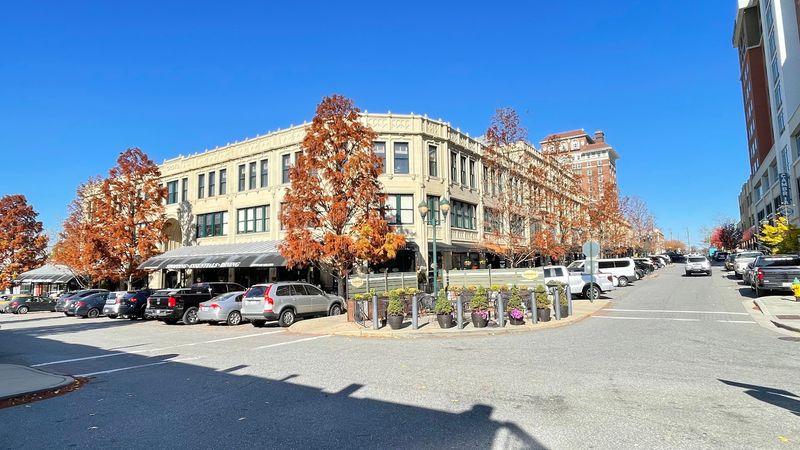
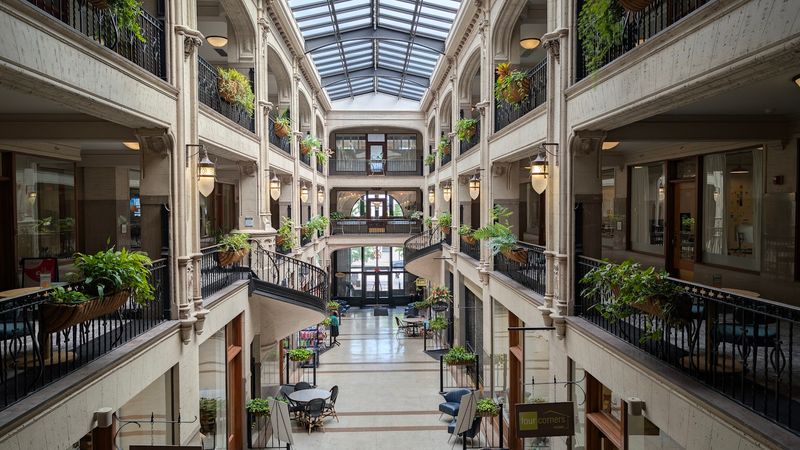
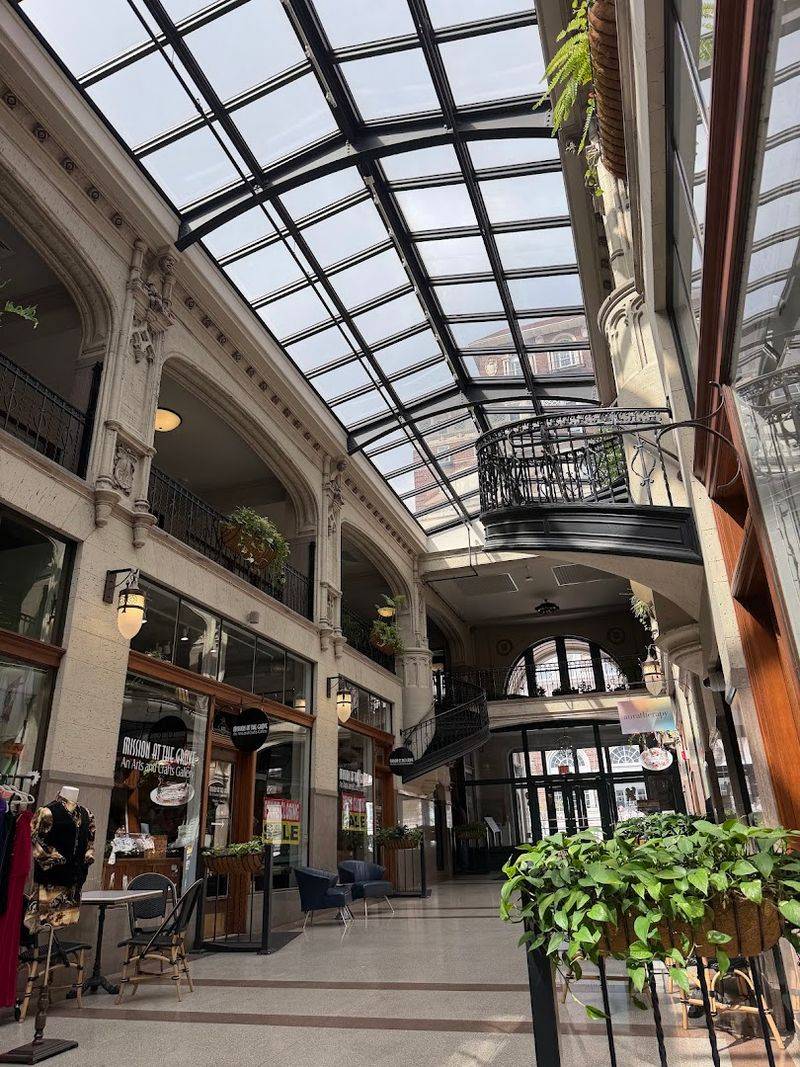
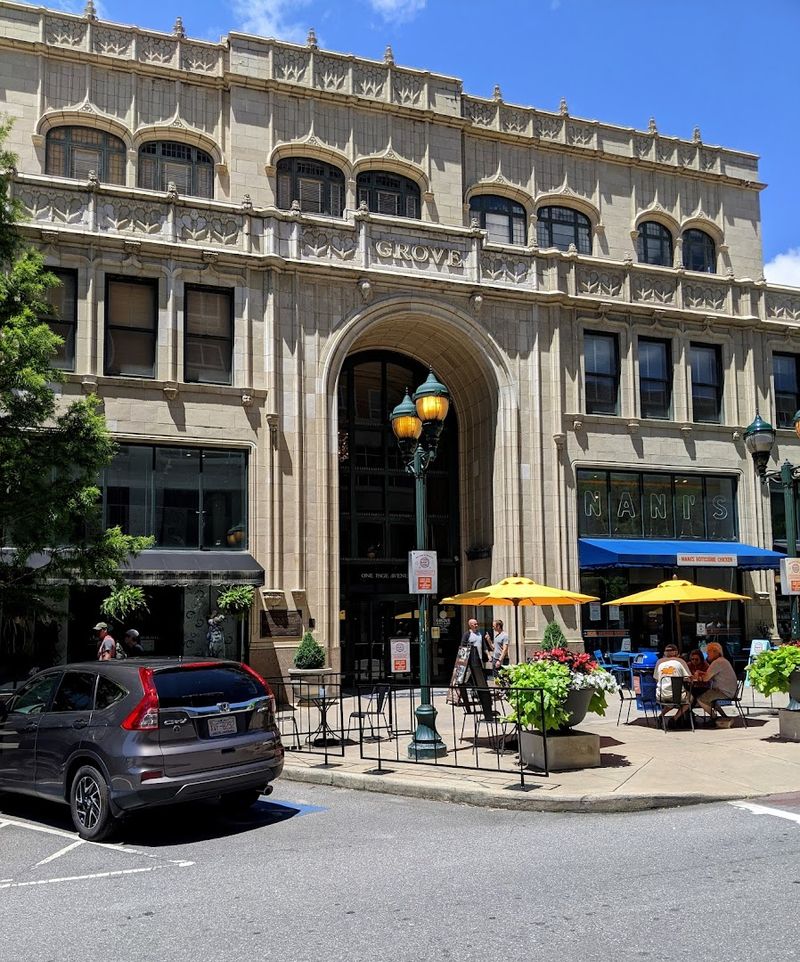
The moment you lay eyes on the Grove Arcade, your jaw drops a little. The building’s Late Gothic Revival and Tudor Revival design features elaborate terra cotta carvings, dramatic arched passageways, and a façade so detailed it looks like it was sculpted by hand — because much of it actually was.
Gargoyle-like figures peer down from the upper levels, intricate floral patterns frame the windows, and the overall effect is something straight out of a fantasy film or a vintage European postcard. It genuinely feels like you’ve wandered onto a movie set where the director forgot to call cut.
Cinematographers and photographers absolutely love shooting here for exactly that reason.
Architect Charles N. Parker drew inspiration from grand European shopping arcades, particularly those found in England and France.
The result is a building that feels almost theatrical in the best possible way. Unlike the plain glass-and-steel structures that dominate modern commercial architecture, every surface here has personality and purpose.
Running your hand along the stonework, you can feel the craftsmanship that went into it. Few buildings in the American South match this level of architectural drama, and that’s a big part of what makes the Grove Arcade so unforgettable.
Built as the Base of an Unfinished Skyscraper
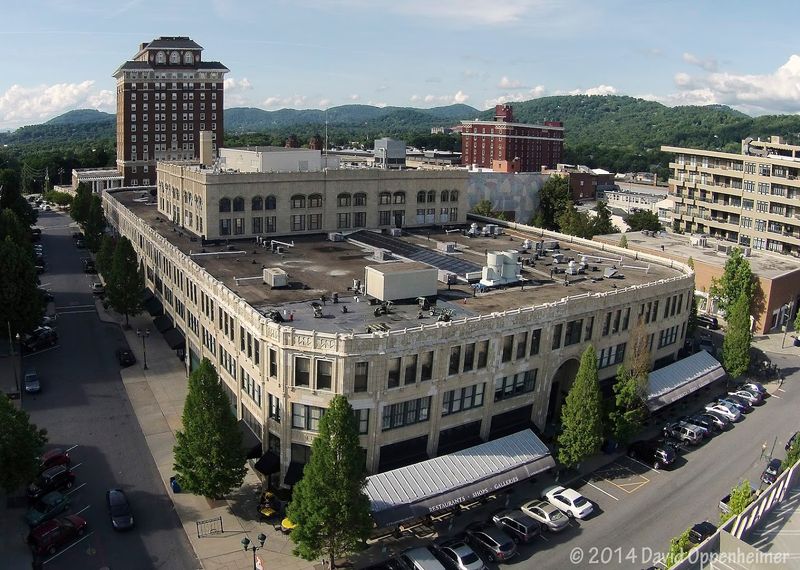
Here’s a wild piece of trivia: the Grove Arcade was never meant to stand alone. E.W.
Grove’s original plan called for a massive skyscraper to rise directly above the arcade, which would have made it one of the tallest buildings in the entire Southeast. The arcade was essentially designed as the grand base for that soaring tower.
Construction on the tower portion never happened, though. Grove died in 1927, and then the stock market crashed in 1929, bringing the economic optimism of the Roaring Twenties to a screeching halt.
Without the financial momentum or the visionary behind it, the skyscraper portion was quietly abandoned, and the arcade became the primary structure by default.
Look carefully at the building’s roofline today and you can still see architectural clues suggesting something bigger was always intended. The proportions feel almost like a foundation waiting for something more — because that’s exactly what they were designed to be.
In a strange way, the unfinished nature of the project makes the Grove Arcade even more fascinating. It’s a monument to ambition that got interrupted by history, frozen mid-dream in the mountain air of Asheville, preserved for future generations to admire and wonder about.
A Bustling Marketplace from Day One
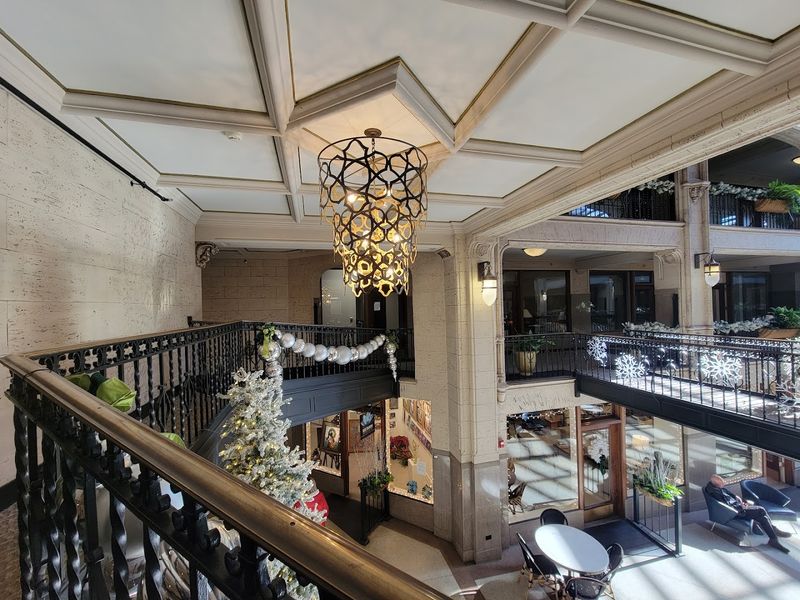
When the Grove Arcade opened its doors in 1929, it didn’t ease into business quietly — it exploded onto the Asheville scene with energy and variety. Cigar stands, barbershops, fruit vendors, bookstores, and specialty retailers all set up shop inside, creating a lively mix of commerce that drew crowds from across the region.
Imagine walking through those arched passages on opening day, surrounded by the smell of fresh tobacco, the chatter of vendors calling out to customers, and the hum of a city fully alive with possibility. The arcade offered something for nearly everyone, functioning almost like a small city within a city.
Families could spend hours browsing without ever needing to step outside into the mountain weather.
The variety of merchants was carefully curated to serve both everyday needs and more luxurious tastes, reflecting Asheville’s unique blend of working-class residents and wealthy tourists. A local barber might set up shop next to an imported goods dealer, creating an eclectic mix that felt genuinely democratic.
That original spirit of diverse, accessible commerce is something the building still tries to honor today, with its current lineup of artisan vendors and specialty shops carrying on the tradition that was established nearly a century ago.
The Social and Commercial Heart of Asheville
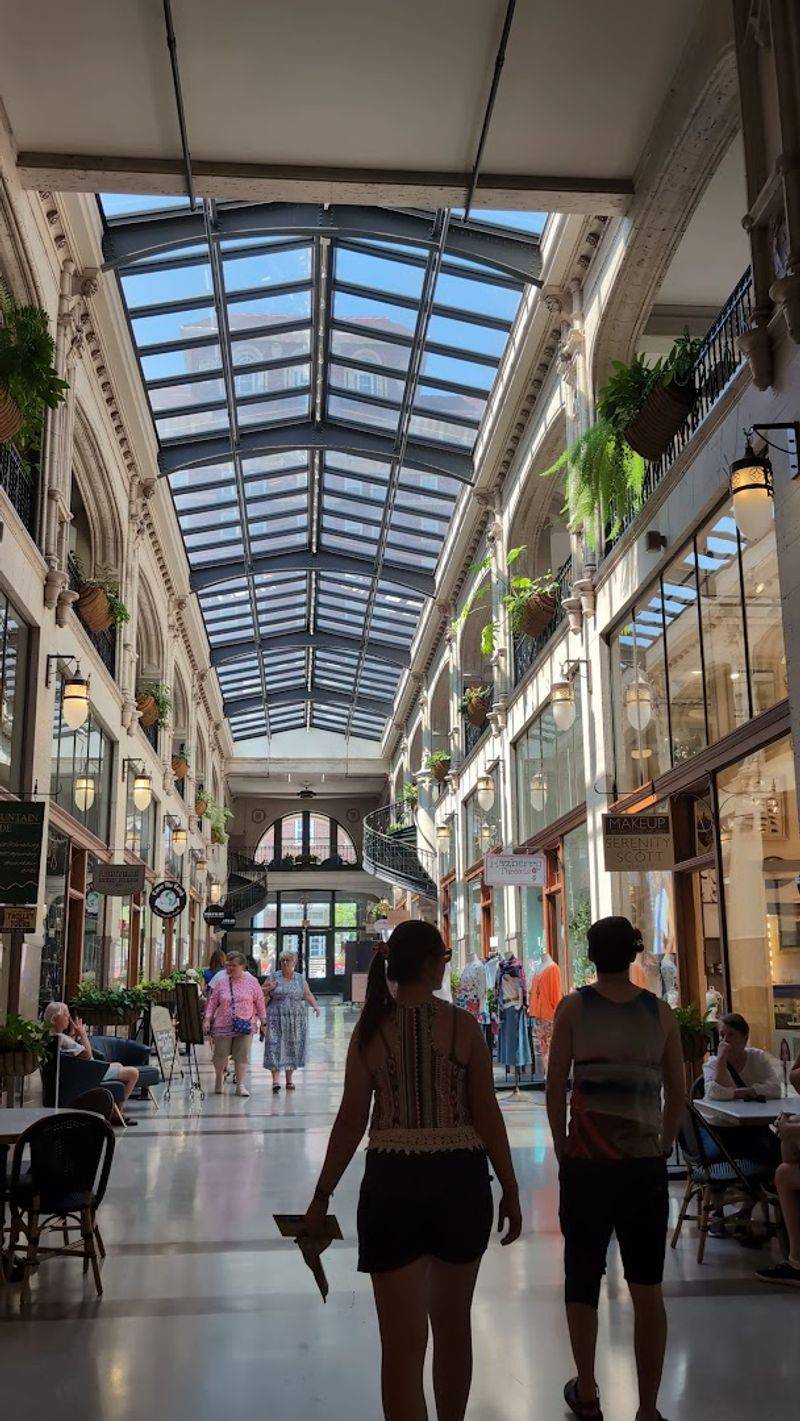
For more than a decade after opening, the Grove Arcade wasn’t just a place to buy things — it was the place to be in Asheville. Locals gathered there to catch up with neighbors, conduct business, grab a quick bite, and simply enjoy being part of the city’s most vibrant social scene.
Its central location made it the natural heartbeat of downtown life.
Western North Carolina didn’t have many commercial centers of this scale during the 1930s, which made the arcade’s role even more significant. Farmers coming in from surrounding mountain communities, businesspeople in pressed suits, and tourists visiting Asheville’s famous resort hotels all crossed paths beneath those ornate ceilings.
The building created an unusual kind of social mixing that was rare for the era.
Merchants who operated inside the arcade became fixtures of Asheville’s identity, some running their businesses there for years and building loyal customer relationships that spanned generations. The arcade wasn’t just economically important — it carried real emotional weight for the people who depended on it.
Losing access to that space later, when the government stepped in, hit the community hard in ways that went beyond simple economics. The arcade had become woven into the daily fabric of Asheville life in a way few buildings ever achieve.
A Surprising Wartime Transformation
Nobody who shopped at the Grove Arcade in the 1930s could have predicted what was coming. When the United States entered World War II, the federal government made a sweeping decision that would change the building’s fate entirely — it seized the arcade, evicted all the tenants, and converted the space into a military and administrative facility.
Imagine being a merchant who had built your business there for years, only to receive notice that you had to pack up and leave because the government needed your space for the war effort. That displacement was abrupt and, for many small business owners, genuinely devastating.
The arcade went from a lively public marketplace to a restricted government operation almost overnight.
The transformation was thorough. Walls were divided, spaces were reconfigured, and the ornate commercial interior was adapted to serve entirely different purposes.
The building’s glamorous 1920s personality was buried under layers of institutional practicality. For the people of Asheville, it must have felt like losing a beloved piece of their city to forces completely outside their control.
It’s one of those historical moments that reminds you how dramatically world events can reshape even the most beloved local landmarks, turning a community treasure into something unrecognizable within just a few months.
Decades as a Federal Office Building
After World War II ended, most people hoped the Grove Arcade would return to its original purpose as a public marketplace. That didn’t happen — at least not for a very long time.
The federal government held onto the building and continued using it as office space, housing agencies including the National Climatic Data Center, which stored and analyzed weather records from across the country.
For decades, the arcade sat behind closed doors, inaccessible to ordinary Asheville residents and visitors. The building that had once been the most public space in the city became one of the most restricted.
From the outside, its stunning Gothic façade still caught the eye of passersby, but the interior life that had made it so special was completely invisible.
There’s something almost poignant about the idea of climate scientists quietly working inside a building designed for shopping and socializing, surrounded by gargoyles and ornate terra cotta that had nothing to do with weather data. The building endured this long institutional chapter with its bones intact, waiting patiently for the day someone would recognize what it had once been and could be again.
That patience would eventually be rewarded, but it took nearly six decades of quiet government occupancy before the story took its next dramatic turn.
Restoration That Brought the 1920s Back to Life
By the late 1990s, a growing movement in Asheville had its eyes fixed firmly on the Grove Arcade. Preservationists, city officials, and community advocates recognized that this extraordinary building deserved better than decades more of institutional obscurity.
A major restoration effort was launched, one of the most significant historic preservation projects in Asheville’s history.
The work was meticulous. Craftspeople carefully repaired and cleaned the terra cotta ornaments, restored the dramatic arched passages, and worked to preserve every surviving detail of the original 1929 design.
The goal wasn’t to modernize the building but to honor what it had always been — a spectacular commercial palace rooted in 1920s architectural ambition.
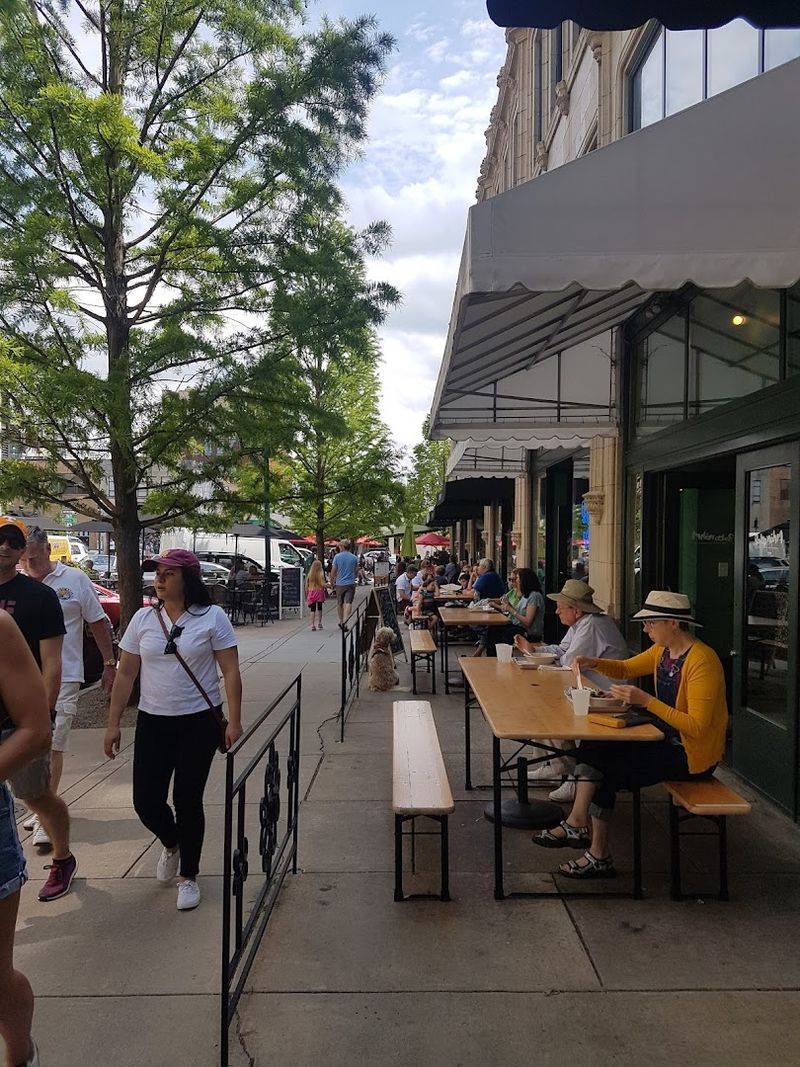
When the restored Grove Arcade reopened to the public in 2002, it felt like Asheville had gotten a piece of itself back. Shops moved in, restaurants set up tables, and residents began filling the upper-floor apartments that were added as part of the adaptive reuse plan.
The response from the community was overwhelmingly emotional, with longtime Asheville residents describing the reopening as a kind of homecoming. Seeing those ornate ceilings alive with foot traffic and conversation again, after so many years of silence, was exactly the kind of second chapter this extraordinary building had always deserved.
A Modern-Day Experience That Feels Frozen in Time
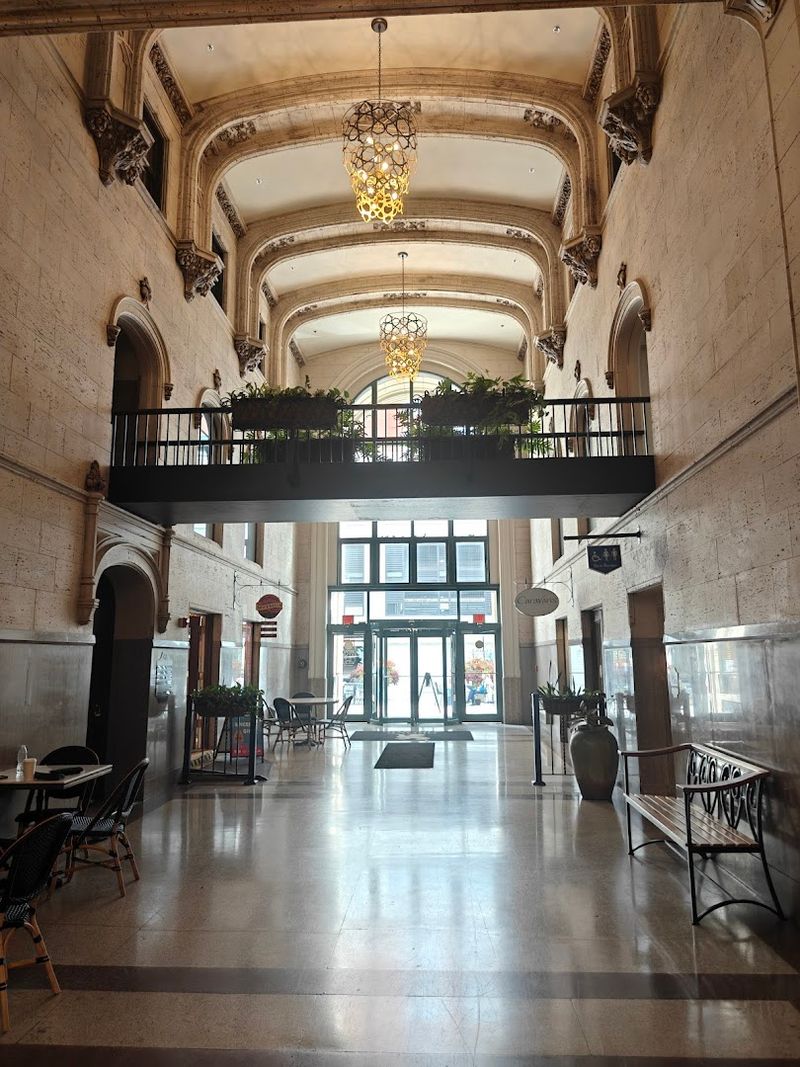
Standing inside the Grove Arcade today, it’s genuinely hard to believe you’re in the 21st century. The vaulted ceilings soar overhead, the carved stonework frames every doorway, and the overall atmosphere wraps around you like a warm, beautifully crafted time capsule.
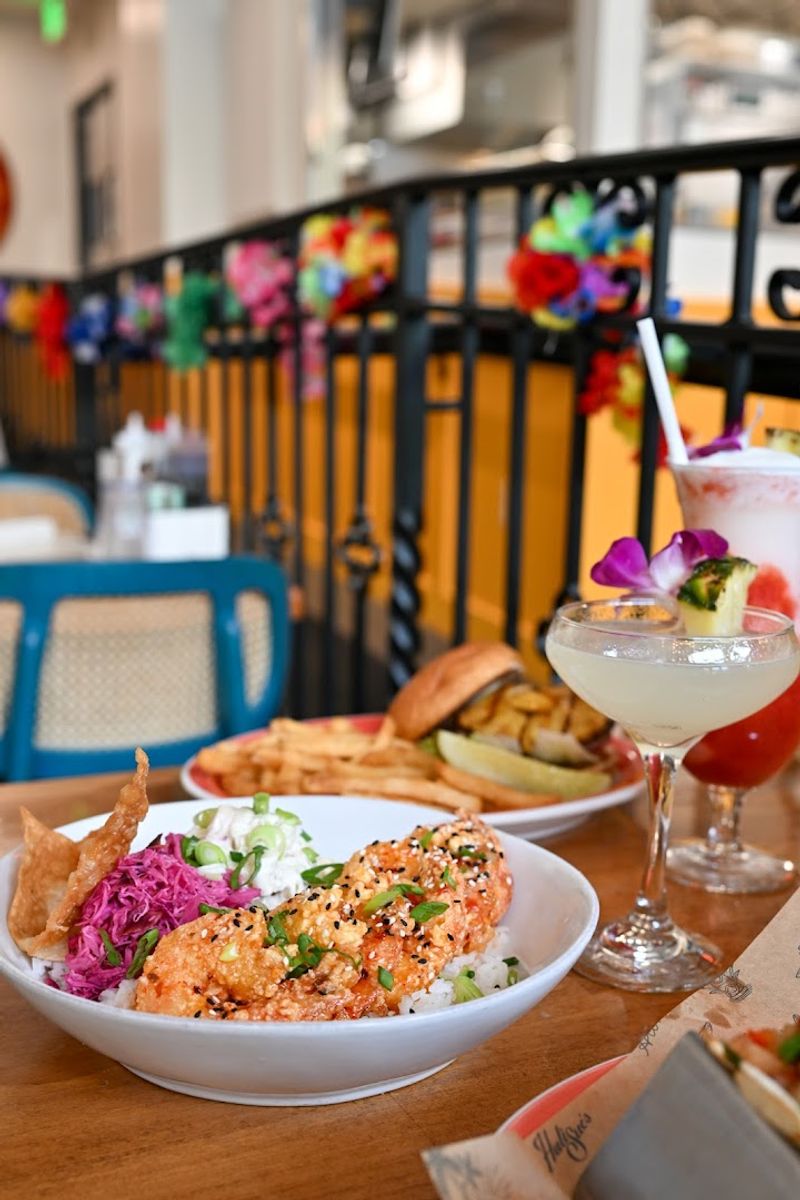
Artisan shops, cozy cafes, and local art galleries now fill the spaces where cigar stands and fruit vendors once operated.
Strolling through the arcade on a quiet weekday morning feels almost cinematic. Light filters through the tall windows, bouncing off the pale stone surfaces and creating the kind of golden glow that photographers chase.
It’s easy to understand why visitors frequently stop mid-stride just to look up and take it all in. The building demands that kind of attention — it doesn’t let you rush.
Located at 1 Page Ave in downtown Asheville, the Grove Arcade is free to enter and open to the public year-round. Whether you’re hunting for a unique handmade gift, searching for a great cup of coffee, or simply looking for a beautiful place to spend an afternoon, this building delivers on every front.
Few places in North Carolina offer this combination of authentic history, stunning architecture, and genuinely enjoyable present-day experience all under one spectacular roof.