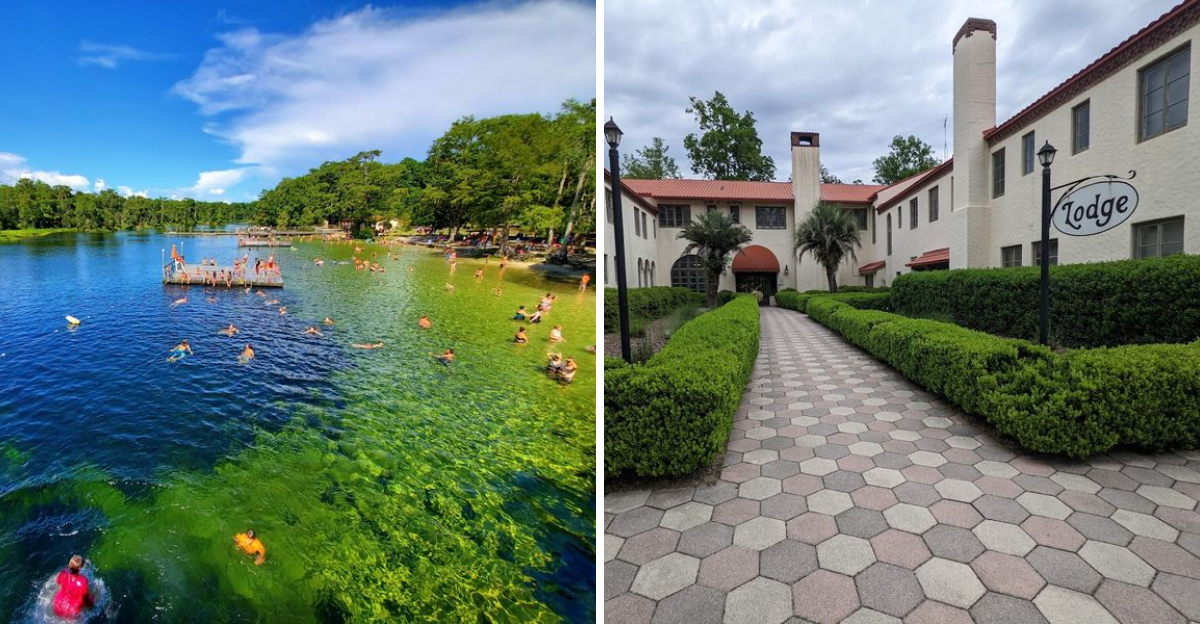
Tucked away in the Florida panhandle, Edward Ball Wakulla Springs State Park is one of those rare places that feels like a secret even after you find it.
From a stunning 1937 lodge to a legendary dive tower and water so clear you can see straight to the bottom, this park packs an incredible amount of history and natural beauty into one spot.
Whether you love swimming, wildlife watching, or just soaking up old Florida charm, this park has something that will genuinely surprise you.
Get ready to discover ten reasons why Wakulla Springs deserves a top spot on your Florida bucket list.
One of the Largest and Deepest Freshwater Springs in the World
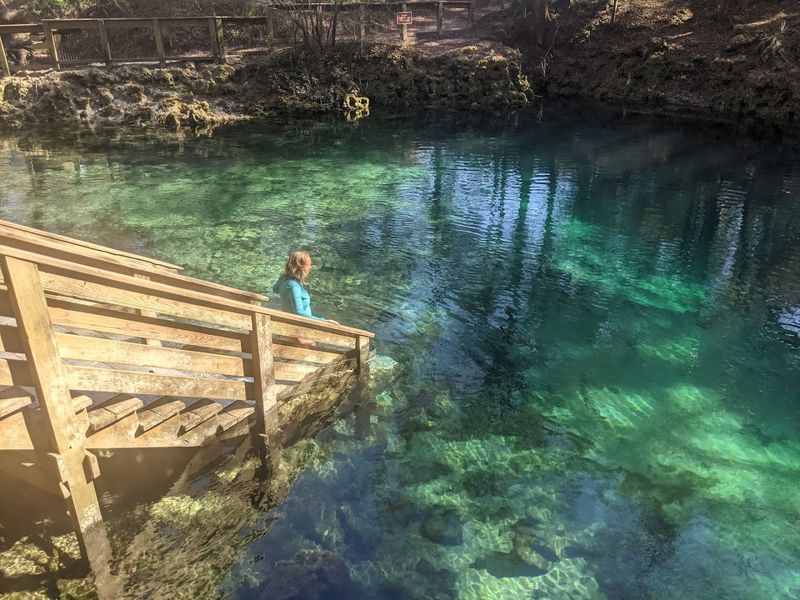
Some natural wonders earn their reputation, and Wakulla Spring absolutely delivers. Classified as a first-magnitude spring, it pumps out hundreds of thousands of gallons of crystal-clear water every single minute.
That output places it among the largest and most powerful freshwater springs anywhere on Earth.
The water bubbles up from deep underground through a limestone cave system, arriving at the surface with a brilliant sapphire-blue color that almost looks too beautiful to be real. On a calm day, visibility through the water can stretch dozens of feet downward, revealing the spring vent far below.
Swimmers and snorkelers regularly describe the experience as otherworldly.
What makes this spring especially remarkable is how well it has been preserved. Unlike many Florida springs that have suffered from pollution or overuse, Wakulla has maintained exceptional water quality for generations.
State park protections have kept development at bay, allowing the spring to remain a functioning, thriving ecosystem. Visiting feels less like a tourist attraction and more like stepping into a living natural museum that has barely changed in a century.
That kind of purity is increasingly rare and genuinely worth celebrating.
The 1937 Wakulla Springs Lodge
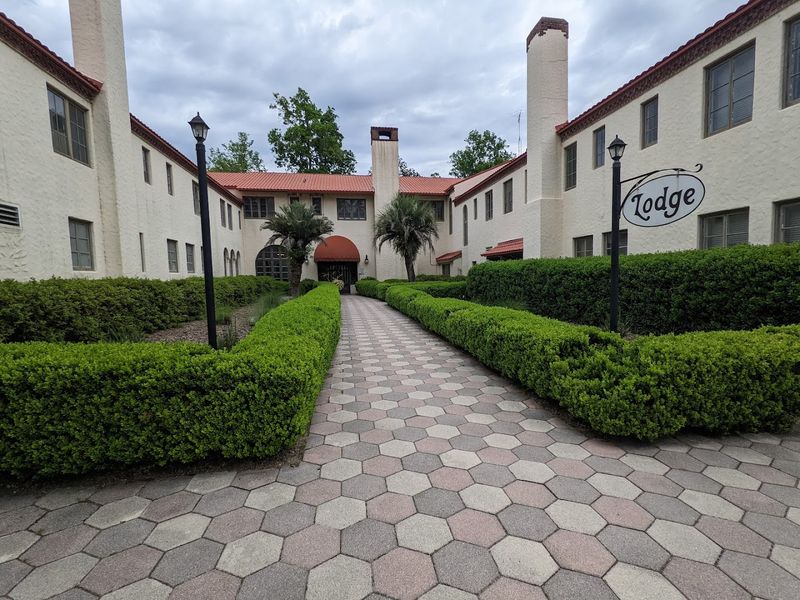
Walking through the front doors of the Wakulla Springs Lodge feels like stepping into a time capsule. Financier Edward Ball commissioned the building in 1937, and the result was a stunning Mediterranean Revival masterpiece that still stands almost exactly as it was designed.
Hand-painted ceiling beams, original marble floors, and vintage elevator doors greet visitors with a warmth that modern hotels simply cannot replicate.
Ball spared no expense during construction. Craftsmen were brought in to paint intricate designs on the lobby ceiling, and every detail was chosen to reflect elegance without being stuffy.
The lodge was meant to welcome guests into a refined “Old Florida” world where nature and luxury coexisted comfortably. Decades later, that vision holds up remarkably well.
Guests can actually stay overnight in the lodge’s rooms, which have been carefully maintained to honor the building’s historic character. Waking up there, having breakfast in the original dining room, and then walking directly to the spring for a morning swim is an experience unlike anything a chain hotel could offer.
History buffs, architecture lovers, and anyone who appreciates craftsmanship will find the lodge alone worth the trip to Wakulla Springs.
A Historic Dive Tower Tradition
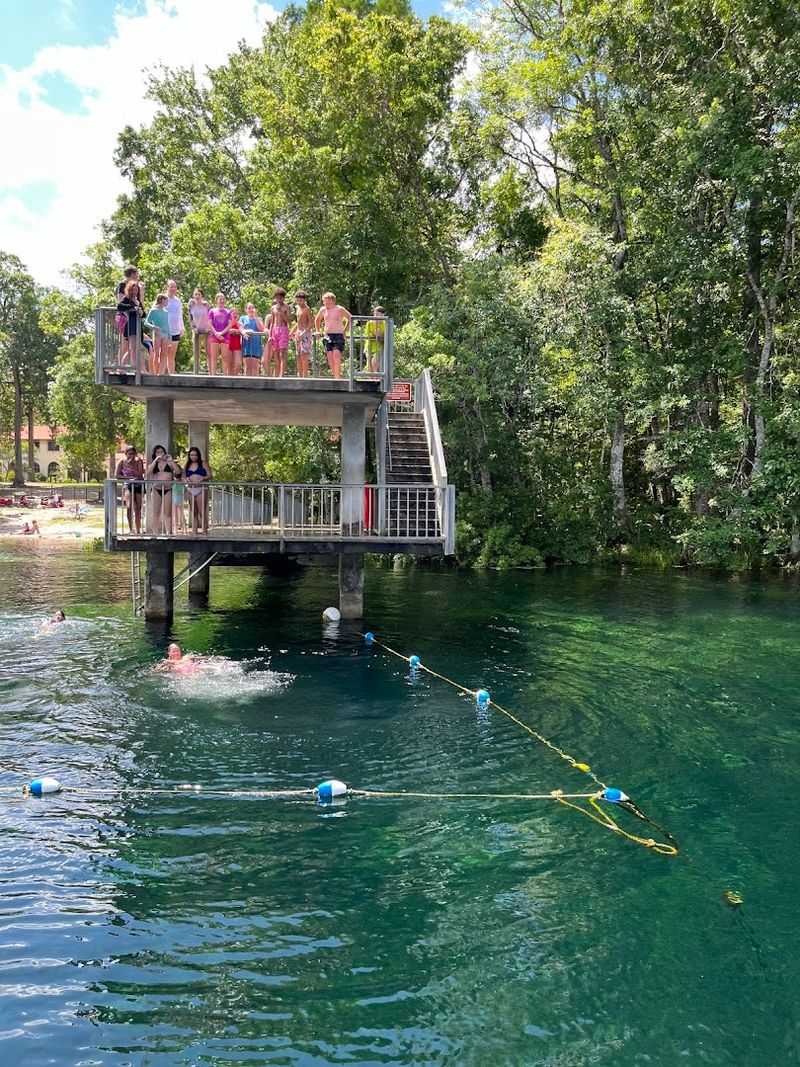
Few summertime memories in north Florida are as iconic as leaping off the dive tower at Wakulla Springs. For generations, families have made the trip specifically to experience that exhilarating jump into the spring’s perfectly chilled water.
It is the kind of tradition that gets passed down from grandparents to grandchildren without anyone needing to explain why.
The water temperature holds steady at around 70 degrees Fahrenheit year-round, which means that first splash after a long, hot Florida summer day hits like a refreshing reset button. The tower itself has become a beloved landmark, representing carefree summers and the simple joy of outdoor swimming before smartphones competed for everyone’s attention.
What keeps this tradition alive is the combination of accessibility and authenticity. You do not need fancy gear or special training to enjoy the dive tower experience.
Just show up, climb the ladder, and take the plunge. Park rangers and lifeguards help maintain a safe environment so families can focus on having fun.
If you grew up in north Florida, chances are someone in your family has a story about this exact spot. And if you have never visited, making that first jump is the kind of memory you will carry for a very long time.
Crystal-Clear Water with a Constant Temperature
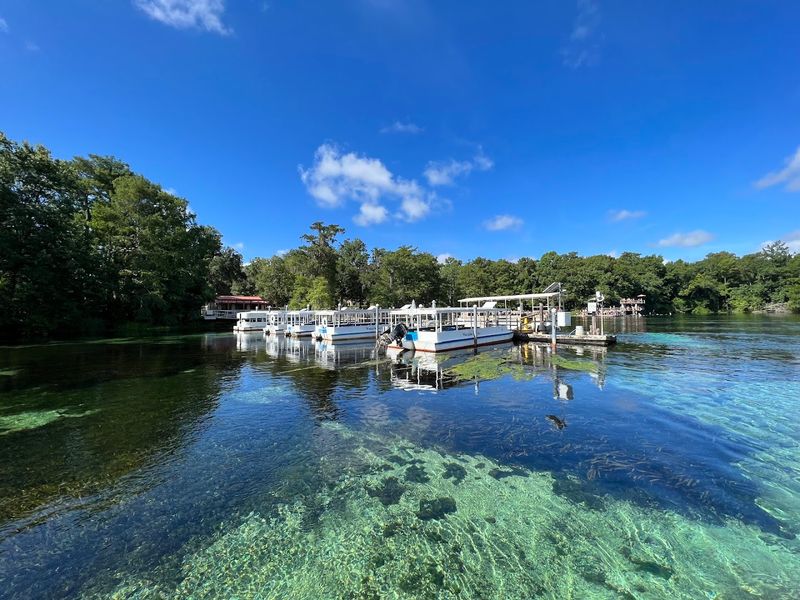
Consistency is not something most bodies of water are known for, but Wakulla Spring breaks that rule in the best possible way. Every single day of the year, regardless of season, the water temperature stays right around 70 degrees Fahrenheit.
That consistency comes from the deep underground aquifer system that feeds the spring, where temperatures remain stable no matter what is happening at the surface.
In practical terms, this means the spring is refreshingly cool during blazing July afternoons and surprisingly comfortable on mild winter mornings. Snorkelers love it because visibility is often extraordinary, allowing a clear view of the sandy bottom, submerged logs, and the occasional curious fish swimming past.
It feels like swimming inside a giant aquarium.
It is worth mentioning that water clarity can occasionally be affected by environmental factors like heavy rainfall or algae blooms, so conditions are not always perfect. Checking park updates before your visit is a smart habit.
Still, on most days, the water quality at Wakulla is exceptional compared to other Florida swimming spots. That combination of steady temperature and remarkable clarity creates an inviting environment that draws swimmers back season after season, year after year, long after other novelties have faded.
A Landscape Shaped by Ancient Geology
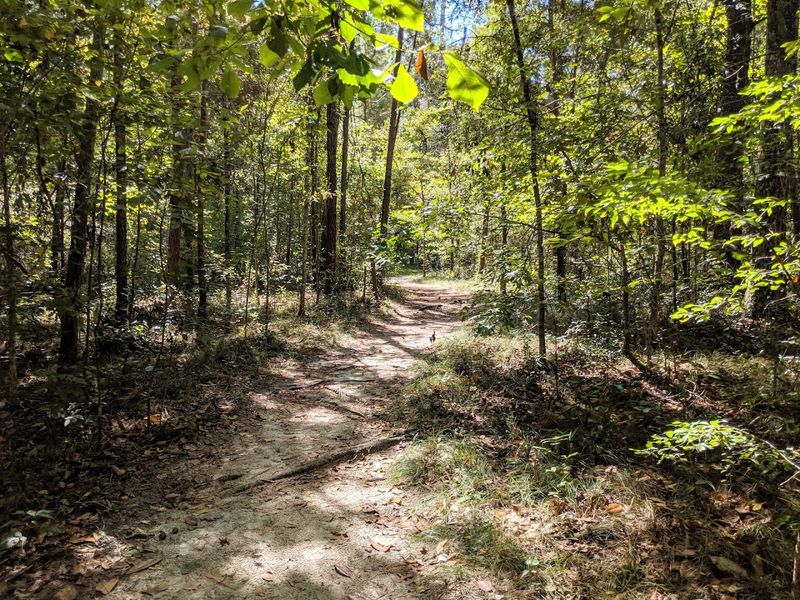
Long before any human set foot in Florida, a slow and powerful geological process was quietly shaping what would eventually become Wakulla Springs State Park. The park sits squarely on the Woodville Karst Plain, a vast region where ancient limestone bedrock has been dissolved over thousands of years by slightly acidic groundwater.
The result is a hidden underground world of caves, tunnels, sinkholes, and rivers carved entirely by chemistry and time.
Karst landscapes are fascinating because so much of the action happens beneath the surface. The caves below Wakulla Springs are among the most extensive underwater cave systems ever explored.
Cave divers have mapped miles of passages that descend to staggering depths, revealing chambers that have never seen sunlight. Those explorations have turned up remarkable discoveries, including fossilized bones from animals that lived during the last Ice Age.
For visitors who are not cave divers, the geology still makes itself known in visible ways. Sinkholes dot the surrounding landscape, and the spring itself is essentially a window into that underground world.
Understanding the karst system adds a whole new layer of appreciation to a visit. What looks like a beautiful swimming hole is actually the surface expression of one of the most complex and ancient geological systems in the entire southeastern United States.
Wildlife Encounters in Pristine Habitat
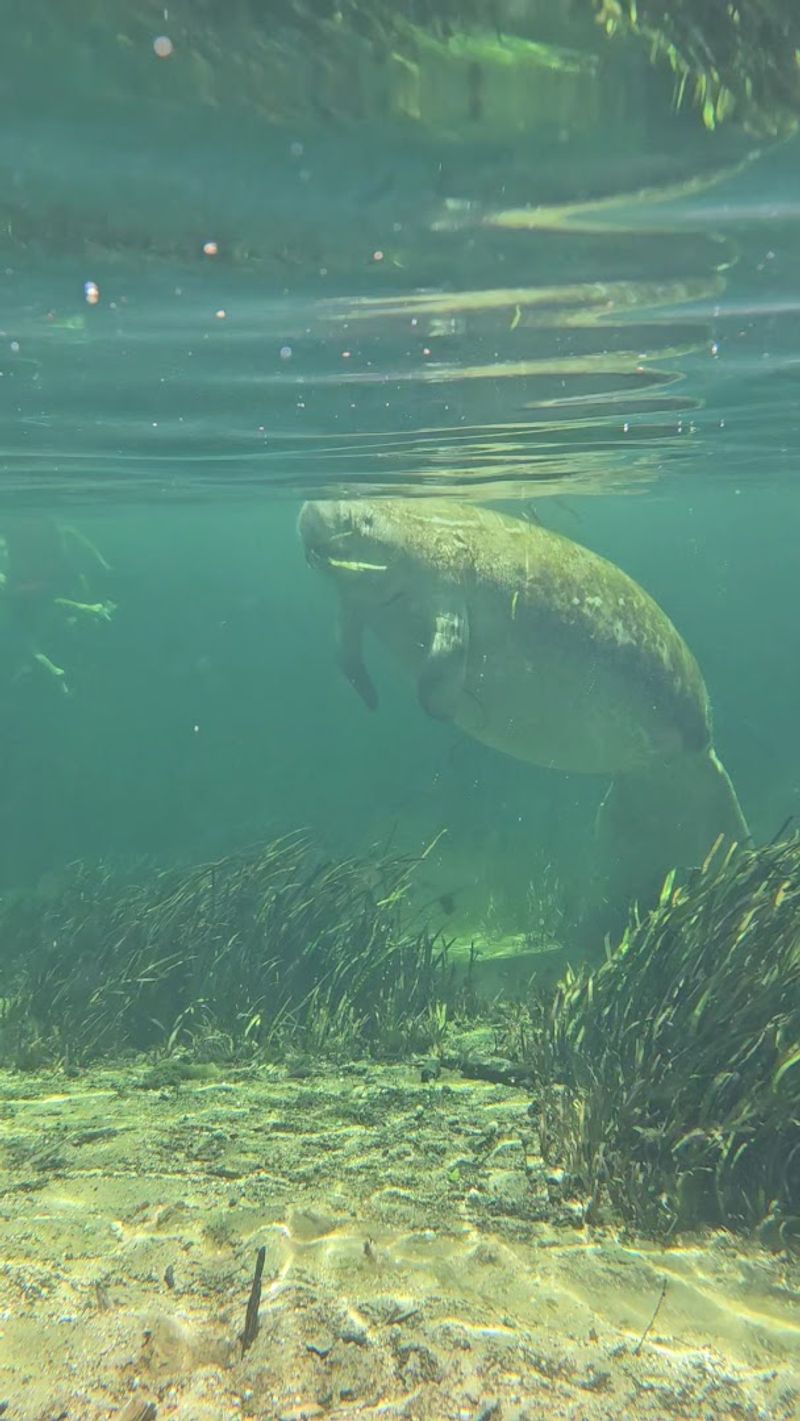
Spotting a manatee gliding silently through crystal-clear water is the kind of moment that stops you mid-sentence. At Wakulla Springs, those encounters happen with surprising regularity, especially during cooler months when manatees seek out the spring’s warm, stable water.
Watching one of those gentle giants drift past just a few feet away is humbling in the best possible sense.
Manatees are not the only residents worth watching. Alligators bask along the riverbanks with impressive indifference to human visitors, turtles stack themselves on every available log, and herons stalk the shallows with patient, focused intensity.
Birders regularly add rare species to their life lists here, thanks to the park’s diverse and largely undisturbed habitat. The ecosystem functions the way Florida’s wild places once functioned everywhere, before development changed so much of the landscape.
Responsible wildlife viewing is encouraged and easy to practice here. Keeping a respectful distance, staying quiet, and moving slowly rewards visitors with far better sightings than rushing or getting too close ever would.
The park’s rangers are knowledgeable and happy to share tips about the best spots and times for wildlife observation. Whether you are a seasoned naturalist or a first-time visitor, the wildlife at Wakulla Springs has a way of making the natural world feel genuinely exciting again.
Riverboat Tours Through Untouched Cypress Swamps
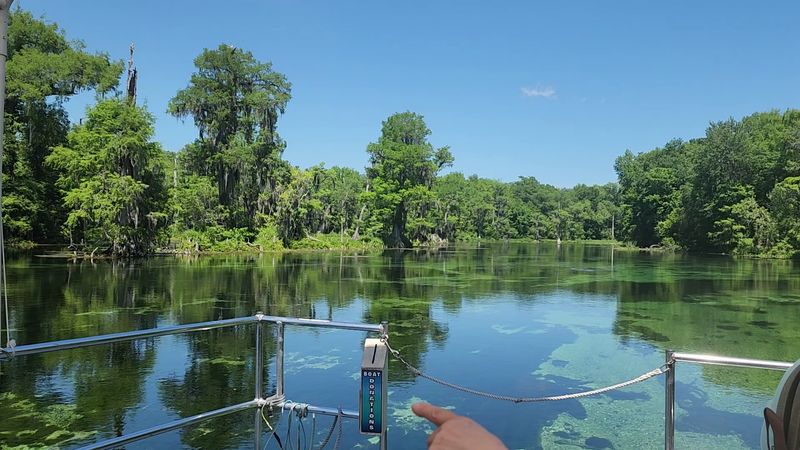
Not everyone wants to get in the water, and the riverboat tours at Wakulla Springs offer a completely different but equally rewarding way to experience the park. Guided boats travel along the Wakulla River, slipping through corridors of ancient cypress trees draped with Spanish moss that filter the sunlight into something soft and golden.
It is the kind of scenery that makes you reach for your camera every thirty seconds.
The tours are narrated by knowledgeable guides who point out wildlife, share the park’s history, and explain the ecology of the cypress swamp ecosystem. Alligators resting on banks, ospreys circling overhead, and turtles crowding onto fallen logs are all common sightings.
Because the boat moves quietly and slowly, animals tend to hold their positions rather than fleeing, giving passengers extended, unhurried views.
Families with young children often find the boat tour to be the highlight of their visit. There is no physical exertion required, the shade from the cypress canopy keeps things comfortable even on warm days, and the storytelling aspect keeps kids genuinely engaged.
Tour duration and availability can vary by season, so checking the park’s schedule in advance is a good idea. Either way, floating through one of Florida’s most preserved river ecosystems is an experience that lingers long after you have driven home.
A Hollywood Filming Location
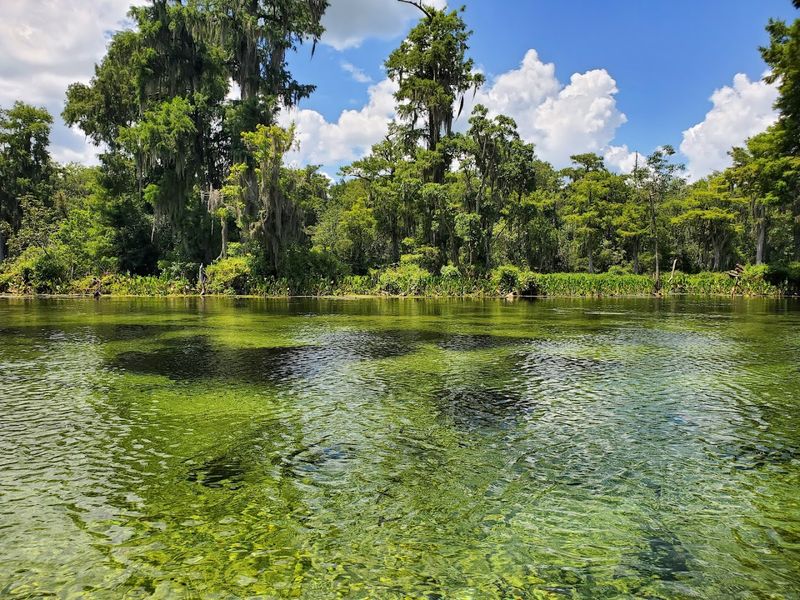
Hollywood has always had a thing for dramatic backdrops, and the prehistoric-looking landscape of Wakulla Springs proved irresistible to filmmakers decades ago. The park’s dense cypress forests, mysterious dark water channels, and jungle-like atmosphere provided the perfect setting for classic adventure films.
Tarzan’s Secret Treasure, released in 1941, used the spring’s scenery to convincingly portray an exotic African wilderness without anyone leaving Florida.
Even more famously, Creature from the Black Lagoon, the 1954 horror classic, filmed underwater sequences at Wakulla Springs. The spring’s extraordinary water clarity made it possible to capture footage that still looks impressive today.
The film became a cultural landmark, and its connection to this Florida park gives the place a quirky, fun layer of pop culture history that visitors often love discovering.
Standing at the spring’s edge and imagining film crews setting up equipment here in the 1940s and 1950s adds a playful dimension to any visit. The park has not changed dramatically since those productions, which is part of what makes it such a compelling place.
That same primeval quality that convinced filmmakers to haul cameras down to north Florida is still fully intact. Wakulla Springs remains, in every meaningful sense, a genuinely cinematic landscape.
Thousands of Years of Human and Natural History
Twelve thousand years is a long time for humans to keep returning to the same spot, but Wakulla Springs has apparently always been worth the trip. Archaeological evidence confirms that people have gathered at this spring since the end of the last Ice Age, drawn by the reliable fresh water, abundant wildlife, and the natural shelter provided by the surrounding landscape.
That kind of continuous human presence across so many generations is genuinely rare.
The spring itself holds natural history just as impressive as the human kind. Fossilized bones from mastodons, giant ground sloths, and other Ice Age megafauna have been recovered from deep within the spring basin.
These animals once roamed the Florida landscape in massive numbers before disappearing around ten thousand years ago, and their remains ended up preserved in the spring’s cold, oxygen-poor depths. Researchers continue to study these fossils for clues about ancient ecosystems.
Thinking about all of that layered history while floating in the spring adds a dimension to the experience that is hard to put into words. You are swimming in the same water that Ice Age hunters camped beside, watching the same limestone walls that ancient animals drank from.
Few places in the United States offer that kind of direct, tangible connection to deep time, and Wakulla Springs carries it all effortlessly.
A National Natural Landmark with Timeless Appeal
Earning a spot on the National Register of Historic Places is no small achievement, and Wakulla Springs State Park has earned that designation by genuinely deserving it. Spanning approximately 6,000 acres, the park protects a remarkable combination of natural wilderness, archaeological significance, and historic architecture that would be nearly impossible to assemble anywhere else in Florida.
That breadth of value is exactly what makes it a National Natural Landmark.
The park manages to serve wildly different visitor interests without feeling overcrowded or overcommercialized. History enthusiasts can explore the lodge and learn about Edward Ball’s vision for the property.
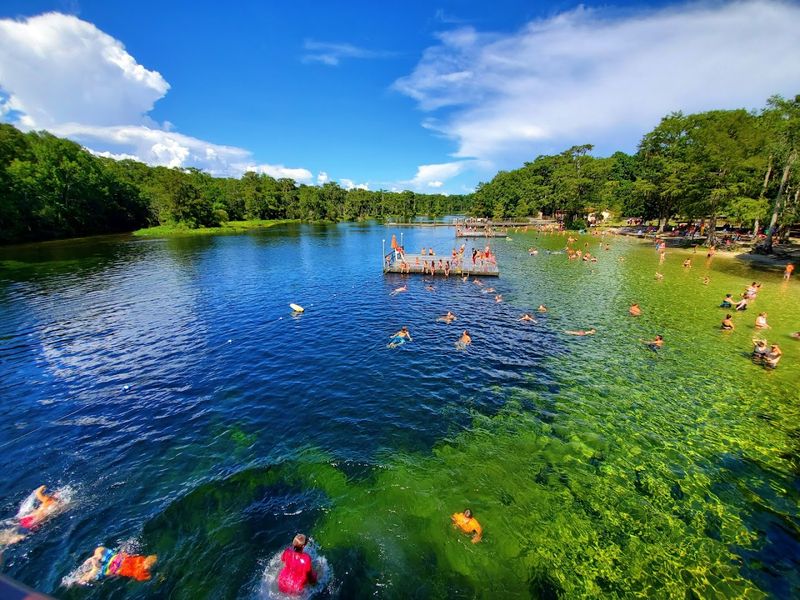
Outdoor adventurers can swim, snorkel, and hike through pristine habitat. Families can enjoy the boat tours and the relaxed atmosphere of the picnic areas.
Each group finds something genuinely satisfying without any single use overwhelming the others.
There is also something quietly powerful about visiting a place that has resisted the relentless development pressure that has transformed so much of Florida. Wakulla Springs looks and feels much the way it did fifty or even a hundred years ago, and that is not an accident.
It reflects sustained commitment from park staff, conservationists, and visitors who recognize that some places are worth protecting exactly as they are. Come once, and you will understand immediately why people keep coming back.