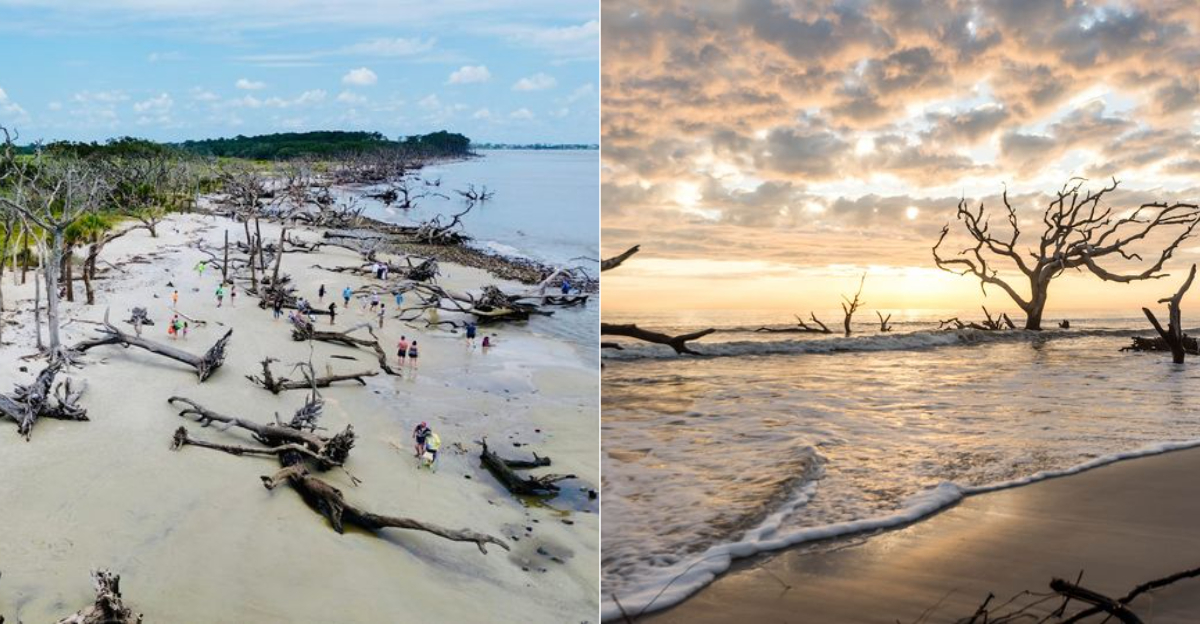
Tucked away on the northern tip of Jekyll Island, Georgia, Driftwood Beach is unlike any shoreline you have ever seen. Massive, sun-bleached trees with twisted trunks and tangled roots rise straight out of the sand, creating a landscape that looks more like a sculptor’s masterpiece than a typical beach.
Coastal erosion carved this hauntingly beautiful scene over centuries, leaving behind the skeletal remains of a once-thriving maritime forest. Whether you are a photographer, a nature lover, or just someone looking for something truly unforgettable, this beach delivers every single time.
The Ancient Driftwood Trees
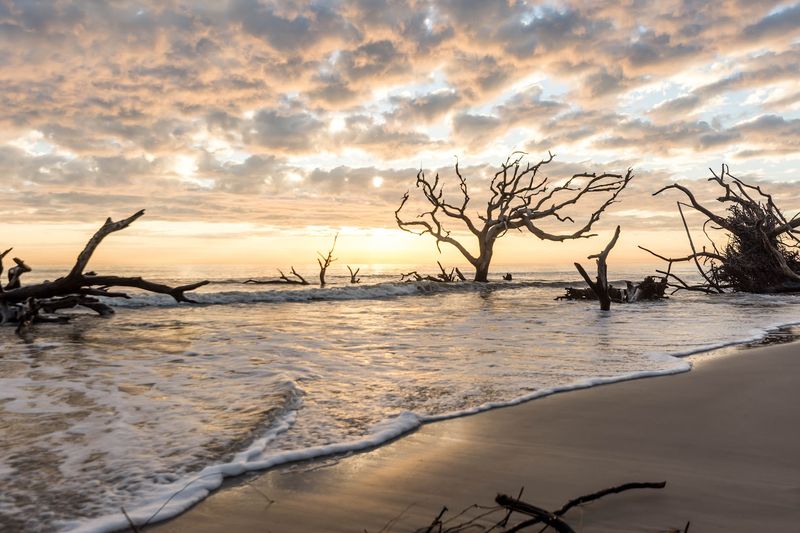
Some of these trees have been standing — or falling — for over 500 years, and you can feel that history the moment you step onto the sand. The driftwood trees at Jekyll Island’s famous beach are the undisputed stars of the show, drawing visitors from all over the country who come just to stand among them.
Their pale, weathered trunks stretch in every direction, some reaching skyward, others sprawling across the sand like sleeping giants.
What makes them so striking is how untouched they look. Nature did all the work here — no artist, no architect.
Coastal erosion gradually swallowed the shoreline, exposing root systems that once ran deep underground. Now those roots twist and curl above the sand like natural sculptures.
Walking among them feels cinematic, almost surreal. Visitors often describe the experience as stepping onto a movie set or into another world entirely.
Many reviewers say their jaws literally dropped when they first laid eyes on the scene.
Photography here is effortless because every angle offers something dramatic. Morning light turns the pale wood golden, while sunset casts long shadows that make the whole beach glow.
Plan to spend more time than you expect — you will not want to leave.
Coastal Erosion: The Artist Behind It All
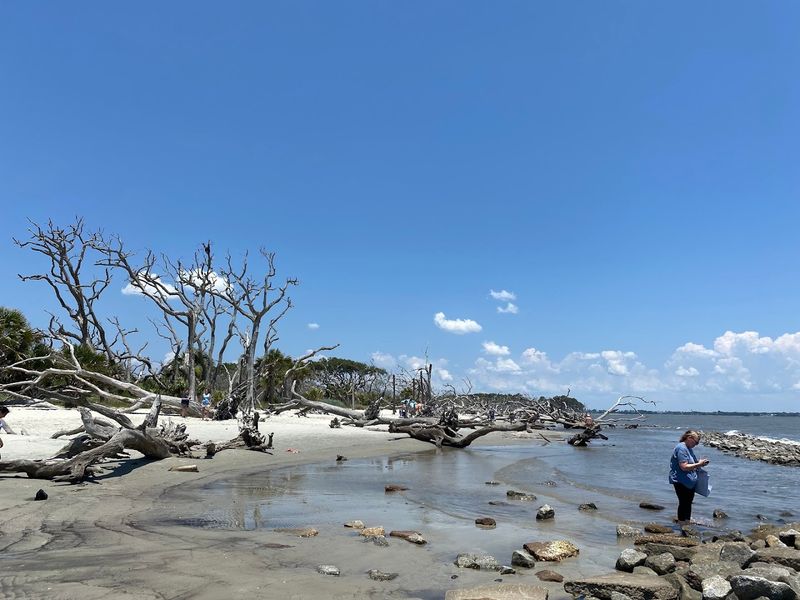
Here is something wild to think about: the breathtaking scenery at Driftwood Beach was not planned by anyone. It happened because the ocean kept chipping away at the shoreline, year after year, decade after decade.
Coastal erosion is the geological process responsible for this whole extraordinary landscape, and understanding it makes the place even more impressive.
Jekyll Island is a barrier island, which means it sits between the mainland and the open Atlantic Ocean. Barrier islands naturally shift and change over time as waves, tides, and storms reshape their edges.
On the northern end of Jekyll, erosion has been especially active, steadily pulling sand away and exposing the forest that once stood well back from the water’s edge.
As the ground disappeared beneath them, trees toppled and their root systems became fully visible. Some trees still stand upright, rooted in shallow water or wet sand, while others lie on their sides in dramatic poses.
The whole process is ongoing — the beach today looks slightly different than it did ten years ago.
Knowing that nature is still actively sculpting this place adds a layer of wonder to every visit. You are not just looking at history.
You are watching it happen in slow motion, one tide at a time.
Photography Opportunities at Every Turn
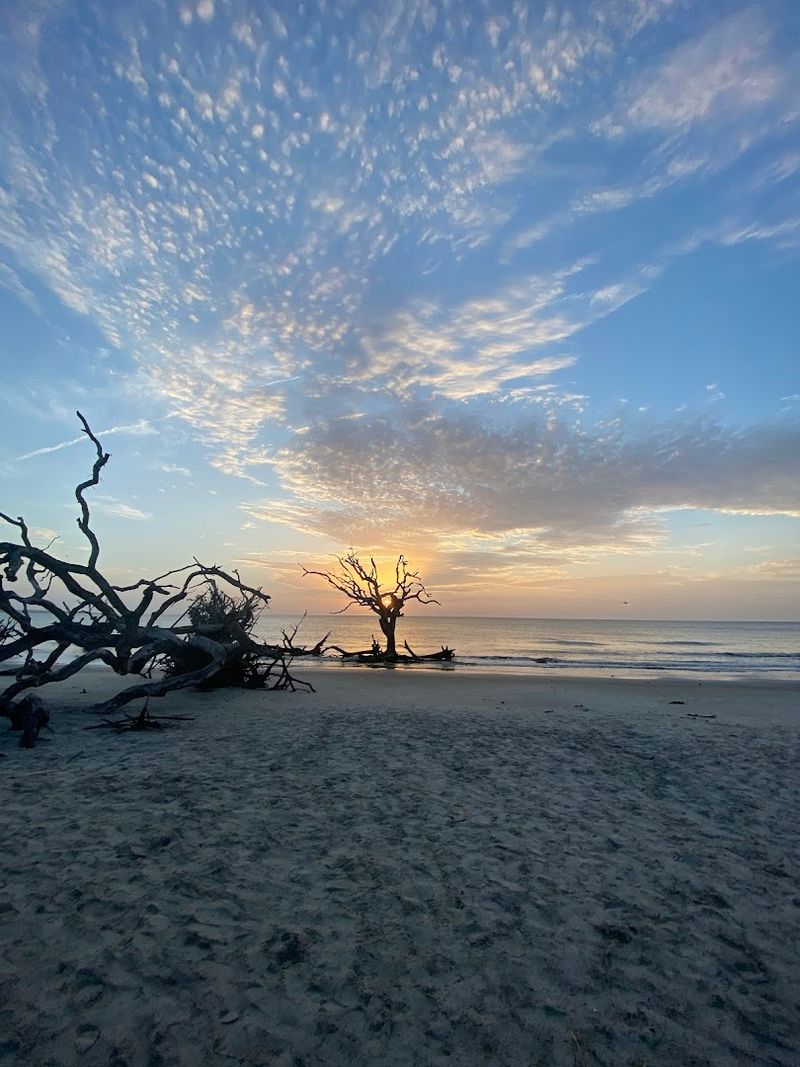
Photographers absolutely love this place, and it is easy to understand why. Every single step along Driftwood Beach reveals a new composition — gnarled branches framing the horizon, root systems casting dramatic shadows, waves rolling quietly past pale wooden trunks.
You do not need professional equipment to walk away with stunning shots here.
Sunrise is widely considered the best time to shoot. The soft pink and orange light bounces off the bleached wood in a way that looks almost magical.
Sunset runs a close second, turning the whole scene amber and gold. Midday light can be harsh, but even then the contrast between the bright white wood and the dark wet sand creates compelling images.
Silhouette shots are especially popular — stand someone next to one of the larger trees at dusk and the photo practically takes itself. The tangled root systems also make for incredible close-up detail shots that look abstract and artistic.
Several reviewers mentioned that photos simply do not do the place justice, which means you really have to visit in person.
One practical tip: wear shoes you do not mind getting sandy or muddy, and give yourself at least an hour to wander and find your favorite spots before the light shifts.
Wildlife and Marine Life Surprises
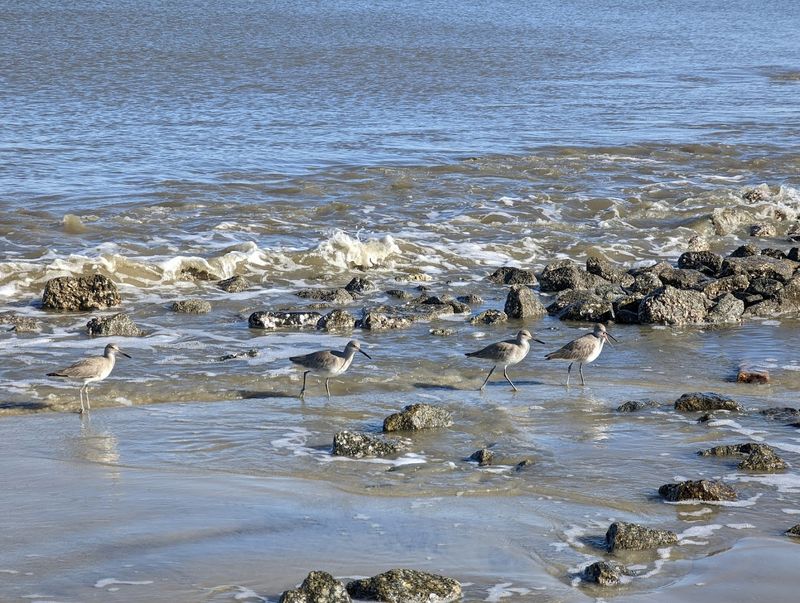
Most people come to Driftwood Beach for the trees, but the wildlife hiding among the roots and tidal pools is a genuine bonus. Look carefully at the base of the driftwood trees and you will spot small crabs scuttling in and out of crevices.
Tidal pools form around the exposed roots at low tide, creating little ecosystems filled with sea anemones, tiny fish, and an impressive variety of shells.
Whole conch shells are surprisingly common finds along this stretch of shoreline. Visitors have also reported spotting Wood Storks wading near the water’s edge, along with herons and other shorebirds that treat the driftwood as their personal perch.
The beach’s undeveloped character means wildlife feels comfortable here in a way it might not on busier, more commercialized shores.
One heads-up worth sharing: bugs can be intense, especially in summer. Gnats and biting flies thrive in the humid, organic-rich environment near the roots and mud.
Experienced visitors recommend timing your trip around low tide with a decent breeze blowing — around 12 to 18 mph winds make a real difference in keeping insects at bay.
Bringing bug spray is always smart, though some reviewers admit even that does not fully solve the problem. Early morning visits tend to be more comfortable than midday ones.
The Best Time to Visit Driftwood Beach
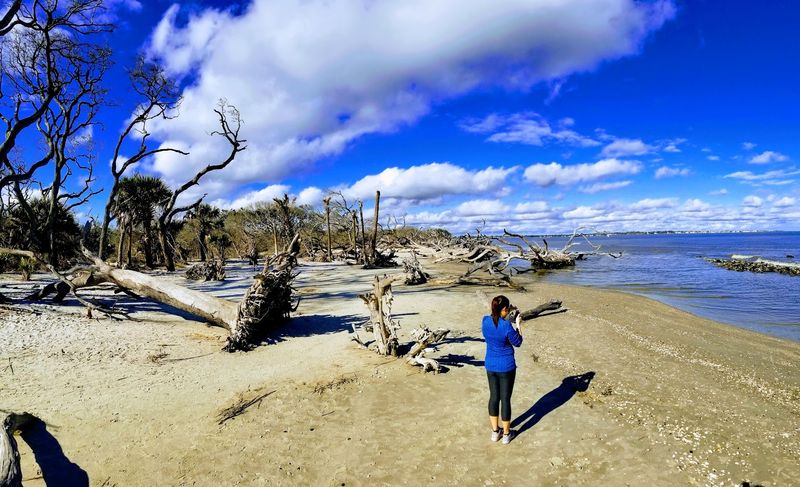
Timing your visit to Driftwood Beach makes a bigger difference here than at most beaches. The combination of tides, light, crowds, and insects all shift throughout the day and across seasons, so a little planning goes a long way.
Low tide is the single most important factor — it exposes more of the root systems and tidal pools, dramatically expanding what you can explore on foot.
Early morning visits during low tide hit the sweet spot on almost every level. Crowds are thin, the light is gorgeous for photography, and breezy morning air keeps the gnats manageable.
Late afternoon on a breezy day is another strong choice, especially if you want to catch sunset colors reflecting off the pale wood.
Seasonally, spring and fall offer the most comfortable temperatures and fewer crowds than peak summer. March is particularly pleasant — Jekyll Island quiets down considerably, and the beach feels almost private during weekday mornings.
Summer visits are absolutely doable but require more planning around tides and bug conditions.
Checking a tide chart before you go is genuinely worth the two minutes it takes. Several repeat visitors swear by this habit and say it transforms a good trip into a spectacular one every single time.
Parking, Access, and Getting There
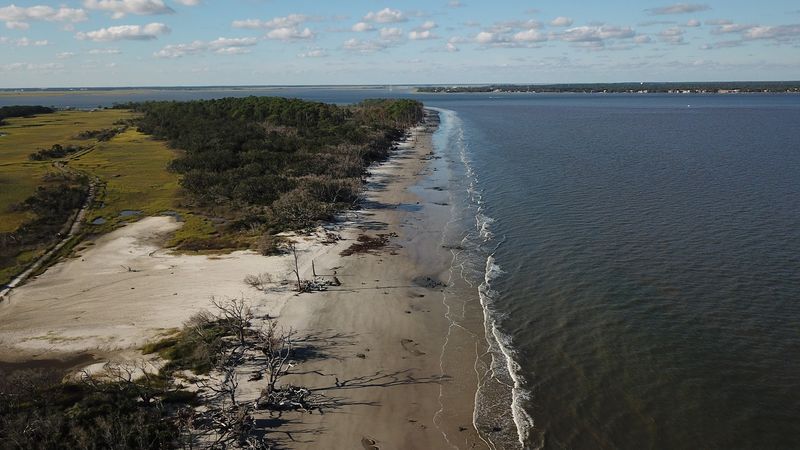
Getting to Driftwood Beach is straightforward, but parking is one thing visitors consistently mention as a small challenge. The main lot is compact and fills up fast on busy days, especially during summer weekends and holidays.
The good news is that street-side parking along the road provides overflow space, and the walk from those spots to the beach is short and easy.
From the parking area, a sandy trail winds through coastal vegetation before opening onto the beach itself. The walk takes just a few minutes and feels like a gradual reveal — you hear the waves before you see the trees, and then suddenly the whole otherworldly landscape appears in front of you.
First-time visitors often stop dead in their tracks at that moment.
One reviewer noted parking across the street and walking around without any trouble, so flexibility helps. Arriving early on weekends — before 9 a.m. — almost guarantees a spot in the main lot.
Weekday visits are generally much easier for parking regardless of the season.
There are no restrooms at the beach itself, but public bathrooms are available just down the road. Keep that in mind, especially when visiting with children or planning a longer stay to explore the full length of the shoreline.
A Dog-Friendly Adventure on the Shore
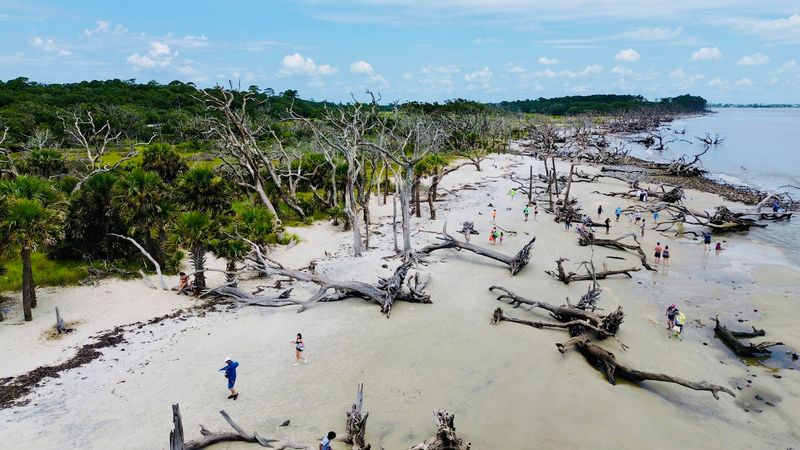
Pet owners, take note — Driftwood Beach is dog-friendly, and that detail earns it serious bonus points among visitors who hate leaving their furry companions behind. Dogs absolutely thrive in this environment.
There is so much to sniff, explore, and climb around that even the most energetic pups tend to wear themselves out happily.
The wide-open, undeveloped nature of the beach means dogs have plenty of room to roam without crowding other visitors. The driftwood trees provide natural shade in spots, which is helpful on warm days when the sun gets intense.
Several reviewers specifically called out the dog-friendly policy as a major reason they loved the beach so much.
A few practical things to keep in mind: the mud near some sections of the beach is extremely slippery, so keep an eye on where your dog is running. Sharp rocks covered in mussels and shells can also be rough on paws, so a quick post-visit paw check is always a good idea.
Bringing fresh water for your dog is essential since there are no facilities on the beach itself.
Overall, Driftwood Beach makes for one of the most memorable dog-walking experiences on the entire Georgia coast — a place where both you and your four-legged companion can genuinely explore together.
Safety Tips for Exploring the Beach
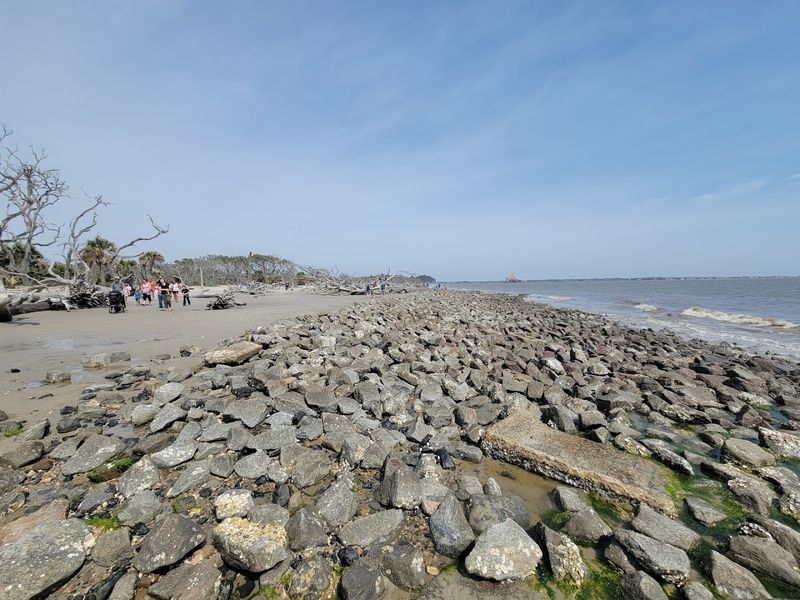
Driftwood Beach is stunning, but it rewards visitors who come prepared. This is not a typical swim-at-the-shoreline kind of beach, and several reviewers are quick to point that out.
The combination of slippery mud, sharp rocks covered in mussels, and unpredictable terrain makes it important to pay attention to where you step, especially with young children in tow.
Footwear matters more here than at almost any other beach. Sandals will get you through, as some reviewers confirm, but sturdy closed-toe shoes or sneakers are the smarter choice.
The dark mud patches scattered across the beach can be deceptively slick, and a fall among the driftwood roots is not a fun way to end an adventure. Tennis shoes give you traction and protect your feet from hidden shell edges.
Swimming is not recommended at this beach. The rocky bottom, strong currents, and general character of the shoreline make it unsuitable for casual swimming, and most visitors come for the scenery rather than the water anyway.
Keep small kids close and remind them not to climb too aggressively on unstable logs.
With the right footwear and a little awareness, the beach is very manageable and endlessly rewarding. Most visitors describe the experience as a fun, easy adventure rather than anything genuinely dangerous.
Sunrise and Sunset Watching at Its Finest
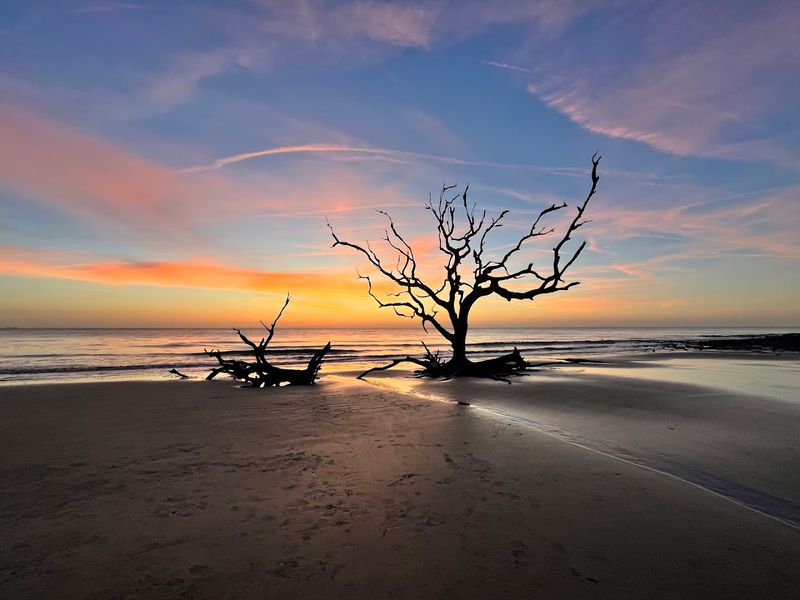
Watching the sun rise or set at Driftwood Beach is one of those experiences that stays with you long after you leave. The pale, sculptural trees act like natural frames, turning every glance toward the horizon into something that belongs on a gallery wall.
It is no surprise that several reviewers specifically call this out as one of the best sunrise spots on the entire Georgia coast.
Sunrise here has a quiet, almost meditative quality. The beach tends to be nearly empty in the early morning hours, which adds to the sense of peaceful solitude.
Light filters through the branches and catches the wet sand in ways that shift every few minutes as the sun climbs higher. Many visitors say they come back repeatedly just for this reason.
Sunset brings a different energy — warmer, more golden, with longer shadows stretching across the driftwood. The contrast between the darkening sky and the pale wood is visually dramatic in a way that photographs beautifully.
Evenings also tend to be breezy, which helps manage the insect situation considerably.
Bringing a blanket and sitting quietly among the trees for either event is one of the most memorable things you can do on Jekyll Island. Pack a snack, leave your phone in your pocket for a few minutes, and just absorb it.
Why Driftwood Beach Belongs on Your Georgia Bucket List
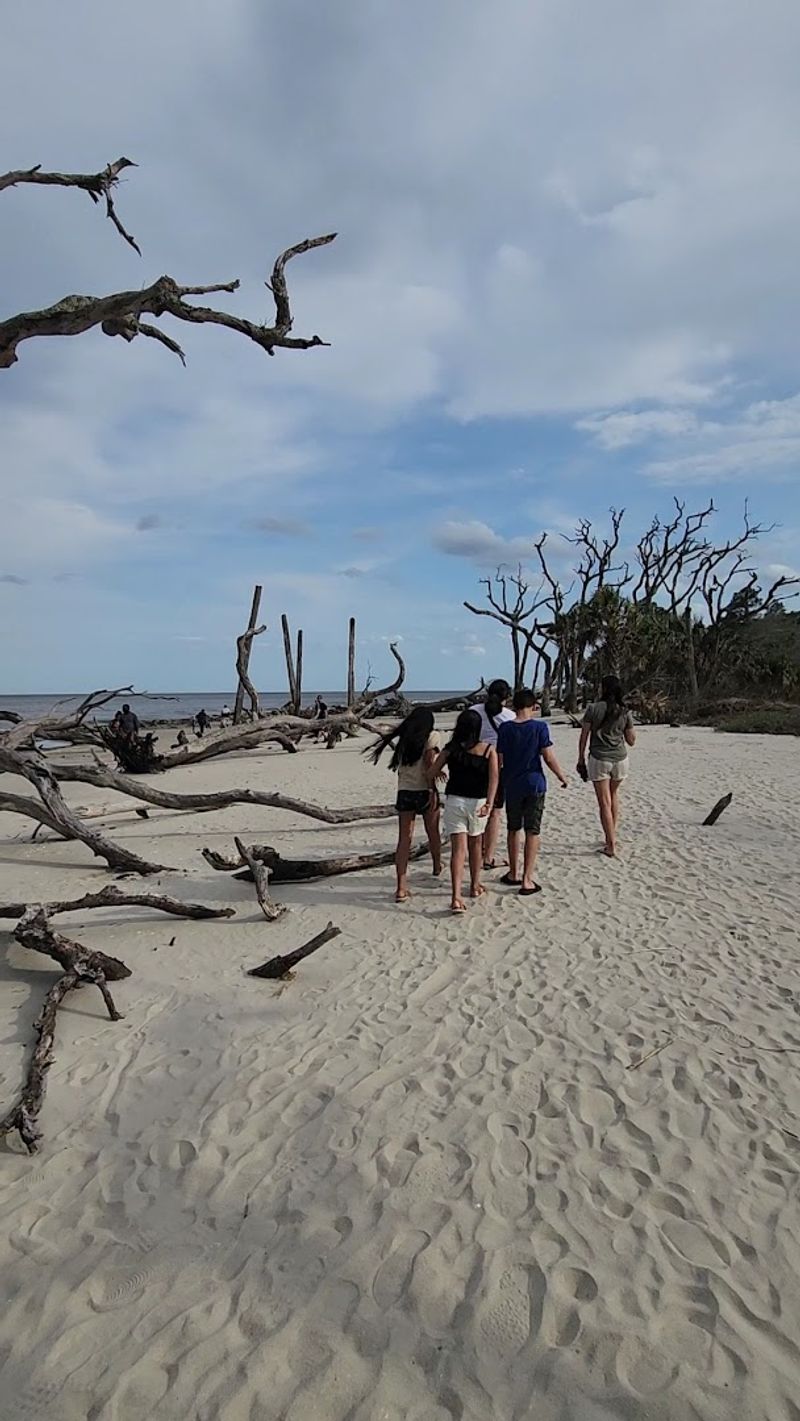
There are plenty of beautiful beaches along the Georgia and Florida coasts, but none of them look anything like this one. Driftwood Beach on Jekyll Island occupies a category entirely its own — a place where geology, time, and the raw power of the ocean have collaborated on something genuinely extraordinary.
Visitors consistently rate it among the most memorable natural attractions they have ever seen, regardless of how widely they have traveled.
The experience is accessible to almost everyone. No special gear, no guided tour, no admission fee beyond the Jekyll Island parking pass.
You simply park, walk a short trail, and find yourself standing inside what many people describe as nature’s greatest art installation. The scale of the driftwood trees has to be seen in person to be truly understood.
Families, solo travelers, couples, photographers, dog owners, nature enthusiasts — the beach genuinely works for all of them. It sits conveniently along the route between Georgia and Florida, making it a natural stop for road-trippers heading either direction.
Even a one-hour visit leaves a lasting impression.
If you ever find yourself within driving distance of Jekyll Island, skipping Driftwood Beach would be a decision you would regret. Every single person who goes says the same thing on the way out: that was absolutely worth it.