Tucked away in the small town of Dover, Ohio, the Ernest Warther Museum and Gardens is one of those rare places that stops you in your tracks the moment you walk through the door.
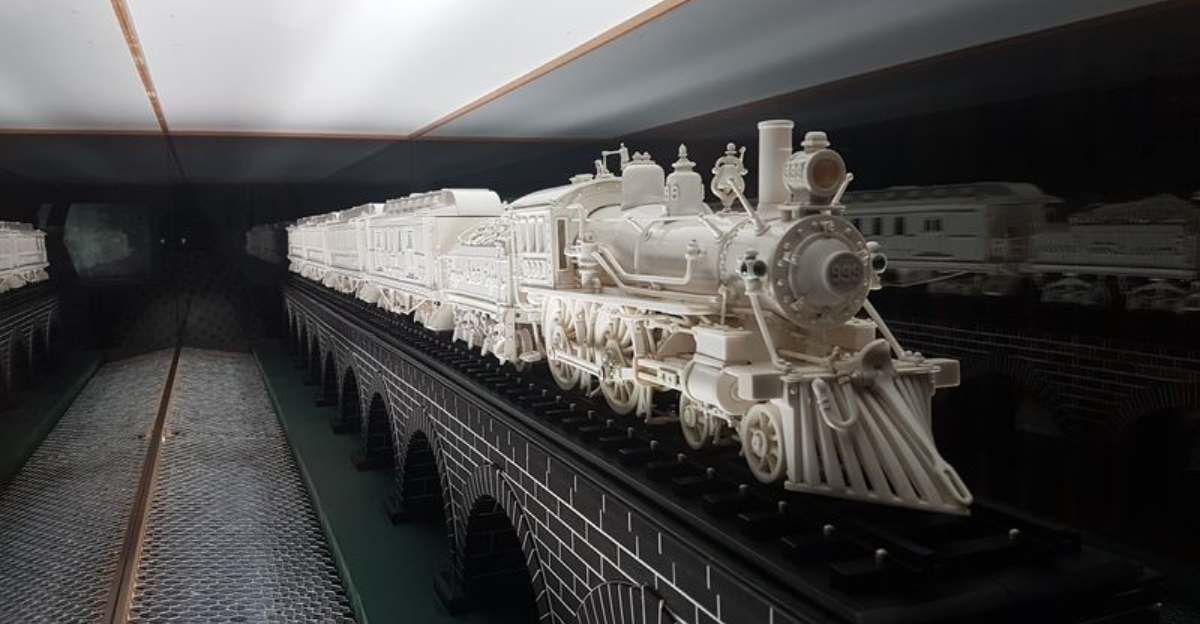
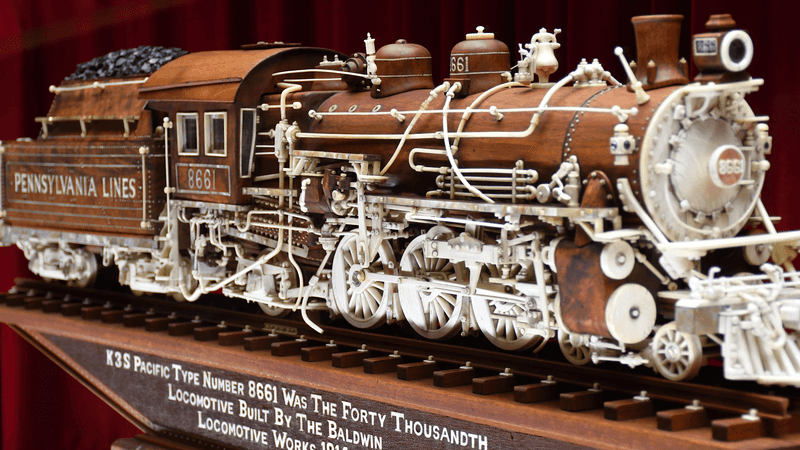
Ernest “Mooney” Warther spent decades carving impossibly detailed locomotive models by hand, turning a personal passion into a world-class collection.
Whether you love trains, woodworking, or just discovering hidden gems, this museum delivers a one-of-a-kind experience you won’t find anywhere else in the state.
It’s the kind of place that reminds you how extraordinary ordinary people can truly be.
The Legacy of Ernest “Mooney” Warther
Not many people turn a childhood hobby into something that earns national attention, but Ernest “Mooney” Warther did exactly that. Born in 1885 in Dover, Ohio, Warther began carving at a young age with little more than a pocketknife and an unstoppable curiosity.
What started as a way to pass the time slowly became something far more meaningful.
By the time he reached adulthood, Warther had developed a carving style so precise and so original that collectors and historians took notice. He worked primarily with wood, ivory, and ebony, coaxing those materials into forms that looked almost too perfect to be handmade.
His locomotives, in particular, showcased a rare combination of artistic talent and mechanical understanding.
Warther never attended art school or formal engineering programs. Everything he knew came from observation, practice, and sheer determination.
That self-taught quality makes his achievements even more remarkable. Today, his work is preserved in a museum that carries his name, ensuring that future generations can appreciate just how far one person’s dedication can go.
His story is genuinely inspiring, especially for anyone who has ever been told their passion is just a hobby.
A Museum Built Around His Life’s Work
Walking onto the Warther Museum property feels less like visiting an institution and more like stepping into someone’s personal world. The museum sits on the original Warther family land, which means the home, the workshop, and the exhibition spaces are all part of the same living history.
That context makes every display feel more grounded and real.
Unlike a traditional gallery where objects sit behind ropes and glass with little explanation, this place tells a story. You can see where Warther actually lived, the kitchen where his family gathered, and the workshop where hours of painstaking labor produced some of the most intricate carvings in American folk art history.
The connection between the artist and the space is something most museums simply cannot replicate.
The museum has been thoughtfully maintained to honor both the work and the family behind it. Additions have been made over the years to accommodate growing collections, but the original character of the property remains intact.
Families visiting for the first time often comment on how welcoming and personal the atmosphere feels. It is a place where art, history, and everyday life overlap in the most unexpected and satisfying way.
The Evolution of Steam Engines in Miniature
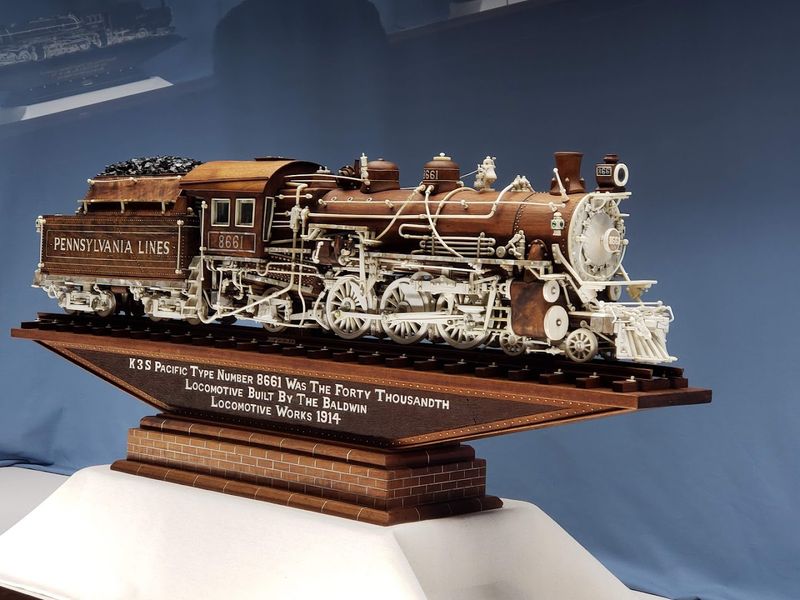
Warther did not just carve trains because they looked impressive. He carved them to tell a story, specifically the story of how steam-powered transportation changed the world.
His locomotive series traces the development of steam engines from their earliest forms all the way through the golden age of rail travel, and each model represents a specific chapter in that history.
What makes this collection so compelling is the combination of artistry and accuracy. Warther researched each locomotive carefully before picking up his tools, ensuring that proportions, components, and mechanical configurations were as faithful to the originals as possible.
The result is a miniature timeline of technological progress that you can actually walk alongside.
Even visitors who have no particular interest in trains tend to find themselves completely absorbed by the display. There is something almost hypnotic about seeing decades of innovation captured in carved wood and ivory at such a small scale.
Each model rewards careful looking, revealing new details the longer you study it. For history enthusiasts and engineering fans alike, this section of the museum is genuinely hard to walk away from quickly.
Plan to spend real time here because rushing through it means missing the full picture.
Extraordinary Detail in Every Carving
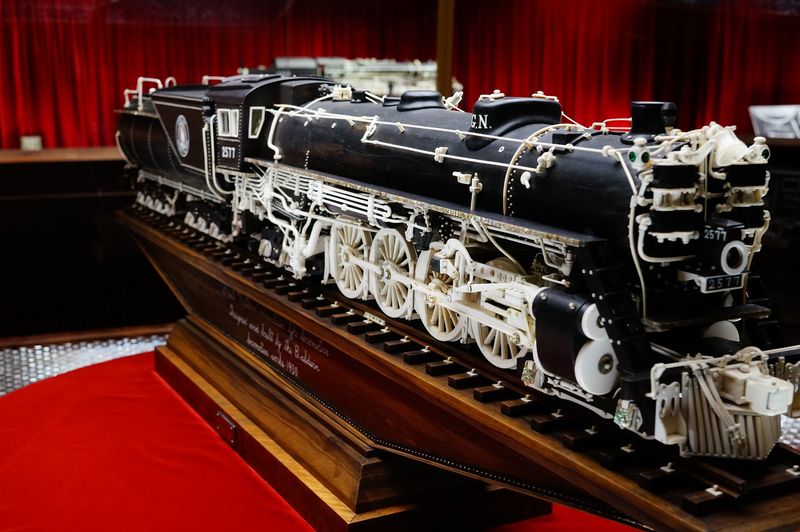
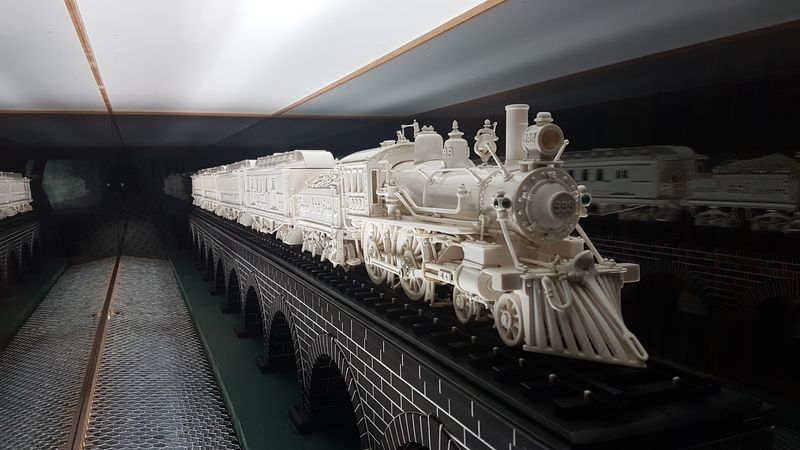
Seeing is truly believing when it comes to the level of detail packed into Warther’s carvings. Some of his locomotive models contain hundreds, and in a few cases thousands, of individually shaped components.
Each tiny piece was carved separately and then assembled with the same care a watchmaker might give to a fine timepiece.
The precision is almost hard to process. Pistons, drive rods, wheels, valve gear, and cab details are all rendered with accuracy that seems impossible for human hands working without modern machinery.
Warther used knives he often made himself, sharpened to a degree that allowed cuts measured in fractions of a millimeter. That level of tool mastery alone is worth appreciating.
What separates Warther from other skilled craftspeople is that he never seemed satisfied with “good enough.” Every carving pushed further than the last, as though each piece was a personal challenge to outdo what he had already accomplished. Visitors who look closely at multiple models can actually track his growth as an artist over time.
The earliest carvings are impressive, but the later ones are in a completely different league. Bring a magnifying glass if you have one because the smallest details are genuinely worth examining up close.
Demonstrations That Bring the Craft to Life
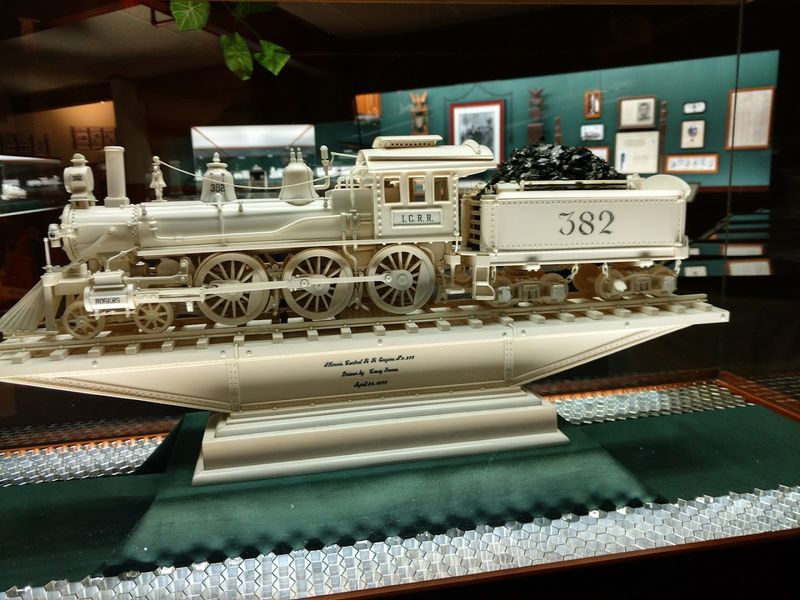
One of the things that sets the Warther Museum apart from a typical sit-and-stare experience is the way guides actively engage visitors with the collection. Guided tours are included with admission, and the people leading them clearly love what they do.
They bring genuine enthusiasm to every stop along the way.
Several of Warther’s models feature moving parts, and watching those components come to life during a demonstration is genuinely exciting. Pistons pump, wheels spin, and rods move in coordinated sequences that mirror how a real locomotive would operate.
Seeing that motion helps visitors understand not just the artistry involved, but the mechanical thinking that went into each design.
The demonstrations also give context that you might miss on your own. Guides explain which historical locomotive each model represents, what made that particular engine significant, and what challenges Warther faced in recreating it.
That storytelling layer transforms the experience from a visual tour into something more like a history lesson you actually want to attend. Kids especially respond well to the moving models, making this a great stop for families.
If you have questions, do not hesitate to ask because the guides are knowledgeable and genuinely happy to share more than the standard script.
The Famous Plier Tree
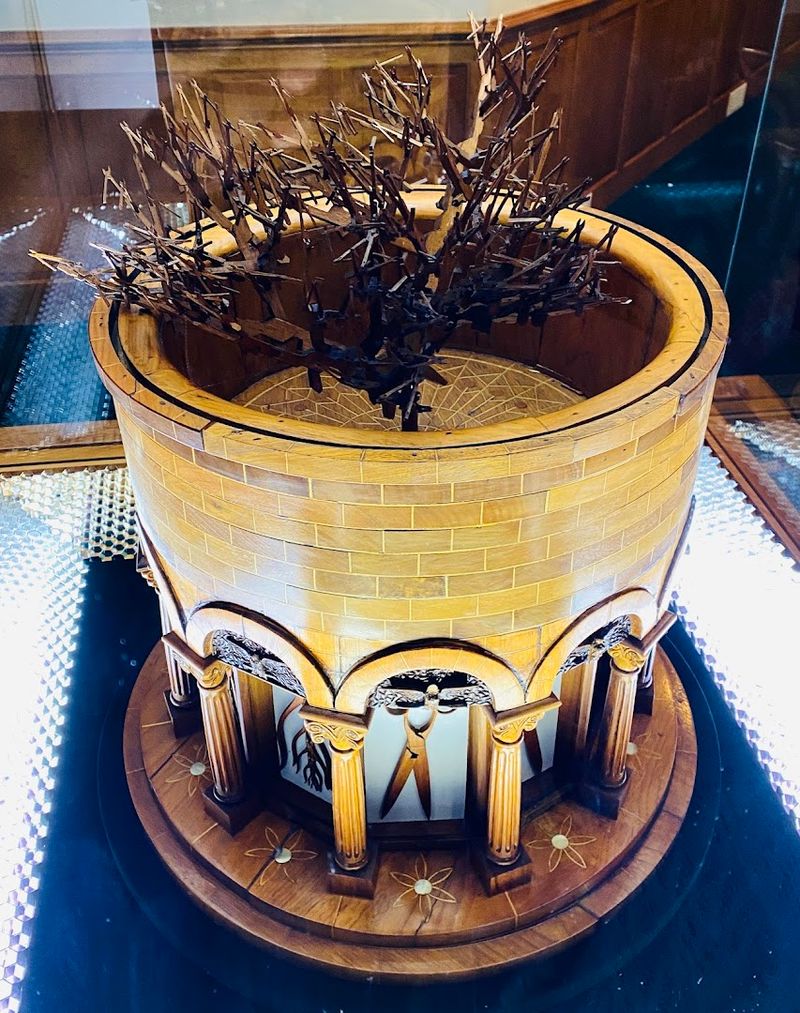
If the locomotive collection leaves you impressed, the Plier Tree will leave you completely baffled in the best possible way. Carved from a single uncut block of wood, this sculpture unfolds into dozens of fully functional, interlocking pliers, all connected and all working, without a single cut ever separating them from the original piece.
It sounds impossible, and yet there it is.
The Plier Tree is one of the most talked-about objects in the entire museum, and for good reason. It demonstrates that Warther’s skills extended well beyond locomotive design into a kind of three-dimensional puzzle-making that pushed the boundaries of what wood carving could even mean.
The piece has a playful, almost mischievous quality to it, as if Warther carved it just to see the look on people’s faces.
Warther actually made multiple versions of this concept throughout his life, gifting some to notable figures including President Harry Truman. The museum’s example gives you a chance to see the full effect in person, and photographs simply do not do it justice.
Standing in front of it and tracing the connections with your eyes is a whole different experience. It is one of those museum moments that sticks with you long after you have gone home.
The Button House Collection
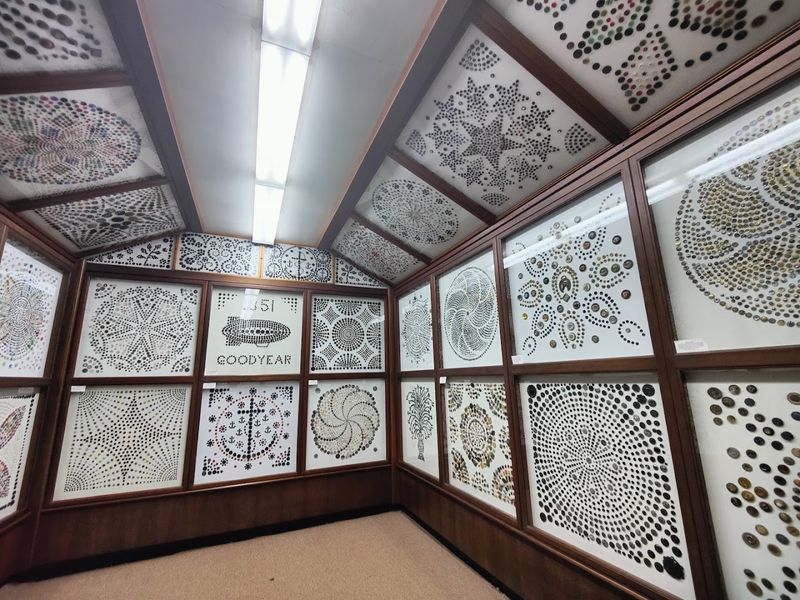
Frieda Warther could have easily been overshadowed by her famous husband, but the Button House makes sure that does not happen. Over the course of her lifetime, Frieda collected and arranged tens of thousands of buttons into elaborate, colorful displays that cover the walls of a separate building on the museum property.
The effect is dazzling and completely unlike anything else on the grounds.
Buttons of every shape, size, color, and material are organized into patterns, images, and decorative arrangements that required an eye for design and enormous patience. Frieda treated her button collection with the same seriousness and dedication that Mooney brought to his carving, and the results speak for themselves.
It is folk art in its own right, created with humble materials but executed with real vision.
The Button House adds a wonderful balance to the overall museum visit. After spending time surrounded by locomotives and mechanical precision, stepping into a room full of color and pattern feels refreshing and surprising.
It also highlights how the Warther family as a whole was driven by creativity, not just one remarkable individual. Many visitors say Frieda’s collection is their favorite part of the entire property, which is a testament to how genuinely special it is.
The Original Workshop and Tool Displays
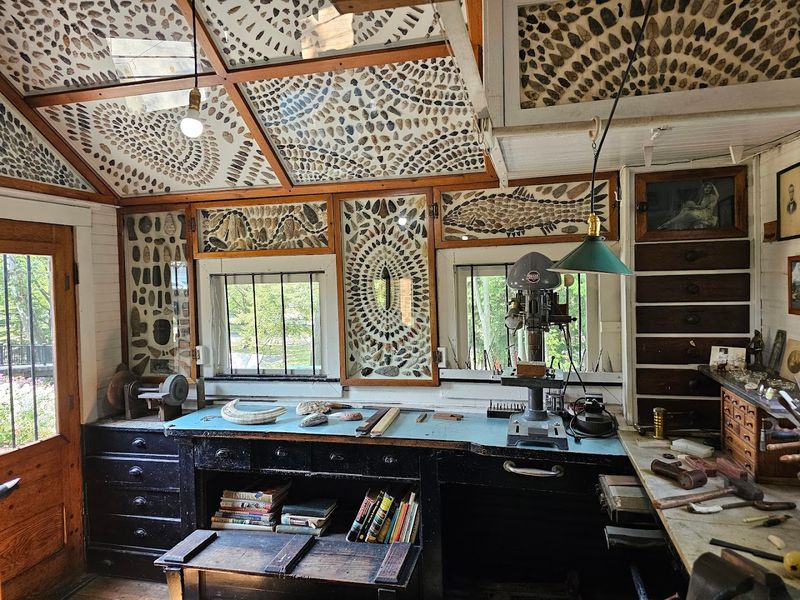
There is something deeply satisfying about seeing the actual tools an artist used to create their work. The Warther Museum preserves Mooney’s original workshop, and visiting it feels like walking into a space where time simply stopped.
The workbenches, the tools, and the general atmosphere all reflect the environment where decades of extraordinary carvings were born.
Warther made many of his own knives, grinding and sharpening them to specifications that matched the demands of whatever he was working on at the time. Seeing those handmade tools laid out in the workshop drives home just how self-reliant and inventive he was as a craftsman.
He did not wait for the right tool to exist; he built it himself.
The tool displays also give visitors a sense of the discipline required to produce work at Warther’s level. Carving thousands of tiny components does not happen through inspiration alone.
It requires routine, patience, and a workspace that supports focused, careful effort over long periods of time. The workshop communicates all of that without needing a single word of explanation.
For anyone interested in craftsmanship, woodworking, or the creative process in general, this section of the museum is absolutely worth taking your time with.
Gardens and Grounds That Reflect Swiss Heritage
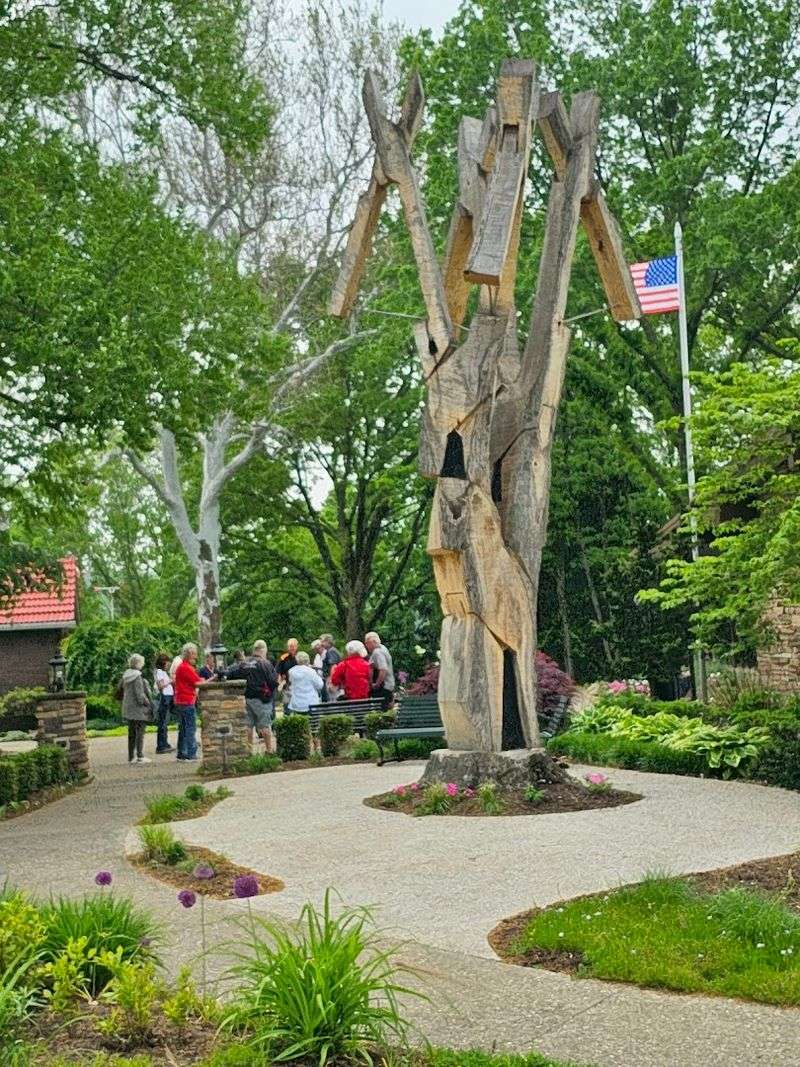
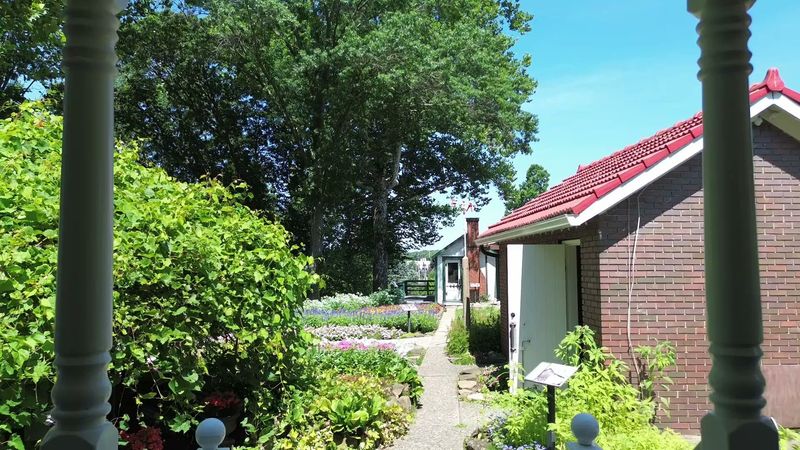
The Warther family’s Swiss roots show up clearly in the gardens and grounds surrounding the museum buildings. Neat pathways, carefully tended plantings, and thoughtfully arranged outdoor spaces give the property a sense of order and beauty that complements the precision of the carvings inside.
The grounds are genuinely pleasant to walk through at any time of year.
Swiss immigrant communities in Ohio often brought strong traditions of craftsmanship, tidy homesteading, and pride in the land, and the Warther property reflects all of that. The landscaping does not feel like a formal botanical garden, but rather like a well-loved family estate where outdoor spaces were maintained with the same care given to everything else.
That personal quality makes the walk between buildings feel like part of the experience rather than just a transition.
Visiting in spring or summer gives you the best chance to appreciate the gardens in full bloom, but the grounds hold their charm in other seasons too. The outdoor areas also provide a natural break point during the tour, giving families with young children a chance to stretch their legs between exhibits.
Taking a few extra minutes to simply walk the paths and enjoy the setting is a good way to absorb the full character of this remarkable property before heading home.
Visitor Information and Tips
Planning ahead makes a real difference when visiting the Warther Museum. The museum is located at 331 Karl Ave, Dover, OH 44622, and can be reached by phone at 330-505-6003.
Hours are generally 9 AM to 5 PM daily, though winter hours tend to be shorter, so checking ahead before your trip is always a smart move.
Guided tours are included with admission and typically run about one hour to one hour and fifteen minutes. The tours cover the main carving collection, the Button House, and key points around the grounds.
Last tour admission is usually in the late afternoon, so arriving earlier in the day ensures you get the full experience without feeling rushed.
Budget at least one and a half to two hours total to explore everything comfortably. Weekday mornings tend to be quieter, which is ideal if you prefer a more relaxed pace or want extra time to ask the guides questions.
The museum is family-friendly, and children tend to respond especially well to the moving train demonstrations. Parking is available on-site, and the property is manageable for most mobility levels.
Whether you are a local looking for a new day trip or a traveler passing through Ohio, this stop is absolutely worth adding to your itinerary.