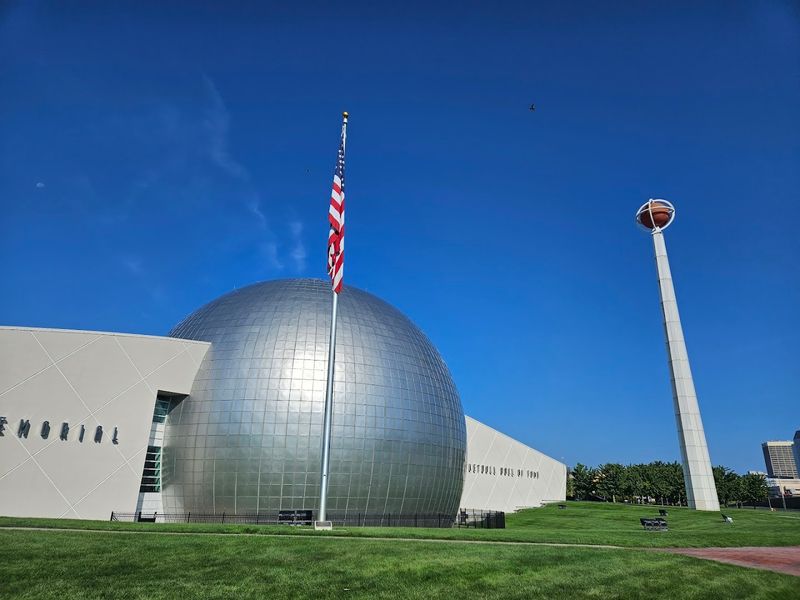
In Springfield, Massachusetts, a silver sphere beside I-91 draws basketball fans the way a championship banner draws eyes to the rafters. The Naismith Memorial Basketball Hall of Fame sits in the very city where Dr. James Naismith invented the game in 1891, and that origin story gives the building a rare kind of gravity.
You do not have to know every stat line to feel the pull here, because the museum blends history, hands-on fun, and unforgettable memorabilia into one compact visit. If you have ever shouted at a buzzer-beater, coached from your couch, or watched a kid fall in love with shooting hoops, this place feels personal.
Start Where Basketball Was Born
The first thing that hits you at 1000 Hall of Fame Avenue is how specific the setting feels. This is not just a museum that happens to celebrate basketball, because Springfield is the city where Dr. James Naismith created the game in 1891.
That local connection gives the building more weight than a standard sports attraction. You are standing near the birthplace of a sport that moved from a gym class solution to a global language spoken in schoolyards, arenas, driveways, and Olympic courts.
Inside, the visit usually begins with a short video that helps frame the story before you move through the exhibits at your own pace. I like that approach because it lets families, longtime fans, and casual visitors set their own rhythm without feeling rushed through a scripted tour.
Plan for at least two to three hours if you want to see the major displays and still have court time. The museum is open daily from 10 AM to 4 PM, and arriving near opening can make the experience feel calmer, especially if you want space for photos and hands-on exhibits.
The Iconic Sphere Beside I-91

Long before you step inside, the building makes its case from the highway. The round, metallic shape beside I-91 looks different from everything around it, which is probably why so many road-trippers recognize it before they know the address.
For visitors driving from Connecticut, Vermont, New York, or farther, the easy highway access is a real advantage. You can get off I-91, park, visit, eat, and get back on the road without threading through a confusing downtown maze.
The structure also works as a visual reminder that basketball is built around one simple object. That may sound obvious, but seeing a museum shaped with that kind of boldness sets the tone before you even scan a ticket.
Parking is generally straightforward, and reviewers often mention the large lot as one of the practical perks. If you are planning a family day trip, that matters because nobody wants the first memory to be circling blocks while kids ask when they can shoot.
Give yourself a few minutes outside for photos. The building, signage, and riverfront setting create the kind of arrival shot that says you made it to the home of hoops.
A Self-Guided Museum That Lets You Set the Pace
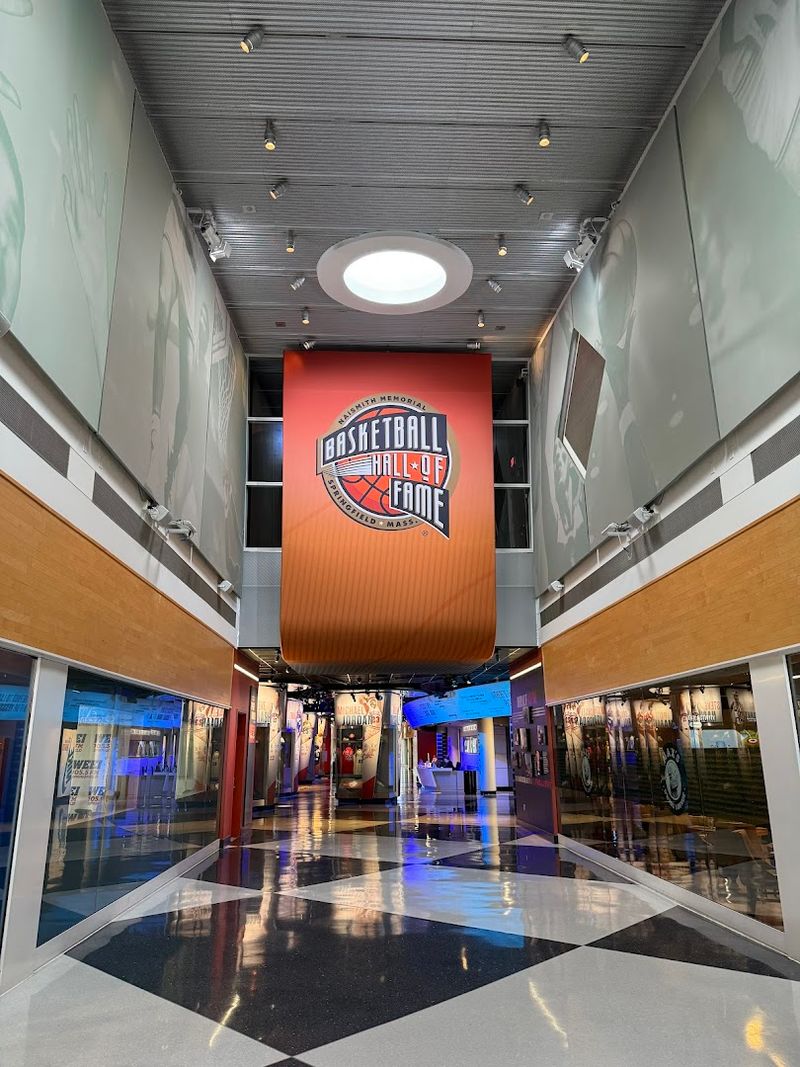
One of the smartest parts of the visit is the self-guided layout. You are not locked into a group or forced to linger at displays that do not match your interests, so the experience can stretch or tighten based on your crowd.
If you are visiting with kids, that flexibility helps a lot. They can spend more time at interactive stations while adults take a closer look at jerseys, trophies, photographs, and the larger story of how basketball expanded.
Some guests wish more artifacts had deeper labels, and that is fair. A legendary jersey or historic trophy becomes more powerful when the museum clearly explains why it matters, especially for visitors who did not live through that era.
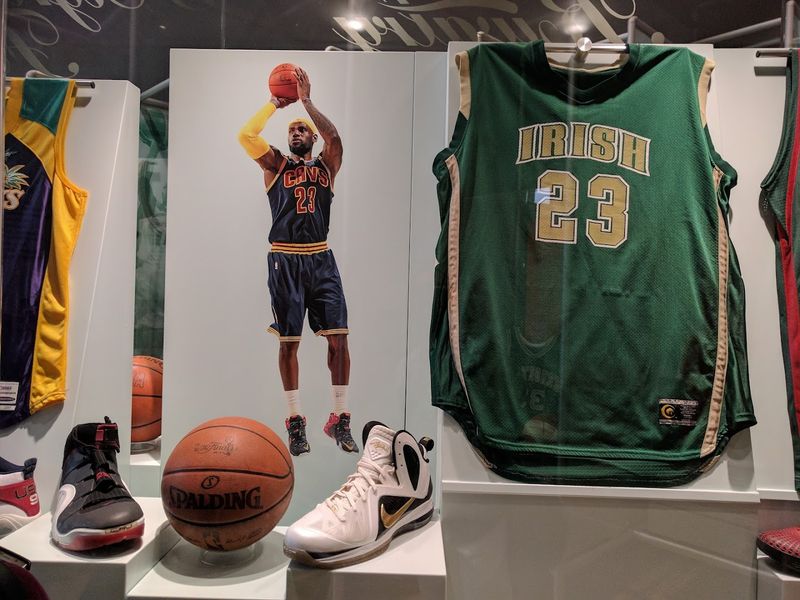
Still, the amount of material on display gives you plenty to notice. You might find yourself stopping for Shaquille O’Neal’s massive shoes, a championship artifact, or a piece connected to a favorite college or professional team.
My practical advice is simple: do not rush the upper levels. The best moments often come when you slow down, read what is available, and let the names connect to memories of games you watched.
Memorabilia That Makes Fans Stop Mid-Step
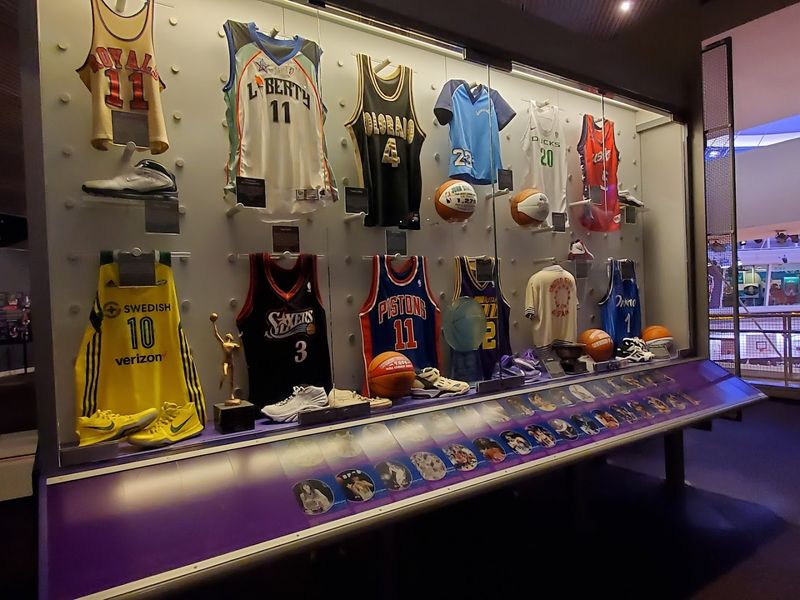
There is a particular pause that happens when a fan spots something tied to a player they grew up watching. It might be a signed jersey, a pair of enormous sneakers, a championship trophy, or a ball connected to a record that once felt impossible.
The Hall of Fame is strongest when those objects spark personal memories. You may remember watching Kobe Bryant highlights after school, arguing about Michael Jordan, following Sue Bird, or trying to copy a crossover in your driveway.
Because the collection covers so many eras, every visitor tends to build a different highlight reel. Parents point out names their kids barely know, while younger fans get excited by modern players and interactive screens that feel closer to their world.
A few displays could use stronger storytelling, especially around social history, international growth, and certain milestone moments. Yet the raw presence of the memorabilia still carries real force, because these are physical traces of careers that shaped the sport.
Take photos, but also give yourself a moment without the phone. Some artifacts reward patience, and you will notice details like shoe size, fabric wear, signatures, or trophy design that make the legends feel human.
Interactive Exhibits That Keep Kids Engaged
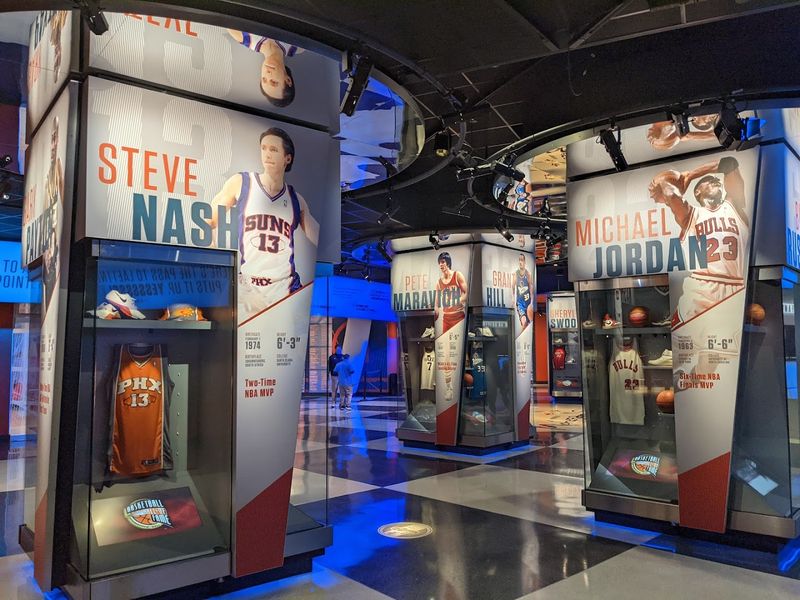
Families often worry that a sports museum will become a slow march past glass cases. Here, the interactive pieces break up the visit and give kids something to do with their hands, eyes, and competitive energy.
You can compare measurements with famous players, test your knowledge, record fun media moments, and move through displays that feel less like homework than a basketball-themed playground with history built in. That balance is why even visitors who are not hardcore fans often leave surprised.
The hand-size and wingspan comparisons are especially fun because they turn abstract greatness into something physical. When you see how your reach stacks up against Giannis or how your hands compare with elite guards, the athletic difference becomes instantly understandable.
These exhibits also help adults who may be visiting with a basketball-obsessed partner or child. You do not need to know advanced stats to enjoy pressing buttons, watching clips, and sharing a laugh when your measurements are nowhere close to the pros.
If you want smoother access, go early or on a quieter weekday. Fewer people means more time at each station and less waiting for kids who want to try everything twice.
The Court Is the Big Finish
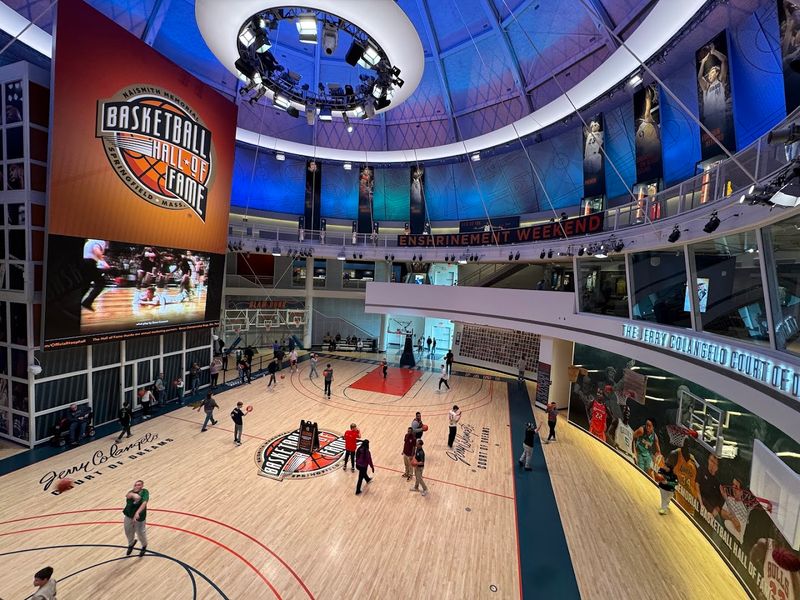
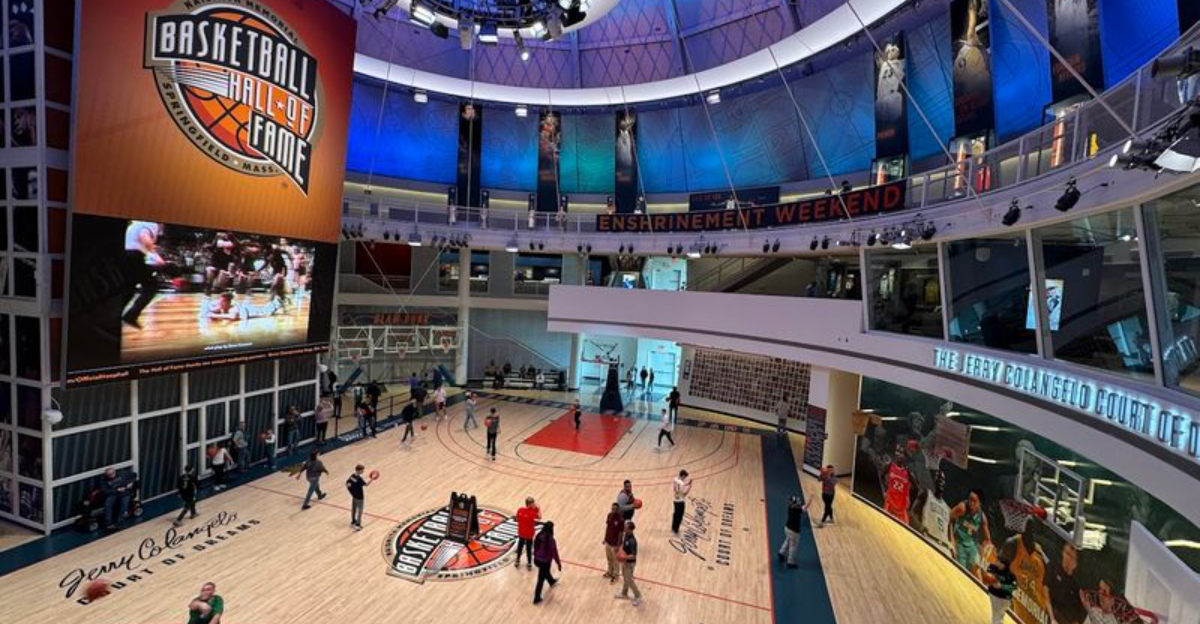
Near the end of the visit, the museum gives you something most halls of fame cannot: actual playing time. The court is where quiet museum energy turns into sneakers squeaking, parents rebounding, kids grinning, and strangers cheering missed free throws.
This is the part many visitors remember most vividly. After looking at the history of the sport, you get to feel it in your shoulders, legs, and slightly overconfident jump shot.
Different baskets and shooting areas make the court appealing for mixed ages and skill levels. A young child can toss from close range while an adult tries to prove they still have range from the foul line.
Reviewers regularly mention spending more time here than expected, sometimes because a casual shootaround turns into friendly contests. If you are traveling with family, build that into your schedule instead of saving only ten minutes at the end.
Wear comfortable shoes if you plan to play. You do not need full gym gear, but the visit is more fun when you are ready to take a few shots without worrying about stiff soles or sore feet afterward.
A Strong Stop for Road Trips and Day Trips
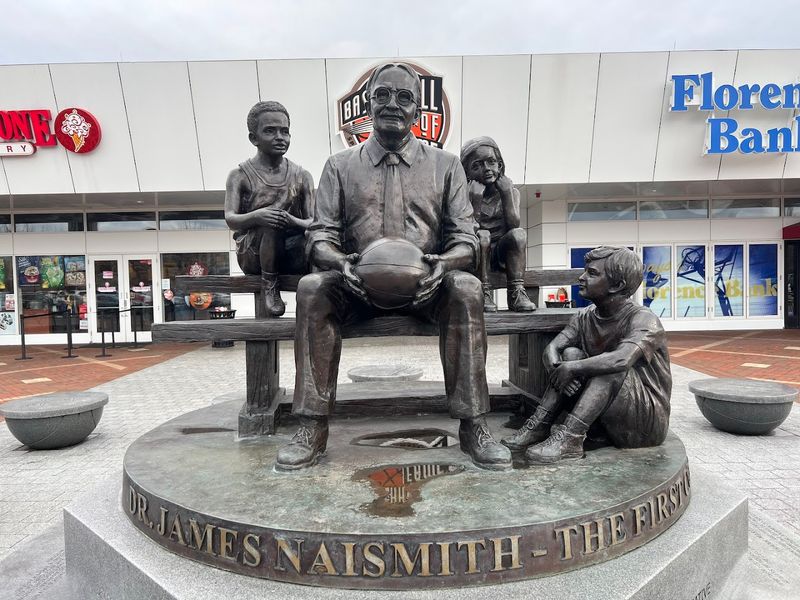
The Hall of Fame works especially well as a road trip anchor because it is easy to fit into a single day. Travelers coming back from Vermont, passing through western Massachusetts, or planning a weekend from nearby states can make it a focused stop.
Its daily 10 AM to 4 PM schedule keeps planning simple, though checking the official website before you go is still smart. Holiday hours, special events, and ticket details can change, and nobody wants a long drive ending at a locked door.
Many visitors mention driving two or three hours and feeling the trip was worthwhile. That makes sense because the building combines museum time, hands-on activities, food options, a gift shop, and plenty of parking in one compact property.
If you are budget-conscious, look online for discounted tickets before arriving. Local residents may also want to check library passes or community discounts, since admission can feel pricey for families buying multiple tickets.
Pair the museum with a meal on site or nearby, then give kids time to play on the court before getting back in the car. That rhythm makes the stop feel complete rather than rushed.
What Casual Fans Will Actually Enjoy
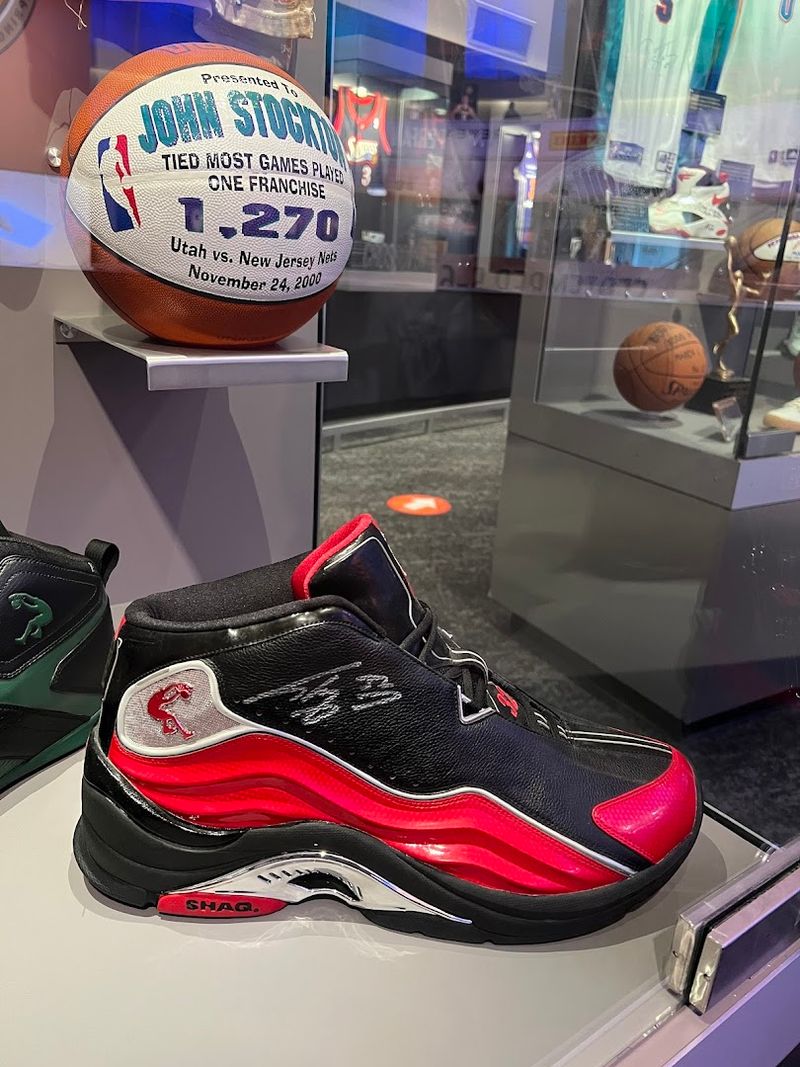
You do not have to be the person who can name every MVP since 1956 to enjoy the museum. In fact, some of the best reactions come from visitors who arrive as companions and slowly realize the place is more entertaining than expected.
The mix of big visuals, famous names, interactive stations, and court time keeps the experience approachable. A casual fan can appreciate the size of Shaq’s shoes, the emotion around Kobe Bryant displays, or the simple thrill of making a basket.
That said, the visit rewards at least a little curiosity. If you ask questions, read labels, and connect artifacts to broader moments, you will get more out of the building than someone simply walking past cases.
For couples or families with different interest levels, split the pace when needed. Let the superfan linger near memorabilia while everyone else tries an interactive station, then regroup before heading to the court.
The museum’s clean layout and friendly staff also help ease first-time visitors into the experience. You can treat it as sports history, pop culture, family entertainment, or a uniquely Springfield landmark, and all of those angles work.
Food, Gift Shop, and Practical Details
A good museum visit can lose momentum fast if everyone gets hungry or confused about basics. The Springfield Hall of Fame helps by offering on-site food options, restrooms, parking, and a gift shop within the same complex.
Visitors have mentioned familiar stops like Subway, Cold Stone Creamery, Max’s Tavern, and other dining choices in or around the building. Availability can shift, so I would still check current options if a meal is part of your plan.
The gift shop is convenient for jerseys, hats, basketballs, and souvenirs, but prices can run high. If you are bringing kids, set expectations before entering so the final memory is not a debate over the most expensive item on the shelf.
The museum’s phone number, +1 877-446-6752, is useful if you have specific questions about accessibility, groups, events, or ticket policies. The official website, hoophall.com, is the best place to confirm hours and purchase tickets.
For a smoother visit, buy tickets online when possible, arrive early, and bring a flexible attitude. The place is compact enough for a short stop, but it becomes much better when you leave room for food, browsing, and extra shots.
Why the Trip Still Feels Worth It
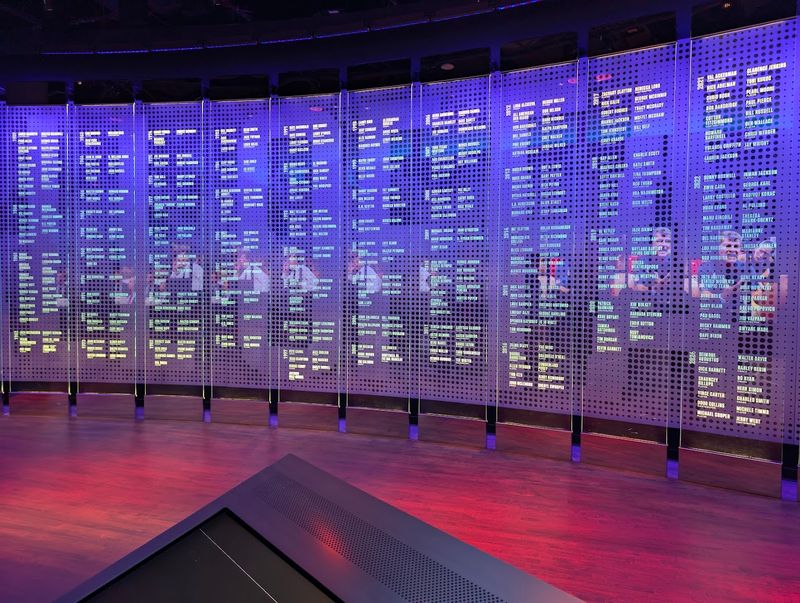
The Hall of Fame is not perfect, and honest visitors have pointed out places where the storytelling could be stronger. Some displays would benefit from richer context, clearer themes, and more attention to international basketball, Olympic history, and underrepresented parts of the game.
Even with those critiques, the building still delivers something rare. It places you in the city where basketball began, surrounds you with artifacts from the sport’s biggest figures, then lets you finish by playing the game yourself.
That combination explains why people drive from so far away. A traditional museum can show you history, but this one lets you bounce it, shoot it, measure yourself against it, and talk about it the whole ride home.
If you love basketball deeply, you will likely find enough memorabilia and emotion to justify the visit. If you are only mildly interested, the interactive pieces and court can still turn the stop into a surprisingly memorable afternoon.
Go with clear expectations: it is a few-hour experience, not an all-day mega museum. Arrive curious, look for ticket deals, save energy for the court, and let Springfield’s place in basketball history do the rest.