
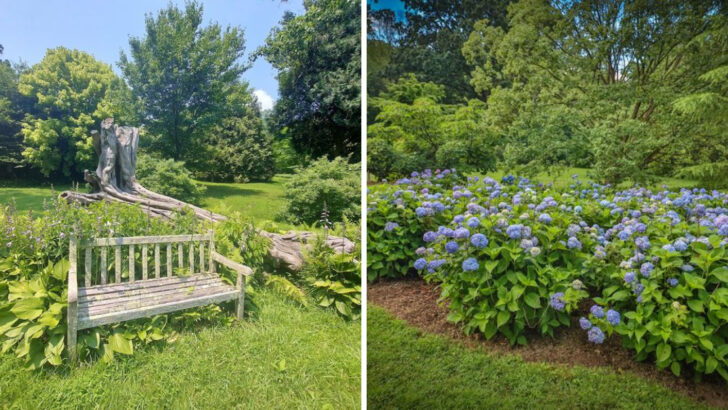
If you are craving a quiet day outside without driving deep into the countryside, Tyler Arboretum feels like a secret worth knowing.
This 650-acre preserve in Media blends historic gardens, shaded woods, sweeping meadows, and thousands of plants into one remarkably peaceful place.
It is the kind of destination where you can come for a short stroll and end up lingering for hours.
Just outside Philadelphia, it offers that rare mix of beauty, history, and breathing room that is hard to resist.
A 650-Acre Woodland Retreat in Delaware County
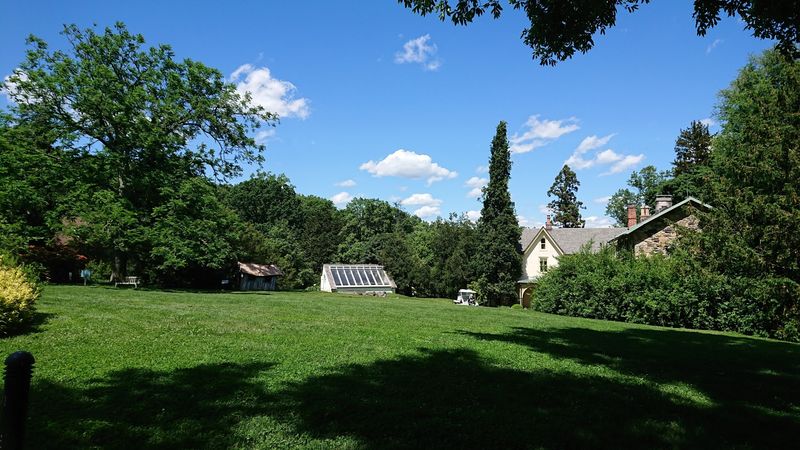
The first thing that stands out at Tyler Arboretum is the sheer amount of space you get to explore. Spread across about 650 acres in Delaware County, this place feels much bigger than a typical public garden, with forests, open meadows, wetlands, and carefully maintained landscapes all unfolding in different directions.
If you like destinations that let you slow down and wander, this one instantly delivers that sense of room.
What makes it even better is how naturally the property shifts from cultivated beauty to wilder scenery. One moment you are near formal plantings and historic structures, and the next you are surrounded by tall trees, birdsong, and quiet trails that make the outside world feel far away.
That contrast gives the arboretum a calming rhythm you can feel as you move through it.
Even though it is easy to reach from the Philadelphia area, Tyler never feels crowded in spirit. It works equally well as a conservation landscape, a walking destination, and a place to simply breathe deeper for a while.
If you want a peaceful day outdoors without sacrificing variety, this broad woodland escape makes a strong first impression.
Thousands of Plant Species in Living Collections
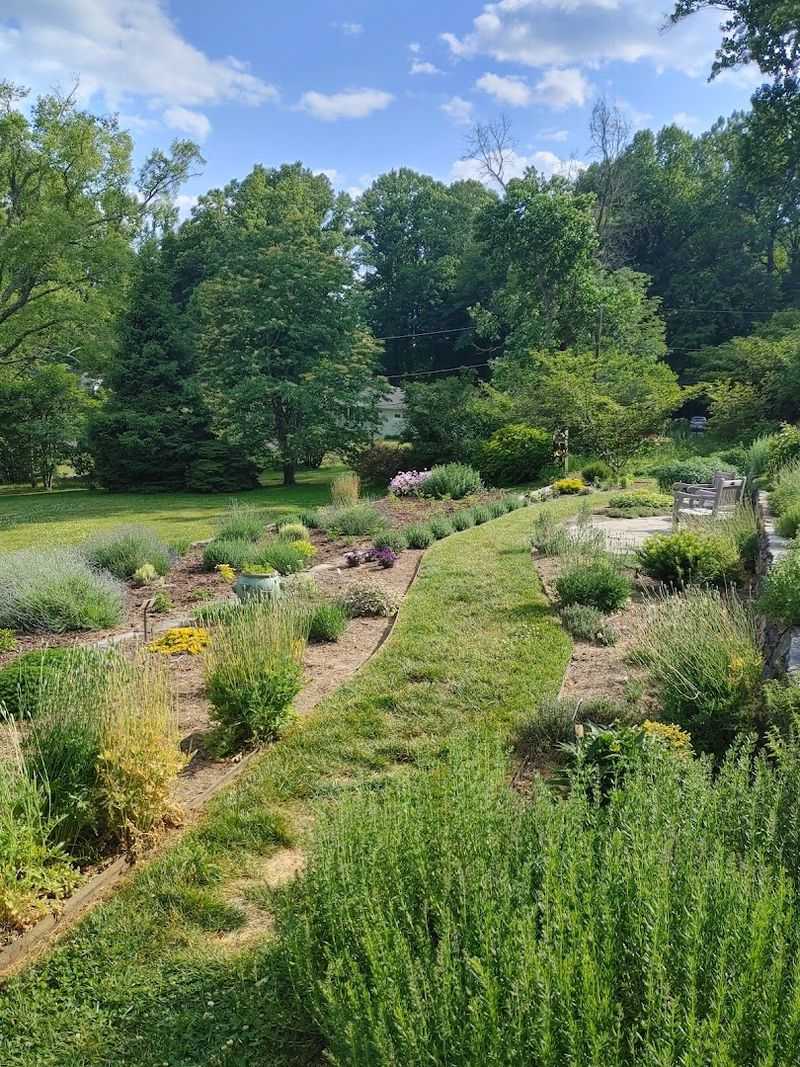
Tyler Arboretum is not just pretty scenery – it is also a serious living collection filled with remarkable botanical diversity. The site is home to thousands of plant species and cultivated varieties, gathered and maintained in collections that highlight ornamental trees, shrubs, seasonal bloomers, and important native plants.
As you walk through, you are not looking at random landscaping, but at decades of thoughtful horticultural care.
That living collection keeps evolving, which is part of what makes the arboretum so interesting. Instead of freezing the landscape at one exact number or moment in time, Tyler reflects ongoing research, stewardship, and the realities of plants growing, adapting, and changing with the seasons.
You get a place that feels alive in the truest sense, with something different to notice throughout the year.
For visitors, that depth translates into a richer experience than a simple garden stroll. You can admire big, dramatic trees one minute and then pause to notice subtle leaf textures, bark patterns, or understory flowers the next.
If you enjoy places where beauty and learning meet naturally, Tyler’s enormous range of plant life gives you plenty to appreciate without ever feeling overly formal or intimidating.
A Landscape Rooted in William Penn Era History
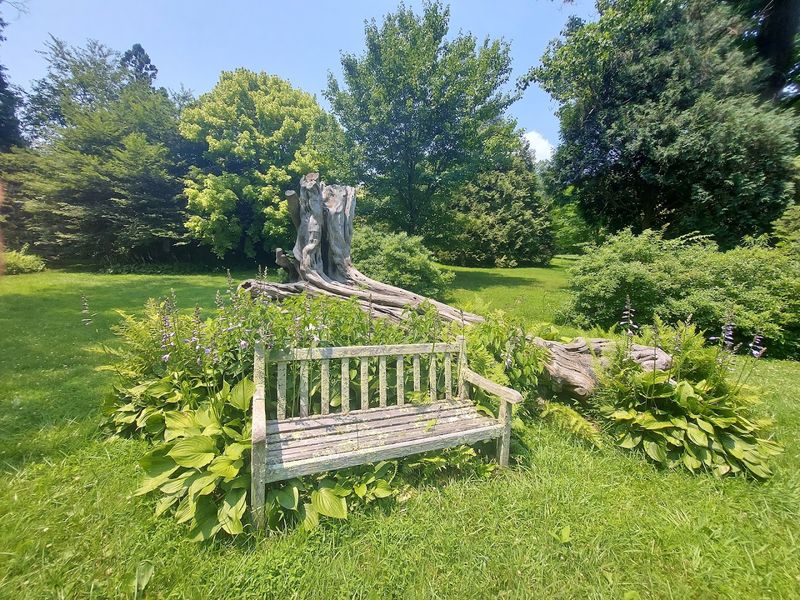
Tyler Arboretum feels timeless, and part of that comes from just how far its story reaches back. The property’s documented history begins in 1681, when the land was granted under William Penn’s colonial land distribution system, linking this quiet preserve to the earliest chapters of Pennsylvania’s development.
When you walk here, you are moving through a landscape shaped by centuries rather than decades.
Over time, the land changed from private holdings and farmland into something far more layered. Instead of disappearing under development, it gradually became a preserved natural and botanical destination, holding onto traces of its past while taking on a new public purpose.
That long transition gives the arboretum a depth you can sense even if you do not arrive expecting a history lesson.
I think that historical continuity makes the experience feel richer than a standard park visit. You are not just passing through attractive woods and gardens – you are stepping into a place where human decisions, cultivation, and conservation have been unfolding for generations.
For anyone who loves sites that combine natural beauty with a real sense of time, Tyler offers a story that quietly enhances every path, tree, and open field.
The Painter Family’s Botanical Experiments
The arboretum that visitors enjoy today owes a lot to the vision of the Painter family, especially the Painter brothers in the 1800s. They transformed the estate into a kind of botanical testing ground, experimenting with ornamental trees, shrubs, and other plantings on a large scale.
More than a thousand species were introduced, creating the groundwork for the collections that would later define the property.
That spirit of experimentation still feels central to Tyler’s identity. Instead of treating the land as a purely decorative estate, the family used it as a place to observe what could thrive, adapt, and contribute to a richer landscape.
Their curiosity helped turn private horticultural ambition into something with lasting public value.
What I like most about this chapter of the story is how practical and imaginative it feels at the same time. The Painter brothers were not just collecting plants for status – they were shaping an evolving landscape that would influence future generations of gardeners, botanists, and everyday visitors.
When you stand among mature trees and established collections now, it is easy to forget they began as experiments, but that sense of discovery still lingers in the atmosphere and gives the arboretum much of its character.
John C. Wister’s Lasting Horticultural Vision
Tyler Arboretum gained another major layer of identity in the twentieth century through the work of botanist Dr. John C. Wister.
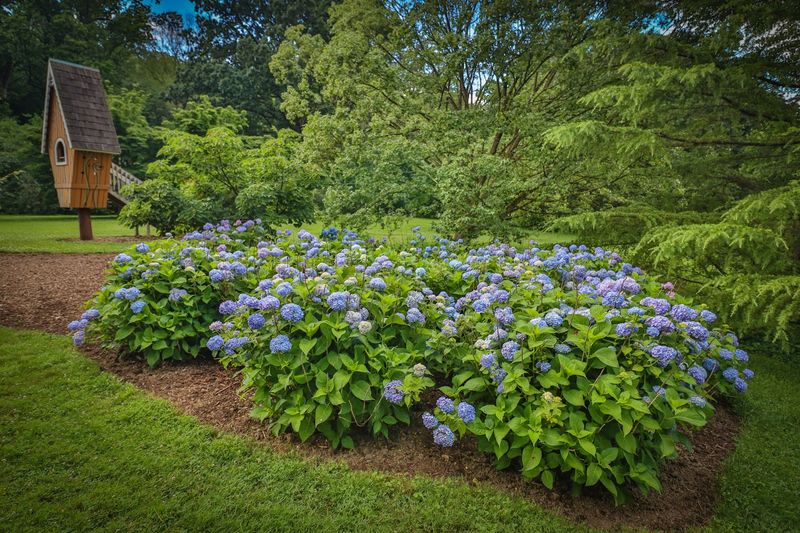
His influence helped shape some of the arboretum’s most admired plant collections, including lilacs, magnolias, cherries, and rhododendrons that still draw visitors year after year. If you love gardens that feel both artful and deeply rooted in botanical knowledge, his legacy is impossible to miss.
Wister’s contribution was not simply about adding more plants. He helped guide the arboretum’s design in ways that balanced seasonal drama, scientific interest, and the natural character of the land itself.
That approach gives Tyler a thoughtful structure, where standout blooms feel exciting without overwhelming the woodland atmosphere that makes the place so calming.
For visitors, his vision means there is always a strong seasonal highlight to chase. Spring can bring magnolias and cherries, later moments belong to lilacs and rhododendrons, and throughout the year the collections continue to offer texture, form, and color.
I find that this sense of intentional design makes wandering here especially satisfying, because every curve of the path seems connected to decades of horticultural planning rather than simple decoration.
Seventeen Miles of Trails Through Changing Habitats
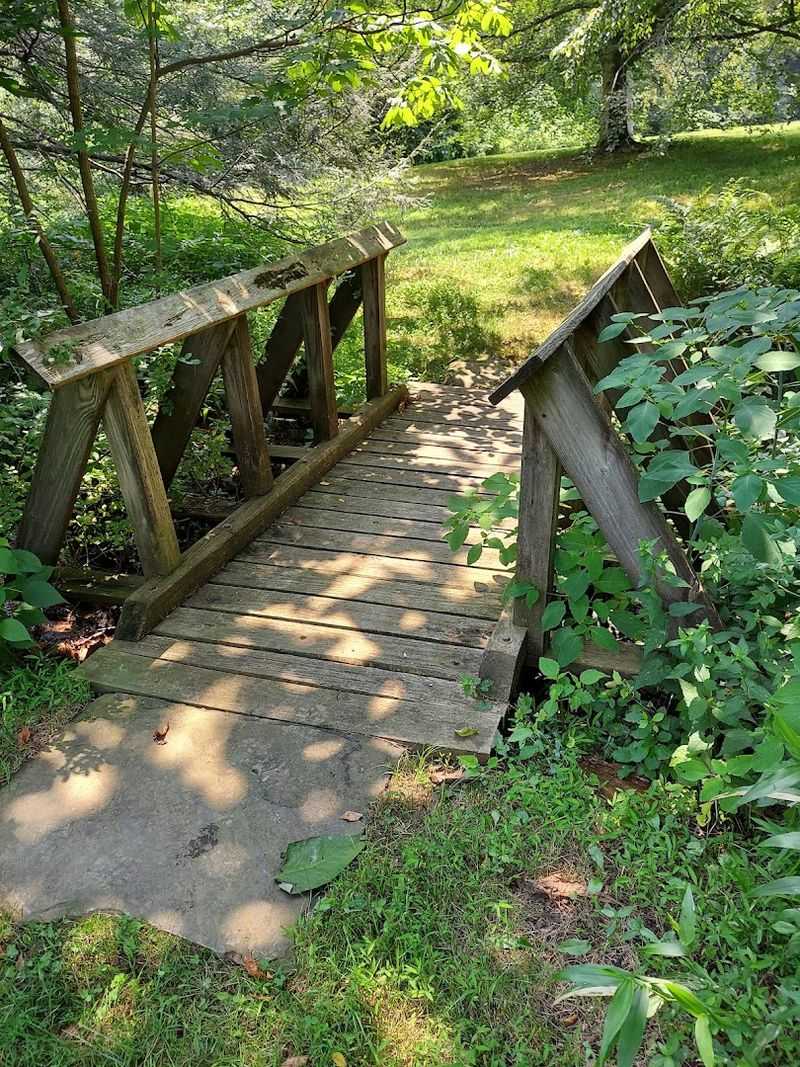
One of the easiest ways to appreciate Tyler Arboretum is simply to start walking. The property offers about 17 miles of trails, giving you plenty of chances to move through mature forest, cross wetland areas, follow meadow edges, and pass into more intentionally landscaped sections without ever feeling repetitive.
Whether you want a brief loop or a longer outing, the trail network makes the experience flexible.
That variety matters because each habitat changes the mood of the walk. Shaded woods feel cool and hushed, meadows open everything up to sky and light, and wetter areas introduce a different texture of sound, smell, and plant life.
You are not just getting exercise here – you are moving through a sequence of distinct ecological spaces that keep your attention engaged.
I think this is a big reason Tyler appeals to so many types of visitors. Some people come for a gentle stroll, others want a more extended hike, and plenty arrive with cameras, field guides, or just a need to clear their heads.
The trails support all of that while still preserving a sense of calm. If you value places where the walk itself becomes the main attraction, Tyler delivers that experience beautifully in every season.
The Rhododendron Collection and Woodland Bloom
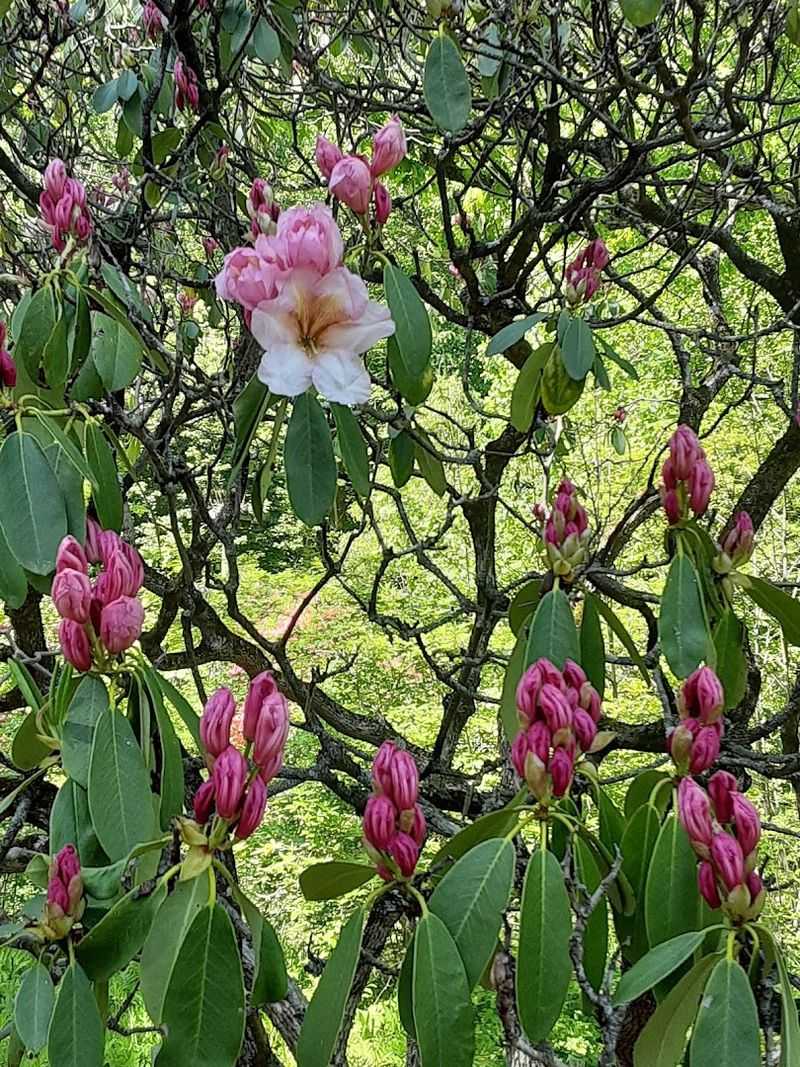
Among Tyler Arboretum’s best known features, the rhododendron collection is a standout for good reason. These shrubs thrive in the arboretum’s shaded woodland conditions, where their bold clusters of color seem to glow against deep green foliage and filtered light.
When bloom season arrives in late spring and early summer, the effect feels immersive rather than merely decorative.
What makes this collection so memorable is the setting around it. Instead of appearing in rigid display beds, the rhododendrons are woven into woodland gardens that feel soft, layered, and atmospheric.
You get color, but you also get texture, shade, moisture, and that cool hush that makes a forest garden especially appealing on a warm day.
If you time your visit well, this may be the part of Tyler you remember most vividly. The flowers create those camera-ready moments everyone loves, but being there in person is even better because the surrounding landscape adds depth that photos rarely capture.
I like that the collection feels impressive without losing its natural character. It shows how horticultural beauty can work with the land instead of against it, which is part of what makes Tyler feel peaceful rather than flashy.
Native Plant Restoration and Conservation Work
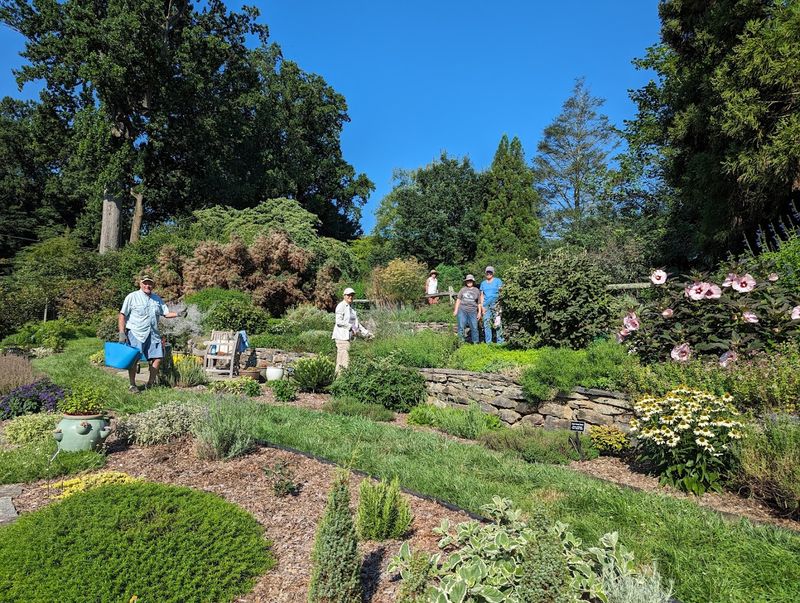
Tyler Arboretum is beautiful on the surface, but its deeper purpose includes meaningful ecological preservation. The organization actively protects native Pennsylvania habitats, including oak-hickory forest communities and understory areas where wildflowers and native shrubs support a wide range of insects and wildlife.
That conservation focus gives the landscape a value that goes far beyond a pleasant day outdoors.
Restoration work matters because healthy native ecosystems are increasingly hard to maintain near major metro areas. At Tyler, preserving these habitats helps sustain biodiversity while also giving visitors a chance to see what regional landscapes can look like when they are cared for with long-term ecological goals in mind.
You are not just admiring plants here – you are witnessing stewardship in action.
I think that adds a satisfying layer to any visit, even if you come mainly for the trails or flowers. There is something reassuring about spending time in a place that is not only protecting land, but also helping people understand the relationship between native plants, habitat health, and resilience.
If you care about conservation, Tyler offers real substance. If you simply want a peaceful walk, that behind-the-scenes ecological work still quietly enriches everything you see.
Pollinator Meadows Full of Seasonal Change
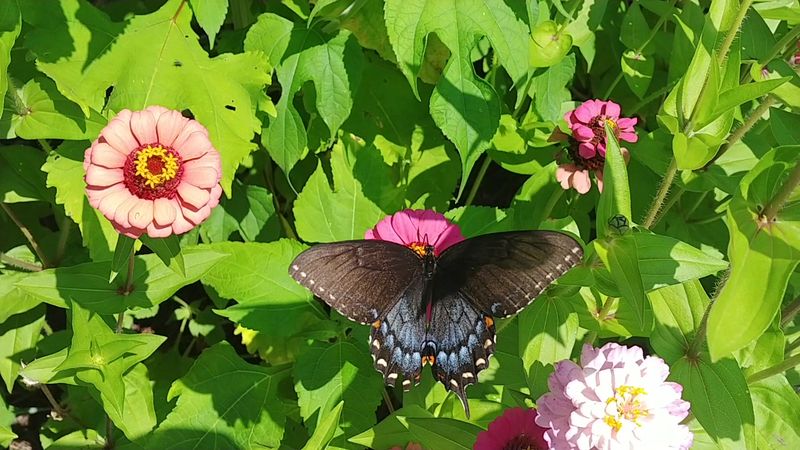
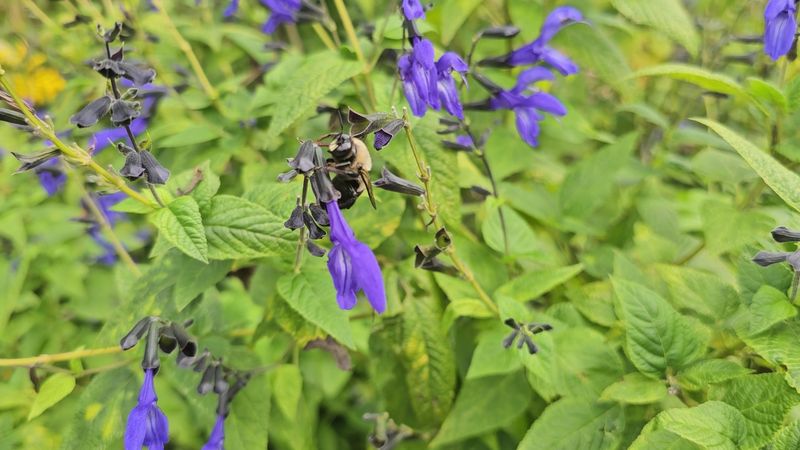
The open meadow areas at Tyler Arboretum bring a completely different energy from the shaded woods. These fields support pollinators like butterflies and native bees, creating a landscape that feels busy with life even when the overall atmosphere remains calm and restorative.
If you enjoy broad views, movement, and seasonal color, the meadows are especially rewarding.
What I love about meadow spaces is how dramatically they change through the year. Spring can bring fresh wildflowers and soft green growth, summer adds taller grasses and more active pollinators, and fall often turns the fields into textured layers of gold, rust, and muted color.
Each season reshapes the scene, so repeat visits never feel exactly the same.
These meadows are not just attractive backdrops – they play a real ecological role. By supporting insects that help pollinate plants across the landscape, they strengthen the health and diversity of the broader preserve.
That gives them beauty with purpose, which feels very true to Tyler as a whole. Whether you pause for photos, watch butterflies drift past, or simply enjoy the open air after a woodland walk, the meadows offer one of the arboretum’s most uplifting and dynamic experiences.
A Quiet Escape Just Outside Philadelphia

One of the most appealing things about Tyler Arboretum is how easy it is to reach while still feeling far removed from city pressure. Located at 515 Painter Road in Media, Pennsylvania, it sits within comfortable range of Philadelphia, yet once you arrive, the mood shifts quickly from traffic and schedules to birdsong, shade, and open space.
That sense of immediate release is part of the magic.
Because the arboretum works year-round, it is not a one-season destination. You can come for spring blooms, summer trails, autumn color, or the quieter beauty of winter landscapes and bare branches revealing the shape of the land.
Each visit offers a slightly different version of calm, which makes Tyler feel dependable in the best possible way.
If you have been looking for a place where walking, learning, and simple nature observation come together naturally, this is an easy recommendation. You do not need to be a serious gardener or experienced hiker to enjoy it.
You just need a little curiosity and time to slow down. For anyone near the Philadelphia metro area, Tyler Arboretum offers a peaceful reset that feels both accessible and genuinely restorative, which is a combination that is harder to find than it should be.