Some of North Carolina’s greatest barbecue is hiding in plain sight beside a busy road in Winterville.
Sam Jones BBQ looks modest from the outside, but inside, it carries one of the state’s deepest barbecue traditions with serious skill and confidence.
If you care about whole-hog cooking, wood smoke, and the kind of chopped pork people argue about for years, this is the stop worth making.
The best part is that you might have already driven by it without realizing what was waiting a few steps from the road.
A Smokehouse You Might Drive Right Past
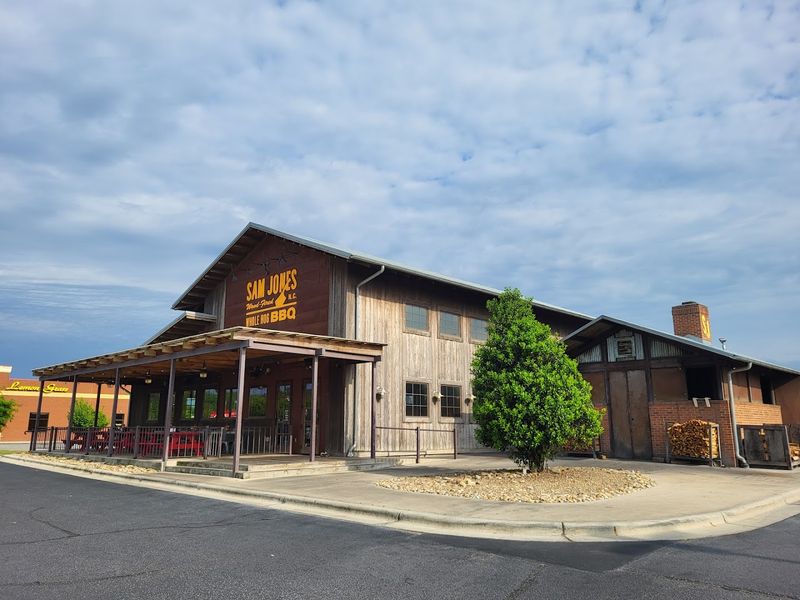
Driving past Sam Jones BBQ for the first time, you could easily mistake it for just another casual roadside restaurant. It sits along a busy stretch in Winterville without the dramatic entrance, oversized signs, or tourist-bait styling that usually announce a famous food stop.
That quiet confidence is part of the charm, because what matters here is not curb appeal but what is happening over the pits.
Once you know what this place represents, the plainspoken exterior feels almost perfect. It reflects an Eastern North Carolina barbecue mindset that has never needed gimmicks, because the food carries the full weight of the reputation.
You are not being lured in by spectacle here, you are being invited into a tradition that has survived by doing one thing exceptionally well.
That contrast between the low-key setting and the caliber of the barbecue is what makes the experience memorable. It feels like discovering a secret that locals have protected for years, even though it is sitting in public view.
If you value places that let substance outrun style, this smokehouse starts winning you over before the first bite even lands.
Built on a Legendary Barbecue Legacy
Sam Jones BBQ is not a restaurant built from trend, branding, or a sudden chef-driven idea. It comes from a third-generation barbecue family whose name means something profound in Eastern North Carolina, where barbecue is treated less like cuisine and more like inheritance.
Sam Jones carries forward the work started by his grandfather Pete Jones, the founder of the legendary Skylight Inn in 1947.
That lineage matters because whole-hog barbecue is learned through repetition, instinct, and respect for process. The details are not just written in recipes, they are absorbed through years around smoke, wood, heat, and the expectations of people who know exactly how this food should taste.
When you eat here, you are tasting a continuation of that chain rather than a polished imitation of it.
What makes the legacy especially compelling is that it does not feel frozen in time. Sam Jones honors the family method without turning it into a museum piece, keeping it alive through daily practice and public service.
You feel that seriousness in the food, because every plate seems to carry both memory and momentum at once.
The Gold Standard of Whole-Hog Cooking
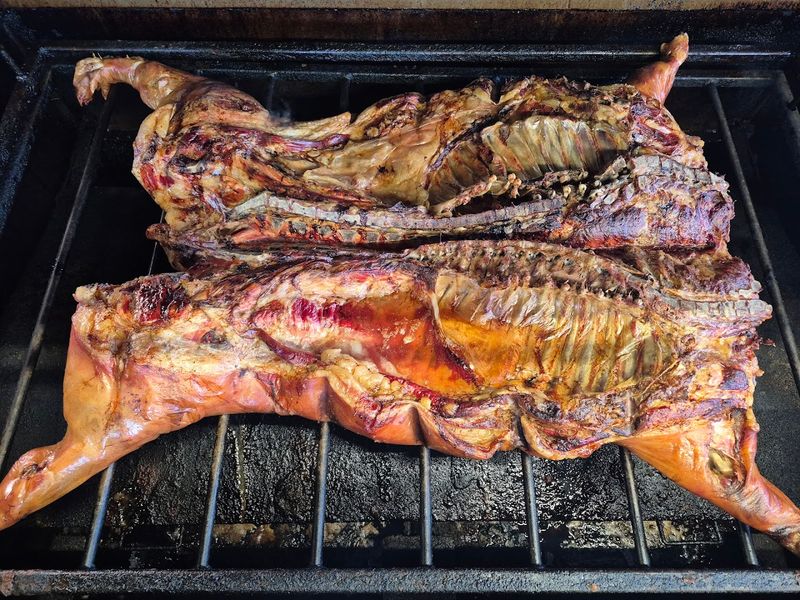
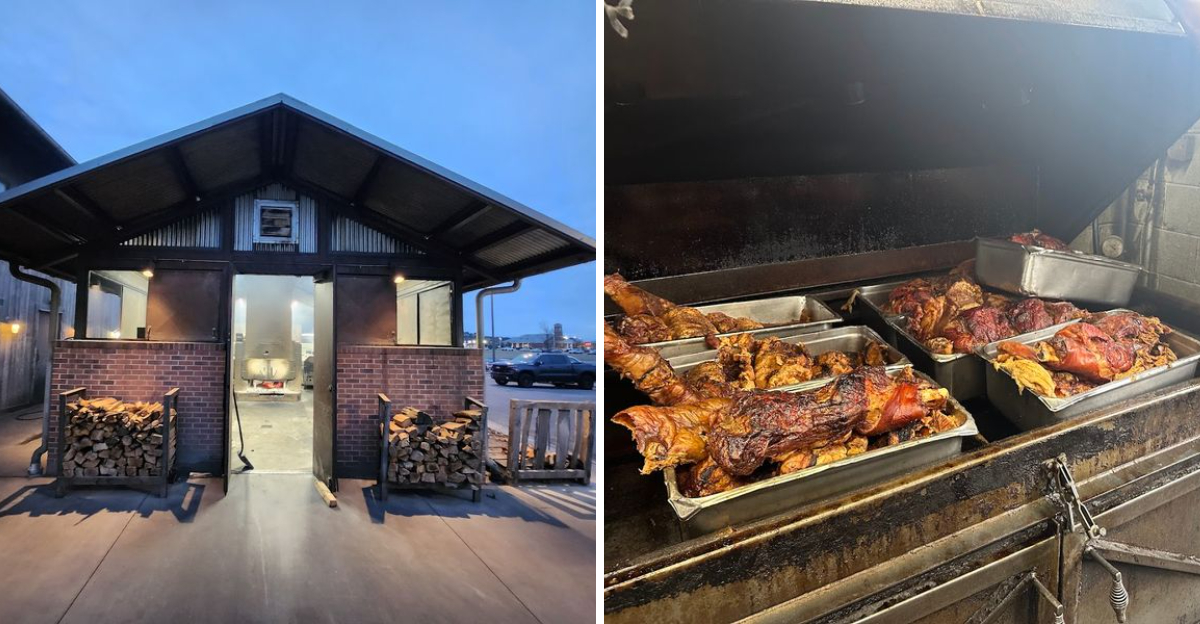
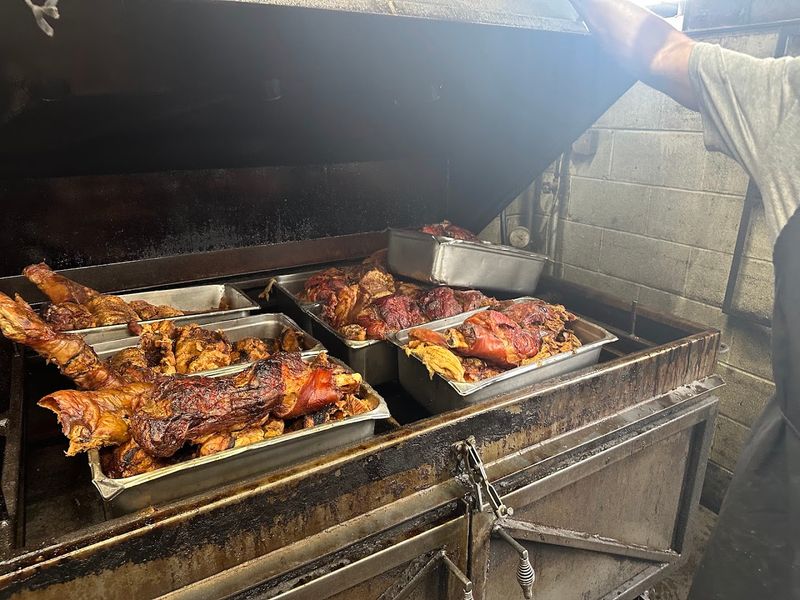
In a barbecue world crowded with brisket headlines and generic pulled pork sandwiches, Sam Jones BBQ stands apart by committing to whole-hog cooking. That means the restaurant prepares entire hogs over live-fire pits, honoring one of the clearest signatures of Eastern North Carolina barbecue.
It is a labor-intensive method, but the payoff is depth, balance, and character that single-cut smoking rarely achieves.
Cooking the whole animal creates a broader range of flavor and texture across every batch of meat. The leaner sections, richer sections, and naturally varied parts all come together in a way that feels complete rather than selective.
You are tasting the full expression of the hog, not just the most convenient portion for modern service.
That commitment is why many barbecue lovers see whole-hog as the gold standard, especially in this region. It demands skill, patience, and consistency, because there is nowhere to hide mistakes when the method is this honest.
At Sam Jones BBQ, the approach does not feel ceremonial or performative, it feels like the most natural way to make barbecue that truly belongs to North Carolina.
Wood-Fired and Low-and-Slow
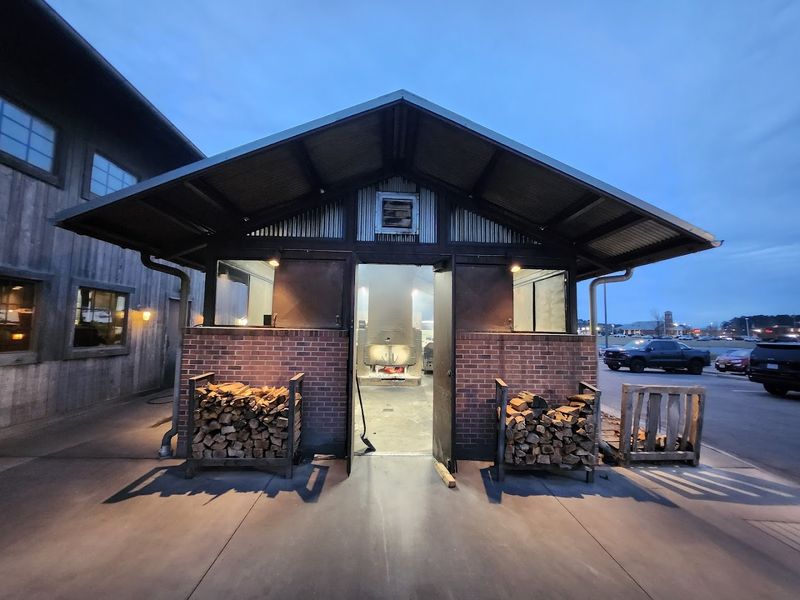
The heart of Sam Jones BBQ is not a shortcut machine or a modern heating system dressed up as tradition. The hogs are cooked low and slow over hardwood coals, using wood fire as the engine of flavor and authenticity.
In Eastern North Carolina, that method is not a decorative detail, it is the standard by which real barbecue is judged.
Wood-fired cooking creates the kind of subtle complexity that cannot be faked with bottled smoke or rushed production. Heat moves differently, smoke settles differently, and the pit demands constant attention from people who understand timing as much as temperature.
You can sense that hand-built process in the finished meat, which tastes developed rather than manufactured.
What I find most compelling is how old this technique feels without seeming outdated. It connects the restaurant to centuries of regional foodways while still delivering something vivid and immediate on the plate.
Every bite reminds you that barbecue was never meant to be sterile or automated, and Sam Jones BBQ preserves that truth with the kind of conviction that turns a meal into cultural proof.
Chopped Pork With Crispy Skin Mixed In
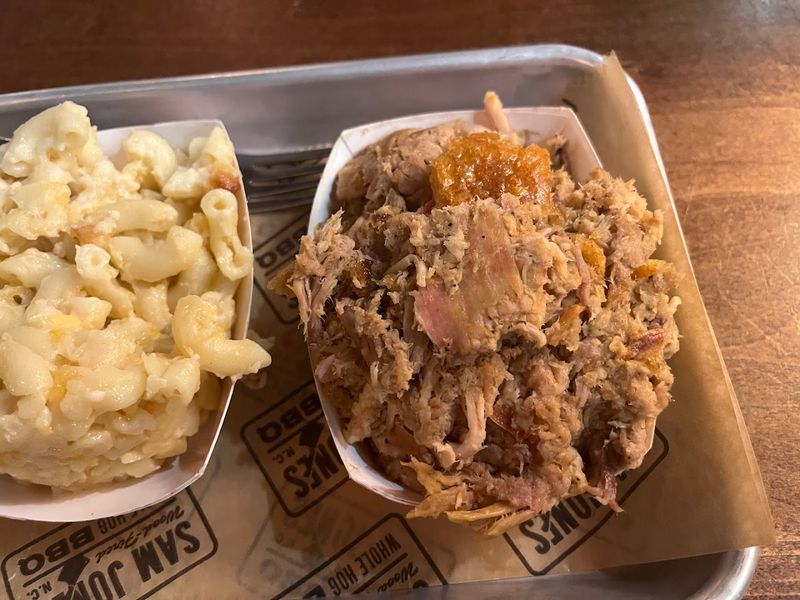
One of the defining pleasures at Sam Jones BBQ is the chopped whole-hog pork, especially because it includes bits of crispy skin mixed into the meat. That crackling element changes everything, adding texture, richness, and flashes of concentrated pork flavor that ordinary pulled pork usually cannot match.
Instead of soft strands alone, you get a lively, irregular bite that feels more complete and more memorable.
This style of chopping matters because it respects the whole-hog approach from pit to plate. The meat is not reduced to a uniform, overly handled pile, but combined in a way that preserves contrast and gives every forkful some personality.
You might get tenderness, smoke, vinegar tang, and crunch all at once, which is exactly why devotees talk about this style with such devotion.
It also captures the no-waste practicality that shaped traditional barbecue in the first place. Nothing feels ornamental here, yet the result is more distinctive than many carefully styled restaurant plates.
Once you taste chopped pork with those crisp shards folded in, it becomes much harder to settle for milder, softer versions that leave out one of the best parts.
A Menu That Balances Tradition and Modern Taste
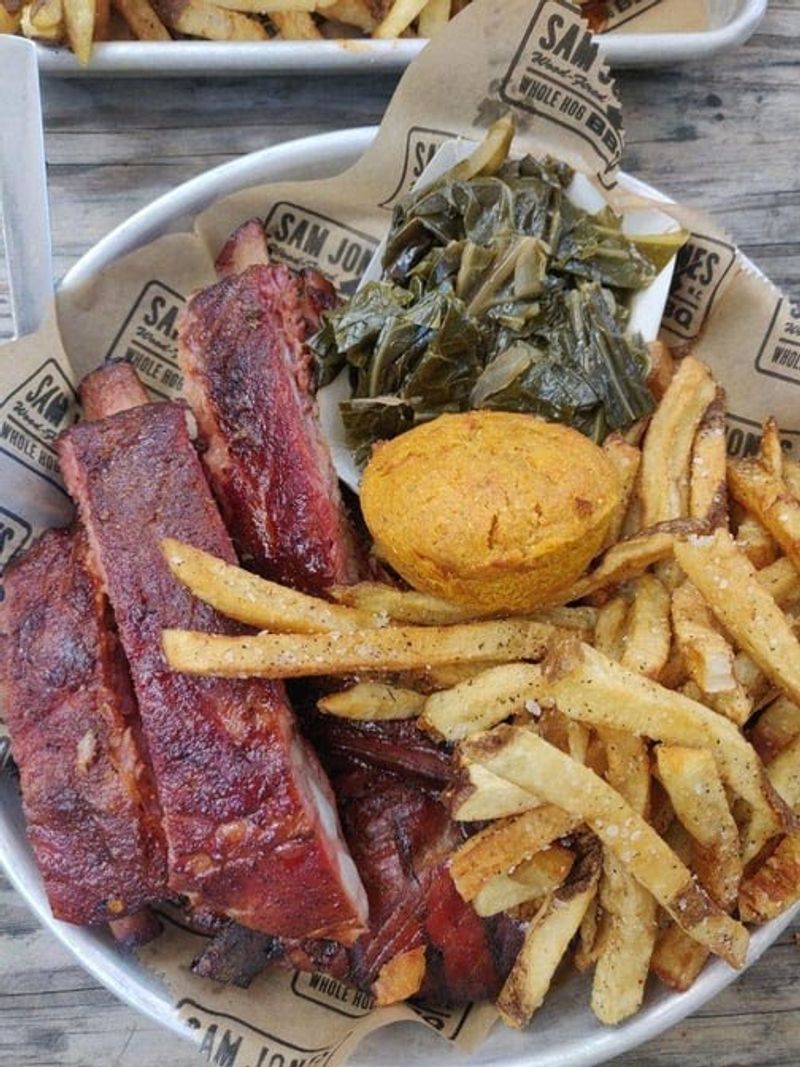
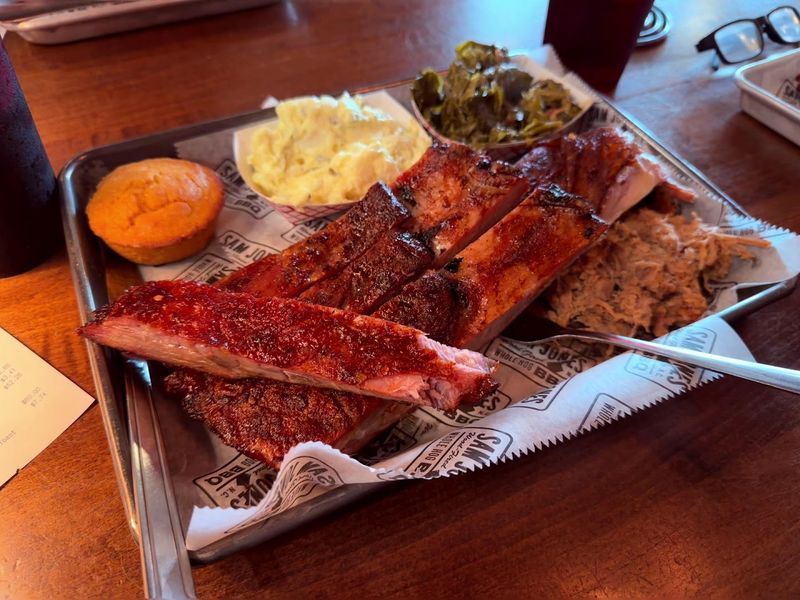
Even though whole-hog pork is clearly the centerpiece, Sam Jones BBQ does not trap itself inside a single-note menu. You can also order ribs, smoked turkey, and a lineup of sides that make the restaurant approachable for different appetites without weakening its identity.
That balance is one reason the place works so well for both barbecue purists and less committed diners.
The smart part is that nothing feels like an apology for tradition. The broader menu reads as an expansion of the smokehouse’s confidence rather than a retreat from whole-hog cooking.
If someone at your table wants the classic chopped pork while another person leans toward ribs or turkey, everyone can eat happily without the restaurant losing its center.
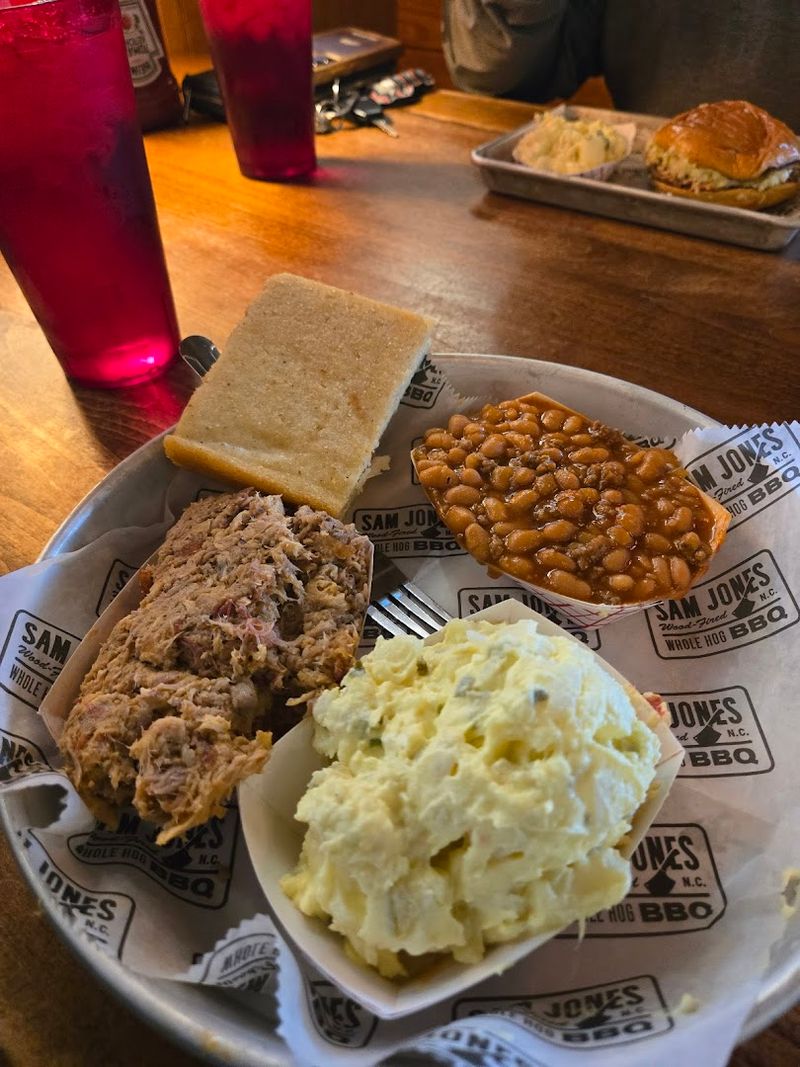
Sides help complete that experience, especially when they reinforce the Southern character of the meal. Slaw, cornbread, and the usual comforting accompaniments give the smoky meat brightness, texture, and contrast, keeping the plate satisfying instead of heavy.
You leave feeling that Sam Jones BBQ understands modern restaurant expectations, but refuses to chase trends at the expense of the thing that made it worth visiting in the first place.
Classic Eastern North Carolina Flavor
If you arrive expecting thick, sweet, tomato-heavy barbecue sauce, Sam Jones BBQ will quickly reorient your idea of what great pork can be. The flavor profile here leans into the classic Eastern North Carolina tradition of vinegar-based seasoning, sharp enough to cut through richness without burying the meat itself.
That restraint is exactly what makes the barbecue taste so confident.
Vinegar-based barbecue is not about overwhelming heat or sugary stickiness. It is about clarity, brightness, and the way acidity can lift smoke and pork fat into better balance.
When it is done well, as it is here, the seasoning works like a spotlight instead of a mask, helping you notice the character of the hog rather than distracting you from it.
This style can surprise first-timers, especially if they come from regions where sauce is expected to dominate. Yet one bite usually makes the logic obvious, because the meat tastes cleaner, livelier, and more specific to place.
Sam Jones BBQ reminds you that regional barbecue traditions survive not because they are stubborn, but because they continue proving their value every time someone tastes them with an open mind.
National Recognition and Real Credibility
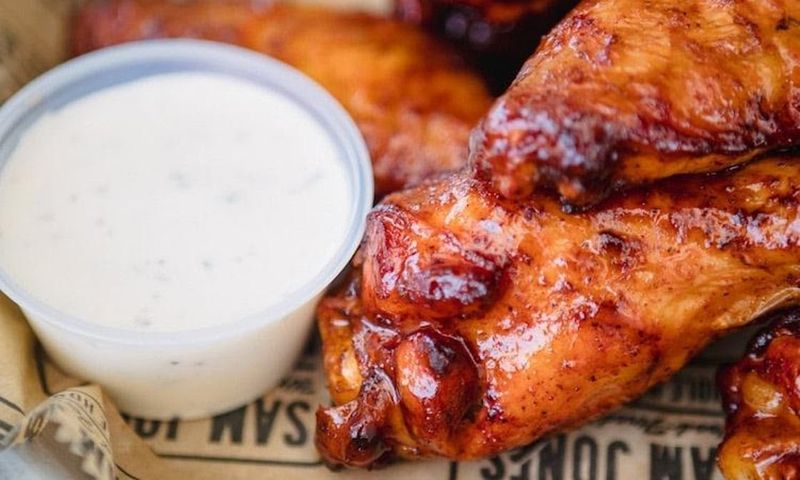
Sam Jones BBQ has earned national attention, but what stands out is that the praise feels deserved rather than inflated. The restaurant has been named among top barbecue destinations in the South, and that recognition speaks to more than popularity or clever marketing.
It reflects the respect the place has earned for preserving and elevating a regional method that could easily have been diluted.
In the current food landscape, acclaim often goes to whatever is newest, loudest, or most visually engineered for attention. Sam Jones BBQ succeeds for almost the opposite reason, because it takes a deeply rooted tradition seriously and executes it with uncommon consistency.
Critics, barbecue fans, and curious travelers respond to that honesty, especially when the final product tastes as authoritative as the reputation suggests.
What I appreciate most is that the credibility here feels grounded in the pit, not in the press release. The awards may bring people through the door, but the wood-fired whole-hog barbecue is what justifies every headline.
For anyone skeptical of
A Modern Space With Old-School Soul
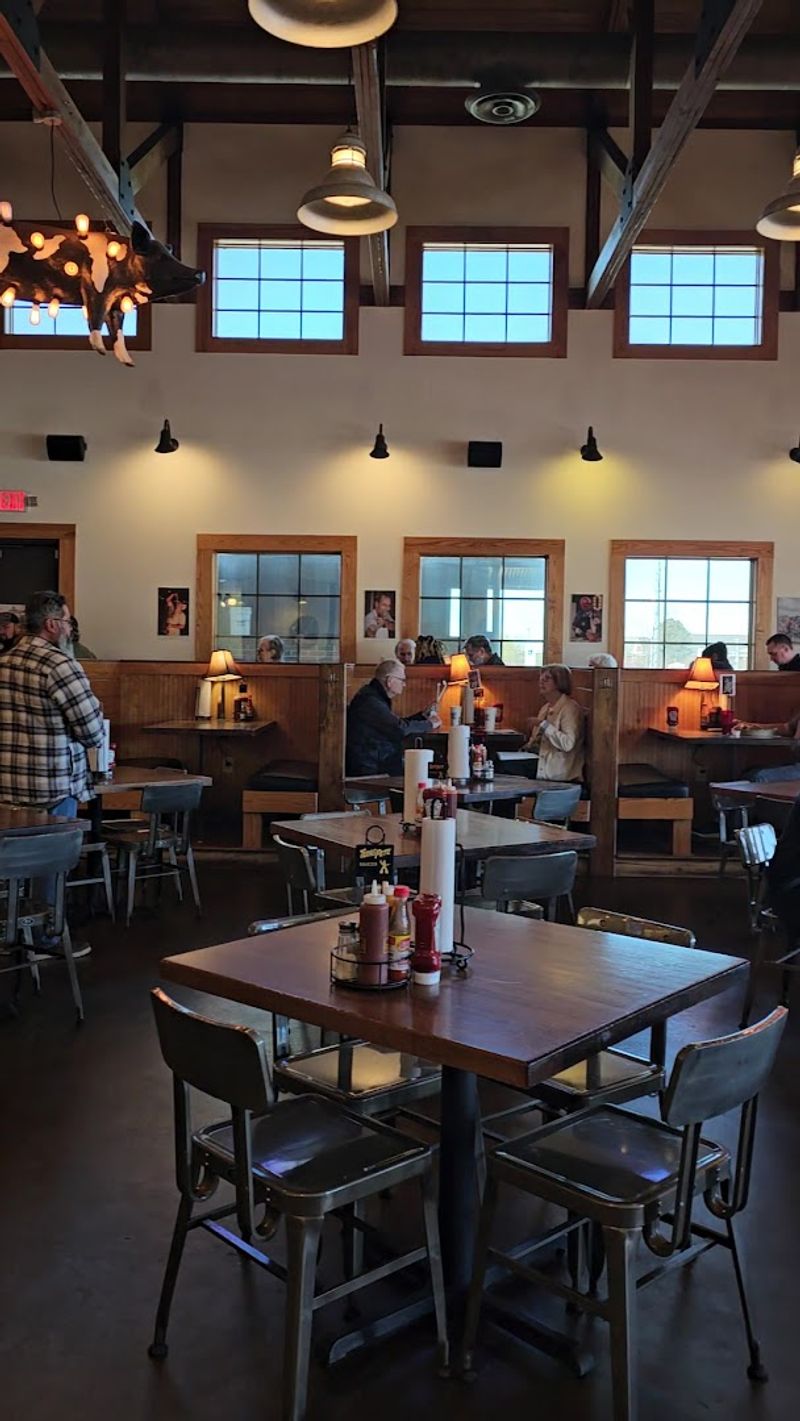
Inside Sam Jones BBQ, the atmosphere bridges old-school barbecue values with a more modern, comfortable dining experience. The dining room feels spacious and contemporary, giving the restaurant room to welcome a broad crowd without pretending to be rustic theater.
That matters because the real tradition here comes from the pits and the food, not from staged nostalgia.
There is something refreshing about a place that understands heritage does not require fake age. You can sit in a clean, functional, modern space while eating barbecue made with methods that predate most American restaurants.
That contrast actually sharpens the experience, because it shows confidence in the cooking instead of relying on decor to tell the story.
The result is a restaurant that feels accessible whether you are a local regular, a barbecue obsessive, or a road-tripper making a special stop. You get the comfort of a well-designed public space alongside the seriousness of deeply traditional craft.
Sam Jones BBQ proves that preserving regional foodways does not mean freezing them behind glass, and that maybe is one reason the place feels so alive instead of merely historic.
Visitor Tips: What to Order and When to Go
If you are making the trip to Sam Jones BBQ, a little planning will make the experience even better. The restaurant is located at 715 W Fire Tower Rd, Winterville, NC 28590, and you can check the menu at samjonesbbq.com or call +1 252-689-6449 before heading over.
Arriving early is smart, because peak freshness and shorter lines usually make the meal feel smoother and more relaxed.
For a first visit, the chopped whole-hog plate is the move. Pair it with slaw and cornbread to get the full Eastern North Carolina rhythm of tang, smoke, crunch, and comfort on one tray.
If dessert is available, do not skip the banana pudding, because it finishes the meal with exactly the kind of familiar sweetness that belongs after serious barbecue.
Service here is casual, and that is part of the point. You come for the food, the tradition, and the sense that every unnecessary flourish has been stripped away in favor of substance.
Go in expecting a focused smokehouse rather than a polished fine-dining production, and you will probably leave feeling like you found one of the state’s essential barbecue stops.