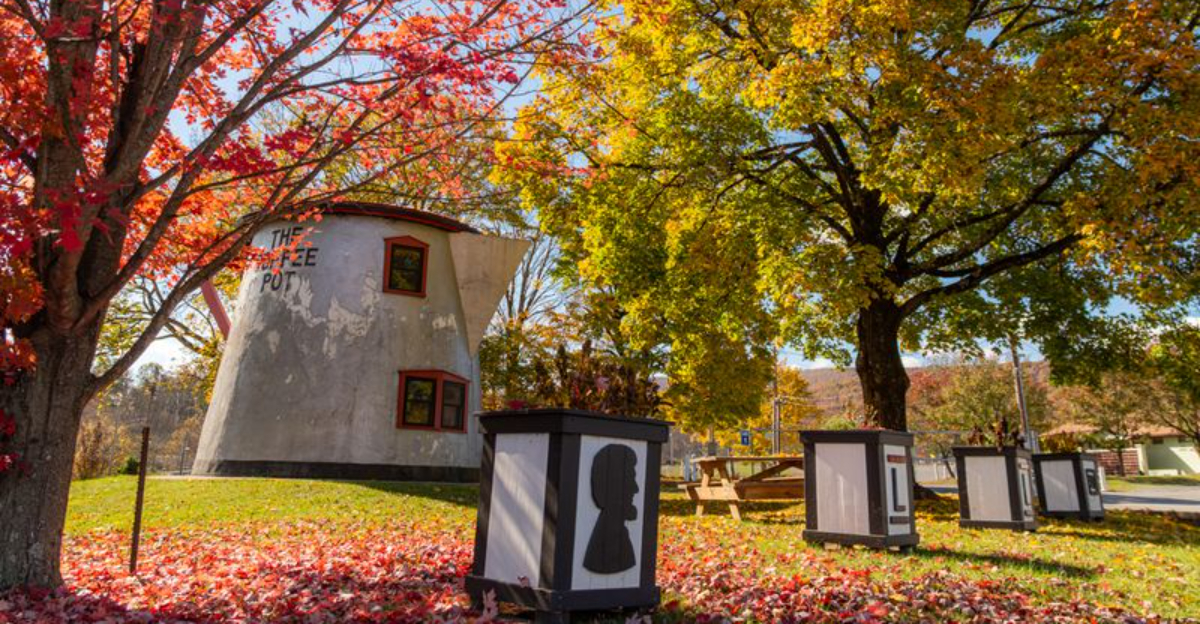
Some roadside attractions are easy to forget, but this one looks like it poured straight out of a postcard from America’s early driving days.
In Bedford, Pennsylvania, an 18-foot coffee pot has been stopping travelers in their tracks for nearly a century.
If you love quirky history, old highways, and places with real personality, this is the kind of landmark that makes a road trip feel special.
The story behind it is even better than the photo you came to take.
A Giant Roadside Landmark on the Lincoln Highway
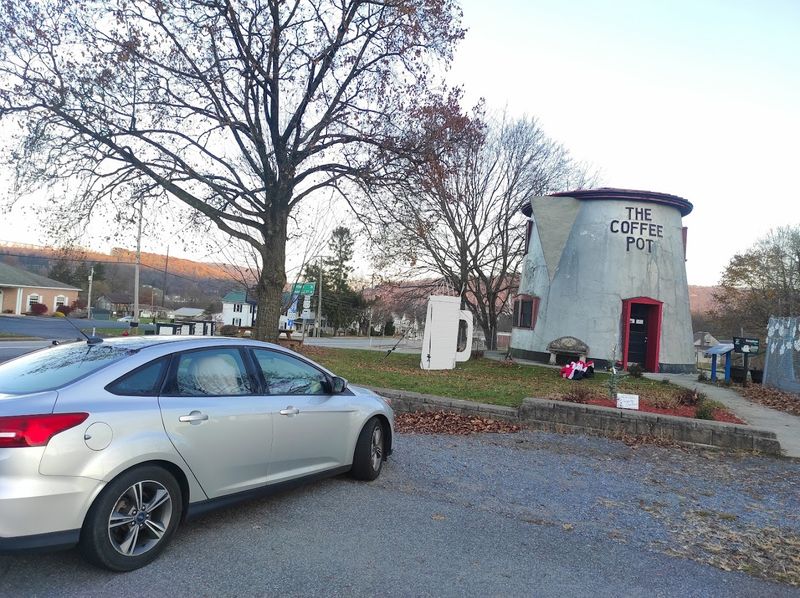
If you are driving the historic Lincoln Highway through Bedford, it is almost impossible not to smile when the Big Coffee Pot comes into view. This 18-foot landmark looks exactly like its name suggests, complete with a rounded body, bold spout, and oversized handle.
It feels playful at first glance, but it also tells a serious story about how businesses once competed for attention along America’s earliest auto routes.
I think that is part of its charm today. You are not just looking at a quirky building, you are seeing a surviving piece of roadside imagination from an era when the journey itself mattered as much as the destination.
Before giant interstate exits and chain restaurants, places like this gave travelers something memorable to talk about.
Set along Business US-30 in Bedford, the structure still greets passersby with the same visual punch it delivered generations ago. It remains one of Pennsylvania’s most recognizable examples of novelty architecture.
If you enjoy landmarks that make a map feel human, this is the kind of stop that earns a place in your travel memories.
Built in 1927 to Draw in Motorists
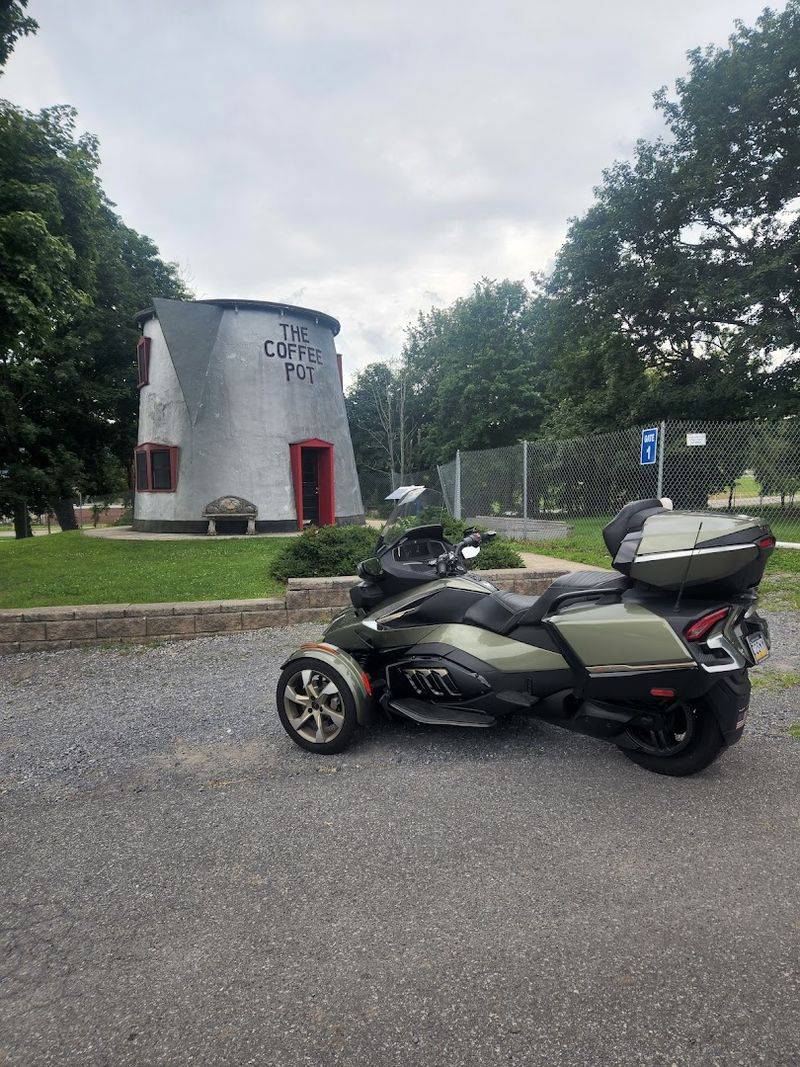
The Big Coffee Pot was built in 1927 by local entrepreneur David Bert Koontz, and its purpose was wonderfully direct: get people to stop. During the early automobile travel boom, more drivers were cruising across Pennsylvania, and business owners along major routes needed something bold enough to catch the eye.
Koontz understood that a standard sign would not do nearly as much as a building shaped like a giant household object.
That practical thinking is what makes the Coffee Pot so interesting. It was not created as public art or as a joke for future tourists.
It was a smart marketing move tied to Koontz’s nearby garage and service station, giving weary motorists one more reason to pull over, refuel, grab a bite, and perhaps spend a little money.
When you stand in front of it now, you can still sense that original business energy. It was born from a moment when car travel was changing daily life and small-town entrepreneurs were learning how to speak to people speeding by at twenty or thirty miles per hour.
This coffee pot did exactly what it was built to do, and people are still stopping because of it.
A Classic Example of Programmatic Architecture
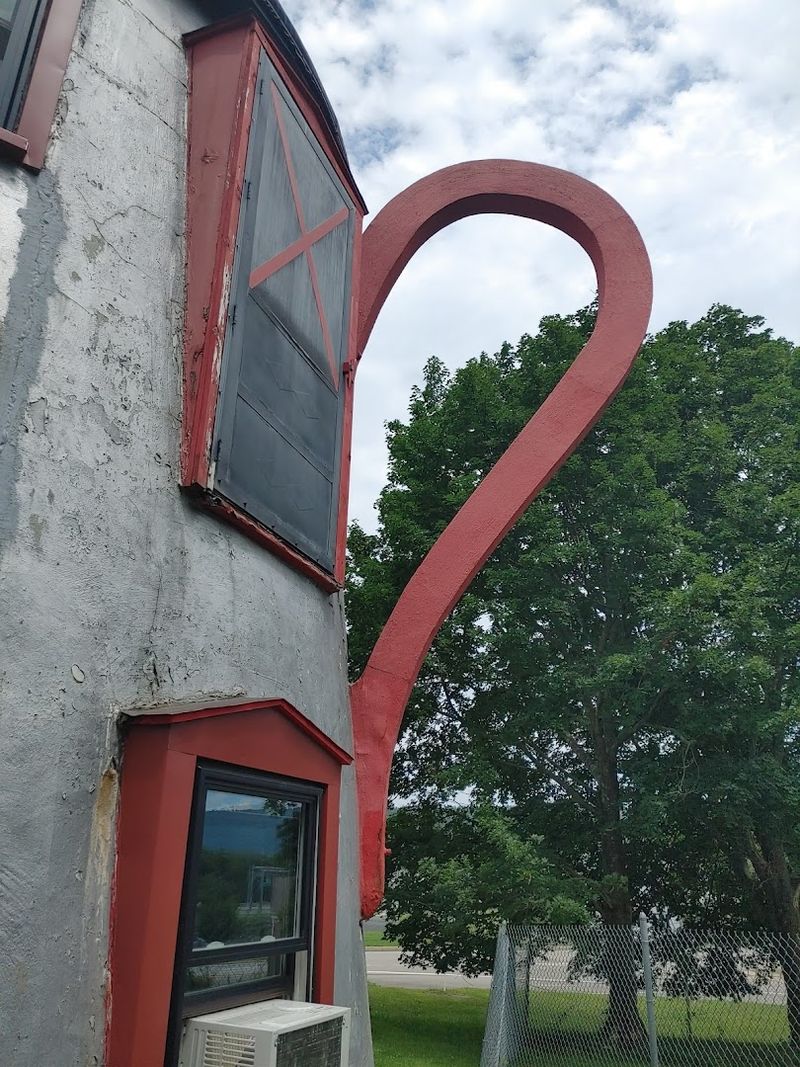
The Big Coffee Pot is more than a fun oddity, it is a textbook example of programmatic architecture. That term refers to buildings intentionally designed to look like the thing they represent, turning architecture into advertisement in the most literal way possible.
In this case, the building was made to resemble a coffee pot so travelers would instantly understand the theme before they ever stepped closer.
I love how direct that approach feels. There is no subtle branding, no polished slogan, and no mystery about what the owner hoped you would think about.
The building itself did the talking, and for motorists moving along the Lincoln Highway, that kind of visual clarity was powerful.
Across America, the early twentieth century produced giant hot dogs, teapots, and other whimsical structures meant to stand out in a growing roadside economy. Many disappeared as tastes changed and highways evolved.
That is why Bedford’s surviving Coffee Pot matters so much. It gives you a rare chance to see how creativity, commerce, and architecture once blended together beside the open road, all in one unforgettable shape.
It Started Life as a Tiny Restaurant
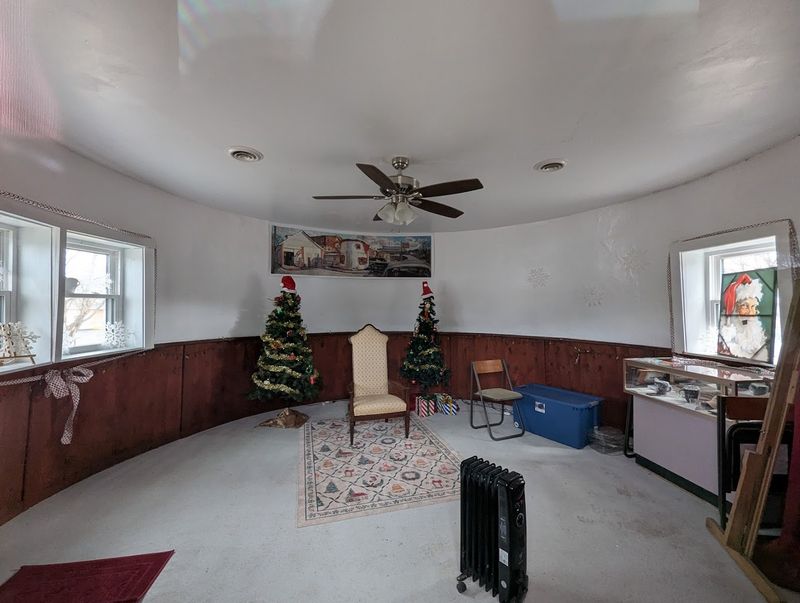
As eye-catching as the building itself is, the original use of the Coffee Pot makes it even more appealing. In its earliest years, it operated as a small luncheonette serving coffee, sandwiches, and ice cream to travelers passing through Bedford.
It was directly connected to the Koontz Garage and service station, creating a convenient one-stop pause for people on the road.
You can picture the scene without much effort. A driver pulls in for gas, someone else stretches their legs, and another traveler steps into the tiny coffee-pot-shaped eatery for a quick bite before continuing west or east.
That combination of novelty and practicality was exactly what made roadside businesses successful during the rise of automobile tourism.
What I find especially charming is that the building was not only meant to look like a coffee pot, it actually served coffee. That simple connection gives the place a satisfying honesty.
It was playful, but it was also functional, and that balance is a big reason the landmark still feels authentic today. You are not looking at a random sculpture.
You are looking at a former business built with purpose, humor, and a very clear menu in mind.
The Site Grew Into a Larger Roadside Stop
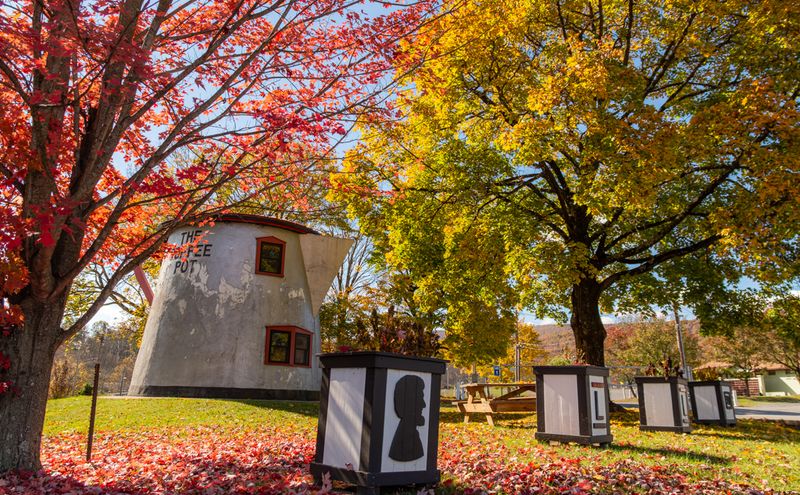
By 1937, the Coffee Pot had entered a new chapter. The building transitioned into a bar, and a motel or hotel structure was added behind it, helping transform the property into a broader roadside stop for travelers and bus passengers.
What began as a novelty luncheonette evolved with the needs of the traffic moving through Bedford.
That change says a lot about how flexible these early highway businesses needed to be. Owners had to respond to shifting customer habits, longer-distance travel, and the growing expectation that a roadside stop could offer more than fuel or a snack.
Food, drinks, lodging, and service all worked together to create a destination that felt useful and welcoming.
When you think about the Coffee Pot in this expanded setting, it becomes easier to imagine it as part of a busy little travel hub rather than a lonely oddball structure. It likely stood out to people arriving by car or bus, acting as both landmark and invitation.
Even though the surrounding operations changed over time, the Coffee Pot remained the visual anchor. It was the image travelers remembered, and the feature that turned an ordinary business stop into something with genuine personality.
A Favorite Stop Before the Interstates Took Over
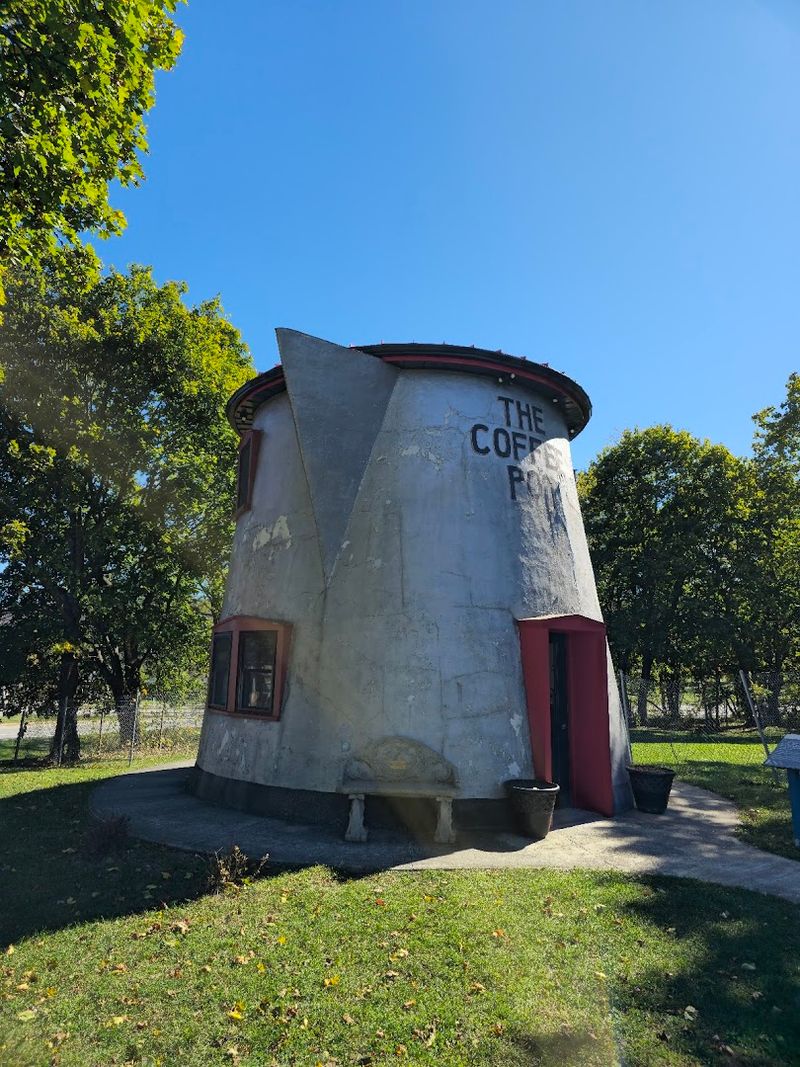
Before interstates and modern turnpikes redirected long-distance traffic, the Lincoln Highway through Bedford was a major artery for cross-country travel. That made the Big Coffee Pot an especially visible and heavily visited stop during the height of pre-interstate road culture.
Drivers, families, salesmen, and bus passengers all moved along this route, and novelty architecture like this had a real audience.
If you love old American road stories, this is where the Coffee Pot becomes more than cute. It stood beside one of the nation’s most important early highways at a time when roadside businesses thrived on curiosity, convenience, and repetition.
People were not racing past at interstate speed. They were more likely to notice local landmarks, stop for refreshment, and let the road unfold town by town.
The opening of the Pennsylvania Turnpike in 1940 changed that pattern in a major way by pulling traffic away from older routes. Still, for years before that shift, the Coffee Pot benefited from a steady stream of travelers exploring the country in a more intimate way.
When you visit today, you are stepping into the memory of that slower travel era, when the road itself offered surprises around almost every bend.
Years of Decline Nearly Ended Its Story
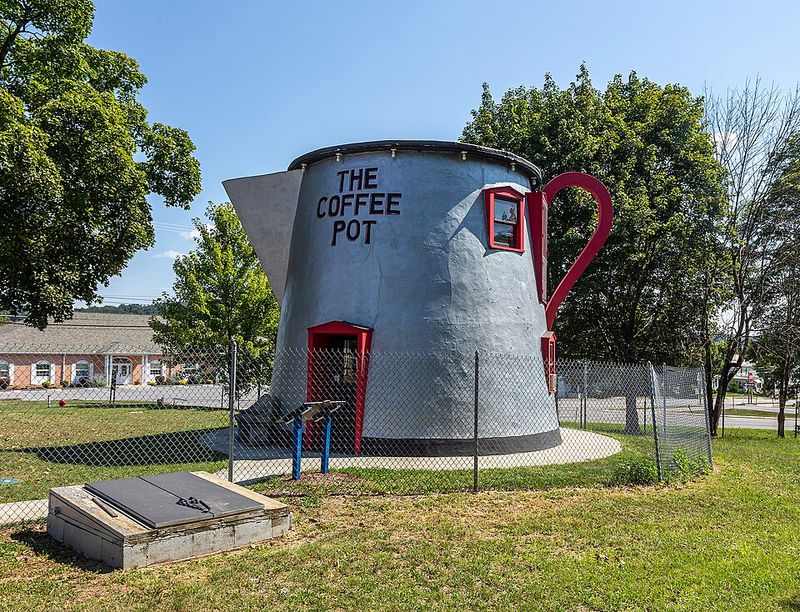
Like many historic roadside landmarks, the Big Coffee Pot did not glide smoothly into protected status. By the late 1980s, it had closed, and as the years passed, the structure fell into serious disrepair.
By the 1990s, deterioration had become severe enough that demolition seemed like a very real possibility.
That part of the story is easy to overlook when you see the restored landmark today, but it matters. Countless pieces of roadside history vanish because they no longer fit modern business models, and once they are gone, the local texture they carried disappears with them.
The Coffee Pot was vulnerable in exactly that way, stranded between nostalgia and neglect.
I think there is something sobering about imagining such a whimsical building on the edge of being lost. Its playful shape could not protect it from weather, disuse, or changing traffic patterns.
Without intervention, it might have become just another photograph in a local history archive instead of a place you can still pull over and see in person. The period of decline gives the Coffee Pot’s survival even more meaning.
It reminds you that preservation is rarely automatic, even for landmarks that seem unforgettable once they are finally saved.
Local Preservationists Stepped In to Save It
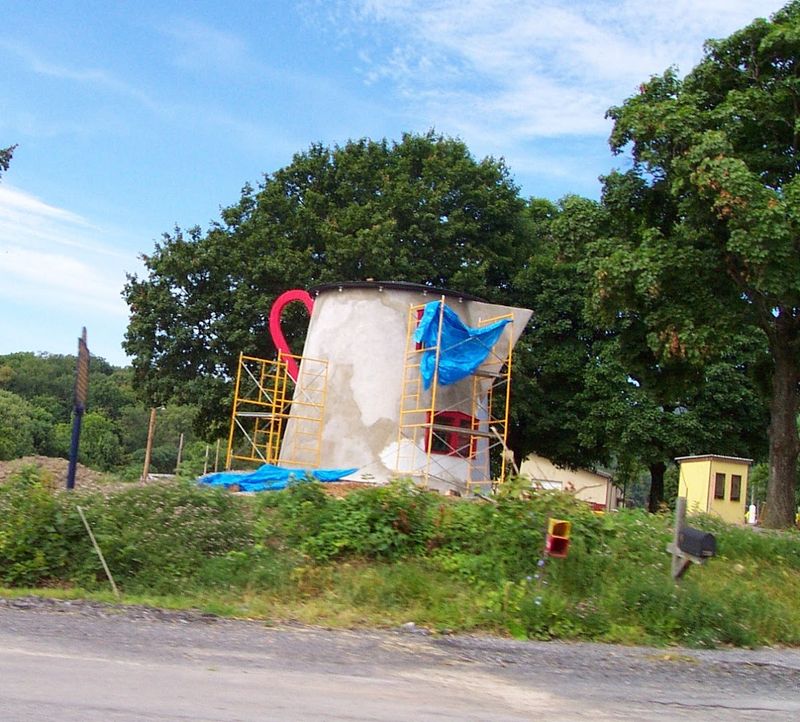
The reason you can still visit the Big Coffee Pot today is simple: people in the community decided it was worth saving. Local preservationists, along with the Lincoln Highway Heritage Corridor, stepped in during the early 2000s to purchase the structure and prevent its destruction.
That effort turned a fading curiosity into a protected piece of regional history.
I always think the best preservation stories are about more than bricks, steel, or paint. They are about residents recognizing that a place carries memory, identity, and a sense of local character that cannot be replaced once it is gone.
The Coffee Pot may be whimsical, but the commitment behind saving it was serious and deeply practical.
Without that community-led action, this landmark could easily have disappeared under the familiar logic of convenience and redevelopment. Instead, preservation advocates treated it as something special, both for Bedford and for the broader story of the Lincoln Highway.
Their work also reflects a growing appreciation for roadside Americana, especially the kinds of small, odd, delightful structures that once shaped everyday travel. When you stop for a photo now, you are really seeing the result of people who believed local history deserved a visible, tangible second chance.
Moved and Restored for a New Life
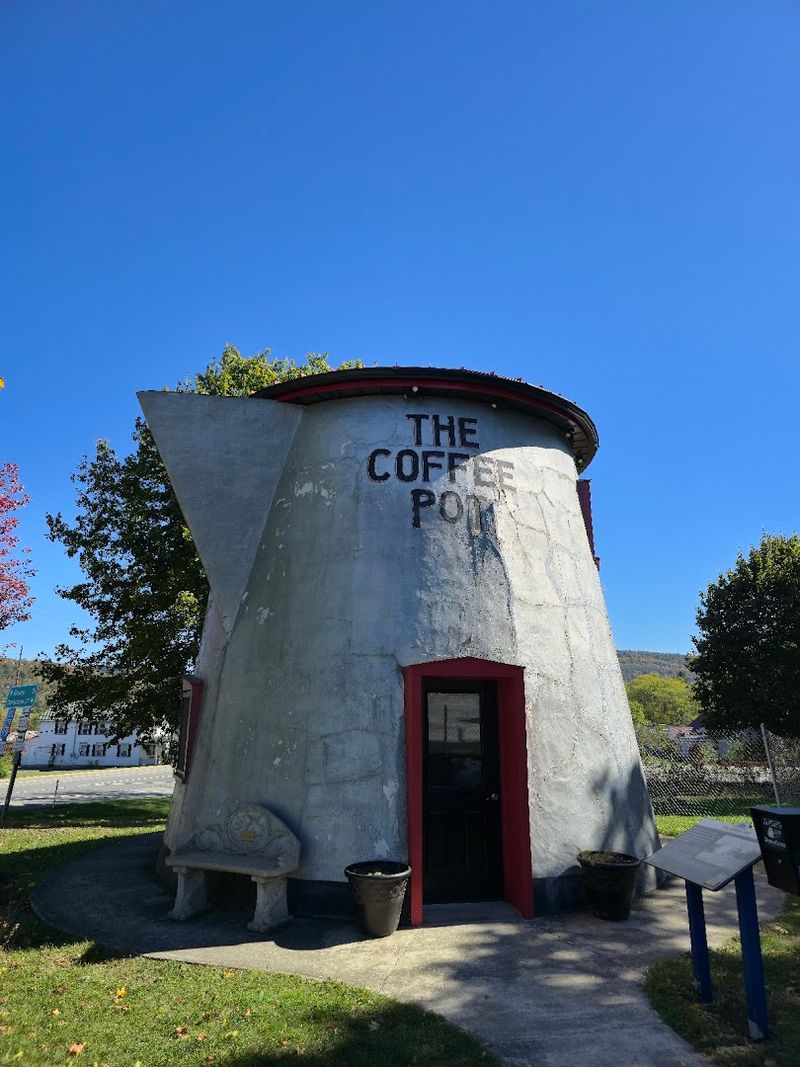
One of the most remarkable parts of the Coffee Pot’s survival story is that it was not simply repaired where it stood. In 2003, the structure was carefully moved across Route 30 to the entrance of the Bedford County Fairgrounds, a relocation that gave preservationists a better chance to protect and showcase it.
After restoration work, it reopened in 2004 as a preserved landmark.
That move was a big deal, because relocating a novelty building is not as simple as towing a sign to a safer lot. The Coffee Pot needed to retain its recognizable character while being stabilized, repaired, and placed where visitors could still experience it as a roadside icon.
The restoration gave it a cleaner future without erasing the old-fashioned spirit that made it special in the first place.
There is something satisfying about this second life. Instead of fading into memory, the Coffee Pot was physically lifted out of decline and set into a new chapter where people could continue appreciating it.
You still get the visual thrill of seeing a giant coffee pot beside the road, but now you also know the structure survived because people invested real care, planning, and effort into keeping that view alive.
What to Know Before You Visit Today
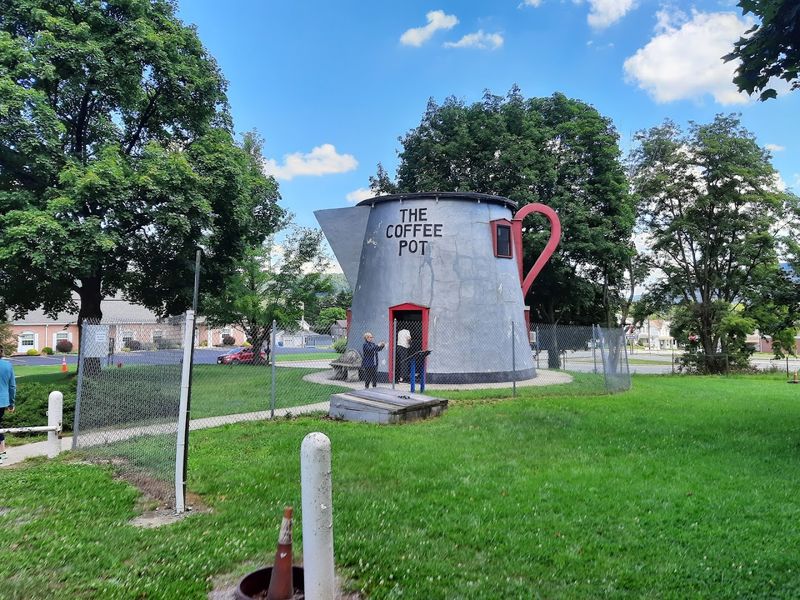
If you want to see the Big Coffee Pot for yourself, head to 714 W Pitt St, Bedford, PA 15522. Today it stands at the entrance to the Bedford County Fairgrounds along Business US-30, making it an easy and rewarding stop if you are already exploring Bedford or following the historic Lincoln Highway.
Best of all, it is a free roadside attraction, which means you can enjoy it without needing much extra time.
This is primarily a quick outdoor photo stop, so plan on viewing the structure from outside unless fairgrounds events or local festivals happen to allow interior access. Parking is usually available nearby, but it is smart to stay mindful of gates, traffic flow, and any fair operations taking place.
A little courtesy goes a long way when you are visiting an active local site.
I would recommend pairing the Coffee Pot with a broader Bedford day trip if you can. It is the kind of landmark that takes only a short visit, yet leaves a surprisingly lasting impression once you see it in person.
Bring your camera, enjoy the roadside nostalgia, and take a moment to imagine the generations of travelers who paused here before you, all because one giant coffee pot demanded their attention.