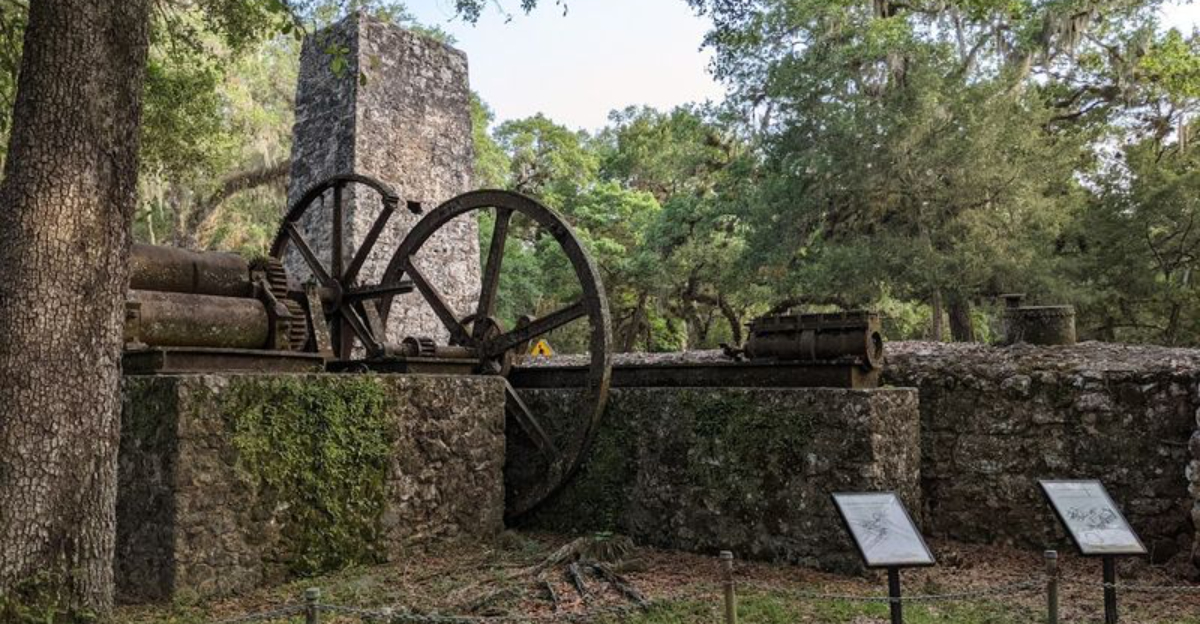
A lot of roadside attractions promise more than they deliver, but this one wins you over precisely because it is so strange, compact, and easy to visit. Yulee Sugar Mill Ruins Historic State Park in Homosassa puts a hefty slice of 19th century Florida history right beside a busy road, where towering masonry and rusting machinery feel almost startlingly close.
You can see it in minutes, but the details have a way of sticking with you long after you leave. If you enjoy quick stops with real substance, this is the kind of place worth slowing down for.
A Quick Stop That Still Feels Memorable
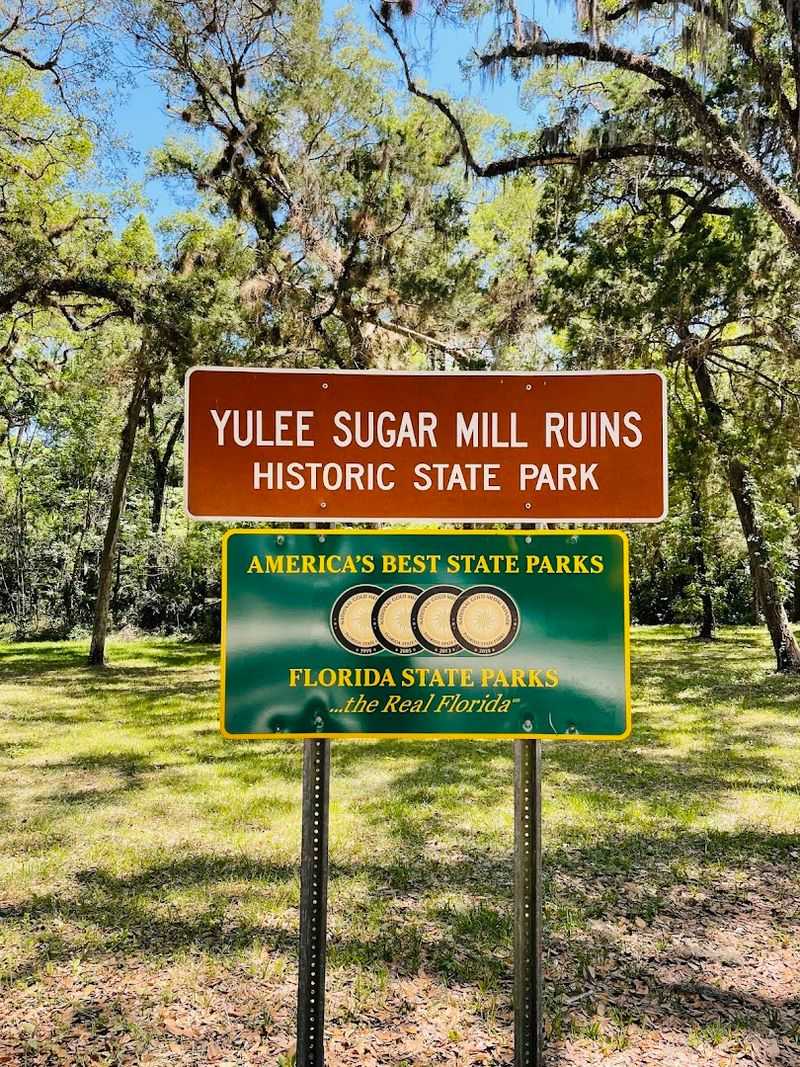
Some historic sites ask for an afternoon, but this one makes its impression in a fraction of that time. You can pull in, park across the road, and be standing near the ruins within minutes, which is exactly why it works so well for a day already packed with plans.
Instead of feeling rushed, the short visit gives the place a focused kind of impact.
Drivers pass by expecting little more than a marker or a fenced lot, then spot the massive chimney and iron components and realize this is a real industrial remnant from Florida’s past. Several visitors mention spending only ten to fifteen minutes here, yet still calling it interesting, unusual, and worth the detour.
That balance makes it ideal for anyone who loves history but does not always want a long museum stop.
What stays with you is the contrast between the site’s small footprint and the size of the story behind it. Sugar production, steam power, plantation history, and Civil War era industry all come into view in a compact roadside setting.
If your travel style leans toward meaningful stops over crowded attractions, this place proves a quick pause can still feel surprisingly substantial and distinctly Floridian.
The Ruins Are More Intact Than You Might Expect
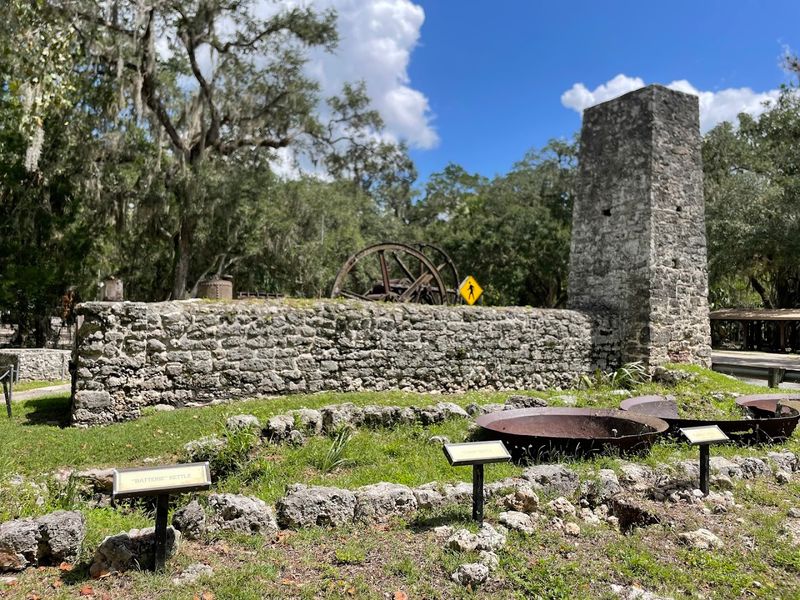
At first glance, you might expect a few scattered stones and a faded sign, but the remains here are much more legible than that. The towering limestone chimney immediately gives the site presence, and the surviving iron machinery helps you picture a working sugar mill instead of a vague archaeological footprint.
Even visitors who expected very little often note that the mill looks more intact than similar ruins they have seen.
That physical clarity matters because it turns history from an abstract topic into something you can actually visualize. The machinery suggests motion, heat, noise, labor, and the rhythm of production, while the masonry hints at the scale of the original operation.
You are not just reading about 1850s industry in Florida, you are looking at the bones of it in place.
Not every interpretive sign has survived over the years, and some reviews mention missing placards or weathering from storms. Even so, the structure itself carries much of the storytelling.
When a site can communicate this much through brick, iron, and layout alone, it earns more than a passing glance, especially for anyone who appreciates places where the landscape still holds the outline of work once done there.
Crossing The Road Is Part Of The Experience
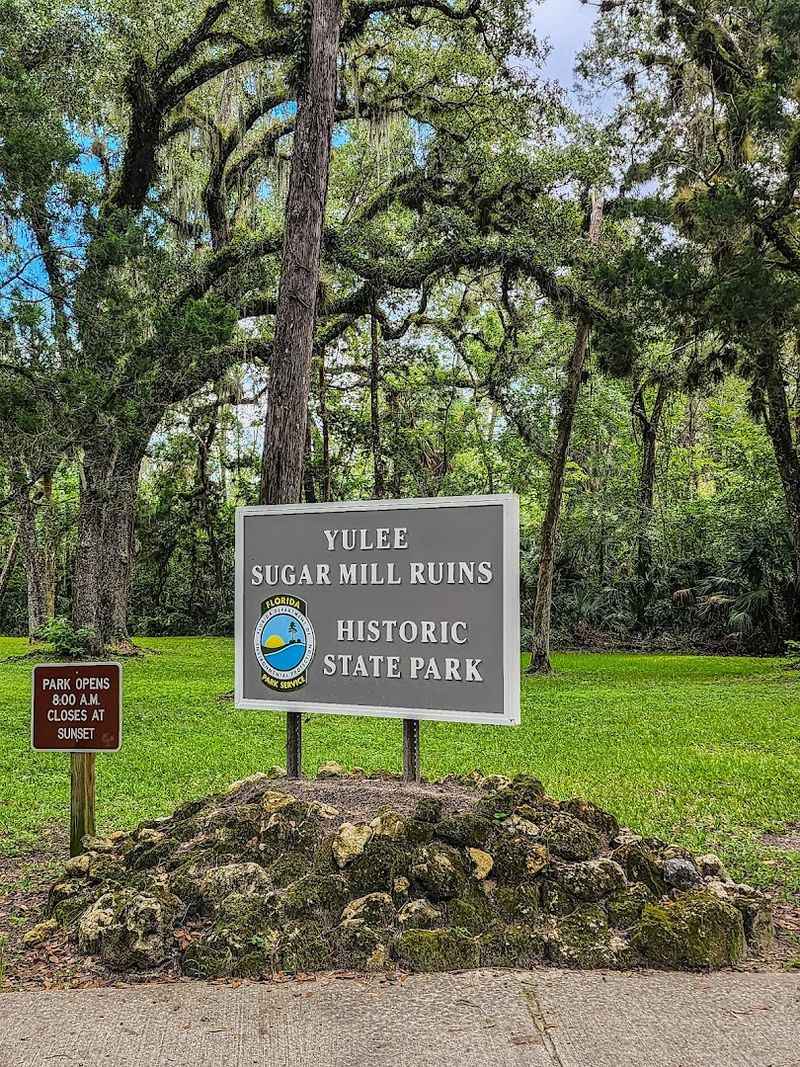
One of the oddest parts of visiting this state park is that the parking area sits across the road from the actual ruins. That arrangement catches some people off guard, especially if they expect a single enclosed park space with the attraction directly beside the lot.
Instead, you park, take in the surroundings, and then carefully cross a road that can be surprisingly busy.
Multiple reviewers warn about traffic, and that is probably the most practical tip to keep in mind before you arrive. It is not difficult to access, but you do need to stay alert and treat the crossing as part of the stop rather than an afterthought.
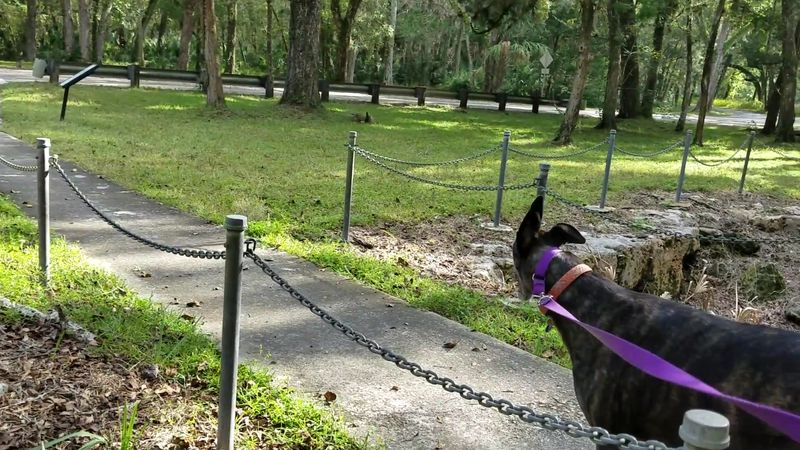
For families, anyone with pets, or travelers just stretching their legs, that small bit of planning makes the visit much smoother.
Once you get to the ruins, the walk itself is easy, with a short paved path and an approachable layout. The unusual split between parking area and historic remains adds to the site’s roadside character, making it feel less like a polished attraction and more like a preserved piece of local history still living in its everyday setting.
That quirk may be inconvenient for a moment, but it also makes the stop memorable in a very specific way.
A Small Site With A Big Florida Story
Standing here, it is hard not to think about how much history is compressed into such a small patch of ground. The ruins are tied to a once extensive sugar plantation, and the surviving mill reflects a period when Florida’s economy, agriculture, and politics were deeply entangled.
Reviews often mention that the site sparks curiosity because it invites you to imagine what life and labor looked like in the 1800s.
The remains are not just decorative relics. They point to steam powered production, the processing of sugarcane, and the broader role this operation played during the Civil War era.
For many travelers, that context turns a short walk into something more reflective, especially when you consider the human effort behind every surviving piece of iron and stone.
It also helps that the setting does not bury the history under too much entertainment or overdesign. You get the essentials, a few explanatory signs, the visible machinery, and enough room for your own imagination to do some of the work.
If you enjoy places that leave space for questions instead of spoon feeding every answer, this little state park delivers a deeper experience than its size suggests, and it does so without asking much of your time.
The Picnic Area Adds A Peaceful Pause
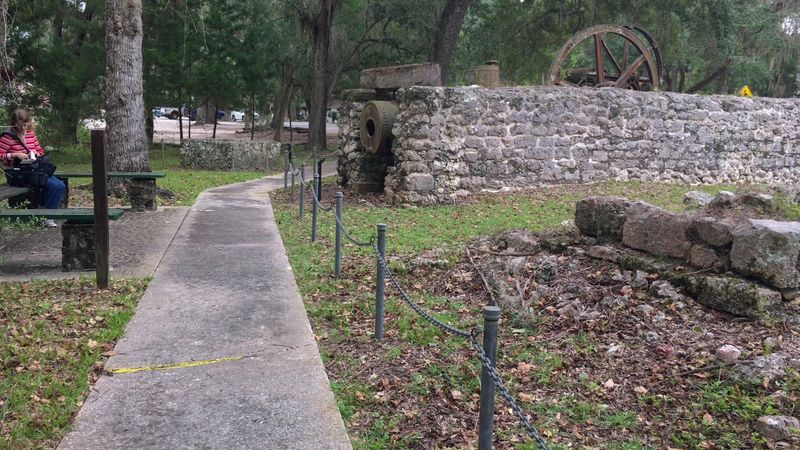
Across from the ruins, the small park area softens the industrial mood with shade, tables, and a pavilion that makes the stop feel more welcoming. A few visitors mention eating lunch here, stretching their legs, or simply enjoying the quiet before getting back on the road.
That simple setup gives the site an easy rhythm: look at the ruins, read the signs, then sit for a few minutes and let the history settle in.
The grounds may not be large, but they add comfort in a way that matters on a travel day. Oak and cypress trees, twisting vines, and the open picnic space create a calm contrast to the hard stone and metal across the street.
One reviewer even singled out the enormous wild grape vine nearby, which sounds like exactly the kind of quirky detail you notice when a place encourages you to slow down.
Not every amenity is guaranteed, and restroom access has been inconsistent according to several comments, so it is smart to arrive prepared. Still, the park side of the property gives this quick stop more appeal than a simple pull off would have.
You are not just hopping out for a photo, you are getting a brief but pleasant break in a setting that feels quietly rooted in old Florida.
Why It Works Best As Part Of A Larger Day
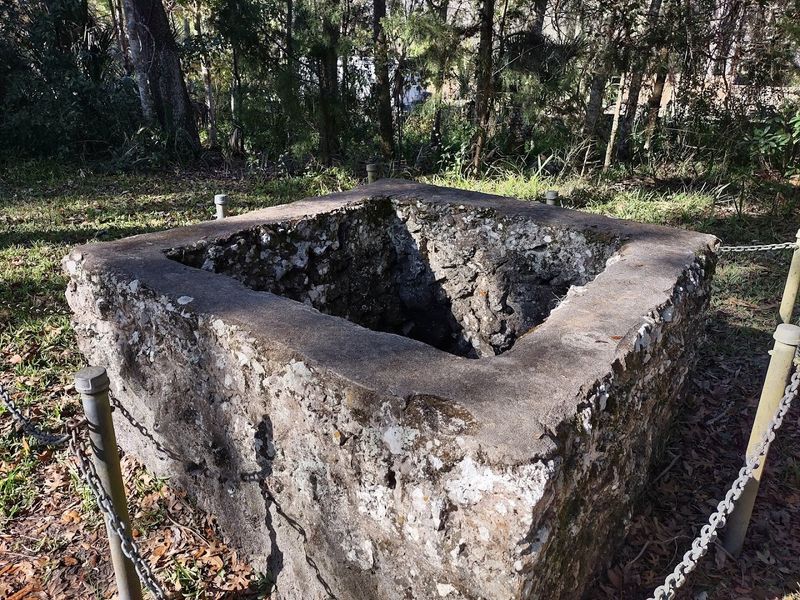
This is not the kind of destination that usually anchors an entire itinerary, and that is actually useful to know before you go. The site is small, the walk is short, and most people finish their visit quickly, so expectations matter.
If you arrive wanting a compact historical detour instead of a full afternoon attraction, you are far more likely to leave happy.
That makes the ruins especially good for road trips through Homosassa or for anyone already exploring nearby spots in Citrus County. You can stop, get a dose of local history, take a few photos, and move on without feeling like you committed too much time.
Several reviews describe it as a perfect place to stretch your legs, walk a dog, or add one meaningful stop to a day of sightseeing.
The smartest approach is to treat it as a concentrated experience rather than a broad one. Read the remaining signage, notice the machinery, take in the chimney, and spend a moment in the picnic area before heading off.
Seen that way, the park does exactly what it should. It offers a clean, accessible glimpse into Florida’s past, and it does so with a low time commitment that fits neatly into real travel plans.
What Makes This Stop Feel So Unusual
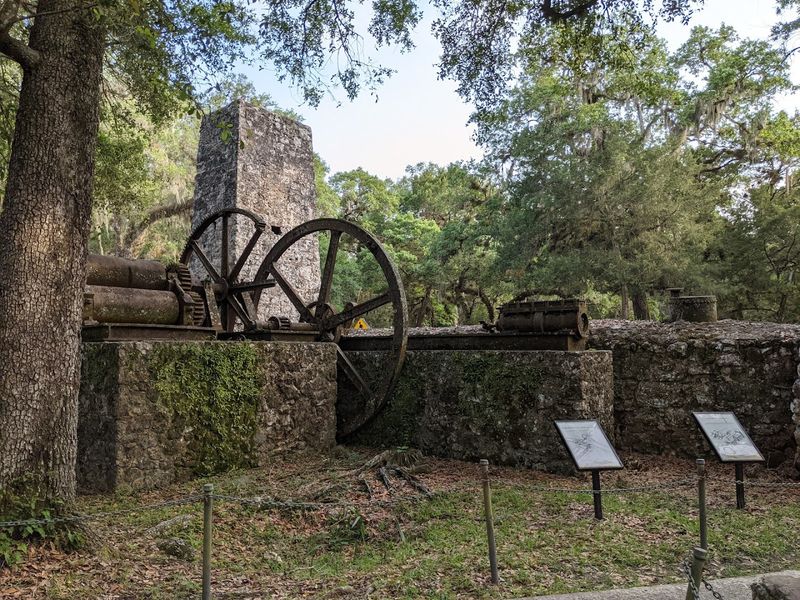
There is something wonderfully odd about finding a state park that feels this compact, this exposed, and this historically weighty all at once. The ruins sit right along the roadside, not hidden deep in a forest or behind a grand visitor center, which gives the whole experience an almost accidental quality.
You are face to face with a serious piece of Florida history in a setting that feels disarmingly ordinary.
That tension is exactly what makes the stop memorable. One minute you are driving through Homosassa traffic, and the next you are looking at a chimney, gears, and cane processing remnants tied to a 19th century sugar plantation.
The site asks very little from you, but in return it offers a rare kind of immediacy that bigger attractions sometimes lose.
It will not overwhelm you with activities, and some visitors do wish there were more signs, more displays, or more to physically see. Even with those limitations, the place has character.
It invites imagination, rewards curiosity, and leaves you with the distinct sense that Florida history often survives in unexpected pockets. For travelers who appreciate unusual places that feel both humble and significant, this quick stop earns its reputation with almost no fuss at all.