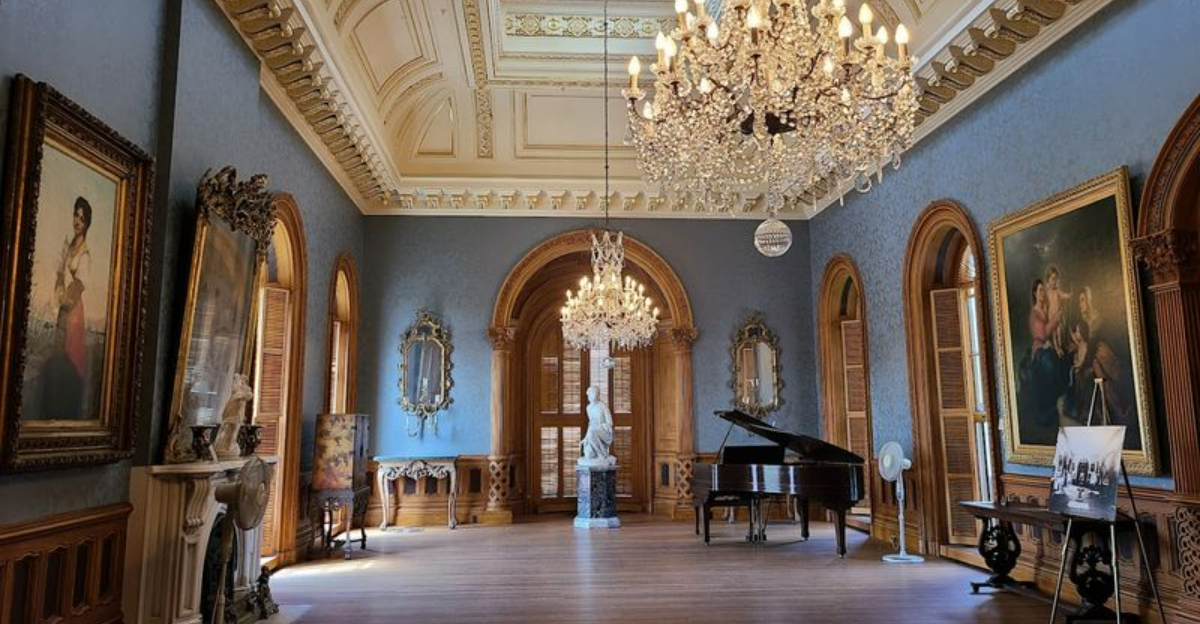
Some historic houses feel impressive, but Hay House feels almost improbable. In the middle of Macon, Georgia, this 18,000-square-foot mansion tells the story of a couple whose three-year European honeymoon turned into a master class in design.
What they brought home was not just art and inspiration, but a bold vision for a palace-like residence unlike anything around it. If you love architecture, hidden details, and the strange ways travel can reshape a life, this house pulls you in fast.
The Honeymoon That Changed the House
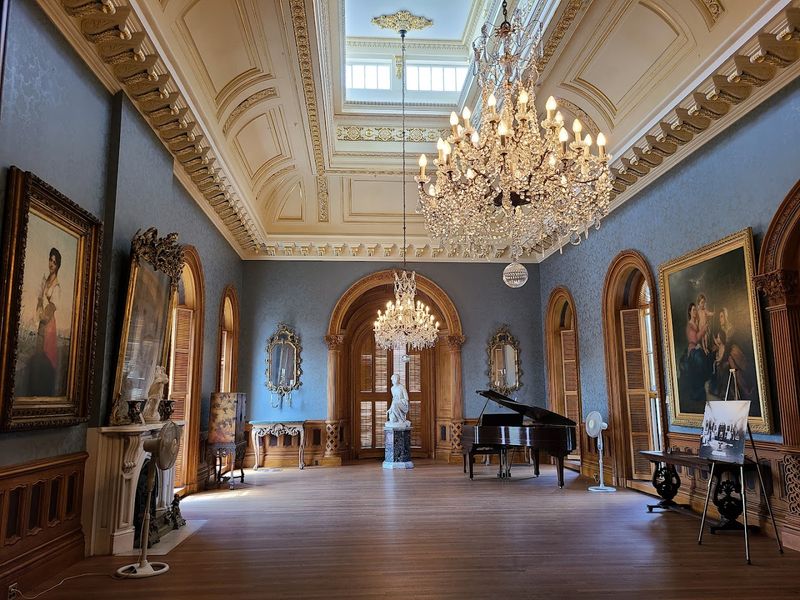
What grabs me first about Hay House is that it really begins in Italy, not Georgia. William Butler Johnston and Anne Clark Tracy spent nearly three years traveling through Europe after their 1851 marriage, and that was less a honeymoon than a design education in motion.
As you look at the mansion today, you can almost feel them translating palazzos, galleries, and villas into a Southern setting.
They were not rushing from landmark to landmark for bragging rights. They studied architecture, collected furnishings, and absorbed the visual language of Italy so thoroughly that when they returned to Macon, they built a house shaped by memory and intention.
That long trip explains why Hay House feels unusually specific, like a personal travel journal turned into brick, stucco, plaster, and ceremony.
Why Macon Makes the Mansion Hit Harder
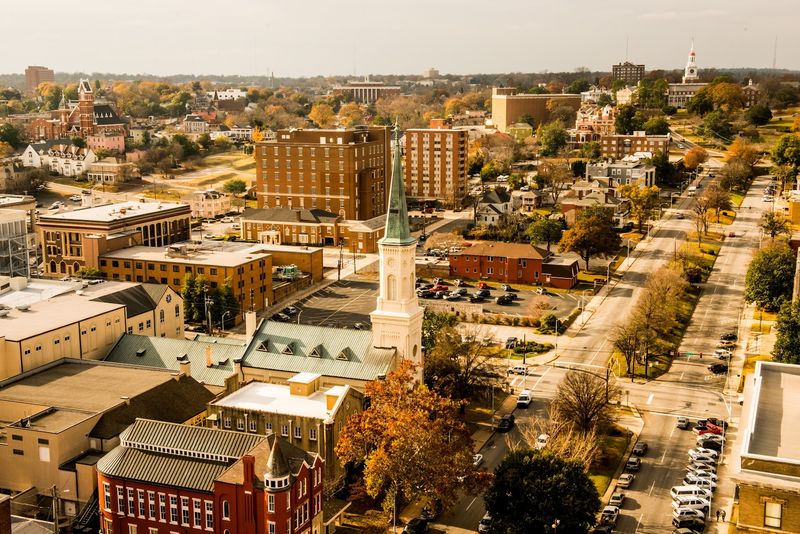
Hay House would be fascinating anywhere, but Macon gives it a richer frame. When you arrive in this part of central Georgia, you quickly realize the city holds far more history than many travelers expect, from antebellum architecture to Civil War memory to a music legacy that still shapes its identity.
The mansion feels anchored in a place that rewards slow looking rather than checklist tourism.
One reason so much survives here is that Macon avoided the kind of widespread wartime destruction that erased older streetscapes in other Southern cities. That matters, because Hay House does not stand as an isolated relic dropped into a modern void.
Instead, you experience it as part of a layered historic environment, where the city itself helps explain how a building this ambitious could still make sense.
First Look at 18,000 Square Feet
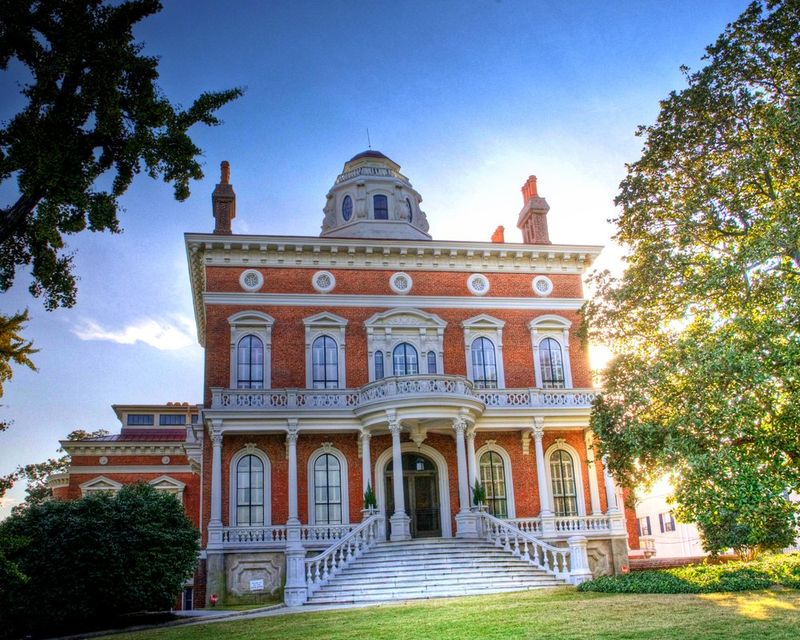
The first surprise at Hay House is not a single ornament but the scale. As you approach from Georgia Avenue, the mansion rises with a kind of calm confidence, larger than the surrounding homes and far more theatrical, yet still balanced enough that it never feels cartoonish.
You understand the 18,000 square feet slowly, by noticing width, height, and the way the facade keeps revealing more of itself.
Its Italian Renaissance Revival design sets it apart immediately from the Greek Revival look many people expect in the antebellum South. Stucco over brick, arched windows, ornamental balustrades, and that commanding roofline push the whole building closer to a European palazzo than a typical Georgia residence.
For me, that contrast is exactly what makes the exterior unforgettable before you even step inside.
Building a Palace in the 1850s
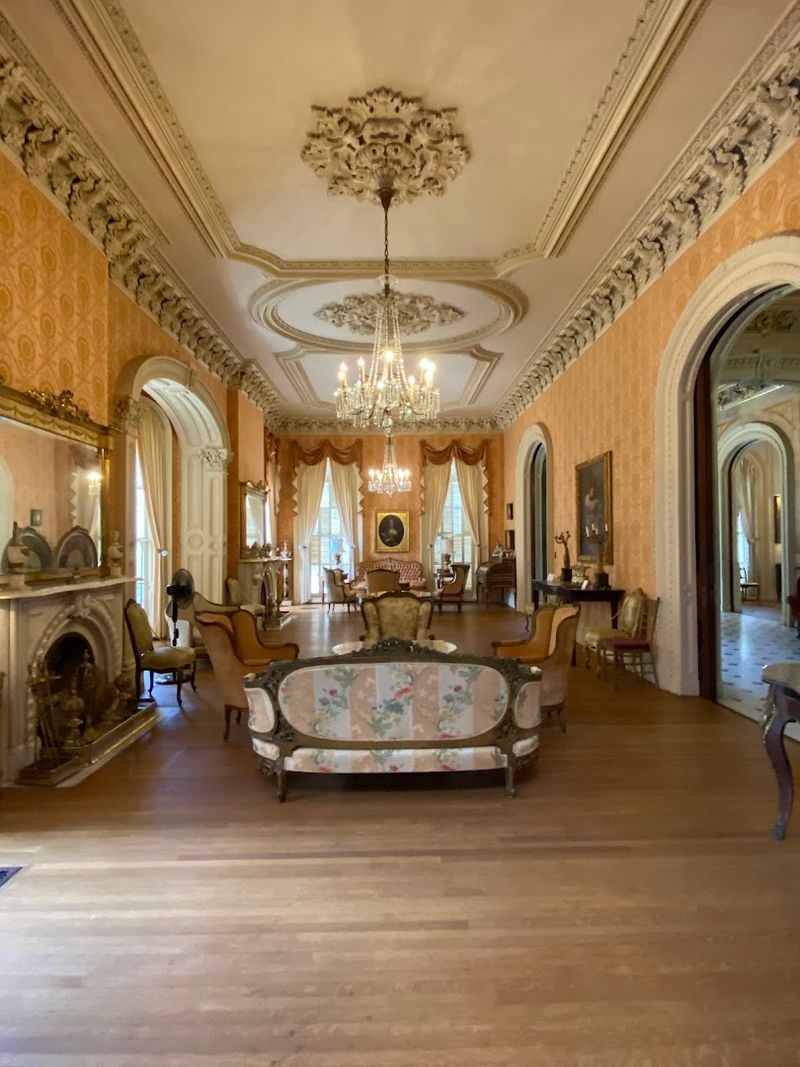
Once you know Hay House was built between 1855 and 1859, the next question is how anyone pulled this off. Creating a mansion of this size before the Civil War meant money, planning, skilled labor, and relentless coordination, especially when the owners wanted a distinctly European look instead of a simpler local formula.
The project depended on specialized craftsmen, imported ideas, and an unusual level of ambition for residential architecture in Georgia.
The design is usually credited to T. Thomas and Son, with local builder James B.
Ayers helping bring the vision into physical form. That collaboration matters because Hay House is not a fantasy sketch frozen on paper, but a complex building translated into workable materials and methods on Southern soil.
You can feel the effort in every finished surface, because the house still looks expensive in labor, not just in size.
The Entry Hall and Its Instant Theater
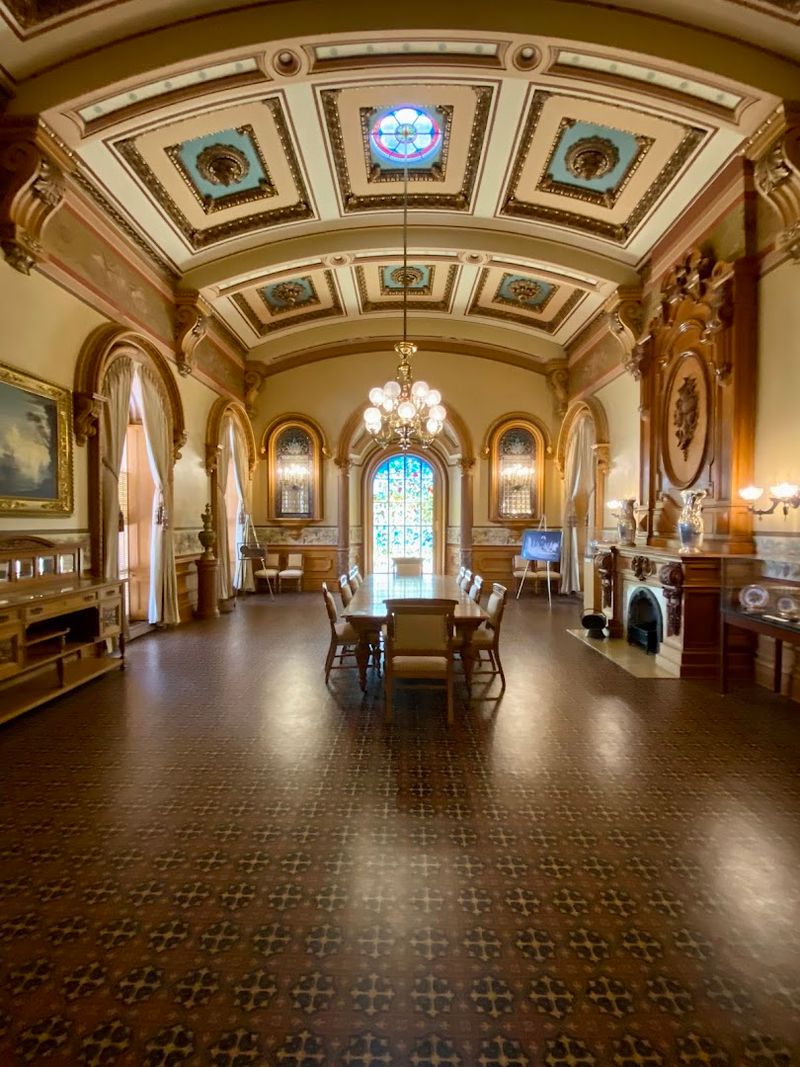
Walking into Hay House, the entry hall does exactly what it was designed to do: stop you. The proportions are grand, but the details carry the real power, from elaborate plasterwork to marbleized surfaces and finely carved wood elements that signal a household determined to impress without apology.
It feels ceremonial, yet not dead, like a room made for both performance and daily movement.
I especially like that this first major space reflects the couple’s European education so directly. Italian craftsmen contributed decorative work, and some ceiling and cornice details closely echo what the Johnstons admired abroad, which gives the interior an authenticity that goes beyond generic luxury.
Even before a guide explains anything, the hall tells you this house was conceived by people who had seen remarkable rooms and wanted Macon to meet them on equal terms.
Mechanical Wonders Hidden in Plain Sight
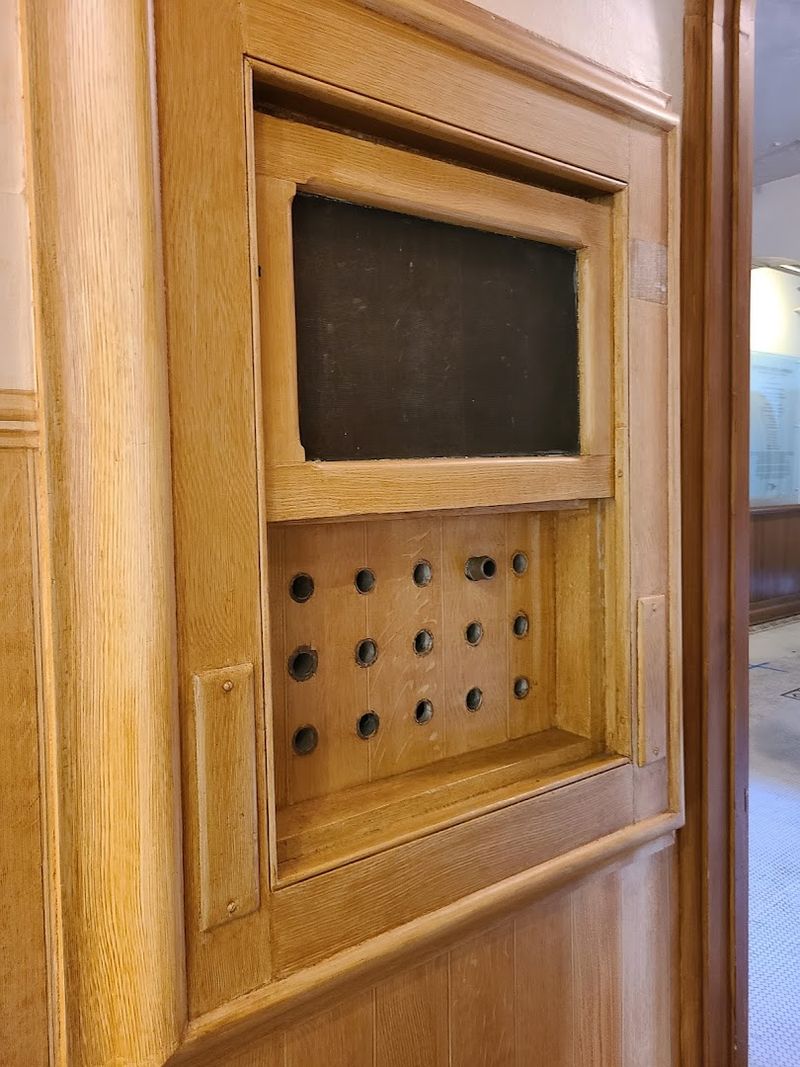
One of the most satisfying things about Hay House is that it is not only beautiful, it is startlingly clever. Long before many American homes had comparable comforts, this mansion included hot and cold running water, indoor plumbing, central heating, gas lighting, ventilation features, and a speaker-tube system linking multiple rooms.
That combination makes the house feel less like a frozen relic and more like an experimental machine for elegant living.
The speaker tubes are especially fun because they reveal how seriously the Johnstons thought about convenience. Instead of shouting across floors or sending someone up endless staircases, people could communicate through built-in pipes, a practical solution shaped by ideas the couple encountered abroad.
Add in the French lift and airflow innovations, and Hay House starts reading like a nineteenth-century prototype for the smart home, only dressed in frescoes and formality.
Art Collected Across Two Continents
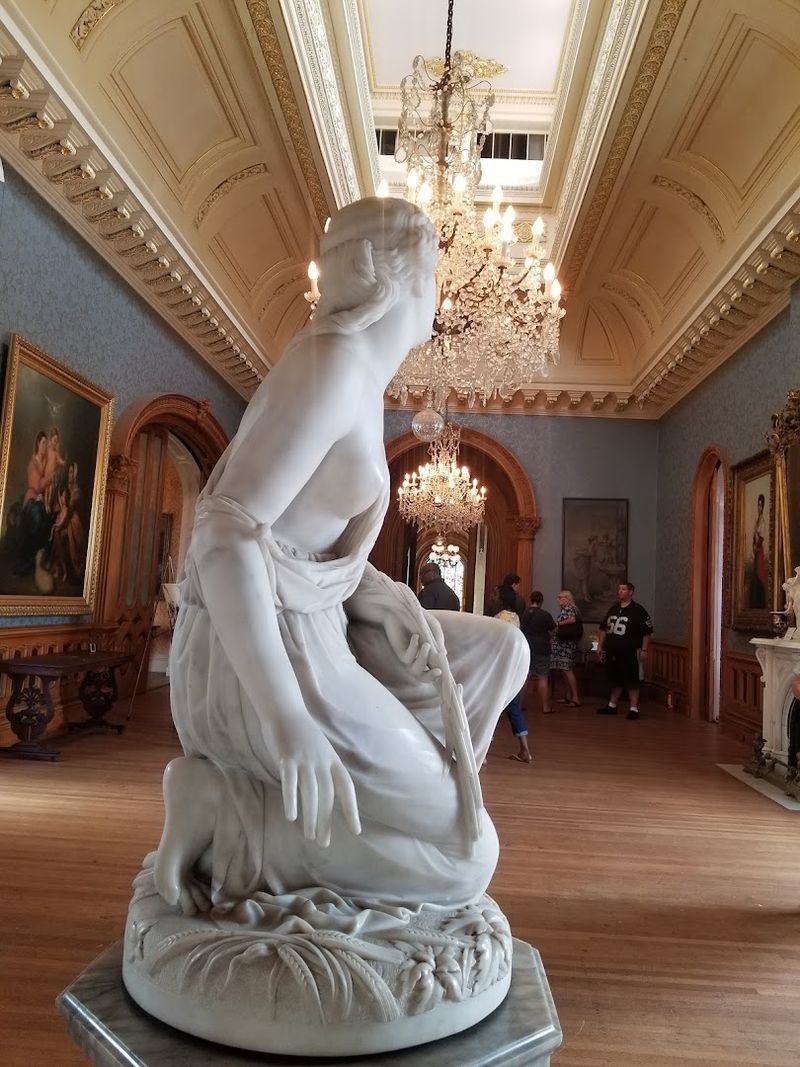
The furnishings at Hay House feel curated rather than merely inherited, and that distinction changes the whole experience. Many artworks and decorative objects were acquired during the Johnstons’ long European journey, so the rooms read like the afterlife of a travel notebook, with taste sharpened by direct exposure to Italian cities, museums, and studios.
You are not just seeing wealth on display, but a collection shaped by looking closely.
Some pieces connect the house to specific places and artistic networks abroad, which gives the collection a documentary quality that goes beyond decoration. Later owners, especially the Hay family, added their own layers, so the interiors now blend original Johnston-era ambitions with subsequent interpretation and preservation.
That mix could have felt muddled, but instead it makes the house more human, because taste here evolved through occupancy rather than being sealed in a single moment.
Civil War History and Local Legend
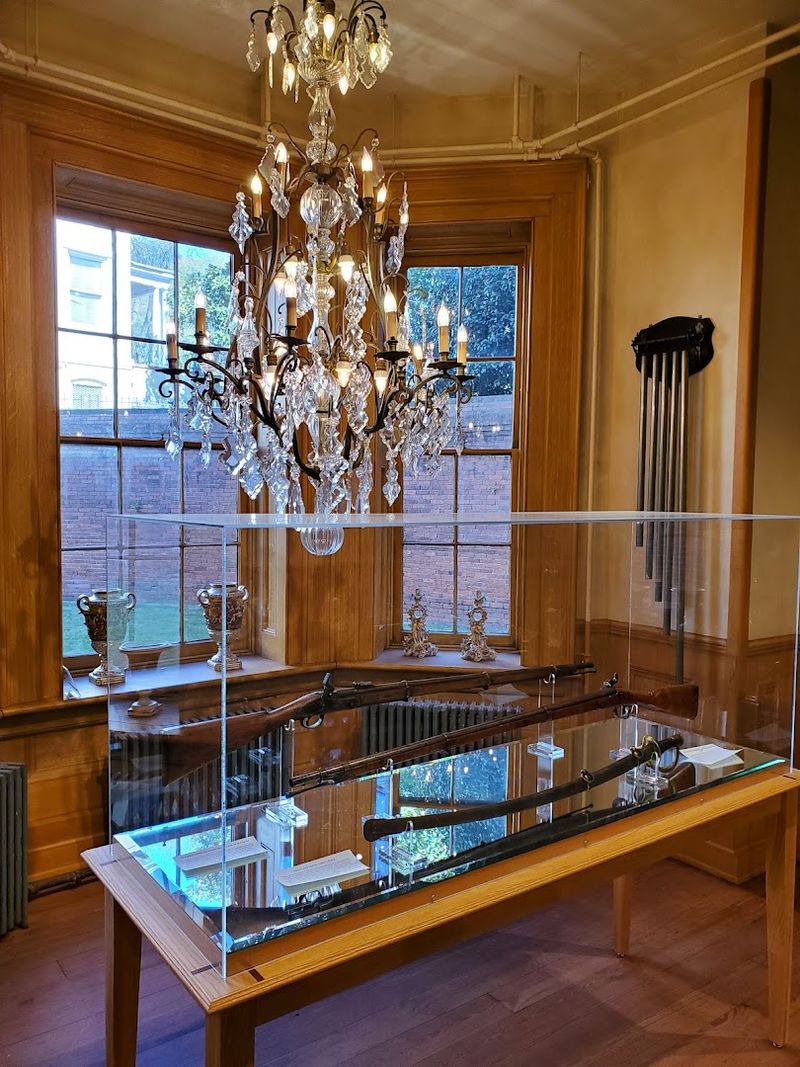
Hay House carries Civil War tension without turning itself into pure myth, and I appreciate that balance. William Butler Johnston supported the Confederacy and reportedly served as keeper of the Confederate treasury, placing the house in a deeply charged historical context even though the building itself escaped major physical damage.
That survival helps explain why the mansion still feels so intact today, while many comparable properties across the South do not.
Then there is the lingering story about Confederate gold possibly being hidden on the property near the end of the war. Guides usually present that tale carefully, as an unresolved local legend rather than a proven fact, which is exactly the right approach.
For you as a visitor, the rumor adds intrigue, but the stronger story is still the documented one: a grand house standing through national collapse, its walls holding both privilege and uncertainty.
How the Hay Family Gave the House Its Name
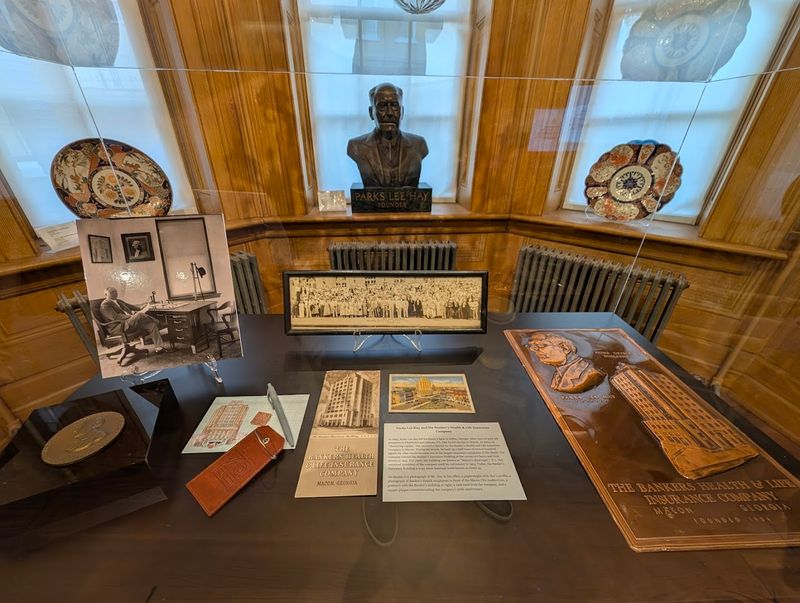
One of the quirks that makes Hay House memorable is that it is not named for the couple who built it. The mansion eventually became associated with Parks Lee Hay and his family, later owners whose long stewardship left such a strong mark that their name displaced Johnston in popular memory.
That kind of historical renaming happens more often than people realize, and it says a lot about how buildings gather identity over time.
The Hay family’s importance goes beyond branding. Their occupancy and care helped preserve the property through decades when houses this large could easily have been neglected, stripped, or demolished as impractical leftovers from another century.
If you only focus on the original builders, you miss that second chapter of survival. In a very real sense, the house exists for us today because later owners treated it as something worth maintaining rather than cashing out.
What Visiting Hay House Feels Like Now
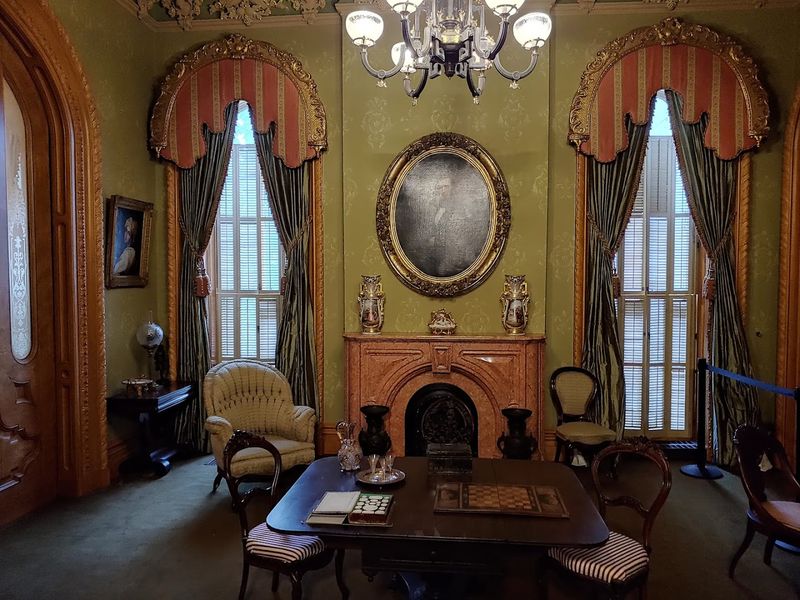
Today, Hay House works best when you experience it as both museum and active preservation project. The Georgia Trust for Historic Preservation manages the property, leads guided tours, and continues restoration, so your visit is not just about admiring a finished object.
You are also seeing the ongoing labor required to keep a complex nineteenth-century mansion alive in the present.
That makes the tour experience feel unusually grounded. Reviews often praise the guides for being knowledgeable and vivid storytellers, and that human element seems to shape whether the house lands as impressive or unforgettable.
At the same time, preservation realities can affect access, hours, or certain spaces, which is worth keeping in mind before you go. I like that honesty, because a house this old should feel cared for, not cosmetically frozen into a perfect illusion for tourists.
Reading the Rooms From Public to Private
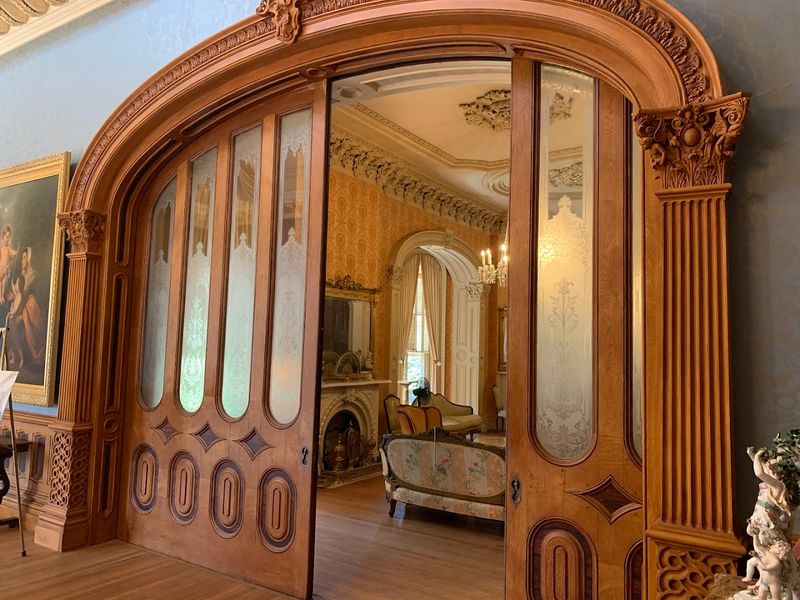
What stays with me most at Hay House is how the rooms change in mood as you move through them. Public spaces near the entrance are built to impress, with scale, decoration, and a polished kind of social confidence, while later rooms feel quieter and more intimate, hinting at routine rather than spectacle.
That progression makes the mansion more readable as a home instead of a nonstop parade of grandeur.
Just as important, the house does not make sense unless you think about the labor behind it. Service areas, circulation routes, and domestic infrastructure point toward the enslaved people and later workers whose effort sustained a lifestyle that visitors often romanticize too easily.
Good interpretation should keep that reality in view, because beauty here was never self-generating. When you notice both the glamorous rooms and the systems supporting them, the house becomes historically sharper and more honest.
Why Hay House Says More Than a Textbook
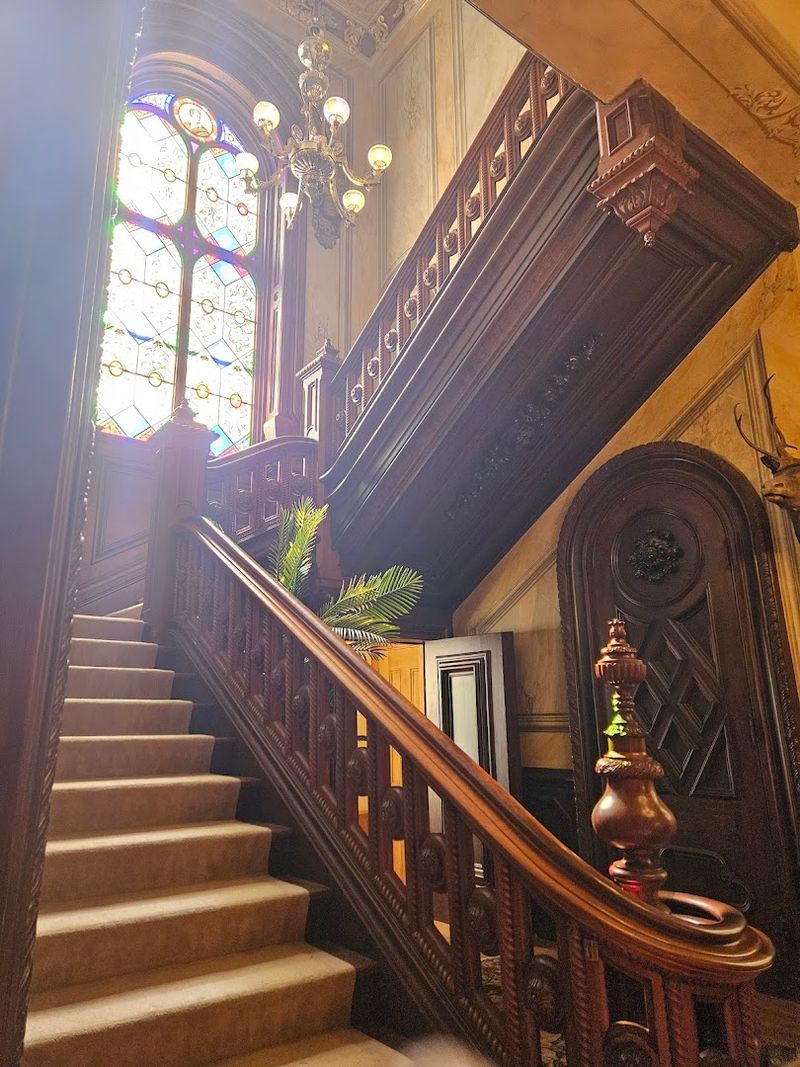
Hay House proves that architecture can explain history in a way a textbook rarely can. Standing inside these rooms, you are not absorbing abstract facts about wealth, travel, taste, technology, or the nineteenth-century South; you are seeing how those forces collided in one very specific place.
That specificity is what makes the mansion so persuasive, because every ceiling, object, and corridor feels tied to an actual decision someone once made.
The detail that reframes everything for me is still the three-year honeymoon. Once you know the Johnstons spent years studying Europe before building their Macon home, the mansion stops looking merely extravagant and starts reading as biography in architectural form.
That is why Hay House lingers after the tour ends. You leave with more than dates and names.
You leave with a vivid sense that travel, obsession, privilege, and imagination can harden into walls you can still walk through.