Massachusetts is full of places where brick mills, worker housing, and river power quietly changed the nation. Some of these towns once drove huge industries, yet today they sit outside the usual travel spotlight.
If you love history with a little grit, mystery, and unexpected beauty, these mill communities are worth a closer look. Each one still whispers stories of machinery, ambition, and the people who kept America running.
Whitinsville (Northbridge)
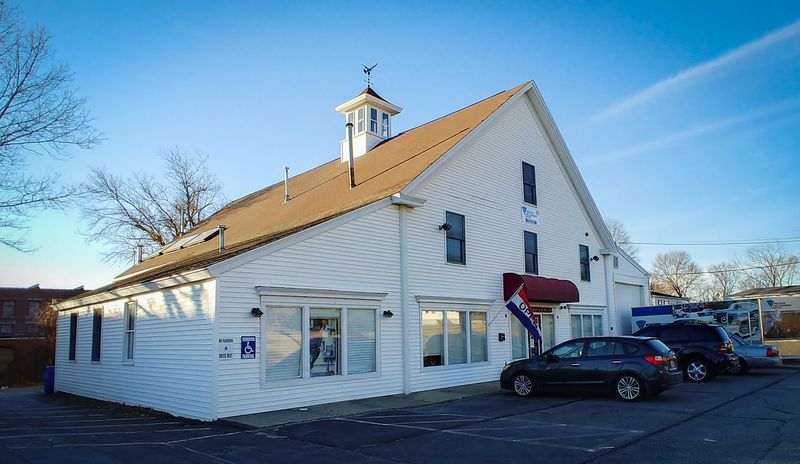
Whitinsville feels less like a single mill site and more like an industrial universe that somehow folded itself into a village. Set on the Mumford River in Northbridge, it grew around Whitin Machine Works, founded in 1831 and eventually known as the largest textile machinery manufacturer in the world.
At its height, the company employed more than 5,000 people and shaped nearly every corner of daily life.
What grabs you here is the scale of the ambition. The Whitin family did not just build factories – they created worker housing, churches, schools, a library, recreation spaces, and a civic identity tied directly to machinery that powered mills across America.
You can still sense that company town logic in the streetscape.
Even after the factory era faded, Whitinsville kept its unusual weight and presence. If you want one place that explains how industrial power could transform a village into something nationally significant, this is the town to start with.
Hopedale
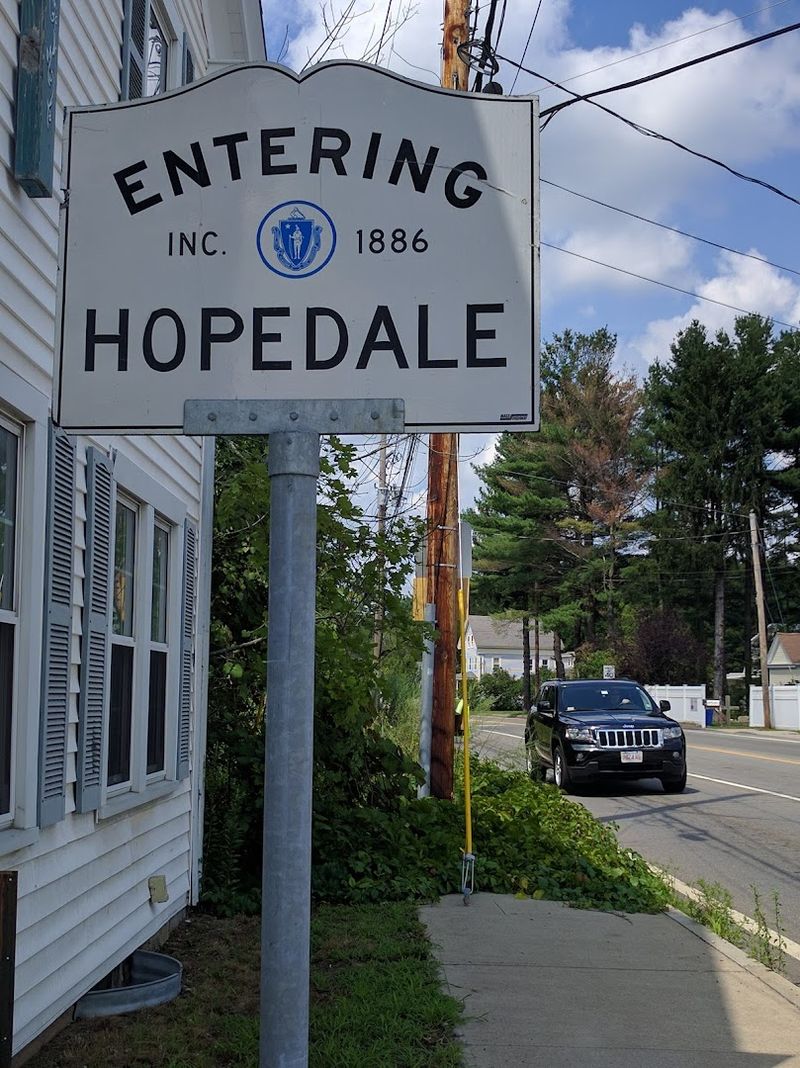
Hopedale has one of the strangest origin stories on this list, because it began with utopian ideals and ended up as one of America’s most influential company towns. After the Draper family acquired the former Hopedale Community assets in 1856, the town evolved around the Draper Corporation, which became the nation’s leading maker of textile machinery.
By 1900, Draper was producing automatic looms on a world-changing scale.
What makes Hopedale memorable is how orderly it still feels. The company invested in homes, churches, schools, a library, a fire station, and public buildings, so you are not just looking at factory ruins but at a carefully arranged industrial landscape.
It was productivity packaged as community design.
The famous Northrop Loom helped make Draper dominant, and that success lasted deep into the twentieth century before the factory closed by 1978. Walking through Hopedale today, you can still feel how engineering ambition once shaped everyday life down to the block.
Turners Falls (Montague)
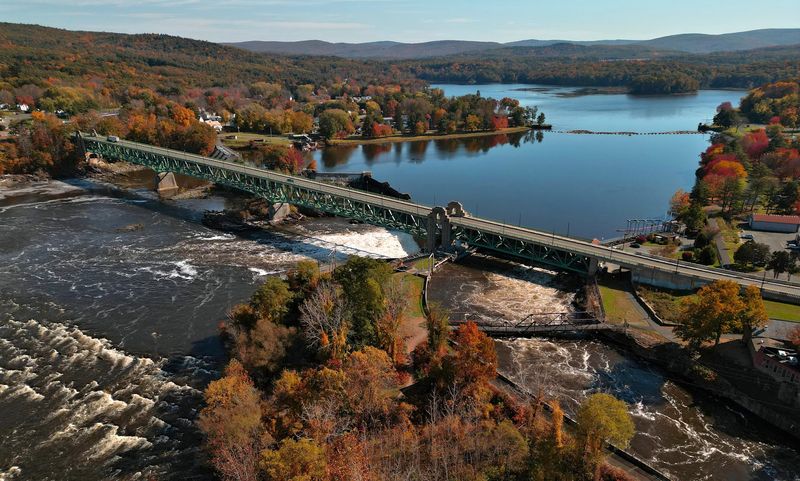
Turners Falls has always had a slightly cinematic quality, and the old paper mills only deepen that feeling. Planned as an industrial community in Montague, it rose with waterpower, canals, and factories that turned raw material into finished paper on an enormous scale.
The best known survivor is the Strathmore Mill complex, dramatically placed between the Connecticut River and the power canal.
This is the kind of place where geography does half the storytelling for you. The mill, originally built in the 1870s by the Keith Paper Company and later associated with Strathmore, looks like it was engineered directly out of river current and brick.
Even in vacancy, the site still carries the confidence of a town built to manufacture constantly.
The paper era faded in the 1990s, and the buildings have stood empty for years, adding a ghostly edge to the village. If you are drawn to forgotten industrial places that feel both beautiful and unresolved, Turners Falls delivers that mood in full.
Uxbridge
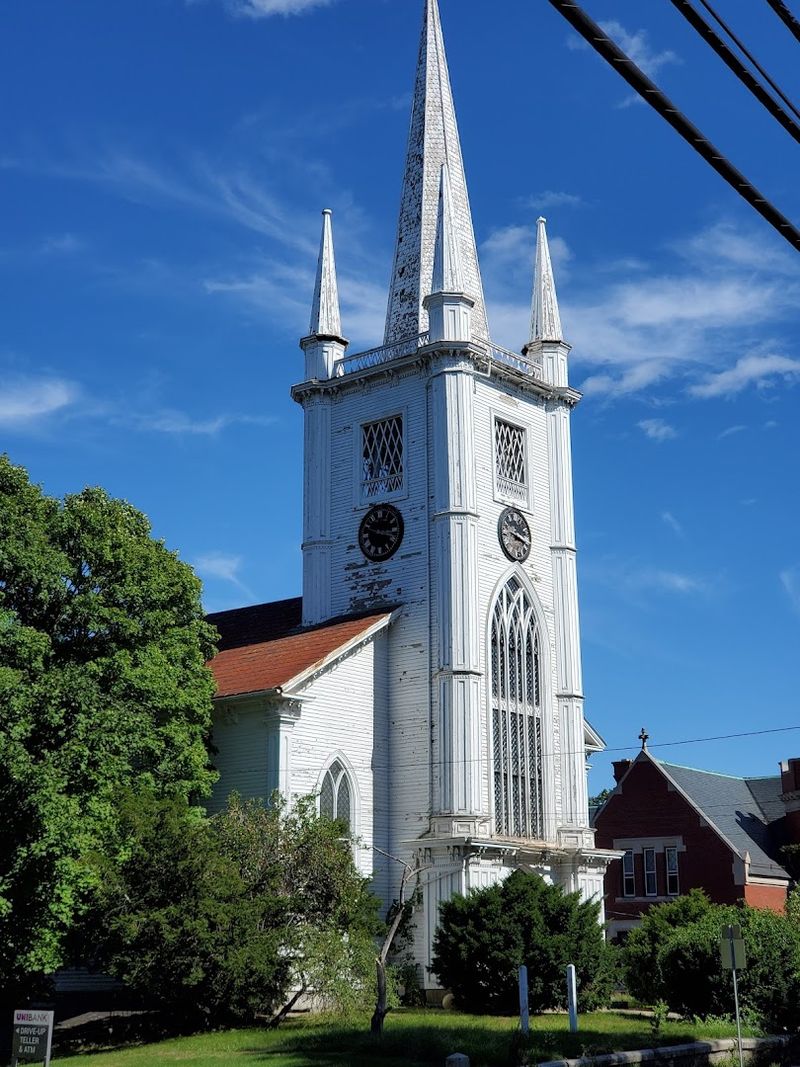
Uxbridge does not always get the same attention as bigger mill names, but it was one of the real engines of the Blackstone Valley. In the nineteenth century, the town and its surrounding villages were packed with textile activity, and the wider area became tied to influential industrial families like the Whitins and Drapers.
This was not a side story – it was part of the core machinery of early American manufacturing.
What makes Uxbridge fascinating is that its importance spread across multiple mill sites instead of one iconic campus. Places like Crown and Eagle Mill and Linwood Mill helped define the valley’s production network, while entrepreneurs moved ideas, capital, and equipment through the region.
You can still read that industrial web in the landscape if you look beyond one building.
There is also something appealingly unpolished about Uxbridge. It feels like a working chapter of industrial history rather than a perfectly packaged museum piece, which makes the town especially rewarding if you like mill history with texture, complexity, and real regional weight.
Adams
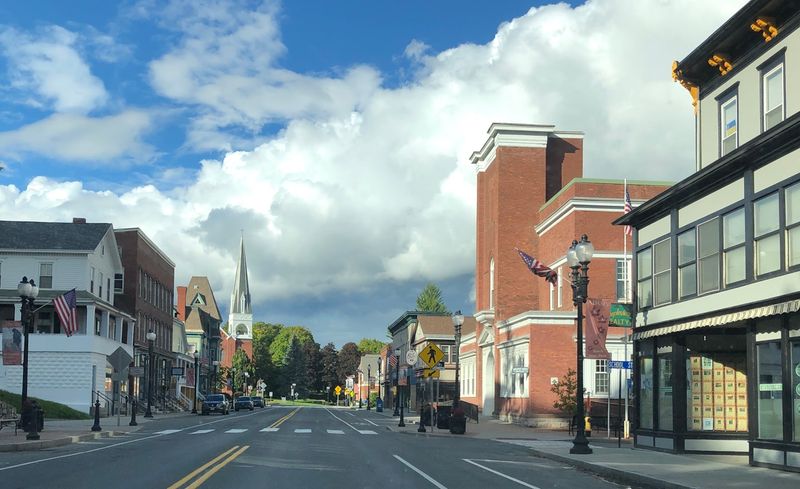
Adams stands out because the industrial story unfolds inside a Berkshire mountain valley, where mills and worker housing sit beneath dramatic slopes. By 1829, the town already had fifteen small textile factories, and manufacturing remained its main occupation for 139 years.
That long commitment gave Adams a texture that feels both hardworking and unexpectedly scenic.
The town’s mill legacy is closely tied to the Berkshire Cotton Manufacturing Company and the Renfrew Manufacturing Company, both major employers with large complexes along the Hoosac River. Renfrew also built worker housing, so the built environment still reflects the intimate relationship between labor and landscape.
You are never far from a reminder that industry once defined daily rhythms here.
What I like most about Adams is the contrast. The mountains suggest escape and openness, yet the town grew through disciplined factory routines, whistles, and production schedules that lasted generations.
Even after the big closures in 1958 and 1989, Adams keeps that unusual mix of natural grandeur and industrial memory.
Southbridge
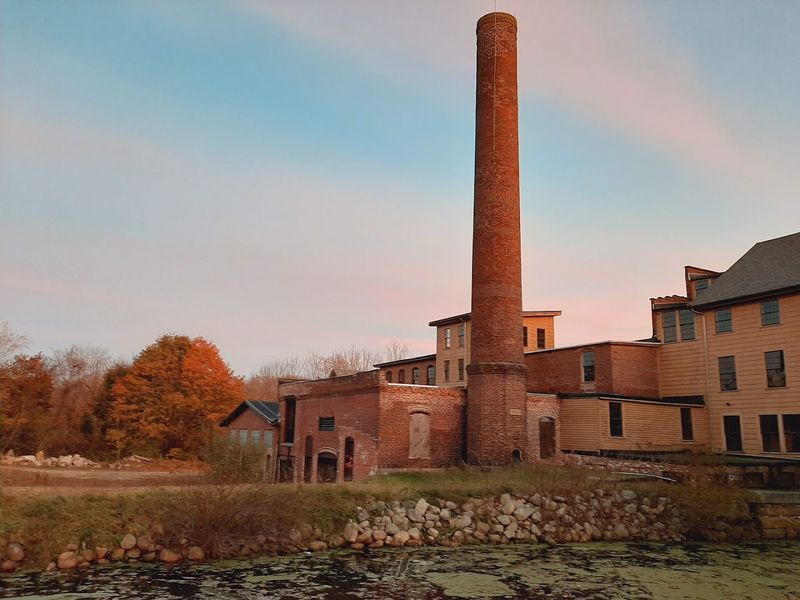
Southbridge is a great reminder that mill towns were not always locked into one industry forever. It began as a significant woolen mill center, with companies like the Hamilton Woolen Company helping the town grow through the nineteenth century, but later became nationally known for manufacturing connected to glass and optics.
That shift gives Southbridge a broader industrial personality than many places on this list.
You can feel that layered identity when you read the town’s history. First came the woolen mills and the classic river-powered factory model, then a later wave of specialized production led by American Optical, a company that turned Southbridge into a world leader in spectacle manufacturing.
It is a rare town where one industrial era did not simply vanish – it evolved.
That makes Southbridge especially interesting if you like places that resisted becoming frozen in a single narrative. Instead of one rise and one fall, the town tells a story of reinvention, where textile beginnings opened the door to a different manufacturing future you can still sense today.
Indian Orchard (Springfield)
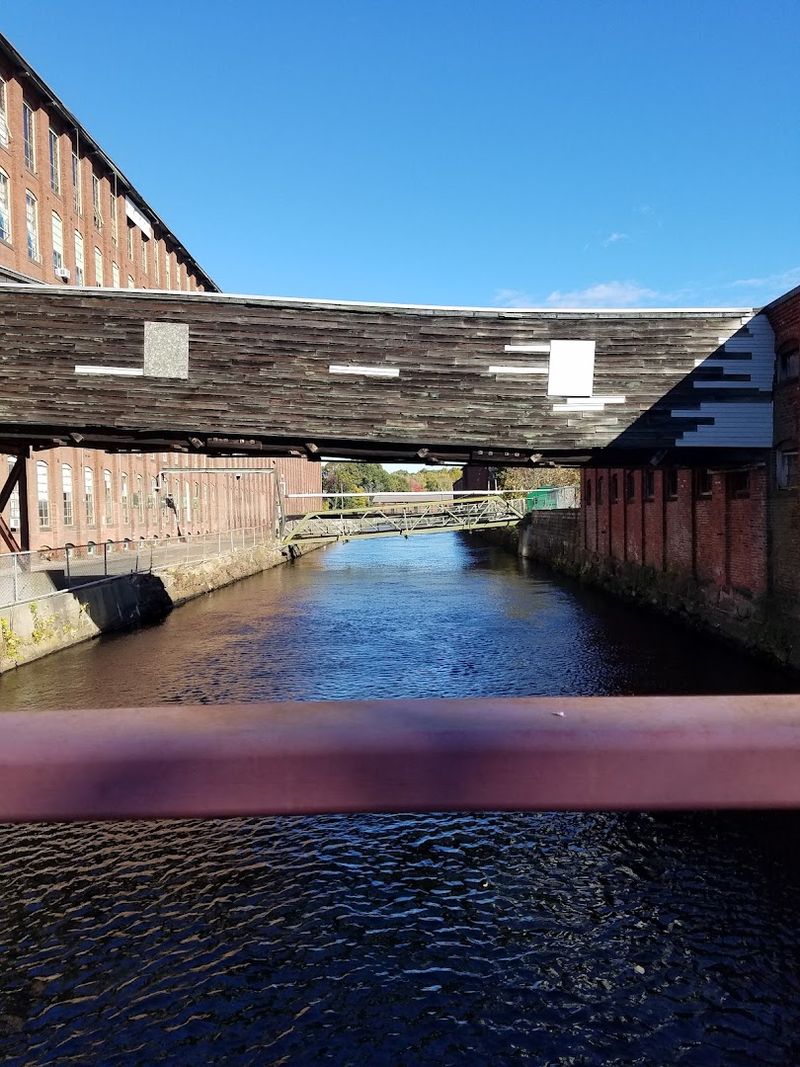
Indian Orchard feels like a hidden industrial city tucked inside Springfield, and that is part of what makes it so compelling. Originating as an isolated mill town in the 1840s, it grew rapidly along the Chicopee River into a major manufacturing district defined by huge factory buildings and transportation links.
The scale here is immediate, even before you know the details.
The Indian Orchard Mills Company, reorganized in 1859 from an earlier enterprise, helped anchor this growth, while the railroad made the village far more than a local mill stop. French-Canadian workers formed an important part of the community, giving the district a rich immigrant story as well as an industrial one.
Around 1916, the mills converted to electric power, showing how the town adapted to changing technology.
What I find most striking is the sense of self-containment. Indian Orchard developed with the intensity of a separate town, yet it remains tied to a larger city, which gives it an unusual identity.
If you like mill districts that feel massive, layered, and slightly overlooked, this one deserves attention.
North Billerica
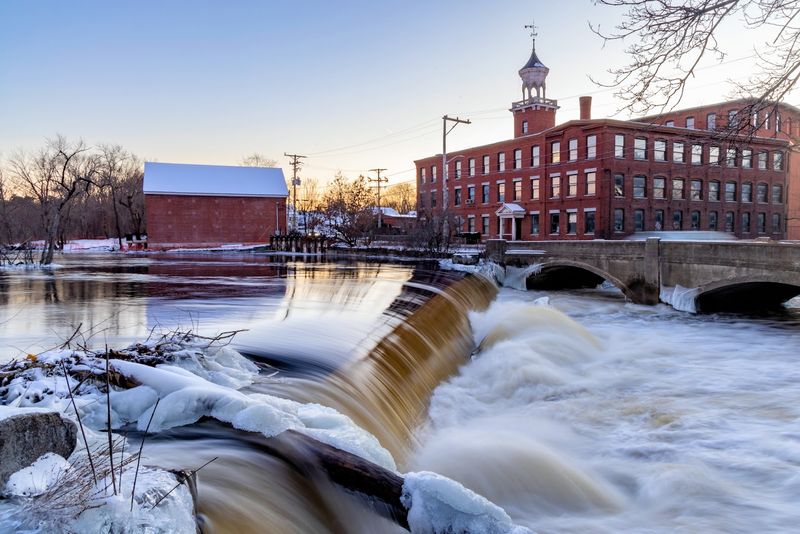
North Billerica has the quiet confidence of a place that never needed flashy reputation to matter. Its historic mill district grew around the Talbot family enterprise, which began in chemicals and dyewood before expanding into woolen manufacturing, leading to the Talbot Woolen Mill in 1857.
For a full century, the company helped define local work, architecture, and routine.
The Talbot Mills became known for flannels and later for a wider range of woolen goods, but the district’s appeal goes beyond product lines. The mill dam, surviving company housing, and central village buildings still reveal how production and daily life were tightly interwoven.
You are looking at a small but remarkably complete industrial landscape.
North Billerica is not as famous as some Massachusetts mill towns, and that is exactly why it lingers in the imagination. It feels discoverable, almost private, yet historically substantial.
If you enjoy places where the evidence of industrial life remains visible without heavy crowds or hype, this district offers a thoughtful and rewarding stop.
Forge Village (Westford)
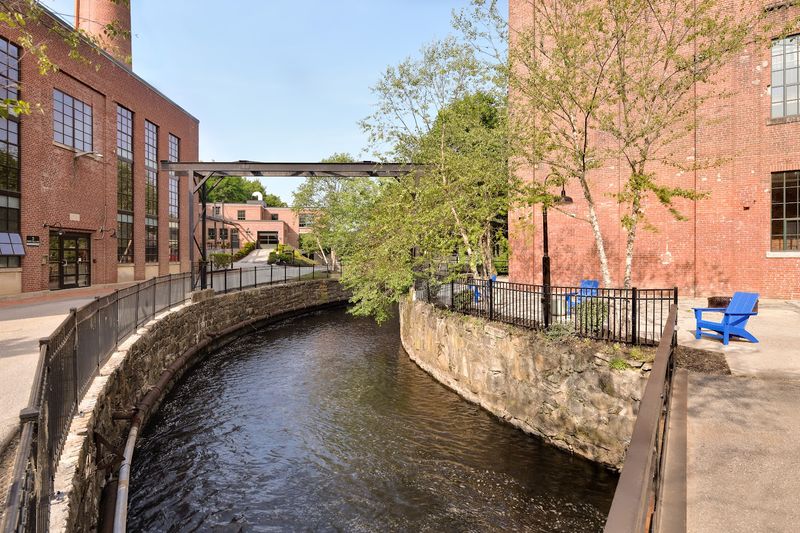
Forge Village has one of the best name-to-history matches anywhere in Massachusetts. The village began with eighteenth-century iron forging by the Prescott family, later moved through nail making and machine work, and then made a major turn into textiles when Abbot Worsted converted the former nail works to woolen yarn production in 1879.
Few towns show industrial evolution this clearly.
That progression gives Forge Village a different energy from places built entirely around one product. You can trace a story of adaptation, where iron helped lay the groundwork for textile manufacturing and a planned company town eventually took shape around the Abbot Worsted Company.
The village that survives today still hints at those carefully organized industrial ambitions.
I like Forge Village because it feels almost modest until you start paying attention. Then the layers appear: forge, nail works, worsted yarn, worker housing, and the long life of an industry that lasted into 1956.
If you want a mill village that rewards curiosity, this one offers more than its small scale first suggests.
Gilbertville (Hardwick)
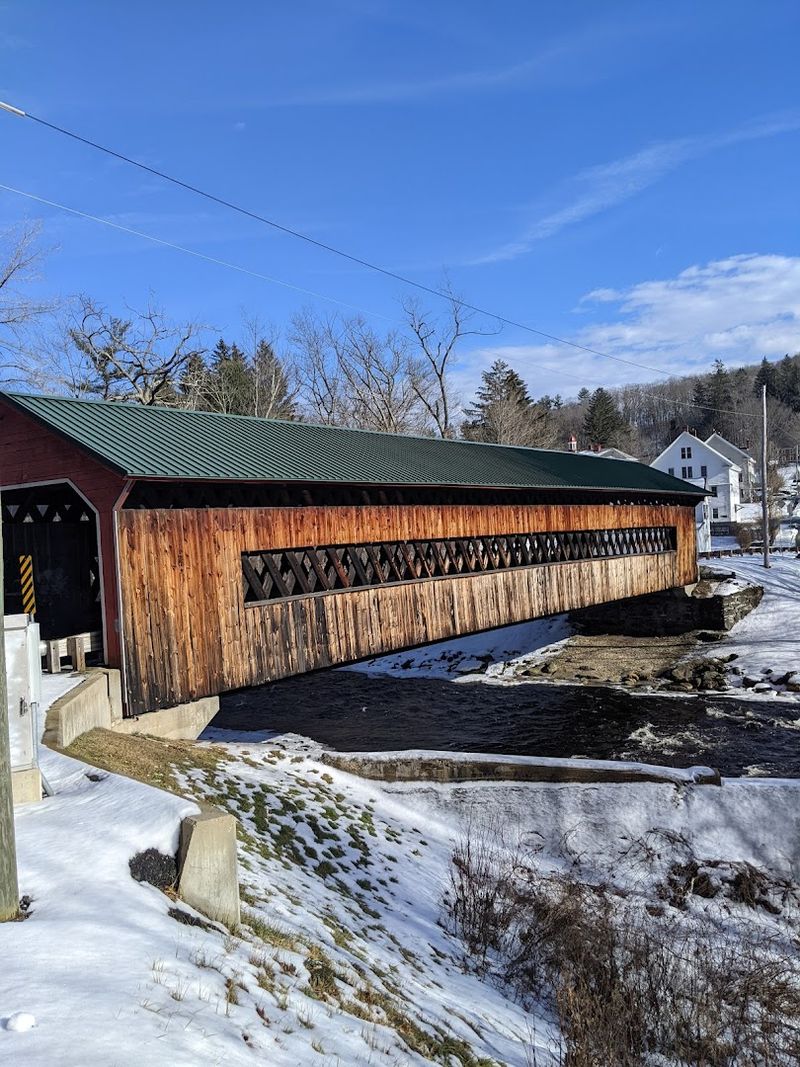
Gilbertville feels like the kind of place that should be much more widely known than it is. Developed within Hardwick after George H.
Gilbert began acquiring land in 1860, the village grew around wool textile mills that eventually employed more than 1,000 people by the turn of the twentieth century. For a rural setting, that is a remarkable concentration of industrial life.
The Gilbert Manufacturing Company shaped far more than payrolls. It supported a Congregational church, a library, and even helped with the local high school, creating a social world tied closely to the mills.
That blend of brick factories and civic investment gave Gilbertville the feel of a self-contained company village with real local character.
Its decline was dramatic, which only adds to the town’s haunting appeal. The wool mills shut down in the late 1930s, and the devastating 1938 flood caused widespread damage, leaving a double mark of economic loss and physical disruption.
Today, Gilbertville feels resilient, quiet, and full of stories just under the surface.
Haywardville (Medford)
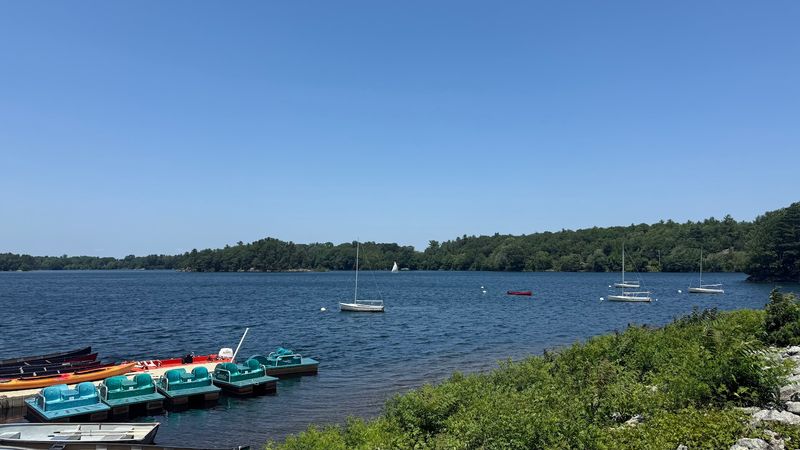
Haywardville may be the truest forgotten place on this list, which makes it especially intriguing. Once associated with shoe and rubber factory activity in Medford, the settlement has largely vanished into or beneath the landscape now linked with the Middlesex Fells Reservation.
Unlike better documented mill villages, Haywardville survives more as an industrial echo than as a fully legible town.
That uncertainty is part of its power. When records are thin, you start to notice how quickly productive places can disappear once industry stops, roads shift, and nature takes over.
Haywardville invites you to think about all the workers, buildings, and routines that once mattered deeply but left only scattered traces and local memory.
I would not call it the easiest industrial site to interpret, but I would call it unforgettable. In a state crowded with preserved mill architecture, this nearly absorbed settlement tells a different story: not of restoration, but of erasure.
Sometimes the most revealing history is the one you have to search hardest to find.