
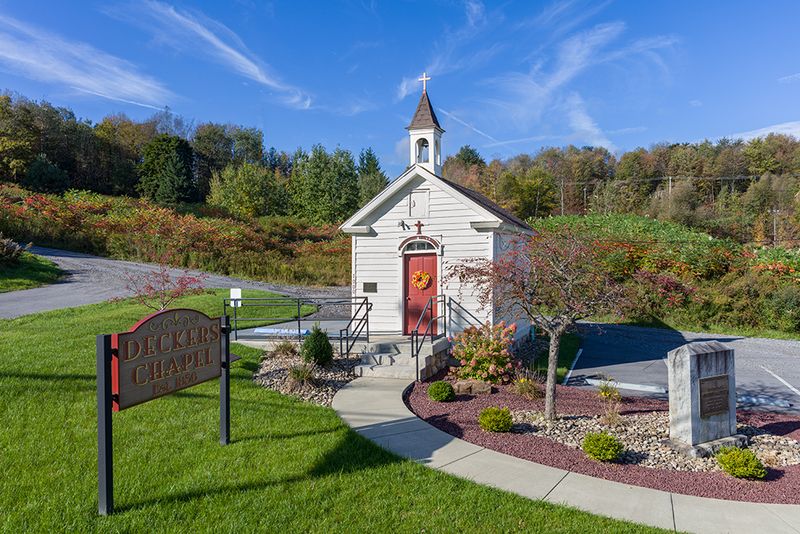
At first glance, Decker Chapel looks like the kind of tiny white building you might mistake for a shed. Then you notice the cross, the age, and the fact that this little structure has quietly served Saint Marys since 1856.
Its size is almost unbelievable, but that is exactly what makes it unforgettable. If you love places where local history feels personal, this chapel is the kind of stop that stays with you.
A Church You Could Miss Without Looking Twice
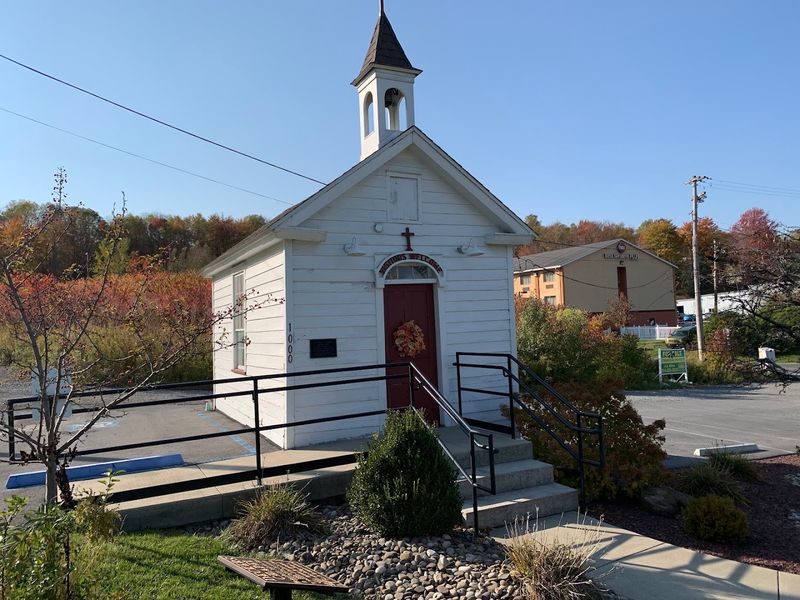
Walking up to Decker Chapel, you might honestly wonder if you have the right place. It sits so modestly along South Saint Marys Street that the building barely announces itself, blending into the neighborhood with the quiet confidence of something that has never needed attention.
The plain white siding, compact footprint, and simple roofline make it look more like an outbuilding than a landmark.
Then your eyes land on the small cross above the door, and the whole scene changes. What seemed ordinary becomes surprisingly moving, because this tiny structure has stood here since 1856, outlasting trends, traffic, and generations of passersby.
I think that first double take is part of the chapel’s charm, because it asks you to slow down and look again.
That moment of recognition is what makes Decker Chapel memorable. It is not dramatic or oversized, and it does not compete for your attention.
Instead, it rewards curiosity, proving that some of Pennsylvania’s most remarkable historic places are the ones you could almost walk past.
Four Kneelers, One Altar, No Room to Spare
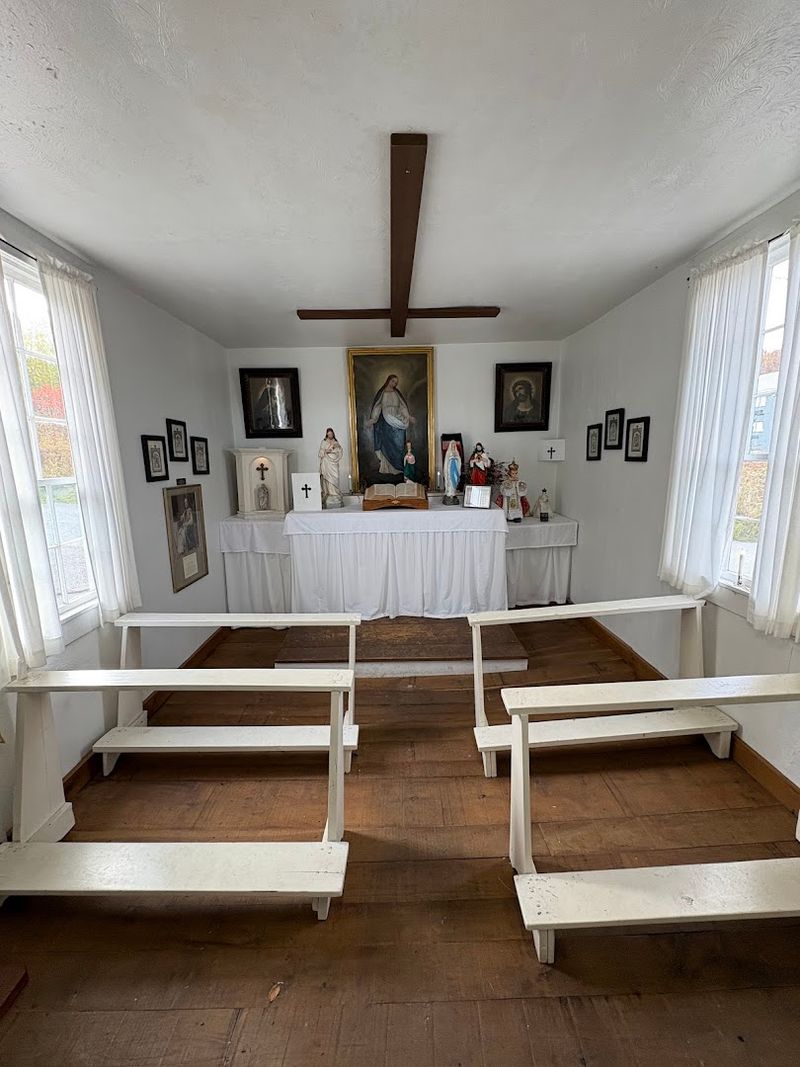
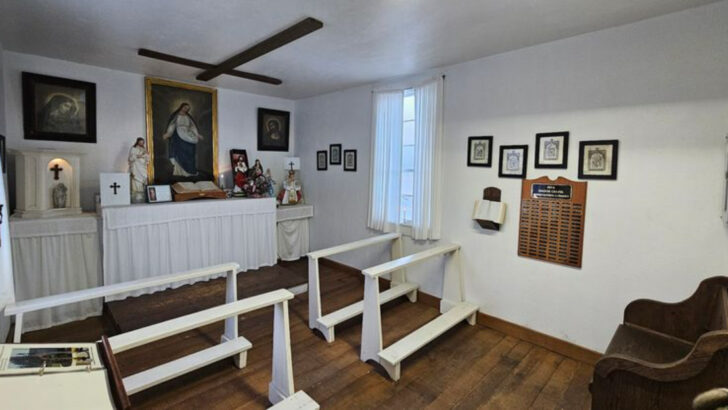
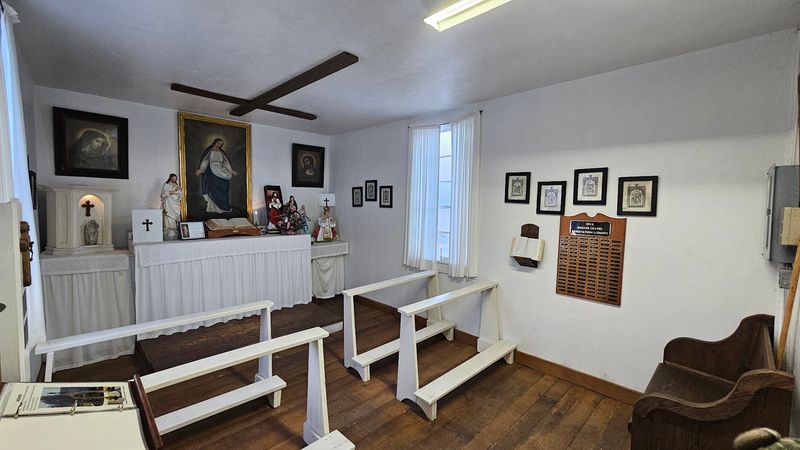
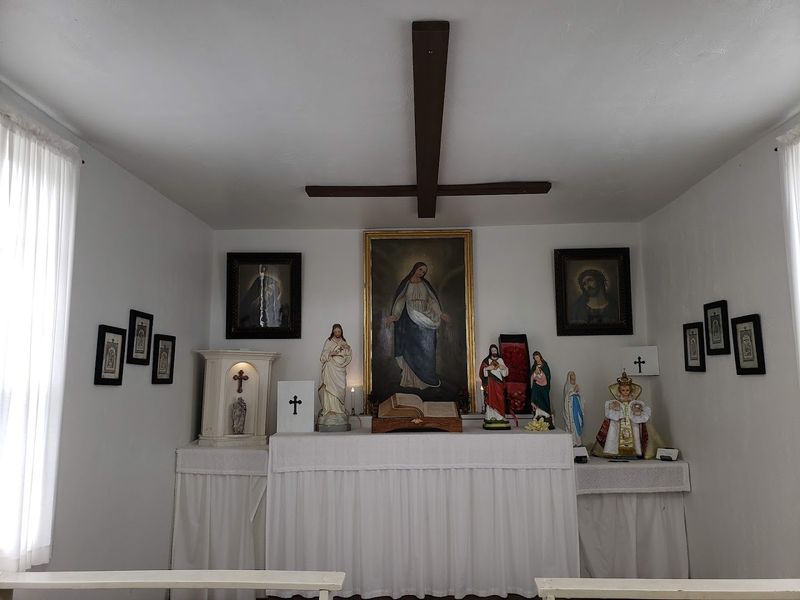
The interior of Decker Chapel tells its story almost instantly. Step inside and you are standing in a space so compact that the scale feels intimate before it feels historic, with four wooden kneelers facing a simple altar and hardly any extra room to spare.
There is no aisle to wander, no choir loft overhead, and no decorative flourish trying to make the room seem larger than it is.
What you get instead is a Catholic devotional space reduced to its essentials. The four kneelers are not symbolic or decorative, which is the detail most people remember, because that is the actual capacity.
If another visitor arrives, someone waits outside, and that reality gives the chapel a sincerity that larger churches can never quite duplicate.
I love how direct the room feels. Nothing distracts you from the purpose of the place, and maybe that is why visitors describe it as peaceful, cozy, and even soul settling.
In a world built for crowds, Decker Chapel remains built for stillness, prayer, and one very small gathering at a time.
Why the Chapel Was Built
Decker Chapel makes more sense when you place it inside the history of Saint Marys itself. German Catholic settlers helped shape this town in the mid nineteenth century, and they brought with them a religious culture that valued both parish life and smaller neighborhood spaces for prayer.
The chapel was never intended to replace a full church, because its purpose was much more personal than that.
This was a devotional space on a human scale, built for quiet prayer and local use rather than public spectacle. Saint Marys, founded in 1842 as a specifically Catholic settlement, had a religious landscape where chapels like this fit naturally into daily life.
That context matters, because without it, the building can seem odd instead of perfectly logical.
Once you understand that background, the chapel stops feeling like a curiosity and starts feeling like a community statement. It reflects how faith was woven into ordinary routines, homes, and neighborhoods.
To me, that is what gives Decker Chapel its emotional weight: it is not just tiny, it is evidence of how seriously early residents shaped Saint Marys around belief.
What 1856 Wood Frame Construction Looks Like
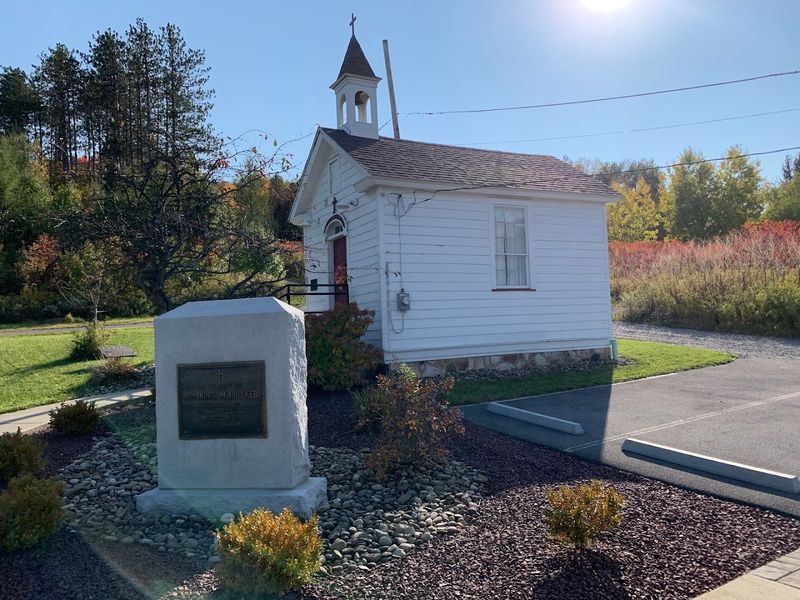
One of the most interesting things about Decker Chapel is how clearly it shows practical mid nineteenth century construction. The building uses straightforward wood-frame methods, with vertical siding, a simple gabled roof, and proportions that feel balanced without trying to impress anyone.
It is plain in the best sense, because every element appears chosen for usefulness, durability, and economy.
That simplicity is exactly what makes the chapel valuable as a historic structure. Rather than reflecting the work of a trained architect, it preserves the look of vernacular religious building traditions in rural Pennsylvania, where ordinary people created sacred spaces with local materials and practical knowledge.
Nearly 170 years later, the result still stands, which says a lot about the quality of that craftsmanship.
I find that kind of architecture especially compelling because it feels honest. There is no grand facade hiding the building’s scale or purpose, just a small wood chapel doing the job it was built to do.
Decker Chapel offers a real snapshot of how working communities translated devotion into construction, one board and one nail at a time.
Why Saint Marys Gives the Chapel Meaning
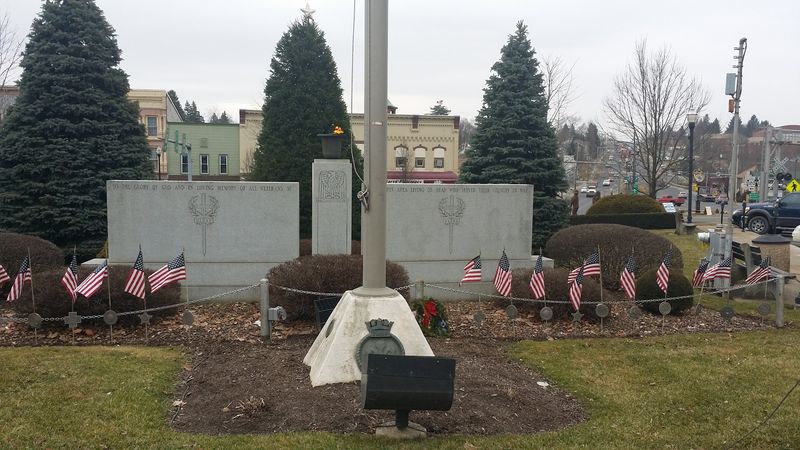
Decker Chapel feels even more meaningful because it belongs to Saint Marys, a town that still carries a strong sense of its origins. Set in Elk County in north central Pennsylvania, Saint Marys combines forested surroundings, a working town atmosphere, and a deep awareness of the German Catholic heritage that helped define it.
The chapel is tiny, but it fits into a much larger local story.
That story is not frozen in the past. Saint Marys remains a place where long-standing institutions matter, from churches and historical societies to familiar local names like Straub Brewery, one of the oldest family-owned breweries in the country.
In a town like this, a structure such as Decker Chapel is not treated as random trivia but as part of a living identity.
When you visit, you are not just looking at an old building on a roadside lot. You are seeing a community’s memory made visible in wood, scale, and continuity.
I think that is why the chapel resonates so strongly with locals and visitors alike: it reflects a town that takes history seriously without needing to make a big production out of it.
How to Visit Respectfully
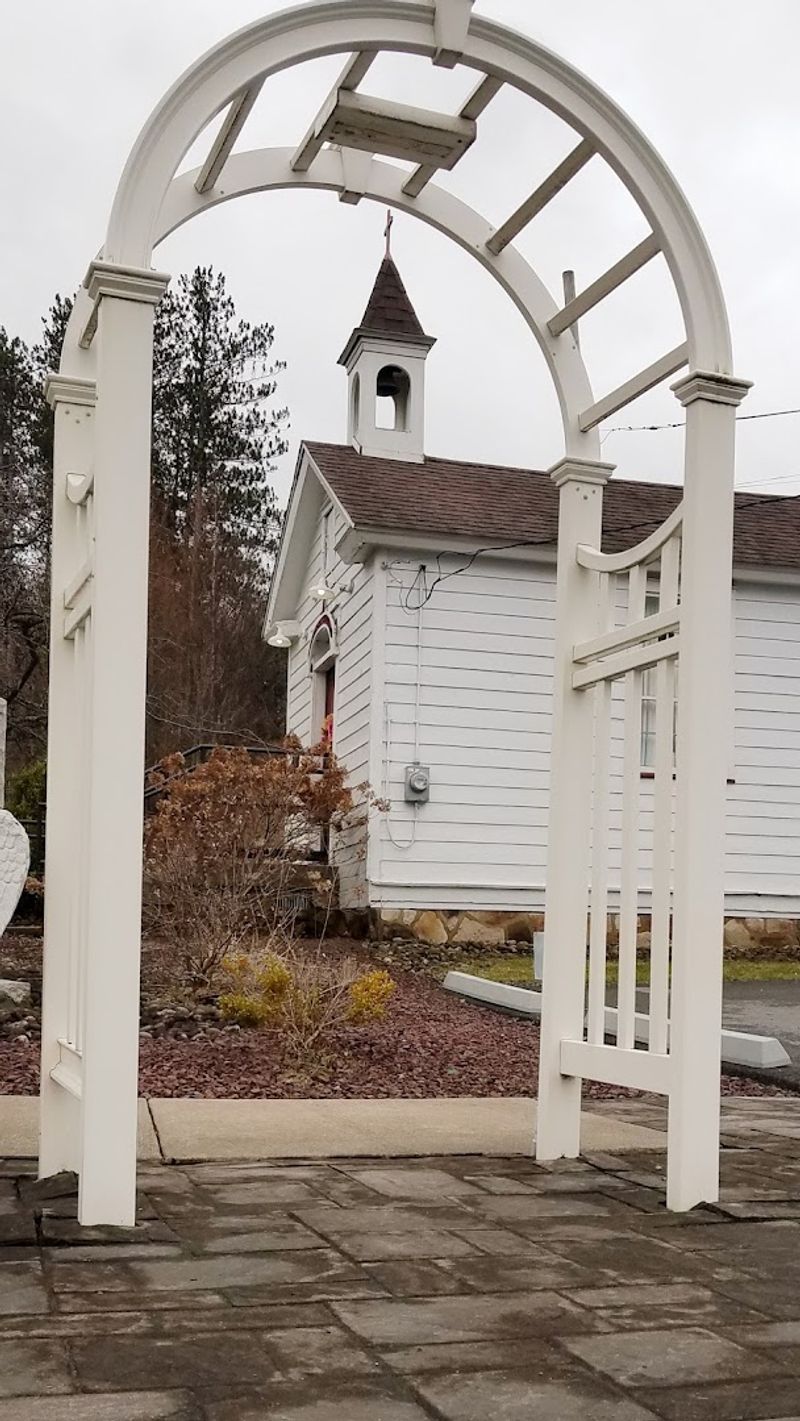
Visiting Decker Chapel is not like visiting a major tourist site, and that is part of the appeal. There are no big interpretive displays, no gift shop, and no steady stream of buses unloading people onto the sidewalk.
Instead, you arrive at a real chapel on a quiet street, where the experience depends on patience, respect, and a willingness to appreciate subtle things.
Sometimes the chapel is open and you may be able to step inside, but even if it is closed, the exterior alone is worth the stop. The building’s literal capacity of four people means any visit feels personal by default, with no room for crowds or noise.
If you do enter, the best approach is simple: keep your voice low, move carefully, and let the space speak for itself.
That low-key experience is exactly what many visitors seem to love, judging by the chapel’s strong reviews and comments about peace, beauty, and charm. I would treat it less like an attraction to conquer and more like a brief encounter with local devotion.
Decker Chapel rewards quiet attention far more than rushed sightseeing ever could.
What Tiny Sacred Spaces Reveal
It is easy to assume that religious history belongs to cathedrals, basilicas, and monumental churches. Decker Chapel argues the opposite, showing how much historical meaning can be packed into a space small enough to hold four kneelers and little else.
Buildings like this preserve the everyday side of faith, where prayer happened close to home and devotion took place without ceremony or spectacle.
Architectural historians often describe structures like Decker as vernacular religious buildings, meaning they were built by and for ordinary people using local materials, practical skill, and common sense. That phrase may sound academic, but the idea is beautifully simple.
These places reveal how communities actually lived, worshiped, and organized themselves at the neighborhood level.
That is why I think tiny chapels deserve more attention than they usually get. They may not overwhelm you with size, but they often tell a clearer story than grander landmarks.
Decker Chapel offers a direct line to the values of the people who built Saint Marys, and it reminds you that big history is often stored in the smallest rooms.
Why Decker Chapel Is Worth the Detour
Even if you are not a church history enthusiast, Decker Chapel is the kind of place that can justify a short detour. Its appeal comes from the way it compresses architecture, local history, religion, and pure curiosity into one tiny structure that you can take in almost at once.
Few places make you smile, think, and slow down within the same minute, but this one manages it.
The chapel’s unusual size is what first draws people in, yet the real reward is everything that size reveals. You notice the practical 1856 construction, the Catholic roots of Saint Marys, and the neighborhood scale of devotion that shaped the town’s past.
Reviews calling it peaceful, magnificent, cute, and worth checking out feel consistent with the experience, because the building leaves a surprisingly strong impression.
What stays with you is not just that Decker Chapel may be the smallest church in Pennsylvania. It is that the place still feels sincere rather than gimmicky, preserved not as a novelty but as a meaningful landmark.
If you appreciate small-town history that feels personal, this chapel is absolutely worth seeking out.