Hidden in the heart of South Florida lies a peaceful retreat that transports visitors to Japan without ever leaving the United States.
The Morikami Museum and Japanese Gardens offers a rare glimpse into 1,000 years of Japanese culture, history, and landscape design through stunning gardens and fascinating exhibits.
This unique destination honors the legacy of brave Japanese settlers who made Florida their home over a century ago.
Whether you’re seeking tranquility, cultural education, or simply a beautiful place to explore, this museum provides an unforgettable experience for all ages.
A Cultural Bridge Between Japan and Florida
Long before this museum opened its doors, a brave group of Japanese farmers ventured to South Florida with big dreams. The Yamato Colony settlers arrived in the early 1900s, determined to cultivate pineapples and other crops in unfamiliar territory.
Their journey wasn’t easy, but their spirit and determination created lasting bonds between two vastly different cultures.
Today, the museum stands as a living tribute to these pioneers who bridged the Pacific Ocean with courage and hope. Their story demonstrates how cultural exchange enriches communities and creates understanding across borders.
Through photographs, artifacts, and personal stories, visitors can experience the challenges and triumphs these farmers faced.
What makes this connection special is how it transformed into something bigger than anyone imagined. The settlers’ legacy evolved from a small farming community into a world-class cultural institution.
Families, students, and history enthusiasts now discover how one group’s dedication planted seeds of friendship that continue growing today, connecting Florida and Japan in meaningful ways that honor both traditions.
Founded Through George Morikami’s Generous Gift
George Morikami arrived in Florida as a young man with nothing but determination and a suitcase. He worked the land alongside fellow Yamato Colony members, watching many friends eventually return to Japan or move elsewhere.
Despite hardships and loneliness, George stayed, becoming one of the last surviving members of the original settlement.
Rather than letting his community’s story fade into history, George made an extraordinary decision in the 1970s. He donated his 200-acre property to Palm Beach County with one simple but powerful wish: preserve the Yamato Colony’s heritage for future generations.
His generosity created something far greater than any monument could achieve.
This selfless act transformed farmland into a cultural sanctuary where thousands now walk each year. George’s vision ensured that his friends’ sacrifices and the colony’s contributions would never be forgotten.
His gift reminds us how one person’s generosity can impact entire communities for decades. The museum bears his name as a testament to his dedication, making him a true Florida hero.
Opening of the Original Museum (1977)
Picture Palm Beach County in the late 1970s—disco music played on radios while something quietly remarkable was taking shape in Delray Beach. The Morikami Museum officially welcomed its first visitors in 1977, marking a milestone for cultural education in South Florida.
Nobody had seen anything quite like it in the region before.
Opening day brought together community members, Japanese officials, and curious locals eager to explore this new treasure. The museum’s mission was clear: educate the public about Japanese culture, art, and the Yamato Colony’s fascinating history.
From traditional tea ceremonies to ancient art forms, the facility offered experiences previously unavailable to most Floridians.
This wasn’t just another museum opening—it represented dreams coming true for George Morikami and the entire community. Early exhibits featured photographs, farming tools, and personal belongings from original settlers.
Students began visiting on field trips, adults attended cultural workshops, and families discovered new traditions. That first year laid the foundation for what would become an internationally recognized institution, proving that cultural centers can thrive anywhere dedicated people make them happen.
Yamato-kan: The Original Museum Building
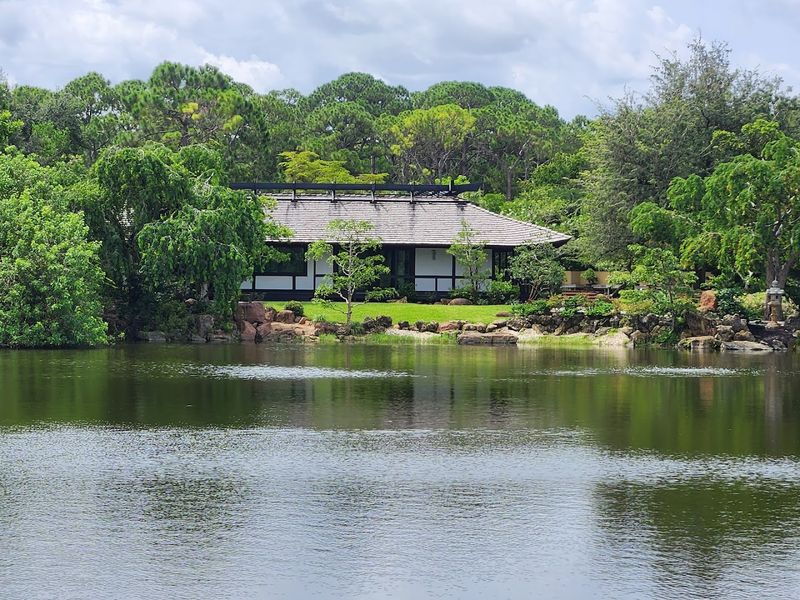
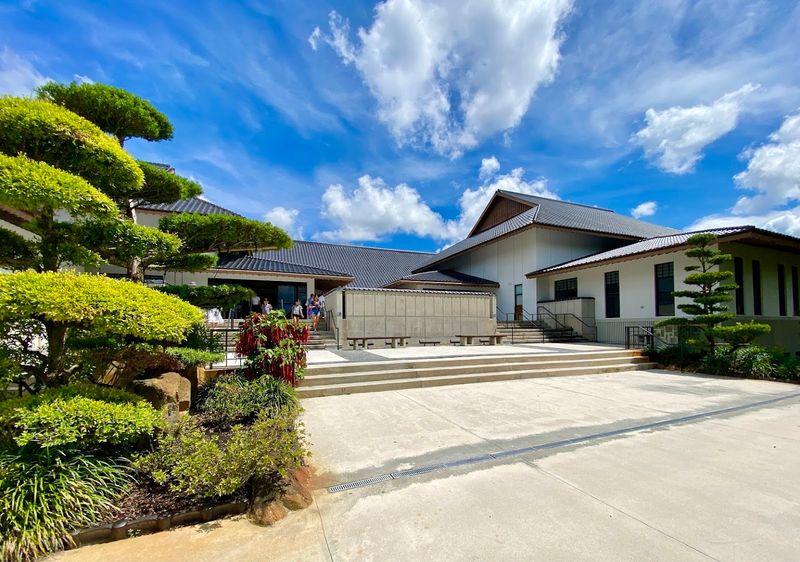
Stepping into the Yamato-kan feels like entering a time capsule where East meets West in perfect harmony. This charming building, designed to resemble a traditional Japanese villa, served as the museum’s original home and continues enchanting visitors today.
Its elegant wooden architecture and thoughtful layout honor centuries-old Japanese design principles while sitting comfortably in subtropical Florida.
Inside, exhibitions tell intimate stories of the Yamato Colony’s daily life through carefully preserved artifacts and photographs. You’ll discover how settlers adapted Japanese farming techniques to Florida’s climate, celebrated traditional holidays far from home, and maintained cultural practices despite isolation.
Each display reveals another layer of their remarkable journey.
Perhaps most captivating is the building’s dry garden courtyard, where raked gravel patterns create waves and ripples around carefully positioned stones. This meditative space invites quiet reflection and demonstrates how Japanese aesthetics emphasize simplicity and natural beauty.
Visitors often pause here, finding unexpected peace amidst their busy days. The Yamato-kan proves that original structures carry irreplaceable charm, preserving authenticity that newer buildings sometimes lack.
Expansion with a Modern Museum Building (1993)
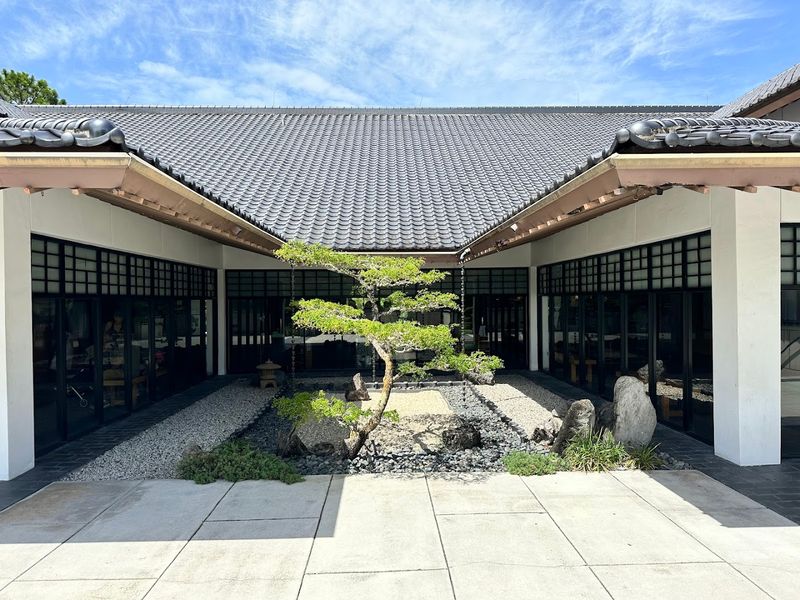
By the early 1990s, something wonderful was happening—the museum’s popularity had outgrown its original space! Visitors arrived in growing numbers, eager to participate in workshops, view exhibitions, and learn about Japanese culture.
The community needed a larger facility to accommodate expanding programs and collections that were bursting at the seams.
When the new 32,000-square-foot building opened in 1993, it revolutionized what the museum could offer. Spacious galleries showcased rotating exhibitions featuring everything from contemporary Japanese art to historical artifacts.
A 225-seat theater hosted performances, films, and lectures that brought culture to life. Classrooms buzzed with students learning origami, calligraphy, and traditional crafts.
Food lovers discovered the Cornell Café, where Japanese-inspired cuisine met fresh Florida ingredients in delicious combinations. The Seishin-an tea house provided authentic tea ceremony experiences in a tranquil setting.
This expansion didn’t just add square footage—it transformed the museum into a comprehensive cultural campus. Today’s visitors benefit from this forward-thinking investment, enjoying world-class facilities that honor tradition while embracing modern educational approaches.
The building itself became an exhibit in blending Japanese aesthetics with contemporary architecture.
Roji-en Japanese Gardens: Garden of the Drops of Dew
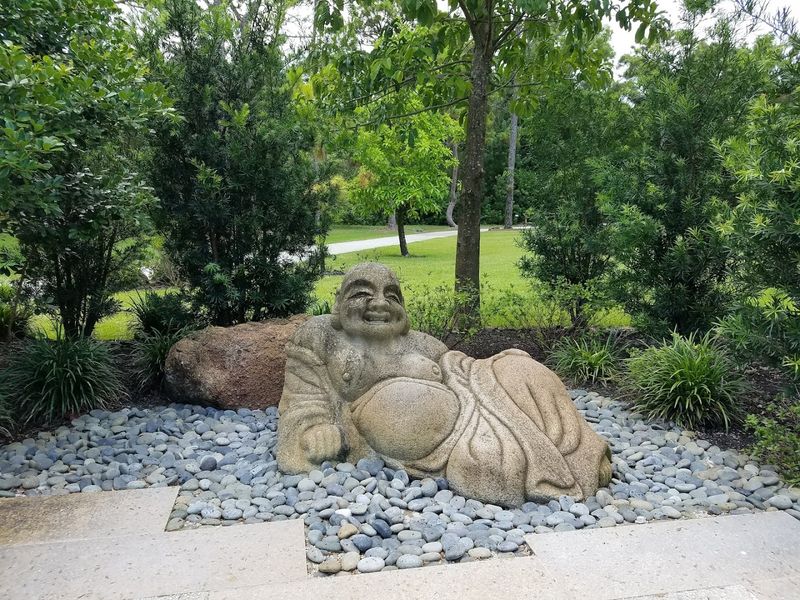
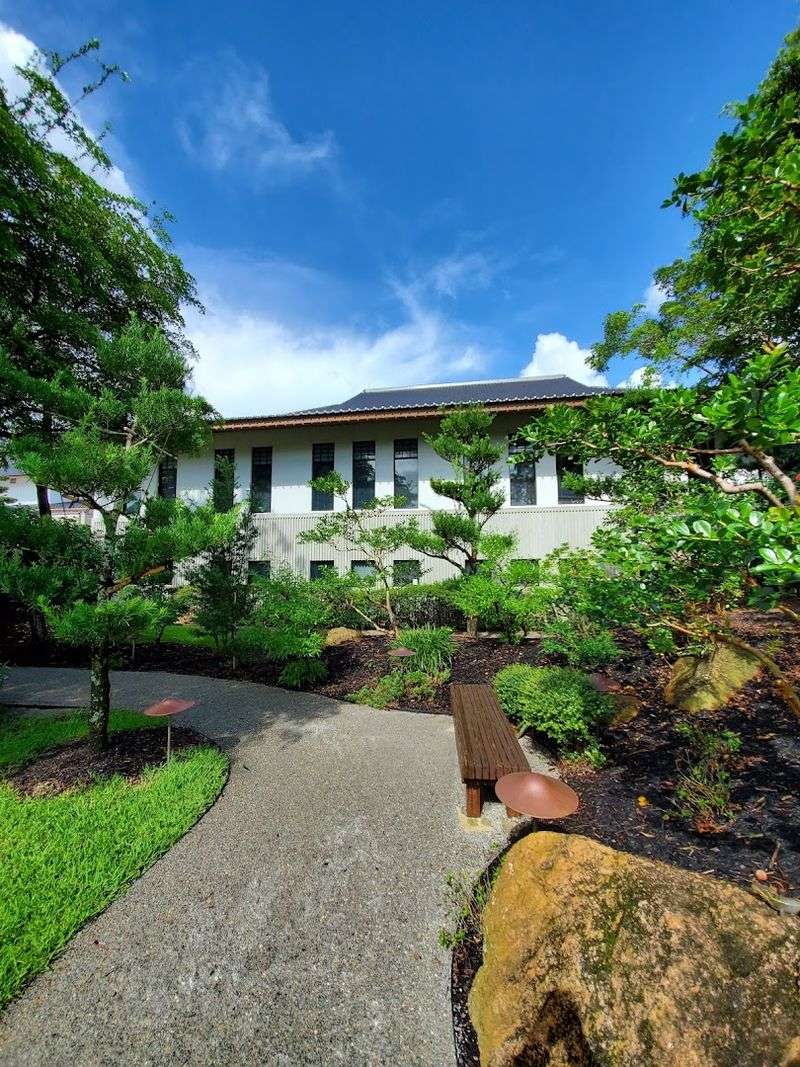
The name Roji-en translates poetically as “Garden of the Drops of Dew,” capturing the delicate beauty that awaits around every winding path. These 16-acre gardens aren’t simply pretty landscapes—they’re living classrooms teaching centuries of Japanese horticultural philosophy.
Each carefully placed stone, pruned tree, and flowing stream serves a purpose in creating harmony between humans and nature.
Walking through Roji-en feels like traveling through time itself, as six distinct garden styles represent different historical periods of Japanese design. Early morning visitors often spot dew glistening on leaves and spider webs, making the garden’s name especially meaningful.
The peaceful atmosphere encourages slow, mindful exploration rather than rushed sightseeing.
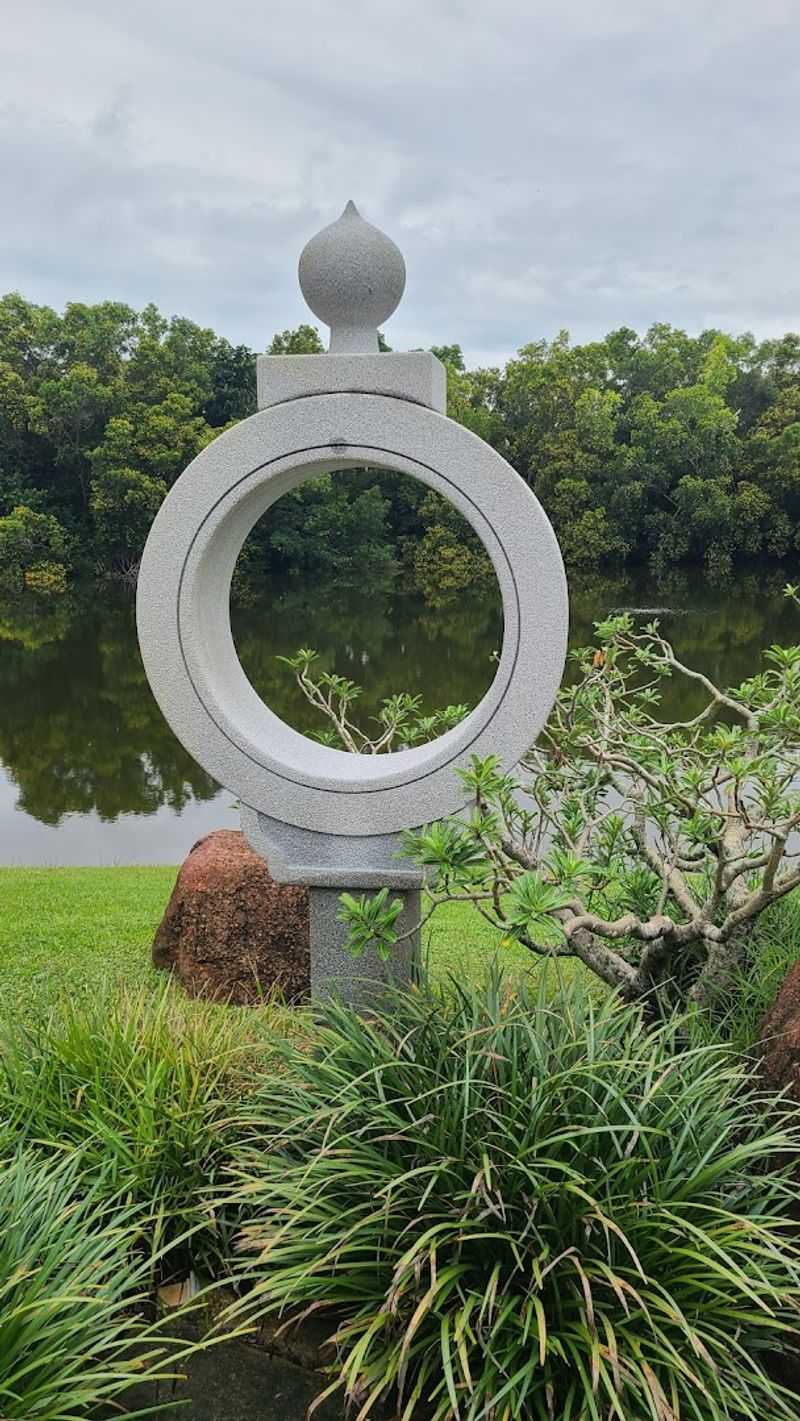
Designers created these gardens specifically as educational exhibits, helping Western audiences understand Japanese landscape traditions. Stone lanterns mark pathways while bamboo fences create intimate spaces for contemplation.
Water features produce soothing sounds that mask city noise, transporting visitors somewhere far from Florida’s hustle and bustle. Seasonal changes bring new beauty—cherry blossoms in spring, lush greenery in summer, and different lighting throughout the year.
Every visit reveals something new in these thoughtfully composed outdoor rooms.
1,000 Years of Japanese Garden Design
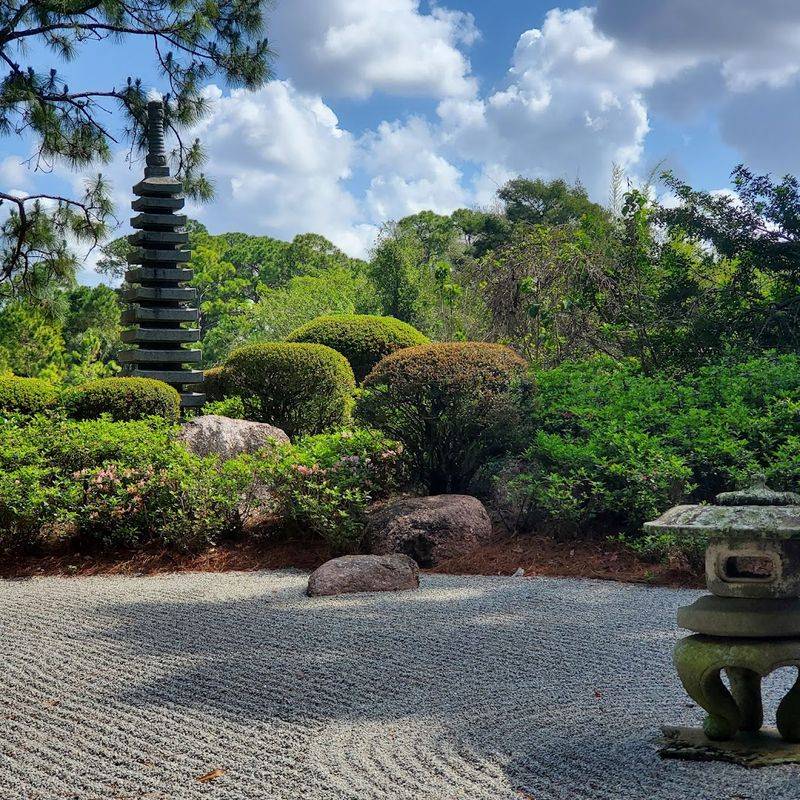
Imagine experiencing ten centuries of artistic evolution in a single afternoon walk—that’s exactly what these gardens deliver! Each section represents a distinct era in Japanese landscape history, from ancient aristocratic estates to contemporary minimalist designs.
This journey through time reveals how Japanese gardening philosophy evolved while maintaining core principles of balance, symbolism, and respect for nature.
Early classical gardens mimicked natural landscapes with artificial hills, winding streams, and islands representing paradise. Medieval zen gardens stripped away decoration, using only rocks and raked gravel to inspire meditation.
Tea gardens developed later, incorporating pathways that prepare visitors mentally for tea ceremonies. Modern sections demonstrate how traditional concepts translate into today’s world.
What’s remarkable is how seamlessly these different styles flow together despite spanning centuries. Transitions between periods feel natural rather than jarring, showing how Japanese designers always built upon previous generations’ wisdom.
Interpretive signs explain each era’s characteristics and cultural context, making history accessible to everyone. Families discover that gardens aren’t static decorations but dynamic expressions of philosophy, religion, and social values.
This comprehensive timeline exists nowhere else in North America, making the museum truly unique.
Bonsai Collection and Natural Landscapes
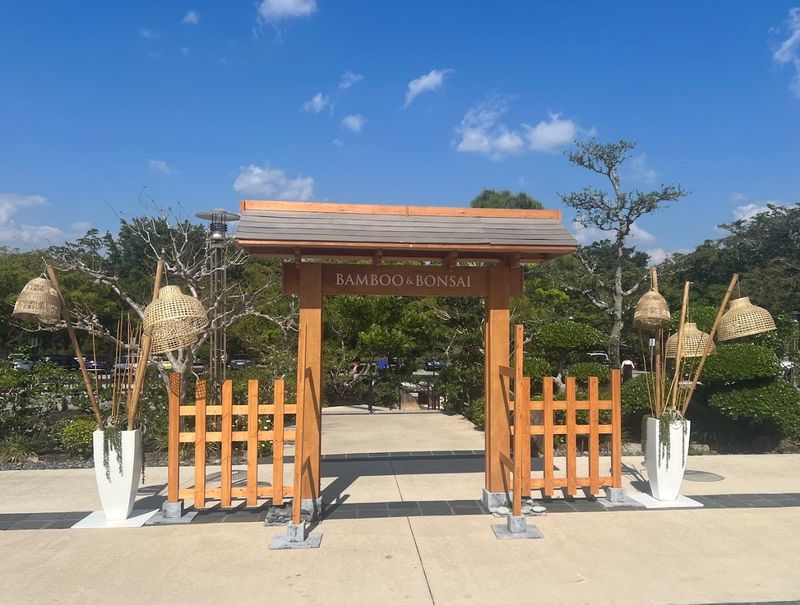
Bonsai trees, some decades old, stand as living sculptures throughout the gardens, their twisted branches and miniature leaves demonstrating incredible patience and skill. These aren’t just pretty plants—they’re works of art requiring years of careful training, pruning, and nurturing.
Master gardeners coax trees that might naturally grow fifty feet tall to thrive beautifully in containers, creating perfect proportions in miniature form.
Koi ponds add movement and color with brilliant orange, white, and black fish gliding gracefully beneath water lilies. Traditional arched bridges invite visitors to pause mid-crossing, watching fish gather hopefully below.
Waterfalls create soothing background music while providing visual focal points that draw eyes upward toward surrounding trees.
What’s especially clever is how designers integrated native Florida ecosystems with Japanese principles without conflict. Palmetto palms coexist with bamboo groves, while local birds nest among imported species.
This fusion demonstrates that respecting natural environments doesn’t require abandoning cultural expression. Visitors leave understanding that beautiful gardens work with nature rather than against it, incorporating local conditions into overall design.
The combination creates something uniquely Floridian while remaining authentically Japanese in spirit.
Cultural Programming and Seasonal Festivals

Annual festivals transform the museum into a vibrant celebration that engages all five senses! Oshogatsu (Japanese New Year) brings traditional foods, games, and performances that families enjoy together each January.
Children write wishes on colorful paper, try their hand at calligraphy, and learn folk dances passed down through generations.
Lantern festivals illuminate summer evenings with hundreds of glowing lights floating across ponds and hanging from trees. The magical atmosphere creates memories that last lifetimes, especially for young visitors experiencing their first lantern ceremony.
Tea ceremony demonstrations occur regularly, teaching proper etiquette and the meditative aspects of this ancient practice.
Art exhibitions rotate throughout the year, showcasing everything from contemporary photography to antique woodblock prints. Workshops teach origami, ikebana (flower arranging), and traditional crafts using authentic materials and techniques.
Guest artists from Japan sometimes visit, sharing specialized knowledge unavailable elsewhere in the region. Weekend programs keep the museum buzzing with activity, ensuring no two visits feel identical.
Whether you’re interested in martial arts demonstrations, cooking classes, or simply enjoying live music, seasonal programming offers something for everyone. This constant evolution keeps regular visitors engaged while welcoming newcomers into Japanese cultural traditions.
Visitor Information (Location, Hours & Admission)
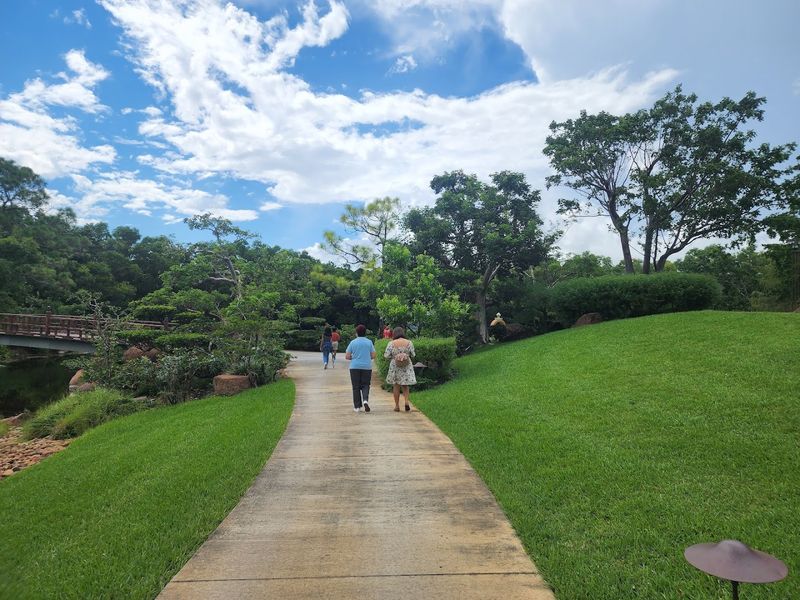
Planning your visit is straightforward and stress-free! The museum sits at 4000 Morikami Park Road in Delray Beach, easily accessible from major South Florida highways.
Most GPS systems and phone maps navigate directly to the entrance, where ample parking welcomes guests. The location feels surprisingly secluded despite being minutes from busy commercial areas.
Operating hours run Tuesday through Sunday, 10:00 AM to 5:00 PM, with Mondays reserved for maintenance and special events. This schedule gives staff time to maintain the gardens’ pristine condition while providing six days weekly for public enjoyment.
Arriving early allows cooler morning exploration, especially during Florida’s hot summers.
General admission fees support ongoing preservation, educational programs, and garden maintenance, though pricing varies for adults, seniors, students, and children. Members enjoy free unlimited visits plus special perks like exhibition previews and discounts at the gift shop.
The museum occasionally offers free admission days, so checking their website or calling ahead can reveal opportunities for budget-conscious families. Allow at least three hours to fully experience both indoor exhibitions and outdoor gardens.
Comfortable walking shoes are essential, as paths wind throughout the extensive property. Bringing cameras is encouraged—these gardens photograph beautifully year-round!