Florida is so often reduced to a postcard version that it is easy to forget how diverse and layered it can be.
Beyond the beaches and theme parks, there are corners that feel Caribbean, European, and even quietly otherworldly, places where the landscape makes you question which state you are actually in.
Some will surprise you with their architecture, while others with a stillness that feels borrowed from another time.
If you are ready to see Florida from a completely different angle, leave the stereotypes behind, these 15 locations are proof that the real adventure begins where the well-worn path ends.
Dry Tortugas National Park
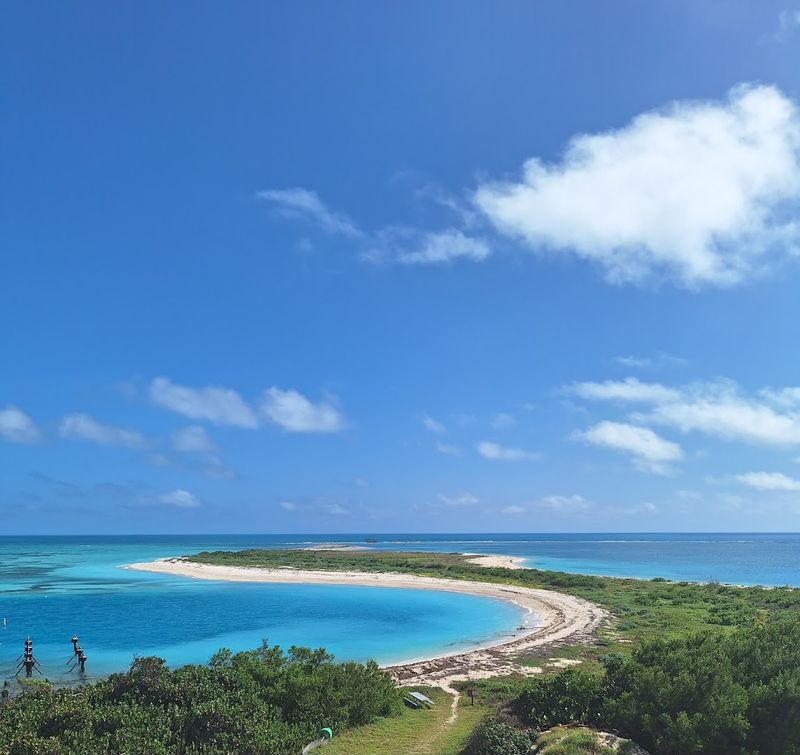
The trip out feels like you are slipping away from the mainland and into another country entirely.
Water turns a startling shade of blue, the horizon opens wide, and the usual Florida clutter disappears into pure sea and sky.
By the time you arrive, the massive brick walls rising from the island look more like a forgotten outpost in the Caribbean than anything tied to the state.
Dry Tortugas National Park sits about 70 miles west of Key West, far out in the Gulf of Mexico, reachable only by boat or seaplane, which only adds to that sense of distance and escape.
This park has that rare, removed feeling that makes every sound sharper and every color richer.
You can walk beside old cannons, drift over coral and tropical fish, and watch frigatebirds circle above the fort in the salty wind.
Even the air seems lighter out there.
What stays with you most is the isolation.
There are no highways nearby, no neon signs, and no pressure to rush.
Just history, shallow water, and a horizon so immense that Florida feels very far away.
Morikami Museum and Japanese Gardens
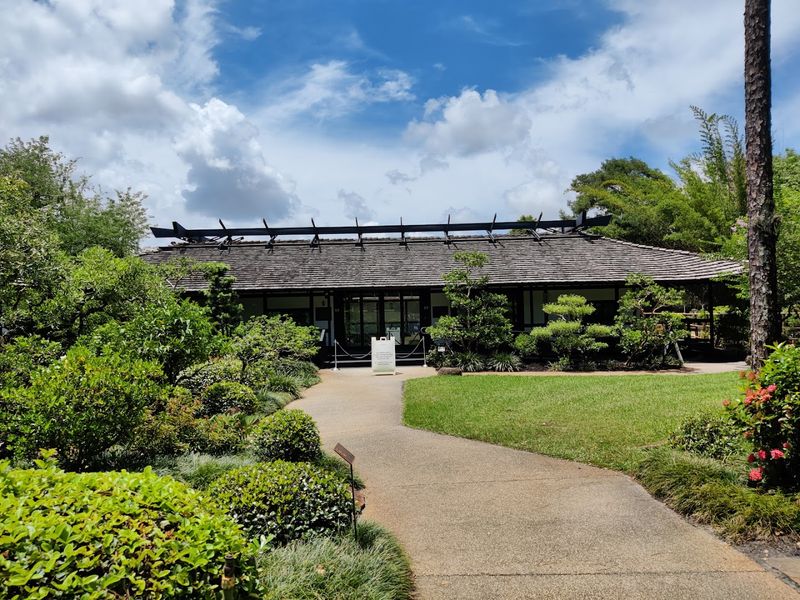
The first thing you notice is the quiet, the kind that changes your pace without asking.
Paths curve gently around ponds, bridges frame still water, and every detail feels placed with care rather than spectacle.
Instead of loud colors and coastal energy, you step into a landscape built around balance, reflection, and restraint.
Tucked away in Delray Beach in South Florida, this cultural and garden complex feels worlds away from the palm-lined image many people expect here.
You move through carefully designed spaces inspired by different periods, passing stone lanterns, bonsai, bamboo groves, and koi gliding like living brushstrokes.
Even a simple breeze through the leaves sounds softer in this setting.
There is something transporting about a place that invites attention instead of distraction.
The architecture, art, and garden design create a mood that feels closer to Kyoto than South Florida. You leave feeling calmer, as if the day itself has been edited into something simpler.
Seaside
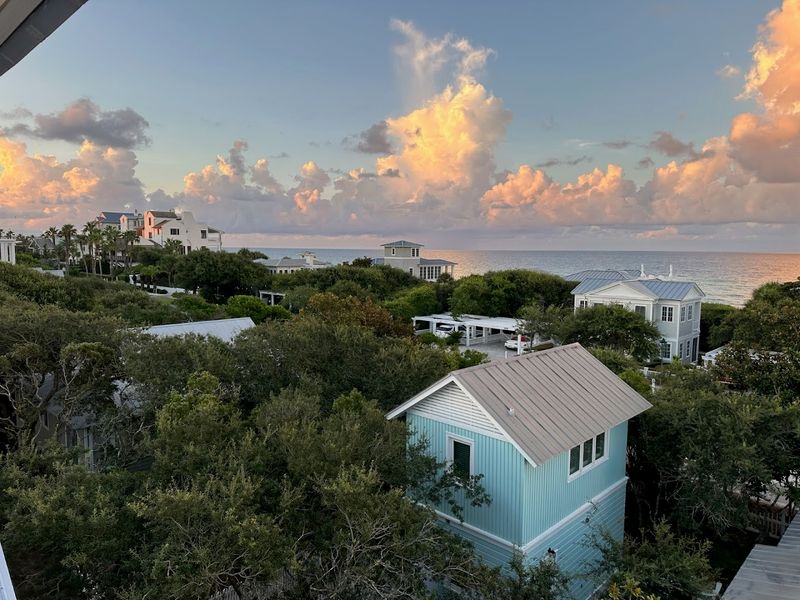
Some beach towns feel improvised, but this one feels composed like a movie set that somehow breathes. Streets are tidy, cottages wear soft colors, and white fences line paths where people actually walk instead of hurry.
The whole place has a polished calm that makes you think of a small resort town on another coast.
Along Florida’s scenic Highway in the Panhandle, this thoughtfully planned community carries a distinctly New Urbanist charm, with porches, narrow lanes, and a town center that encourages lingering.
Food trucks and little shops sit near the square, while the beach unfolds beyond the dunes in bright, clean bands of sand and sky.
It feels both nostalgic and slightly unreal in the best way.
What makes it stand apart is the rhythm.
You can move around by foot or bike, stop for a coffee, and feel the day slow into something intentional.
In a state known for sprawl, this place feels designed for human scale and simple pleasures.
Bok Tower Gardens
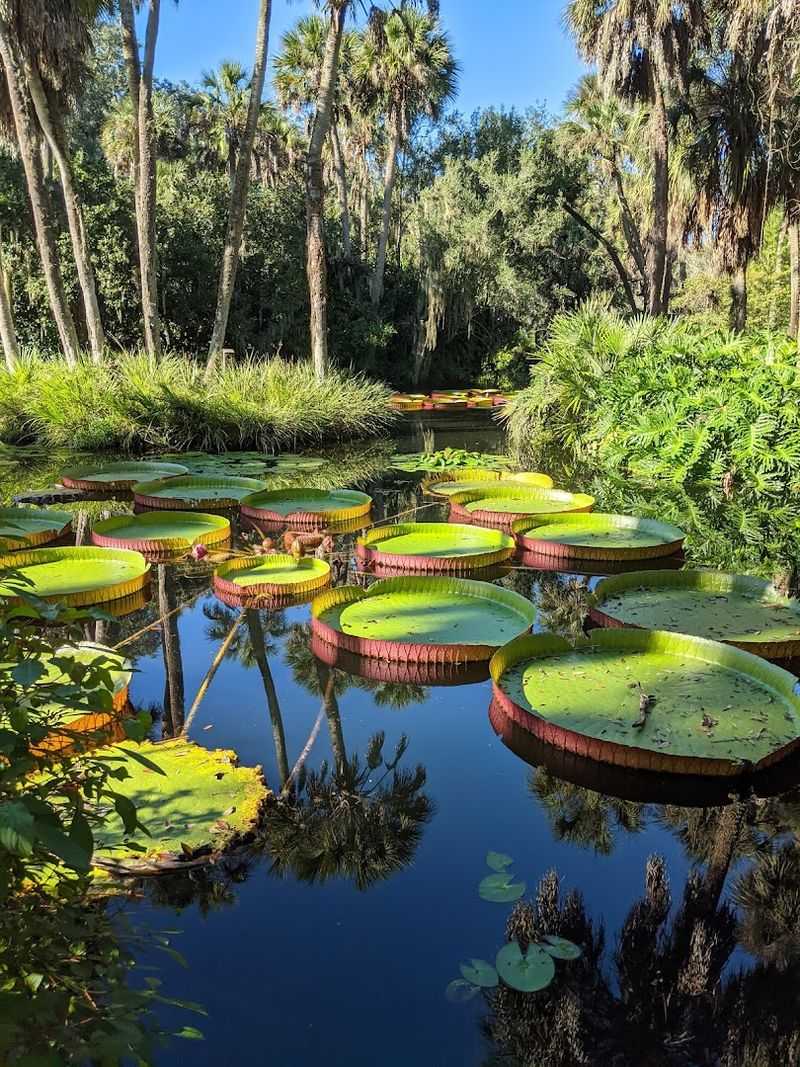
There is a hush here that feels almost ceremonial, as if the landscape has decided noise does not belong. Rolling lawns, shady paths, and layers of flowers gather around a tall stone tower that seems imported from Europe.
You do not expect this kind of elevation or elegance in central Florida, which is exactly why it feels so surprising.
Bok Tower Gardens sits near Lake Wales in Central Florida, on one of the highest points in the peninsula, and that subtle rise changes the atmosphere immediately.
The Singing Tower brings Gothic Revival drama to the skyline, while the carillon music drifts over reflection pools and thick gardens with a strange, dreamlike grace. It feels formal without becoming stiff.
As you wander, the place seems less like a park and more like a carefully staged retreat.
Birds move through the trees, the light shifts across stone, and the landscape invites long pauses.
For a little while, the state outside disappears behind beauty, silence, and old world design.
Weeki Wachee Springs State Park
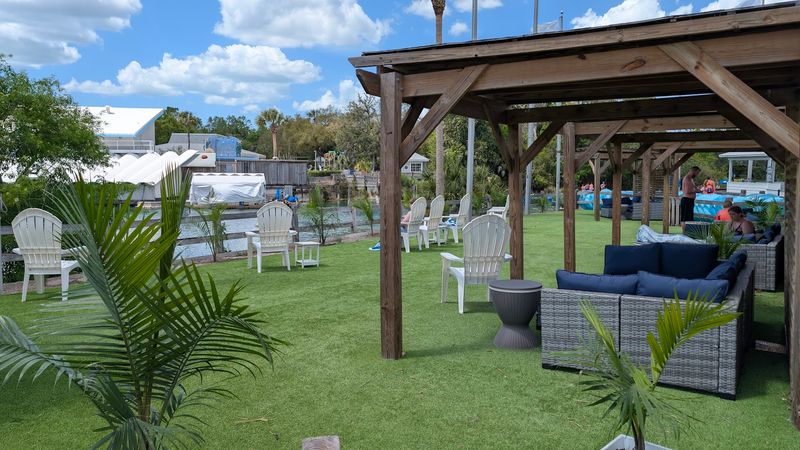
It starts with water so clear it looks invented, the kind that reflects sky and greenery with almost impossible sharpness.
Then comes the wonderfully strange twist: a famous roadside attraction built around live mermaid performances.
That mix of natural beauty and old Florida spectacle gives the place an identity unlike anywhere else.
Weeki Wachee Springs State Park feels less like a standard park and more like a faded fantasy that never completely disappeared.
You can watch swimmers perform underwater in a historic theater, then paddle past manatees and swaying grasses on a spring run so pristine it seems untouched by time.
It is kitschy, yes, but also oddly magical.
Located along Florida’s Gulf Coast near the town of Spring Hill, this spot blends crystal-clear spring water with one of the most unusual traditions in the state.
The atmosphere lands somewhere between vintage Americana and a subtropical dreamscape.
You are surrounded by jungle-like growth, glassy water, and a tradition so distinctive that it feels proudly outside the modern world.
Instead of theme park polish, you get something weirder, gentler, and far more memorable.
Apalachicola
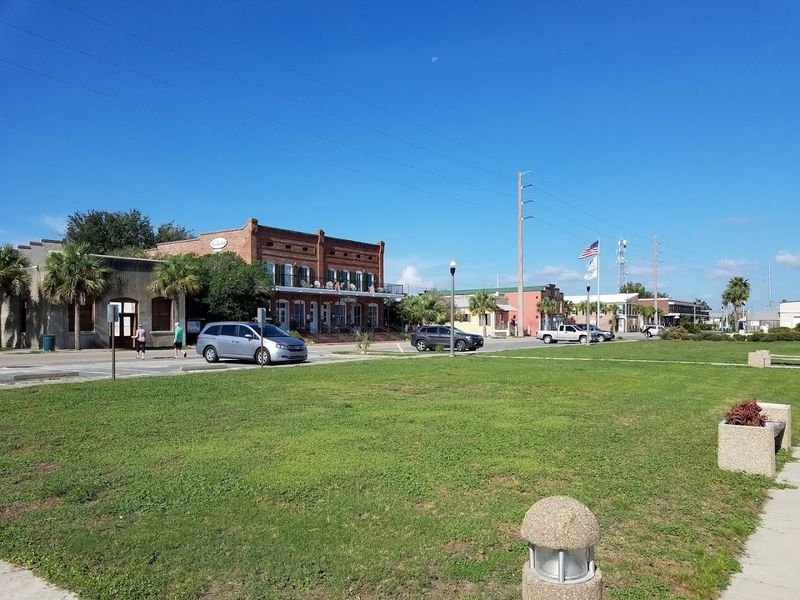
This town does not try to impress you quickly, which is part of its charm.
Weathered brick buildings, old storefronts, and a working waterfront create a mood that feels more like a forgotten Gulf port than vacation-centered Florida.
You can almost sense the layers of trade, storms, and stories still hanging in the humid air.
Set along the Florida Panhandle on the Gulf of Mexico, near the mouth of the Apalachicola River, the setting immediately feels tied to water, history, and a slower way of life.
It carries a distinctly Southern character, shaped by oysters, maritime traditions, and a pace that remains pleasingly unbothered.
The streets feel lived in rather than curated, with galleries, seafood spots, and Victorian homes adding texture without sanding away the grit.
It has the soul of a river town that happens to meet the sea.
What makes it feel different is its restraint.
There is no glossy spectacle competing for attention, just porches, boats, and a shoreline economy that still feels connected to place.
If you like destinations with history under the surface, this one draws you in quietly and keeps you there.
Falling Waters State Park
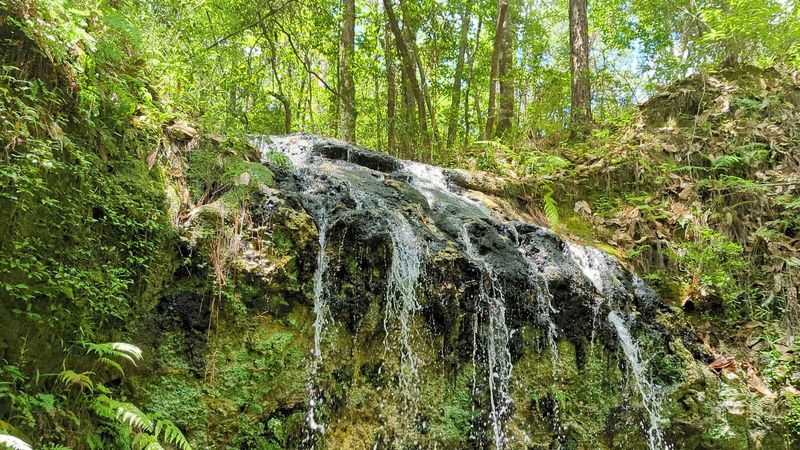
Florida is not the state most people associate with waterfalls, which makes this place feel instantly disorienting in a good way.
Pine forest gives way to a dramatic sink where water slips out of sight into a deep limestone cavity.
The effect is brief but startling, like stumbling across a secret borrowed from Appalachia.
At Falling Waters State Park in the Florida Panhandle near the town of Chipley, the terrain breaks the flat state stereotype almost immediately.
Boardwalks lead through ferny shade and tall trees, and the air feels cooler near the sink where the water disappears underground.
Instead of open beaches or marsh, you get elevation changes, enclosed woods, and geology that feels unexpectedly rugged.
That contrast is exactly what lingers after your visit.
The setting is compact, but it has a strange power because it overturns what you thought this landscape could offer.
You come expecting a pleasant stop and leave thinking you briefly crossed into a different region altogether.
St. Augustine
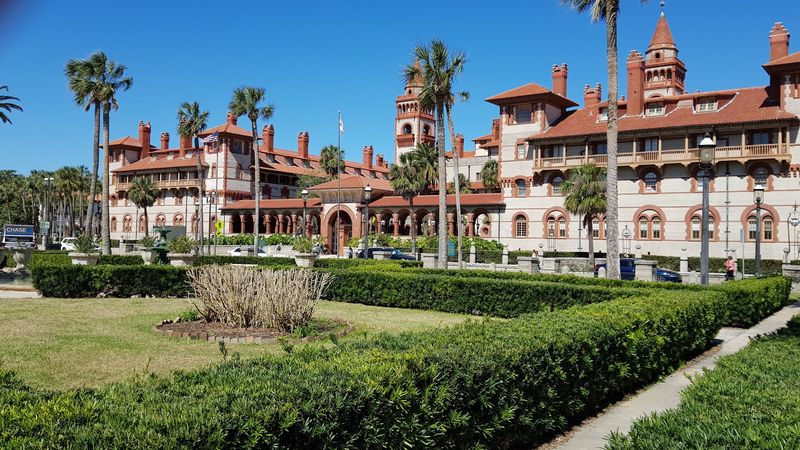
Walk these streets for even a few minutes and the usual Florida mood begins to dissolve.
Coquina walls, narrow lanes, and balconies shaded by old buildings create a setting that feels unmistakably European.
Instead of modern resort energy, you get texture, age, and the satisfying impression that history still shapes daily life.
St. Augustine sits along Florida’s northeast coast, just south of Jacksonville, and carries its Spanish colonial roots openly, from the fortress by the bay to courtyards, churches, and hidden passageways that reward wandering.
The architecture gives weight to the city, while horse-drawn carriages, brick paths, and old stone details deepen the sense that time moves differently here.
Even the tourist bustle cannot erase that atmosphere.
The best moments happen when you look beyond the obvious landmarks.
A quiet side street, a lantern glowing at dusk, or music drifting from a courtyard can make the place feel uncannily far from the rest of the state. It is one of the rare destinations where age becomes the main attraction.
Devil’s Den Prehistoric Spring
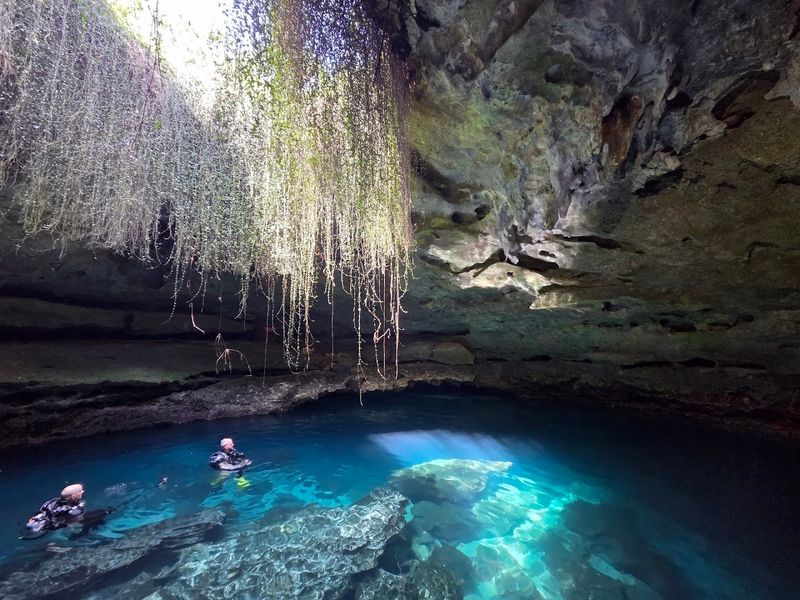
Nothing about the approach prepares you for what waits below.
You descend into a cavern where light pours through an opening overhead and lands on astonishing blue water ringed by ancient rock.
It feels cinematic, mysterious, and far removed from the flat, sun-blasted image many people carry of the state.
The atmosphere is that of a hidden grotto you might expect in another country.
The enclosed chamber stays cool, the stone walls hold a deep earthy texture, and snorkelers or divers slip into water so clear it seems illuminated from within.
Prehistoric fossils found here only add to the sense of age and wonder.
Set near the small town of Williston in North Central Florida, this underground spring reveals a completely different side of the state.
What makes it unforgettable is the contrast between outside and in.
Above ground, the world looks ordinary enough, but below, everything turns dramatic and almost subterranean in mood.
You do not simply visit a spring here, you step into a space that feels secret, ancient, and slightly surreal.
Mount Dora
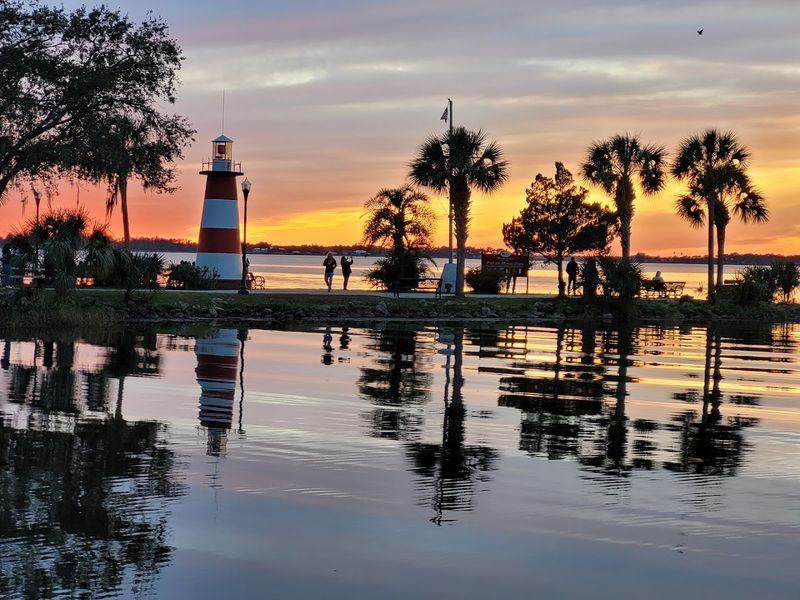
This lakeside town has a softness to it that feels more small Southern village than peninsular getaway.
Hills are gentle, streets are shaded, and downtown invites strolling instead of speeding through.
If you arrive expecting the usual strip malls and coastal flash, the antique stores and historic buildings feel like a pleasant correction.
Mount Dora sits in Central Florida, about 30 miles northwest of Orlando, and is shaped by porches, inns, gardens, and a walkable center where local shops still define the mood.
Seasonal festivals bring extra energy, but even on quiet days the place has an old-fashioned warmth that makes time loosen its grip a little.
The lake adds calm rather than spectacle. What stands out is how settled and intimate it feels.
You can browse for vintage finds, stop for tea or lunch, and watch boats drift in a scene that could easily belong to another state. It is not dramatic, and that is exactly why it works so well.
The charm arrives slowly, then stays.
Everglades National Park
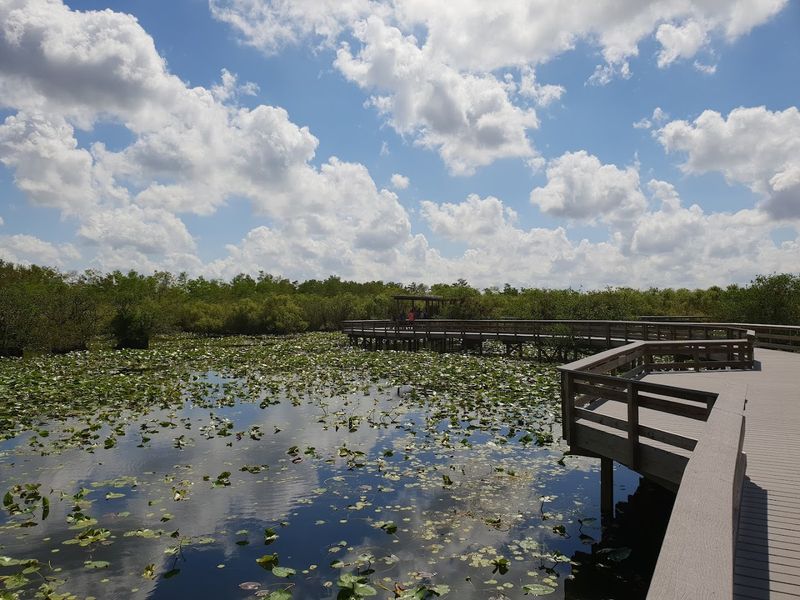
Some landscapes make you feel small through mountains or deserts, but this one does it with openness. The horizon stretches over sawgrass, mangroves tangle into watery corridors, and the light changes the entire mood by the hour.
It can feel less like the Southeast and more like a vast subtropical frontier at the edge of the world.
The experience is not dramatic in the obvious sense, yet its scale and strangeness create a powerful sense of departure.
Alligators slide through dark water, roseate spoonbills flash pink against the marsh, and quiet trails lead into habitats that seem ruled more by tide and weather than by people. The wildness feels intact.
Stretching across the southern tip of Florida, west of Miami and down toward the Gulf of Mexico, this vast wetland landscape reveals a side of the state that feels almost untouched by time.
What unsettles and enchants you is how hard it is to categorize.
It is not swamp in the simple way outsiders imagine, and it is certainly not the postcard Florida many expect.
This place feels ancient, fluid, and deeply self-contained, as if it has always belonged to a different map.
Anna Maria Island
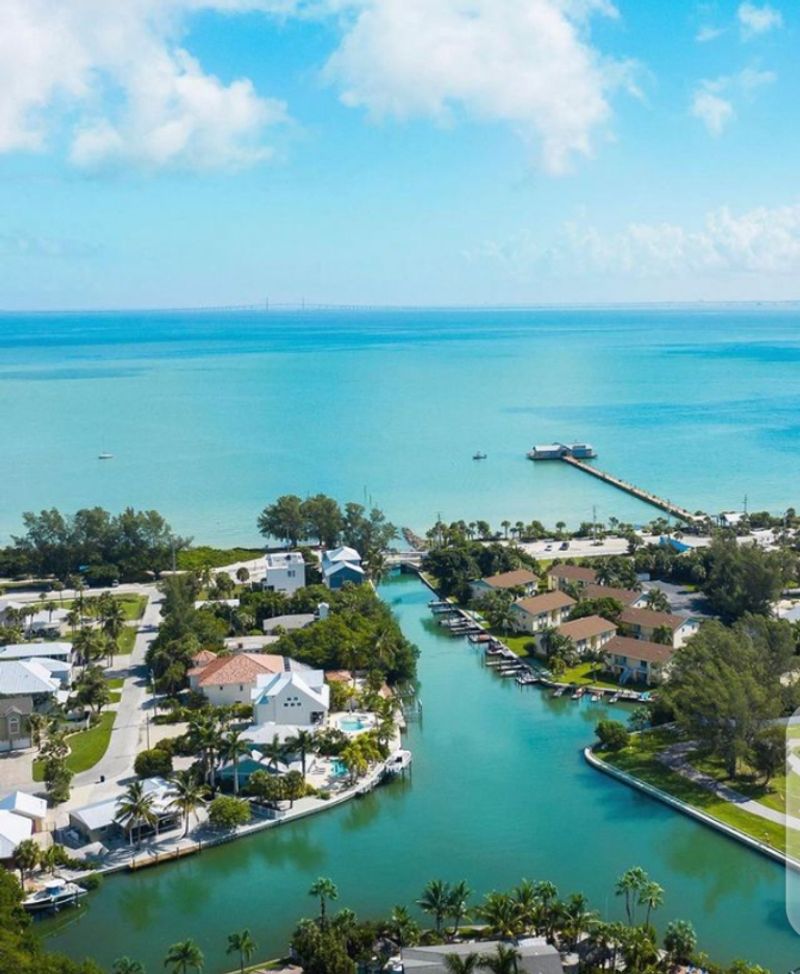
On Florida’s Gulf Coast near Bradenton, there are beach destinations that feel engineered for volume, and then there are places like this that seem to exhale.
Low-rise buildings, old cottages, and soft Gulf light create a gentler rhythm, one that recalls a simpler coastal era.
The absence of towering development makes the scenery feel more like an island hideaway than a major state destination.
Anna Maria Island keeps its charm in the details.
Colorful homes sit near quiet streets, small cafés and seafood spots never overwhelm the shoreline, and the water often glows in calm shades of green and blue that feel almost tropical.
You can bike around easily and let the day unfold without much planning.
What gives it that out-of-state sensation is the mood of understatement.
Nothing needs to be louder or bigger than the beach itself, and that restraint changes how you experience the coast.
Instead of spectacle, you get breezes, sunsets, and a village atmosphere that feels warmly detached from the mainland rush.
Cedar Key
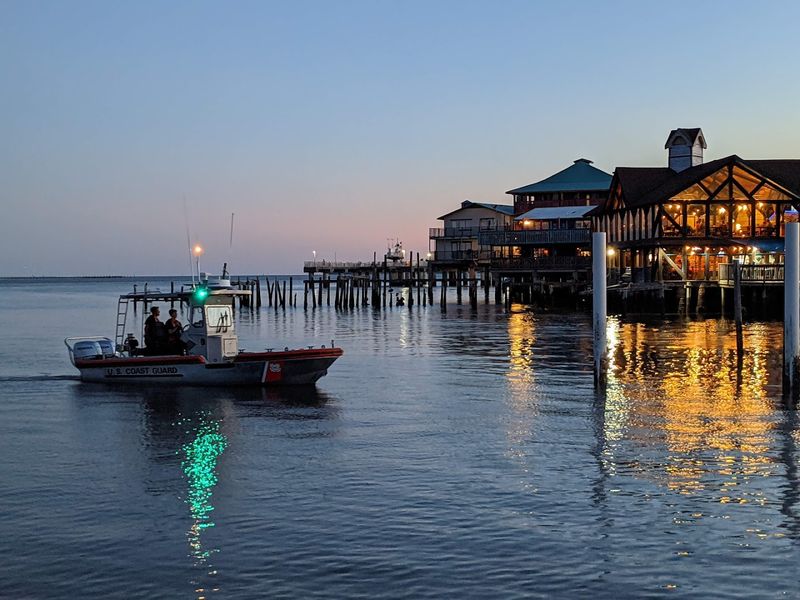
The drive in already hints that you are leaving one version of Florida for another. Marshy edges, open sky, and a slower pace lead to a waterfront town that feels weathered, creative, and slightly apart from the modern world.
It is the kind of place where the Gulf looks working and lived in, not just decorative.
Cedar Key has the soul of an old fishing village, with docks, clapboard buildings, seafood shacks, and small galleries folded into everyday life.
Pelicans perch nearby, golf carts drift through town, and the shoreline carries a rough beauty that feels closer to coastal Louisiana or a remote island community than a tourism machine.
Even the quiet feels textured.
Located on Florida’s Gulf Coast about 50 miles southwest of Gainesville, this small island community stands out for its refusal to become polished in predictable ways.
The atmosphere stays local, artistic, and a little salty around the edges.
If you enjoy places with personality rather than perfection, this one feels like a secret you are lucky enough to have found.
Florida Caverns State Park
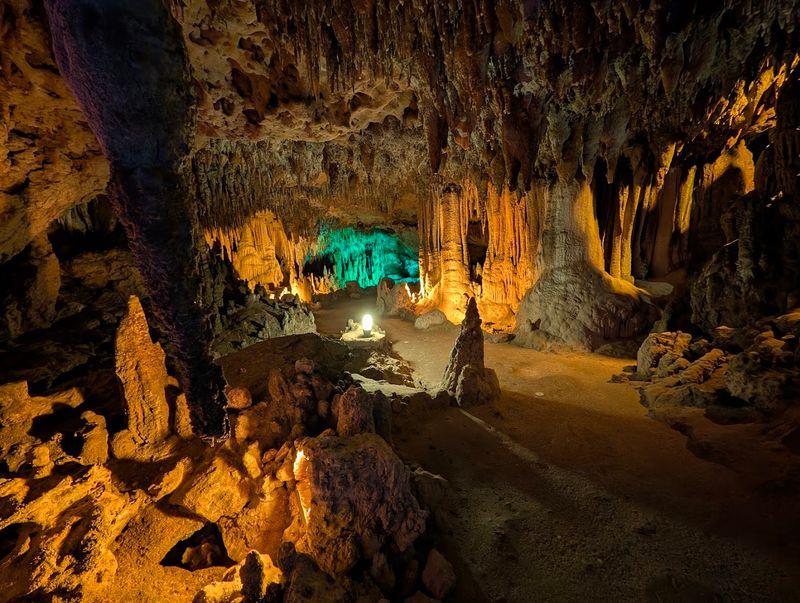
Caves are not what most people picture when they think about this state, which is why this park feels so wonderfully unexpected.
Beneath the surface, cool chambers open into limestone rooms lined with formations that look sculpted over ages.
It is a complete shift from beaches, palms, and sun-drenched flatlands.
Guided tours lead you through a hidden underground world of stalactites, stalagmites, and narrow passages shaped by water and time.
Above ground, the surrounding forest and river scenery are beautiful on their own, but the real surprise is descending into a landscape that feels more Ozarks than Gulf Coast.
The temperature drop alone changes your mood.
Up in the Florida Panhandle, near the quiet town of Marianna, this unexpected landscape reveals a side of the state most people never associate with it.
That sense of contrast gives the place its power.
You are reminded that Florida is geologically stranger than its stereotypes allow, and that wonder often waits underground.
By the time you return to daylight, the state feels bigger, older, and far less familiar than it did before.
Islamorada
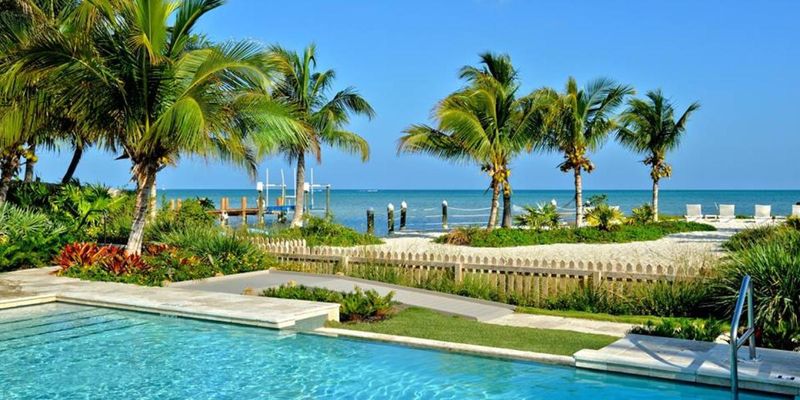
Along the Florida Keys, where long bridges stretch over open water and the mainland slowly fades from view, the journey itself sets the tone before you even arrive.
Once there, the atmosphere shifts into something undeniably island-like, with turquoise shallows, fishing skiffs, and breezy waterfront spots that feel closer to the Caribbean than the continental United States.
The light alone seems different, brighter and somehow slower.
Islamorada balances polished leisure with working water culture in a way that feels effortless.
Sportfishing history runs deep, marinas hum quietly, and oceanfront restaurants invite you to linger over the view instead of rushing through an itinerary.
The architecture is low and relaxed, letting sea and sky carry most of the drama.What separates it from other coastal escapes is the sense of being suspended between worlds.
You are still in Florida, but only technically it seems, because the scenery and rhythm suggest another chain of islands entirely.
Days here feel saltier, looser, and far more remote than the map implies.