Standing tall in downtown Macon, the Hay House captures the imagination of everyone who visits this remarkable Italian Renaissance masterpiece. Built in the 1800s, this seven-story mansion showcases golden ceilings, marble sculptures, colorful stained glass, and engineering features that were way ahead of its time.
From hidden passages to a cooling system that worked without electricity, every corner of this historic home tells an amazing story about Southern wealth and clever design. Walking through its grand rooms feels like stepping back in time to experience how wealthy families lived during America’s Gilded Age.
The Italian Renaissance Architecture That Stands Out in the South
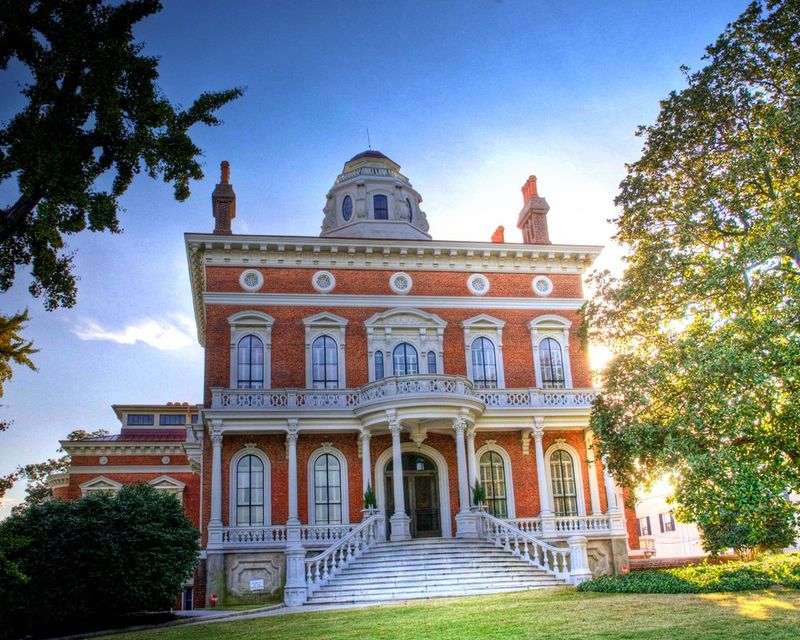
Imagine seeing a palace from Italy right in the middle of Georgia. That’s exactly what visitors experience when they first see the Hay House, designed in the Italian Renaissance Revival style that was rare for the American South.
The mansion’s red brick exterior, decorative stonework, and grand arches make it look like it belongs in Florence rather than Macon.
Wealthy businessman William Butler Johnston hired architects to create this showpiece in 1855. He wanted a home that would impress everyone who saw it.
The design features symmetrical windows, elaborate cornices, and classical details that make the building look powerful and elegant at the same time.
What makes this architecture special is how well it has been preserved over time. The outside still looks much like it did when first built.
You can see carved stone decorations, tall chimneys, and ironwork that required incredible skill to create.
Standing before this mansion, you understand why people travel from all over to photograph it. The architectural style represents a period when American millionaires wanted to show their sophistication by copying European design.
This house succeeded brilliantly in that goal.
The Spectacular Gilded Ceilings and Decorative Plasterwork
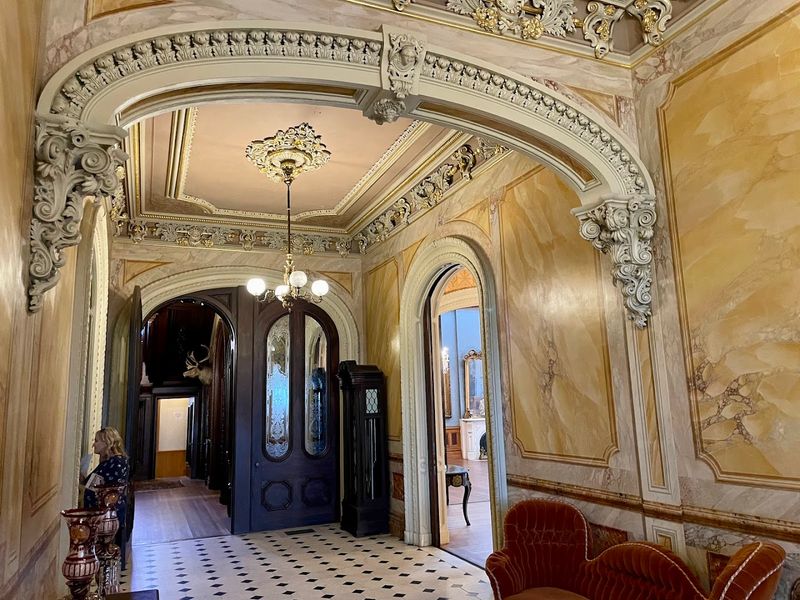
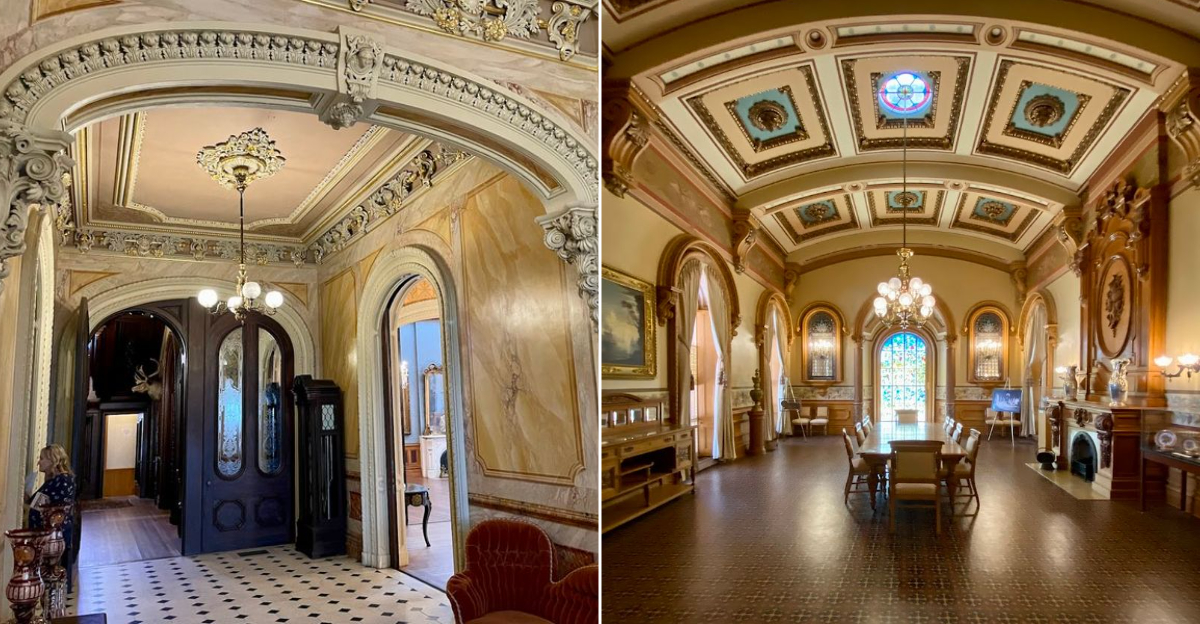
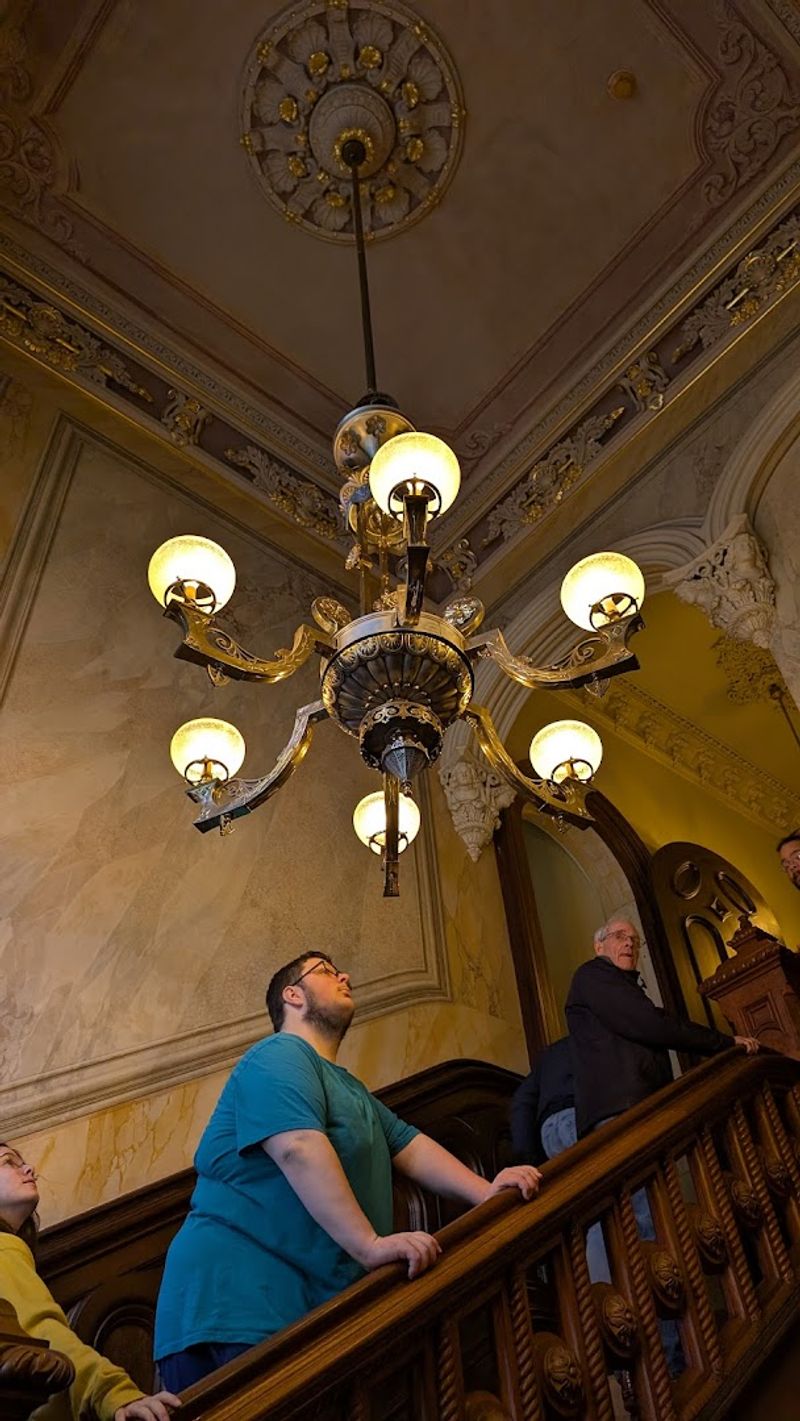
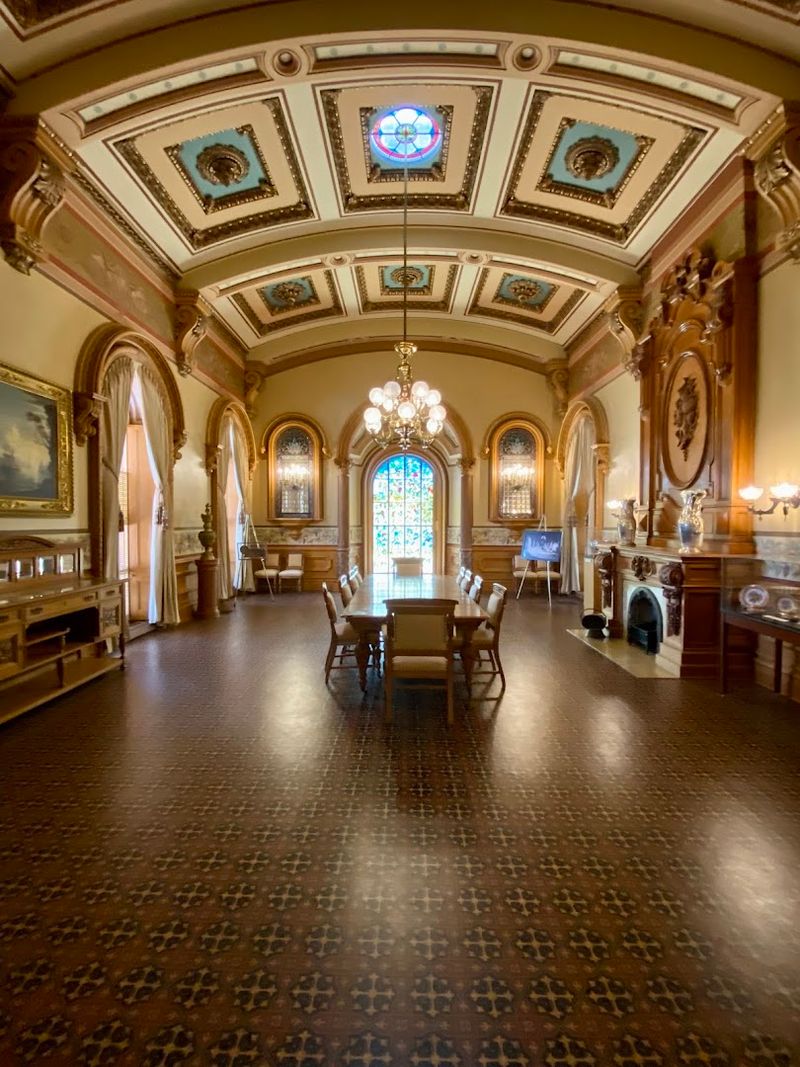
Looking up inside the Hay House literally takes your breath away. Gold leaf covers many ceilings, creating shimmering surfaces that catch light from crystal chandeliers and windows.
These gilded ceilings represent some of the finest decorative work found in any American home from this era.
Skilled craftsmen spent months applying thin sheets of real gold to plaster designs. The patterns include flowers, geometric shapes, and classical motifs inspired by Italian palaces.
Every ceiling tells its own visual story through color and texture.
Beyond the gold, the plasterwork itself deserves attention. Walls feature raised designs that look like carved stone but are actually skillfully painted plaster.
Master artists created fake marble, wood grain, and stone textures so realistic that visitors often touch the walls to check what they’re really made of.
These decorative techniques required incredible talent and patience. Workers had to apply multiple layers, let each dry properly, then carefully paint every detail by hand.
The results remain stunning more than 160 years later, proving that quality craftsmanship truly stands the test of time in remarkable ways.
The Seven-Story Wonder From Basement to Cupola
Most houses have two or three floors, but the Hay House stretches an amazing seven stories from its basement to the cupola on top. This vertical design was unusual for Southern homes and required special engineering to make it stable and safe.
Each level served different purposes for the family and their many servants.
The basement contained storage areas and the foundation for the advanced ventilation system. Ground floors housed servant quarters initially, while the main family rooms occupied the second and third floors.
Higher levels included bedrooms, additional storage, and mechanical systems.
Climbing to the cupola requires navigating narrow spiral staircases that get tighter as you go up. Tour guides offer a special extended tour that takes visitors all the way to the top.
From up there, you can see across downtown Macon and understand how this mansion dominated the skyline when it was built.
Building upward instead of outward on the property was a bold choice. It created an impressive silhouette visible from blocks away.
The height also helped the ventilation system work better, as hot air could rise through all those floors and escape through vents at the top.
The Revolutionary Ventilation System That Cooled Without Electricity
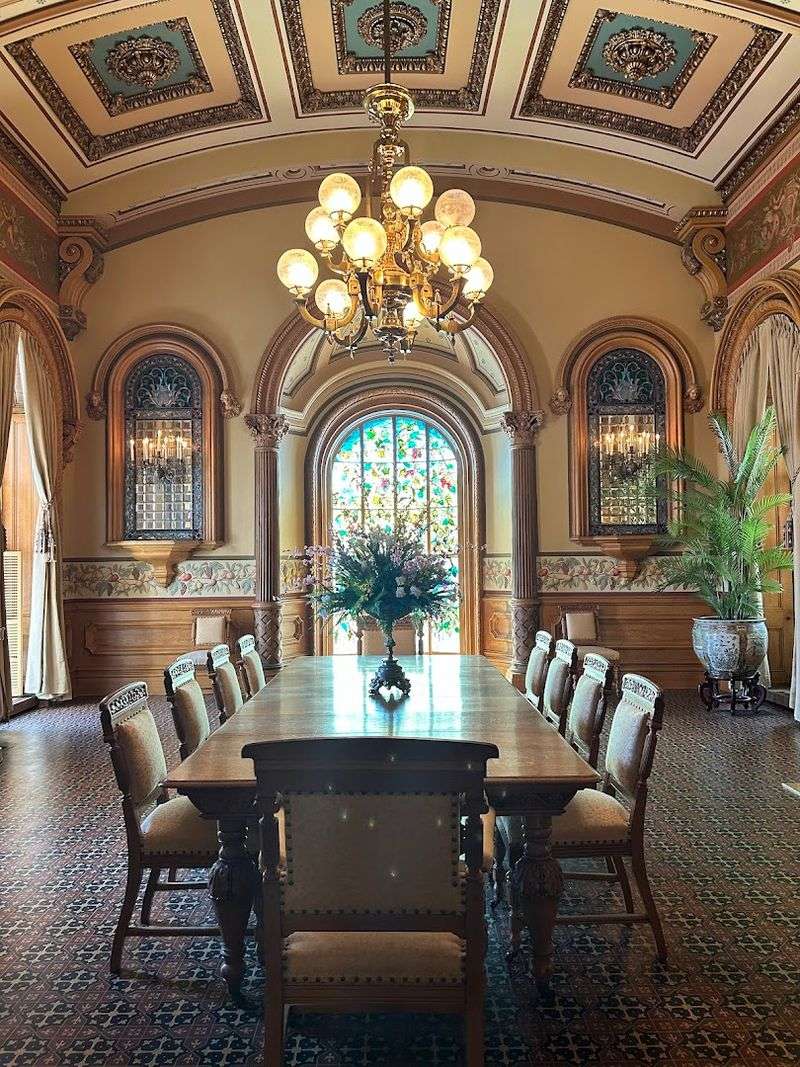
Remember, this house was built before electric fans or air conditioning existed. Yet somehow, the Hay House stayed comfortable even during hot Georgia summers.
The secret was an ingenious ventilation system that used physics and smart design to move air naturally throughout the building.
Architects placed vents strategically on every floor. Cool air entered through basement openings, flowed upward as it warmed, and escaped through the cupola at the top.
This created constant circulation that actually worked pretty well for keeping temperatures bearable.
The system also helped preserve food and wine. Certain rooms stayed cooler than others because of careful vent placement.
Families could store items that would spoil quickly in regular pantries, extending their freshness by days or weeks.
Modern engineers study this design because it shows how buildings can cool themselves using natural airflow. The principle is called passive cooling today, and architects are rediscovering these old techniques to make energy-efficient homes.
What seemed like common sense to Victorian builders is now considered innovative green technology, proving that good ideas never really go out of style.
The Massive Front Doors That Weigh Half a Ton
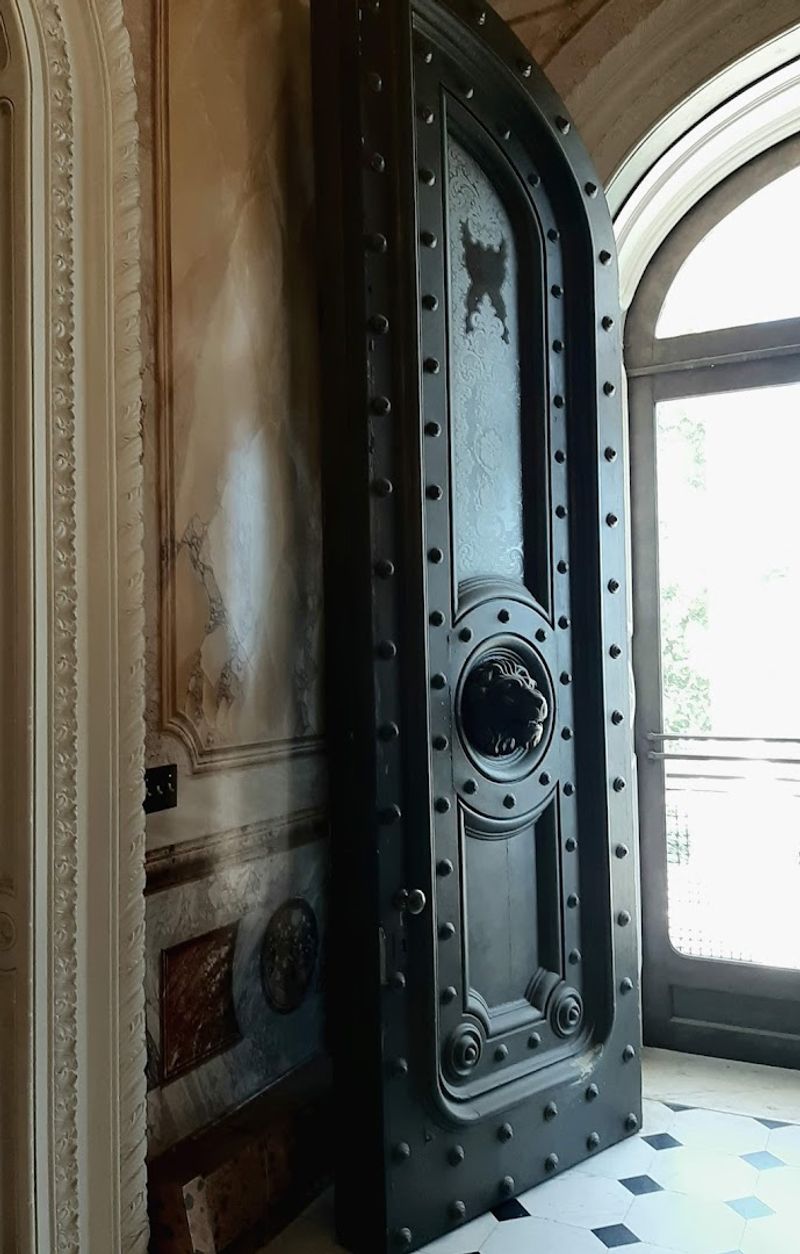
Walking up to the main entrance, you face doors unlike any you’ve probably seen before. Each of the two front doors stands 12 feet tall and weighs 500 pounds.
That’s heavier than most motorcycles, yet they’re balanced so perfectly that one person can open them with reasonable effort.
These enormous doors were designed to impress visitors immediately. Their size announced that important, wealthy people lived here.
The doors feature detailed wood carvings and massive hinges that had to be custom-made to support their weight.
Getting doors this large to work properly required expert carpentry and metalworking. The hinges connect to heavy frames anchored deep into the brick walls.
Everything had to be measured precisely so the doors would swing smoothly rather than drag or stick.
Tour guides love demonstrating how the doors operate. Despite their massive size, they move with surprising ease when you know the balance point.
This combination of grandeur and functionality shows the attention to detail that went into every part of the house, where nothing was too small or large to deserve the best craftsmanship available.
The Brilliant Stained Glass Windows Throughout the Mansion
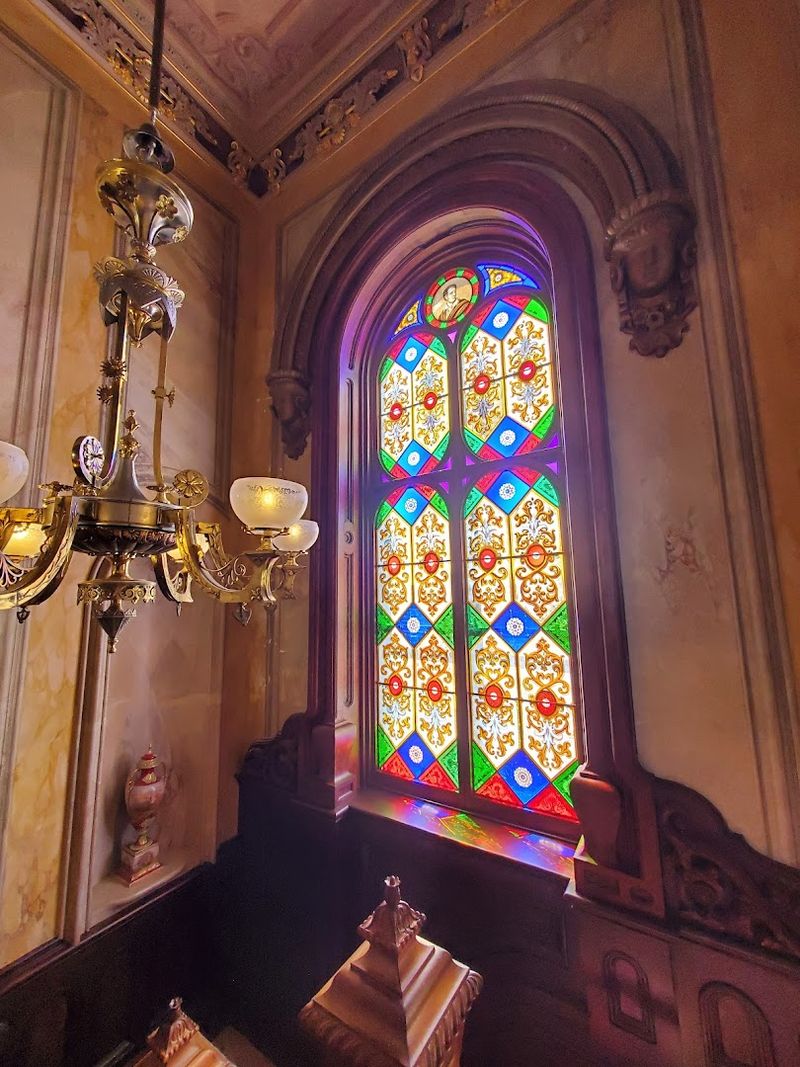
Sunlight streaming through stained glass creates magical effects inside the Hay House. Colored glass panels turn ordinary daylight into rainbows of red, blue, green, and gold that dance across walls and floors.
These windows serve both practical and artistic purposes in ways that show how thoughtfully the house was designed.
Victorian families loved stained glass because it added beauty while providing privacy. People outside couldn’t see in clearly, but those inside enjoyed colorful light and interesting patterns.
The glass also reduced glare while still letting in plenty of natural illumination.
Different rooms feature different glass designs. Some windows show geometric patterns, while others include floral motifs or more complex scenes.
The glass pieces were cut and assembled by hand, with lead strips holding everything together in intricate frameworks.
Many original windows survive in excellent condition today. Restoration experts have carefully repaired damaged sections using techniques similar to what the original craftsmen employed.
Standing in a room filled with colored light from these vintage windows connects you directly to the past, seeing the same beautiful effects that Victorian residents enjoyed over a century ago.
The Secret Passageways and Hidden Architectural Features
Did you know the Hay House contains secret spaces that most visitors never see? Hidden passageways wind between walls, connecting rooms in unexpected ways.
These weren’t built for spies or treasure hiding, but they served practical purposes for a large household with many servants.
Service corridors let staff move through the house without being seen by family members or guests. This was considered proper in wealthy Victorian homes, where servants were expected to be available but invisible.
They could deliver meals, clean rooms, and perform other duties without disturbing the family’s activities.
Some passages also provided access to the mechanical systems. Workers needed to reach ventilation controls, plumbing connections, and other infrastructure hidden within the walls.
These maintenance corridors show how complex the house’s inner workings actually were.
Special behind-the-scenes tours occasionally let visitors explore these hidden areas. Walking through narrow passages feels like being a detective discovering secrets.
You see parts of the house most people miss, including original construction techniques and how the building was put together. These hidden features remind us that grand mansions were like small cities, requiring lots of behind-the-scenes work to operate smoothly.
The Breathtaking Cupola With Panoramic City Views
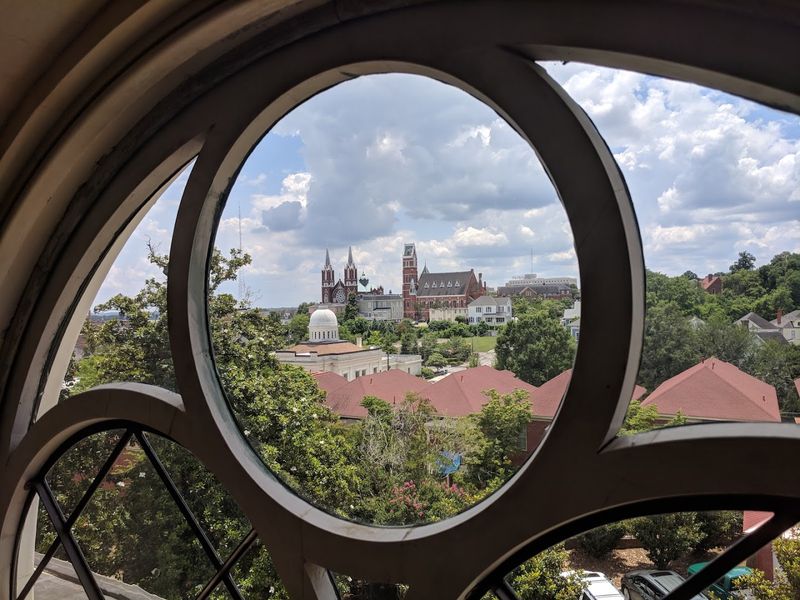
Climbing five extra dollars’ worth of spiral stairs takes you to the house’s crown jewel: the cupola. This octagonal tower room at the very top offers 360-degree views of Macon that make the effort completely worthwhile.
Windows on all sides let you see for miles in every direction.
When the house was built, this viewing room let the Johnston family survey their city from the highest private building around. They could watch street activity, see approaching weather, and enjoy sunset views that were theirs alone.
The cupola became a special retreat above the busy household below.
Getting up there today requires navigating increasingly narrow staircases. The steps get steeper and the passages tighter as you ascend.
It’s not recommended for people with mobility issues, but those who make the climb find the reward worth every step.
Standing in the cupola now, you see how much Macon has changed while also noticing what has stayed the same. Church steeples, the river, and historic buildings still define the skyline.
The view helps you understand the house’s relationship to its surroundings and why this location was chosen for such an important residence.
The Museum-Quality Period Furnishings and Art Collection
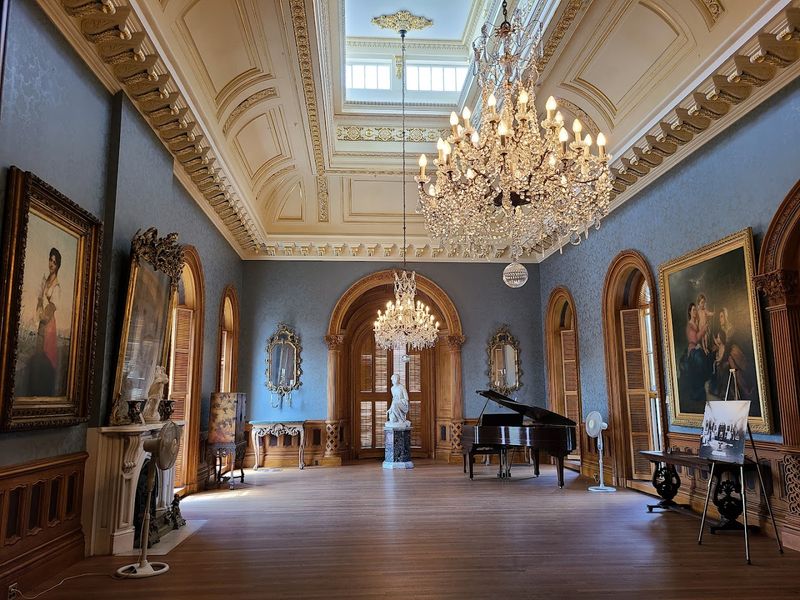
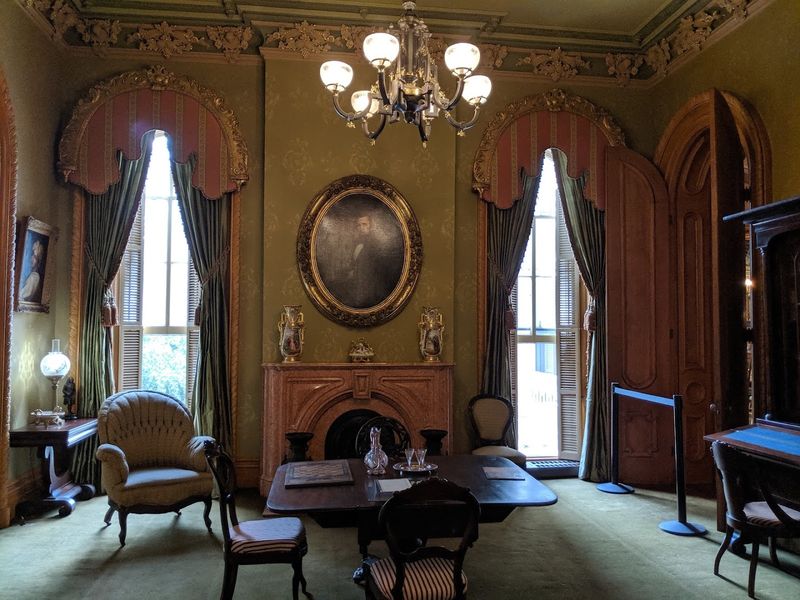
Walking through the Hay House is like visiting a museum dedicated to Victorian luxury. Rooms contain original and period-appropriate furniture, paintings, sculptures, and decorative objects that show how wealthy Southern families lived.
Every piece was chosen to demonstrate refinement, education, and taste.
Some furnishings belonged to the original Johnston family or the later owners, the Hays. Other pieces are historically accurate examples from the same time period, carefully selected to match what would have been in the house.
Marble statues imported from Europe, oil paintings in gilded frames, and hand-carved furniture fill every major room.
The arrangement of objects follows Victorian customs. Parlors display the finest items where guests would see them.
Private rooms contain more personal objects. Even the servant areas include authentic tools and furnishings from the era.
Restoration teams have worked carefully to present the house as it would have appeared during its prime. They research old photographs, inventories, and family records to get details right.
The result lets modern visitors experience authentic Victorian elegance, understanding not just how the house looked but how families actually used these spaces for daily living and entertaining.
The Advanced Plumbing System Before the White House Had It
Here’s something that surprises most visitors: the Hay House had running water and indoor plumbing before the White House in Washington got those modern conveniences. In the 1850s, this was extraordinarily rare and expensive technology.
Most Americans still used outhouses and carried water from wells or pumps.
Engineers installed a complex system of pipes that brought water into the house from a cistern. Multiple bathrooms featured flush toilets, sinks, and even an early version of a shower.
The system relied on gravity, water pressure, and clever design rather than electric pumps.
Having indoor plumbing changed daily life dramatically. Family members didn’t have to go outside in bad weather or at night.
They could wash up more easily, and the house stayed more sanitary. This convenience was worth the enormous expense to the Johnstons.
Seeing the original plumbing fixtures helps us appreciate modern conveniences we take for granted. What seems normal now was cutting-edge luxury back then.
The Hay House’s advanced systems proved that wealthy Georgians could access the latest technology just as easily as people in Northern cities, challenging stereotypes about the Old South being backward.