Ohio hides a surprising collection of ruins that look less like faded industrial leftovers and more like the setting for a forgotten thriller, fantasy epic, or post-apocalyptic road movie. Wander long enough through the state’s river valleys, forests, and quarry trails, and you will find chimney stacks, stone walls, mossy foundations, and eerie brick corridors waiting in the shadows.
Some feel medieval, some feel haunted, and some are so cinematic you will wonder why a film crew is not already there. If you love places where history and atmosphere collide, these abandoned mill ruins deserve a spot on your list.
Beiber Mill Ruins
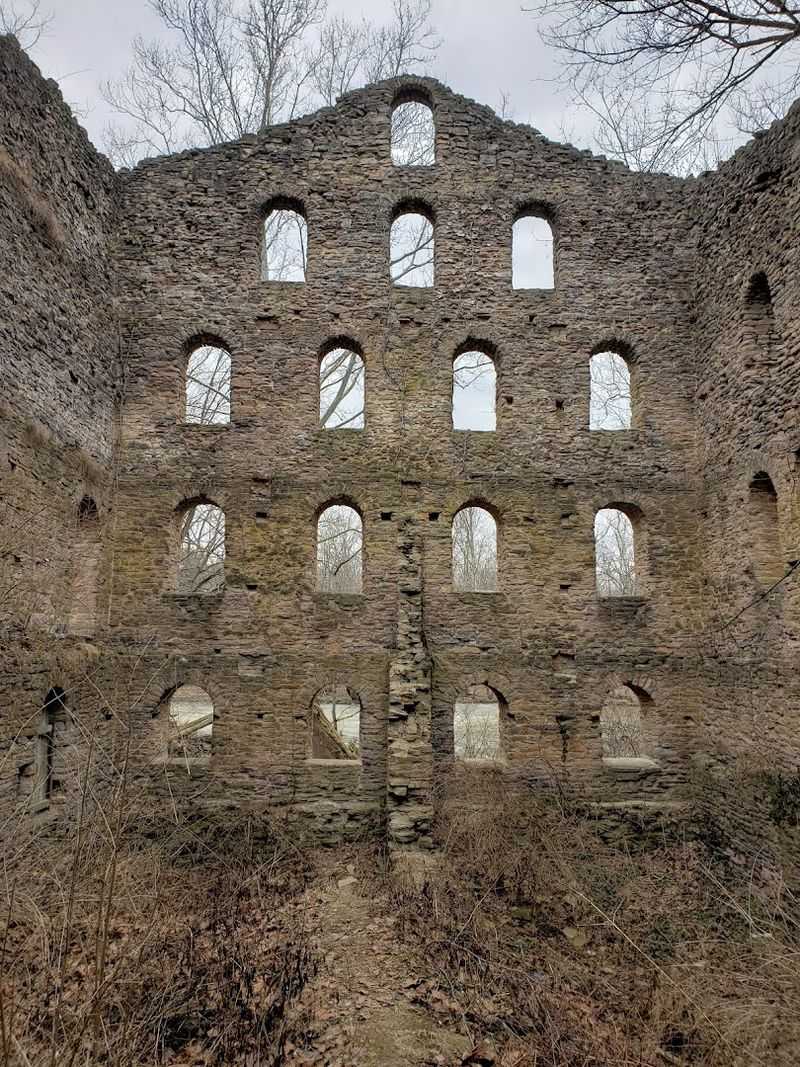
Tucked into the woods along the east side of the Olentangy River, Beiber Mill Ruins feels like the kind of place you would expect to find in a medieval legend, not Delaware County. The surviving limestone walls are thick, tall, and strangely regal, giving the old grist mill a fortress look that instantly pulls your imagination away from ordinary industry.
If you glanced at it through the trees, you might honestly think you had stumbled onto a forgotten castle.
The original mill dates to the 1840s, while a larger stone replacement was built in 1876 and 1877 by James Beiber, who also included a saw mill. Costs spiraled, the property changed hands, and an early 1900s fire helped seal its fate.
Today the site is owned by the Ohio Department of Natural Resources and is not open to visitors, which only adds to its mystique. Even from a respectful distance, it looks less like an old worksite and more like the final scene of a historical adventure film.
Address: 4919 Chapman Rd #4801, Delaware, OH 43015
Jaite Paper Mill
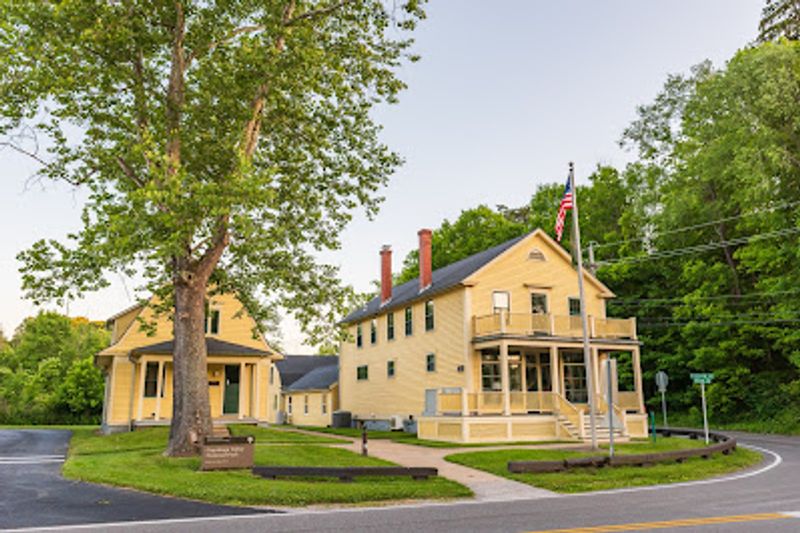
Jaite Paper Mill carries the kind of industrial mood that makes you slow down without meaning to. Set inside Cuyahoga Valley National Park, it blends brick mill architecture, canal history, and a company town backdrop into something that feels unusually theatrical.
You are not just looking at an abandoned paper operation here – you are stepping into a place where Ohio’s manufacturing story still hangs in the air.
Charles Jaite founded the mill in 1905, and by the 1920s and 1930s it had grown into one of the nation’s major multi-wall paper producers. Its location near the Ohio and Erie Canal and the Cleveland Terminal and Valley Railroad made it a practical powerhouse, but operations finally ended in 1984.
Parts of the wider Jaite Historic District remain preserved, with some buildings now used by the National Park Service. That contrast between active preservation and visible industrial decay gives the whole area a quiet, eerie energy that feels ready-made for a period drama.
Address: Brecksville, Ohio 44141
Kent Mill Ruins
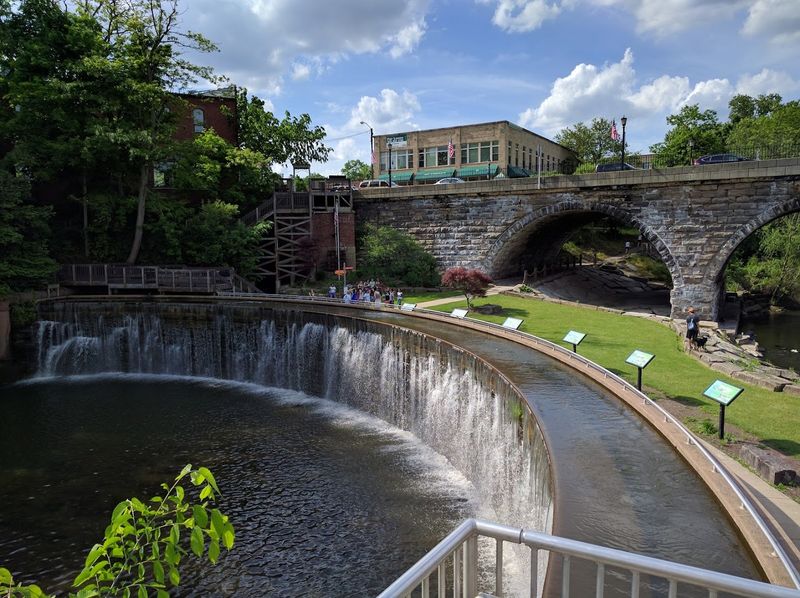
At first glance, Kent Mill Ruins can seem understated, but that is part of its charm. Set beside the Cuyahoga River in Franklin Mills Riveredge Park, the surviving foundation walls from an 1832 flour mill give the riverbank a timeworn stage-set quality.
You can almost picture carts, workers, floodwater, and decades of local industry layered into the same narrow stretch of land.
The original flour mill stood through much of the nineteenth century before severe damage from the devastating 1913 flood pushed it toward the end of its life. It was ultimately torn down in the 1930s, yet its foundation remains still anchor this historic industrial district in a very physical way.
Because the ruins sit within a public park rather than a remote forest, the contrast is especially striking – joggers, trees, and open sky framed against the bones of early Ohio commerce. That mix makes the site feel less like a forgotten relic and more like an outdoor set designer deliberately left behind pieces of a riverfront period piece for you to discover.
Address: 143 River St, Kent, OH 44240
Lane’s Mill Historic Buildings
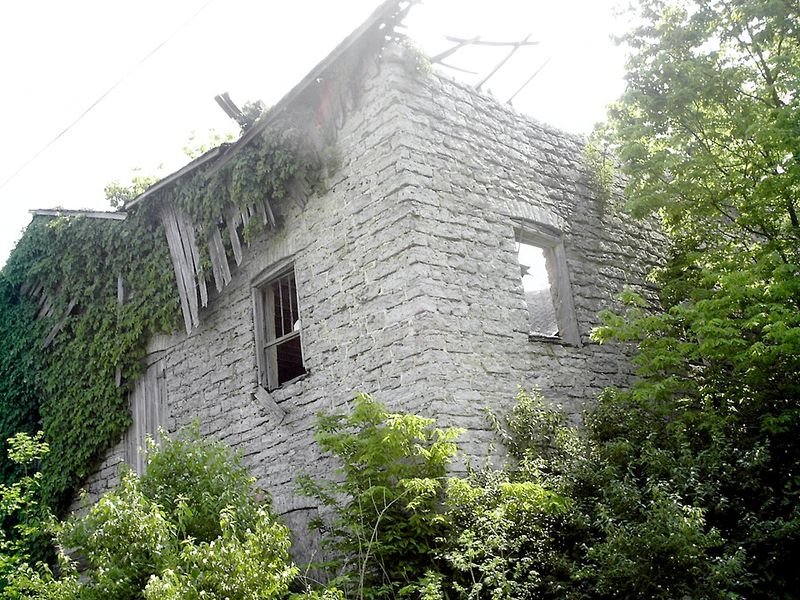
Lane’s Mill Historic Buildings has the slow-burn atmosphere of a movie location that gets creepier the longer you stand there. Hidden in Milford Township in Butler County, this abandoned mill complex sits among farmland and woods, where the quiet feels almost too complete.
Instead of one dramatic ruin, you get a layered scene of weathered structures that suggest generations of labor, decline, and eventual disappearance.
The first mill here was a wood-frame building from around 1816, later replaced by a stone structure built between 1848 and 1850. Over time, the site served as a gristmill, sawmill, and fulling mill, making it an important local workhorse before fading into abandonment.
It was added to the National Register of Historic Places in 1980, yet little preservation or restoration followed, leaving the complex with a raw, unpolished authenticity. That absence of cleanup is exactly what gives it cinematic power.
You are not seeing a recreated heritage attraction here – you are seeing the real texture of time, weather, and neglect working together.
Deep Lock Quarry Millstone Plant Ruins
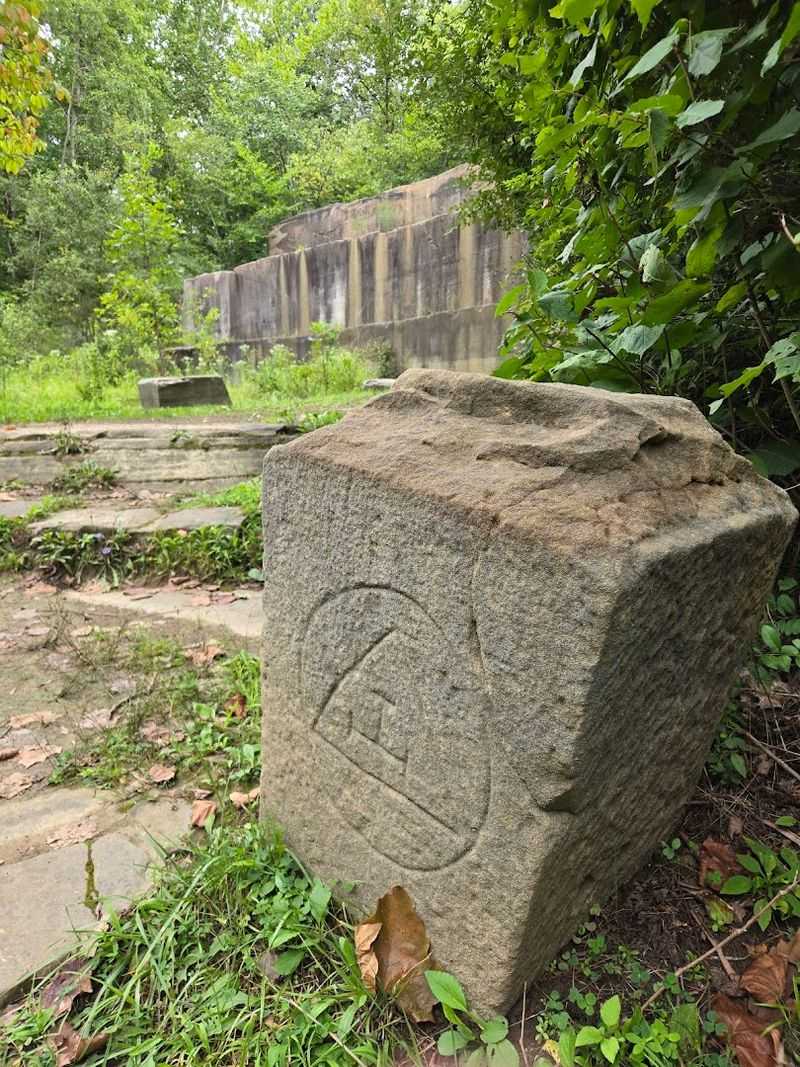
Deep Lock Quarry Millstone Plant Ruins feels like one of those places where every broken object hints at a larger story. Hidden in the woods near quarry trails in Peninsula, the site mixes industrial remains with dense natural cover, so the foundations and discarded millstones seem to appear out of nowhere.
If you like ruins that make you feel like an explorer rather than a tourist, this one absolutely delivers.
The wider quarry was known for producing Berea sandstone used to build and repair locks along the Ohio and Erie Canal, along with many regional structures. In 1879, Ferdinand Schumacher, the future Quaker Oats founder often called the Oatmeal King, acquired part of the quarry to make millstones for hulling oats.
Quarry activity declined and stone removal ceased in the 1930s, leaving the area scattered with fragments of its former purpose. Today, the broken circular stones and forgotten foundations feel wonderfully surreal, like props left behind after filming an industrial fairy tale in the middle of the forest.
Hope Furnace Ruins
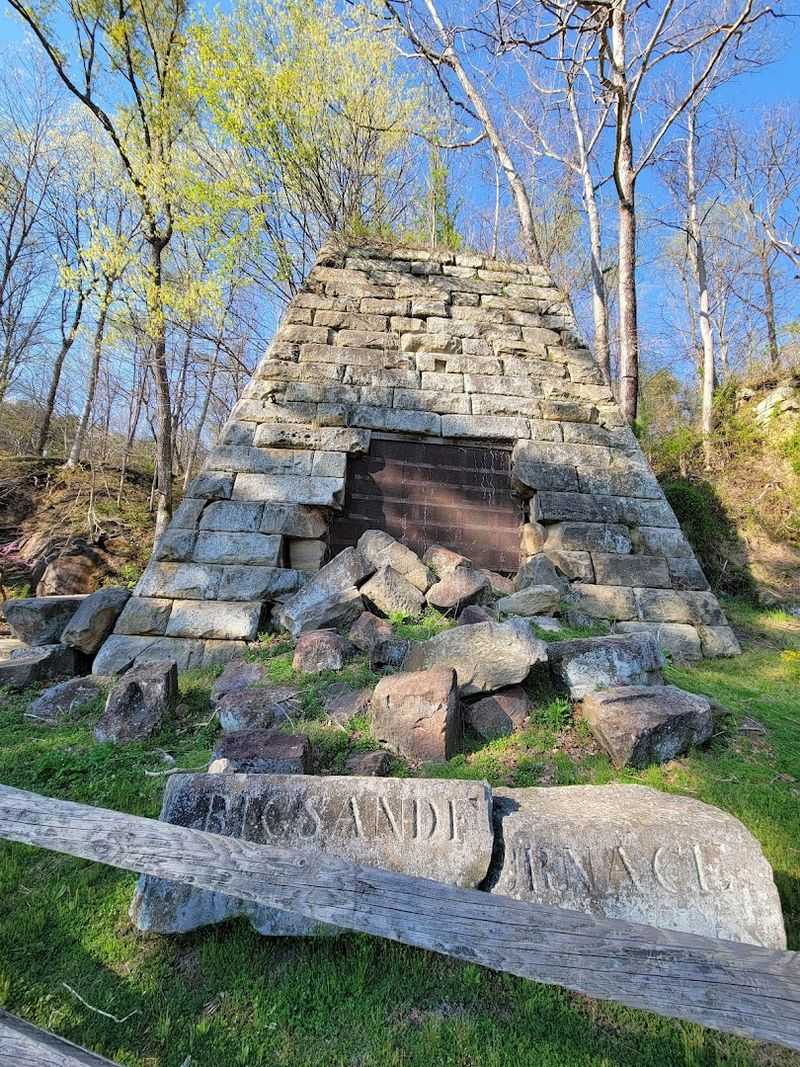
Hope Furnace Ruins rises from Lake Hope State Park with the kind of dramatic silhouette that instantly reads as cinema. The towering sandstone chimney and scattered foundations do not just suggest industry – they suggest scale, ambition, and a sudden collapse that your imagination wants to fill in.
Standing near it, you get the feeling that a camera should be sweeping across the hills while ominous music starts to build.
Constructed in 1853 and 1854, the furnace processed iron ore using charcoal made from timber cut across the surrounding ridges. Ohio was a major iron producer at the time, but this furnace shut down in 1874 after only two decades, partly because richer ore sources farther west changed the economics.
What remains today is a rectangular sandstone structure and associated ruins that carry enormous visual presence without needing much explanation. Unlike smaller foundations that require effort to interpret, Hope Furnace hits you immediately.
It feels less like a leftover worksite and more like the monumental ruin of a vanished industrial kingdom.
Ariel-Foundation Park Ruins
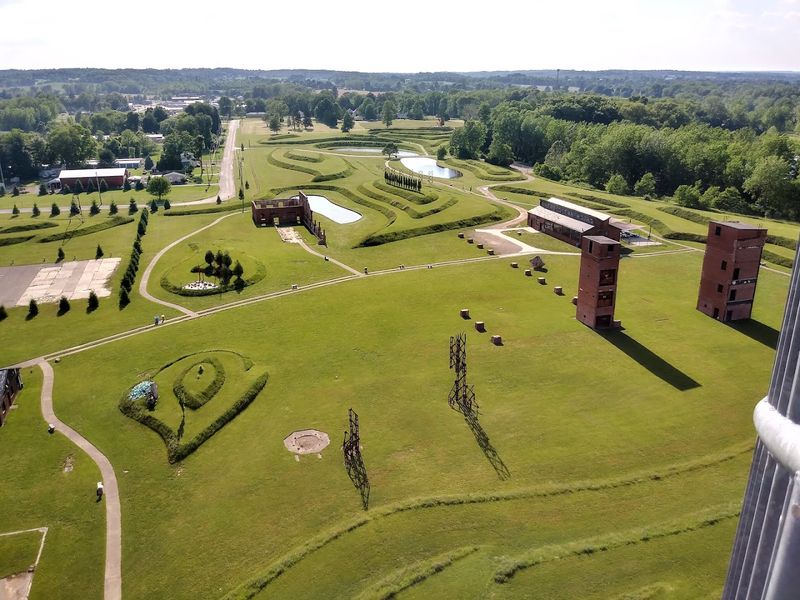
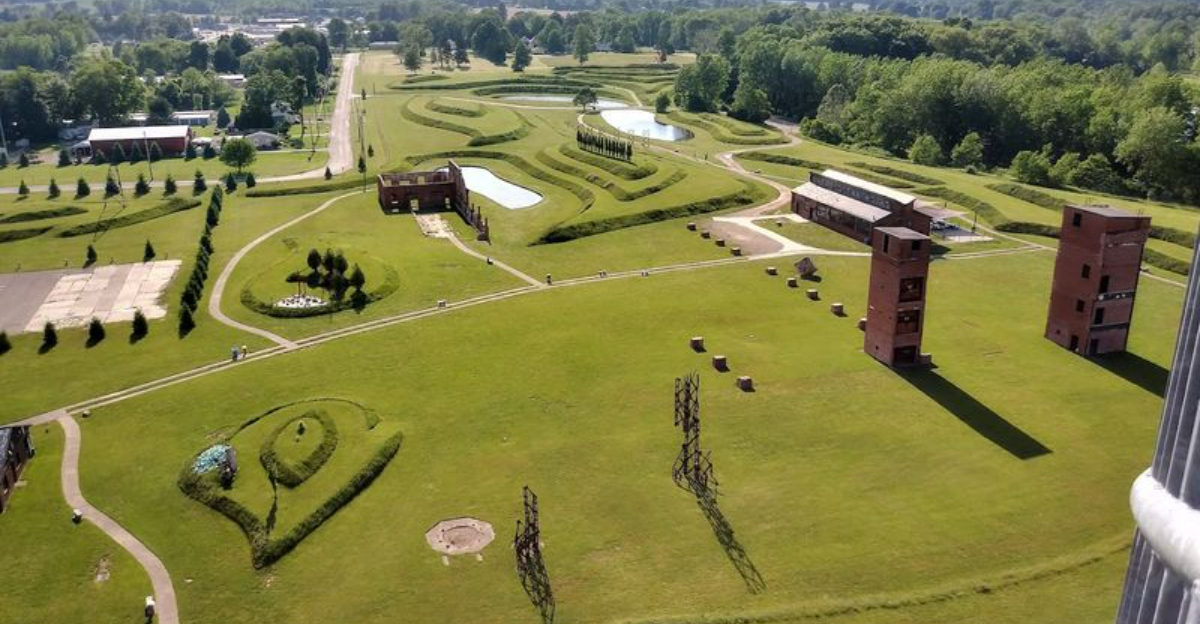
Ariel-Foundation Park Ruins may be the closest thing Ohio has to a carefully curated post-apocalyptic film set. In Mount Vernon, the preserved remains of the former Pittsburgh Plate Glass plant rise above ponds and trails with a scale that feels almost unreal.
You can walk through a landscape where nature, design, and industrial skeletons all work together to create something both beautiful and slightly eerie.
PPG Works #11 operated from 1907 until 1976, and when the park opened in 2015, planners intentionally kept major structural elements as part of the experience. The 1900 Coxey Building, a 1945 carpenter shop, and the 1951 smokestack all remain, with the smokestack transformed into a 280-foot observation tower.
Instead of hiding the site’s industrial past, the park turns it into the main event, using preserved ruins and water views to amplify the atmosphere. The result is wildly cinematic.
It feels like the backdrop for a thoughtful science-fiction drama where civilization has changed, but the old bones of industry still refuse to disappear.
Leetonia Beehive Coke Ovens
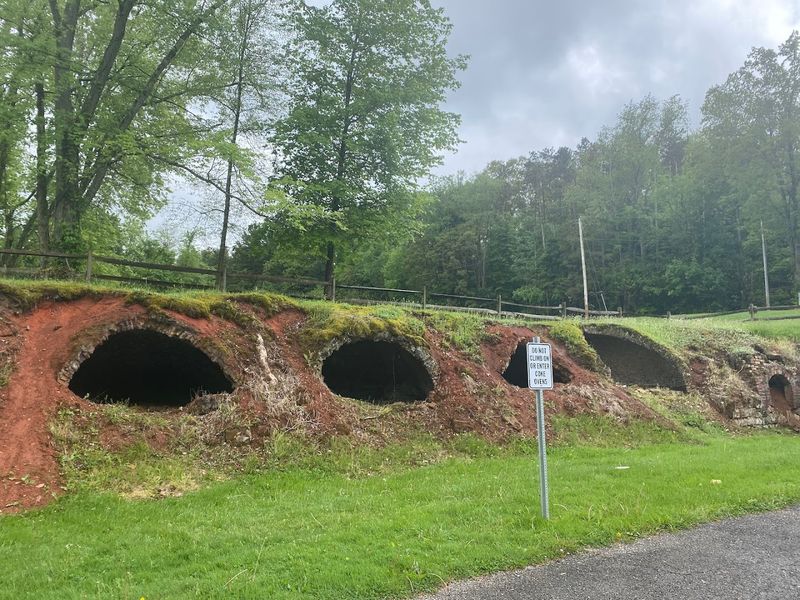
Leetonia Beehive Coke Ovens has one of the strangest visual personalities on this list. Hidden in the forest, the long rows of grass-covered brick ovens look part industrial ruin, part fantasy village, which is why so many visitors compare the site to something out of another world.
You do not need much imagination here – the place already feels staged for a moody fantasy film with a darker backstory.
Built in 1866 for the Leetonia Iron and Coal Company, the ovens transformed coal into coke, a crucial fuel for iron production. The surrounding industrial operation supported the town for decades before closing in 1930, after which the site sat neglected for more than half a century.
Cleanup and preservation efforts eventually turned it into a public park with walking trails, and it was added to the National Register of Historic Places in 1993. Even with that public access, the atmosphere still feels wonderfully eerie.
The repeated arches, hidden paths, and quiet woods make this one of those places where history feels close enough to hear.
Old Stone Crusher Ruins
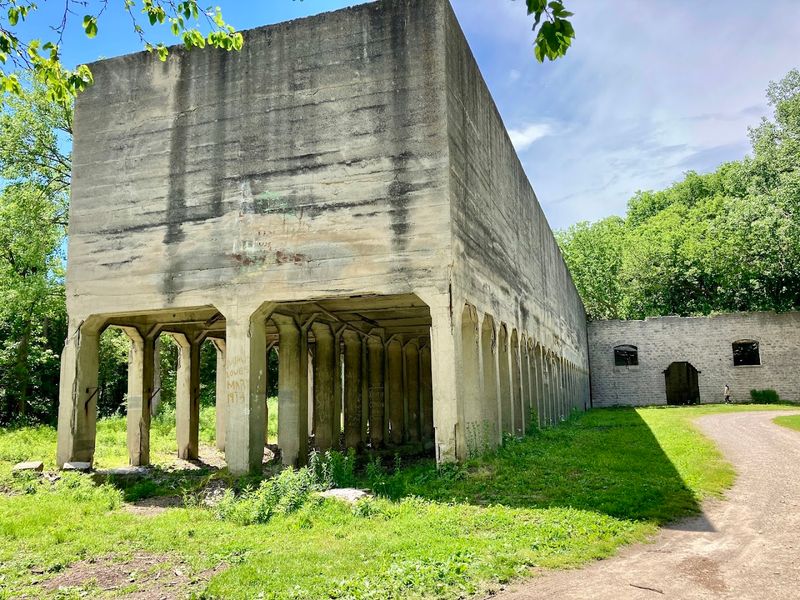
Old Stone Crusher Ruins on Kelleys Island looks so rugged and oversized that it barely reads as a former processing site at first. Scattered across the island’s quarry landscape, the limestone remains have the heavy, defensive presence of an ancient fortress, especially when gray skies or lake winds sharpen the mood.
If you enjoy ruins that seem to belong equally to history and myth, this one is hard to beat.
The site is tied to Kelleys Island’s long quarrying history, which began around 1830 and continued in various forms until roughly 2008. These remains were part of the North Side quarry crusher building and steam plant operated by the Kelleys Island Lime and Transport Company, where railroad cars dumped stone into machinery before it was moved for shipment by boat.
Knowing the logistics only makes the ruins feel more cinematic, because the surviving structures still suggest motion, noise, and scale. Today, though, they stand mostly silent against the island landscape, looking less like old equipment and more like the weathered architecture of some industrial empire.
Hambleton Mill Ruins
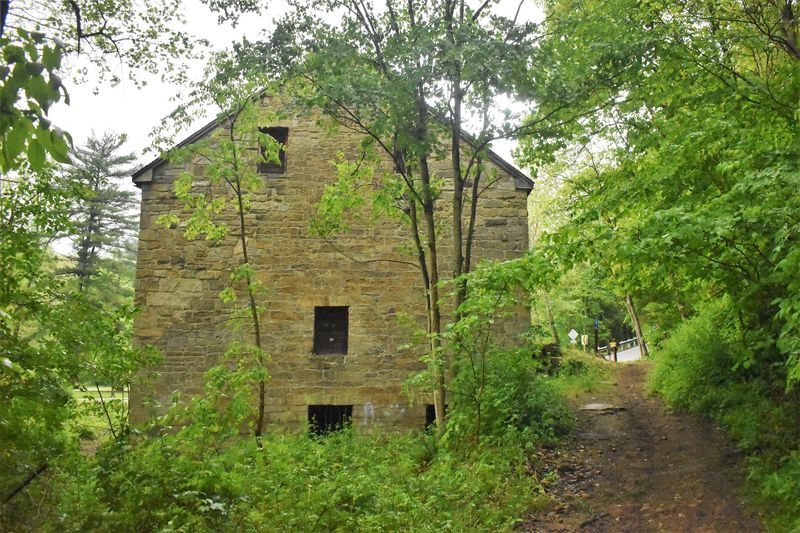
Hambleton Mill Ruins has the kind of setting that makes history feel personal. In Beaver Creek State Park, the stone walls and creekside remnants sit so naturally in the landscape that they seem less abandoned than absorbed, like a frontier settlement fading back into the earth.
You can almost believe the people of old Sprucevale just stepped away for the evening and never returned.
James Hambleton built the mill in 1813, and it became a central feature of the small community that later declined with the collapse of the Sandy and Beaver Canal. Sprucevale was largely abandoned around 1870, leaving the mill ruins as one of the clearest physical links to that vanished place.
The site was restored in the 1970s, but it still keeps a wonderfully ghostly atmosphere, helped along by local legends, including tales of a spirit named Esther Hale. That blend of documented history, partial restoration, and folklore gives Hambleton Mill a cinematic edge.
It feels ready for either a historical drama or a beautifully restrained ghost story.
Peters Cartridge Factory Ruins
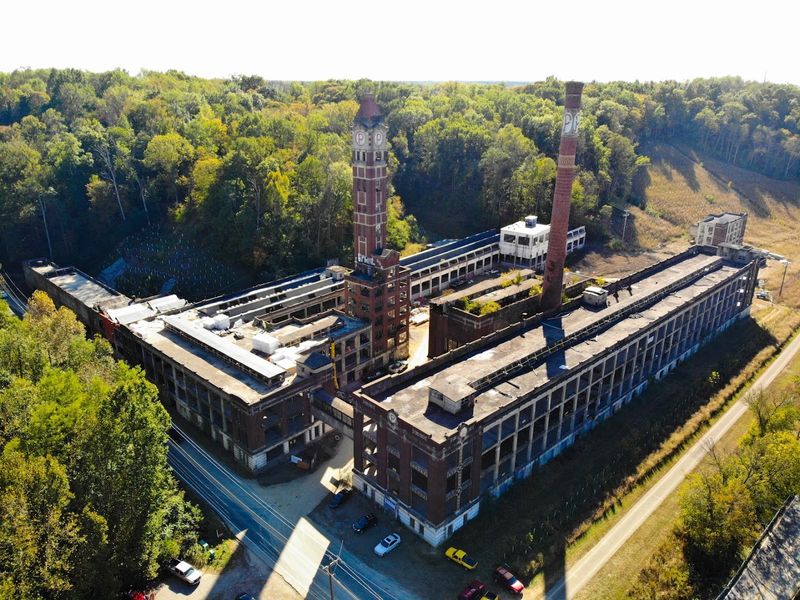
Set along the Little Miami River in Kings Mills, Peters Cartridge Factory Ruins looks less like an industrial site and more like the backlot of a historical thriller. The massive brick shells, broken windows, and riverside setting give it a dramatic mood that changes with every shift in light.
You can almost picture smoke curling from the roofs and workers moving through the corridors.
What lingers most is the scale. Even in decay, the complex feels imposing, cinematic, and strangely elegant, with textures and shadows that reward a slow walk.
It is one of those Ohio ruins that makes the past feel close enough to touch.
Mill Creek Furnace Ruins
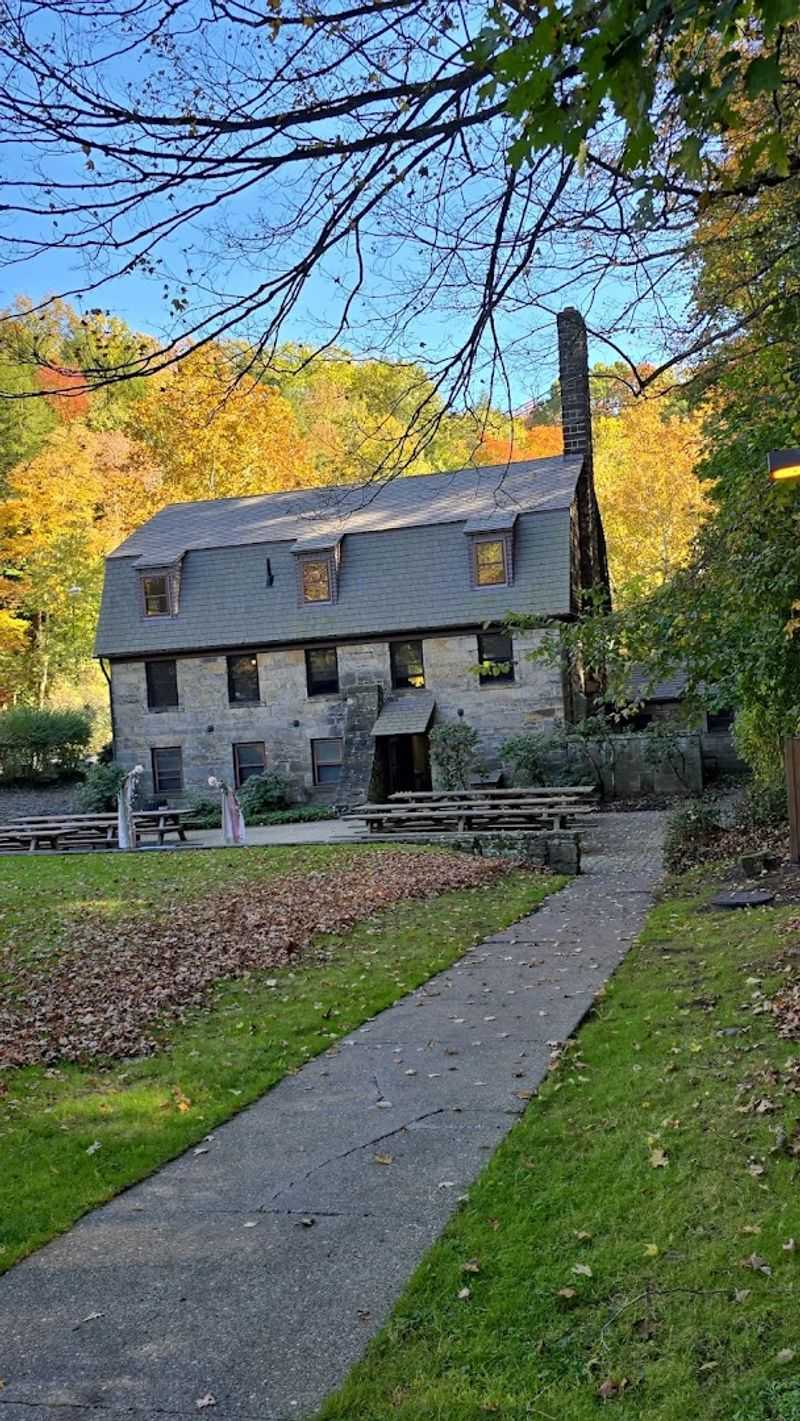
Hidden within Youngstown’s wooded Mill Creek Park, Mill Creek Furnace Ruins looks less like an industrial leftover and more like the stone remains of a forgotten stronghold. The towering furnace stack rises from the trees with a weathered, cinematic presence, especially when the light filters through the canopy.
You can almost picture a period drama unfolding here instead of iron once being smelted on site.
What makes this place stick with you is the contrast between industry and quiet beauty. Moss softens the stone, trails wind nearby, and the setting feels theatrical without trying too hard.
Slow down here, and the ruin works on imagination.