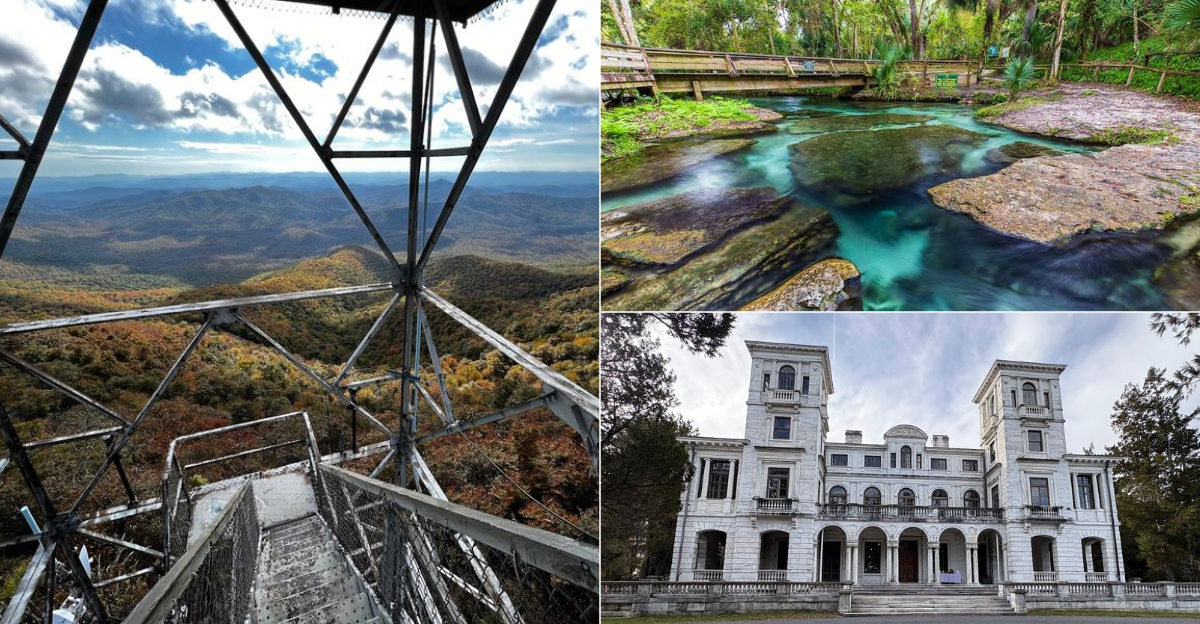
Real adventure rarely begins where everything is clearly marked. Sometimes you have to step outside your comfort zone, leave the main road, and head toward places that do not come with big signs or polished promotion.
That is where a different side of North Carolina begins. Across the state, there are locations that feel quiet, unusual, and easy to miss if you are moving too fast.
If you are ready to leave the familiar behind and trade predictability for something a little stranger, these 14 stops reveal a version of North Carolina most people never see.
Whirligig Park
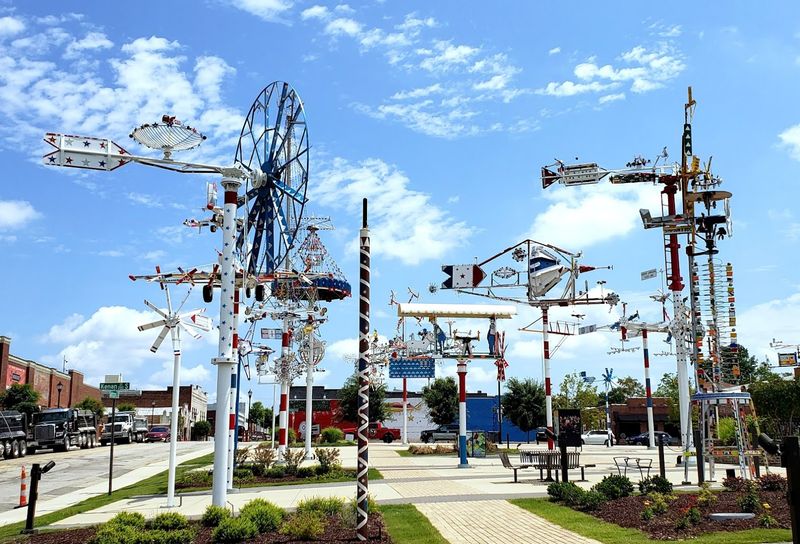
At first glance it feels playful, almost absurd, with giant spinning constructions made from salvaged metal, road signs, and old machine parts.
Then the wind catches them, the blades begin to turn, and the whole park shifts from quirky roadside art to something nearly hypnotic.
Motion gives these towering creations their own strange kind of music.
In Wilson, an ordinary downtown block becomes an outdoor gallery of improbable invention shaped by the vision of Vollis Simpson.
What might have been junk elsewhere rises here into kinetic sculpture with color, humor, and a slight edge of madness.
Sunlight flashes across reflective surfaces while the structures whirl like cheerful contraptions from a dream.
The overlooked beauty of this place lies in how deeply human it feels.
You sense patience, obsession, and a refusal to let discarded objects stay discarded.
Children read it as wonder, artists see design, and everyone else leaves surprised by how emotional spinning metal can be.
Against the North Carolina sky, eccentricity turns into a kind of monument.
Judaculla Rock
Some attractions impress by size, but this one works through secrecy.
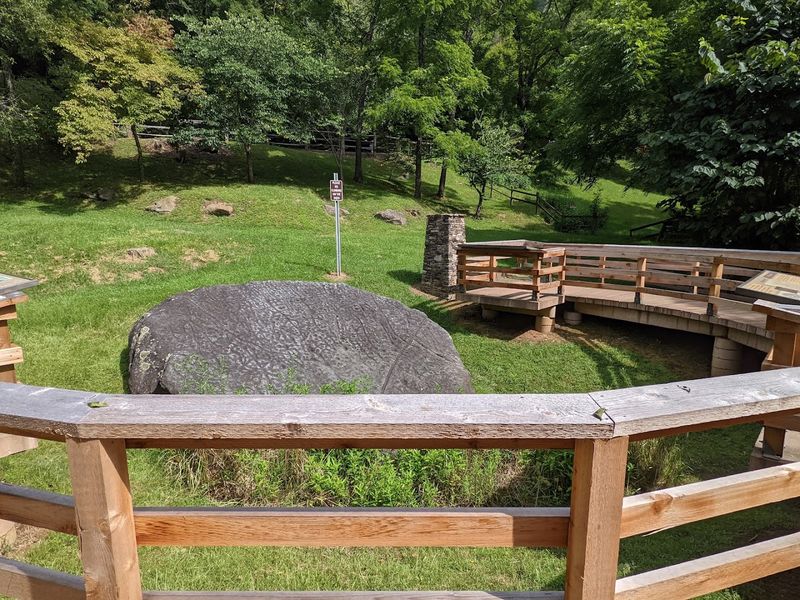
A broad stone lies marked with hundreds of carved symbols, and the longer you study them, the less certain you feel about what you are seeing.
Spirals, cup marks, tracks, and lines overlap like messages sent from a world that never expected translation.
Not far from Cullowhee, this revered site is tied to Cherokee tradition and to the powerful being remembered as Judaculla.
Scholars can describe the petroglyphs, yet explanation never fully settles the feeling around them. Protective fencing keeps you at a distance, though the mystery easily crosses that small gap.
You do not need to believe every legend to feel the gravity here.
Rain darkens the stone until the carvings seem freshly cut, birds go quiet in irregular bursts, and time starts behaving oddly.
Rather than offering a neat historical lesson, the place leaves you with a more haunting gift, the sense that some stories are meant to stay partially veiled.
Biltmore Estate Winery Tunnel
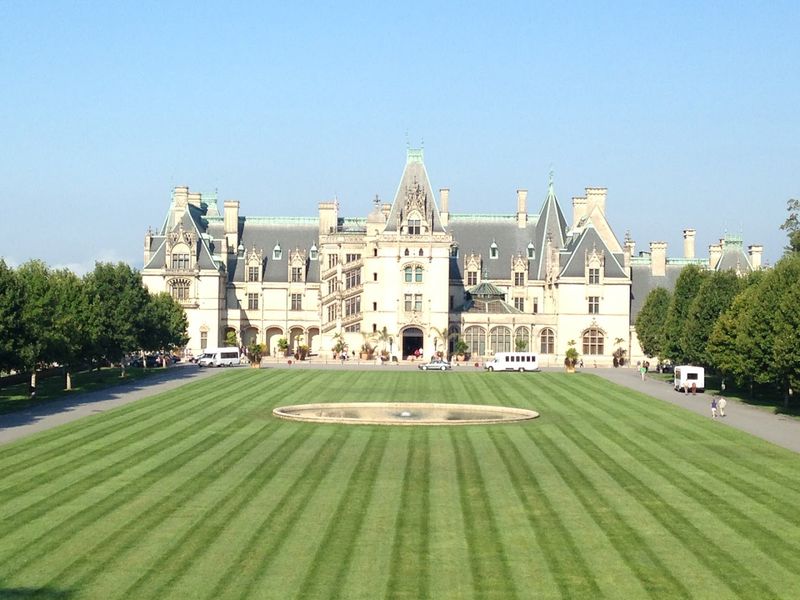
Grandeur usually defines this famous estate, but one of its most curious corners hides underground.
A cool stone passage curves beneath the winery area with a hush that feels older than the crowds above, and for a moment the estate’s polished surface gives way to something secretive.
The air smells faintly of earth, age, and barrel wood.
Asheville provides the backdrop, though this tucked-away corridor feels detached from the lively city beyond the gates.
Built into the working world of wine production, the tunnel carries the romance of European cellars without trying too hard to imitate them.
Shadows gather in the archways, and even casual conversation instinctively drops to a whisper.
What makes it memorable is the contrast.
You come expecting chandeliers, gardens, and mansion views, then find a dim route that suggests labor, storage, and hidden movement beneath all that beauty.
It is less theatrical than the estate’s grand rooms, which somehow makes it more atmospheric.
In that cool half-light, elegance briefly gives way to mystery.
Road to Nowhere
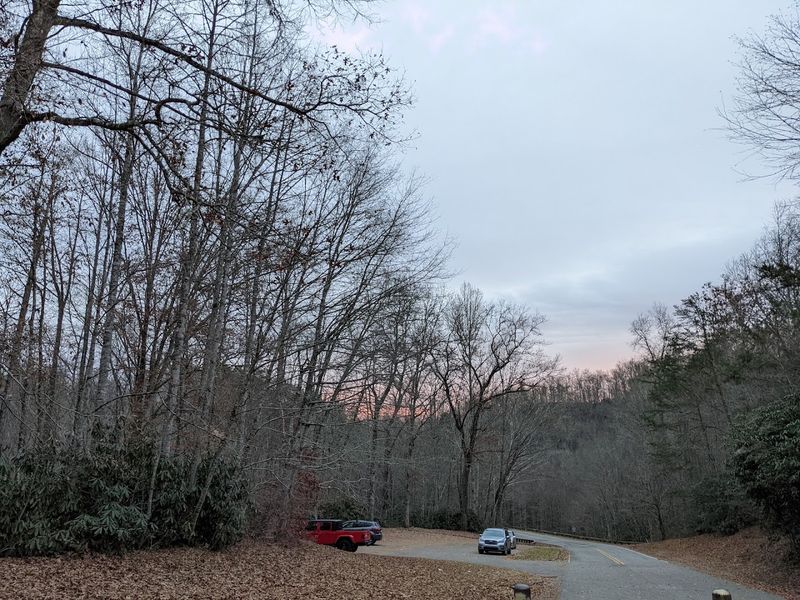
The journey feels wrong in the most intriguing way, as if the pavement forgot what it was supposed to become.
One minute you are winding through the Great Smoky Mountains, and the next you are standing before a tunnel that swallows daylight and sends your footsteps echoing into cold stone.
The abandoned stretch beyond it carries the uneasy silence of a promise never kept.
Deep near Bryson City, this unfinished route was meant to replace roads flooded after Fontana Lake changed the landscape.
Instead, the project stalled, leaving behind a ribbon of asphalt that simply ends against wilderness and memory.
Graffiti brightens the tunnel walls, but it only makes the stillness feel stranger, like laughter in an empty church.
What stays with you is not the engineering story, though that history matters, but the sensation of walking into a place suspended between purpose and disappearance.
Fog drifts through the trees, voices lower without anyone asking, and every step hints that the mountains remember more than maps do.
Shell Castle Island
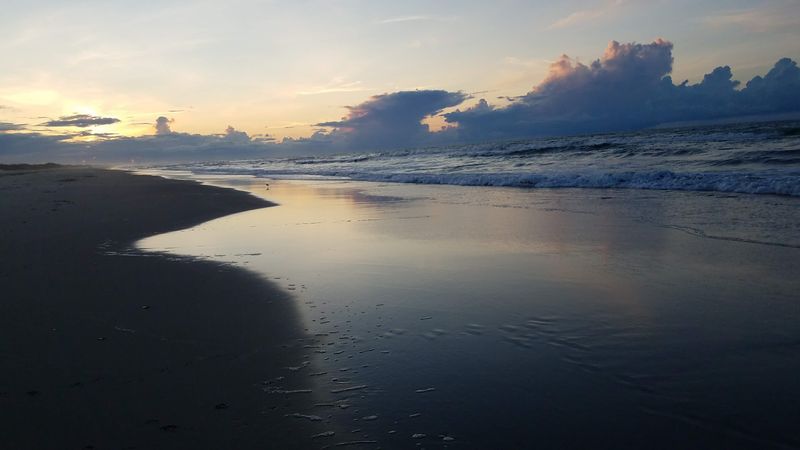
Even its name sounds half remembered, like something sailors would mention only after dark.
What remains is not a castle at all but a fragile sliver of history and shifting sand, shaped by storms, stories, and the restless edge of the Atlantic.
The beauty here is spare, windblown, and a little mournful.
Off Ocracoke, this isolated site once held a shell-made structure linked to the 1700s and to a coast that rarely lets anything stay fixed for long.
Time, tides, and hurricanes erased much of what people built, yet the legend clings stubbornly to the shoals.
You feel that impermanence immediately, especially when the water seems to rearrange the horizon by the minute.
Part of the fascination comes from how little there is to hold onto.
No grand ruins announce themselves, and that absence becomes the story.
You are left with sea light, fragments, and the thought of lives briefly anchored here before weather took over.
Along the Outer Banks, few places say more about disappearance with so little material evidence.
Kindred Spirit Mailbox
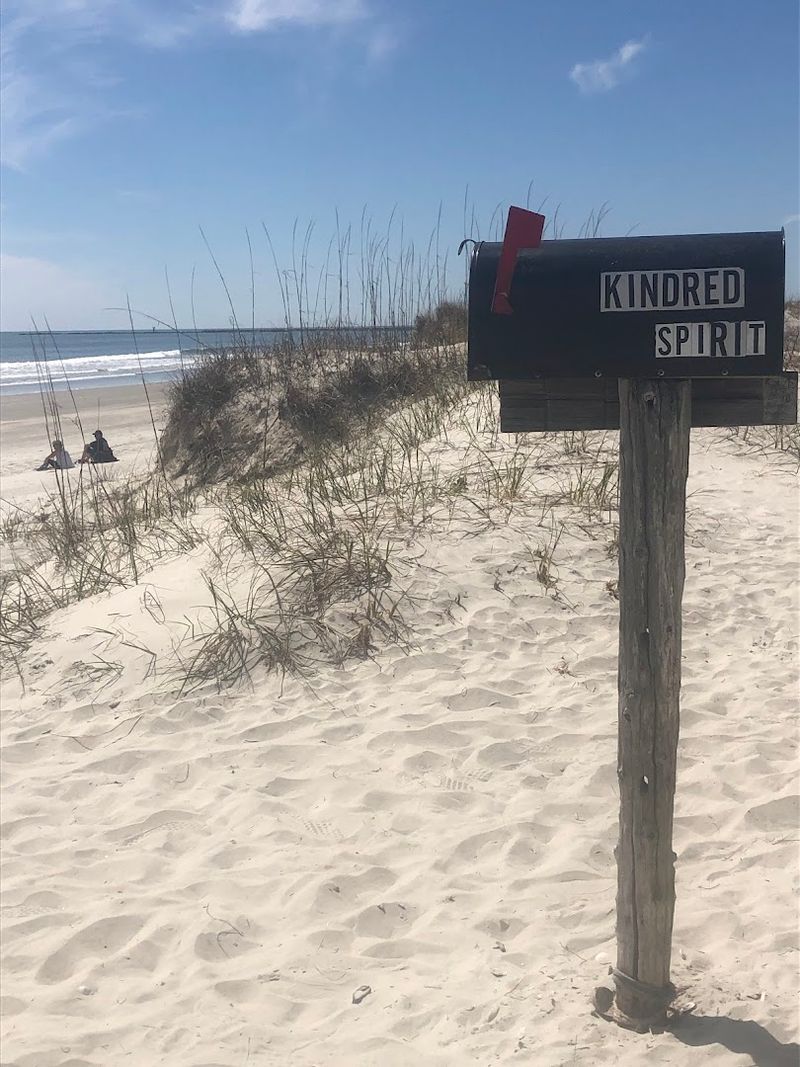
There is something quietly radical about a mailbox standing alone by the sea.
Instead of bills or advertisements, it holds handwritten confessions, love notes, grief, hope, and the sort of thoughts people usually protect from strangers.
Opening it feels less like sightseeing and more like being trusted with a chorus of private lives.
Near Bird Island on the southern coast, the walk through dunes and marsh grass prepares you for a place that values slowness.
The box itself is simple, almost humble, yet the notebooks inside carry years of human weather.
Some entries are joyful, some raw, and some so intimate they leave you staring at the ocean afterward in silence.
What makes this stop unforgettable is the way the landscape and the writing complete each other.
Wind moves through the grasses, gulls drift overhead, and page after page reminds you that strangers often feel closest when they are honest.
There may be grander views elsewhere, but few places create such a tender and unexpectedly haunting connection.
Brown Mountain Lights
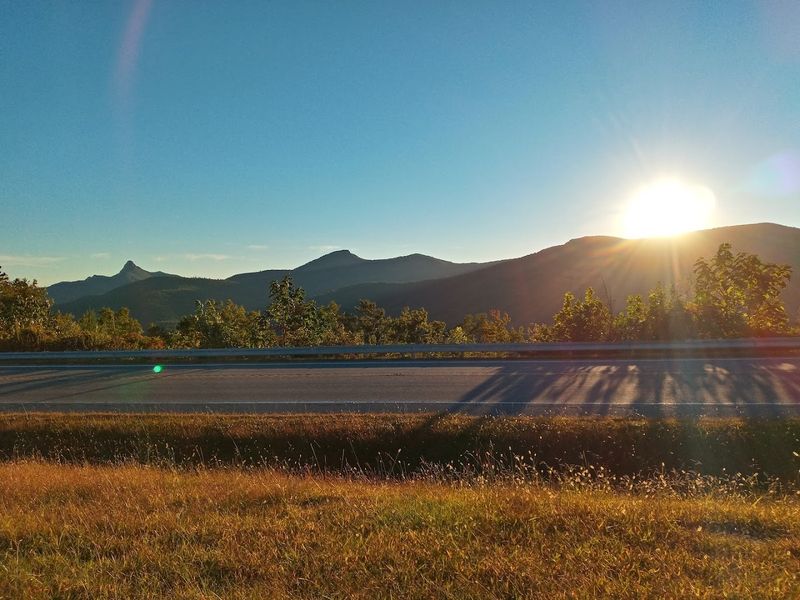
You wait in darkness longer than seems reasonable, watching an ordinary ridge line and wondering whether the stories have done what stories do.
Then a glow appears, faint but undeniable, drifting or pulsing where no steady source should be.
The effect is small in scale yet enormous in mood, because uncertainty sharpens every detail around you.
Burke County has carried accounts of these lights for generations, with explanations ranging from atmospheric conditions to folklore and restless spirits.
Scientific theories exist, and some are persuasive, but they do not cancel the thrill of seeing something strange move across the mountain’s black silhouette.
Night air settles cool and damp, and conversation turns speculative almost immediately.
The real appeal is not proving a legend right or wrong.
It is standing in the dark with other people and feeling a shared shift from skepticism to wonder.
Even when the lights refuse to appear, the waiting itself becomes part of the experience.
Hidden in the foothills, this is mystery in its purest form, elusive, debated, and deeply memorable.
Devil’s Ski Area
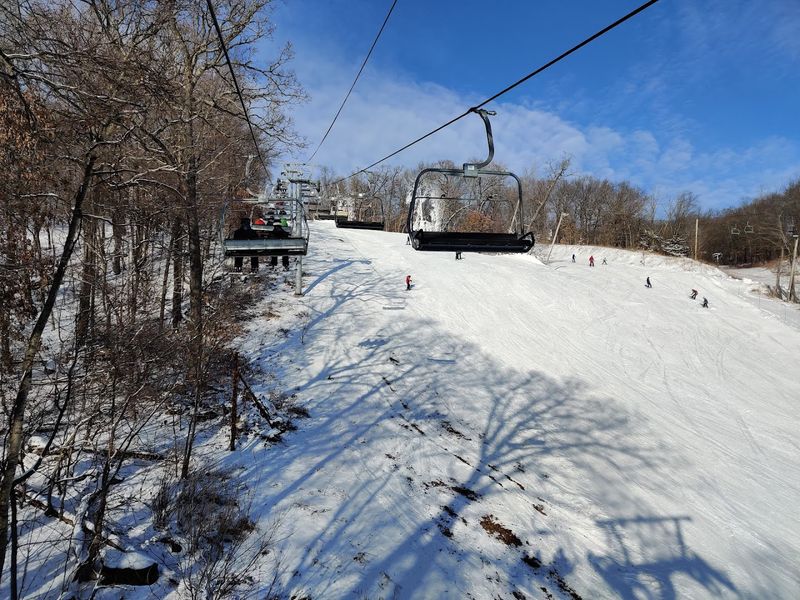
The name alone sounds like a dare, which is fitting for a place that feels discovered by rumor before road signs.
Instead of a polished attraction, you find rough terrain, local mythology, and a landscape whose oddity seems amplified by how little official attention it receives.
The strangeness here is understated, which somehow makes it more persuasive.
In Chatham County, this curious area has long inspired stories tied to unusual topography and whispered folklore.
Depending on who is talking, it is a natural oddity, a hangout with a dramatic nickname, or a place where the atmosphere changes after dusk.
Sparse details and conflicting versions only deepen its hold on the imagination.
What draws you in is the feeling of standing somewhere that exists mainly through local memory.
There is no tidy interpretive script smoothing out the contradictions. Instead, you get raw ground, restless silence, and the suspicion that the name survived because it captured something true about the mood.
Some destinations impress with spectacle.
This one lingers because it never fully explains itself.
North Carolina Arboretum Bonsai Collection
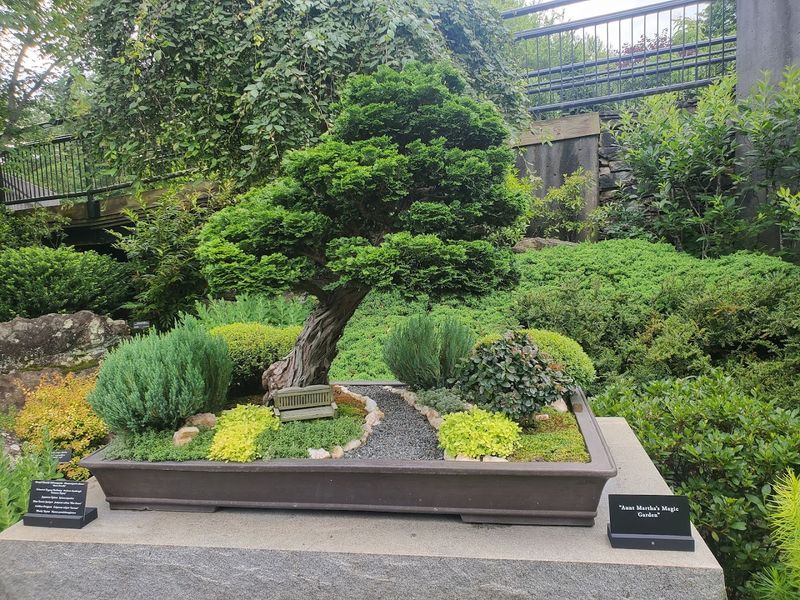
Not every hidden attraction announces itself with drama.
Here, the surprise comes from scale: entire landscapes suggested inside shallow pots, with trunks twisted into age, weather, and grace.
You lean closer, expecting delicacy alone, and instead encounter an intensity that makes these miniature trees feel somehow larger than the surrounding garden.
Within Asheville’s arboretum grounds, the collection offers a pocket of stillness that rewards patience rather than speed.
Pines bend like survivors of alpine storms, maples spread in perfect proportion, and each composition reveals years of disciplined care.
The silence around the displays does not feel empty, it feels concentrated.
What makes this stop offbeat is how quietly it alters your perception.
After a few minutes, bark texture becomes monumental, moss reads like a forest floor, and time seems visible in every clipped branch.
Most travelers chase grand vistas in the Blue Ridge region, yet this small, exacting world can be just as transporting.
It is not flashy, not loud, and absolutely unforgettable once its strange spell takes hold.
Swannanoa Palace Ruins
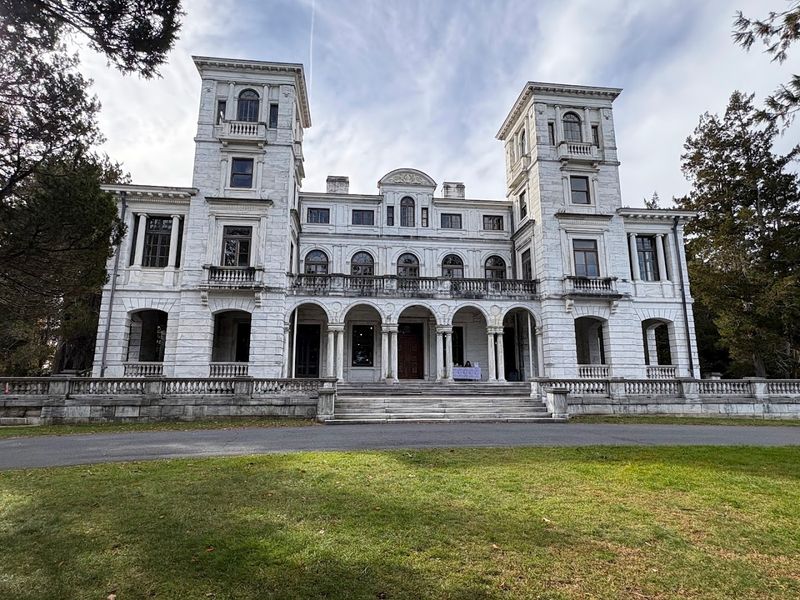
Ruins have a way of making ambition look fragile, and that is the first feeling that rises here.
Broken stone and lingering grandeur suggest a dream interrupted, one elegant enough to remain beautiful even in collapse.
The setting turns every wall fragment into a sentence from a story whose final pages disappeared.
Across the Swannanoa Valley, these remnants echo the extravagant spirit that once shaped this mountain corridor.
Weather, neglect, and time have softened whatever certainty the architecture originally projected, leaving behind a scene that feels part estate, part apparition.
Greenery slips through cracks, birds claim the silence, and the past becomes less historical than atmospheric.
What fascinates most is the balance between opulence and abandonment.
You can still sense wealth, planning, and social performance, yet the broken edges refuse to let those qualities stay intact.
Instead, the place asks you to imagine what was lost and what the land chose to reclaim.
North Carolina has no shortage of lovely mountain scenery, but few sights feel this haunted by vanished refinement.
Cryptozoology Museum and of paranormal phenomena
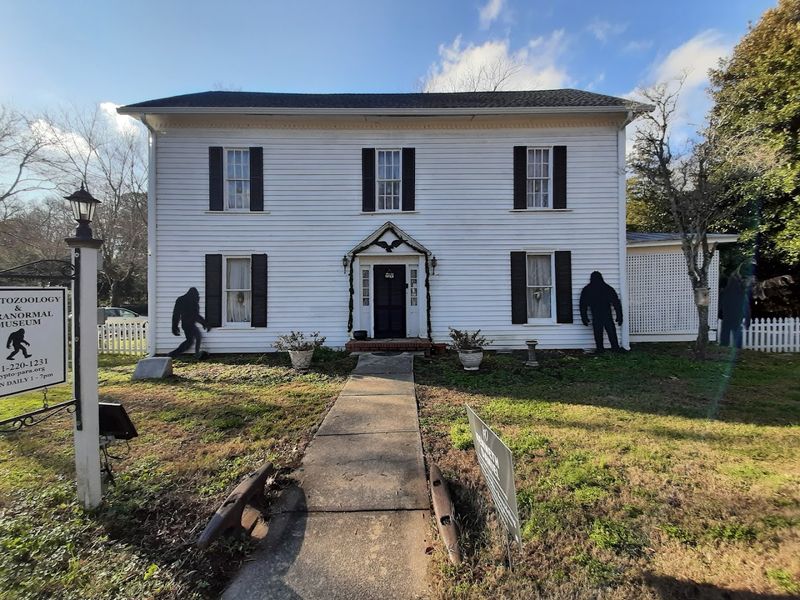
Some hidden attractions ask for reverence, while this one invites curiosity with a raised eyebrow.
Inside, folklore, odd evidence, regional legends, and paranormal claims gather under one roof in a way that feels both tongue in cheek and sincerely fascinated.
You move from amusement to intrigue faster than you expect.
Littleton is an ideal setting for a museum like this, a small town where the unusual feels just believable enough to keep the conversation alive.
Cases and displays point toward cryptids, unexplained events, and creatures that hover between campfire tale and alleged encounter.
Even the most skeptical visitor may find themselves reading every placard a little too carefully.
The charm comes from its refusal to become slick or overproduced.
Instead, it preserves the wonderfully human habit of collecting mysteries and trying to give them shape. Some exhibits feel playful, others unsettling, and together they create the sense of stepping into a roadside archive of things people cannot quite let go of.
For offbeat travel, that mix is hard to resist.
Frying Pan Tower
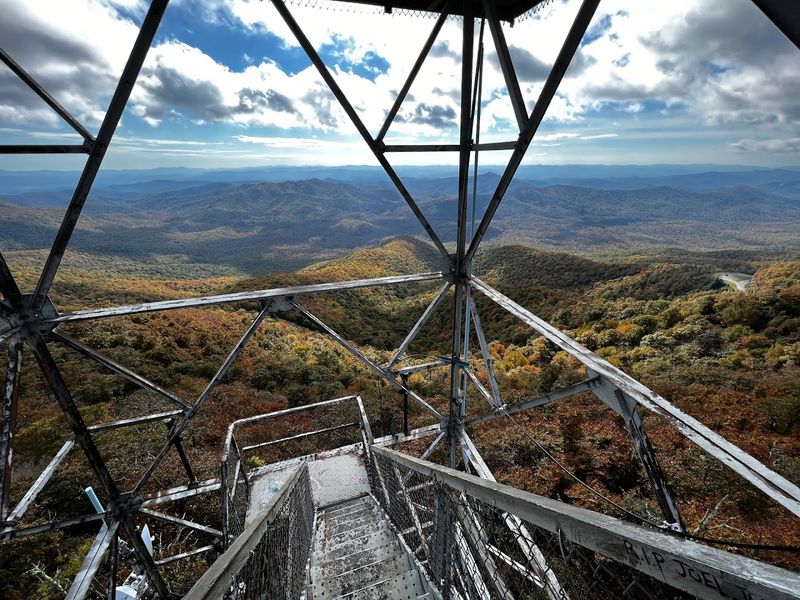
Far offshore, the structure rises from the Atlantic like a survivor from another century, part outpost and part mirage.
Reaching it is not casual, and that difficulty is part of the allure.
The tower feels detached from ordinary travel, as though it belongs more to weather reports and maritime legend than to vacation planning.
Along the coast of North Carolina, this former light station now stands as one of the strangest overnight experiences in the state.
Surrounded by open water, it trades comfort for exposure, horizon, and the kind of solitude that amplifies every wave slap and wind gust.
Sunrise there seems less like a view than an event.What stays with you is the sense of suspension.
Steel walkways hang over moving sea, storms feel imaginable even on calm days, and the mainland becomes an idea somewhere beyond the line of blue.
It is adventurous without needing theatrics, simply because the setting does all the work.
Few places create such a powerful feeling of distance while still remaining within reach of the familiar world.
Slip Rock
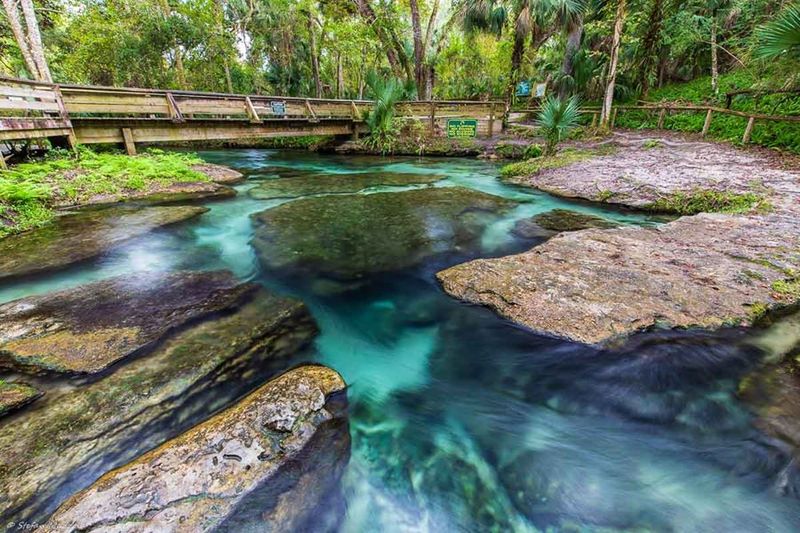
The mountain stream does not ask permission before turning playfully dangerous.
Water races over a broad polished slab, creating a natural slide that looks inviting, cold, and slightly wild all at once.
The effect is immediate: laughter nearby, nerves rising, and forest shade giving everything a secret-summer energy.
Hidden within Pisgah National Forest, this slick rock feature feels like a discovery passed from person to person rather than advertised to the world.
Moss, rushing water, and rounded stone combine into a place shaped more by current than by human design.
Even when others are around, the surrounding trees keep the setting intimate and tucked away.
Its charm lies in the balance between innocence and risk.
You are not just looking at scenery, you are confronting the mountain’s physical presence through icy water and smooth, unforgiving rock.
The memory that lasts is sensory: the shock of temperature, the roar in your ears, and sunlight flickering through leaves overhead.
Among North Carolina’s quieter oddities, this one feels thrillingly alive.
Outer Banks Shipwrecks

Few sights blend beauty and disaster as powerfully as a shipwreck emerging from the surf.
Timbers, iron, and broken forms appear at low tide like the coast briefly deciding to reveal what it has swallowed.
The feeling is never purely historical, it is visceral, windblown, and edged with loss.
Across the Outer Banks, shifting sands and storms have exposed remnants from vessels claimed by the treacherous waters known as the Graveyard of the Atlantic.
Some are easy to miss unless conditions align, which only heightens the drama when one suddenly comes into view. Salt air, gray light, and the sound of waves do the rest.
What makes these sites so compelling is their refusal to become neat museum objects.
They remain in motion, eroding, burying, and reappearing according to the sea’s mood.
You stand there imagining crews, cargo, weather, and the final terrible confusion, while beachgoers continue walking nearby under open sky.
The coastline is often celebrated for its beauty, yet these fractured remains reveal a darker, more unforgettable side.