Some drives are all about getting there, but Georgia keeps throwing in places that make you pull over and stay awhile. The best roadside stops here are not always the famous ones – they are the oddball landmarks, folk art worlds, and legendary attractions you end up talking about long after the trip.
If your ideal detour involves giant chickens, haunted-feeling trails, rooftop goats, and a vanished monument with a lasting legacy, this list is for you. These 10 stops turn an ordinary route into the kind of drive you never want to end.
Doll’s Head Trail (Atlanta)
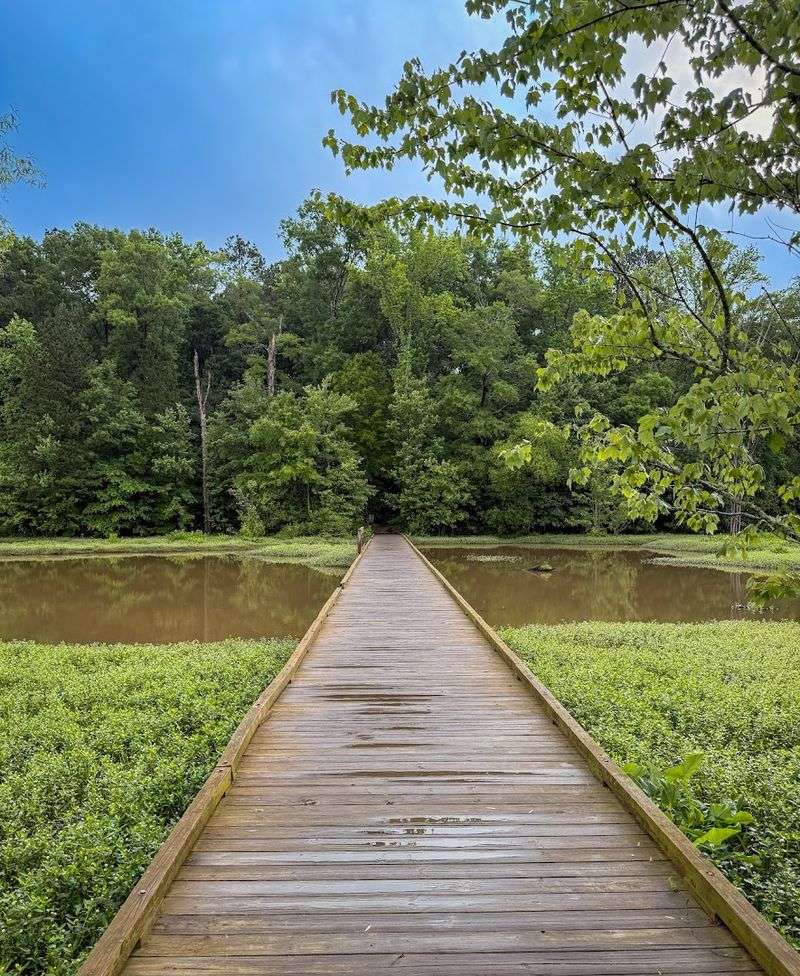
If you like your roadside stops a little strange and a little poetic, Doll’s Head Trail absolutely delivers. Tucked inside Constitution Lakes Park in Atlanta, this short loop feels like a secret world built from the leftovers of modern life.
Broken dolls, tiles, toys, and scrap pieces become eerie, clever art hidden beside wetlands and trees.
What makes it stick with you is the mix of nature and human imagination. The trail began when local carpenter Joel Slaton started arranging found objects into faces, figures, and miniature scenes, and visitors still add thoughtful creations using materials discovered in the park.
It feels spontaneous, collaborative, and just weird enough to be unforgettable.
I would not call it polished, and that is exactly the charm. You get birdsong, marsh views, and a gentle walk, then suddenly a doll head stares out from the brush like a tiny roadside ghost.
It is the kind of stop that makes the whole day feel more interesting and personal.
The Big Chicken (Marietta)
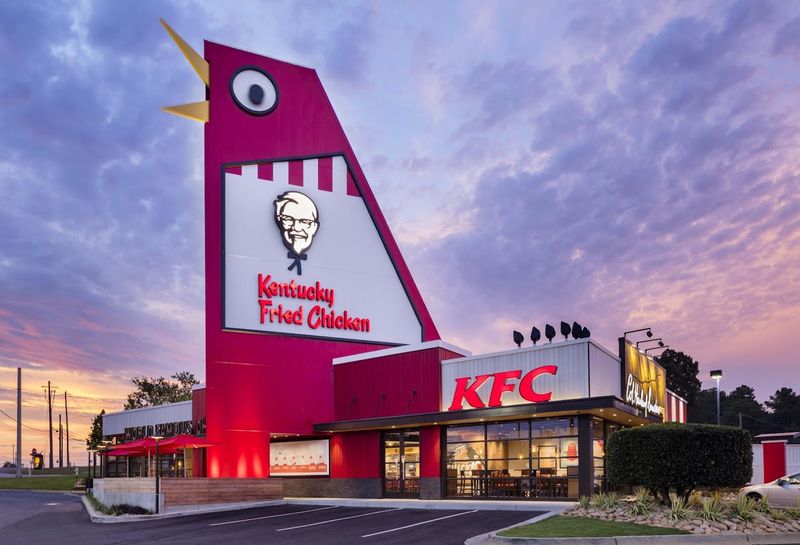
There is something wonderfully ridiculous about planning a stop just to see a giant chicken, and then realizing it was worth it. The Big Chicken in Marietta is exactly that kind of place, a towering 56-foot landmark with animated eyes and a moving beak.
It sits above a KFC now, but it feels bigger than any fast food sign has a right to feel.
Built in 1963 as a roadside advertisement, it has become a local icon and even a navigation point. People really do give directions based on it, which says everything about how deeply it lives in Georgia culture.
After storm damage in the 1990s, locals pushed to restore it, and that loyalty makes the stop even more charming.
You are not coming here for deep reflection, and that is the beauty of it. You pull over, laugh, take the photo, and suddenly the drive feels lighter.
Few roadside attractions are this simple, memorable, and completely comfortable being exactly what they are.
Rock Garden (Calhoun)
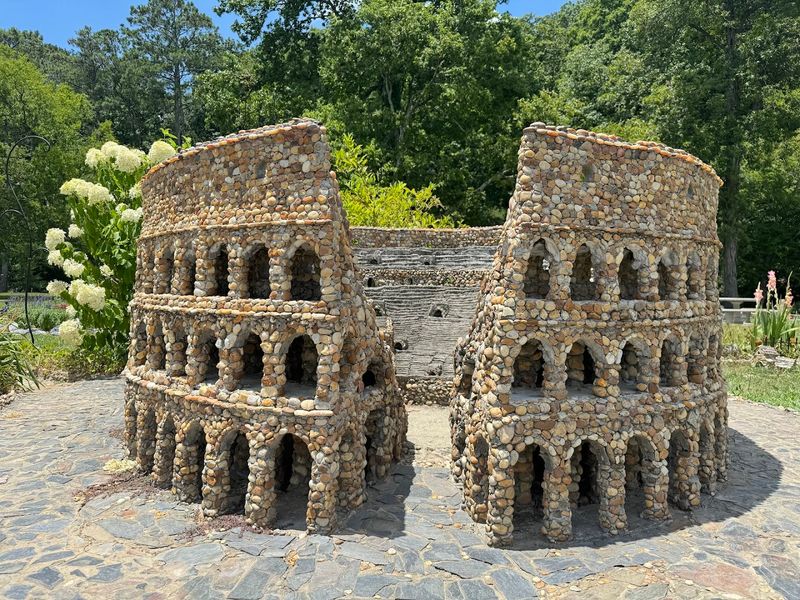
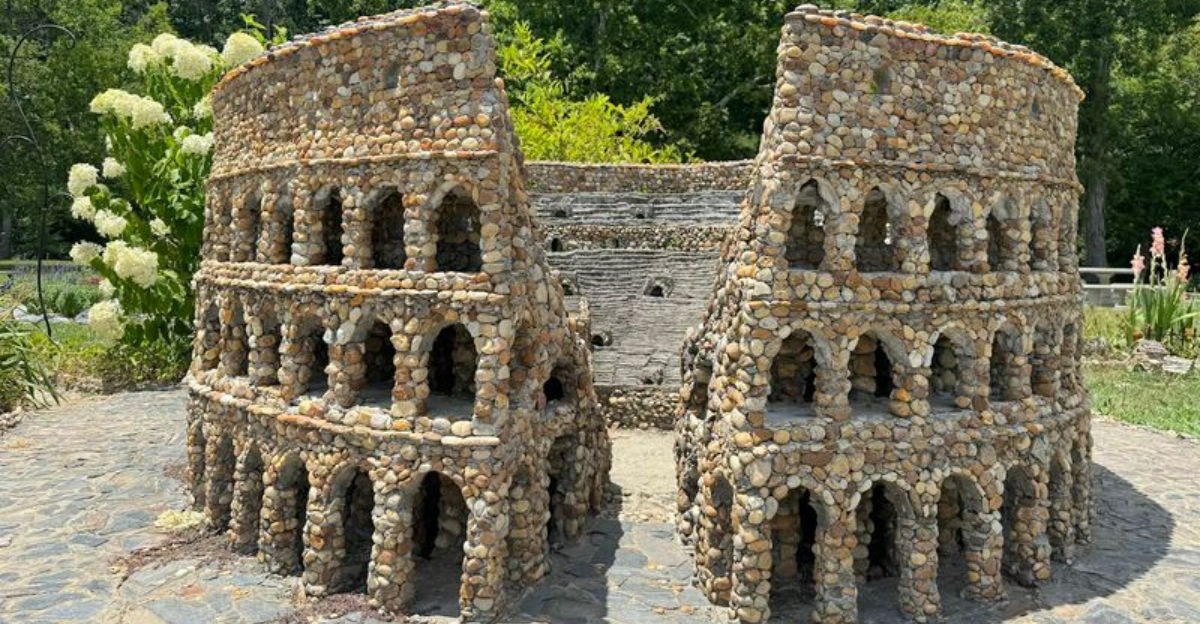
The Rock Garden in Calhoun feels like stumbling onto a tiny handmade kingdom where imagination did all the city planning. Hidden behind the Calhoun Seventh-Day Adventist Church, it is filled with miniature castles, cathedrals, bridges, and landmarks crafted from pebbles, shells, glass, and broken china.
Every structure looks delicate from a distance, then surprisingly intricate when you lean in closer.
The project grew from the creativity of Dewitt Boyd, known as Old Dog, and it still carries that generous homemade spirit. Nothing here feels mass produced or designed for a rushed tourist selfie.
Instead, you get the sense that someone patiently built a world just because beauty was worth making by hand.
That is what makes this stop such a sleeper hit on a Georgia drive. It is quiet, thoughtful, and slightly surreal without trying too hard.
If you have been speeding along all day, this place gently resets your brain and reminds you how satisfying small details can be.
Goats on the Roof (Tiger)
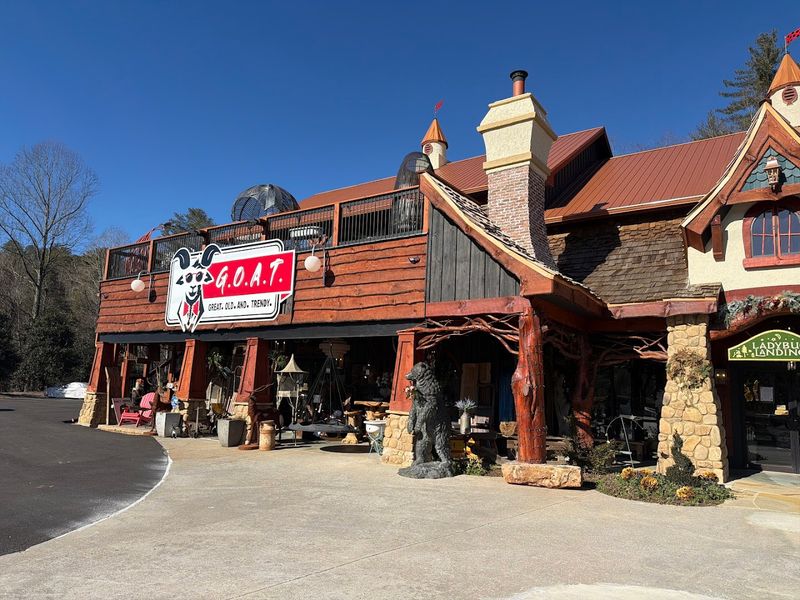
Some roadside attractions earn your attention with mystery, but Goats on the Roof in Tiger wins by being exactly what the name promises. You pull up expecting novelty, and then there they are, actual goats hanging out on the roof like it is the most normal thing in Georgia.
That instant absurdity is reason enough to stop.
Once you are there, the place turns into a full break from the drive. You can grab ice cream, browse the gift shop, try homemade fudge, and use the hand powered goat cycle to send food up to the animals.
It is playful in a way that makes adults feel like kids again without trying too hard.
I love stops that understand fun does not need to be complicated. This one has mountain town charm, a little bit of chaos, and plenty of photo opportunities.
Even if you arrived skeptical, the combination of rooftop goats and a sweet snack somehow works, and your road trip mood improves immediately.
The Tree That Owns Itself (Athens)
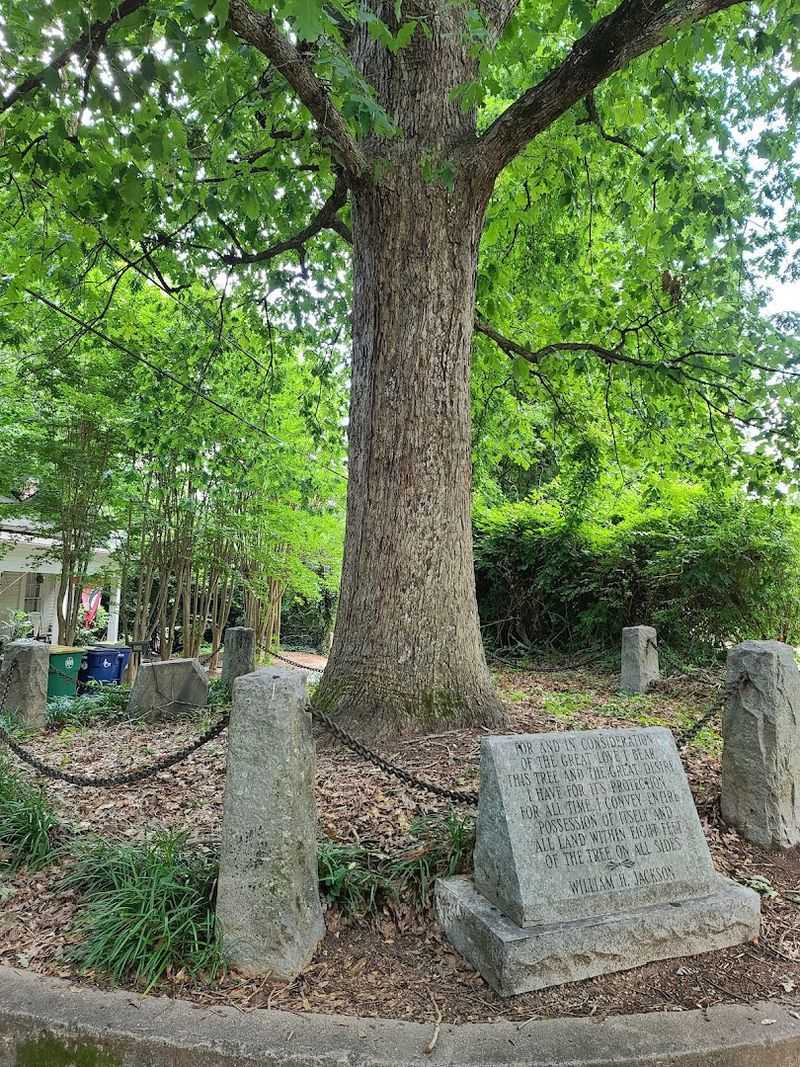
The Tree That Owns Itself sounds like the setup to a joke, but in Athens it is a beloved local legend with real staying power. Standing at the corner of Dearing and Finley Streets, this white oak is famous for the story that it was granted ownership of itself and the land around it.
Legal scholars may argue, but roadside magic rarely depends on technicalities.
The original tree fell in 1942, and what you see today is its successor, grown from one of its acorns and planted in the same spot. That detail somehow makes the place even more moving.
The legend survived, the community cared enough to continue it, and the tree remains a symbol of Athens at its most literary and affectionate.
This is not a flashy stop, and that is exactly why it works. You pause in a quiet neighborhood, read the plaque, and grin at the wonderfully Southern mix of myth, history, and civic pride.
It gives your drive a story, not just a snapshot.
Expedition Bigfoot (Cherry Log)
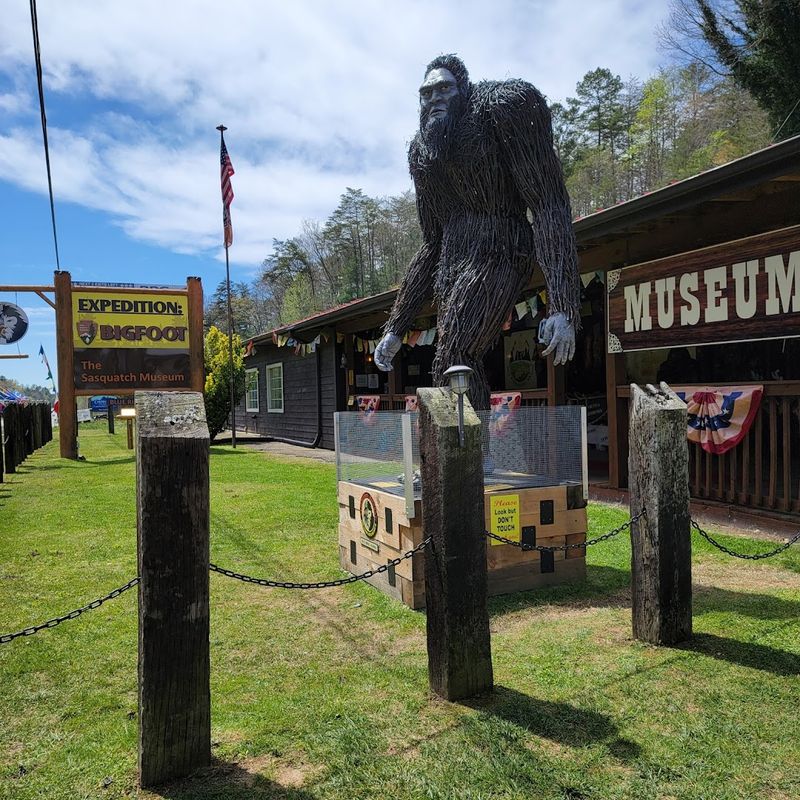
If your road trip could use a little conspiracy flavored entertainment, Expedition Bigfoot in Cherry Log is ready for you. This 4,000 square foot museum leans all the way into Sasquatch lore with sighting maps, footprint casts, hair samples, giant displays, and enough evidence boards to make you second guess the woods.
It is part mountain roadside stop, part cryptid fever dream.
Opened by David and Malinda Bakara, the museum does not play the subject for cheap laughs alone. There is a genuine fascination here with folklore, field research, and the stories people swear are true.
The result is more immersive than kitschy, especially when you see the research vehicle and the theater dedicated to all things Bigfoot.
You do not have to believe to enjoy it, and honestly that is part of the fun. It is a perfect break from highway monotony because it invites curiosity, debate, and a little paranoia before you head back into North Georgia forest country.
Suddenly every tree line feels suspicious.
Pasaquan (Buena Vista)
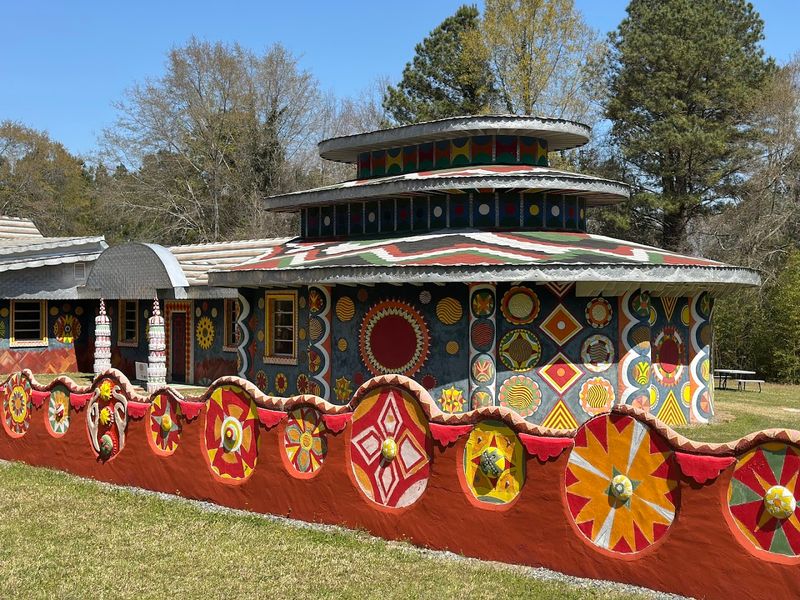
Pasaquan does not feel like a roadside stop so much as a portal into someone else’s vivid inner universe. Created by artist St. EOM near Buena Vista, this seven acre visionary art site explodes with painted walls, symbolic patterns, totems, walkways, and buildings that seem to pulse with color.
It is immersive in the best way, impossible to absorb with a quick glance.
The place took shape over decades and carries influences from multiple spiritual and artistic traditions without feeling tidy or overly explained. That makes wandering here especially rewarding.
Every corner offers another burst of imagery, another texture, another clue to the eccentric worldview that shaped the whole environment.
What I love most is how it changes the energy of a long drive. One minute you are following a rural Georgia road, and the next you are standing inside a monumental artwork that feels deeply personal and gloriously strange.
It wakes you up, challenges your expectations, and leaves a strong visual afterimage long after you leave.
School Bus Graveyard (Alto)
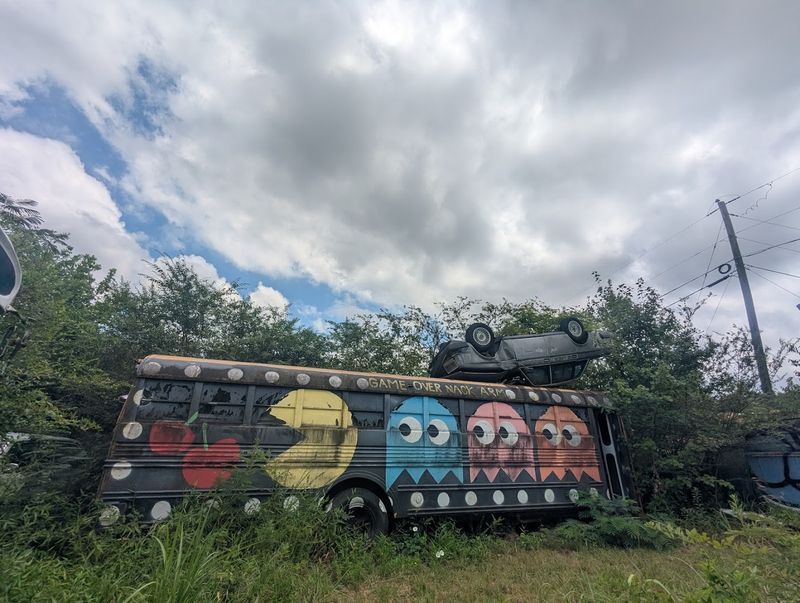
The School Bus Graveyard in Alto looks like the kind of place you might spot from the road and immediately wonder if you just imagined it. Instead of abandoned vehicles fading quietly into rust, this salvage yard has become a constantly changing outdoor gallery splashed with bold graffiti and mural work.
School buses, trucks, and RVs line up like giant canvases with engines long retired.
The story behind it makes the stop even better. The buses were first arranged as a security barrier, then artists gradually transformed them into something far more memorable.
Because new designs continue to appear, the place has a living quality that many roadside attractions never achieve.
This stop has grit, color, and a strong sense of local character. It is not polished, and that rawness is part of its appeal.
If your road trip tastes lean more toward outsider art than gift shop souvenirs, you will probably love how unexpected and unapologetically strange this place feels in person.
Paradise Garden (Summerville)
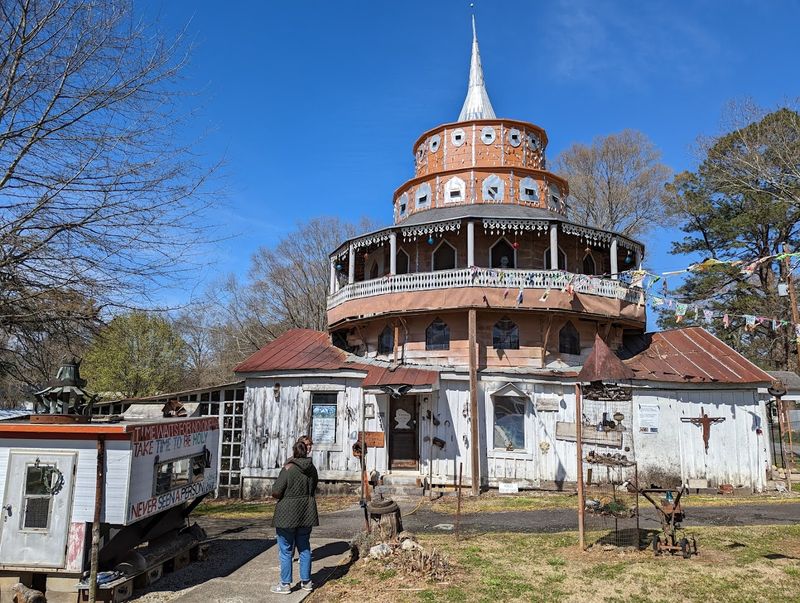
Paradise Garden in Summerville is one of those places that makes you wonder why more road trips are not built around folk art. Created by preacher and artist Howard Finster, the site is an exuberant maze of towers, signs, sculptures, mirrored surfaces, bicycles, and handmade structures layered with spiritual messages and pop culture references.
It feels joyful, chaotic, and deeply sincere all at once.
Finster spent decades shaping this former swampy property into a personal universe, and you can sense that devotion everywhere. The Bible House, Hubcap Tower, Mirror House, and Folk Art Chapel all pull you in with different textures and moods.
Even when the imagery gets overwhelming, it never feels empty or purely decorative.
That intensity is exactly why the stop lands so strongly. You are not just looking at art, you are entering the mind of someone who believed creativity could reach people directly.
On a long Georgia drive, Paradise Garden offers color, conviction, and the kind of unforgettable originality that makes every ordinary stop afterward feel bland.
Georgia Guidestones (Elberton – Historical)
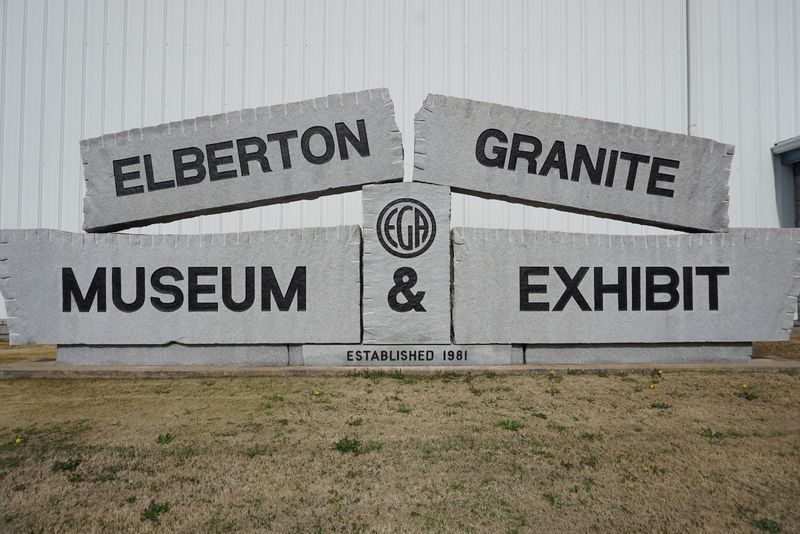
The Georgia Guidestones are different from every other stop on this list because you cannot visit the monument as it once stood. Unveiled in 1980 and destroyed in 2022 after a bombing, the massive granite structure drew decades of fascination, criticism, conspiracy theories, and roadside curiosity.
Even in absence, it still shapes the imagination of anyone interested in Georgia’s stranger landmarks.
Known as America’s Stonehenge, the monument featured astronomical alignments and inscriptions in multiple languages outlining ten principles for humanity. Its anonymous commissioning by someone calling himself R.
C. Christian only deepened the mystery.
Today, the site is gone, but the story continues through archived images, local memory, and a display model at the Elberton Granite Museum.
That makes this a historical roadside stop rather than a traditional pull off and wander experience. Still, I think it belongs here because few places have generated this much debate and symbolism.
Sometimes the most compelling detour is the one that asks you to imagine what stood there before.