Georgia in May feels like the world suddenly turns the volume down on chaos and turns the sky crystal clear.
Mountain ridges sharpen into view, canyons open like carved secrets, and every overlook feels like a front-row seat to something vast and untamed.
No summer haze. No washed-out horizons.
Just crisp air that stretches views for miles and makes every step up a trail feel worth it.
This is the month when Georgia’s high places steal the show. Clifftops glow, valleys bloom, and the wind carries a cool edge that keeps every viewpoint sharp and unforgettable.
From towering peaks to canyon rims that drop out of sight, these thirteen overlooks turn a simple day outside into something you’ll remember long after the trail dust settles.
Brasstown Bald
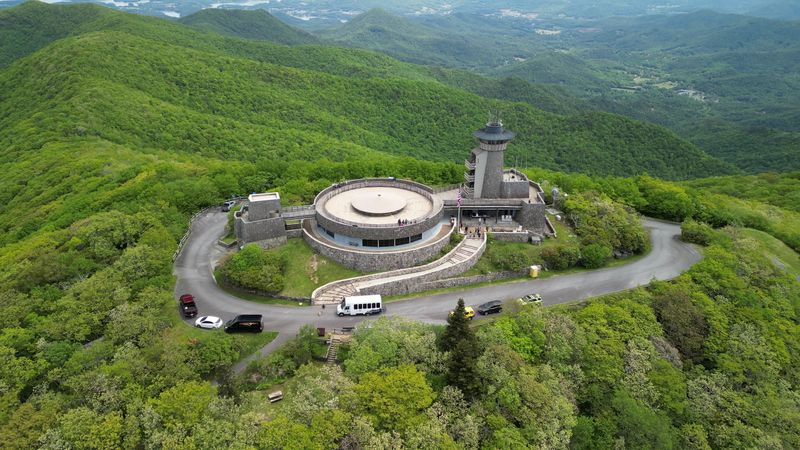
Standing at 4,784 feet, this mountain summit towers above every other point in Georgia. The paved pathway from the parking area makes reaching the observation deck accessible for most visitors, though a shuttle operates for those who prefer not to walk the steep half-mile climb.
May brings exceptionally clear conditions that make this overlook truly spectacular. Four states become visible from the viewing platform when atmospheric conditions cooperate perfectly.
Tennessee, North Carolina, South Carolina, and Georgia spread out beneath you in a stunning panorama.
The visitor center offers fascinating exhibits about the mountain’s ecology and cultural history. Interactive displays help identify distant peaks and landmarks visible from your elevated vantage point.
Rangers frequently conduct educational programs during pleasant spring weekends.
Arrive early morning for the most remarkable visibility before afternoon clouds develop. The sunrise views paint the surrounding Appalachian ridges in golden light that photographers absolutely cherish.
Cool May temperatures make the uphill walk comfortable compared to sweltering summer hikes.
Cloudland Canyon State Park
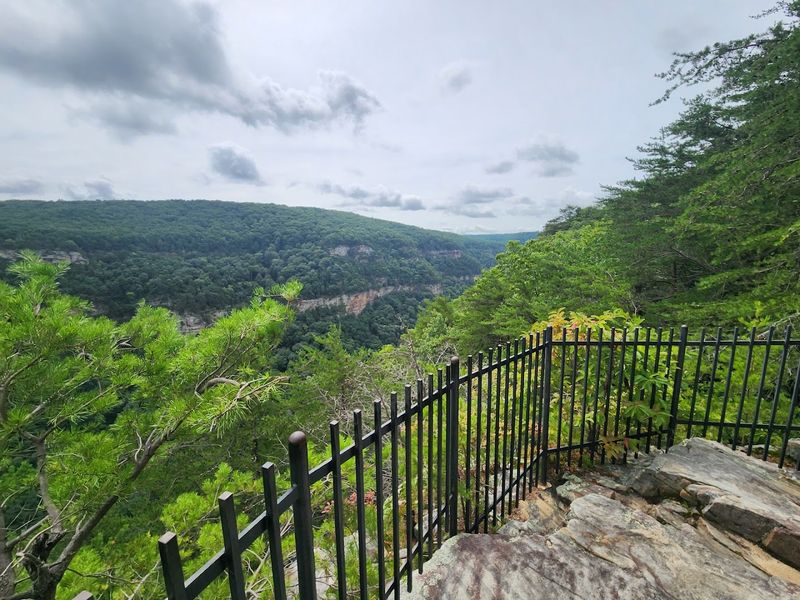
Perched on Lookout Mountain’s western edge, this canyon delivers some of Georgia’s most jaw-dropping geological drama. Massive sandstone walls plunge over 1,000 feet below the rim, creating a landscape that seems transported from the American Southwest.
Two waterfalls thunder through the canyon during May’s typical rainfall patterns. Cherokee Falls and Hemlock Falls both flow with impressive volume after spring showers refresh the watershed.
The rim trail offers multiple vantage points without requiring strenuous hiking.
Vibrant spring foliage transforms the canyon into a sea of brilliant green. Hemlock trees, mountain laurel, and countless wildflowers paint the gorge walls with fresh color.
Photographers find endless compositions combining waterfalls, cliffs, and lush vegetation.
Sunset viewing from the canyon rim creates magical lighting conditions. The western-facing overlooks catch golden hour perfectly, illuminating the sandstone formations in warm tones.
Camping facilities allow overnight visitors to catch both sunrise and sunset from this remarkable location.
Tallulah Gorge State Park
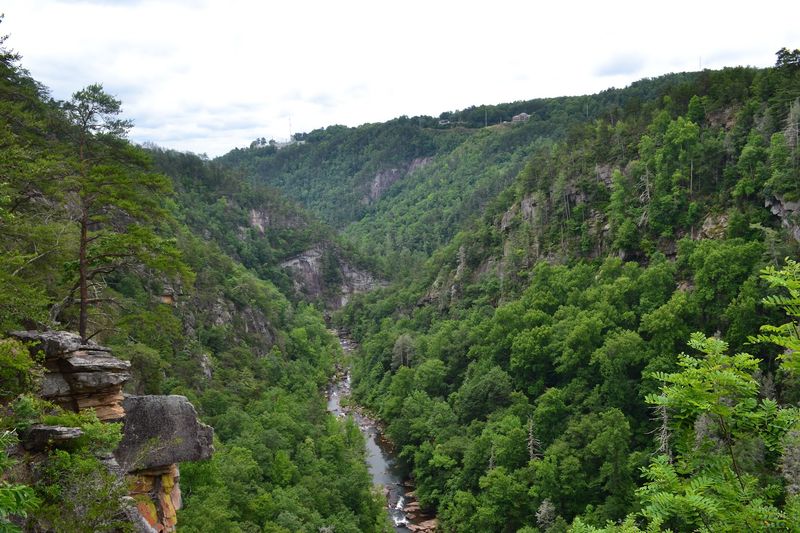
Nature carved this stunning gorge over millions of years, creating one of the deepest canyons east of the Mississippi River. Six major waterfalls cascade through the rocky chasm, though hydroelectric operations control water flow throughout most of the year.
Hurricane Falls ranks among the gorge’s most photogenic features. The overlook platform extends out over the canyon rim, providing heart-pounding views straight down into the rushing waters below.
Sturdy railings make the experience safe while maintaining that thrilling edge-of-the-world sensation.
May offers perfect hiking weather for exploring the rim trail system. Temperatures stay comfortable while trails remain relatively uncrowded compared to peak summer visitation.
Ten different overlook points provide varying perspectives on the gorge’s dramatic geology.
Adventurous visitors can obtain permits to descend into the canyon itself. The 600-step staircase leads down to the gorge floor, where you can wade in the river and view the waterfalls from below.
Remember to save energy for climbing back up those challenging stairs.
Black Rock Mountain State Park
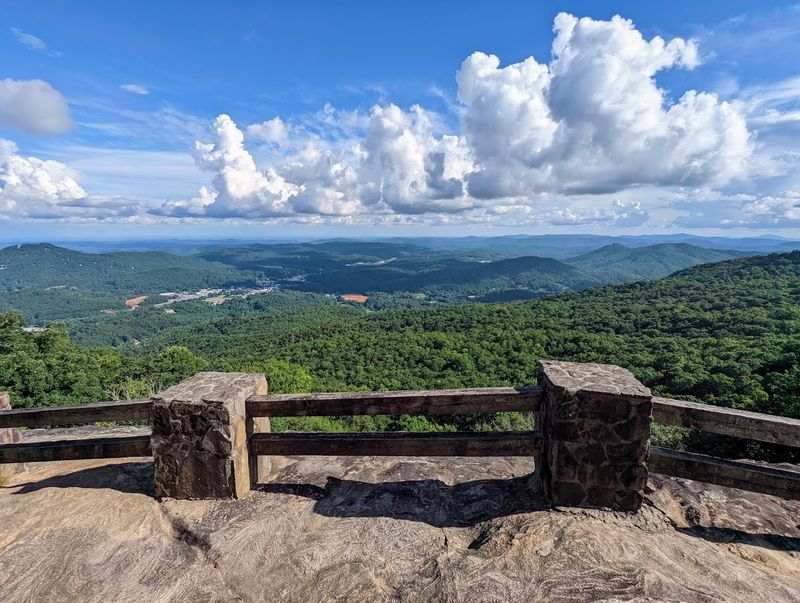
Georgia’s highest state park sits at 3,640 feet elevation, earning its nickname as the mountain floating in the sky. Cool temperatures persist here even when lower elevations swelter, making spring visits particularly delightful.
The Tennessee Rock Trail leads to the park’s premier overlook after a moderate woodland hike. Massive boulders create natural seating areas where you can rest while absorbing the incredible vista.
Valley fog often lingers below during morning hours, creating an ethereal landscape.
Mountain laurel blooms transform the forest into a floral wonderland during late May. Pink and white blossoms frame overlook views with natural beauty that enhances photography opportunities.
The combination of flowers and distant ridges creates postcard-perfect compositions.
Seven-state views become possible on exceptionally clear days, though verifying all seven requires detailed topographic knowledge. Even on typical days, the sweeping Blue Ridge panorama stretches far beyond what eyes can fully absorb.
Binoculars help identify distant landmarks and appreciate the landscape’s full scope.
Amicalola Falls State Park
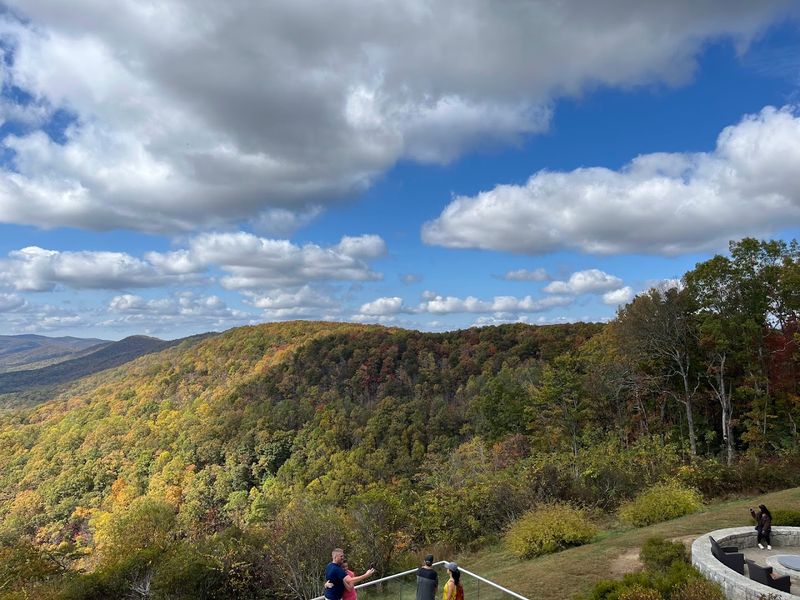
While most visitors focus solely on the 729-foot waterfall, the park’s trail system reveals equally stunning ridge-top vistas. The Approach Trail to Springer Mountain, famous as the Appalachian Trail’s southern terminus, passes through remarkable overlook territory.
Multiple viewing platforms dot the mountainside along various hiking routes. Each offers unique perspectives across the sprawling North Georgia wilderness.
Forested ridges roll toward distant horizons in waves of green that seem endless.
May brings vibrant foliage that makes these overlooks particularly photogenic. Fresh spring growth creates varying shades of green that add depth and dimension to landscape views.
Morning light filtering through the canopy creates beautiful atmospheric effects.
The visitor center provides trail maps highlighting the best overlook locations. Rangers offer recommendations based on your fitness level and time availability.
Some viewpoints require serious hiking, while others sit conveniently near parking areas for quick photo opportunities.
Combine waterfall viewing with overlook exploration for a complete park experience. The diversity of scenic opportunities makes Amicalola Falls worth an entire day of exploration.
Yonah Mountain Trail
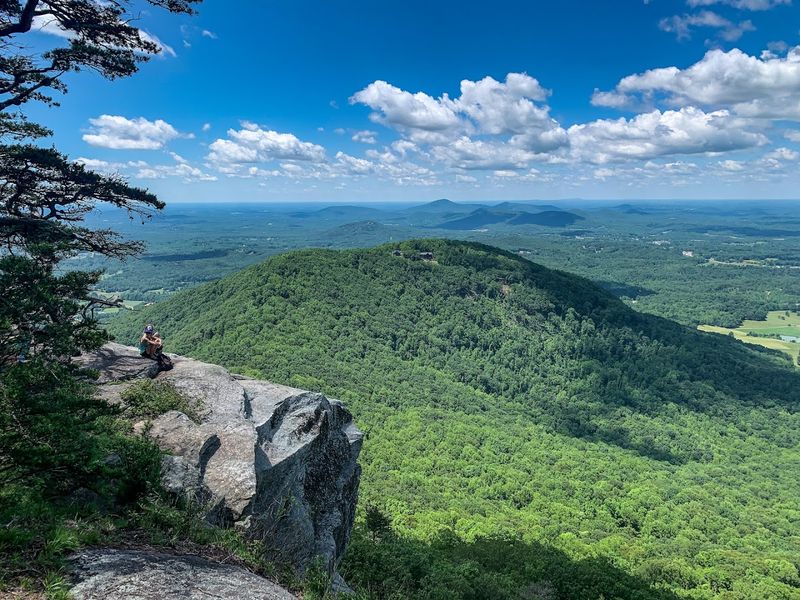
This imposing granite monolith dominates the landscape near Helen, challenging hikers with a steep 2.5-mile ascent. The trail gains over 1,400 feet in elevation, making it one of North Georgia’s more strenuous day hikes.
Reaching the summit reveals massive exposed rock slabs that function as natural viewing platforms. The granite outcrops extend for hundreds of feet, offering numerous spots to rest and enjoy the spectacular scenery.
Rock climbers often practice technical skills on the mountain’s sheer eastern face.
Panoramic views encompass the entire Chattahoochee National Forest region. On clear May mornings, visibility extends across dozens of mountain ridges marching toward distant horizons.
The open summit allows 360-degree observations without tree obstruction.
Wildflowers dot the rocky landscape during spring months, adding unexpected color to the granite environment. Birds of prey frequently soar at eye level, riding thermal currents that rise along the mountain’s steep flanks.
Watching hawks glide past while you stand on the summit creates unforgettable wildlife encounters.
Bring plenty of water since the steep climb demands serious effort. The exposed summit offers no shade protection during midday hours.
Blood Mountain
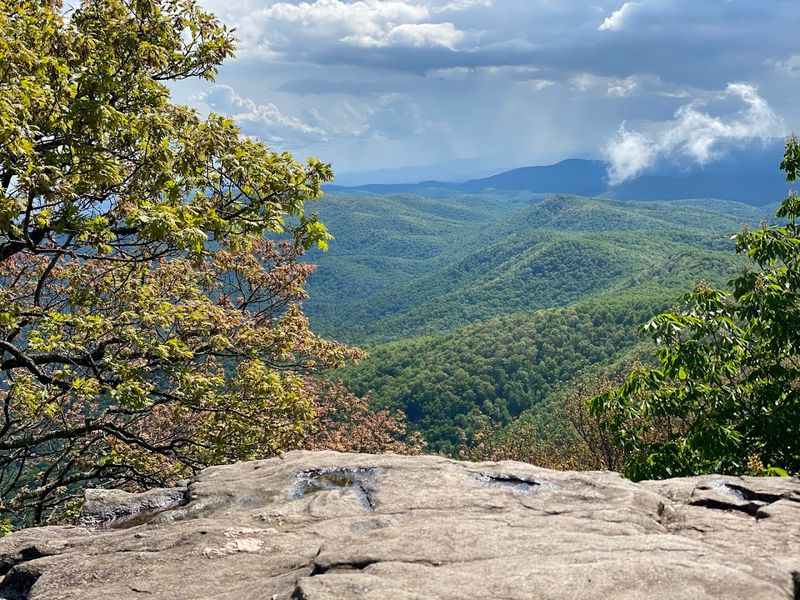
At 4,458 feet, this mountain represents one of Georgia’s most iconic Appalachian Trail destinations. The summit attracts through-hikers and day-trippers alike, creating a welcoming social atmosphere atop the rocky peak.
An historic stone shelter built by the Civilian Conservation Corps still stands near the summit. This rustic structure provides emergency housing for overnight visitors and serves as a windbreak during blustery conditions.
The shelter’s cultural significance adds historical interest to the natural beauty.
Spring wildflowers create spectacular displays along the trail during May. Trillium, lady slippers, and countless other species bloom throughout the forest ecosystem.
The combination of flowering plants and expanding views as you climb creates a sensory feast.
Multiple approach trails offer varying difficulty levels for reaching the summit. The Freeman Trail provides the shortest but steepest route, while the Appalachian Trail approaches offer more gradual climbing.
Choose your route based on fitness level and desired adventure intensity.
Summit views span across the surrounding Chattahoochee National Forest wilderness. Neighboring peaks like Brasstown Bald and Tray Mountain punctuate the horizon, helping orient your geographical understanding of North Georgia’s mountain terrain.
Rabun Bald Fire Tower
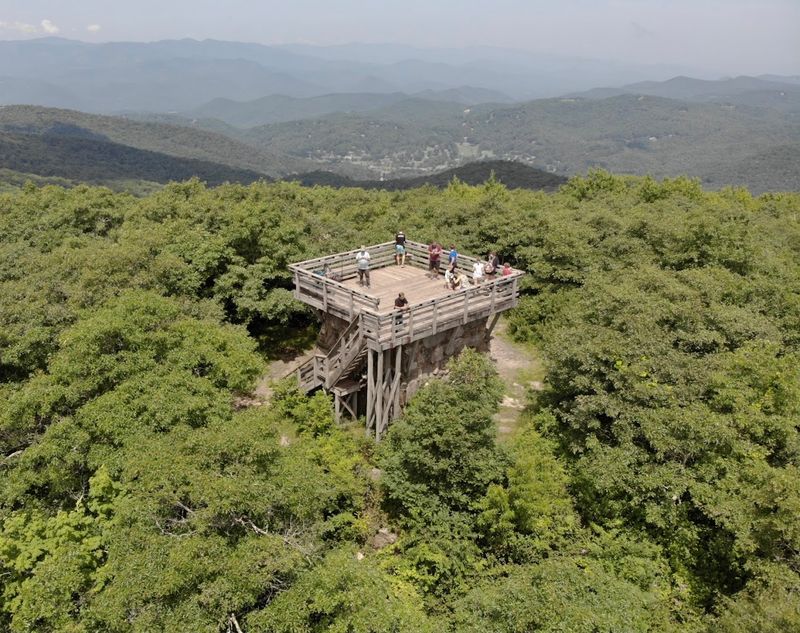
Georgia’s second-highest peak features a restored fire tower that elevates viewers even higher above the surrounding landscape. Climbing the tower’s stairs adds roughly 40 feet to your already lofty 4,696-foot elevation, creating unmatched viewing opportunities.
The tower platform provides true 360-degree panoramas without any visual obstruction. Metal railings ensure safety while allowing unimpeded views in every direction.
On exceptionally clear May days, some claim to see portions of five states from this elevated vantage point.
Reaching the summit requires commitment since the nearest trailhead sits over two miles away. The hike gains significant elevation through beautiful mountain forest before emerging at the open summit.
May weather typically offers comfortable hiking temperatures with minimal humidity.
Historical information posted near the tower explains its crucial role in forest fire detection. Before modern surveillance technology, rangers staffed these towers watching for smoke plumes across vast wilderness territories.
The tower’s preservation honors this important conservation legacy.
Photography enthusiasts particularly appreciate the tower’s height advantage for landscape compositions. The elevated perspective creates unique angles impossible from ground-level overlooks.
Bell Mountain Overlook
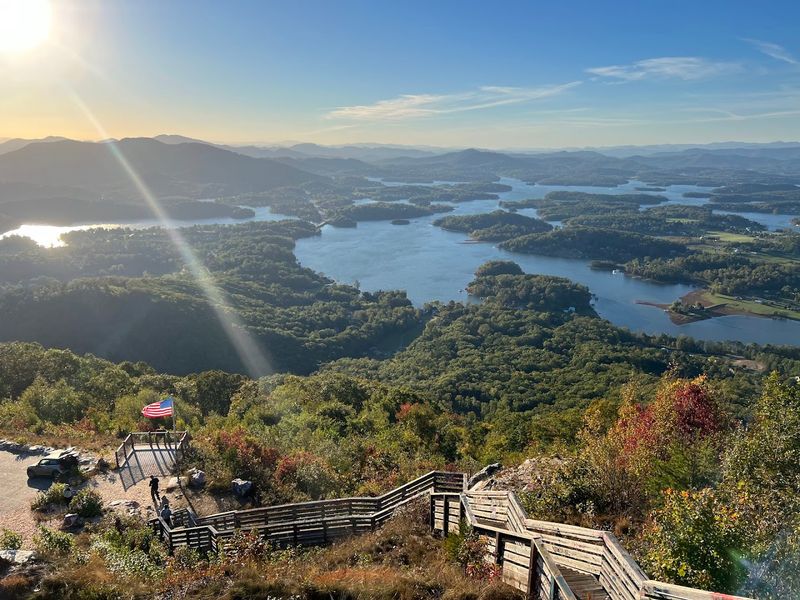
This relatively short but challenging climb rewards hikers with stunning lake and mountain vistas. The trail gains roughly 1,100 feet in just 1.5 miles, making it a legitimate leg-burner despite its brief distance.
Lake Chatuge spreads across the valley below like a giant blue mirror. The reservoir’s irregular shoreline creates interesting visual patterns from your elevated viewpoint.
Boats appear as tiny white dots drifting across the water’s surface.
Rocky outcrops at the summit provide natural seating with million-dollar views. The open granite slabs allow multiple groups to spread out without feeling crowded.
Sunset visits prove particularly magical as golden light illuminates both water and mountains.
Spring greenery softens the mountain landscape during May visits. Hardwood forests surrounding the peak display fresh foliage in countless shades of green.
Wildflowers add splashes of color along the trail and near the summit rocks.
The overlook’s relative obscurity means fewer crowds compared to more famous peaks. Local hikers treasure this spot as a hidden gem offering spectacular rewards without overwhelming visitor traffic.
Arrive prepared for steep climbing and carry sufficient water for the strenuous ascent.
Providence Canyon State Park
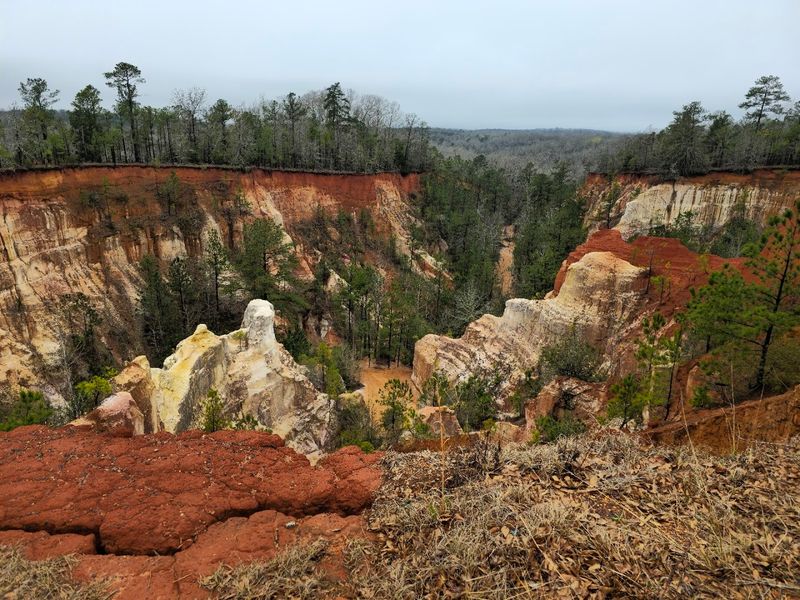
Poor farming practices during the 1800s accidentally created this geological marvel. Soil erosion carved deep gullies that eventually expanded into a 150-foot-deep canyon system revealing spectacular color layers.
Pink, orange, red, and white sediment layers create a painter’s palette across the canyon walls. Clear May sunshine intensifies these natural colors, making them glow with almost unreal vibrancy.
The erosion continues gradually reshaping the landscape with each heavy rainfall.
Multiple rim trails offer easy walking with frequent overlook opportunities. The Canyon Loop Trail provides the most comprehensive views, circling the canyon’s upper edge with numerous photo-worthy vantage points.
For closer inspection, the Canyon Floor Trail descends into the gulches themselves.
Unlike mountain overlooks, this unique spot showcases canyon geology uncommon in Georgia. The southwestern landscape aesthetic feels surprisingly different from typical North Georgia scenery.
Photographers appreciate how the rich earth tones contrast against green vegetation and blue skies.
Visit during late afternoon for the most dramatic lighting conditions. Angled sunlight emphasizes the canyon walls’ texture and color variations, creating enhanced three-dimensional effects that make the formations appear even more spectacular.
Lookout Mountain Rock City Overlooks
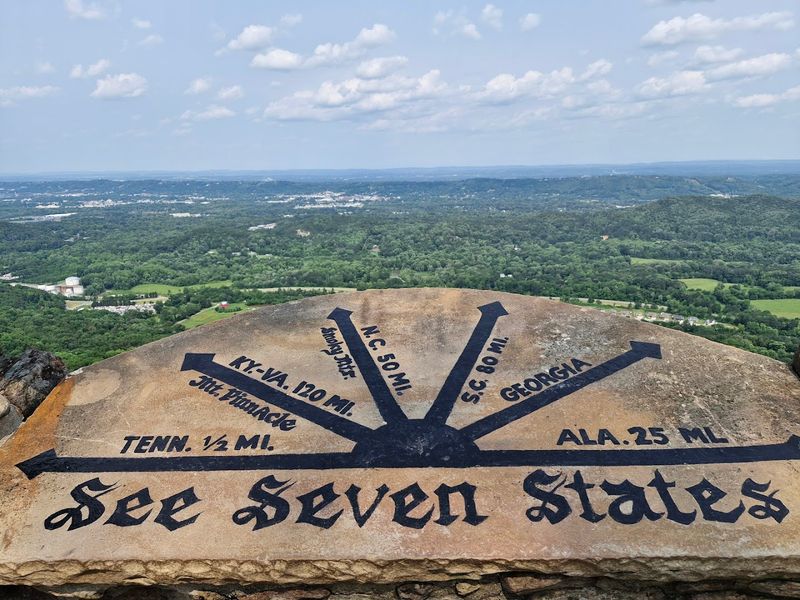
Massive sandstone formations create natural gardens and viewing areas along this famous ridge system. While some areas require admission to the commercial attraction, the geological features and views remain genuinely spectacular.
The Lover’s Leap overlook extends out from a cliff face offering vertiginous views across seven states. Whether you actually see all seven depends on atmospheric conditions, but Tennessee Valley definitely sprawls impressively below.
The metal safety railings feel reassuring given the dramatic exposure.
Rock formations with whimsical names like Fat Man’s Squeeze and Needle’s Eye create unique hiking experiences. The pathways wind through narrow passages between towering boulders before emerging at various overlook points.
Each vista offers slightly different perspectives on the surrounding mountains.
May brings excellent visibility for long-distance viewing across the valley. Spring rains clean the atmosphere, removing the hazy buildup that obscures summer views.
Cool morning temperatures make exploring the extensive trail system particularly enjoyable.
Gardens featuring native and exotic plants add botanical interest to the geological attractions. Spring blooms enhance the natural beauty, combining floral displays with mountain panoramas for comprehensive scenic experiences that appeal to diverse interests.
Hogpen Gap Appalachian Trail Overlook
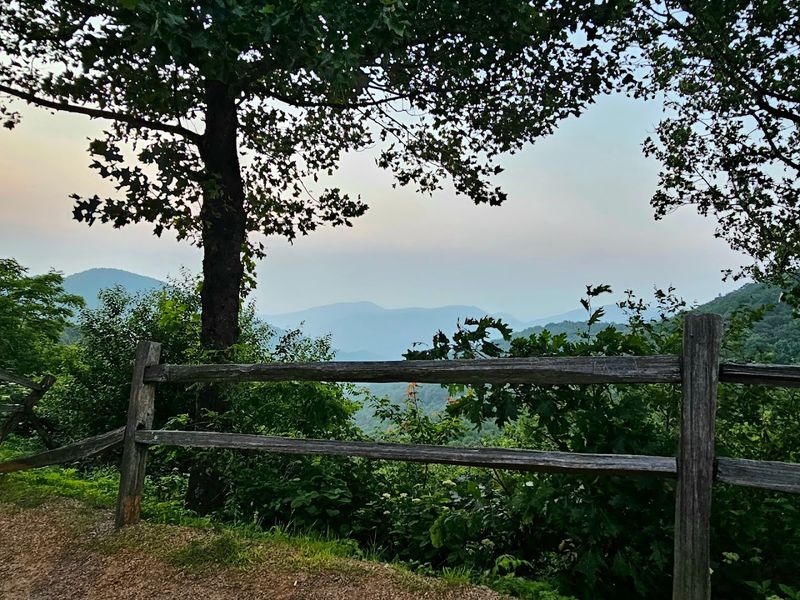
This scenic mountain pass sits at 3,450 feet elevation where Highway 348 crosses the Appalachian Trail. Convenient parking areas allow easy access to impressive views without requiring strenuous hiking effort.
The roadside pull-offs provide immediate overlook opportunities for travelers cruising the mountain highways. Simply step from your vehicle to enjoy sweeping valley vistas framed by rolling ridges.
The accessibility makes this spot perfect for visitors with limited mobility or time constraints.
Through-hikers crossing the gap often pause here to resupply or catch rides into nearby towns. Watching backpackers emerge from the forest trail adds human interest to the scenic experience.
Their stories of Appalachian Trail adventures provide fascinating entertainment while you rest and enjoy the views.
Multiple trails branch from the gap for those wanting to extend their overlook explorations. Short walks along the Appalachian Trail in either direction reveal additional vantage points.
The white blazes marking the famous footpath create photo opportunities combining trail markers with mountain backgrounds.
May weather at this elevation stays pleasantly cool while lower valleys grow warm. The temperature difference makes Hogpen Gap particularly refreshing during late spring days when heat becomes uncomfortable elsewhere.
Coosa Bald Overlook
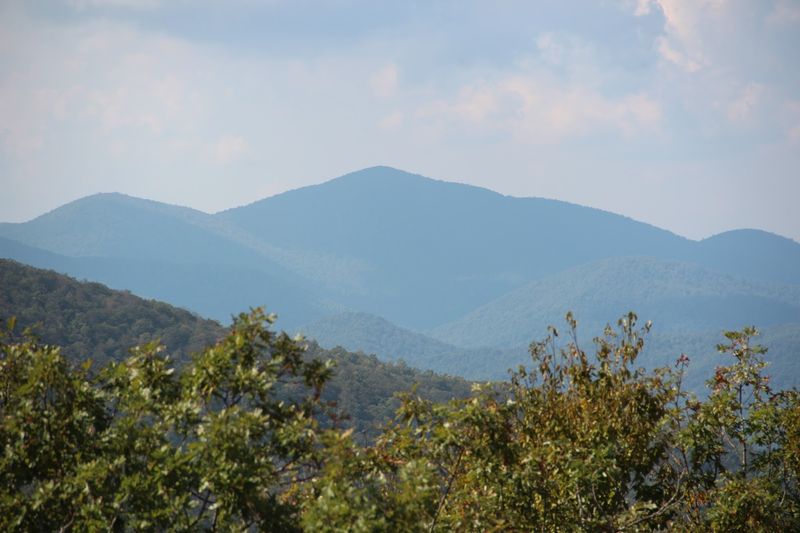
Straddling the Georgia-North Carolina border, this less-crowded summit offers peaceful mountain solitude. The 4,271-foot elevation provides excellent views without the tourist crowds that flock to more famous peaks.
Forested ridges extend endlessly in every direction from the grassy summit area. The tree-free mountaintop creates a natural meadow where panoramic observations become possible without climbing rocks or towers.
Wildflowers carpet the summit during peak spring blooming periods.
Accessing this overlook requires hiking roughly four miles along the Appalachian Trail from the nearest parking area. The moderate difficulty hike passes through beautiful mountain forest before ascending to the open summit.
May temperatures make the trek comfortable without excessive heat or humidity.
The relative obscurity means you might enjoy these spectacular views in complete solitude. Many hikers prefer this peaceful atmosphere over more crowded destinations where maintaining personal space becomes challenging.
The quiet allows better wildlife observation and contemplative nature experiences.
Long-range visibility reaches its annual peak during May before summer humidity reduces atmospheric clarity. Crystal-clear mornings reveal mountain details at remarkable distances, making early starts particularly worthwhile for photography and panoramic appreciation of Georgia’s spectacular mountain landscape.