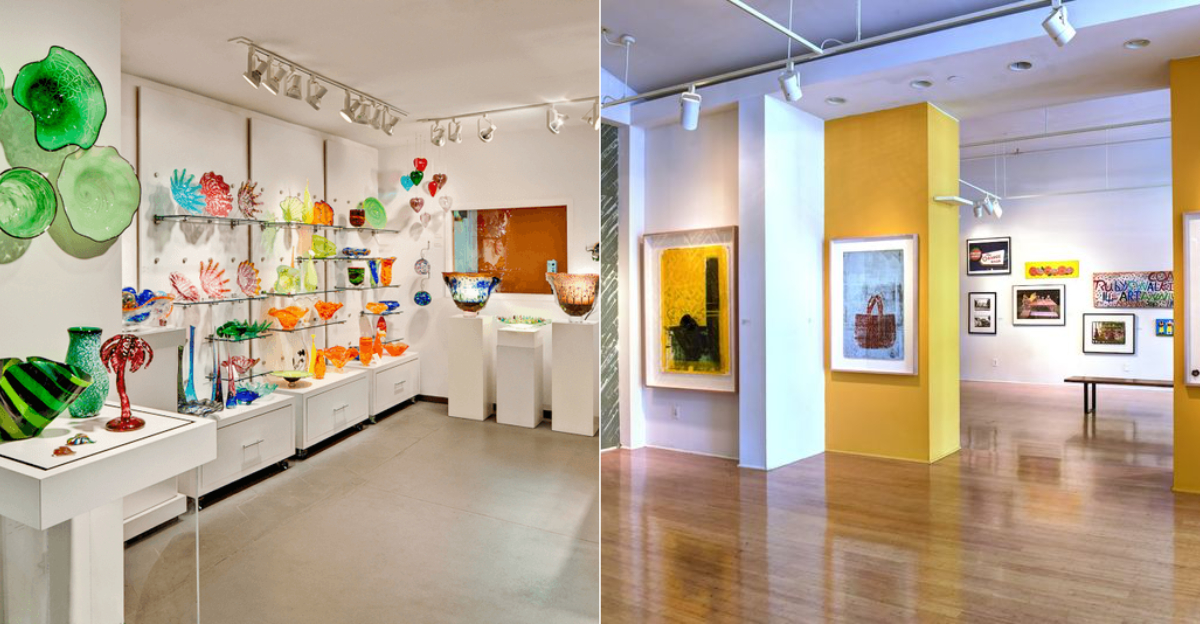
The first thing you notice when stepping inside from the warm streets of St. Pete is not a painting or a sculpture, but the feeling that the air itself is charged with attention.
At Morean Arts Center, art does not sit at a distance behind glass, it breathes, spins, dries, glows, and changes in real time.
While a classic Florida day unfolds outside, this space pulls you into a living state of concentration, inviting you to watch people transform raw materials into something unforgettable.
Walk in, and you feel less like a spectator and more like someone standing at the edge of another person’s creative courage.
Where Fire Becomes Performance
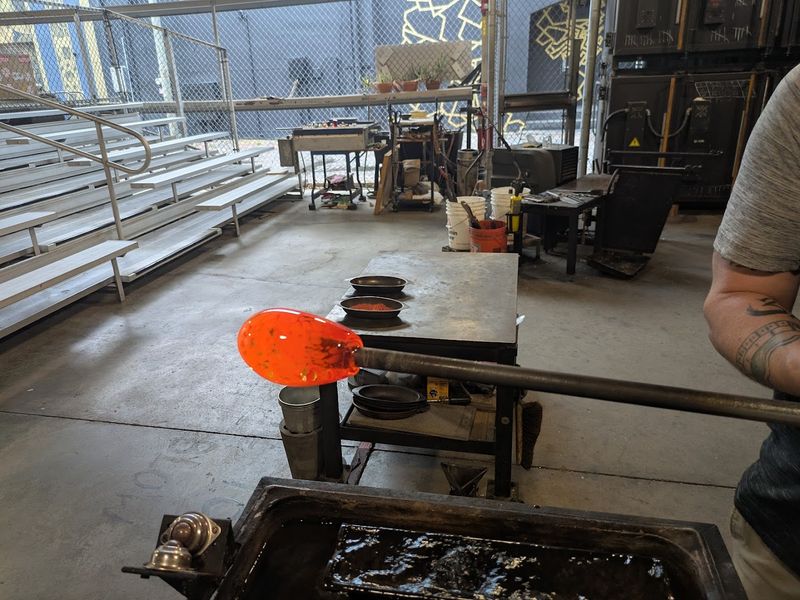
The live glassblowing demonstrations pull you in before you fully realize you have stopped walking.
A furnace glows like a second sun, and every movement around it feels purposeful, timed, almost musical. You hear metal tools tap, glass turn, instructors call out small directions, and suddenly the studio becomes less like a room and more like a stage shaped by heat.
What makes the scene memorable is the balance between danger and grace.
Molten glass gathers at the end of a pipe like honey lit from within, then stretches, spins, and rounds itself under practiced hands.
Even if you know nothing about technique, you can feel the physical skill involved, the weight, the temperature, the speed, and the absolute need for trust between the people working side by side.
Watching it happen changes how you see finished objects in the gallery later.
A vase or sphere no longer feels decorative alone.
It carries the memory of flame, breath, timing, sweat, and the brief thrilling moment when soft material agrees to become art.
Clay Under the Fingertips
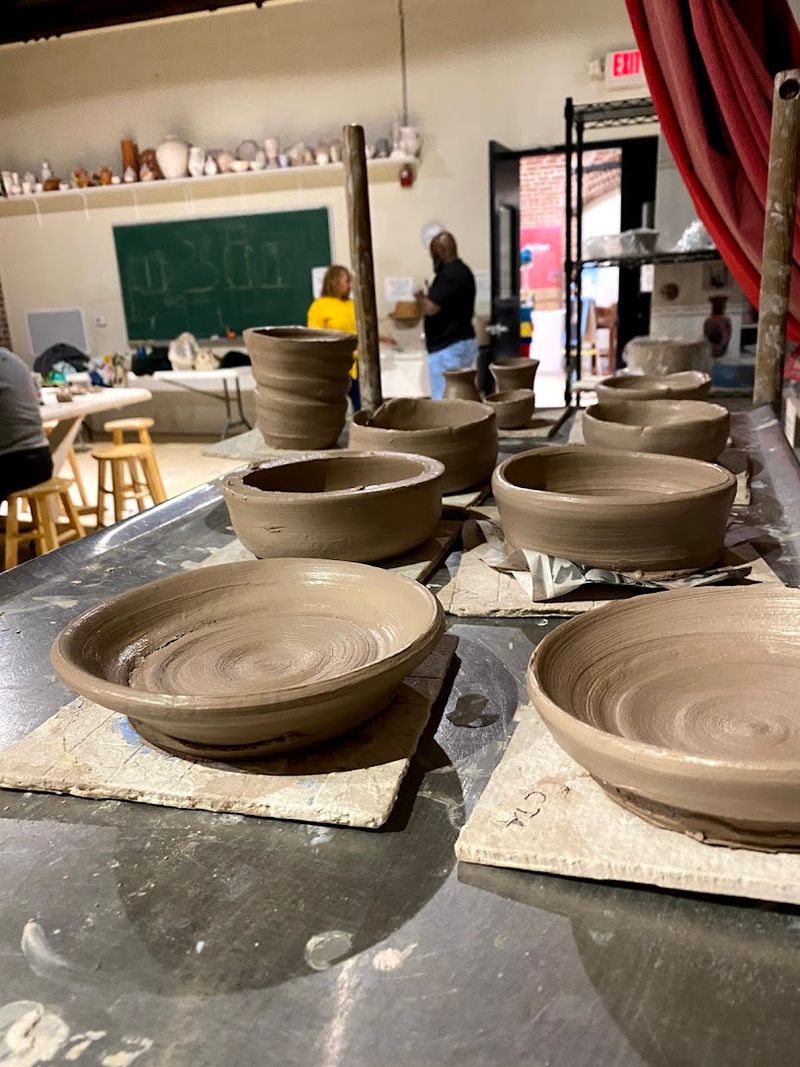
In the clay workshops, the energy changes completely.
The heat of the glass studio gives way to a cooler rhythm where hands press, pinch, smooth, and begin again, and the room fills with the soft scrape of tools against damp earth.
Here, creativity feels slower and more private, but no less alive.
There is something deeply grounding about clay because it answers touch immediately.
A wall rises under your palm, a rim collapses if you rush, and every small correction asks for patience instead of perfection.
Beginners seem to relax once they realize the material records honesty more than polish, while experienced makers settle into that familiar conversation between hand pressure, moisture, and form.
What lingers is the satisfaction of making an object from almost nothing.
Even a simple cup carries the memory of your attention in its curve.
At the Morean Arts Center, clay workshops offer more than instruction.
They let you feel how art can begin in mess, hesitation, and then quietly become something sturdy enough to keep.
The Pleasure of Making Something Real
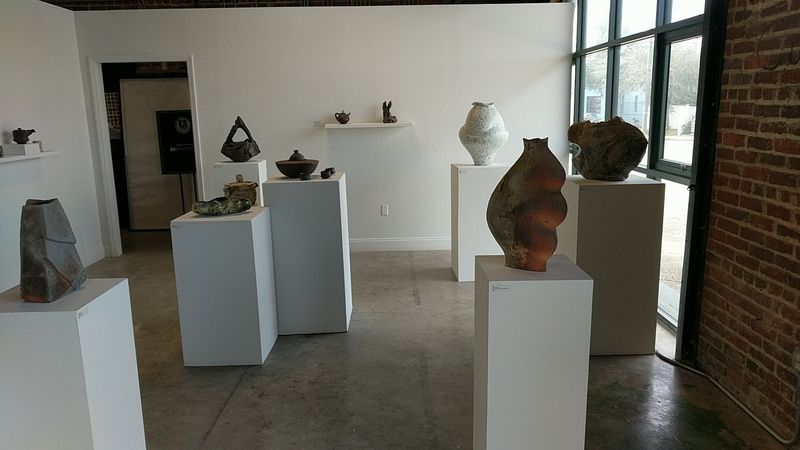
One of the strongest impressions here is how quickly admiration turns into participation.
You may arrive expecting to look at art, but the center keeps nudging you toward the richer experience of touching materials, asking questions, and testing your own creative instincts.
That shift feels important because it replaces passive appreciation with personal investment.
Making something by hand can be surprisingly emotional.
A shaped piece of clay or a glass form guided with help from an instructor becomes proof that attention matters, that your body can learn a rhythm, and that beauty often comes from small repeated adjustments. There is joy in seeing an object emerge, but there is also relief, as if the mind finally quiets because the hands have been given useful work.
You can sense that satisfaction in the faces leaving class or hovering near pickup shelves.
People smile at their imperfect pieces with real affection.
The results are not valuable because they are flawless.
They matter because they carry an afternoon of focus, vulnerability, and the rare pleasure of creating something tangible in a digital world.
Artists, Students, and Curious Strangers
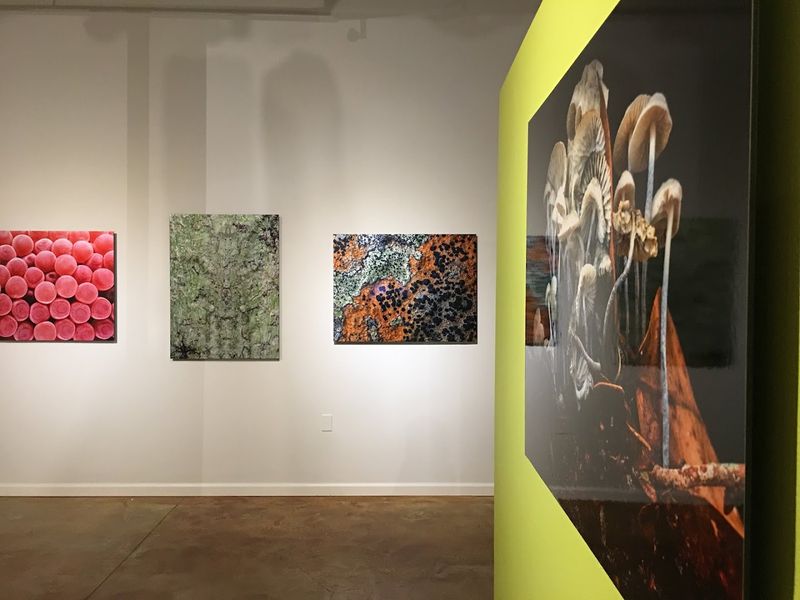
This art center is shaped as much by conversations as by objects.
Artists explain process without talking down to anyone, students compare works in progress with a mix of pride and uncertainty, and visitors ask the kinds of direct questions that reopen wonder.
The result is a creative environment that feels porous, where experience and curiosity meet easily.
That openness matters because it changes the emotional temperature of the place.
Instead of sensing a line between expert and outsider, you notice a community built on shared attention. Someone who has thrown clay for years may stand beside a first timer, both watching a demonstration with the same focused expression, both interested in how material behaves when guided well.
Even brief exchanges carry warmth.
A staff member offering context, an instructor adjusting a grip, a stranger admiring another person’s finished piece, these moments make the center feel human before anything else.
Art becomes less about status and more about practice, trial, and generosity.
You leave with the impression that creativity grows best where people are willing to welcome each other into the process.
Gallery Calm and Workshop Motion
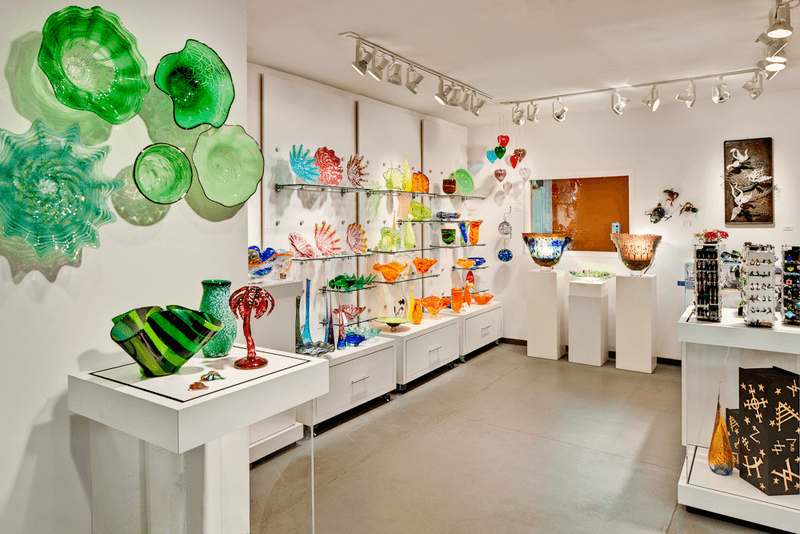
Part of what makes this center memorable is the contrast between its moods.
In the galleries, your steps slow almost automatically, and the silence gives color and texture more room to speak.
Then, not far away, a workshop carries the hum of activity, the sound of tools, conversation, and creative decisions being made on the spot.
That shift between stillness and motion keeps the experience alive.
A painting or ceramic vessel may invite long close looking, while the studios remind you that every finished work began in uncertainty, repetition, and labor.
Moving between these spaces, you feel the full arc of artistic life, from idea to object, from concentration to display, from private effort to shared encounter.
The architecture of attention changes with each room.
In one, you notice surface, line, and shadow. In another, you notice posture, timing, and hands at work.
Together, the galleries and workspaces create a fuller understanding of art as both contemplation and action. The center never lets creativity harden into something distant.
It stays active, physical, and wonderfully within reach.
Light, Color, and the Language of Materials
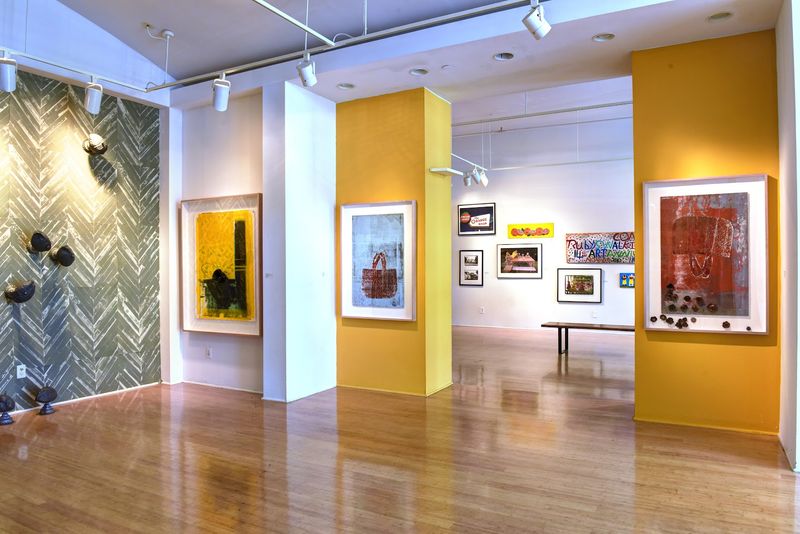
Light does important work here. It moves across polished glass, settles gently on matte ceramics, and turns ordinary surfaces into changing fields of color and texture throughout the day.
In spring especially, the brightness outside seems to enter with visitors, making the center feel awake in a fresh, clear way.
Glass and clay respond to light so differently that walking through the space becomes a study in contrast. One material catches and throws color outward, flashing with movement as you pass.
The other absorbs attention more quietly, asking you to notice weight, grain, fingerprints, edges, and the softness left behind by tools and palms.
Fire has shaped both, yet each tells that story in its own visual language.
These material conversations are part of the center’s emotional pull.
You do not just see objects, you sense the processes still living inside them.
A vessel seems to remember the wheel. A blown form still suggests breath and turning.
The visual pleasure is immediate, but what lasts is the awareness that art can hold heat, touch, and time long after the making ends.
A Creative Pulse in the City
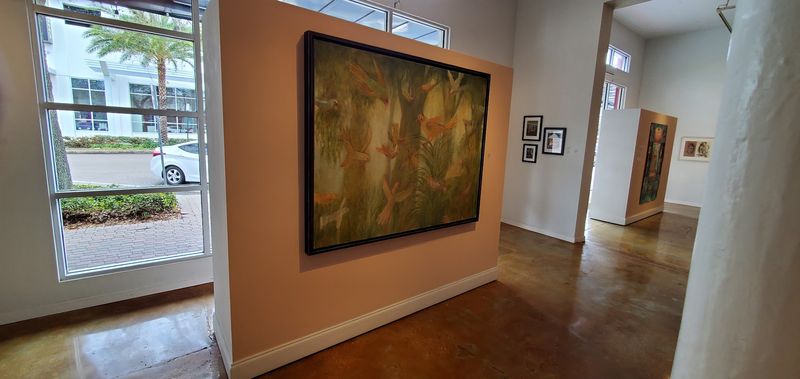
The center also feels inseparable from the creative pulse of St. Petersburg itself.
You sense it in the easy movement of people between gallery spaces, studios, sidewalks, and nearby cultural stops, as if art here naturally extends beyond walls and into the rhythm of the city.
The atmosphere is not rushed, but it is undeniably alive.
That local energy gives the Morean Arts Center a specific character.
It welcomes serious makers, curious visitors, families, and people who simply wandered in wanting to see something different from the usual afternoon.
Because the programming includes exhibitions, classes, and demonstrations, the space keeps renewing itself through activity rather than relying on a single mood or audience.
What stands out most is how naturally beginners and experienced artists seem to coexist.
No one looks out of place.
Skill is visible, but so is invitation, and that combination makes creativity feel social rather than exclusive. The center reflects a city that values experimentation, public engagement, and artistic labor.
You come away sensing not just one institution, but a broader culture that gives art room to keep evolving.
What Stays With You Afterward
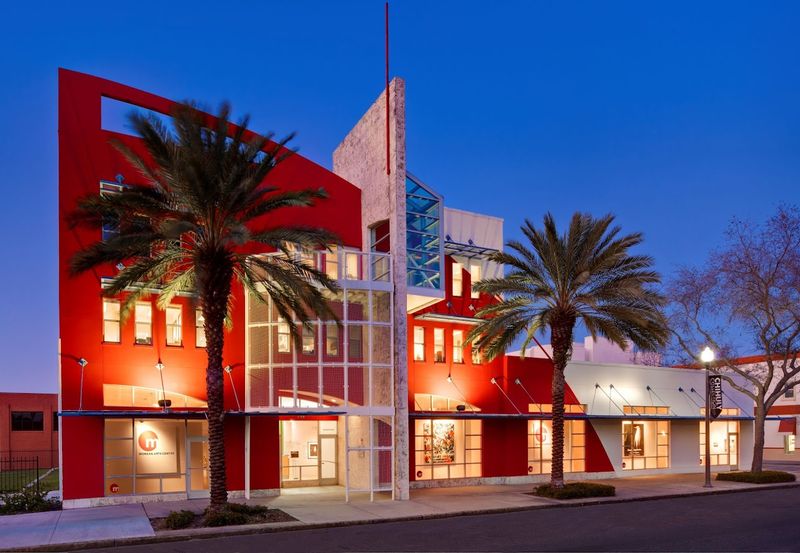
Some places impress you in the moment and then fade by dinner.
This one stays active in the mind because the experience is made of sensations that do not disappear quickly: the flare of the furnace, the cool drag of clay, the brightness of color under natural light, the visible concentration on another person’s face.
Long after leaving, those details keep returning.
The lingering feeling is not only admiration.
It is a renewed awareness of what focused making looks like, and how restorative it can be to spend time around people who care deeply about process.
The center offers flashes of excitement, but it also offers something quieter, a reminder that attention itself is meaningful, and that art can be part of ordinary life rather than separate from it.
You leave carrying more than images of finished pieces.
You carry a changed sense of materials, effort, and possibility.
The Morean Arts Center gives you the rare experience of seeing creativity from the inside out.
That is why the inspiration lasts. It follows you onto the sidewalk, into conversation later, and sometimes back into your own hands.