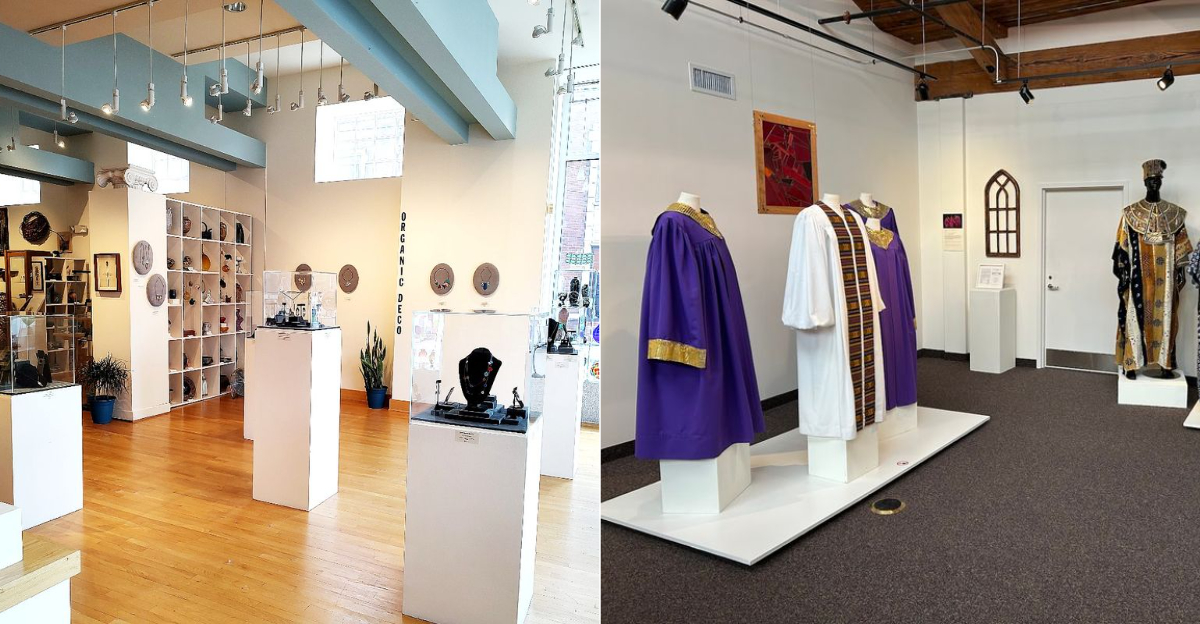
The most memorable trips are not always about what you see.
Sometimes they are about what your hands learn to do, what your clothes carry home in clay dust or wool fibers, and how a room full of tools can sharpen the way you notice a landscape.
Across the rural regions of North Carolina, historic craft schools offer exactly that, a return to Appalachian traditions and shared making.
They transform travel into something tangible, inviting you to bring home memories shaped by your own hands.
Sitting at an old wooden table alongside local masters, you don’t just learn a craft, you become part of a living history that has been preserved in these hills for generations.
John C. Campbell Community School – Brasstown
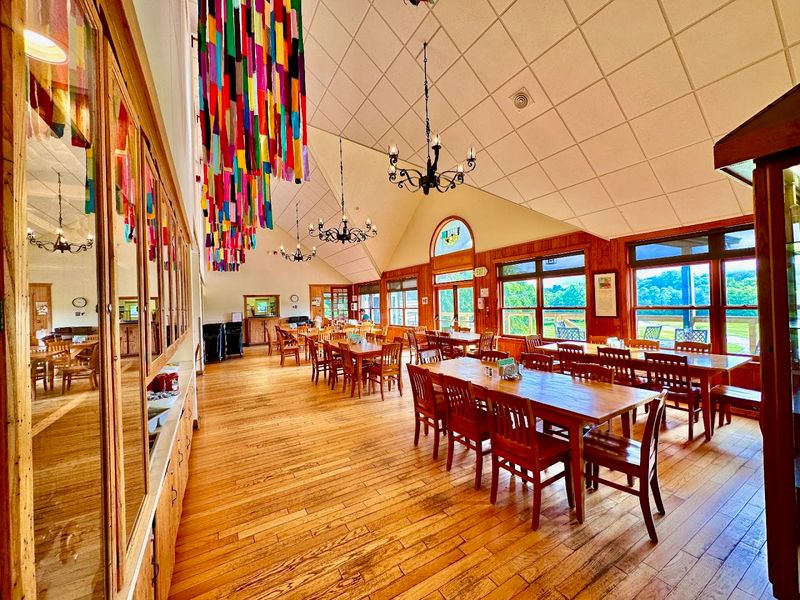
You arrive to the sound of hammering, fiddles, and screen doors closing somewhere down a wooded lane. The campus feels lived in rather than staged, with workshops spread among sturdy buildings where clay, fiber, wood, and metal each claim their own lively corners.
Instead of standing back and watching, you are quickly drawn into doing, whether that means pulling a mug on the wheel, shaping hot iron, or learning how yarn changes under your fingers.
What stays with you is the social energy.
Meals, evening dances, and casual conversations between classes make the whole experience feel like an ongoing exchange of skill, memory, and encouragement.
Traditional making is not presented as a museum piece here.
It feels useful, shared, and fully awake, connected to the mountains through materials, songs, and the plain pleasure of using your hands with purpose for a few days.
Penland Craft School – Penland
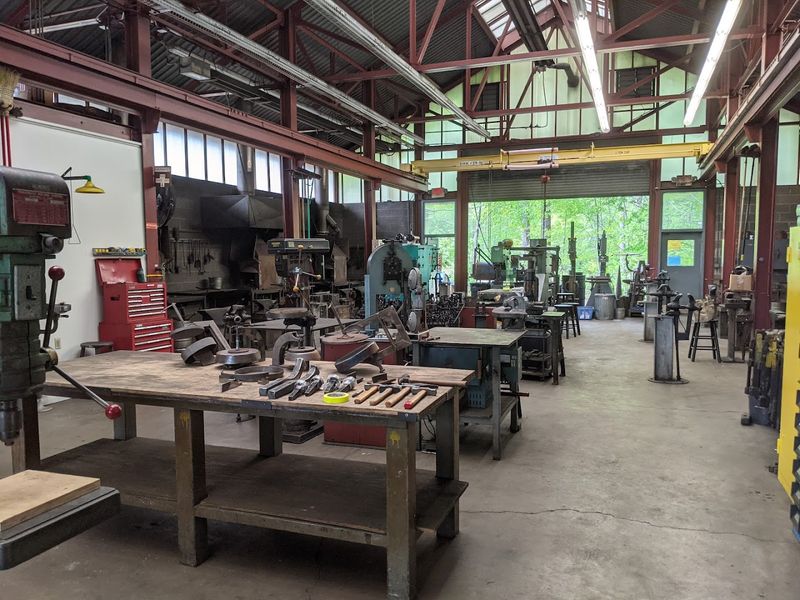
The hillside setting gives every walk between studios a sense of expectation.
One room glows with furnaces and molten color, another smells faintly of sawdust, while somewhere nearby a kiln cools behind a heavy door.
The scale of the workshops is exciting, yet the real pull is how seriously making is treated, as if every material deserves its own language and every student can learn to speak it.
One of the most exciting parts is how the day can move from intensely technical to wildly experimental.
You might spend hours refining a join, testing a glaze, or understanding how heat transforms glass, then end up in a conversation that cracks open a new way of seeing your own work.
The community pushes you without becoming stiff.
Skill matters here, but so does curiosity.
By the time you leave, your hands feel smarter, and the mountain air seems tied to everything you tried, ruined, fixed, and finally made.
Folk Art Center – Asheville
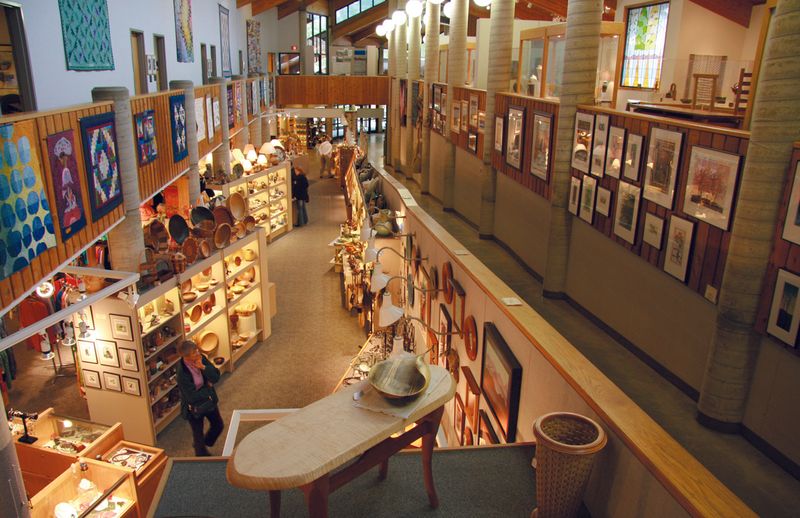
Wood carvings, woven baskets, hand-thrown pottery, quilts, and jewelry fill the galleries with the feeling of an ongoing conversation between generations of makers.
Instead of presenting Appalachian craft as frozen history, the displays reveal how traditional skills continue adapting through contemporary artists who still work directly with local materials and inherited techniques.
Live demonstrations often become the most memorable part of a visit.
Watching a broom take shape, seeing wood curl away beneath carving tools, or hearing the steady rhythm of a loom transforms handmade work from decoration into labor you can physically imagine.
The pace feels slower than many modern galleries, but that slowness becomes part of the pleasure.
You begin noticing details that mass-produced objects rarely carry: uneven surfaces, fingerprints, tiny tool marks, and subtle variations that quietly reveal the human hand behind every piece.
EnergyXchange – Burnsville

Few creative spaces feel as unusual as this one.
Studios operate using methane generated from a nearby landfill, creating an environment where sustainability and craftsmanship become inseparable from one another.
Glassblowing flames roar in one building while ceramic kilns radiate heat nearby, all powered through an unexpectedly innovative system hidden beneath the mountain landscape.
The contrast between industrial process and handmade work gives the workshops a distinctive atmosphere.
Molten glass gathers glowing color at the end of long pipes, heavy doors swing open to reveal freshly fired ceramics, and artists move carefully through spaces filled with heat and movement.
Yet the surrounding mountains prevent the place from feeling harsh or mechanical.
Instead, the entire experience quietly demonstrates how creativity, environmental thinking, and traditional skill can coexist without losing warmth or humanity.
Haywood Community College Professional Crafts Program – Clyde
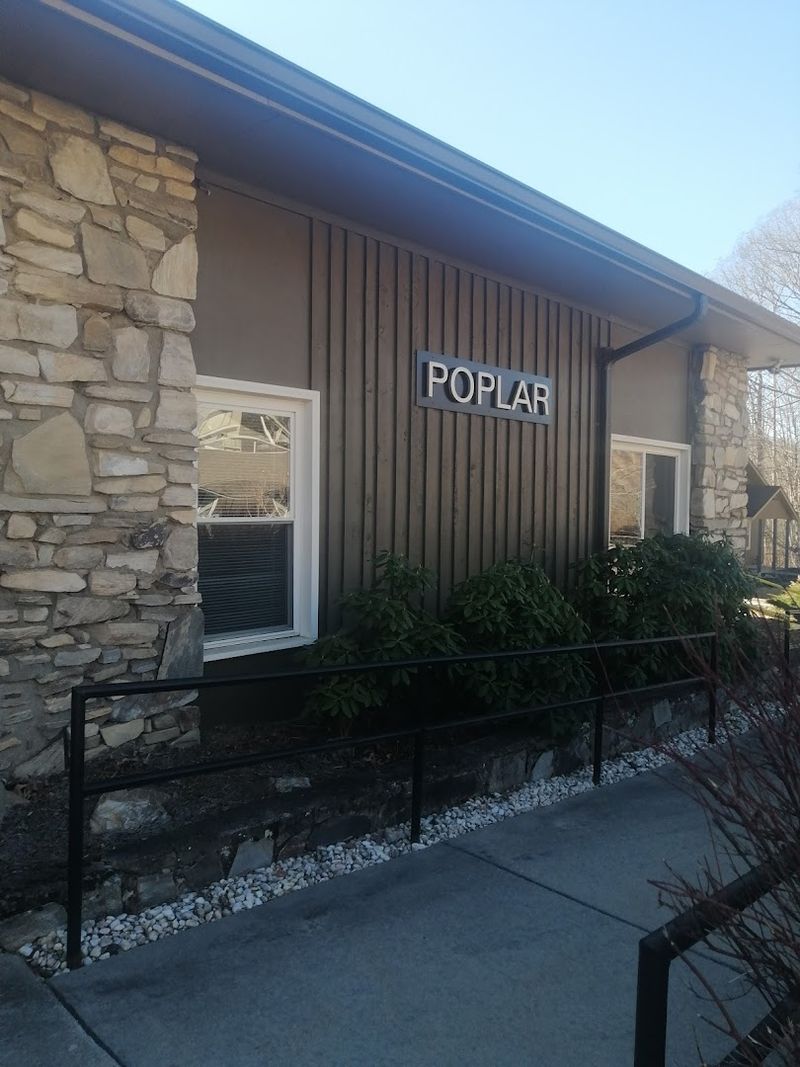
This campus has a more disciplined pulse than many casual workshop spaces, and that is exactly its strength.
Benches, machines, measuring tools, and material racks suggest long hours of real training, where design meets utility and beautiful objects are expected to hold up under scrutiny.
Whether the work turns toward wood processing, fiber, jewelry, or clay, the mood encourages precision without draining the pleasure out of making.
Part of the appeal comes from how clearly craft is treated as both a livelihood and an art.
You can sense the value placed on construction, repeatability, finish, and the kind of technical judgment that only comes from doing something over and over until your standards rise.
Even so, the place never feels cold.
There is deep satisfaction in watching rough stock become a refined surface or in learning why one join succeeds while another fails.
It gives handmade work weight, showing how skill grows through exacting practice and practical ambition.
STARworks – Star
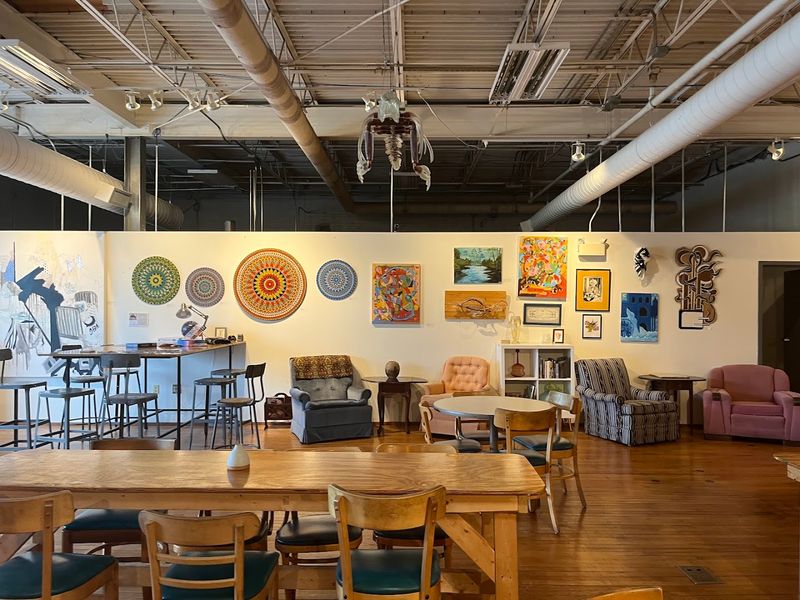
Large industrial spaces give this destination a completely different personality from smaller mountain studios.
Brick walls, cavernous rooms, and massive equipment create the feeling of stepping inside a working creative factory where ceramics, glass, and metal are produced on a serious scale.
The atmosphere feels energetic and ambitious rather than delicate.
Watching artists navigate these oversized spaces changes your understanding of handmade work.
Huge kilns radiate heat, glass furnaces glow continuously, and shelves overflow with materials waiting to become something functional or sculptural.
There is beauty in the scale itself.
Instead of focusing only on quiet concentration, the environment highlights coordination, production, and technical mastery.
The result feels bold and memorable, especially for travelers who enjoy seeing craftsmanship operate with industrial intensity while still preserving the individuality of handmade objects.
North Carolina Pottery Center – Seagrove
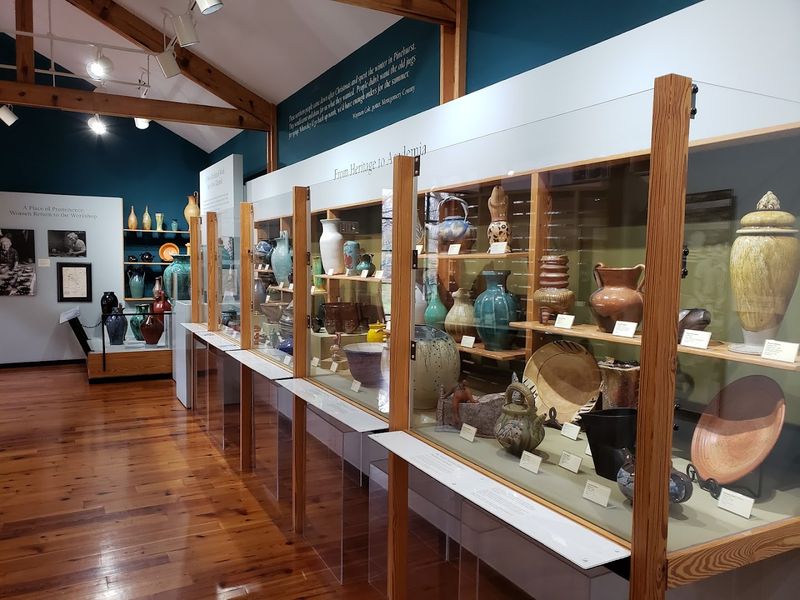
For anyone interested in handmade traditions, this stop adds historical depth to all the throwing and glazing you may have tried elsewhere.
The rooms connect regional clay work to families, utilitarian forms, kiln practices, and the long continuity of making vessels meant for daily life.
Instead of treating pottery as a fashionable hobby, the experience grounds it in labor, economy, and inherited knowledge shaped by local earth.
What makes the visit rewarding is the way history sharpens your eye.
A storage jar, jug, or crock begins to reveal choices about proportion, firing, surface, and use that once looked simple from a distance.
Demonstrations and interpretation help bridge the gap between past and present, so the craft feels ongoing rather than sealed behind glass.
When a potter makes the same form across years, tiny differences start to matter enormously.
That realization gives even a beginner’s bowl more meaning, linking practice to lineage and place.
Center for Craft – Asheville
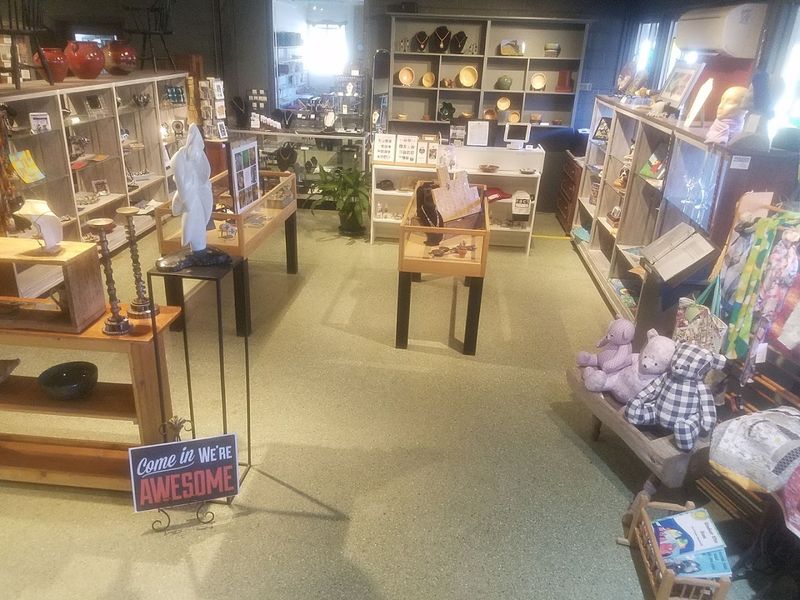
Rather than functioning primarily as a traditional workshop campus, this space approaches craft through ideas, exhibitions, research, and cultural storytelling.
Galleries explore how materials shape identity, labor, design, and regional history, allowing visitors to think about handmade work in ways that extend far beyond technique alone.
Exhibitions often place contemporary objects beside discussions of tradition, industry, sustainability, and social change, making the experience feel intellectually stimulating without losing visual appeal.
One room may focus on fiber traditions, while another explores experimental furniture or modern ceramics shaped by older Appalachian influences.
Instead of simply asking people to admire finished work, the exhibitions encourage deeper curiosity about where objects come from and who makes them.
They also explore why handmade processes continue carrying emotional weight in an increasingly digital world.
Piedmont Craftsmen – Winston-Salem
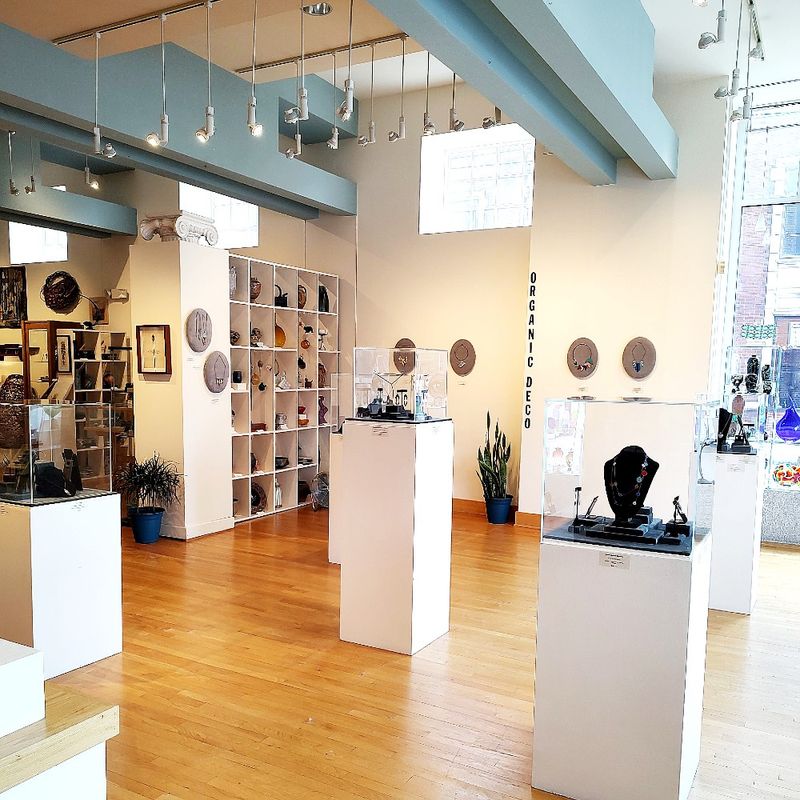
This organization brings together artists working across wood, clay, textiles, jewelry, glass, and mixed media, creating a broader picture of contemporary Southern craftsmanship.
Exhibitions often highlight technical excellence while still leaving room for experimentation and personality, allowing visitors to compare very different approaches to handmade work within the same setting.
What stands out most is the sense of continuity between tradition and innovation.
Some pieces carry obvious folk influences, while others push materials into far more modern forms, yet both feel connected through a shared respect for skill and process.
Demonstrations, workshops, and artist interactions keep the experience grounded rather than overly formal. Instead of leaving with the impression that craft belongs only to history, visitors come away understanding how actively these traditions continue evolving through living makers today.
Arrowmont School of Arts and Crafts – Gatlinburg
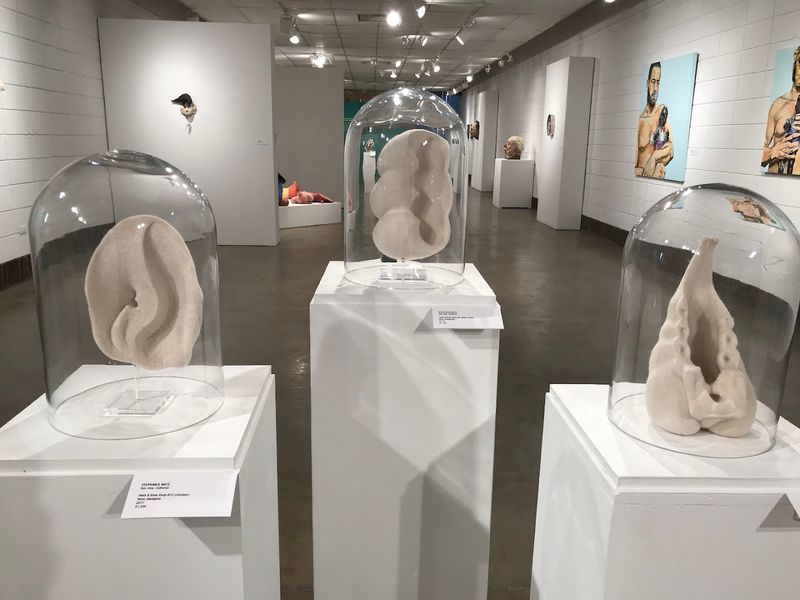
This campus feels charged from the moment you step between buildings.
People carry planks, sketchbooks, aprons, and glowing ideas from one studio to the next, and the range of media keeps your curiosity fully switched on.
Wood, metal, clay, print, and glass all seem to converse with one another, creating a place where you can sense both concentration and momentum in the same breath.
A day here can be physically demanding, especially when heat, heavy materials, or repetitive shaping enter the picture, but that effort becomes part of the reward.
In the glass studio, movement matters; in the woodshop, accuracy matters; elsewhere, surface and form begin arguing with each other until a piece finally resolves.
The surrounding hills heighten the feeling that making is tied to terrain, weather, and resourcefulness. Rather than soothing you into passivity, the experience wakes you up.
You leave feeling worked, challenged, and newly alert to how much intelligence lives in the body.
Sawtooth School of Visual Arts – Winston-Salem
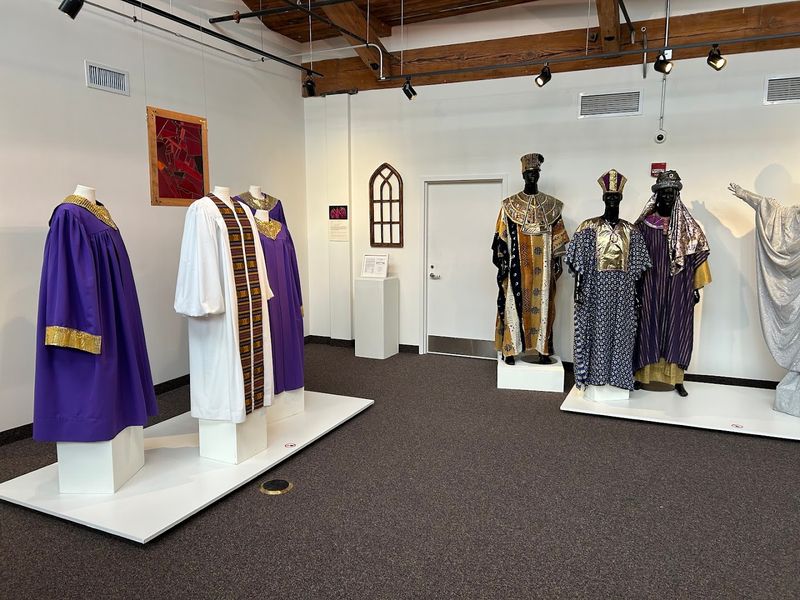
This final stop brings a more urban edge to the journey, and the change is energizing.
The building hums with varied activity, from printmaking and drawing to ceramics and glass blowing, so the experience feels broad without losing the intimacy of hands-on learning.
You sense people fitting art into real daily life here, coming after work, trying something new, or sharpening a practice they want to take further.
The glass areas are especially memorable.
Heat, timing, breath, and teamwork all become visible at once, turning the process into a choreography of tools, molten material, and quick decision making.
Elsewhere, quieter classrooms offer their own satisfactions, proving that not every breakthrough needs drama.
What ties the whole place together is accessibility paired with rigor.
You are invited in, but you are also expected to engage fully with the material in front of you.
That balance makes the experience stick.
It reminds you that creative confidence often grows not from inspiration alone, but from showing up and making again.