
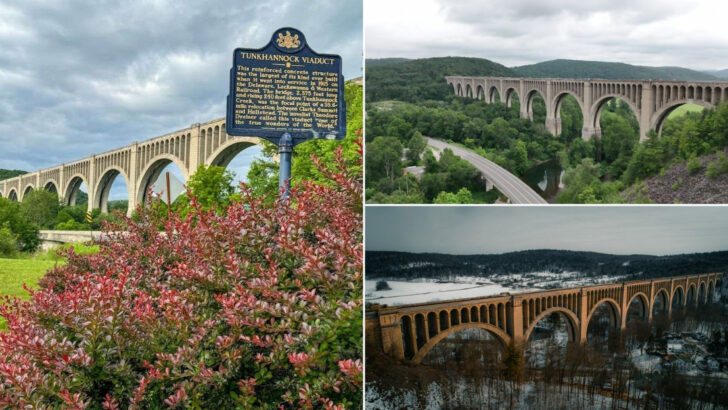
The rolling hills of northeastern Pennsylvania have a quiet beauty in spring, when fresh green fields spread across the countryside and winding roads lead through small towns that seem untouched by hurry. Around May, the landscape feels especially open and peaceful, making unexpected discoveries along the drive even more memorable.
Near Nicholson, the massive Tunkhannock Viaduct rises above the valley with a kind of calm grandeur that catches visitors off guard. Its towering concrete arches stretch across the creek and hills below, blending engineering ambition with the softness of the surrounding landscape.
Standing beneath it, you hear birds, distant water, and sometimes the rumble of a passing train echoing overhead.
It is the sort of place that makes you slow the car, step outside, and simply look for a while. Here is why this remarkable Pennsylvania landmark continues to leave such a lasting impression.
A Construction Wonder That Defied the Odds
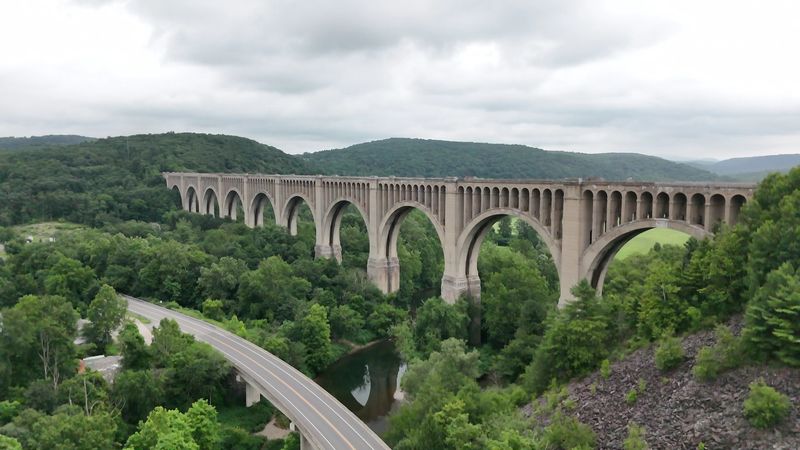
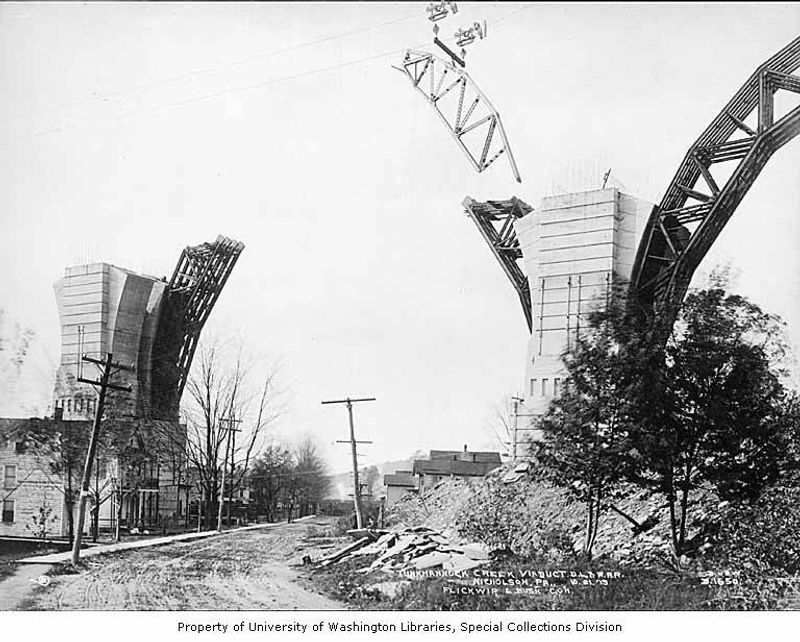
Imagine building the world’s largest concrete structure without modern machinery or computers. Between 1912 and 1915, roughly 500 workers tackled this incredible challenge around the clock.
The Delaware, Lackawanna & Western Railroad poured 167,000 cubic yards of concrete and installed 1,140 tons of reinforcing steel to create what became a global landmark.
The project cost $1.4 million back then, which equals over $34 million in today’s money. Workers mixed concrete on-site and hauled materials up towering wooden scaffolding.
Many laborers were unskilled immigrants seeking better opportunities, yet they accomplished something truly extraordinary.
Historical records show at least four workers died during construction, though some sources suggest the number may have been higher. The Tunkhannock Viaduct in Nicholson represents both human achievement and sacrifice.
Despite the dangers and difficulty, the bridge was completed on schedule and has served trains continuously for more than 108 years without major repairs or structural problems.
Twelve Graceful Arches That Touch the Sky
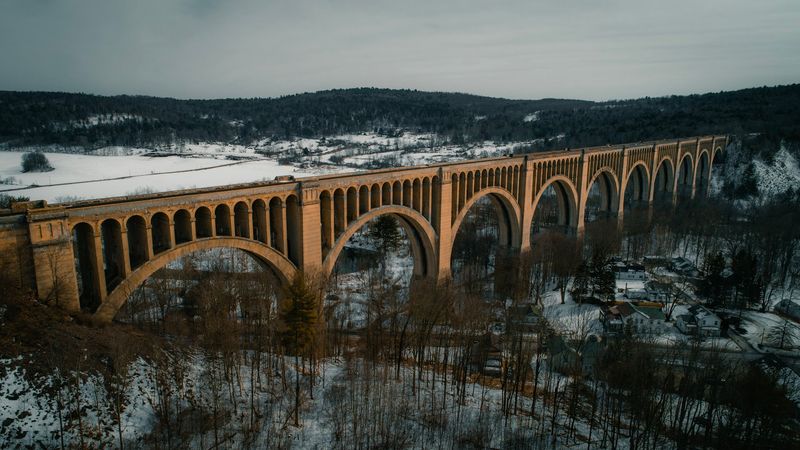
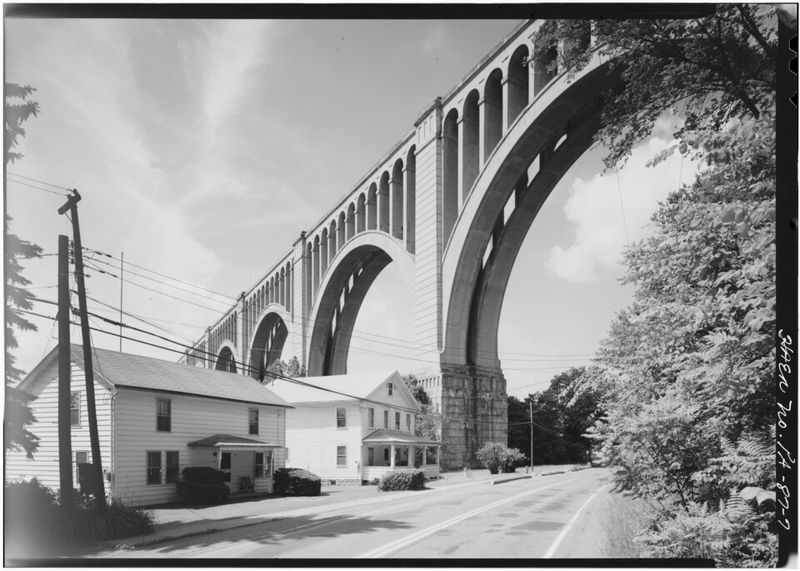
Standing beneath these towering curves feels like visiting a concrete cathedral. Twelve perfectly formed arches span Tunkhannock Creek, each one a masterpiece of early 20th-century design.
The symmetry and proportion create a visual rhythm that photographers and engineers have admired for generations.
Each arch rises dramatically from the valley floor, supporting the railroad tracks that run 300 feet overhead. The graceful curves aren’t just beautiful—they’re incredibly strong, distributing the weight of heavy freight trains that rumble across daily.
Reinforced concrete was still relatively new technology when builders chose this arch design.
The Tunkhannock Viaduct’s arches inspired similar bridges across America, though few matched its scale or elegance. Visitors often compare the structure to ancient Roman aqueducts, and the comparison isn’t far off.
Like those ancient builders, the engineers who designed this bridge understood that arches combine beauty with unbeatable strength, creating something that would last centuries rather than decades.
When Famous Minds Came to Marvel
Three of America’s most brilliant minds made special trips to witness this engineering breakthrough. Thomas Edison, Henry Ford, and Theodore Roosevelt each visited during or shortly after construction, drawn by reports of something truly remarkable rising in rural Pennsylvania.
Edison’s praise—calling it one of the true wonders of the world—still resonates today.
Author Theodore Dreiser wrote about the viaduct’s colossal and impressive arches in 1916, capturing the awe that visitors felt. These weren’t casual tourists but influential leaders who understood groundbreaking innovation when they saw it.
Their visits brought national attention to what might have remained a local curiosity.
The Tunkhannock Viaduct represented more than just a bridge—it symbolized American ingenuity and ambition. When completed, it held the title of the world’s largest concrete structure and remained America’s largest concrete bridge for over 50 years.
Today it still ranks as the world’s largest reinforced concrete railroad bridge, a record that has stood for more than a century.
Photography Paradise on Route 92
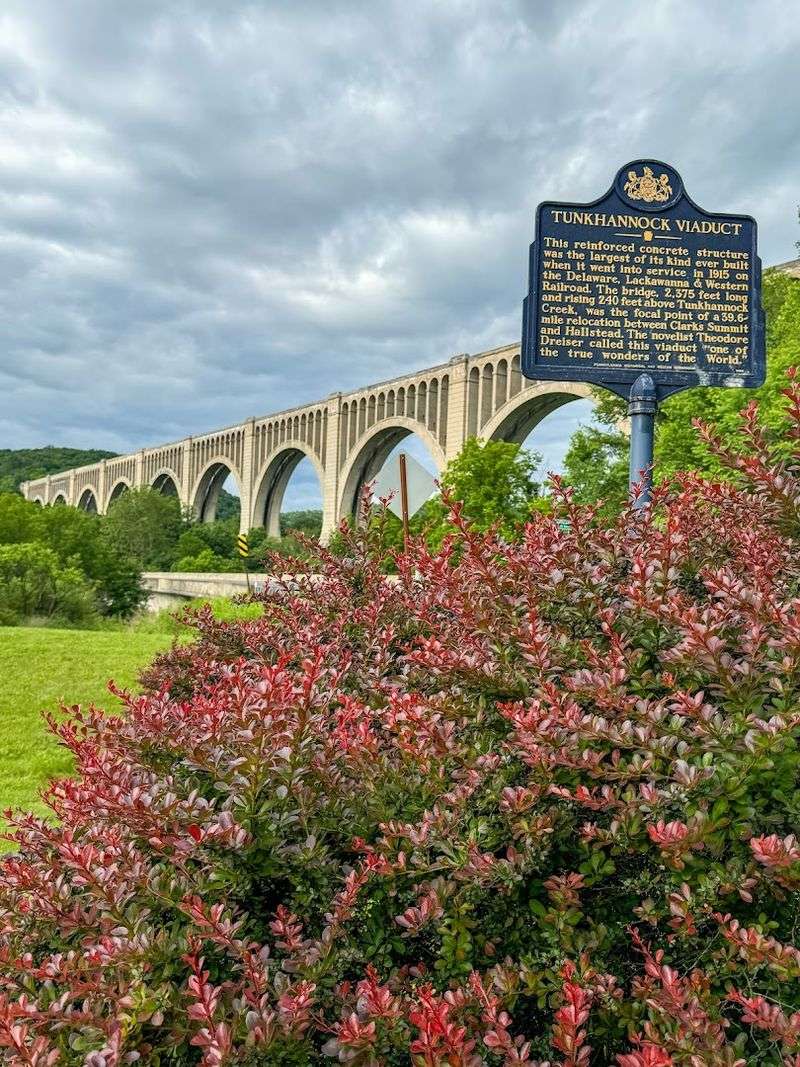
Finding the perfect angle to capture this massive structure is part of the adventure. A dedicated pull-off area on Route 92 offers the safest and most convenient vantage point, complete with historical information panels.
Photographers love this spot because it provides an unobstructed view of the entire length without traffic concerns.
Some adventurous visitors head behind the viaduct to the middle of the road for dramatic shots, though safety should always come first. The nearby gas station also provides a great backdrop for photos and a place to park comfortably.
Fall foliage season transforms the scene into something magical, with brilliant colors framing the concrete arches.
The Tunkhannock Viaduct photographs well from multiple distances and angles. Morning light creates stunning shadows between the arches, while sunset bathes the concrete in golden hues.
Whether you’re using a smartphone or professional camera, you’ll capture images that friends won’t believe are real until you explain this hidden Pennsylvania treasure actually exists.
Trains Still Rumble Across Every Day
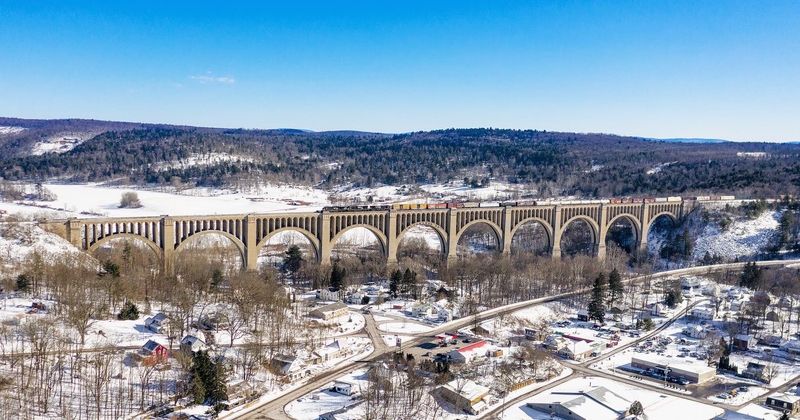
Unlike many historic bridges that became museums, this one never stopped working. Active freight trains cross the Tunkhannock Viaduct daily, proving the original builders created something meant to last.
The rumble of locomotives overhead reminds visitors that this isn’t just a monument—it’s vital transportation infrastructure.
Railroad enthusiasts can time visits to catch trains crossing, which adds drama and scale to the experience. The bridge handles modern freight loads that weigh far more than anything the 1915 designers could have imagined.
Yet the reinforced concrete arches support these heavy trains without complaint.
Models of the viaduct are displayed at Steamtown Train Museum in Scranton, inspiring visitors to make the short drive north to see the real thing. The bridge remains part of the Norfolk Southern Railway system, connecting communities and businesses across northeastern Pennsylvania.
Watching a train cross 300 feet above the creek makes you appreciate both the original vision and the ongoing maintenance that keeps this engineering marvel in service.
Dimensions That Boggle the Mind
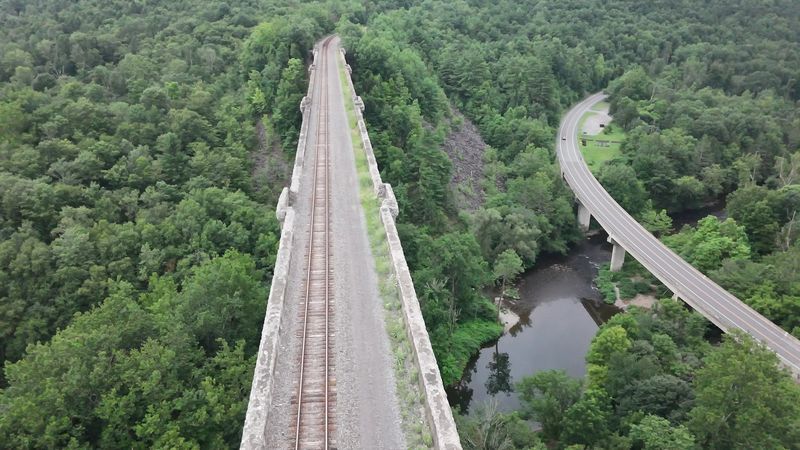
Numbers don’t always tell the story, but in this case they’re staggering. Stretching 2,375 feet from end to end, the bridge spans nearly half a mile.
Its width of 34 feet accommodates railroad tracks with room for maintenance. But the most impressive measurement is height—300 feet from the valley floor to the tracks above.
That’s roughly equivalent to a 30-story building standing in the countryside. From certain angles below, looking up at the towering arches creates genuine vertigo.
The scale becomes even more amazing when you remember this was built entirely with 1912-era technology.
Comparing the Tunkhannock Viaduct to similar structures reveals its exceptional size. It dwarfs the Paulinskill Viaduct and Delaware River Viaduct, both impressive bridges in their own right.
Visitors often underestimate the size until they’re standing beneath it, where the massive concrete arches seem to touch the clouds. The structure can be seen from miles away, rising above the Pennsylvania landscape like a monument to human determination and engineering skill.
A Historic Civil Engineering Landmark
Professional engineers make pilgrimages to see this bridge, and for good reason. Designated as a Historic Civil Engineering Landmark, the structure represents a pivotal moment in construction history.
When it opened in 1915, it proved that reinforced concrete could handle massive loads and extreme heights safely.
Civil engineering students study the design principles that made this bridge possible. The combination of arch geometry, reinforced concrete techniques, and construction methods pushed the boundaries of what seemed achievable.
Many vacation plans for engineering families include stops at bridges, dams, and similar marvels.
The Tunkhannock Viaduct influenced bridge design across America and beyond. Engineers learned from its success, applying similar principles to later projects.
Even without an engineering degree, visitors can appreciate the elegant solution to a difficult problem—crossing a deep valley while supporting heavy trains. The bridge proves that functional structures can also be beautiful, and that good engineering stands the test of time, serving communities for generations beyond its builders’ lives.
Twenty-Four Seven Access and Convenience
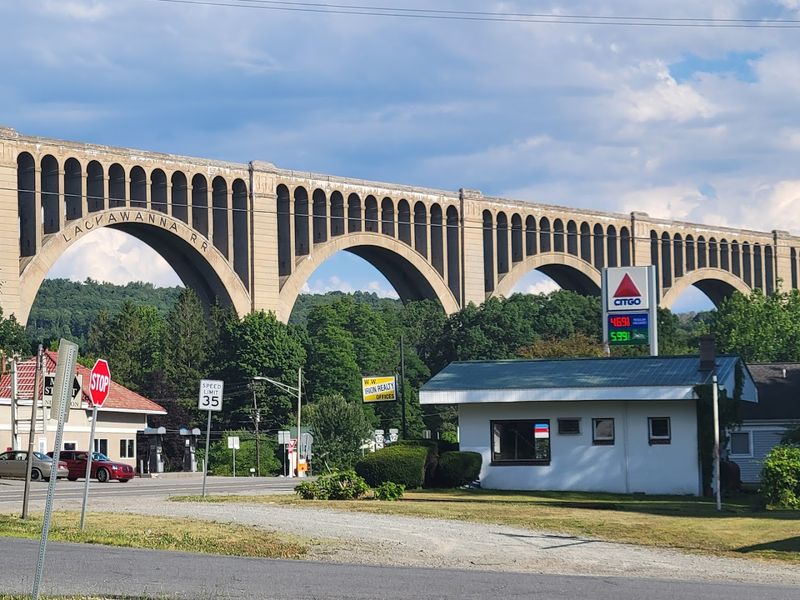
Planning a visit couldn’t be easier because the area around the bridge stays open around the clock. Whether you’re an early morning photographer chasing sunrise light or a night owl seeking a peaceful evening view, access never closes.
This flexibility makes it perfect for road trippers with unpredictable schedules.
The small town of Nicholson offers a full-service gas station near the bridge where visitors can grab snacks, use restrooms, and ask locals for recommendations. Parking options include the official Route 92 pull-off, the gas station lot, and roadside spots.
Just be cautious of traffic if you stop along the road itself.
The Tunkhannock Viaduct requires no admission fees or reservations. Families can stop for ten minutes or spend an hour exploring different viewpoints.
The heritage organization website provides additional historical information for those wanting deeper understanding. Contact information is available if you’re planning a group visit or have specific questions, making this accessible marvel welcoming to everyone from casual tourists to serious historians and photography enthusiasts.
Exploring the Endless Mountains Region
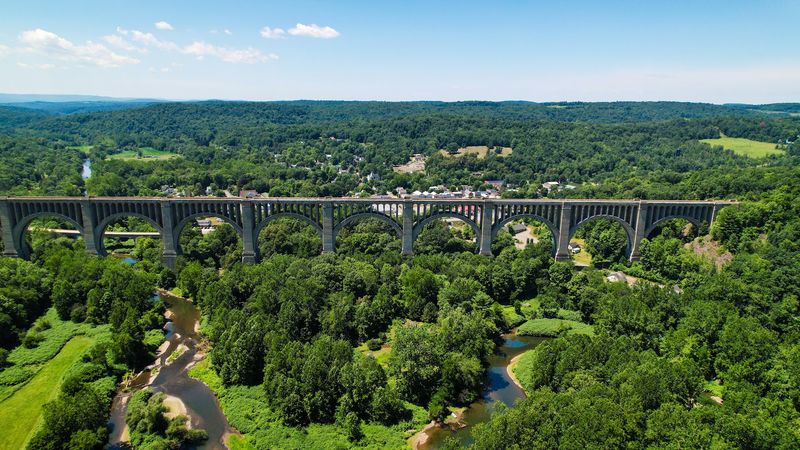
The bridge sits in one of Pennsylvania’s most beautiful but underappreciated regions. The Endless Mountains area earned its name from the gentle, rolling peaks that stretch toward every horizon.
Visitors discover charming small towns, covered bridges, and natural beauty that few tourists crowd.
Nearby Hop Bottom features another impressive viaduct worth seeing on the same trip. The countryside offers excellent drives, especially during fall when foliage transforms hillsides into tapestries of red, orange, and gold.
Lakehouse owners in the region count the Tunkhannock Viaduct among their favorite discoveries to share with guests.
Local communities take pride in their railroad heritage and agricultural traditions. The area provides a refreshing break from urban pace without feeling too remote.
After viewing the bridge, visitors can explore backroads, visit farm stands, or simply enjoy the peaceful rural atmosphere. Many people make anniversary trips or annual pilgrimages to the Tunkhannock Viaduct, finding new appreciation with each visit as they notice details missed before or capture different seasonal beauty.
Concrete That Conquered Time
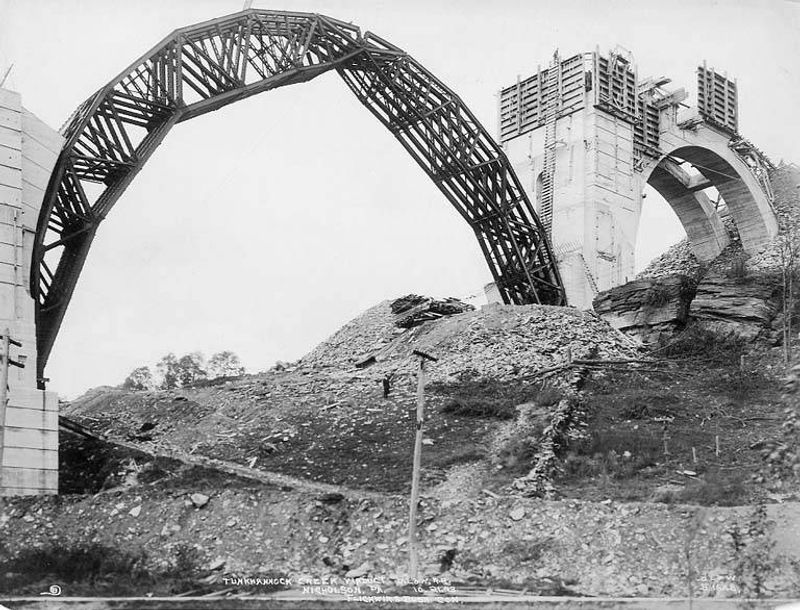
Most concrete structures from 1915 have crumbled or required extensive repairs. Yet this bridge stands strong after 108 years of continuous use, weathering harsh Pennsylvania winters and supporting countless heavy trains.
The secret lies in the quality of materials, expert construction, and revolutionary reinforcement techniques.
The 167,000 cubic yards of concrete represent more than just bulk—they showcase precision mixing and pouring that created exceptionally durable material. The 1,140 tons of reinforcing steel work with the concrete, providing tensile strength that pure concrete lacks.
This combination proved so effective that major structural repairs have never been necessary.
The Tunkhannock Viaduct held records that seemed unbreakable. World’s largest concrete structure.
America’s largest concrete bridge for over half a century. Still the world’s largest reinforced concrete railroad bridge.
These achievements reflect both ambition and execution. Looking at the weathered but solid arches today, you see why some creations outlast their makers, becoming timeless landmarks that teach future generations about determination, innovation, and building things meant to endure.