Blink and you might miss it from the rush of downtown Jacksonville, but the moment you step into Treaty Oak Park, the city suddenly starts whispering instead of shouting.
Standing beneath this enormous live oak feels a little like entering nature’s cathedral, except the ceiling twists, swoops, and poses for photos better than most people do.
The tree is ancient, the backstory is clever, and the setting somehow manages to be both a hidden gem and a local legend at the same time.
If you love odd history, giant trees, and places that make you stop scrolling and actually look up, Treaty Oak Park is the kind of landmark that earns every bit of its hype.
It is time to find out why locals treasure it, why visitors linger, and why this old oak still rules its corner of Jacksonville with leafy charisma and a trunk full of stories.
A Giant With Serious Main Character Energy
Here is the kind of tree that makes you laugh softly because it seems almost too dramatic to be real.
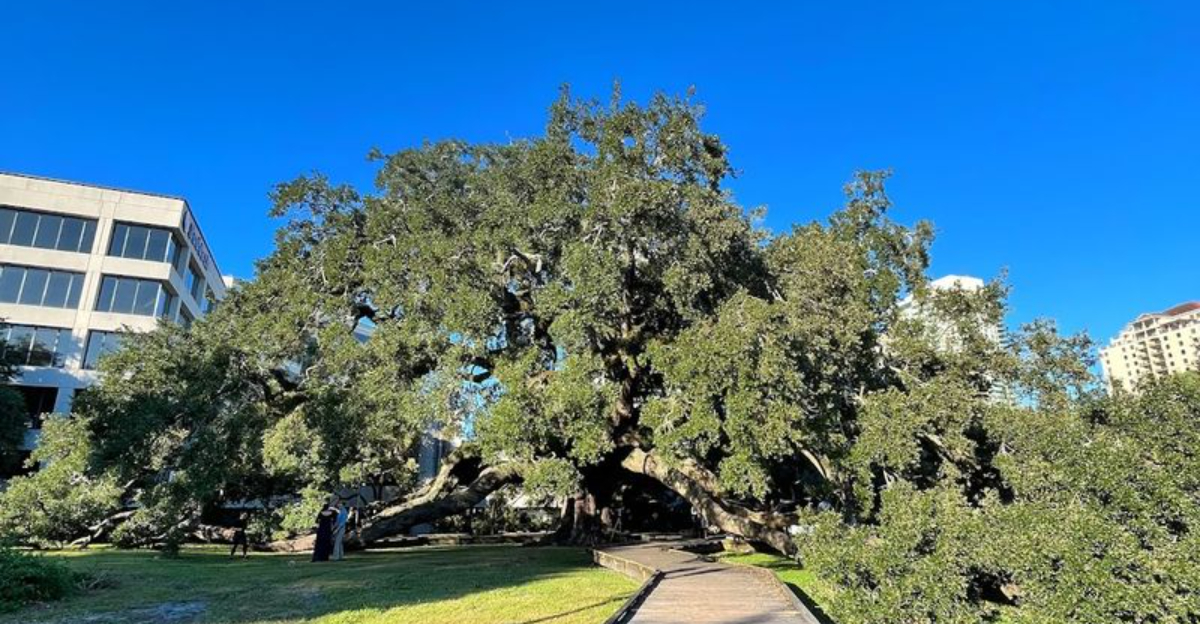
The Treaty Oak rises about 70 feet tall, but height is only part of the show.
Its trunk measures more than 25 feet around, and its crown stretches roughly 145 to 147 feet wide, creating a huge pool of shade that feels more like a leafy neighborhood than a single plant.
What really grabs you are the branches. They dip low, twist outward, and curl back up in ways that make the tree look part octopus, part sculpture, and part wise old storyteller.
You do not just look at this oak. You circle it, tilt your head at it, and probably take far too many photos of it from every angle.
The best part is how alive the space feels beneath it. Even on a warm Florida day, the canopy cools the ground and changes the mood instantly.
You can understand why so many visitors describe the park as peaceful, spiritual, or simply amazing.
This tree has presence, and not the quiet kind. It feels like a celebrity that never needed a publicist.
One glance explains why Jacksonville fell for it, because the Treaty Oak does not just fill space in the park. It owns the scene with bark, brawn, and centuries of leafy swagger.
Older Than The City Around It
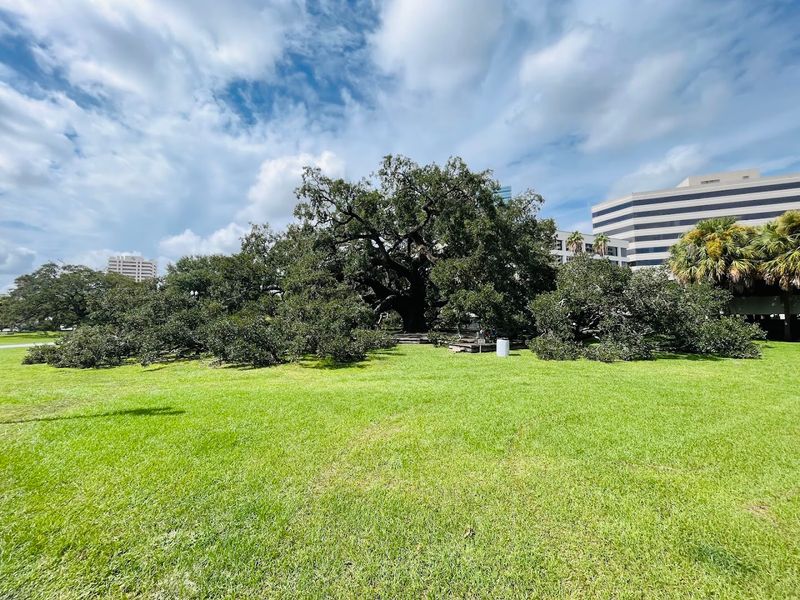
Long before Jacksonville had traffic, towers, and coffee runs, this tree was already putting down roots and minding its own leafy business.
The Treaty Oak is estimated to be around 250 years old, which means it likely predates the city’s founding in the 1820s. That alone gives it bragging rights few landmarks can touch.
Think about the timeline for a second. While neighborhoods appeared, roads shifted, and generations came and went, this live oak kept growing through storms, heat, and endless change.
It may be the oldest living thing in Jacksonville, which turns an ordinary park visit into something that feels strangely intimate. You are not just seeing a big tree, but meeting a survivor.
Age matters here because it adds weight to every crooked limb and every patch of bark.
The tree has stood through centuries of local history, not as a museum object behind glass, but as a living, breathing part of the city. That is rare
Most places ask you to imagine the past. This one lets you stand under it.
That deep time is part of the oak’s charm. It feels grounded, patient, and delightfully unbothered by modern fuss.
Jacksonville grew up around it, yet the tree still steals the spotlight. Honestly, when you are two and a half centuries old, you have earned a little extra attention.
The Legend Was Fake, But The Save Was Real
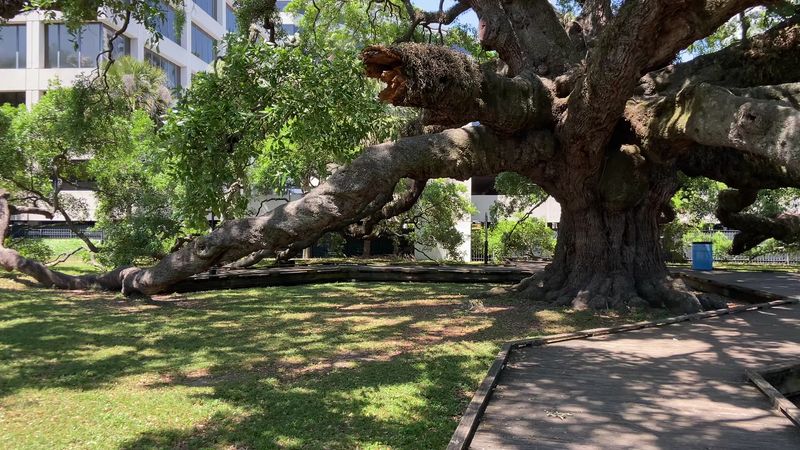
Now for the twist worthy of a Florida history sitcom: the famous treaty under the tree never actually happened.
In the 1930s, journalist Pat Moran of the Florida Times-Union helped spread a made-up story that Native Americans and settlers had signed a peace treaty beneath the branches.
It was not factual, but it was effective, and sometimes preservation arrives wearing a very theatrical costume.
At the time, the old oak was threatened by development. Moran, working with the Jacksonville Garden Club, understood that people protect what captures their imagination.
So the tree, once called the Great Oak or Giant Oak, suddenly had a romantic legend and a memorable new name. Treaty Oak stuck, and the public paid attention.
There is something wonderfully mischievous about that. The story was invented, yet it helped save something genuinely historic and irreplaceable.
Instead of getting paved over, the tree became a civic treasure with a headline-friendly identity.
You might call it a tall tale, but in this case the tale helped preserve something truly tall.
That backstory gives the oak extra personality. It is not just old and beautiful, but also the star of one of Jacksonville’s cleverest save-the-landmark moves.
The treaty was fictional, sure, but the love it inspired turned out to be very real, and the tree is still here because of it.
The Park Address Every Curious Visitor Should Know
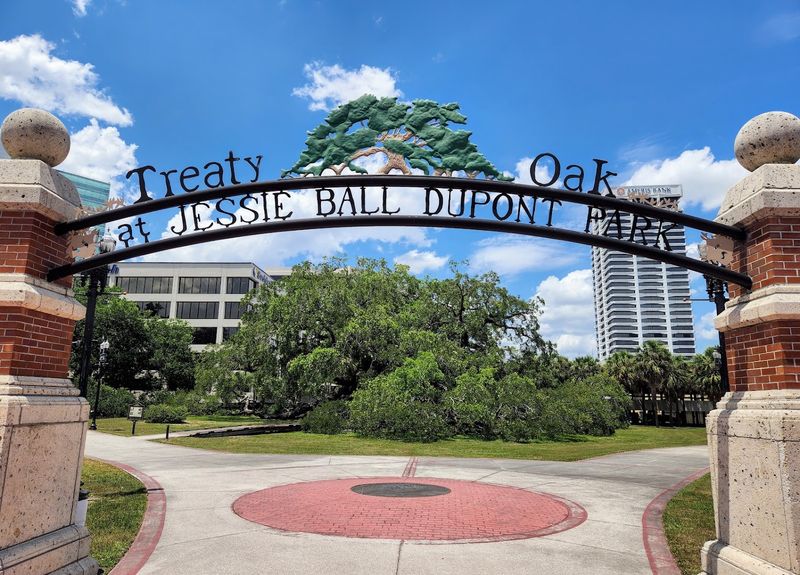
If you are plotting a visit, this oak is not hiding deep in the wilderness wearing camouflage.
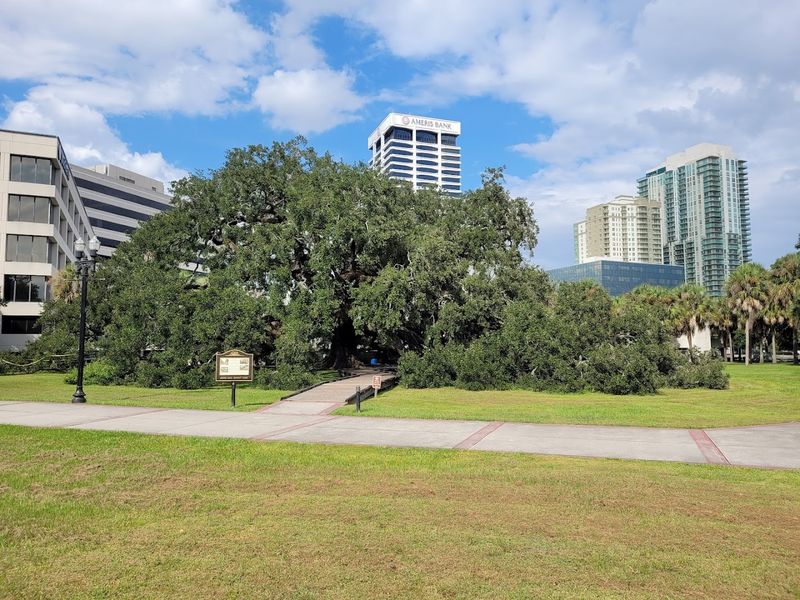
Treaty Oak sits in Treaty Oak Park, also known as Jessie Ball duPont Park, at 1207 Prudential Dr, Jacksonville, FL 32207, in the Southbank area of Downtown Jacksonville.
It is tucked off Prudential Drive between Main Street and Flagler Street, which means you get a surprisingly serene green space right in the middle of the city.
The park covers about seven acres, and the tree is absolutely the headliner.
According to current place information, the park is generally open daily from 7 AM to 7 PM and holds a strong 4.7 star rating from more than a thousand reviewers.
Visitors praise the beauty, the shade, and the photo opportunities, though many also mention a familiar urban adventure: parking can be tricky.
That tip is worth keeping in your back pocket. Street spaces may be limited, and some visitors note that weekends can be easier.
Still, once you arrive, the location feels refreshingly accessible.
Instead of committing to a full wilderness expedition, you are stepping into a pocket of old Florida charm with downtown just beyond the branches.
That contrast is part of the magic. One minute it is city streets, the next it is filtered sunlight, huge limbs, and instant calm.
Few landmarks deliver such a quick mood change, and this one does it with style.
Saved By People Who Refused To Let It Fall
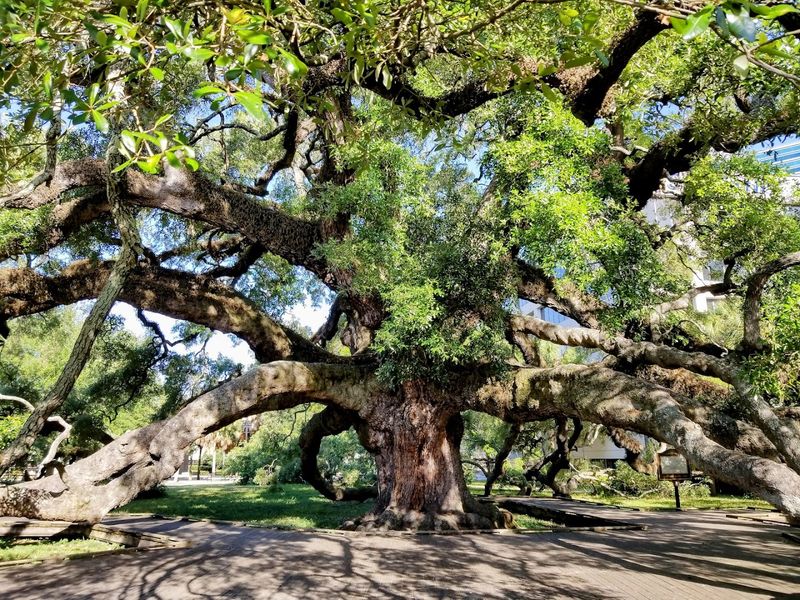
Nothing says beloved landmark quite like a long list of humans who refused to let it be lost.
In the 1930s, philanthropist Jessie Ball duPont, who was connected to the Jacksonville Garden Club, and the Alfred I. duPont Testamentary Trust purchased the property around the oak to protect it from development.
Later, in 1964, the land was donated to the City of Jacksonville with the condition that it remain a public park centered on preserving the tree.
That was only the beginning of the rescue mission. Major preservation work in 1995 and again in 2006 helped support the oak’s enormous limbs and protect it from lightning, two very real concerns for a giant tree in Florida.
The Jessie Ball duPont Fund also awarded $150,000 in 2006 for park renovations and tree maintenance, proving that good intentions work even better with practical funding.
These efforts matter because old trees are not immortal just because they look invincible.
The Treaty Oak needs careful monitoring, structural support, and long-term stewardship to keep thriving in an urban environment.
Arborists believe that with continued care, it could live another 250 to 400 years, which is a wild and wonderful thought.
In other words, this landmark survived because people showed up for it. That kind of civic devotion is part of the story you feel on site.
The oak is ancient, yes, but its future has been built by generations who chose preservation over convenience.
A Park With A Surprisingly Wild Past
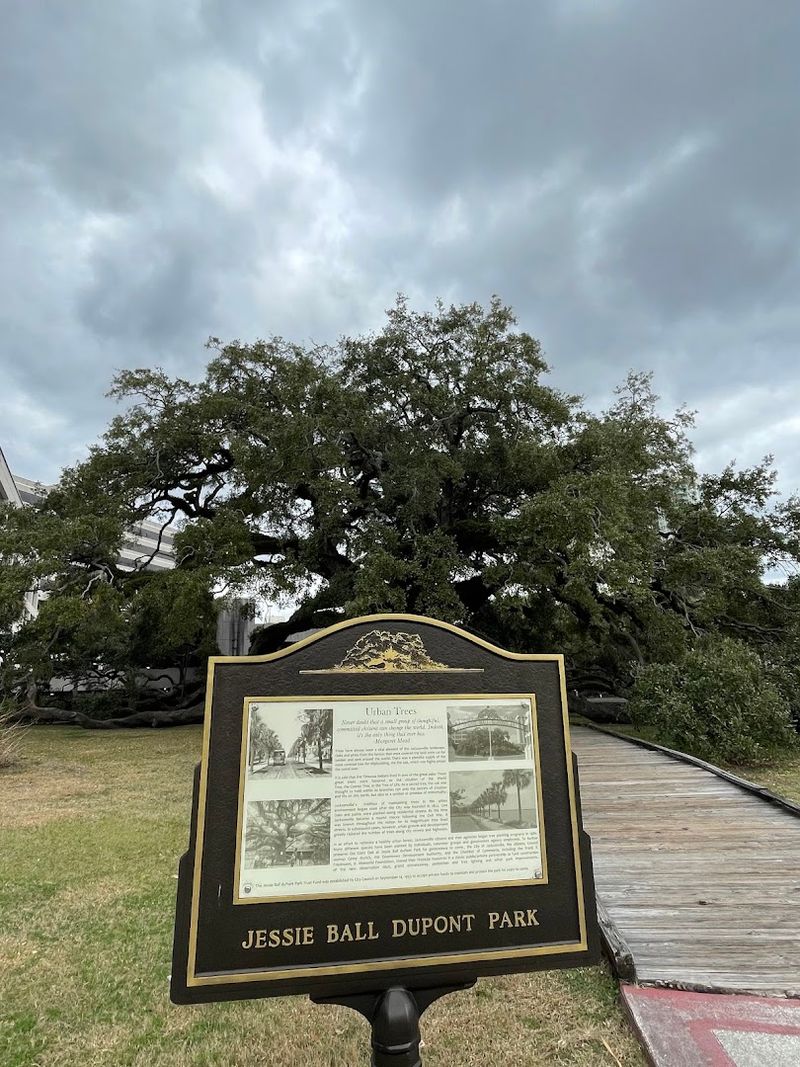
Believe it or not, this peaceful park once had a much rowdier neighborly vibe.
The land around the Treaty Oak was once part of the old Dixieland Amusement Park in the early 1900s, a detail that adds a delightful plot twist to the setting.
At one point, the giant oak was even decorated with electric lights, because apparently being majestic in daylight was not enough.
The site also witnessed memorable moments from Jacksonville’s lively past.
Historical accounts connect the area with events like Babe Ruth playing baseball and John Philip Sousa performing nearby.
That means the tree was not only watching local history unfold. It was doing so while amusement park energy buzzed around it, which sounds like one very eventful chapter for a senior citizen of the plant world.
Today, it is hard to imagine carnival excitement around such a calm and reflective place, yet that contrast makes the oak even more fascinating.
The tree has adapted to changing eras without losing its identity. It has been a natural wonder, a novelty, a threatened landmark, and now a protected icon.
Few attractions manage that kind of reinvention while standing in exactly the same spot.
This layered history gives the park real texture. It is not just old.
It is seasoned.
When you visit, you are not walking into a blank green space. You are stepping into a place where Jacksonville’s entertainment, ambition, and affection all once gathered beneath the same sprawling branches.
Why Locals Keep Coming Back
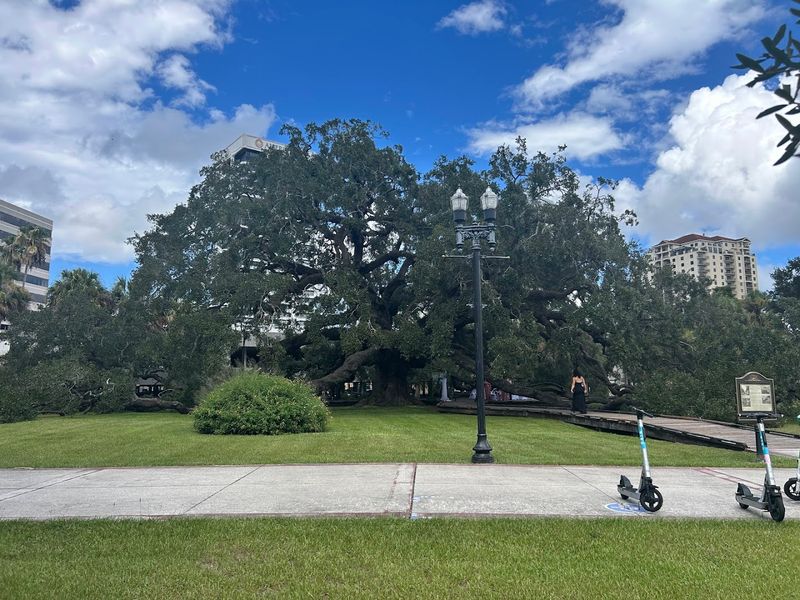
Step under the canopy and the mood changes faster than a Florida forecast.
Treaty Oak Park is not just a place people admire from a distance. It is a place they actually use, love, and return to for lunch breaks, picnics, photos, weddings, and quiet moments that feel miles away from downtown noise.
That everyday affection is a big reason the park has become one of Jacksonville’s most beloved landmarks.
Recent visitor reviews tell the story beautifully. People call it a hidden gem, a peaceful place to read, a great picnic stop, and one of the best photo spots in the city.
Others describe the tree as spiritual, adventurous, and bigger than expected, which feels like the most polite way possible to say, wow, that oak is showing off again.
The setting invites lingering. The massive limbs create shade and shape, and the open area around the tree allows you to walk, sit, and take in its unusual form from all sides.
It is the kind of place where conversations slow down, lunch somehow tastes better, and your camera roll fills up before you realize it. Even commuters can sneak in a little calm here.
That mix of accessibility and wonder is hard to fake.
The Treaty Oak is not beloved because someone told people to care. It is beloved because once visitors stand beneath it, they usually get it.
The Oak That Keeps Giving Jacksonville Shade And Seedlings
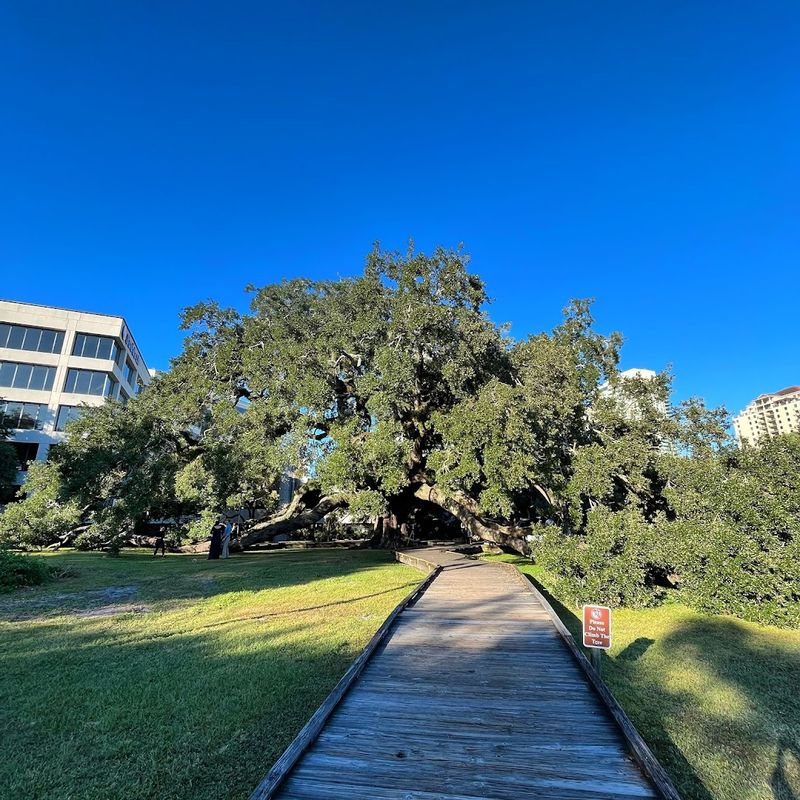
For a tree that mostly stands still, the Treaty Oak has an impressively active afterlife plan.
Beyond its beauty and history, it plays an important role in education, conservation, and Jacksonville’s urban environment.
Its huge canopy cools the surrounding area, improves air quality, and offers a vivid example of how mature trees make cities more livable.
Local educators use the site to talk about Native American history, urban planning, climate resilience, and the importance of preserving meaningful public spaces.
That makes the park more than a scenic stop. It becomes an outdoor classroom where one living landmark can spark conversations across science, history, and community identity.
Not bad for a tree that never had to make a slideshow.
The legacy also continues through its acorns. In 1986, JEA started a program to grow seedlings from Treaty Oak acorns, and those young trees have been distributed through Greenscape for planting throughout Jacksonville.
Hundreds of these baby Treaty Oaks now extend the old oak’s story into neighborhoods across the city, giving residents a living connection to the original giant.
That future-minded effort is a perfect final note. The Treaty Oak is treasured not only because it has survived so much, but because people have chosen to carry its legacy forward.
It shades the present while quietly seeding the future. For one ancient tree in downtown Jacksonville, that is a pretty magnificent encore.