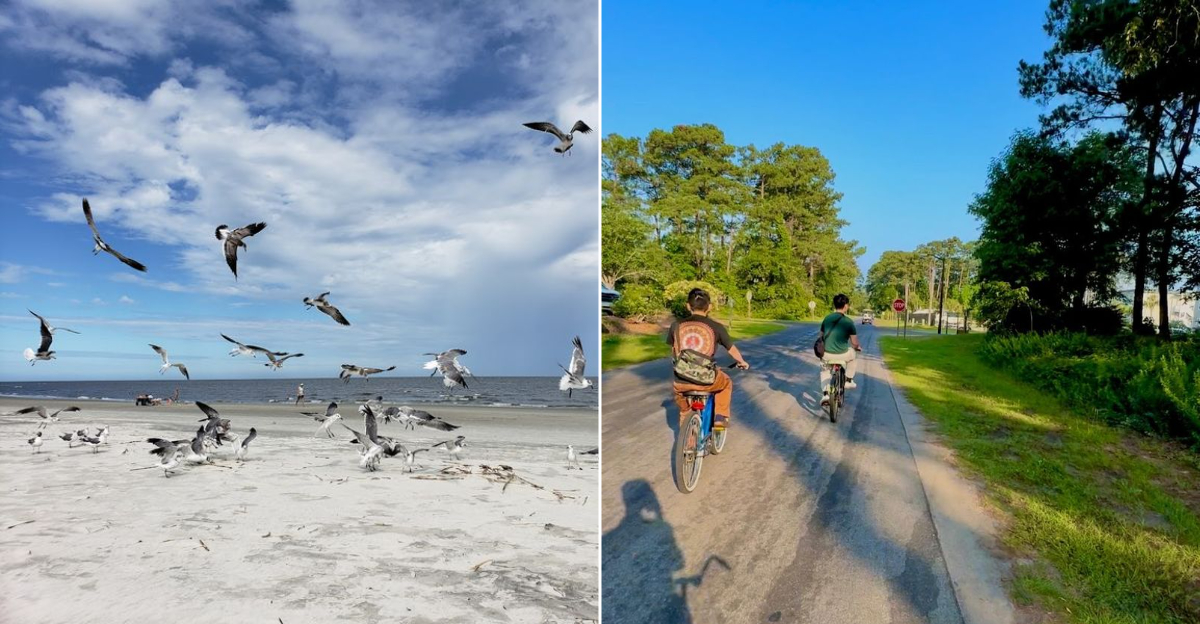
Georgia’s coastline has a quiet rhythm that reveals itself slowly. In spring, when marsh grasses brighten and warm air drifts in from the Atlantic, even the most familiar stretches of shore feel softer, calmer, and more open.
Tides roll through winding estuaries, herons move through the shallows, and small ferry crossings lead toward places that feel a world away from everyday pace.
Beyond the well-known beach towns, there are islands without bridges, wide empty sands, and coastal forests where the sound of wind often replaces the sound of people. It’s a landscape shaped by water and time, not crowds.
For those drawn to quiet discovery and unhurried travel, this part of Georgia offers something rare: space to simply be.
Here are 12 Georgia coastal gems most travelers haven’t discovered yet.
Cumberland Island National Seashore
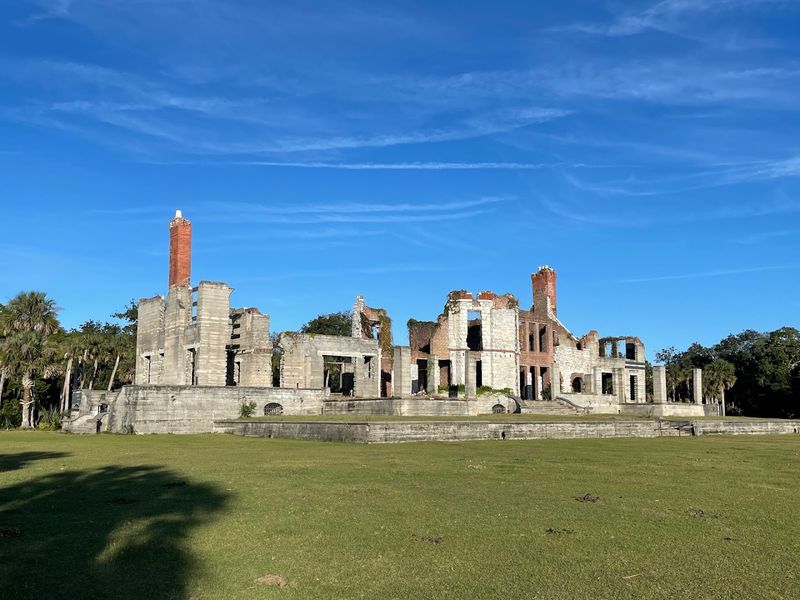
Salt hangs in the air a little differently when a place still feels ruled by tides, wind, and wild animals instead of traffic and boardwalks. That is the mood waiting on Cumberland Island National Seashore, reached from St. Marys by ferry and protected by strict daily visitor limits.
The journey over already feels like a filter, leaving the mainland behind before the island even comes into view.
Once you arrive, the scale of the landscape becomes the real surprise. There are roughly 17 miles of undeveloped beach, broad dunes, maritime forest trails, and the famous Dungeness ruins tied to the Carnegie family.
Wild horses often appear near the road or in open clearings, but they are best admired from a respectful distance.
I think Cumberland works best for travelers who want to slow down completely. You can bike, hike, camp, beachcomb, and watch shorebirds without the constant hum of commercial activity.
Even the most photographed spots feel expansive because the island spreads visitors out so naturally.
Plan carefully, because ferry reservations matter and services are limited once you land. Bring water, sun protection, and realistic expectations about heat, bugs, and walking distances.
If you want Georgia’s coast at its most legendary and least polished, this is the island that delivers it.
Ossabaw Island Heritage Preserve
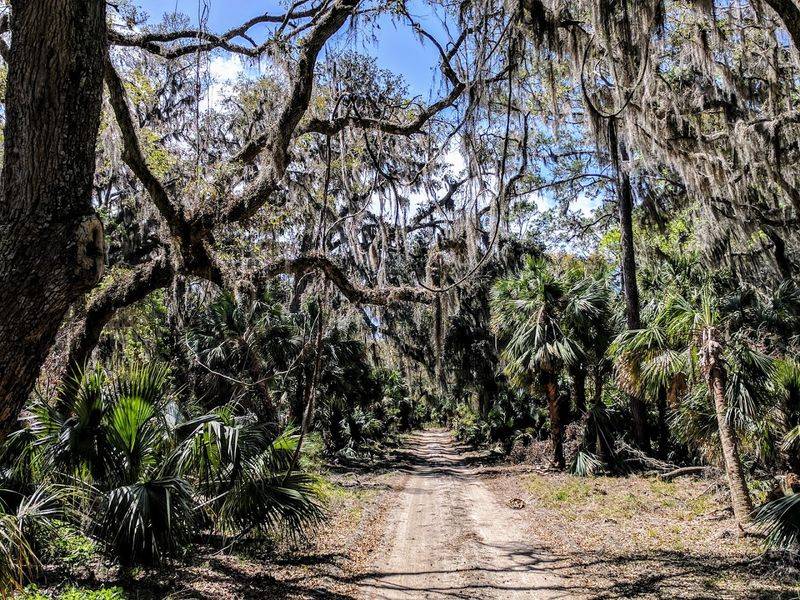
Some places stay memorable because they never try to be easy. Ossabaw Island Heritage Preserve sits south of Savannah and remains largely inaccessible except through approved educational tours and special programs.
That restriction preserves not only the island’s wild beaches and forests, but also the feeling that you are entering somewhere that still has boundaries.
The island covers a vast stretch of conservation land with maritime forest, tidal creeks, marsh, and open shoreline. Visitors often talk about the richness of the ecosystem, but the human history matters too, from Native American presence to plantation-era traces and later preservation efforts.
It feels like a living classroom disguised as a remote coastal escape.
I find Ossabaw especially appealing for travelers who enjoy context along with scenery. You are not simply walking a beach – you are stepping through layers of natural and cultural history that have been intentionally protected.
That gives the island a seriousness that many beach destinations completely lack.
Because access is controlled, this is not a place for casual drop-ins or spontaneous afternoon detours. You need to watch schedules, understand the tour format, and arrive ready to engage with a protected environment.
If that sounds appealing rather than restrictive, Ossabaw may become one of your most meaningful Georgia coast experiences.
Little Tybee Island
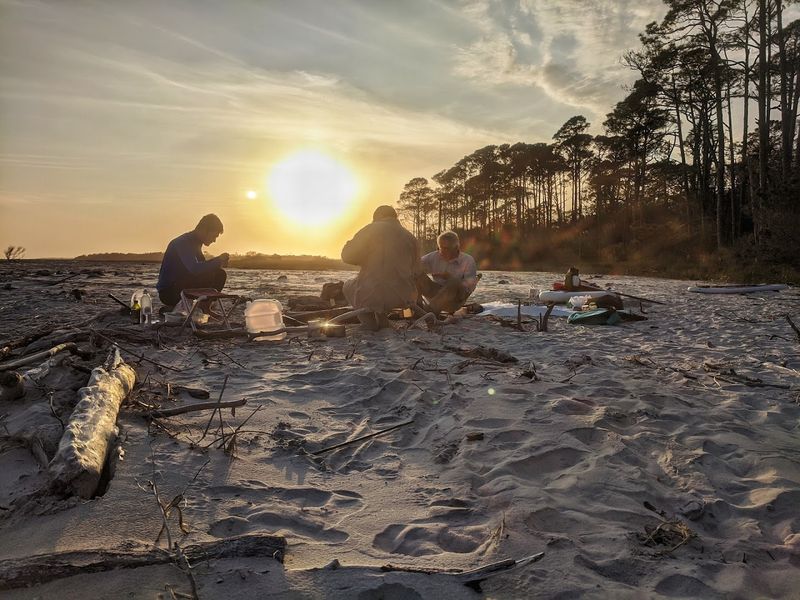
Adventure starts before your feet hit the sand when a beach requires paddling or boating just to reach it. Little Tybee Island, near Savannah, is an uninhabited barrier island where tidal creeks, marsh channels, and open shoreline create a setting that feels both playful and rugged.
It is one of those places that instantly rewards anyone craving the coast without the crowds.
Despite the name, the island covers thousands of acres of protected habitat. You will find backwater paddling routes, broad beaches, salt marsh, dunes, and primitive camping opportunities for travelers who want to stay overnight.
The lack of roads and development keeps the scenery remarkably clean and photogenic.
What makes Little Tybee special is how flexible the experience can be. Some people come for a half-day kayak trip and a picnic, while others treat it like a minimalist wilderness escape with fishing, birdwatching, and stargazing.
Either way, you feel the distance from modern noise almost immediately.
Tides and weather matter here, so planning your route is not optional. Bring more water than you think you need, protect your gear, and leave no trace on the island.
If your ideal Georgia beach includes effort, freedom, and a little salt-sprayed unpredictability, Little Tybee Island is an excellent choice.
St. Catherines Island
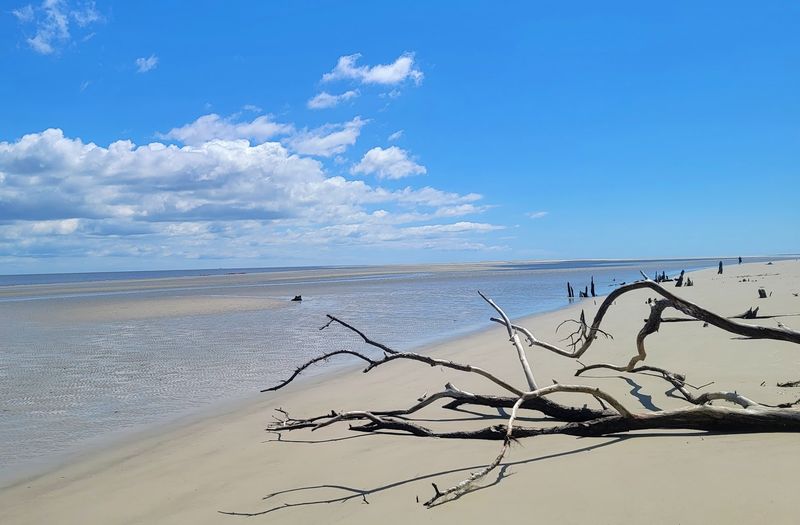
Mystery gives some coastal places their appeal, especially when access is limited enough to keep curiosity alive. St. Catherines Island, off Liberty County, is largely private and devoted to research, conservation, and historic preservation, which means most travelers know very little about it.
That lack of casual tourism is exactly what makes it so intriguing.
The island is known for pristine beaches, rich archaeological significance, and fragile ecosystems that have remained relatively undisturbed. Human history runs deep here, including Indigenous heritage, Spanish mission connections, and later plantation-era stories.
Even from afar, it feels less like a beach destination and more like a protected archive shaped by sea wind and time.
I would not call this an easy stop, but it belongs in any conversation about Georgia’s hidden coast. Its value comes from what has been preserved rather than developed, and that includes wildlife habitat as much as historical evidence.
Few places communicate the long timeline of the coast so quietly and so powerfully.
Because public access is highly restricted, visiting may not be possible for most people in a conventional way. Still, knowing this island exists changes how you see the region, revealing how much of Georgia’s shoreline remains protected behind the scenes.
For travelers drawn to rarity and significance, St. Catherines stands apart.
Wolf Island National Wildlife Refuge
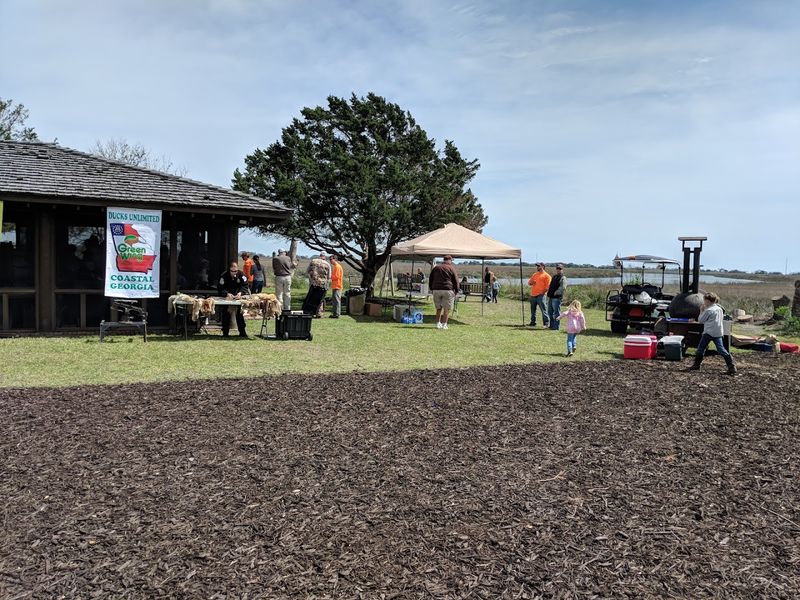
Few places on the Georgia coast feel as purely reserved for nature as this one. Wolf Island National Wildlife Refuge, near Darien, is completely undeveloped and managed primarily as a sanctuary for nesting and migratory birds.
That means the appeal is not convenience or entertainment, but the rare chance to witness a barrier island that remains fundamentally wild.
The refuge includes beaches, dunes, marsh, and tidal waterways, all supporting sensitive coastal habitat. Public visitation is limited, and much of the island is best appreciated through careful planning, responsible boating, and a strong respect for seasonal wildlife restrictions.
Its remoteness is exactly what keeps the ecosystem intact.
I think Wolf Island is fascinating even for travelers who never fully set foot on it. Knowing that a place like this still exists on the Atlantic coast adds depth to the region, especially when so many shorelines elsewhere have been heavily altered.
It serves as a reminder that preservation can still win.
This is not the right destination for someone expecting facilities, dining, or easy beach lounging. It is better suited to birders, naturalists, photographers, and people who value rarity over comfort.
If hidden gem means truly protected and genuinely undeveloped to you, Wolf Island may be the most authentic example on this list.
Sapelo Island Cabretta Beach
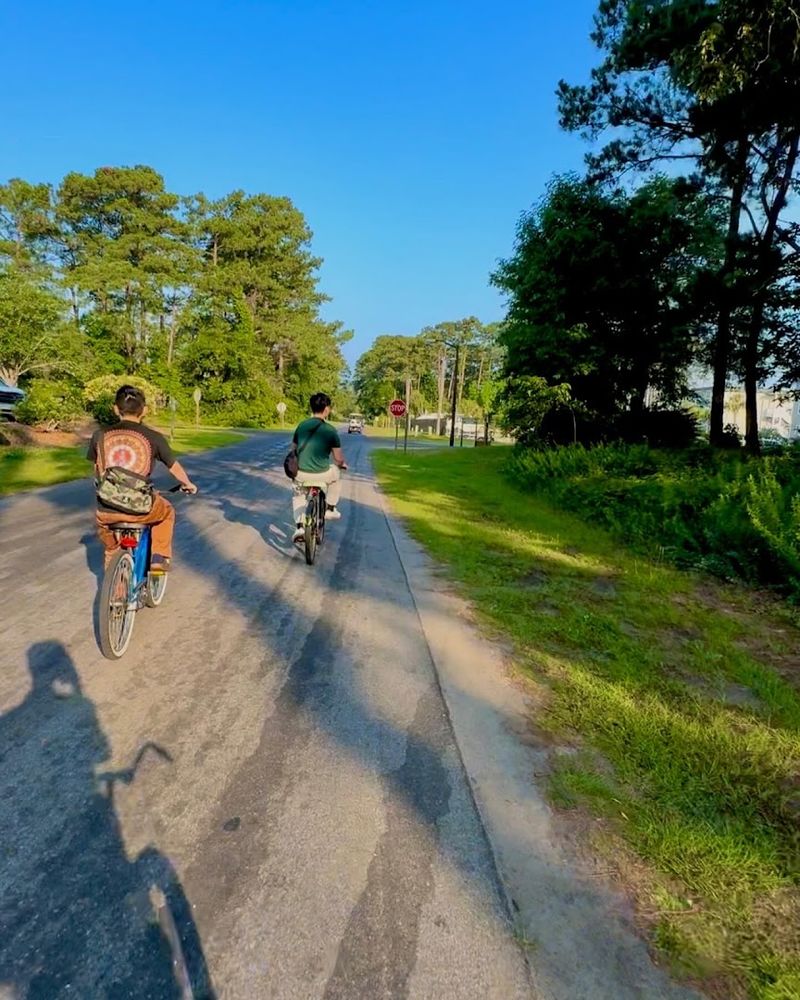
Sometimes the shoreline itself becomes the reason to make a complicated trip. Cabretta Beach on Sapelo Island is that kind of place, where the sand feels wider, the horizon feels farther away, and the absence of development becomes the main attraction.
It rewards effort with a beach experience that feels startlingly open and unhurried.
Unlike busier coastal stretches, Cabretta offers long views, wild dune systems, and habitat that remains largely intact. Depending on the season, you may notice shorebirds, ghost crabs, wind-sculpted sand, and an almost meditative quiet broken only by surf.
It is scenic in the classic sense, but also deeply calming.
I like this spot for travelers who want a single, unforgettable shoreline rather than a menu of activities. You can walk for a long time, pause often, and feel the texture of the coast without constant distraction.
There is enough natural drama in the dunes, light, and weather to hold your attention for hours.
Because reaching Cabretta usually involves limited ferry access and often guided arrangements, spontaneity is not its strength. Still, the planning is worth it if your goal is a truly remote Georgia beach.
For many visitors, this stretch of Sapelo becomes the image they carry home when they think about the state’s hidden coast.
Jekyll Island Driftwood Beach
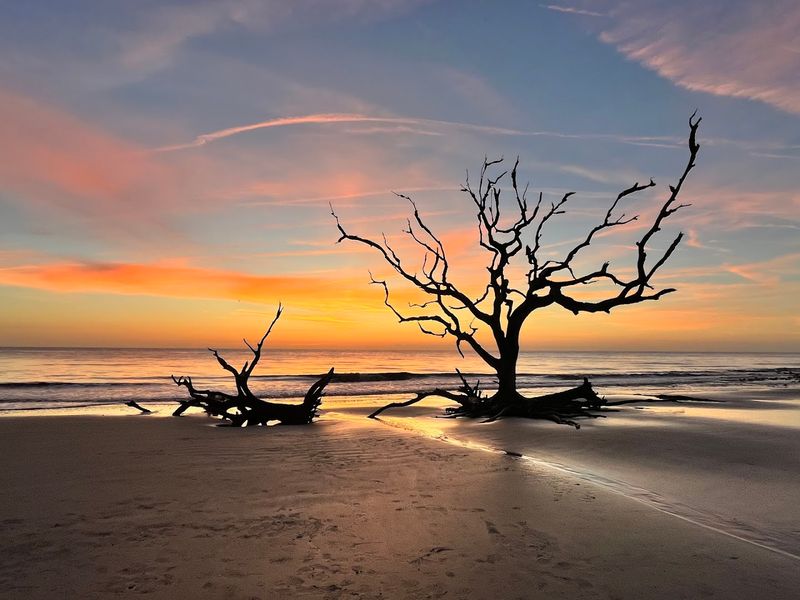
At first glance, the scene looks almost surreal, as if a storm froze in place and left art behind. Driftwood Beach on Jekyll Island is one of the most visually distinctive spots on Georgia’s coast, with bleached tree skeletons scattered along the shoreline in dramatic formations.
Even though Jekyll itself is well known, this area still feels like a hidden pocket of strange beauty.
The beach sits within an island shaped by conservation-minded development, so it retains more natural character than many popular seaside destinations. Sunrise is especially striking here, when soft light catches the driftwood and turns every fallen trunk into a sculpture.
Photographers love it, but you do not need a camera to appreciate the atmosphere.
I think the magic lies in the contrast between fragility and permanence. The landscape feels temporary, always shifting with erosion and tide, yet the driftwood creates a memorable structure that anchors the experience.
It is ideal for slow walking, reflective moments, and those trips where scenery matters more than swimming.
Go early if you want the quietest conditions and the best light. Wear shoes that handle uneven surfaces, and keep expectations focused on beauty rather than classic beach lounging.
If you want one of Georgia’s most unusual coastal sights, Driftwood Beach absolutely belongs on your route.
St. Simons Island East Beach
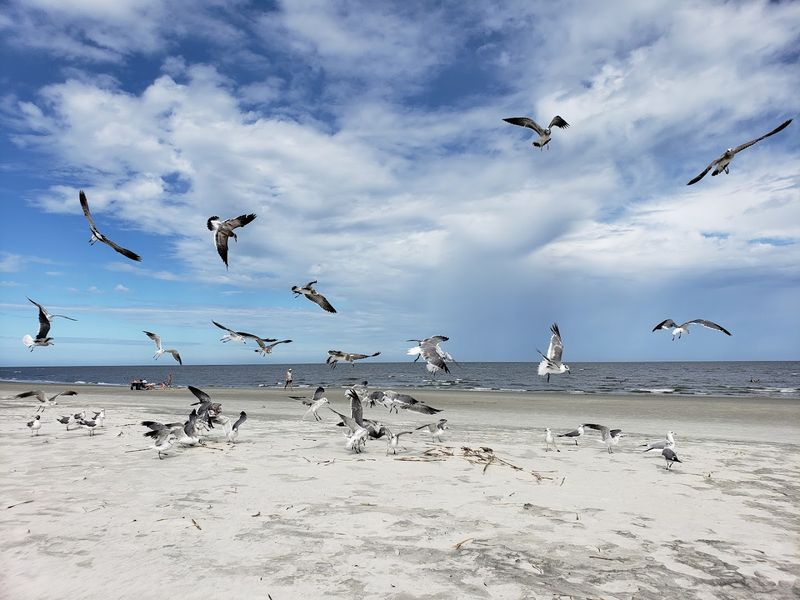
Not every hidden gem is completely remote – some are simply overlooked in favor of louder, more obvious attractions. East Beach on St. Simons Island fits that description, especially if you seek out its quieter stretches away from the busiest access points.
Here, the island’s more relaxed side shows up in wide sands, dunes, and generous views.
At low tide, the beach opens beautifully, creating space for long walks, shell searching, and birdwatching. You may spot shorebirds skimming the flats or feel the breeze coming clean across the Atlantic without the visual clutter of overbuilt beachfront strips.
It is easy to understand why locals return to this shoreline repeatedly.
I like East Beach because it balances accessibility with a genuine sense of calm. You can enjoy the comfort of staying on St. Simons while still finding moments that feel unhurried and lightly discovered.
That combination makes it especially appealing for travelers who want ease without sacrificing atmosphere.
For the best experience, aim for early morning or quieter seasons when the island breathes a little more freely. Keep an eye on tides, bring binoculars if you enjoy birdlife, and wander beyond the first obvious stopping point.
If you want a softer, less crowded version of Georgia beach culture, East Beach is a smart choice.
Sea Island Private Beaches
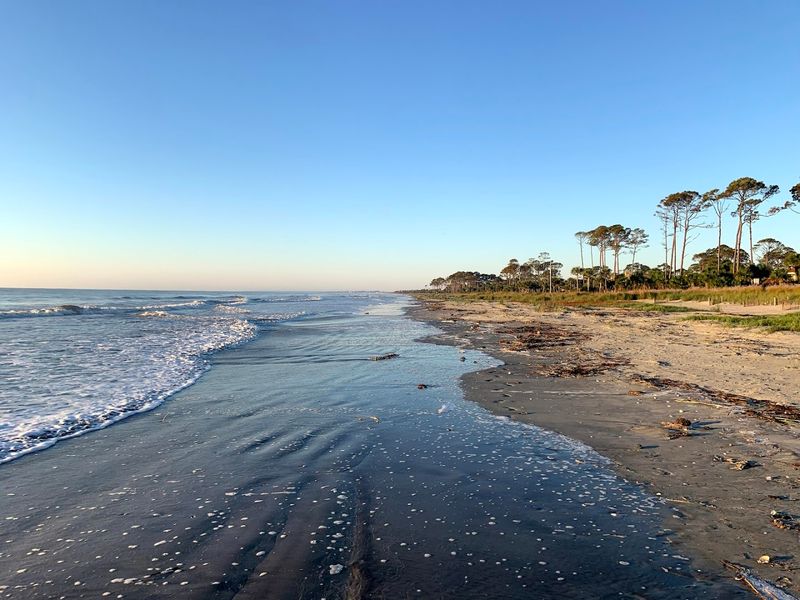
Luxury and privacy can sometimes protect a landscape as effectively as remoteness. Sea Island’s private beaches are a good example, offering controlled access, polished surroundings, and a coastal environment that feels insulated from the crowds found elsewhere nearby.
While the island is hardly unknown, its shoreline remains hidden in practical terms for most travelers.
The appeal here is not rugged adventure but refined quiet. Soft sands, carefully preserved dunes, and access to natural areas create a beach experience that feels exclusive without losing its sense of place.
You still get the beauty of Georgia’s coast, just framed by a more curated and upscale atmosphere.
I would suggest Sea Island to travelers who value service, comfort, and space over spontaneity. It is ideal for people who want morning walks, elegant accommodations, and a shoreline that never feels chaotic or overrun.
The private setting lets the coast speak softly rather than compete with noise.
Of course, exclusivity is part of the barrier, so this is not a universal option. Access typically comes through staying at the resort or being connected to the property in some way.
But if your version of a hidden gem includes restraint, serenity, and beautifully managed beachfront, Sea Island offers a distinct slice of the Georgia coast.
Tybee Island North Beach
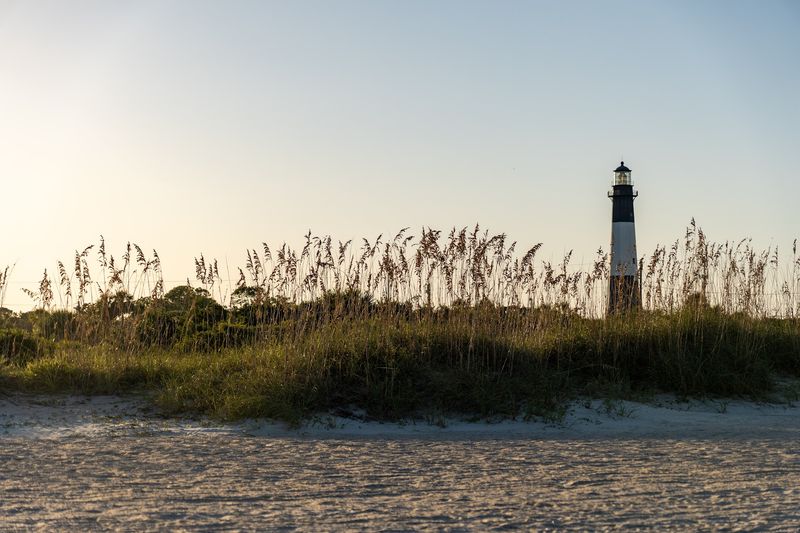
A quieter mood settles in when you leave the busiest stretches of Tybee behind and head north. North Beach offers a more relaxed side of the island, where lighthouse views, open sand, and gentler crowds create a coastal atmosphere that feels easier to enjoy.
It is proof that even Georgia’s better-known beaches still hold pockets of relative calm.
The setting is especially appealing because it blends scenery with a sense of place. You can walk the shore with the Tybee Light Station nearby, watch ships moving in the distance, and enjoy a beach experience that feels less commercial than the main beachfront zones.
That slightly removed position makes all the difference.
I often recommend North Beach to travelers who want convenience without the spring-break energy. It works well for morning walks, shell collecting, and simply sitting with the breeze while the island wakes up around you.
Families, couples, and solo visitors can all find room to breathe here.
It is still Tybee, so timing matters if you want the quieter version of it. Go early, visit outside peak holidays when possible, and pair your beach time with a stop at the lighthouse or nearby historic spots.
If you thought Tybee was all bustle, North Beach offers a welcome correction.
Fort Pulaski National Monument Shoreline
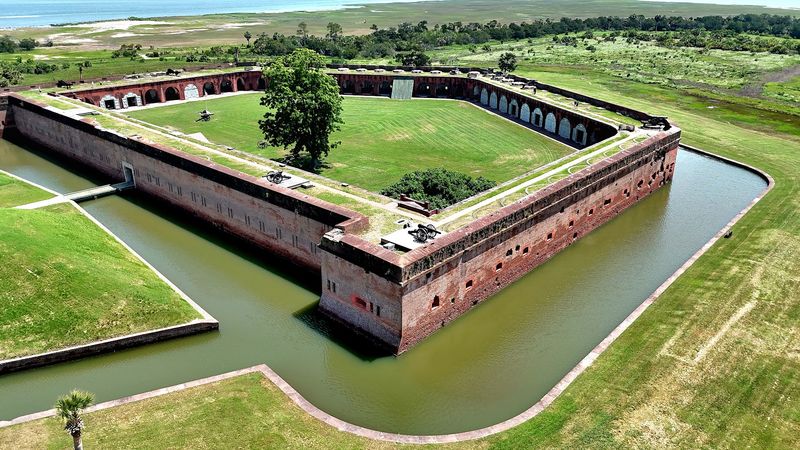
History gives the landscape extra weight when the shoreline comes with stories as well as scenery. At Fort Pulaski National Monument, the coastal edges around the famous brick fort reveal a quieter side of the Savannah area, where undeveloped water views, marsh habitat, and river mouth light create an unexpectedly peaceful setting.
Many visitors focus on the fort itself and rush past the surrounding environment.
That is a mistake, because the shoreline adds another layer to the experience. Trails, observation points, and open views toward Cockspur Island and nearby waterways make this an excellent place for birdwatching and slow exploration.
The mix of military history and tidal ecology is distinctly Georgia.
I think this stop works especially well for travelers who want variety without driving all over the coast. You can tour the monument, learn something meaningful, and then step outside into breezy spaces that feel far removed from city noise.
It is both educational and quietly scenic in the best way.
Bring binoculars if you enjoy wildlife, and allow more time than you think you need. The fort is the headline, but the shoreline is what rounds out the visit and makes it memorable.
If you love hidden gems that combine place, history, and atmosphere, Fort Pulaski’s coastal edges deliver beautifully.
Harris Neck National Wildlife Refuge
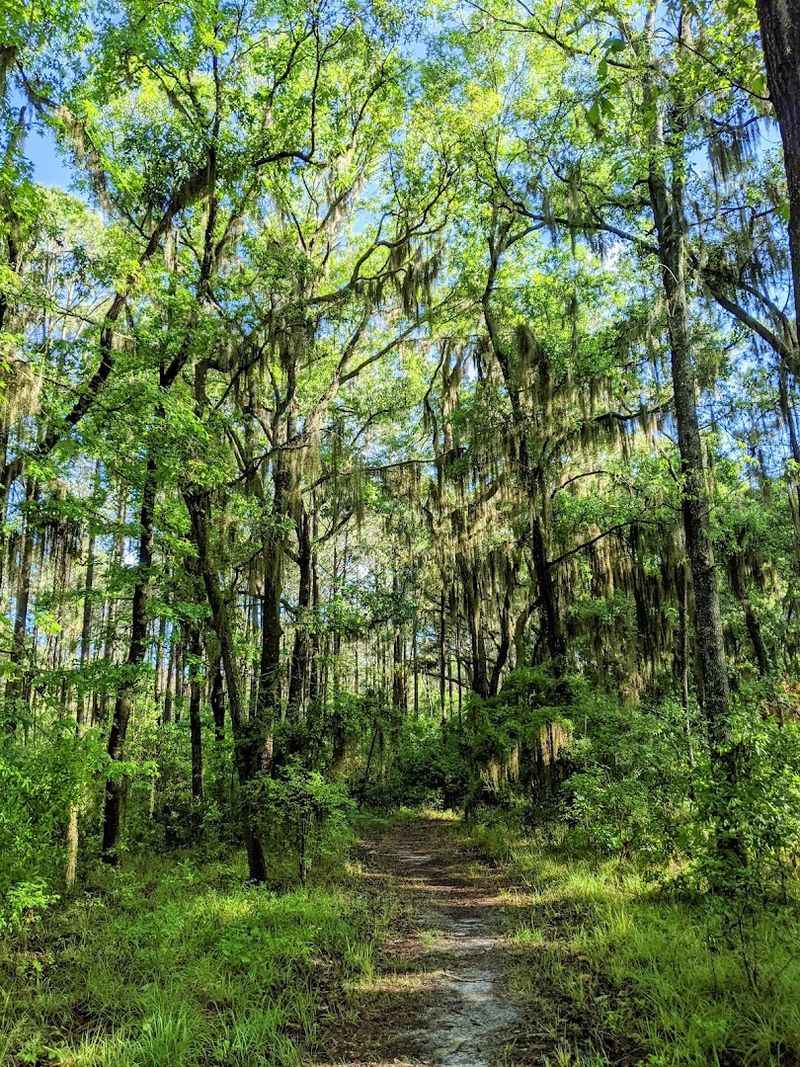
Some stretches of the Georgia coast feel built for lingering, especially where open marsh meets old oaks and the horizon stays wide enough to calm your breathing. This is the kind of place where you slow down without deciding to, watching egrets pick through the shallows while the distant hum of traffic never really seems to reach you.
The stillness feels earned, shaped by tides, wind, and time.
Harris Neck National Wildlife Refuge carries that same quiet mood just inland from the water. Once a rice plantation and later a military airfield, it is now a protected coastal refuge where nature has fully reclaimed the land.
A scenic driving loop leads past wetlands, freshwater pools, and forests alive with birdsong, while alligators and deer often appear along the edges of the road. It is a place for patient observation and slow discovery.
More than a stop, it is a pause in motion.