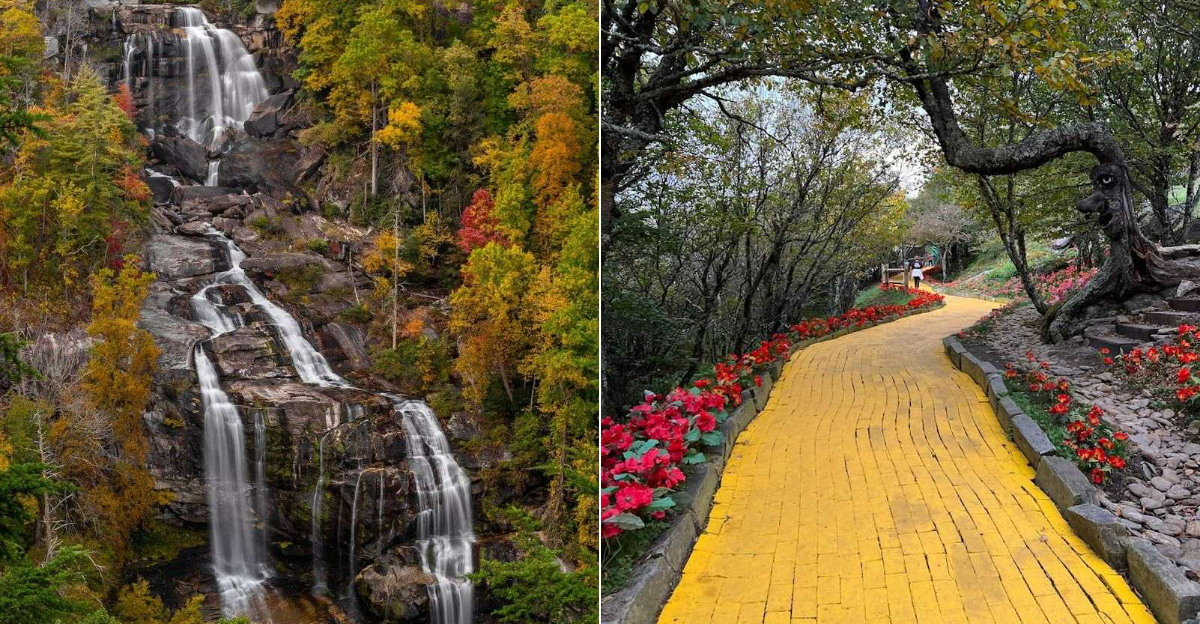
Some trails give you pretty views, and some deliver a genuine double take. In North Carolina, a simple walk through woods, wetlands, or mountain air can suddenly end at a ghostly speedway, a yellow brick road, or plants that literally eat insects.
If you love hikes with a twist, these ten spots turn an ordinary outing into a story you will want to tell the second you get back.
Land of Oz Theme Park (Beech Mountain)
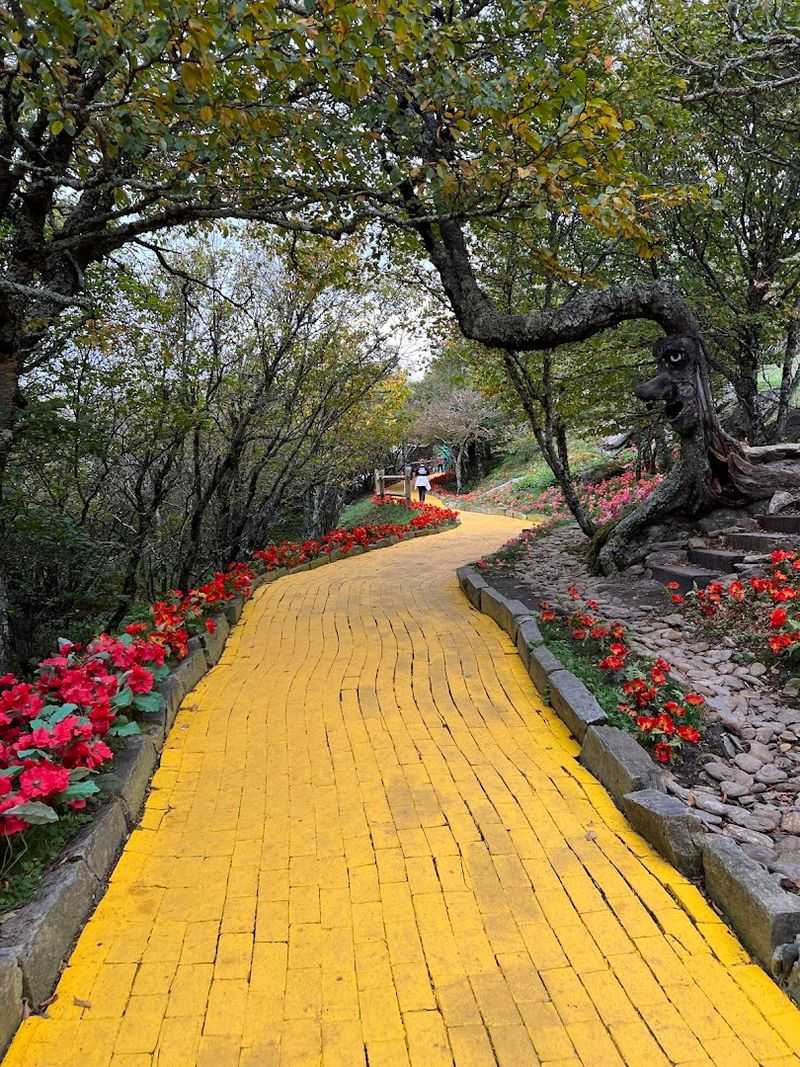
You can start this Beech Mountain walk expecting cool air, resort scenery, and a fairly normal trail through the high country. Then the forest opens and the surprise hits: a yellow brick road curling across the mountain, with odd, faded pieces of a long closed Wizard of Oz theme park.
It feels less like finding an attraction and more like stumbling into a memory that never fully left.
Land of Oz opened in the 1970s and closed in 1980, but the site still holds a strange pull for anyone drawn to lost places. The Emerald City suffered fire damage in 1976, which adds to the park’s half magical, half haunted mood.
You can still spot themed remnants, and Dorothy’s farmhouse replica keeps the story feeling unusually close.
The biggest draw is the seasonal Autumn at Oz event, though 2025 was paused for infrastructure review, with reopening plans for 2026. If you go outside festival dates, the mystery becomes the main attraction.
Few trails reward curiosity with anything this surreal.
Historic Occoneechee Speedway (Hillsborough)
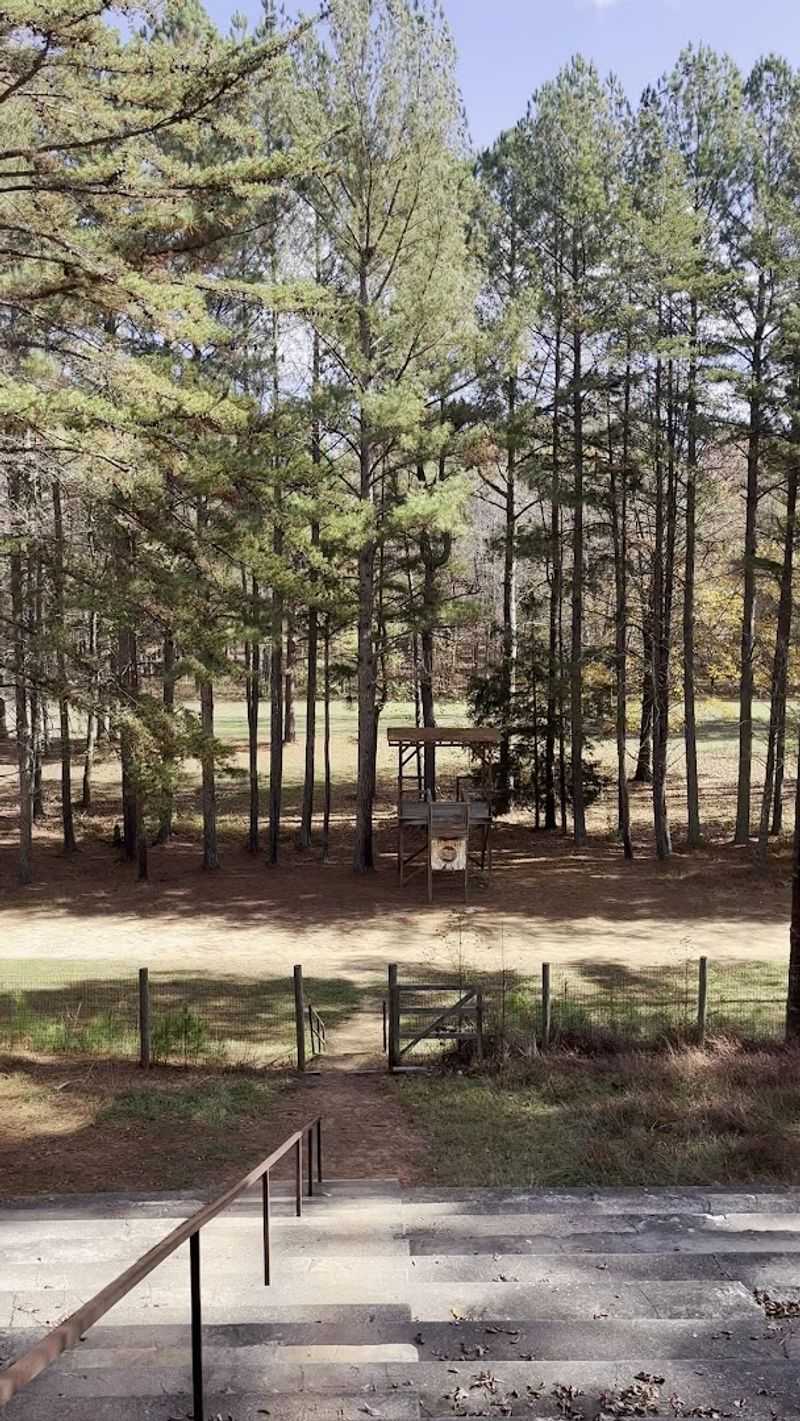
At first, this shaded walk near Hillsborough feels like a peaceful river trail with birdsong, hardwoods, and that easy rhythm that makes you settle in. Then you notice the curve of the land, scraps of metal, and suddenly the woods reveal a dirt oval where early stock car history once roared.
It is a wonderfully strange moment, like nature forgot to hide NASCAR’s past.
Historic Occoneechee Speedway was active from 1948 to 1968 and remains the only surviving dirt track from NASCAR’s inaugural 1949 season. Today, a broader trail system crosses the property, but the old oval still shapes the experience.
Rusted car bodies, weathered grandstands, and the track itself create an outdoor museum that feels accidental rather than staged.
I love that the place never loses its calm, even with such loud history behind it. You can walk the loop, glance toward the Eno River, and imagine engines once shaking these same trees.
Few trail surprises balance ruin, sport, and serenity this well.
The Blowing Rock (Blowing Rock)
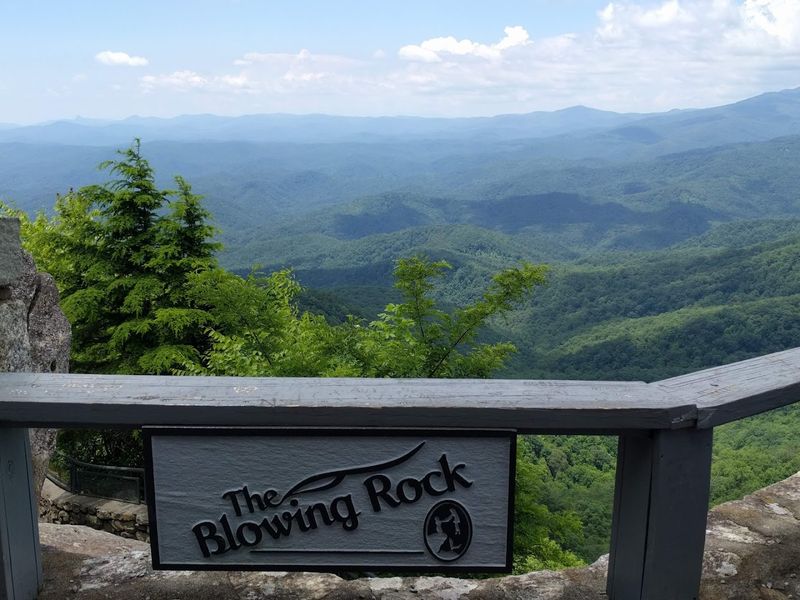
You follow a short scenic path here expecting a nice overlook, maybe a few dramatic Blue Ridge photos, and then the cliff starts showing off. The Blowing Rock juts high above Johns River Gorge, and the air can behave so oddly that light objects seem to float back upward.
It is the kind of place that makes you test what you thought wind was supposed to do.
Open as an attraction since 1933, this site has had generations of visitors trying to understand its strange updrafts. The gorge and rock formation work together to push wind vertically, giving the overlook its legend and its fame.
Ripley’s even leaned into the phenomenon with the claim that snow can appear to fall upward here.
The main walking route is only about half a mile, but it packs in more surprise than some full day hikes. Gardens, overlooks, and an observation tower make the stop feel polished without losing its weird edge.
If you like nature with a magic trick built in, this is your place.
Carolina Beach State Park Flytrap Trail (Carolina Beach)
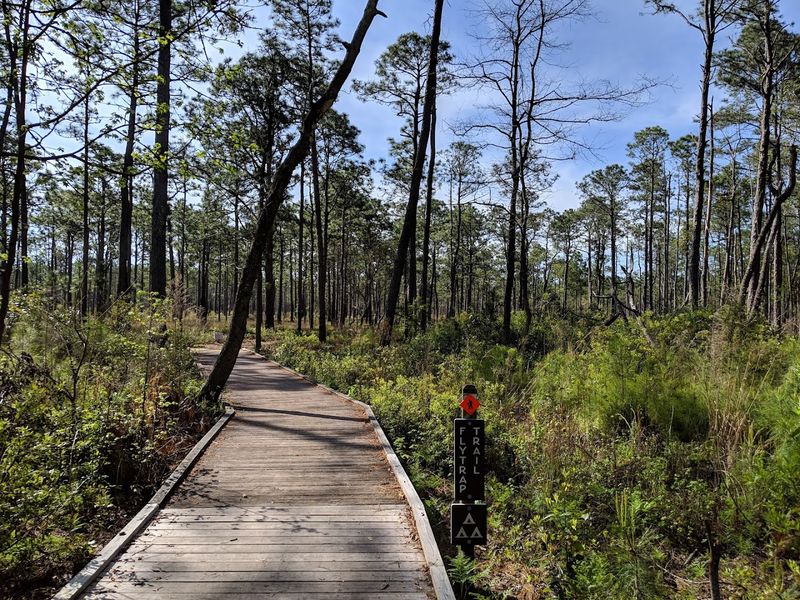
This trail does not rely on huge elevation, dramatic cliffs, or some giant waterfall reveal to feel surprising. Instead, you walk through a quiet coastal wetland and suddenly realize one of the world’s most famous carnivorous plants is growing right there in the wild.
That moment lands differently because the Venus flytrap seems like something invented for a greenhouse, not casually living beside your path.
Carolina Beach State Park is one of the best places to see these rare native plants where they actually belong. The Flytrap Trail is an accessible loop, and along the edges of the pocosin habitat you can sometimes spot the low, open traps tucked into the landscape.
It is a subtle surprise, which somehow makes it even better.
You will want to slow down and scan carefully, because this is not a loud destination. The reward comes from noticing what many people would walk right past.
Stay on the trail, protect the fragile habitat, and let the weirdness of wild flytraps speak for itself.
Eno River Pump Station (Durham)
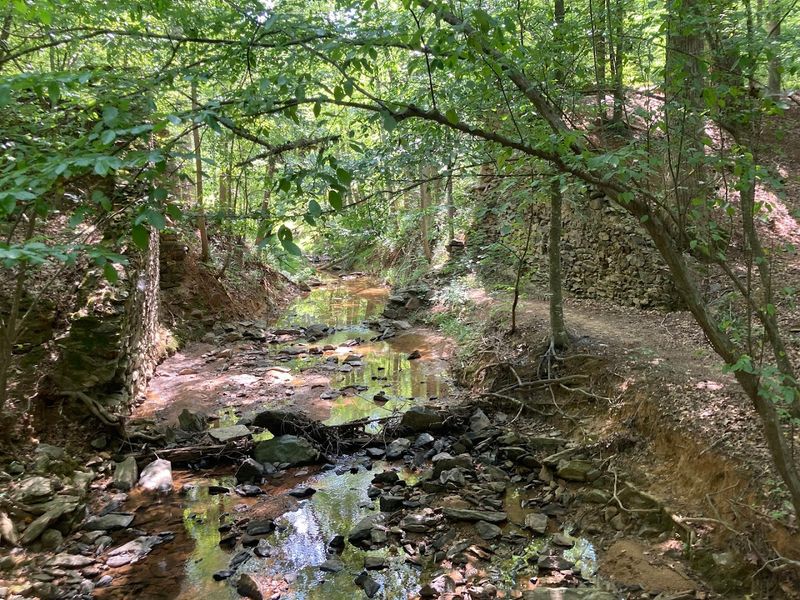
A hike along the Eno River usually promises what you would expect: leafy shade, rushing water, and a little local history if you know where to look. Then, near the Cole Homesite area, the woods suddenly give up a massive stone structure that feels too grand and too hidden to be real.
The abandoned Durham Pump Station appears like a forgotten fortress built for some vanished city.
Constructed in 1887 by Boston engineer A.H. Howland, the station was part of Durham’s early water supply system.
Its stone walls still rise roughly fifteen to twenty feet, forming a maze-like shell deep in the forest. Because you reach it on foot, the discovery feels earned, like you uncovered an industrial secret rather than visited a marked attraction.
What stays with you is the contrast. One minute you are hearing the river and stepping over roots, and the next you are staring at ambitious nineteenth century infrastructure wrapped in moss and quiet.
For an unexpected trail ending, this one is wonderfully strange and unforgettable.
Black Balsam Knob (Pisgah National Forest)
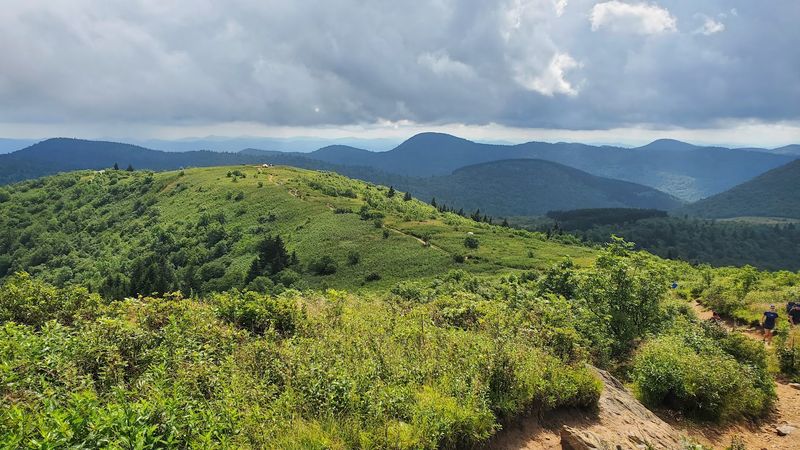
You may start the Art Loeb approach expecting another beautiful Appalachian hike with tunnel-like forest and occasional overlooks. Then the trees drop away, and Black Balsam Knob opens into a broad bald summit that feels startlingly out of place in the South.
For a second, you could swear you wandered into a windswept highland landscape somewhere far beyond North Carolina.
The summit rises to 6,214 feet, and the big surprise is not just the elevation but the openness. Instead of dense woodland, you get grassy slopes, bare rock, and uninterrupted 360 degree views in nearly every direction.
In late summer, wildflowers and blueberries soften the ruggedness and make the place feel both wild and welcoming.
I think this trail works because the reveal happens fast and hits hard. One moment the route feels familiar, and the next it becomes expansive, airy, and almost foreign.
If you crave a hike that changes mood completely by the summit, Black Balsam delivers one of the best transformations in the state.
Tom’s Creek Falls (Marion)
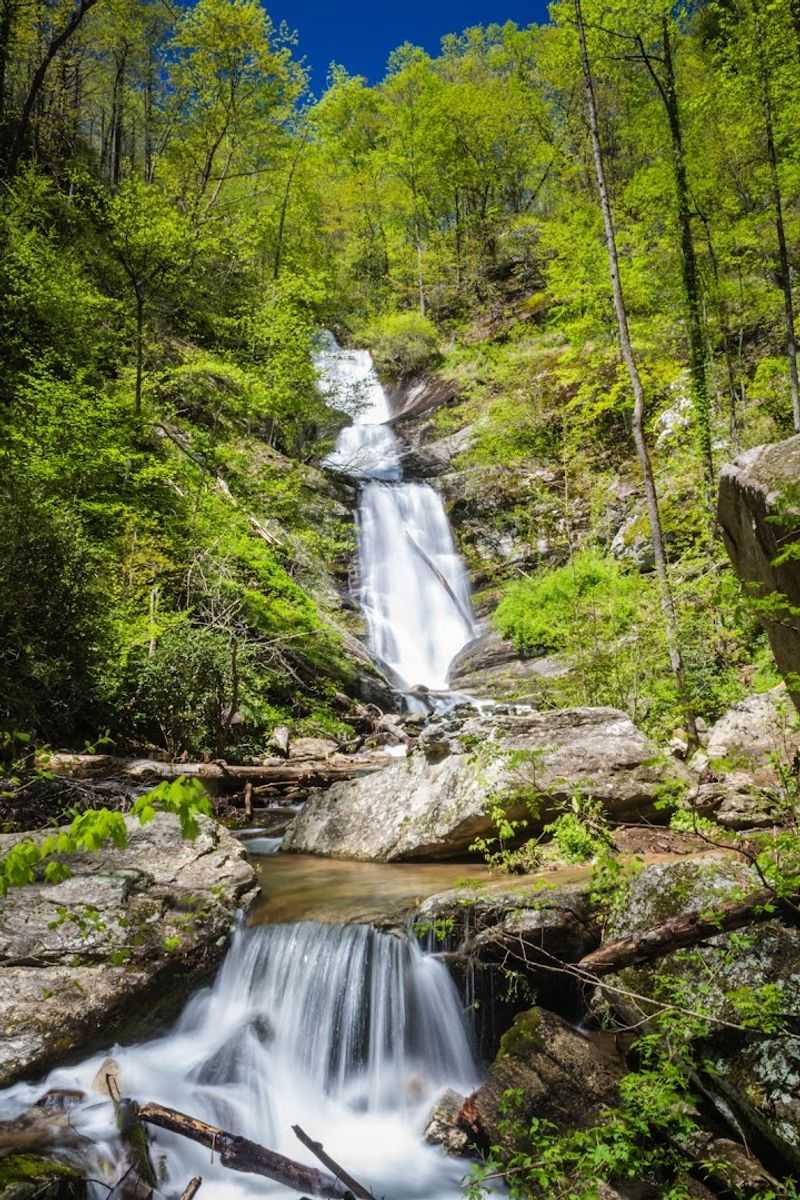
An easy walk to a waterfall is already a good deal, but Tom’s Creek Falls adds an extra bit of mountain oddity. As you follow the short trail through Pisgah forest, pieces of mica begin catching the light beside the path, glittering like somebody spilled tiny mirrors into the soil.
By the time the waterfall appears, you have already had one unexpected reveal before the main one.
The hike is roughly a mile round trip, with an 80 foot multi-cascade falls waiting near the end. Along switchbacks and near the water, the sparkling mica points to the area’s mining history and gives the entire trail a hidden treasure feeling.
It is not a formal mine tour, just a quiet reminder that the mountain has been worked and weathered in many ways.
You do not need to be a geology person to appreciate this surprise. The glimmering rock makes kids look twice, photographers stop early, and grown adults suddenly crouch down like curious collectors.
For such a short hike, it packs in a lot of wonder.
Mount Mitchell State Park Summit Trail (Burnsville)
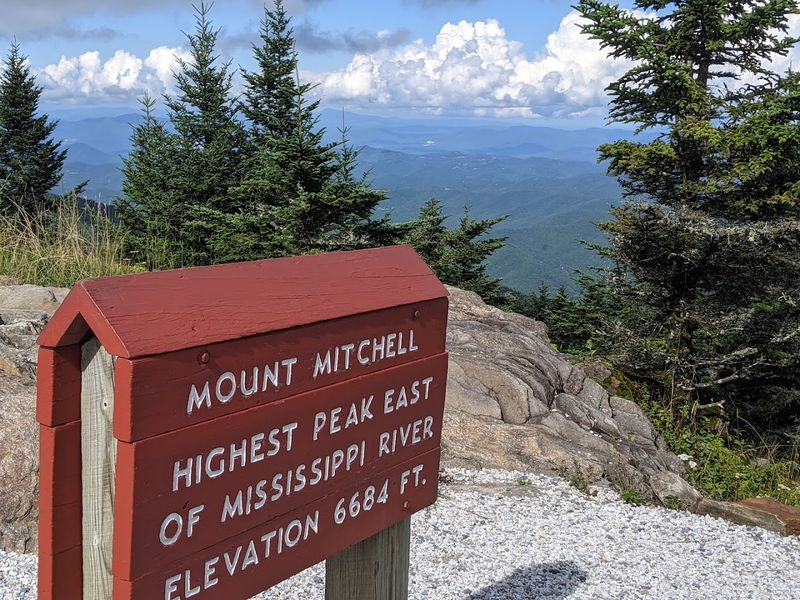
There is something funny about stepping out for a paved quarter mile walk and ending up in conditions that feel like another region altogether. At Mount Mitchell, the short summit trail leads you to the highest peak in the eastern United States, where the air turns cooler fast and the forest starts looking almost northern.
It is less a casual stroll than a quick entry into a different climate.
The summit reaches 6,684 feet, and that altitude changes everything from the temperature to the vegetation. Fraser firs, shifting clouds, and sweeping views give the place an alpine feel that can surprise anyone arriving from warmer elevations below.
The observation deck adds a dramatic finish without demanding a strenuous climb.
What I like most is how immediate the contrast feels. You can begin the day in mild weather, then need an extra layer by the time you reach the top.
Few trails, especially such short accessible ones, deliver such a sharp sense of elevation and environmental change.
Dismal Swamp State Park Boardwalk (South Mills)
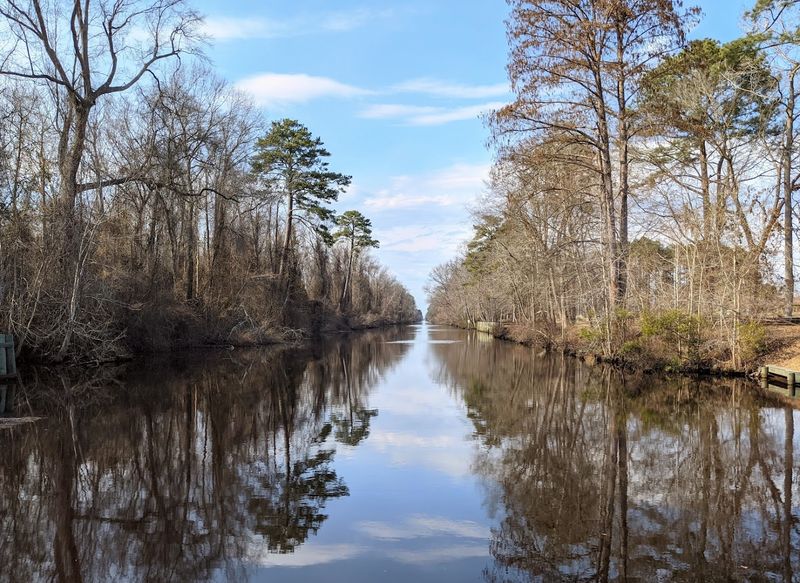
You know a place has potential when the word dismal is right there in the name and somehow still undersells the mood. A walk through this swamp landscape feels hushed, shadowy, and slightly unreal, with water darkened by peat and tannins and trees rising from saturated ground.
The surprise is not a single flashy landmark so much as the scale and mystery of the wetland world around you.
Dismal Swamp State Park connects to the broader Great Dismal Swamp region, which includes Lake Drummond, a large natural lake with famously tea colored water. Boardwalks and trails ease you into an environment that might otherwise feel inaccessible and forbidding.
That access makes the encounter stranger, because you are close enough to study the details while still feeling small inside the swamp.
If mountain vistas are your usual thing, this place rewires your idea of what dramatic can mean. The stillness becomes the spectacle, and the dark water holds your attention longer than expected.
It is eerie, beautiful, and unlike almost any other trail experience in North Carolina.
Whitewater Falls (Sapphire)
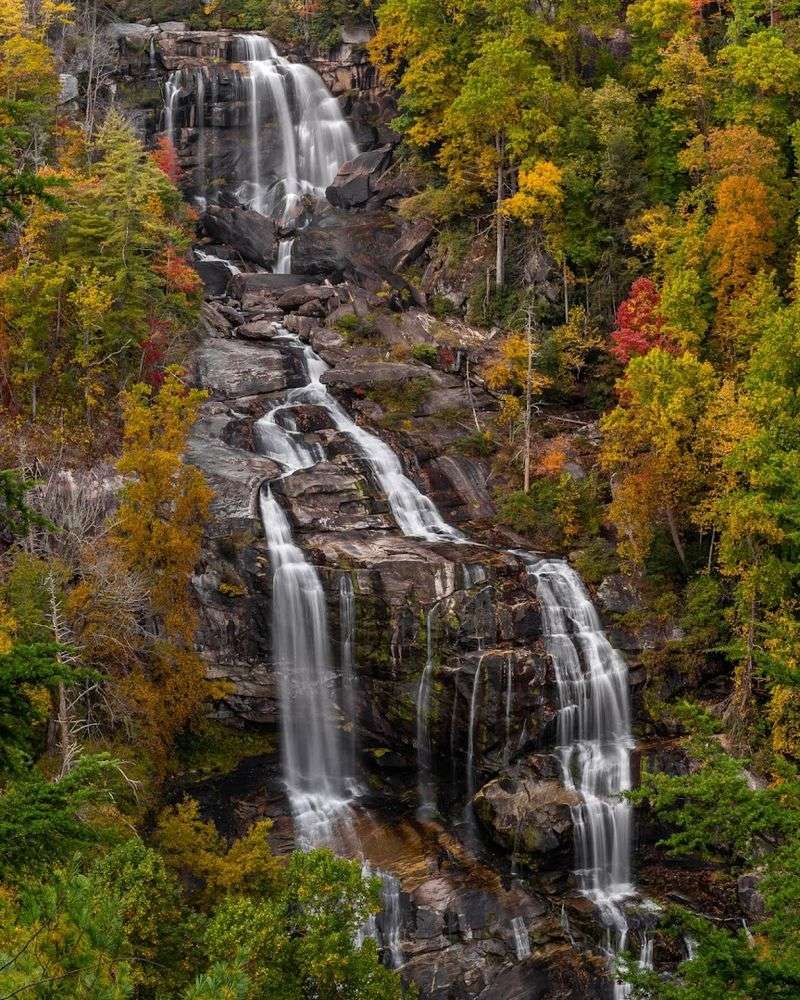
You can arrive here knowing there is a waterfall ahead and still be caught off guard by the scale of what waits beyond the overlook. The paved trail is short, the route is approachable, and then the gorge opens to reveal Whitewater Falls dropping with serious force into an intensely green Appalachian chasm.
It feels bigger, deeper, and louder than your brain prepared for.
Upper Whitewater Falls plunges 411 feet, making it one of the highest waterfalls east of the Rockies. The upper overlook gives you the grand view quickly, while the long stairway to the lower platform lets you work a little harder for a closer, more immersive perspective.
Ferns, mosses, and constant spray make the whole setting feel almost prehistoric.
I think what makes this trail unexpected is the contrast between effort and payoff. You do not need a brutal trek to reach something this dramatic, yet the scenery feels remote and oversized.
For visitors who want a fast walk with a huge visual reward, this one absolutely overdelivers.