Florida might be famous for its beaches and theme parks, but there’s something magical about finding places where the sky seems to wrap around you.
Whether you’re standing on an observation tower, walking a remote pier, or gazing across endless wetlands, these spots make the heavens feel within arm’s reach.
From sunrise reflections over open marshes to sunset horizons where ocean meets sky, Florida offers incredible opportunities to experience the atmosphere in ways that feel almost surreal.
Shark Valley Observation Tower — Everglades National Park
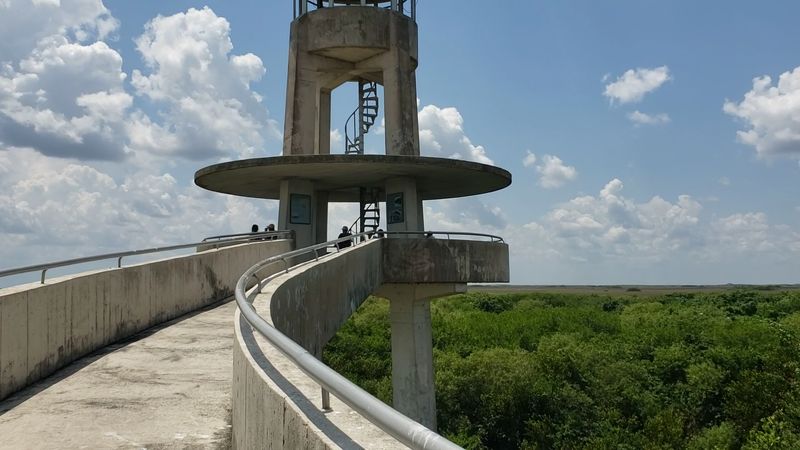
Standing 65 feet above the sawgrass prairie, this concrete tower puts you eye-level with the clouds. The 360-degree view reveals nothing but wetland wilderness stretching endlessly in every direction, making the sky feel like a dome resting just overhead.
You can bike or take a tram along the 15-mile loop to reach the tower. Once at the top, the experience transforms how you see Florida’s interior.
The lack of trees or buildings means clouds cast shadows you can watch travel for miles across the golden grass below.
Early morning brings low-hanging mist that blurs the line between earth and atmosphere. Afternoon thunderstorms build dramatically on the horizon, their anvil tops towering thousands of feet up.
Wildlife spotters love this place, but sky watchers find something equally powerful—a rare connection to weather patterns and atmospheric drama that most people never witness from ground level in Florida’s flat terrain.
Dry Tortugas National Park — Gulf of Mexico
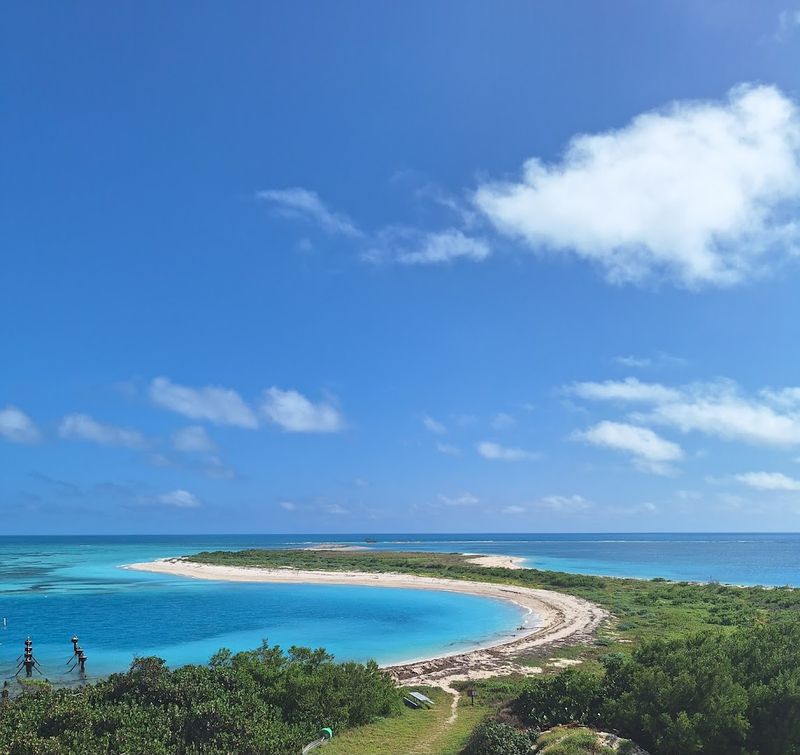
Seventy miles west of Key West sits a cluster of seven islands so remote they feel like another world. Getting here requires a seaplane or ferry, but the reward is a sky so vast it seems to swallow everything else.
With zero light pollution and no mainland in sight, the atmosphere dominates your entire field of vision.
Fort Jefferson rises from the water like a brick fortress, but even its massive walls can’t compete with the sky’s scale. Walk the moat walls at sunrise when pink and orange hues paint the entire dome above you.
The water reflects every color, doubling the visual impact.
Night transforms this place into a stargazer’s paradise. The Milky Way stretches overhead with clarity rarely seen in populated areas.
Clouds that pass during the day cast shadows on water so clear you can see through to the sandy bottom, creating layered effects between sea, land, and sky that photographers dream about.
Bok Tower Gardens — Lake Wales Ridge
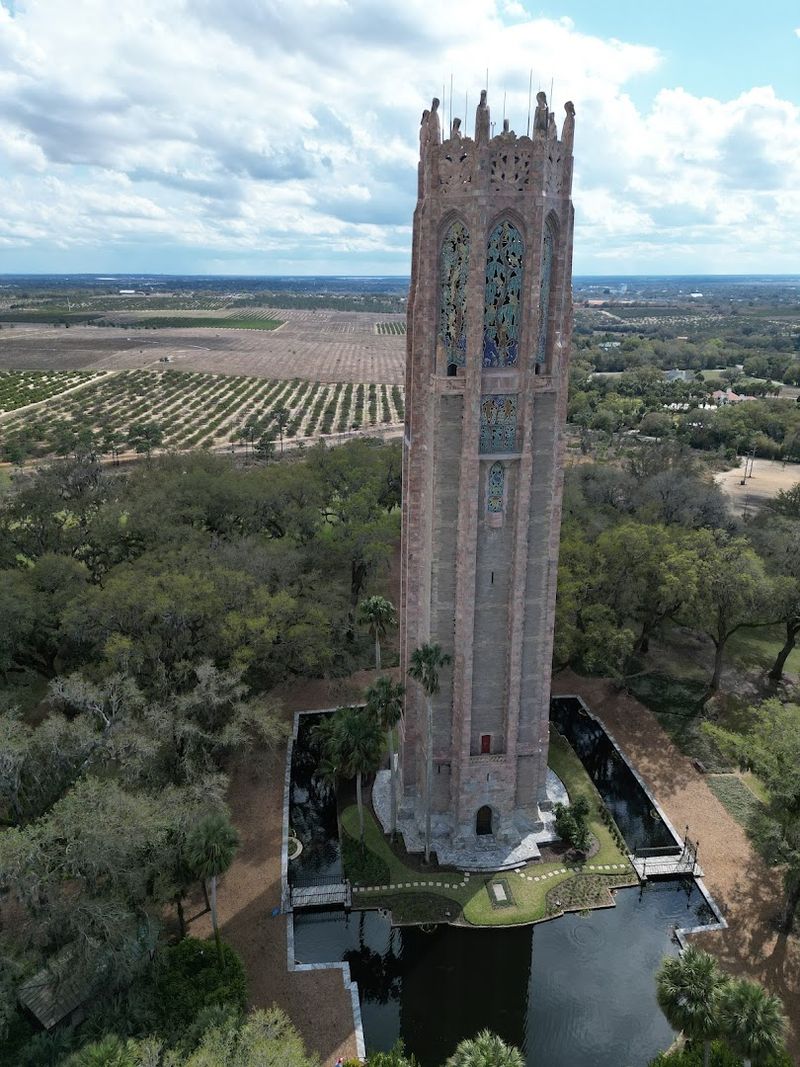
Perched atop Iron Mountain at 298 feet above sea level, this doesn’t sound impressive until you realize it’s one of Florida’s highest natural points. The elevation change creates a surprising sensation—like standing on the roof of the peninsula with the sky pressing closer than anywhere else inland.
The 205-foot Gothic Revival carillon tower adds even more height. During bell concerts, music seems to float directly into the clouds.
Surrounding gardens roll across the hilltop in manicured waves, their formal paths framing sky views through Spanish moss and live oaks.
What makes this spot unique is its inland position. Unlike coastal locations where ocean creates horizon effects, here you’re genuinely elevated above central Florida’s rolling citrus country.
Sunrise paints the eastern sky in layers you can’t see from lower ground. Winter mornings occasionally bring fog that settles in the valleys below while you stand above it in clear air, literally looking down on clouds—an almost impossible experience in Florida.
Big Cypress National Preserve — South Florida
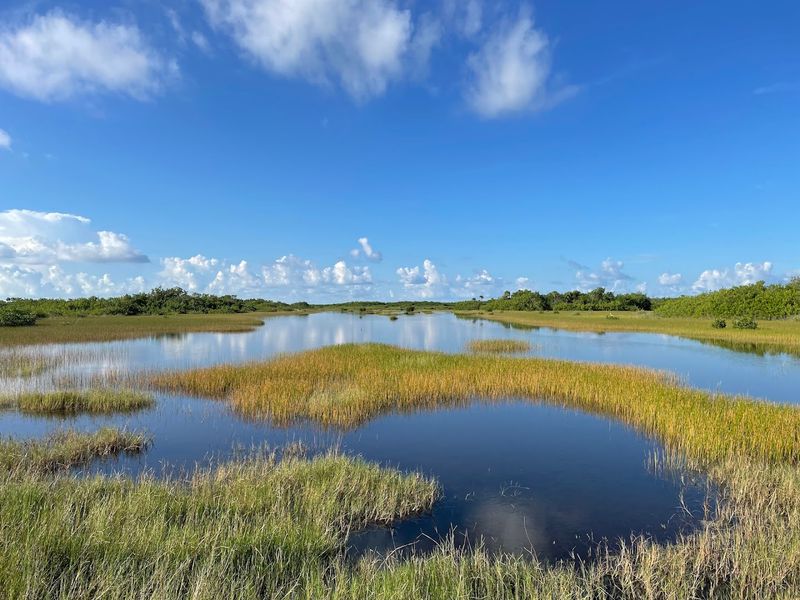
Storm season turns Big Cypress into a sky theater. Afternoon thunderheads build to 50,000 feet, their anvil tops spreading like mushrooms across the atmosphere.
The completely flat terrain offers zero obstruction, so you watch weather systems develop from tiny puffs into towering giants that dwarf the landscape.
Drive the Loop Road or Tamiami Trail and you’ll understand why pilots love this area for cloud photography. The subtropical wetland creates perfect conditions for dramatic cumulus development.
Lightning streaks connect cloud to earth across distances that seem impossible, visible for their entire journey.
Early morning presents the opposite effect—perfectly still air and glassy water reflecting dawn colors with mirror precision. The cypress domes break the horizon into interesting shapes, but between them, sky extends unbroken.
Rangers say visitors often stop their cars just to stare upward, necks craned at formations that feel close enough to touch yet tower miles overhead. It’s a humbling reminder of atmosphere’s true scale.
Anhinga Trail — Everglades National Park
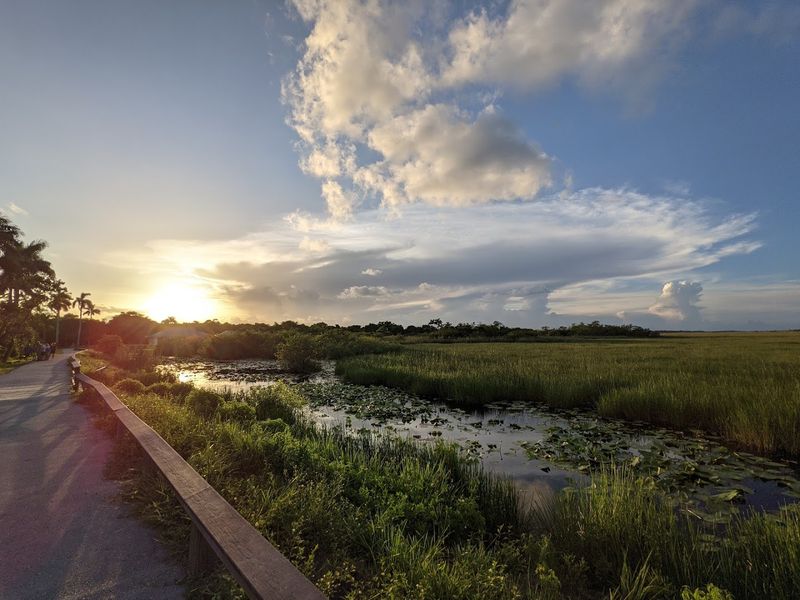
This boardwalk trail creates one of nature’s most mind-bending optical illusions. Walking above shallow marsh water that reflects the sky so perfectly, you lose track of where atmosphere ends and earth begins.
The extremely low elevation—barely above sea level—puts you inside the reflection rather than above it.
Photographers arrive at dawn when still air creates perfect mirror conditions. Blue sky doubles itself in the water below, creating the sensation of floating through atmosphere.
White clouds appear both overhead and beneath the boardwalk, a surreal effect that makes the sky feel three-dimensional.
Wildlife watching is spectacular here, but look up more often than down. Hawks and vultures soar at eye level because you’re so close to ground.
When they fly over the water’s reflective surface, their mirror images create doubled silhouettes. Sunset transforms everything golden, with marsh grass becoming backlit fingers reaching into orange sky.
It’s absolutely one of Florida’s most accessible spots for experiencing atmospheric immersion without climbing towers or traveling offshore.
Naples Pier — Gulf Coast
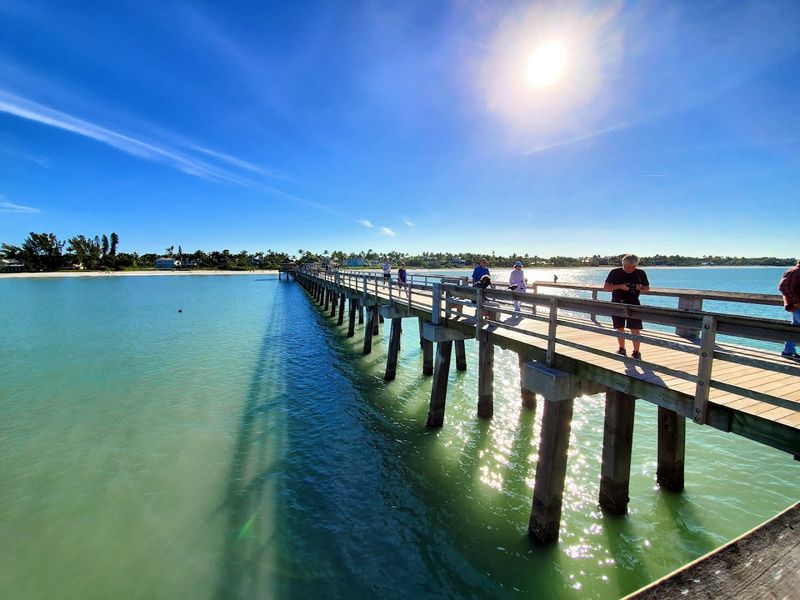
Built in 1888 and extending 1,000 feet into the Gulf, this historic pier places you directly in the middle of sunset’s daily performance. The western horizon flattens into a perfectly straight line where water meets atmosphere, and during those golden minutes before dark, the two elements seem to fuse completely.
Fishermen line the rails, but many visitors come just to watch the sky show. With no land visible to the west, clouds catch light from below the horizon, painting themselves in impossible shades of pink, purple, and gold.
The shallow Gulf waters reflect every color, creating mirror effects that stretch toward shore.
Weekend evenings can get crowded, but even shared with hundreds of people, the experience feels intimate. Something about standing over open water makes the sky feel accessible—like you could reach up and run your fingers through those painted clouds.
Dolphins sometimes surface nearby, their arched backs creating perfect foreground elements against the massive atmospheric canvas behind them.
Clearwater Beach — Gulf Coast
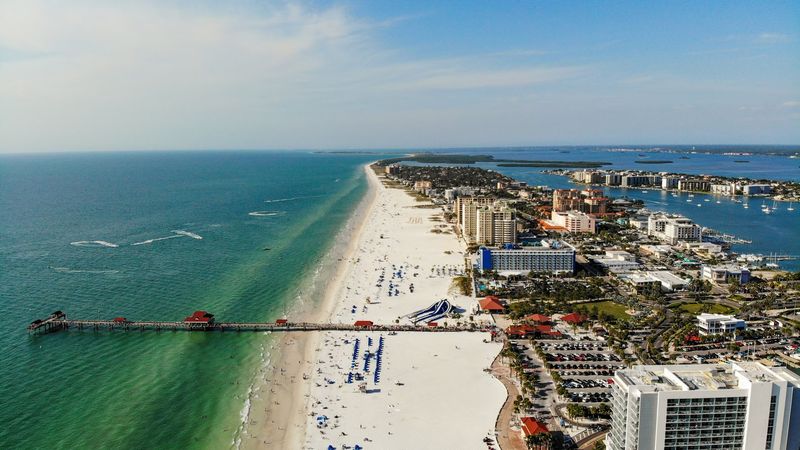
The secret to Clearwater’s sky-touching reputation isn’t just its famous white sand—it’s the deliberate absence of high-rise development blocking western views. The beach faces directly toward the Gulf’s open water, and strict building codes keep structures back far enough that sunset watchers get unobstructed atmospheric displays.
During summer months, the sun drops directly into the water, creating that perfect postcard moment where a glowing orange ball kisses the horizon. But winter brings something even more spectacular—sunset angles shift south, painting massive sections of sky in graduated color bands that stretch from horizon to zenith.
Morning visits offer different rewards. Low tide expands the beach, creating mirror-like wet sand that reflects dawn colors.
Early walkers leave footprints across this natural canvas while the eastern sky lightens through shades of blue and pink. The flat terrain means you can see weather approaching from miles away, watching storm lines march across the water or clear skies push clouds inland with visible force.
It’s simple, accessible, and reliably spectacular.
St. Augustine Lighthouse & Maritime Museum — Northeast Florida
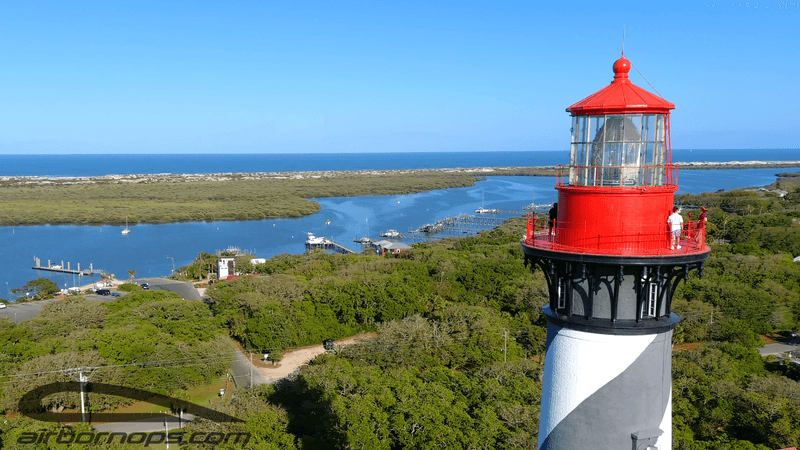
Climbing 219 steps might sound exhausting, but reaching the observation deck 165 feet above sea level changes everything. The Atlantic Ocean curves visibly at this height, and the sky’s dome shape becomes obvious.
You’re not just looking at the horizon—you’re seeing Earth’s actual curvature.
Built in 1874, this lighthouse has guided ships through some of the most dangerous coastal waters in Florida. Today it guides sky watchers to one of the state’s best elevated viewpoints.
The 360-degree perspective shows ocean to the east and the Matanzas River winding through marshes to the west, but overhead steals the show.
Weather watching from here becomes addictive. You spot approaching fronts while they’re still 20 miles offshore.
Seabirds soar below your feet, a disorienting reversal that emphasizes how high you’ve climbed. Sunset and sunrise both deliver spectacular shows, but midday might be most impressive—when the sun is directly overhead and the sky forms a perfect blue hemisphere that seems close enough to touch if you could just reach a little higher.
Jonathan Dickinson State Park — Hobe Sound
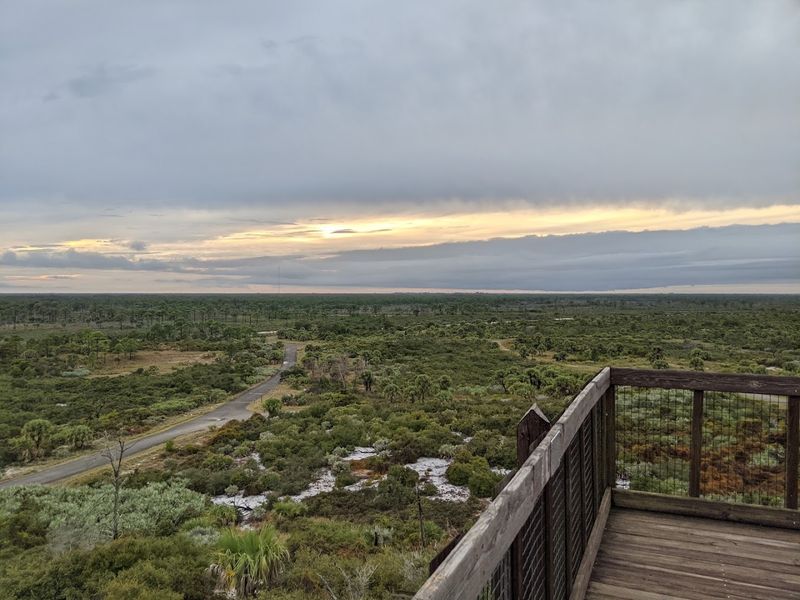
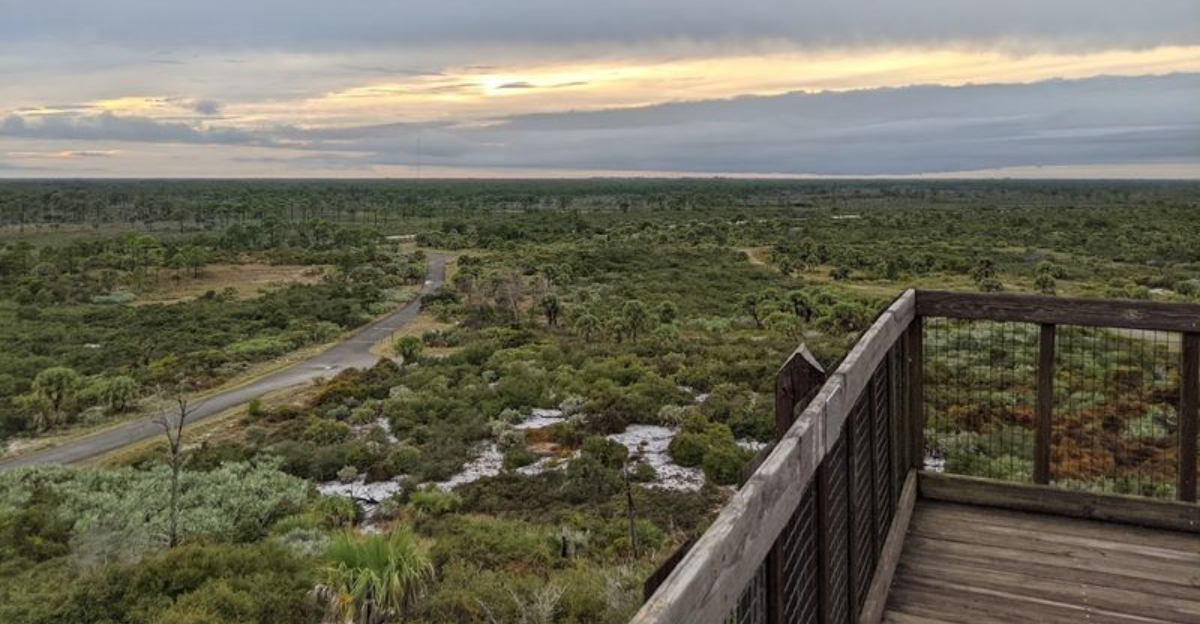
Hobe Mountain’s observation tower sits atop one of South Florida’s highest natural points at 86 feet elevation. It doesn’t sound impressive until you remember that most of South Florida barely rises above sea level.
From here, pine flatwoods stretch in every direction under an enormous sky that feels almost Midwestern in its expansiveness.
The climb up is gradual, but each level reveals more atmosphere. By the top, you’re standing above the forest canopy with nothing between you and clouds except air.
Hawks use thermals that rise along the hillside, spiraling upward past the tower at eye level.
What makes this spot special is its rarity. Finding elevation in Florida requires searching, and this natural high point offers genuine topographic relief.
Storm clouds build over the interior and march toward the coast, visible for their entire journey. The Loxahatchee River winds through the landscape below, catching light like a silver ribbon.
But your eyes keep returning upward, drawn by the sheer scale of sky pressing down on the wilderness.
Gulf Islands National Seashore — Pensacola area
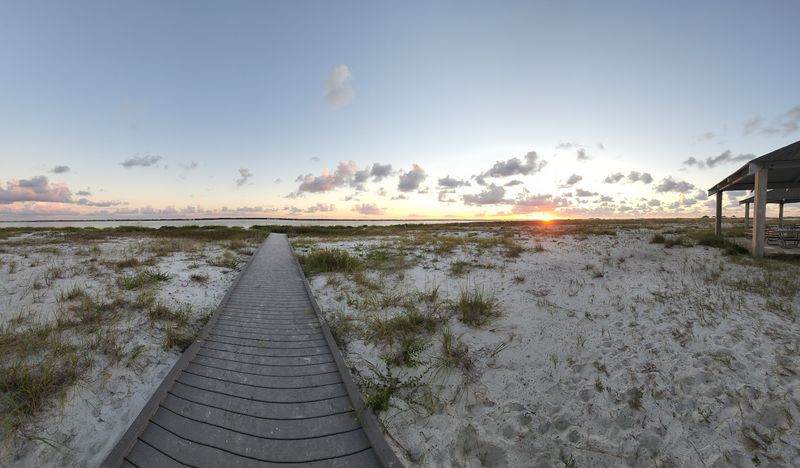
Miles of protected barrier islands create one of Florida’s purest horizon experiences. With minimal development and almost no artificial light, the sky dominates everything.
White quartz sand dunes rise and fall like frozen waves, their curves echoing the cloud formations overhead.
Walk the shoreline at Fort Pickens or Perdido Key and you’ll notice something different from developed beaches—silence. Without hotels and restaurants, the only sounds are wind, waves, and birds.
This quiet amplifies the visual experience, letting the sky’s presence fill your senses completely.
The undeveloped nature means darker night skies too. Star watching here rivals anywhere in Florida, with the Milky Way visible to the naked eye during new moon phases.
During the day, the bright white sand reflects sunlight upward, creating unusual lighting conditions that make clouds appear more three-dimensional. Sunrise and sunset both paint the sky with colors that seem more saturated against this clean, minimal landscape.
It’s like experiencing sky without interference—pure atmospheric connection.
Lake Okeechobee Scenic Shoreline — Central Florida
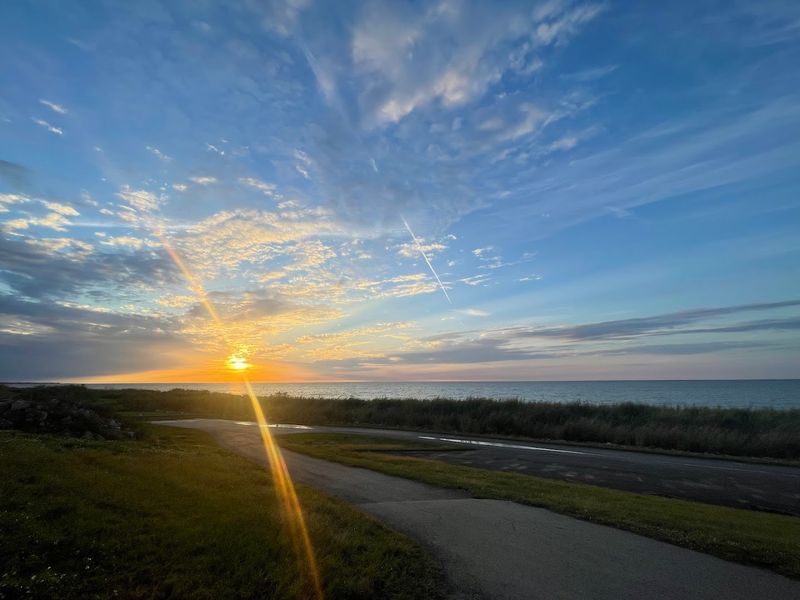
Florida’s largest lake stretches 730 square miles, creating a rare inland ocean effect. From the shoreline, water extends to the horizon in every direction you look, making the sky feel twice as large through reflection.
Early morning brings glassy conditions that mirror clouds with perfect precision.
The Herbert Hoover Dike encircles the lake, offering elevated walking and cycling paths. From this vantage point, you’re high enough to see the water’s slight curve—a reminder that even lakes have horizons.
Fishermen understand this spot’s power, but they’re watching the water. Smart visitors split their attention, because the sky show rivals anything on the coast.
Thunderstorms develop over the lake during summer afternoons, their anvil tops spreading in classic Florida fashion. You can watch entire weather systems form, mature, and dissipate without obstruction.
The flat central Florida landscape provides zero interference. Sunset turns the lake into liquid gold, with sky and water becoming indistinguishable.
It’s proof that you don’t need saltwater to experience horizon magic—just enough water and sky to blur the boundaries between them.