Most people picture Ohio as flat farmland and industrial cities, but they’re missing something incredible.
Hidden across the state are gorges, waterfalls, and cliff-lined trails that rival landscapes in far more famous destinations.
From ancient earthworks overlooking river valleys to deep sandstone canyons that feel straight out of the American West, Ohio holds outdoor surprises that catch even seasoned travelers off guard.
These ten stunning views prove that the Buckeye State has way more natural beauty than most people ever expect.
Hocking Hills State Park – Waterfalls Hidden in a Stone Wonderland
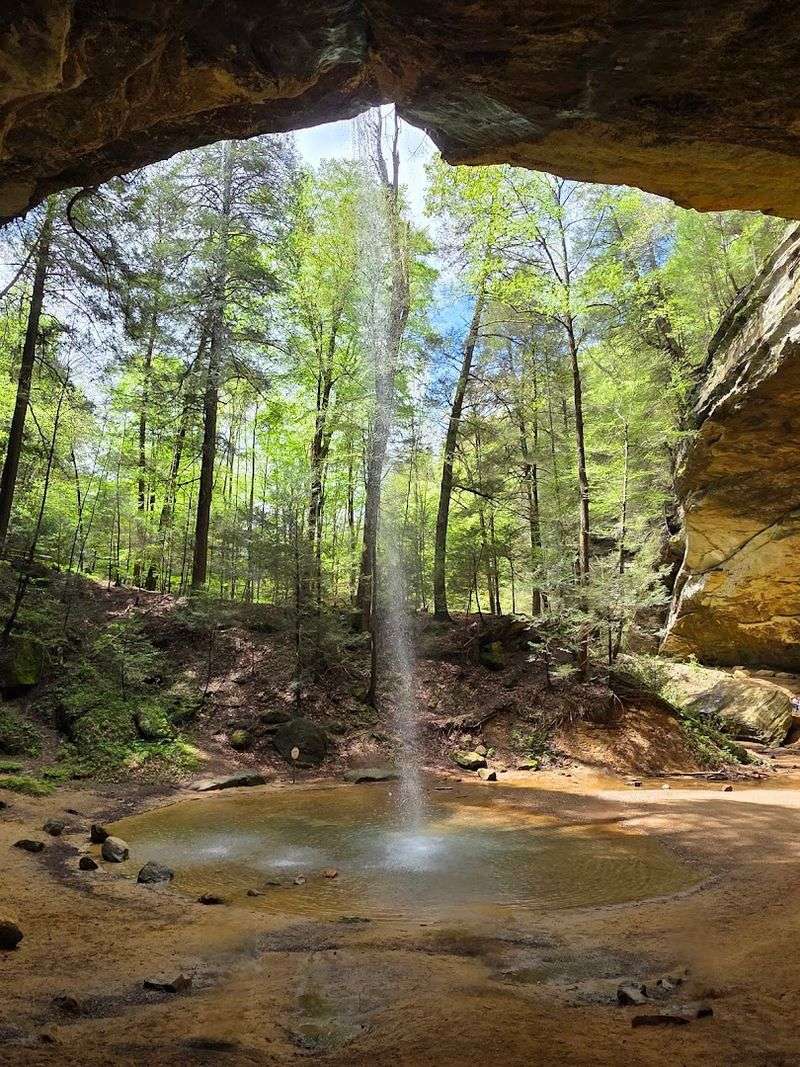
Walk into a sandstone canyon where water tumbles over layered cliffs and you’ll forget you’re in the Midwest. Hocking Hills delivers scenery that belongs in Appalachia or the Pacific Northwest, with towering rock shelters, recessed caves, and waterfalls spilling into emerald pools.
The main attractions—Old Man’s Cave, Ash Cave, and Cedar Falls—draw crowds for good reason, but even packed trails can’t diminish the raw beauty.
Ash Cave alone stretches 700 feet wide with a horseshoe-shaped cliff that towers overhead like nature’s amphitheater. A ribbon waterfall drops from the rim during wet seasons, misting hikers who stand beneath the massive overhang.
Hemlock trees cling to the gorge walls, and thick moss blankets every shaded surface, creating an almost prehistoric atmosphere.
Spring runoff brings the waterfalls to life, while fall paints the canopy in fiery colors that glow against gray stone. Winter freezes the cascades into glistening ice columns that shimmer in cold sunlight.
Every season offers a different version of this landscape, but the overwhelming reaction stays the same—disbelief that Ohio holds something this dramatic and beautiful in its backyard.
Cuyahoga Valley National Park – Rolling Green Valleys Between Major Cities
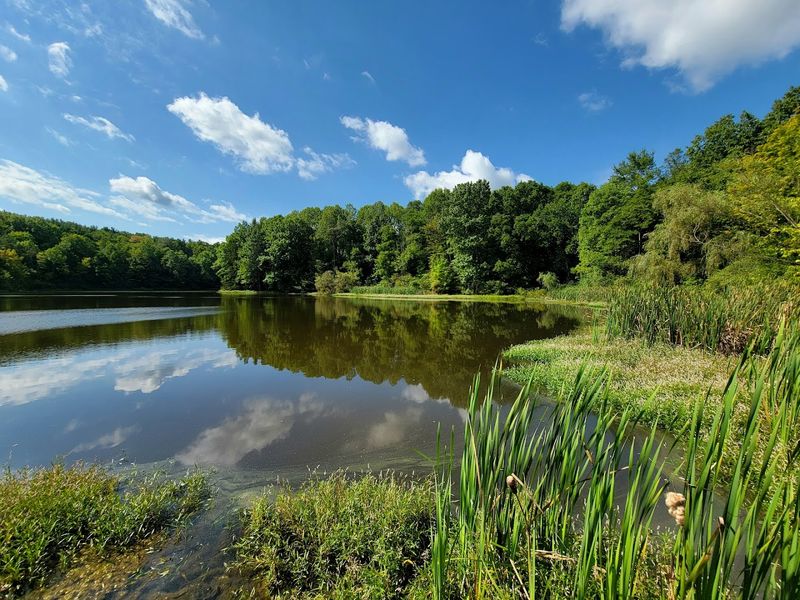
Tucked between Cleveland and Akron sits a national park most people don’t even know exists. Cuyahoga Valley preserves over 33,000 acres of forested hills, winding rivers, and cascading waterfalls that feel a world away from nearby highways and suburbs.
Brandywine Falls steals the show—a 65-foot waterfall that thunders year-round, accessible by an easy boardwalk trail that lets you stand just feet from the plunging water.
The Ledges Trail takes you through towering rock formations where boulders the size of houses lean against each other, creating natural tunnels and narrow passageways. Views from the overlooks reveal endless tree-covered ridges rolling toward distant horizons.
The Ohio & Erie Canal Towpath offers flat, scenic biking along historic waterways where herons fish and beavers build lodges.
Wildlife thrives here despite the urban proximity—deer, foxes, coyotes, and over 250 bird species call the valley home. Whether you’re chasing waterfalls, exploring rock formations, or simply walking through peaceful forests, this park proves wilderness doesn’t need to be remote.
Sometimes the best natural escapes hide in plain sight between city limits.
Lake Erie – Endless Water Horizons That Feel Coastal
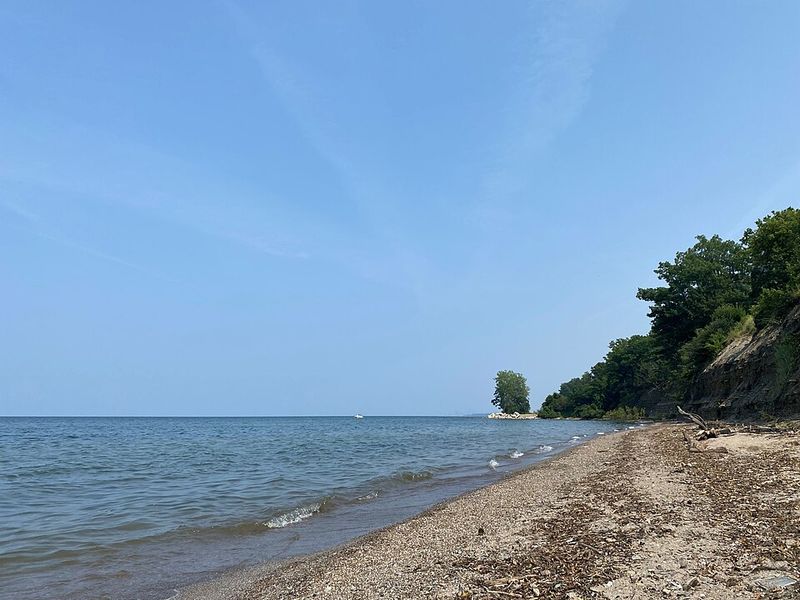
Stand on the shore of Lake Erie and watch freighters drift past the horizon line—you’d swear you’re looking at an ocean. The Great Lake stretches so far that the opposite shore vanishes completely, leaving only sky meeting water in every direction.
Sunsets here paint the western sky in impossible shades of pink and orange, reflected in glassy water that glows like liquid metal.
Headlands Beach boasts Ohio’s longest natural beach, where sand dunes roll toward a shoreline that could pass for the Atlantic coast. Cleveland’s lakefront offers dramatic pier walks where waves crash against concrete breakwalls, sending spray high into the air during storms.
Lighthouses dot the coastline—historic beacons that once guided ships through treacherous waters, now standing as scenic landmarks above rocky outcroppings.
Summer brings sailboats skimming across blue water while beachgoers claim their spots on warm sand. Winter transforms the lake into something otherworldly when ice formations build along the shore, creating frozen sculptures shaped by wind and waves.
Clear days sometimes reveal the faint outline of Canada across the water, a reminder that this massive lake connects two countries while giving Ohio a taste of coastal living.
John Bryan State Park – Dramatic Limestone Cliffs Over the Little Miami River
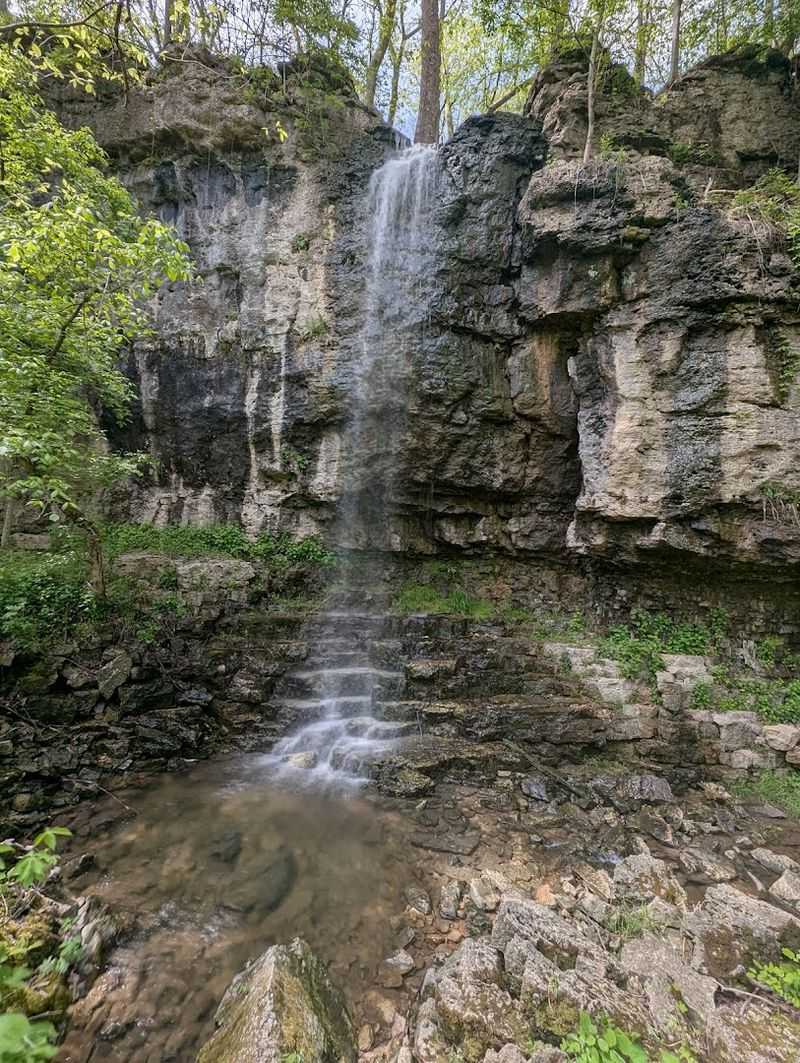
Near the artsy village of Yellow Springs, a deep gorge cuts through limestone bedrock with surprising drama. John Bryan State Park protects this scenic river valley where cliffs rise 100 feet above fast-flowing water, creating one of Ohio’s most rugged landscapes.
The Clifton Gorge section next door adds even more spectacular views, with trails that follow the rim and base of the ravine.
Springtime runoff transforms the Little Miami River into whitewater rapids that rush over rock ledges and around massive boulders. Limestone walls layered like ancient pages tower overhead, carved by thousands of years of erosion into overhangs, caves, and jagged edges.
Hikers can walk along the cliff tops for bird’s-eye views or trek the gorge floor where the river’s roar echoes off stone walls.
The gorge harbors rare plants and cool microclimates where species normally found farther north thrive in the shaded, moist conditions. Cedars twist from cracks in the rock face while ferns carpet every ledge.
Fall brings spectacular color when the canopy explodes in reds and golds against gray limestone. It’s a concentrated dose of wild beauty that punches way above its relatively small size.
Mohican State Park – Deep Forested Ravines and River Overlooks
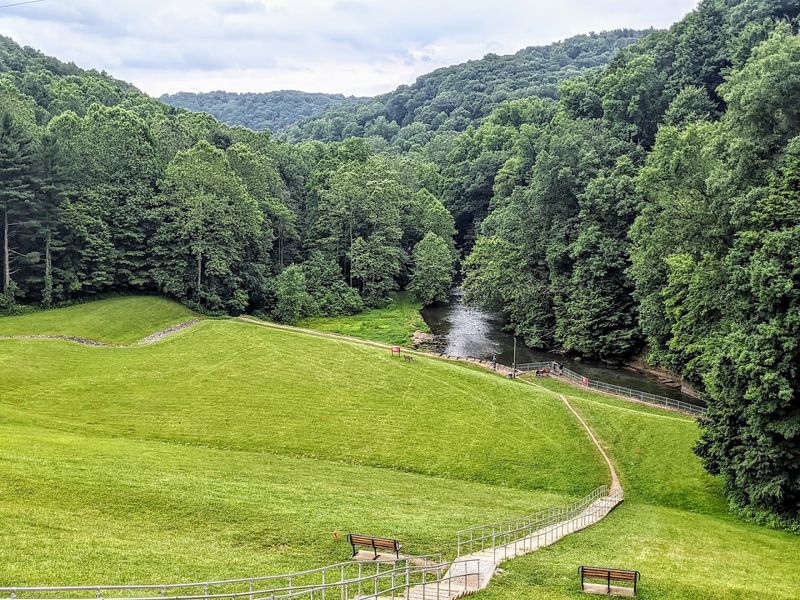
Deep in north-central Ohio, the Clear Fork Gorge carves through ancient bedrock to create a landscape that feels borrowed from the Smokies. Mohican State Park’s overlooks reveal sweeping forest canyons where the river snakes through tree-covered hills that ripple toward distant horizons.
Stand at the right spot on a misty morning and you’ll watch fog pool in the valley like a slow-motion river of clouds.
The gorge itself drops dramatically from the rim trails, with hemlock-shaded slopes plunging toward the water far below. Lyons Falls, though modest in height, adds a scenic cascade where water tumbles over mossy ledges surrounded by thick forest.
Multiple trails explore different perspectives—some follow the ridge tops for panoramic views while others descend into the ravine where massive boulders and twisted tree roots create a primeval atmosphere.
Fall transforms Mohican into a color spectacular when hardwoods ignite in oranges, reds, and yellows that seem to glow against the evergreen hemlocks. Kayakers paddle the Clear Fork’s calmer sections, passing beneath cliff walls and overhanging branches.
Whether you’re scanning the horizon from a high overlook or standing beside the river in the gorge’s depths, the scale and beauty surprise first-time visitors repeatedly.
Perry’s Victory and International Peace Memorial – 360° Lake Erie Island Views
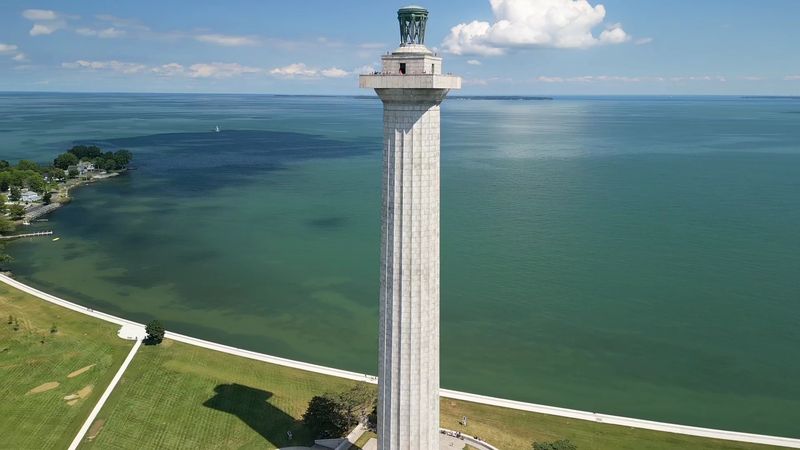
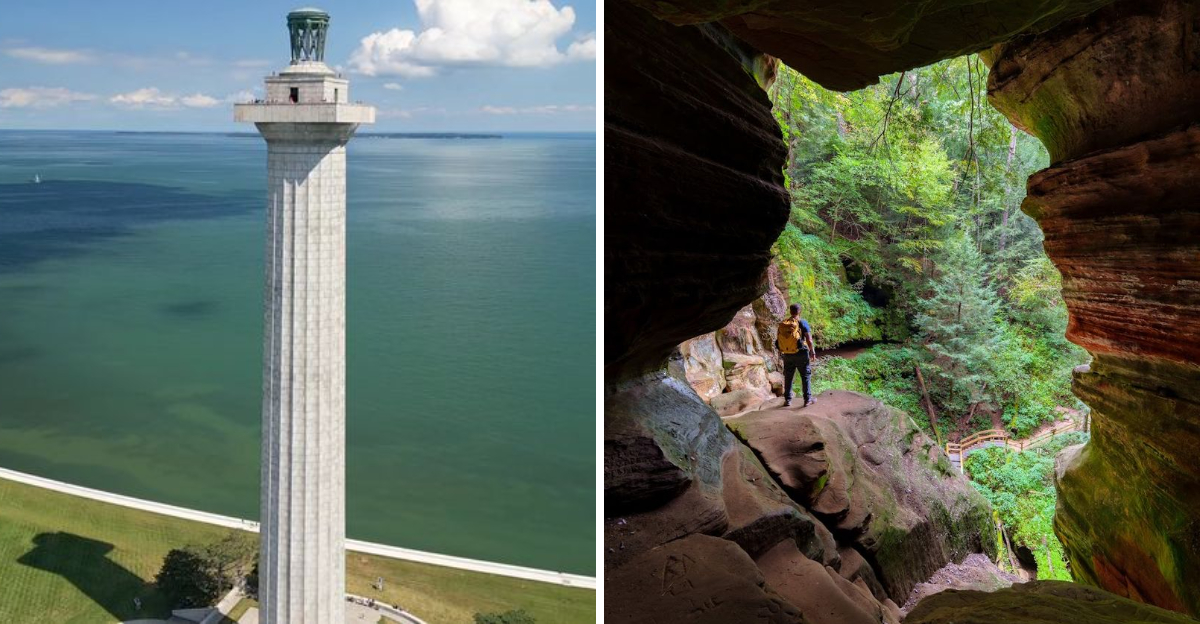
Rising 352 feet above South Bass Island, this limestone column offers the most expansive Lake Erie view you’ll find anywhere. An elevator whisks visitors to the observation deck where windows circle the entire tower, revealing 360 degrees of open water, scattered islands, and endless sky.
On exceptionally clear days, you can spot the Canadian shoreline across the international border, a distant line separating blue water from pale sky.
The monument honors Commodore Perry’s 1813 naval victory during the War of 1812, but most visitors come for the jaw-dropping views. Below, Put-in-Bay’s harbor fills with sailboats and yachts while golf carts (the island’s preferred transportation) zip along tree-lined streets.
Islands dot the lake in every direction—some forested and inhabited, others just rocky outcroppings where cormorants perch and waves crash.
Sunrise here paints the eastern horizon in spectacular pinks and golds as light spreads across miles of water. Ferries chug between islands like slow-moving water beetles, and freighters drift past on shipping lanes that connect distant ports.
The sheer scale of what you’re seeing—this massive inland sea stretching toward multiple horizons—reshapes how people think about Great Lakes geography and Ohio’s surprising waterfront.
Serpent Mound – Ancient Earthwork Above a Winding Valley
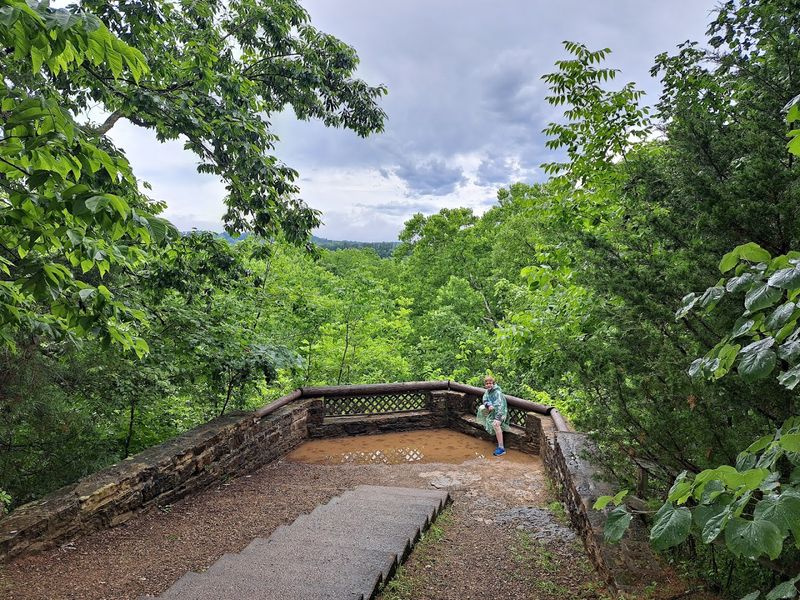
A quarter-mile-long serpent crafted from earth winds across a high ridge in Adams County, one of the most mysterious and visually stunning prehistoric sites in North America. Created over 1,000 years ago by Native Americans, this massive effigy mound follows the natural contours of the land while its open jaws appear ready to swallow an oval earthwork.
An observation tower lets you see the full serpent shape from above, though the site’s setting—perched on a bluff overlooking Brush Creek valley—adds equally impressive natural beauty.
The mound aligns with various astronomical events including solstices and equinoxes, suggesting its builders possessed sophisticated knowledge of celestial movements. Whether you view it as sacred ground, astronomical calendar, or landscape art, the serpent’s graceful curves against the surrounding valley create an unforgettable sight.
The peaceful meadow where it rests seems to hold centuries of history in its grass-covered curves.
Views from the ridge extend across the valley’s gentle bends and forested hillsides, a landscape that’s changed little since ancient times. Wildflowers bloom along the paths, and interpretive signs explain theories about the mound’s purpose and builders.
This unique combination of human creation and natural beauty offers something no other Ohio landmark can match.
Hocking Hills Rock House – A Natural Stone Tunnel With Cliff Views
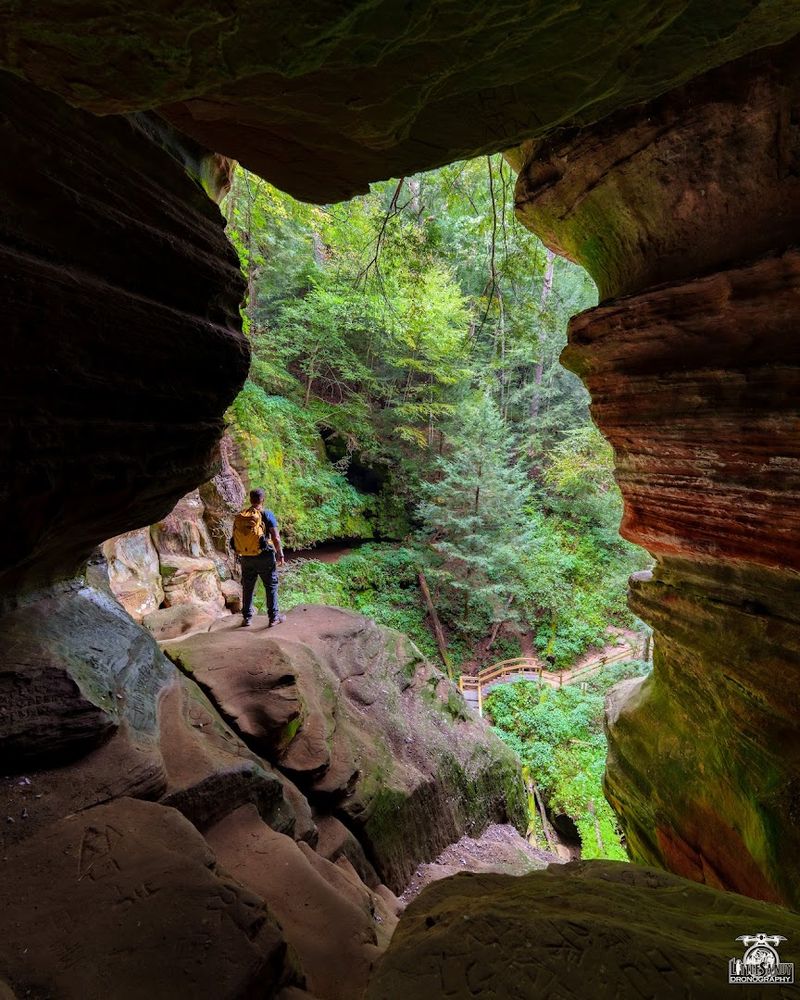
Imagine a stone hallway carved completely by nature, with Gothic-style windows punched through the cliff face to frame forest views. Rock House delivers exactly that—a 200-foot-long corridor tucked inside a sandstone cliff, complete with seven natural window openings that look out over the wooded valley below.
It’s the only true cave in Hocking Hills, though calling it a cave undersells how unique this formation really is.
The tunnel formed when softer rock eroded away behind harder layers, creating a protected passage wide enough for groups to walk through comfortably. Those natural windows?
They’re not just openings—they’re perfectly positioned frames that highlight specific views of hemlock-covered slopes and the gorge’s depths. Photographers camp out here for the way sunlight streams through the openings, casting dramatic shadows across the weathered stone floor.
The approach trail descends through beautiful forest before the Rock House suddenly appears in the cliff face like something from a fantasy novel. Inside, the temperature drops noticeably even on hot days, and the acoustics create subtle echoes.
Stand by one of the windows and you get two experiences at once—the sheltered intimacy of the stone corridor behind you and the wild, open forest stretching outward through the frame.
Cantwell Cliffs – Steep Ledges and Hidden Forest Drop-Offs
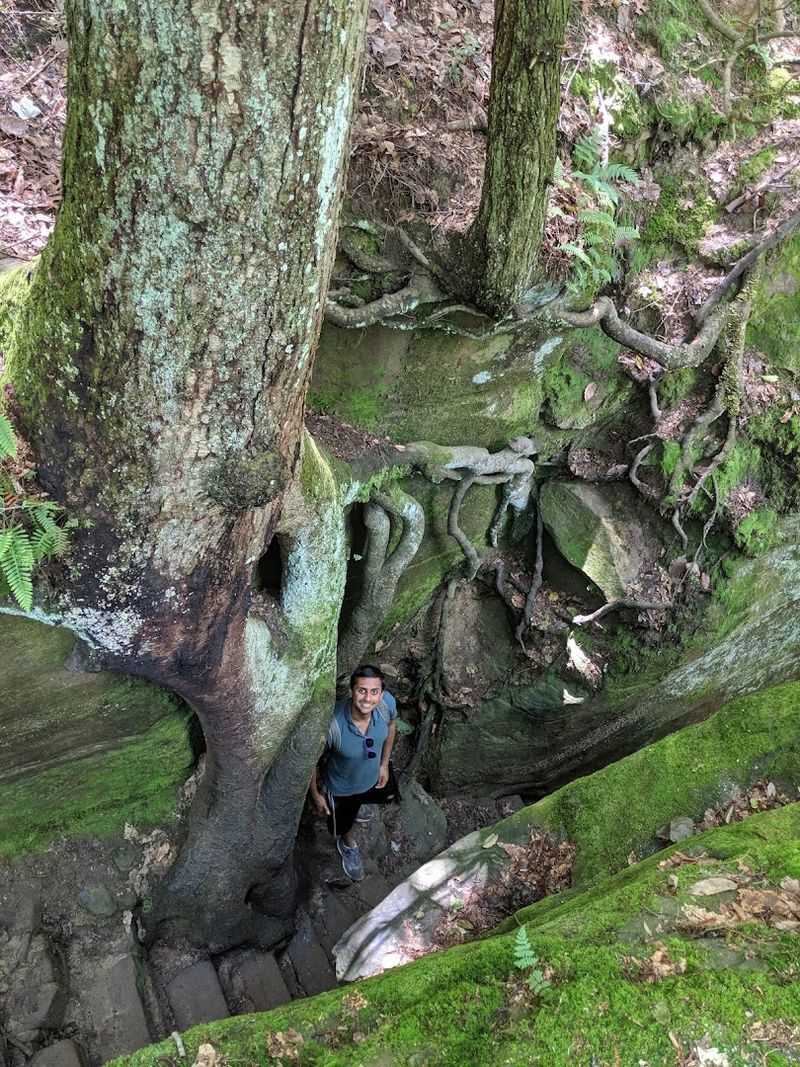
While crowds pack Old Man’s Cave, savvy hikers head to Cantwell Cliffs for equally dramatic scenery with a fraction of the foot traffic. This Hocking Hills gem features some of the steepest terrain in the region—narrow metal staircases bolted to cliff faces, tight rock passages you squeeze through sideways, and sudden overlooks where the forest floor drops away into deep green ravines below your boots.
The rim trail circles the gorge top, offering multiple perspectives into the canyon where sandstone walls tower and massive boulders rest at impossible angles. Narrow slot passages between rock walls create cool, shaded corridors where moss grows thick and ferns sprout from every crack.
The lower trail takes you to the gorge floor, where you’ll walk beneath those same towering cliffs you viewed from above.
What makes Cantwell special isn’t just the geology—it’s the sense of adventure and discovery. The trail feels more rugged and wild than other Hocking Hills locations, with steeper climbs, tighter passages, and more challenging footing.
Views from the overlooks reveal layer upon layer of forested ridges rolling toward the horizon. It’s proof that sometimes the best scenery hides just off the beaten path, waiting for visitors willing to take the less-traveled trail.
Conkles Hollow State Nature Preserve – Ohio’s Deepest Gorge Walk
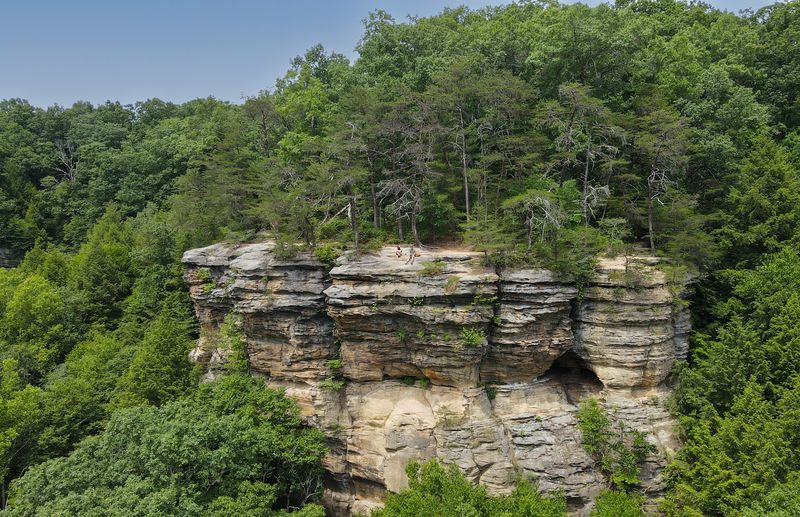
Step into Ohio’s deepest gorge and the sheer vertical walls rising 200 feet on both sides make you feel incredibly small. Conkles Hollow’s narrow canyon creates a slot-canyon effect rare anywhere east of the Rockies—sandstone cliffs so tall and close together they nearly block the sky, leaving just a ribbon of blue overhead.
The gorge floor stays cool and shaded even in summer, supporting old-growth hemlock forest and rare plant species.
Two trail options offer completely different experiences. The gorge trail follows the narrow canyon bottom past massive boulders, small waterfalls, and towering walls that seem to lean inward.
The rim trail circles the gorge top, providing vertigo-inducing views straight down into the depths where tiny hikers far below give scale to the immense cliff faces.
Waterfalls trickle over ledges in the upper gorge, their streams cutting deeper into rock that’s been eroding for thousands of years. The preserve’s protected status means nature runs the show here—fallen trees rest where they land, wildflowers bloom undisturbed, and the primeval atmosphere remains largely unchanged.
This isn’t just a pretty trail—it’s a journey through geological time where the landscape’s raw power becomes impossible to ignore.