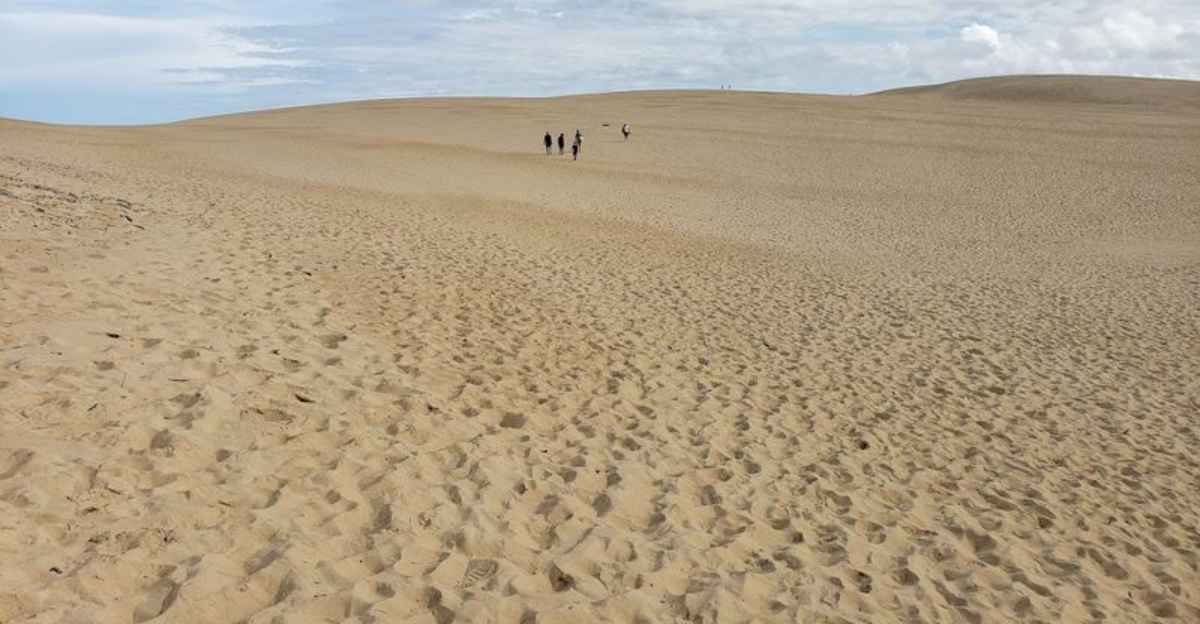
North Carolina doesn’t just show you scenery—it drops you straight into a film that never stops rolling.
Fog slides between mountain ridges like slow-moving smoke, and cliffs rise out of nowhere as if they were built for a dramatic reveal. Along the coast, waves hit the shore with the kind of force that feels like a turning point in a story you can’t look away from.
One moment you’re standing above endless blue peaks stretching into silence, the next you’re walking across dunes that glow gold as the sun sinks low. Every direction feels staged, like nature is setting up shot after shot just for you.
Get ready for ten places where the view doesn’t sit still—it performs, shifts, and pulls you right into the scene.
Blue Ridge Parkway (A Skyline That Never Ends)
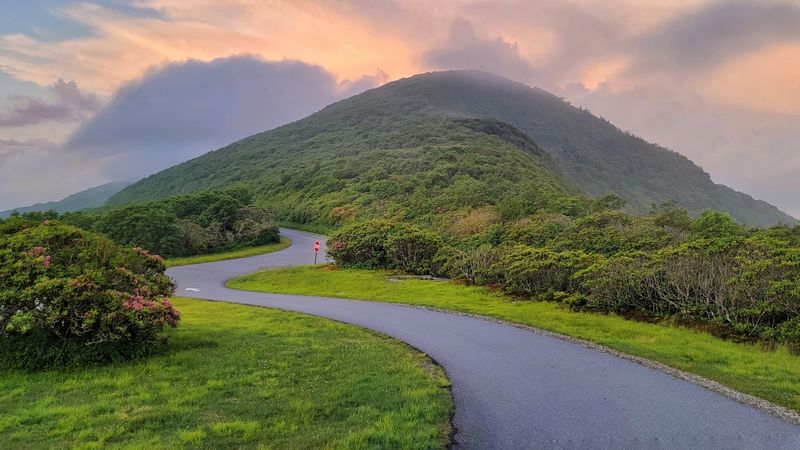
Stretching 469 miles through mountain country, this legendary roadway delivers one jaw-dropping view after another. Around every curve, another vista opens up – ridges stacked like waves on the horizon, valleys dropping away into blue mist.
Morning light paints everything gold, while evening brings purple shadows that make the mountains look like stage props.
Nicknamed America’s Favorite Drive for good reason, the parkway feels less like a road and more like a scenic movie set designed by nature itself. You can pull off at countless overlooks, each one framing the landscape differently.
Some show distant peaks fading into clouds, others reveal forested valleys stretching for miles.
The changing seasons transform the scenery too. Spring brings wildflowers and fresh green leaves, fall explodes with red and orange color, and winter adds drama with snow-dusted ridges.
Professional filmmakers and everyday tourists alike find themselves stopping constantly to capture the views. It’s the kind of place where even a simple drive becomes an unforgettable visual journey.
Grandfather Mountain (Suspension Bridge Above the Clouds)
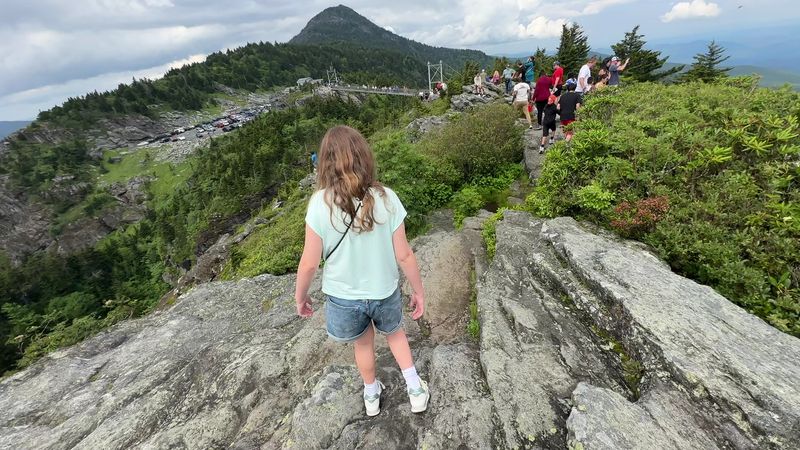
Standing on a swinging footbridge 5,280 feet above sea level creates a sensation unlike anything else. The famous Mile High Swinging Bridge connects two rocky peaks, and when clouds roll through below your feet, you feel like you’re floating in the sky.
Wind rocks the structure gently, adding to the cinematic thrill.
On clear days, the 360-degree panorama reveals mountain ranges in every direction, each ridge creating perfect natural layers that fade into the distance. The rugged peaks and drop-offs look like they belong in an adventure film about mountain climbers or soaring eagles.
Even the walk to the bridge feels epic, with stone steps and narrow paths clinging to cliffsides.
Weather changes fast up here, creating constantly shifting visual drama. Sunshine can give way to swirling fog in minutes, transforming the view from vast to mysterious.
Photographers love capturing the bridge itself, which seems to hover impossibly between rocky outcrops. Whether you visit in summer or winter, the height and exposure make every moment feel larger than life.
Linville Gorge Wilderness (The Grand Canyon of the East)
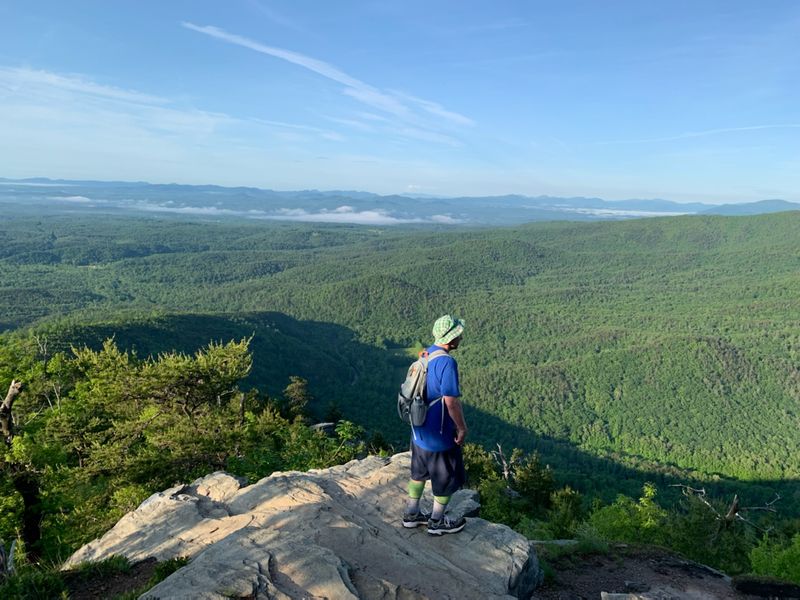
Few places in the Southeast can match the raw, untamed beauty found here. Steep rock walls plunge more than 2,000 feet down to the Linville River, creating a canyon that feels both ancient and mysterious.
Hikers standing on the rim peer down at a world carved by water and time, with towering cliffs catching sunlight while shadows fill the depths below.
The gorge earned its Grand Canyon nickname honestly – the scale and drama rival western landscapes. Jagged quartzite formations jut out at dramatic angles, and the river winds like a silver ribbon through the canyon floor.
Dense forests cling to impossible slopes, their green canopy hiding countless waterfalls and boulder fields.
Getting good views requires effort, which makes the payoff even sweeter. Trails lead to overlooks with names like Hawksbill and Table Rock, each offering slightly different perspectives on the massive chasm.
Early morning fog often fills the gorge like a slow-moving river, then burns off to reveal the full depth.
It’s the kind of place where you half expect a movie director to yell “action.”
Chimney Rock State Park (A Vertical Panorama)
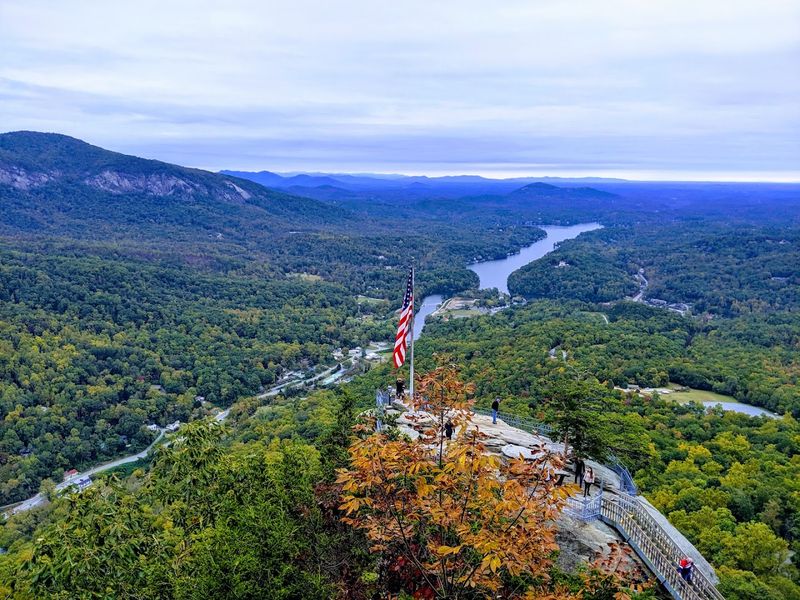
Picture a 315-foot granite spire jutting straight up from a mountainside, and you’ll understand why this landmark became a state park. Reaching the top means climbing 499 stairs or taking an elevator through solid rock – either way, you’re building anticipation for the reveal.
Once you emerge onto the rock itself, the landscape spreads out like a movie scene waiting for its hero shot.
Lake Lure sparkles far below, surrounded by forested ridges and steep valley walls. The gorge stretches for 14 miles, creating natural depth and layers that change color with the light.
Film crews have actually used this location for Hollywood productions, recognizing its ready-made cinematic appeal. The rock formation itself looks like something a set designer would create, except nature did all the work.
Hickory Nut Falls tumbles 404 feet down a nearby cliff face, adding movement and sound to the visual feast. Hawks and vultures often soar at eye level, riding thermal currents that rise from the valley.
Standing at the top, you feel exposed to the elements and the view simultaneously – it’s exhilarating and humbling all at once.
Mount Mitchell State Park (Highest Point East of the Mississippi)
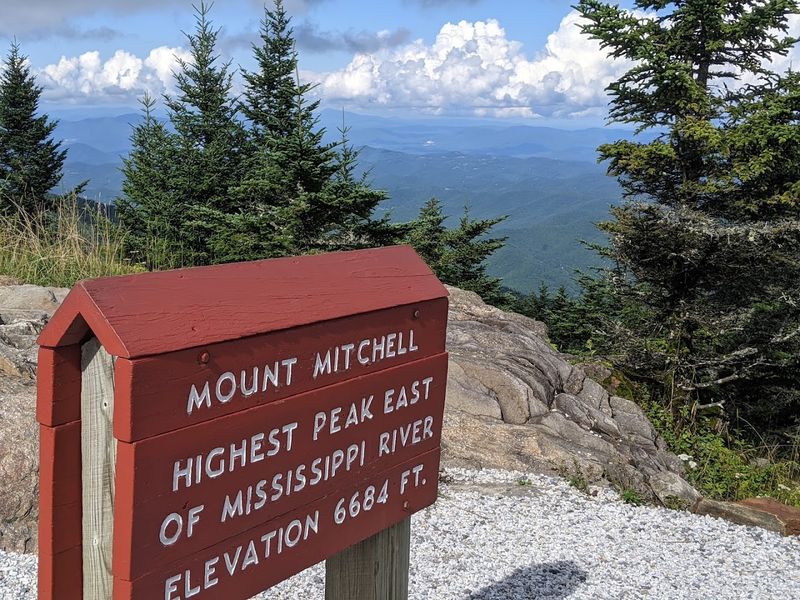
Reaching the highest peak east of the Mississippi River feels like ascending into another realm entirely. At 6,684 feet, Mount Mitchell’s summit often pokes through cloud layers, giving visitors that above-the-world sensation usually reserved for airplane passengers.
The temperature drops noticeably as you climb, and the vegetation changes from hardwood forests to spruce-fir forests that look more like Canada than Carolina.
An observation deck provides 360-degree views when weather cooperates. On exceptional days, you can see up to 85 miles in every direction, with ridge after ridge creating a seemingly endless landscape.
More often, clouds drift through and around the summit, creating that moody, atmospheric quality filmmakers love. The interplay of light, shadow, and mist makes every visit different.
The park’s name honors Elisha Mitchell, a professor who proved this was indeed the tallest peak. Today, a stone tower marks the exact summit, offering shelter and even better views.
Sunrise seekers arrive in darkness to watch the sun paint the cloud sea below them. It’s proof that height alone can create drama – nature’s vertical cinema at its finest.
Hanging Rock State Park (Waterfalls and Rock Formations)
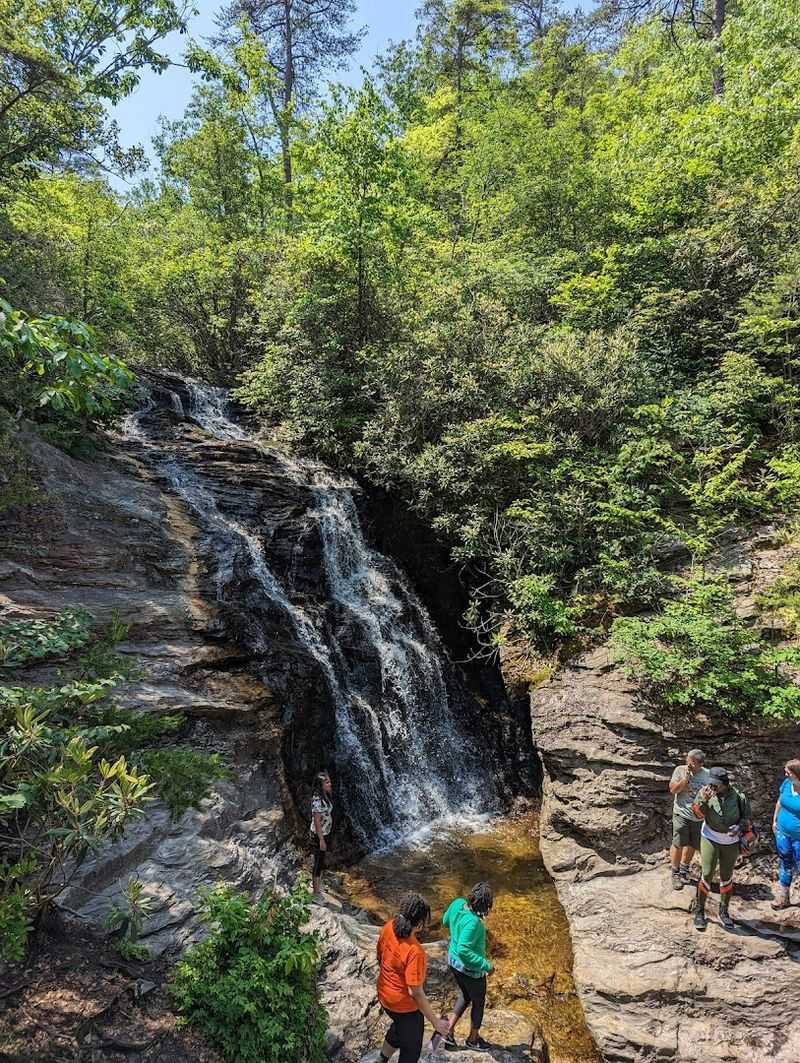
Quartzite cliffs rise abruptly from rolling Piedmont terrain, creating dramatic contrasts that catch eyes and cameras alike. The park combines multiple visual elements – towering rock faces, tumbling waterfalls, dense forests, and distant farmland – into one varied landscape.
From the main overlook at Hanging Rock itself, the view stretches across 30 miles of North Carolina countryside like a painted backdrop come to life.
Three waterfalls within the park add motion and sound to the scenery. Window Falls drops through a natural opening in the rock, while Hidden Falls lives up to its name in a secluded forest glen.
Upper Cascades creates a series of stepped pools that look designed for photo shoots. Each waterfall offers something different, ensuring no two visits feel the same.
The rock formations themselves tell geological stories millions of years old. Climbers scale the steep faces, adding tiny human figures to the massive stone canvas.
Trails wind through diverse terrain, from creek beds to ridge tops, constantly changing the perspective. Whether you’re standing atop Hanging Rock looking out or gazing up at the cliffs from below, the scale and variety create natural drama worth capturing on film.
Jockey’s Ridge State Park (Shifting Coastal Dunes)
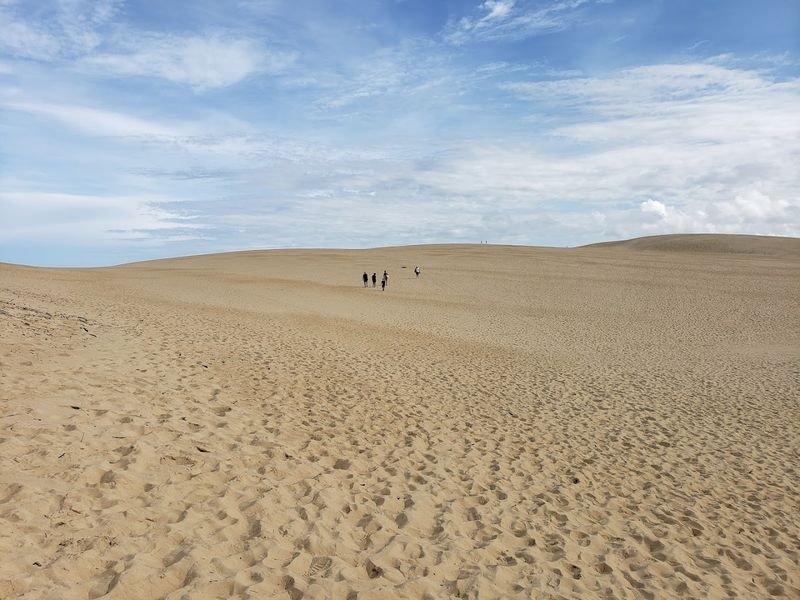
Sand dunes rising 100 feet above sea level create an unexpected desert landscape just steps from the Atlantic Ocean. Wind sculpts the dunes constantly, reshaping ridges and valleys into new patterns.
At sunset, shadows stretch long across golden sand, transforming the terrain into something that looks more like North Africa than North Carolina. The contrast between soft sand curves and the flat coastal plain beyond is striking.
These are the tallest natural sand dunes on the entire East Coast, a fact that surprises first-time visitors expecting typical beach scenery. Walking to the top feels like climbing a mountain made of sugar.
The sand shifts under your feet, making every step a small adventure. From the summit, you can see Roanoke Sound on one side and hints of the ocean on the other.
Hang gliders launch from the dunes regularly, adding colorful motion to the sky. Their bright wings catch wind currents, circling overhead like birds of prey.
The combination of flowing sand, endless sky, and soaring figures creates images that seem pulled from an adventure movie. Kids run down the dune faces while couples photograph each other against the ever-changing landscape.
Cape Hatteras National Seashore (Lighthouse on the Edge of the Sea)
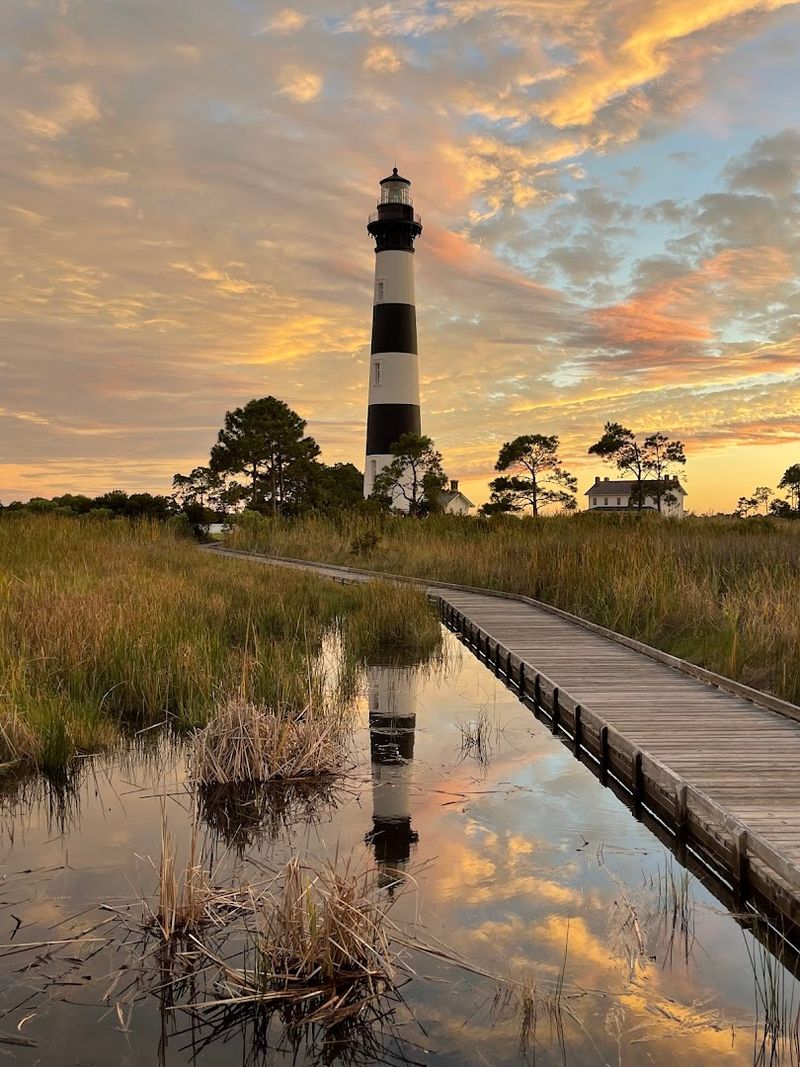
A candy-striped lighthouse stands tall against wild Atlantic skies, marking one of the most treacherous stretches of coastline in America. The black and white spiral pattern makes it instantly recognizable and impossibly photogenic.
When storm clouds gather overhead and waves crash against the beach, the scene takes on epic proportions – a solitary sentinel facing nature’s fury.
This barrier island location means dramatic weather arrives regularly. Nor’easters bring towering waves and driving rain, while clear days reveal miles of empty beach stretching in both directions.
The lighthouse has witnessed countless maritime dramas since 1870, and that history adds weight to its presence. Ships still pass on the horizon, their tiny silhouettes emphasizing the vast ocean beyond.
The seashore itself offers 70 miles of undeveloped beach, dunes, and marshes. Sunrise paints everything in warm tones, while sunset silhouettes the lighthouse against orange and purple skies.
Even the name evokes adventure – Cape Hatteras, the Graveyard of the Atlantic. Standing here, you feel the power of wind and water, the persistence of human engineering, and the timeless quality of land meeting sea.
It’s coastal cinema at its finest.
Looking Glass Falls (A Forest Waterfall Scene)
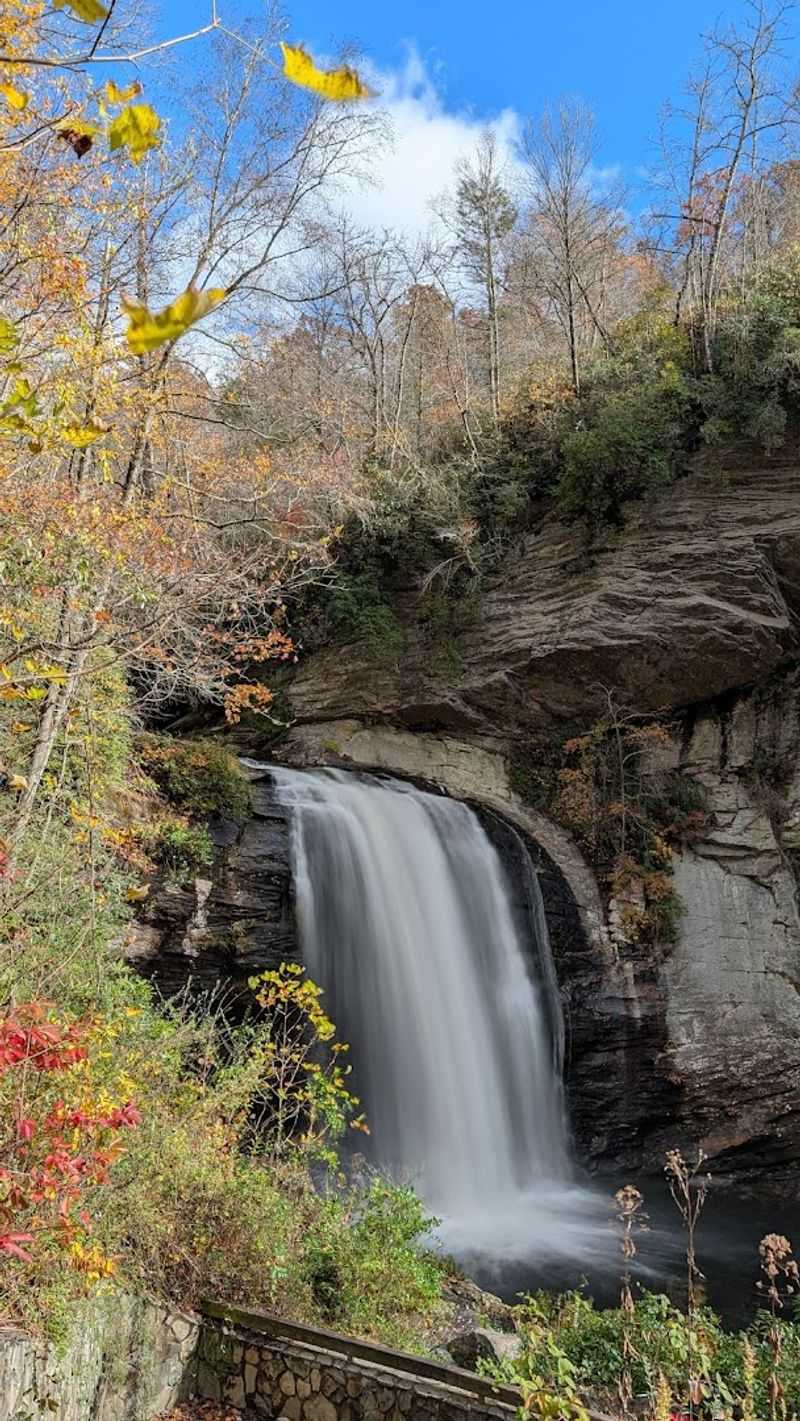
Water pours 60 feet over a smooth rock face into a crystal-clear pool, creating that perfect waterfall tableau you’d expect in a fantasy film. The falls got their name because ice sometimes forms over the rock in winter, making it shine like a mirror.
Even in summer, the water creates a shimmering veil that catches sunlight beautifully. Mist rises constantly from where water meets pool, adding a dreamy, soft-focus quality to photographs.
What makes this spot special is how accessible it is – the falls sit just steps from the roadside in Pisgah National Forest. You don’t need hiking boots or a trail map, yet the reward feels like a secret discovery.
Dense forest surrounds the falls on all sides, creating a natural theater with the waterfall as the star performer. Moss-covered rocks and ferns frame the scene perfectly.
The pool at the base invites wading on hot days, adding human interaction to the natural beauty. Photographers set up tripods to capture long exposures, turning the falling water into silky threads.
The sound alone – constant rushing and splashing – completes the sensory experience. It’s a ready-made film location that needs no enhancement or special effects to look magical.
Great Smoky Mountains National Park (Fog-Laced Mountain Layers)
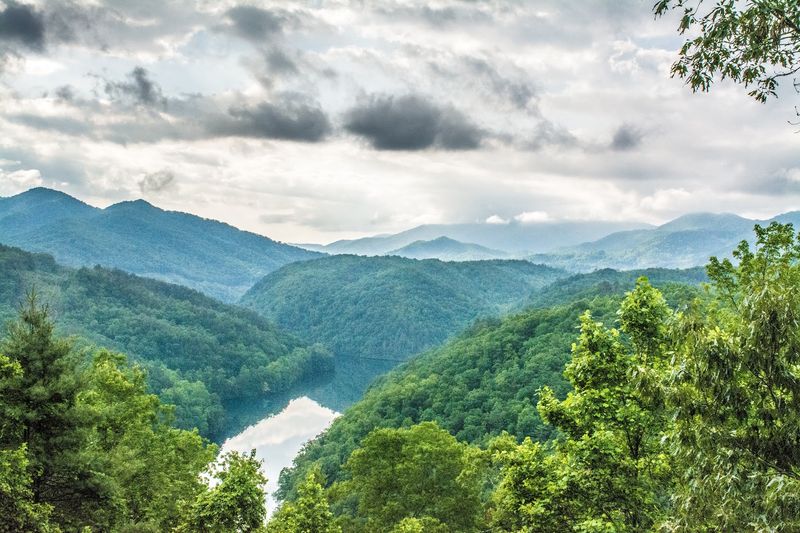
Morning fog rolls through mountain valleys like a living thing, giving the Smokies their famous name and their otherworldly appearance. From high viewpoints like Clingmans Dome, you watch layers of mountains fade from green to blue to purple as they march toward the horizon.
Each ridge looks slightly hazier than the one before it, creating that signature atmospheric perspective painters and photographers dream about. The fog itself moves constantly, revealing and concealing features in slow motion.
This is America’s most visited national park, and the views explain why. Ridge after ridge of forested mountains create what seems like endless wilderness, though you’re never far from a road or trail.
The biodiversity here is legendary – more tree species than in all of Europe – which creates visual variety in every season. Spring brings wildflowers, summer delivers lush green canopy, fall explodes in color, and winter adds stark beauty.
Sunrise and sunset turn the fog into gold and pink ribbons. The constantly shifting light and moisture create unique conditions every single day.
Wildlife occasionally appears in the foreground, adding scale and life to the grand landscape. It’s cinematic without trying to be.