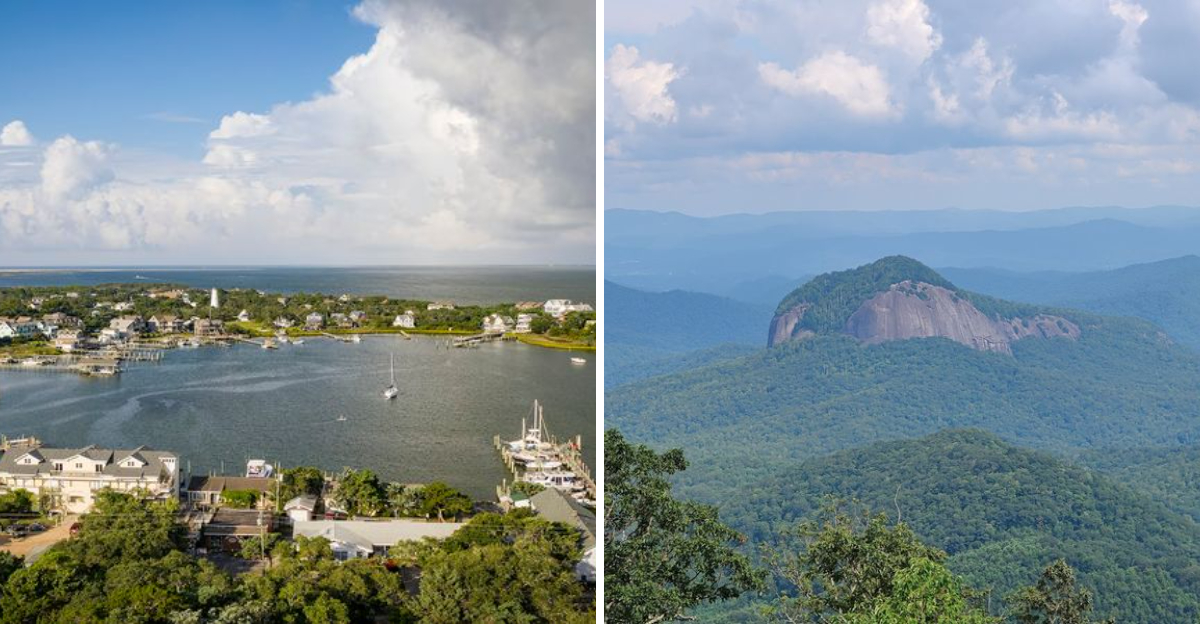
North Carolina doesn’t just show off. It completely steals the scene.
One minute you’re standing above a sea of blue mountain ridges. The next, you’re barefoot on windswept dunes with the Atlantic roaring beside you.
This state knows how to make a view feel massive, wild, and almost unreal.
Some places hit you the second you arrive. Others sneak up on you later while you’re stuck at work, staring out a window, wishing you were back on that overlook or coastal highway again.
North Carolina is full of those moments.
From fog rolling through the Smokies to sunsets that light up the Outer Banks like fire, these thirteen views don’t disappear when the trip ends. They stay lodged in your memory long after the drive home.
Blue Ridge Parkway Overlooks near Asheville
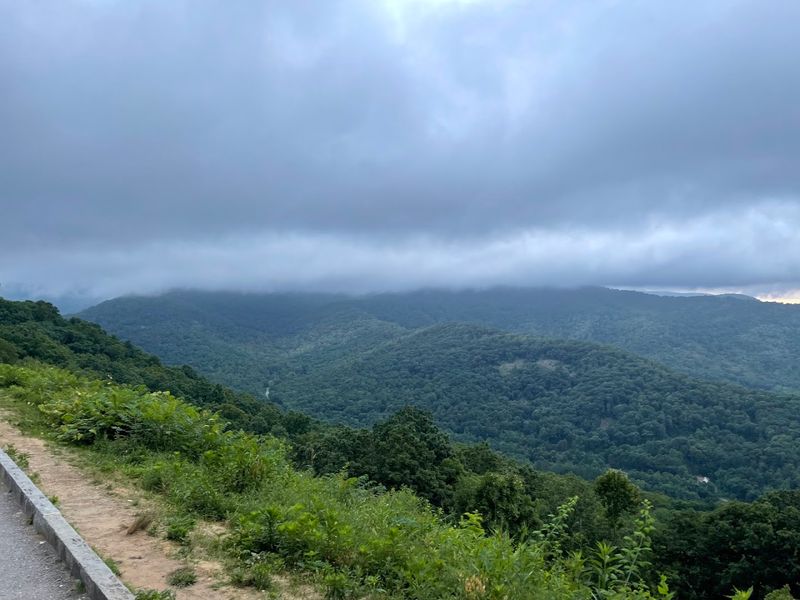
Pull off at almost any overlook near Asheville, and you’ll understand why people call this America’s favorite drive. The mountains don’t just sit there—they layer themselves in shades of blue and purple that stretch until earth meets sky.
Morning brings fog that rolls through valleys like slow-motion ocean waves, turning ordinary ridgelines into something magical.
Early fall transforms the scene into an artist’s palette gone wild. Reds, oranges, and yellows splash across the hillsides, mixing with evergreens that stay stubbornly green.
The light changes everything too, shifting from soft pink dawns to golden afternoons that make the whole landscape glow.
What makes these overlooks unforgettable isn’t just one thing—it’s the combination of endless distance, shifting weather, and those mountain layers that seem to go on forever. Visitors often stand silent at the railings, trying to absorb a view that cameras can’t quite capture.
The memory settles deep, replaying itself during ordinary moments back home when you least expect it.
Grandfather Mountain’s Mile High Swinging Bridge
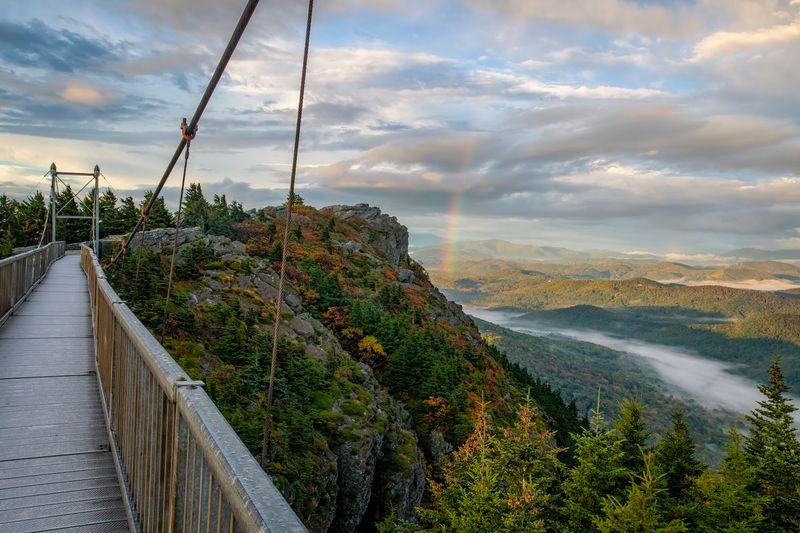
Standing 5,280 feet above sea level, this swinging bridge earns its name honestly. Wind whips across the span while mountains tumble away beneath your feet in every direction.
The combination of height, exposure, and those stomach-dropping views creates an experience your brain refuses to forget.
Rocky cliffs jut up around the bridge like ancient guardians watching over the valleys below. On clear days, you can spot peaks in four different states, making you feel like you’re standing on top of the world.
The bridge sways gently with each step, adding just enough thrill to make your heart beat faster without being scary.
Photographers love this spot because the scenery works from every angle. Look down and see rugged wilderness.
Look out and count mountain ranges until they fade into hazy blue. First-time visitors often grip the cables a little tighter than necessary, but by the time they reach the other side, they’re already planning return trips.
The view imprints itself permanently—that particular shade of mountain blue, that specific feeling of floating above everything.
Clingmans Dome in the Great Smoky Mountains
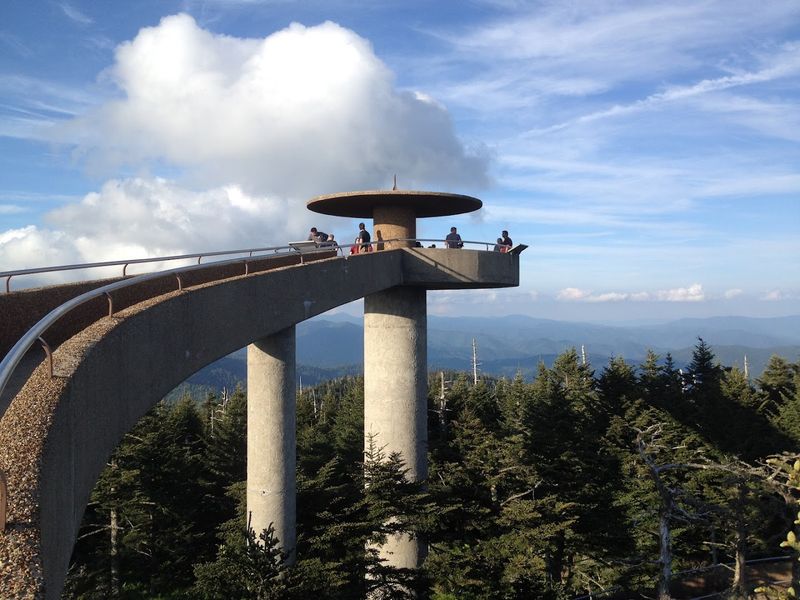
At 6,643 feet, Clingmans Dome doesn’t just offer views—it delivers an above-the-clouds experience that feels almost otherworldly. The spiral observation tower rises like a concrete spaceship, lifting visitors even higher into air so thin and clear that neighboring states appear within reach.
When clouds settle below the peak, you’re literally standing in the sky while white fluff fills the valleys like celestial cotton.
The 360-degree panorama reveals why the Smokies earned their name. Blue-gray haze wraps around countless ridges, creating that signature smoky appearance.
Cool mountain air and constant breeze make the temperature noticeably different from valleys below, adding to the sense that you’ve traveled to another world entirely.
Half a mile of paved but steep walkway leads to the tower, and every step feels worth the effort once you reach the top. Sunrise and sunset transform the view into something painters spend lifetimes trying to capture.
The vastness overwhelms first, then comforts, leaving visitors with a profound sense of perspective that travels home with them.
Looking Glass Rock in Pisgah National Forest
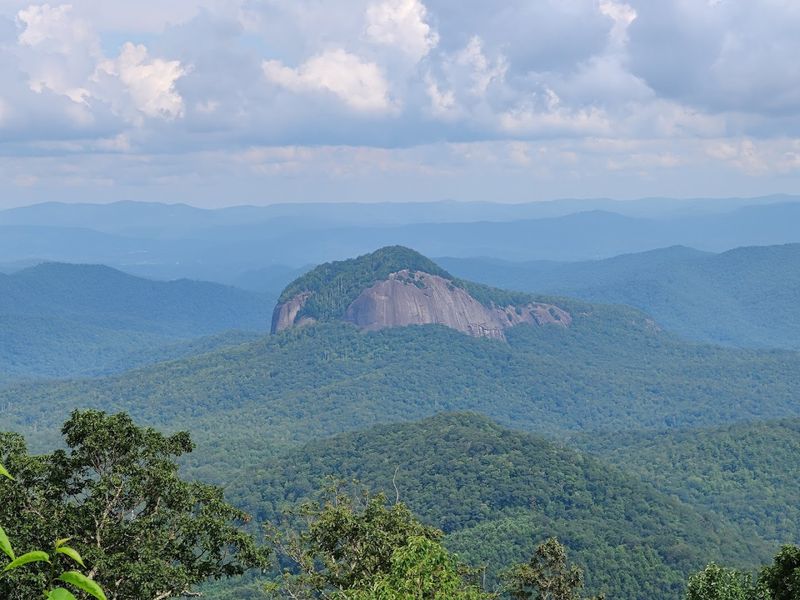
This massive granite dome gets its name from the way water freezes on its surface, creating an icy mirror that reflects sunlight for miles. Even without ice, the rock face gleams like polished stone, standing proud above the forest canopy.
The sheer size makes your jaw drop—it’s not just a rock, it’s a geological monument rising 1,700 feet from base to summit.
Hikers who make the challenging climb find themselves rewarded with views that stretch across the Appalachian Mountains in sweeping waves of green and blue. Dense forests carpet the lower elevations while distant peaks fade into soft purple haze.
The perspective from the top shows just how wild and vast Pisgah National Forest really is.
Rock climbers love the sheer face, their colorful gear visible as tiny dots against gray granite. But you don’t need climbing skills to appreciate Looking Glass—the view from below or from nearby overlooks still impresses deeply.
Something about that gleaming rock face surrounded by endless forest creates a mental snapshot that replays itself whenever you think about mountain beauty.
Linville Gorge from Wiseman’s View
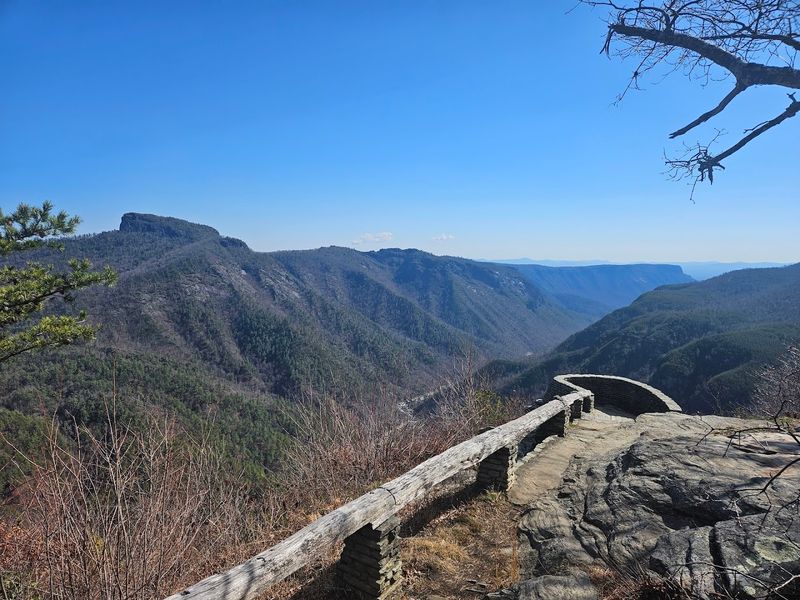
People call Linville Gorge the Grand Canyon of the East, and Wiseman’s View proves why that nickname sticks. Sheer cliffs plunge dramatically into a wild gorge carved by the Linville River over millions of years.
The depth makes your stomach flip a little—standing at the overlook, you’re looking down at hawks circling hundreds of feet below eye level.
This isn’t polished tourist scenery. Linville Gorge remains rugged, untamed, and remote-feeling despite its accessibility.
Dense forest blankets steep walls, broken only by dramatic rock outcrops and the silver thread of river visible far below. The wilderness designation means this area stays wild, giving the view an authentic, unspoiled quality that’s increasingly rare.
Sunrise paints the gorge in layers of shadow and gold, while sunset turns the whole scene orange and pink. Weather changes everything too—fog fills the gorge like a lake, clouds drift through at eye level, and storms roll in with dramatic flair.
Every visit delivers a slightly different scene, but they all share that same sense of raw, powerful beauty that refuses to leave your memory.
Cape Hatteras National Seashore
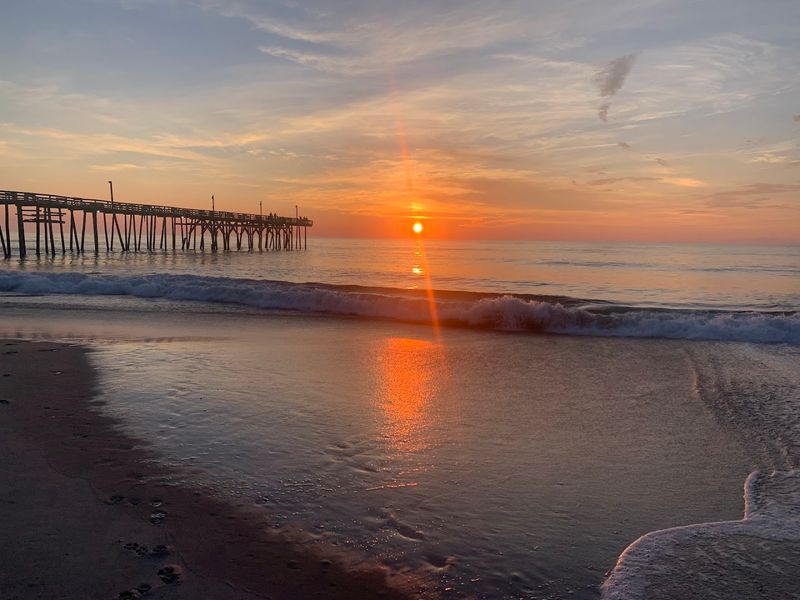
Where the Outer Banks jut furthest into the Atlantic, Cape Hatteras creates a meeting place of water, sand, and sky that feels both peaceful and powerful. Miles of undeveloped beach stretch in both directions, marked only by dunes, wild grasses, and the famous black-and-white striped lighthouse standing sentinel.
Waves pound the shore with rhythmic force, reminding you that this is where the Gulf Stream collides with the Labrador Current.
Sunrise here deserves its reputation. The sun climbs directly out of the ocean, painting water and clouds in shades of pink, orange, and gold that photographs never quite capture accurately.
Wind almost always blows, carrying salt spray and the cries of seabirds wheeling overhead.
The landscape feels open and endless, giving visitors a sense of space that modern life rarely provides. You can walk for miles seeing nothing but nature in its most elemental form—sand, water, and endless sky.
That combination of wildness and beauty creates memories that surface unexpectedly, triggered by ocean sounds or beach smells years later. The view becomes part of you somehow.
Chimney Rock State Park
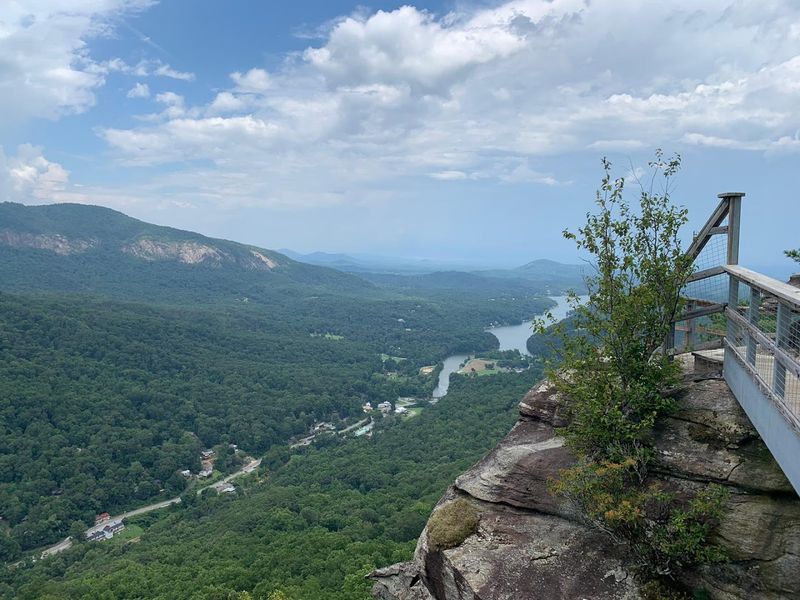
A 315-foot granite monolith juts from the mountainside like nature’s skyscraper, giving Chimney Rock its name and its fame. Climb the stairs or take the elevator to the top, and suddenly you’re standing 2,280 feet above sea level with Hickory Nut Gorge spread below like a movie set.
Lake Lure glitters in the distance, surrounded by mountains that fold into each other creating layers of scenic drama.
The vertical scenery feels almost cinematic—which makes sense since several movies filmed here, including The Last of the Mohicans. Cliffs drop away dramatically on multiple sides, creating that edge-of-the-world sensation that makes your pulse quicken.
Flag Rock, accessible via a short trail, offers an equally stunning perspective from a different angle.
Four seasons deliver four completely different views. Spring brings waterfalls rushing with snowmelt.
Summer wraps everything in lush green. Fall explodes with color that cascades down mountainsides.
Winter reveals the bare bones of the landscape, stark and beautiful. No matter when you visit, the combination of height, gorge, lake, and endless mountains creates a visual memory that plays on repeat long after you’ve returned home.
Roan Mountain at Carver’s Gap
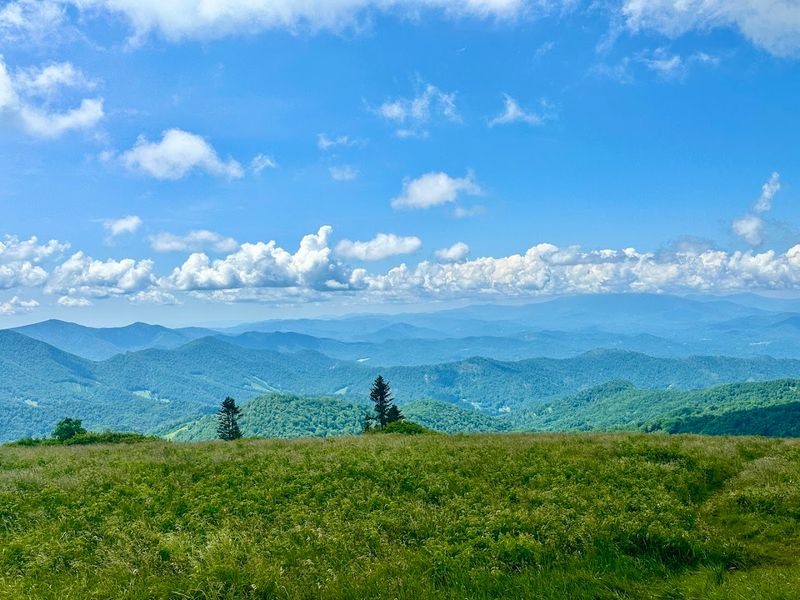
Most mountains wear trees like thick coats, but Roan Mountain’s balds stay mysteriously open, creating meadow-covered peaks that offer 360-degree views with nothing blocking the scenery. At over 6,000 feet, you’re standing in wide-open grasslands that feel more like the western prairies than Appalachian highlands.
The effect is both strange and stunning—mountains shouldn’t look like this, which makes them unforgettable.
June transforms Roan into something extraordinary when rhododendron catawbiense explodes into bloom. Purple-pink flowers carpet entire hillsides, creating what many consider the finest natural rhododendron garden in the world.
The combination of flowers, grass, and endless mountain views creates scenery that seems almost impossible.
The Appalachian Trail crosses right through Carver’s Gap, making this accessible to hikers of varying abilities. Round balds roll away in every direction, their grassy tops contrasting with forested valleys below.
Weather changes fast at this elevation, adding drama—clouds blow through at walking speed, fog appears from nowhere, and sunny skies can shift to storms within minutes. Each condition creates different views, but all share that same open, endless quality that stays with you forever.
Jockey’s Ridge State Park in the Outer Banks
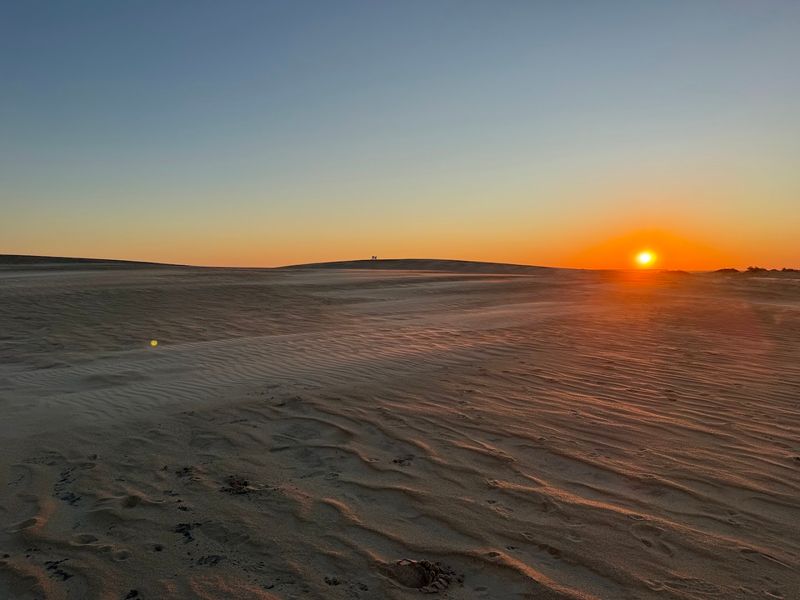
Walking up the tallest living sand dune system on the East Coast feels like stepping into a desert someone accidentally dropped beside the ocean. Jockey’s Ridge rises unexpectedly from the Outer Banks, its shifting sands creating a landscape that belongs in the Southwest, not coastal North Carolina.
Wind constantly reshapes the dunes, meaning the view literally never looks exactly the same twice.
Climb to the top and you’re rewarded with a perspective few expect—Roanoke Sound on one side, hint of ocean on the other, and nothing but sculpted sand in between. Hang gliders launch from the slopes, adding colorful dots to an already dramatic scene.
The sand itself creates mesmerizing patterns, rippled by endless wind into waves frozen in place.
Sunset transforms this place into something magical. The western sky explodes with color while the sand glows orange and pink, creating what feels like another planet.
Couples, families, and solo visitors sit silently watching the show, surrounded by wind and space and beauty. The memory of standing on that sand mountain stays sharp—the feeling of wind, the vastness of sky, the way everything glowed in the fading light.
Rough Ridge on the Blue Ridge Parkway
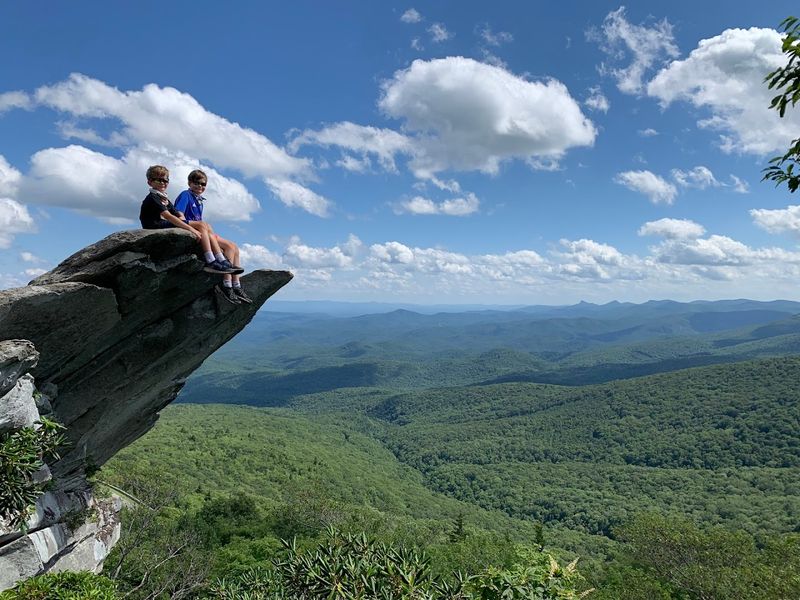
A short but rewarding hike leads to one of the most accessible spectacular views on the entire Blue Ridge Parkway. Rough Ridge earned its name from the rocky outcrops that jut above the tree line, creating natural observation platforms that feel like they were designed specifically for taking in mountain scenery.
Wooden boardwalks protect fragile alpine plants while guiding visitors to the best viewpoints.
The vista rewards immediately. Mountain ranges layer themselves in shades of blue and purple, stretching to the horizon in wave after wave of peaks and valleys.
You can trace the winding Parkway below as it snakes through the landscape, a thin ribbon of pavement threading between mountains. Early morning brings fog that fills valleys while peaks float like islands above a white sea.
Wildflowers bloom at this elevation from late spring through summer, adding splashes of color to rocky terrain. Rhododendron, flame azalea, and countless smaller flowers create a natural garden that frames the long-distance views perfectly.
Photography enthusiasts arrive at dawn and dusk, chasing the golden light that makes everything glow. But any time of day delivers views that imprint themselves deeply, becoming the mental screensaver you return to whenever stress needs antidote.
Lake Lure from Morse Park or Chimney Rock
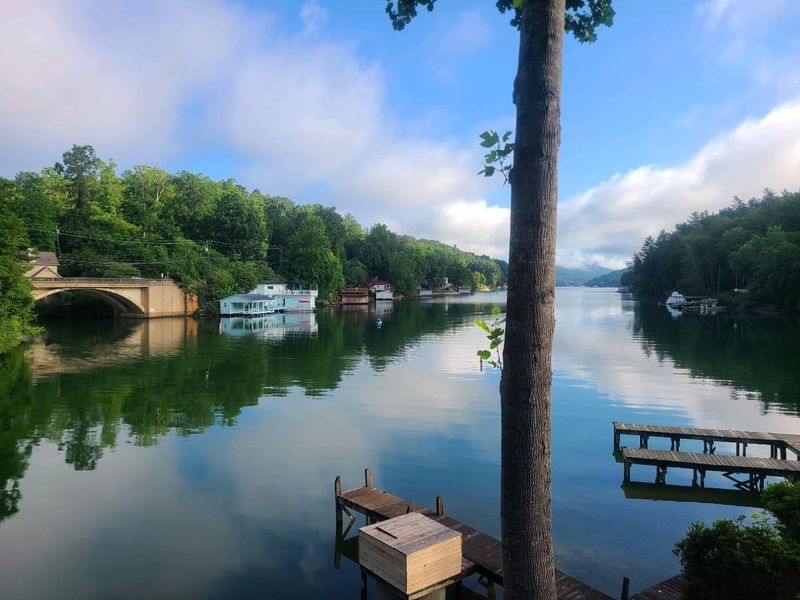
Nestled in the Blue Ridge foothills, Lake Lure combines water and mountains in a way that creates postcard scenery from every angle. The lake’s surface acts like a mirror on calm days, reflecting surrounding peaks and creating double the beauty.
Whether viewed from Morse Park at water level or from high above at Chimney Rock, this place delivers views that make you understand why it’s appeared in so many movies.
Forested mountains rise steeply from the shoreline, their green slopes contrasting beautifully with blue water. Cliffs add drama, jutting from hillsides in rocky exclamation points that catch afternoon light.
The combination feels both peaceful and impressive—gentle enough for swimming and kayaking, dramatic enough to take your breath away when you round a bend and see the full panorama.
Different seasons paint different pictures. Fall transforms the surrounding mountains into a riot of reds, oranges, and yellows that double themselves in the lake’s reflection.
Spring brings fresh green and flowing waterfalls. Summer turns everything lush and deep.
Winter reveals the landscape’s bones, stark and beautiful. All year long, that mix of calm water and mountain drama creates scenery that refuses to fade from memory, replaying itself in quiet moments years later.
Whitewater Falls near the South Carolina Border
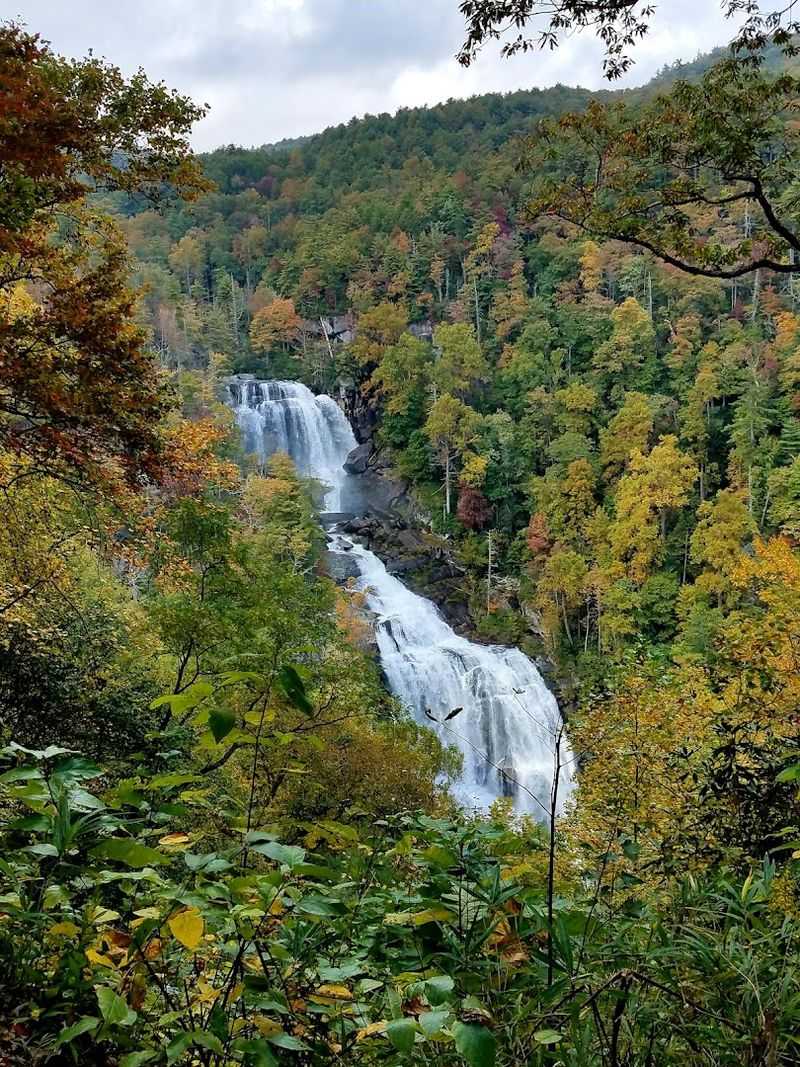
Dropping 411 feet in a series of cascades, Whitewater Falls claims the title of one of the tallest waterfalls east of the Rockies. The name perfectly describes what you see—white torrents of water rushing down a steep mountain face, crashing over rocks and creating constant mist that drifts through the gorge.
The sound reaches you before the view does, a deep roar that announces the falls’ power.
Two overlooks provide different perspectives. The upper platform offers the classic view, showing the falls’ full drop through frames of dense forest.
Adventurous visitors can hike down to lower overlooks for closer perspectives that let you feel the mist and power more directly. Either way, the combination of height, water volume, and wild mountain setting creates something impressive.
After heavy rains, the falls transform into an absolute torrent, their roar audible from the parking area. During drier times, they maintain steady flow that still impresses with its scale and beauty.
Rhododendron and mountain laurel surround the overlooks, blooming in late spring and adding flowers to the already scenic view. The memory sticks—that particular shade of rock, the constant white rush of water, the feeling of standing near such raw natural power in the middle of mountain wilderness.
Ocracoke Island’s Remote Shoreline
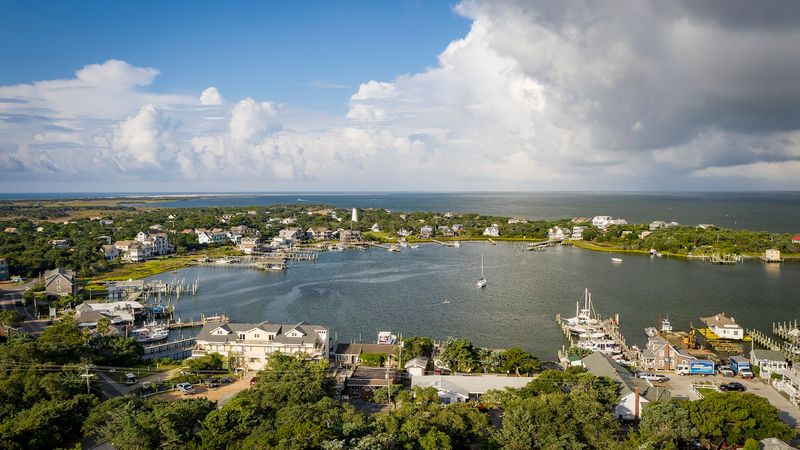
Reachable mainly by ferry, Ocracoke offers something increasingly rare on the East Coast—miles of undeveloped beach that look much like they did centuries ago. No high-rises interrupt the horizon.
No boardwalks or beach shops crowd the sand. Just rolling dunes, wild grasses bending in the constant breeze, and Atlantic waves rolling in with ancient rhythm.
The isolation creates a sense of discovery, like you’ve stumbled onto a secret place that modern development forgot.
The village sits small and quiet at the island’s southern end, leaving most of the shoreline wild and open. You can walk for miles seeing nothing but nature—sand, water, sky, and the occasional seabird.
Sunrise paints everything gold and pink while sunset turns the western sky into an impressionist masterpiece reflected in tidal pools.
Wild horses once roamed these dunes, and though they’re gone now, the landscape still feels untamed and free. Wind sculpts the sand into ever-changing patterns.
Shells and sea glass scatter the tide line. The sense of space and peace that Ocracoke delivers stays with visitors long after the ferry carries them back to the mainland.
Something about that untouched beauty creates memories that refuse to fade.